by Moe | Mar 24, 2013 | Apocalypse, History of the Brotherhood
In more apocalyptic headline gnews this week, it was announced that President Barack Obama has successfully brokered an end to a bitter dispute between Israel and Turkey
During his trip to Israel, Obama had arranged for two of America’s most important allies, Israel and Turkey to talk with one another. Israel’s prime minister Benjamin Netanyahu had telephoned Turkish prime minister, Recep Tayyip Erdogan, where it is said that Netanyahu had apologized for Israel’s 2010 killing of nine Turkish activists aboard a ship headed for the Gaza Strip. This one gracious phone call had essentially ended the three-year dispute between the two nations and two of America’s greatest allies.
President Obama had said that the timing on his trip to Israel was right for both Turkey and Israel to start restoring normal diplomatic relations. (more…)
Moe is the founder of GnosticWarrior.com. He is a father, husband, author, martial arts black belt, and an expert in Gnosticism, the occult, and esotericism.
by Moe | Dec 10, 2012 | History of the Brotherhood
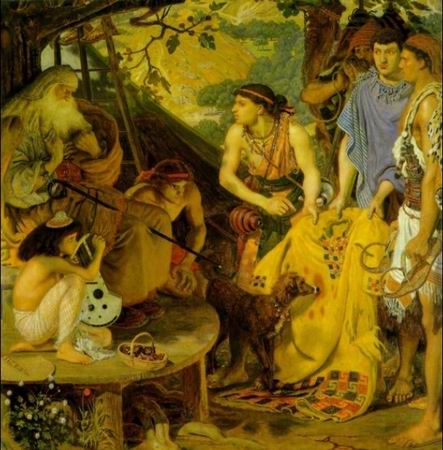 The purpose for the coat of many colors (Hebrew: כְּתֹנֶת פַּסִּים kethoneth passim) that was given to Joseph by his father Jacob has been debated upon for many centuries. My hopes are that with this article, I will provide the reasoning backed by the facts to support my theory as to what the coat of many colors had signified in the most simple way possible. Before we explore what this coat is, we first have to identify the people and their tribes or affiliations in the story.
This coat was given to Joseph by his father Jacob. These names and all names in the bible whether it be the Old or New Testaments are not their actual names, but are allegorical. An allegory has a hidden spiritual meaning that transcends the literal sense of a sacred text. Hence, what this means is that the names we see written in the Bible are simply not the original birth names of the people these stories are written about. This is the main method used by biblical authors to help conceal hidden meanings in both the Old and New Testament.
Who was Jacob and what does his name truly mean?
Jacob was the third patriarch of the Hebrew people with whom God had made a covenant, and ancestor of the tribes of Israel, which were named after his descendants. This sentence is key in understanding the coat of many colors because Jacob is essentially the father of Israel because it is the spiritual Israel with whom God made a covenant.
It is in (Genesis 32:28-29 and 35:10), before the birth of Jacob’s son Benjamin, God renames Jacob the new name, Israel. So we understand now that it was at this time that Israel had come into being. What you need to understand is that when Jacob was renamed Israel is that this was the new formation and beginnings of a new peoples united by religion, faith and some, blood. Jacob would be the anointed father of these new peoples that we can find represented in the Authorized King James Version, Genesis 37:3 reads: Now Israel loved Joseph more than all his children, because he was the son of his old age: and he made him a coat of many colours. (more…)
Moe is the founder of GnosticWarrior.com. He is a father, husband, author, martial arts black belt, and an expert in Gnosticism, the occult, and esotericism.
by Moe | Jul 27, 2012 | History of the Brotherhood

In researching biblical history, you will find that it is often difficult to locate Tribes or peoples described in the various bible passages. Most researches are simply not aware that this was done for a religious reason because of the fact that many of the tribes and or peoples written about in the bible ,were truly high profile families, Kings and or Saints. They had changed their true names throughout biblical history in order to hide their identities as the worldwide Temple was being built. This type of propaganda is an art of war which this battlefield technique is performed using a pen instead of a sword.
The religious reality is that the bible is not just spiritual, historical, and astrotheological teachings, but also a type of Imperialistic propaganda; just as corporate media is used today. This art of war was used in the past as a weapon which conceals the truth below layers of allegorical names from our enemies, but yet still honors the light of the divine people and most worthy Tribes (families) of biblical prophecy.
In the article below I will present my research in the most simple way possible on the origins and whereabouts of one of these lost tribes; the Tribe of Dan who have eluded historians for hundreds of years, until now.
Let it be known that the Tribe of Dan descends from one of the most famous Irish High Kings who ever lived. His descendants still live to this day. This King you will find various spellings of his name, such as King Tech- baoithin, Baithen, Baithin, Baithan, Baetin, Baitan Mor (“Baithen the Great”), which are some of the earlier Latin forms of the King’s name. Later in history when our language had changed over into Old English, so did the names. At that time, you will find this King called Boythan, Bothan, Bathan, Baeda, Baedan, and Saint Aidan, Aedh-og or Mo-Aedh-og who was Áed mac Ainmuirech high-king of the Northern Uí Néill. (more…)
Moe is the founder of GnosticWarrior.com. He is a father, husband, author, martial arts black belt, and an expert in Gnosticism, the occult, and esotericism.
by Moe | Aug 30, 2011 | Ecclesiastical History of England
AT that time, Naiton, King of the Picts, who inhabit the northern parts of Britain, taught by frequent meditation on the ecclesiastical writings, renounced the error whereby he and his nation had been holden till then, touching the observance of Easter, and brought himself and all his people to celebrate the catholic time of our Lord’s Resurrection. To the end that he might bring this to pass with the more ease and greater authority, he sought aid from the English, whom he knew to have long since framed their religion after the example of the holy Roman Apostolic Church. Accordingly, he sent messengers to the venerable Ceolfrid, abbot of the monastery of the blessed Apostles, Peter and Paul, which stands at the mouth of the river Wear, and near the river Tyne, at the place called Ingyruum, which he gloriously governed after Benedict, of whom we have before spoken; desiring, that he would send him a letter of exhortation, by the help of which he might the better confute those that presumed to keep Easter out of the due time; as also concerning the form and manner of tonsure whereby the clergy should be distinguished, notwithstanding that he himself had no small knowledge of these things. He also prayed to have master-builders sent him to build a church of stone in his nation after the Roman manner, promising to dedicate the same in honour of the blessed chief of the Apostles. Moreover, he and all his people, he said, would always follow the custom of the holy Roman Apostolic Church, in so far as men so distant from the speech and nation of the Romans could learn it. The most reverend Abbot Ceolfrid favourably receiving his godly desires and requests, sent the builders he desired, and likewise the following letter:
“To the most excellent lord, and glorious King Naiton, Abbot Ceolfrid, greeting in the Lord. We most readily and willingly endeavour, according to your desire, to make known to you the catholic observance of holy Easter, according to what we have learned of the Apostolic see, even as you, most devout king, in your godly zeal, have requested of us. For we know, that whensoever the lords of this world labour to learn, and to teach and to guard the truth, it is a gift of God to his Holy Church. For a certain profane writer has most truly said, that the world would be most happy if either kings were philosophers, or philosophers were kings. Now if a man of this world could judge truly of the philosophy of this world, and form a right choice concerning the state of this world, how much more is it to be desired, and most earnestly to be prayed for by such as are citizens of the heavenly country, and strangers and pilgrims in this world, that the more powerful any are in the world the more they may strive to hearken to the commands of Him who is the Supreme Judge, and by their example and authority may teach those that are committed to their charge, to keep the same, tqgether with themselves.
“There are then three rules given in the Sacred Writings, whereby the time of keeping Easter has been appointed for us and may in no wise be changed by any authority of man; two whereof are divinely established in the law of Moses; the third is added in the Gospel by reason of the Passion and Resurrection of our Lord. For the law enjoined, that the Passover should be kept in the first month of the year, and the third week of that month, that is, from the fifteenth day to the one-and- wentieth. It is added, by Apostolic institution, from the Gospel, that we are to wait for the Lord’s day in that third week, and to keep the beginning of the Paschal season on the same. Which threefold rule whosoever shall rightly observe, will never err in fixing the Paschal feast. But if you desire to be more plainly and fully informed in all these particulars, it is written in Exodus, where the people of Israel, being about to be delivered out of Egypt, are commanded to keep the first Passover, that the Lord spake unto Moses and Aaron, saying, ‘This month shall be unto you the beginning of months; it shall be the first month of the year to you. Speak ye unto all the congregation of Israel, saying, In the tenth day of this month they shall take to them every man a lamb, according to the house of their fathers, a lamb for an house.’ And a little after, ‘And ye shall keep it up until the fourteenth day of the same month; and the whole assembly of the congregation of Israel shall kill it in the evening.’ By which words it most plainly appears, that in the Paschal observance, though mention is made of the fourteenth day, yet it is not commanded that the Passover be kept on that day; but on the evening of the fourteenth day, that is, when the fifteenth moon, which is the beginning of the third week, appears in the sky, it is commanded that the lamb be killed; and that it was the night of the fifteenth moon, when the Egyptians were smitten and Israel was redeemed from long captivity. He says, ‘Seven days shall ye eat unleavened bread.’ By which words all the third week of that same first month is appointed to be a solemn feast. But lest we should think that those same seven days were to be reckoned from the fourteenth to the twentieth, He forthwith adds, ‘Even the first day ye shall put away leaven out of your houses; for whosoever eateth leavened bread, from the first day until the seventh day, that soul shall be cut off from Israel;’ and so on, till he says, ‘For in this selfsame day I will bring your army out of the land of Egypt.’
Moe is the founder of GnosticWarrior.com. He is a father, husband, author, martial arts black belt, and an expert in Gnosticism, the occult, and esotericism.
by Moe | Aug 21, 2011 | Secret Teachings of All Ages
p. 97
EACH of the four primary elements as taught by the early philosophers has its analogue in the quaternary terrestrial constitution of man. The rocks and earth correspond to the bones and flesh; the water to the various fluids; the air to the gases; and the fire to the bodily heat. Since the bones are the framework that sustains the corporeal structure, they may be regarded as a fitting emblem of the spirit–that divine foundation which supports the composite fabric of mind, soul, and body. To the initiate, the skeleton of death holding in bony fingers the reaper’s scythe denotes Saturn (Kronos), the father of the gods, carrying the sickle with which he mutilated Ouranos, his own sire.
In the language of the Mysteries, the spirits of men are the powdered bones of Saturn. The latter deity was always worshiped under the symbol of the base or footing, inasmuch as he was considered to be the substructure upholding creation. The myth of Saturn has its historical basis in the fragmentary records preserved by the early Greeks and Phœnicians concerning a king by that name who ruled over the ancient continent of Hyperborea. Polaris, Hyperborea, and Atlantis, because they lie buried beneath the continents and oceans of the modern world, have frequently been symbolized as rocks supporting upon their broad surfaces new lands, races, and empires. According to the Scandinavian Mysteries, the stones and cliffs were formed from the bones of Ymir, the primordial giant of the seething clay, while to the Hellenic mystics the rocks were the bones of the Great Mother, Gæa.
After the deluge sent by the gods to destroy mankind at the close of the Iron Age, only Deucalion and Pyrrha were left alive. Entering a ruined sanctuary to pray, they were directed by an oracle to depart from the temple and with heads veiled and garments unbound cast behind them the bones of their mother. Construing the cryptic message of the god to mean that the earth was the Great Mother of all creatures, Deucalion picked up loose rocks and, bidding Pyrrha do likewise, cast them behind him. From these rocks there sprang forth a new and stalwart race of human beings, the rocks thrown by Deucalion becoming men and those thrown by Pyrrha becoming women. In this allegory is epitomized the mystery of human evolution; for spirit, by ensouling matter, becomes that indwelling power which gradually but sequentially raises the mineral to the status of the plant; the plant to the plane of the animal; the animal to the dignity of man; and man to the estate of the gods.
The solar system was organized by forces operating inward from the great ring of the Saturnian sphere; and since the beginnings of all things were under the control of Saturn, the most reasonable inference is that the first forms of worship were dedicated to him and his peculiar symbol–the stone. Thus the intrinsic nature of Saturn is synonymous with that spiritual rock which is the enduring foundation of the Solar Temple, and has its antitypc or lower octave in that terrestrial rock–the planet Earth–which sustains upon its jagged surface the diversified genera of mundane life.
Although its origin is uncertain, litholatry undoubtedly constitutes one of the earliest forms of religious expression. “Throughout all the world, ” writes Godfrey Higgins, “the first object of Idolatry seems to have been a plain, unwrought stone, placed in the ground, as an emblem of the generative or procreative powers of nature.” (See The Celtic Druids.) Remnants of stone worship are distributed over the greater part of the earth’s surface, a notable example being the menhirs at Carnac, in Brittany, where several thousand gigantic uncut stones are arranged in eleven orderly rows. Many of these monoliths stand over twenty feet out of the sand in which they are embedded, and it has been calculated that some of the larger ones weigh as much as 250,000 pounds. By some it is believed that certain of the menhirs mark the location of buried treasure, but the most plausible view is that which regards Carnac as a monument to the astronomical knowledge of antiquity. Scattered throughout the British Isles and Europe, these cairns, dolmens, menhirs, and cistvaens stand as mute but eloquent testimonials to the existence and achievements of races now extinct.
Moe is the founder of GnosticWarrior.com. He is a father, husband, author, martial arts black belt, and an expert in Gnosticism, the occult, and esotericism.