by Moe | Apr 16, 2013 | Alchemy, Meaning of Symbols
The symbol for water is the inverted triangle. This symbol is considered passive or what is called, ‘feminine.’ 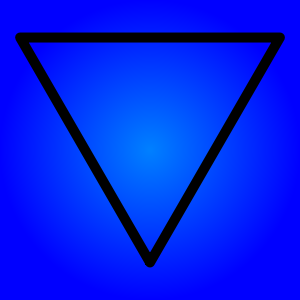
An example of this feminine aspect can be found with the Eastern icon represented in Sophia with wings and at times with a garment of fish scales points to her relationship to water. In European legends and folklore, Sophia is represented by the Melusine (or Melusina) which is representative of a feminine spirit of fresh waters in sacred springs and rivers.
The planets the water symbol represents are the Moon and Venus with its Zodiac signs found in Cancer, Scorpio, and Pisces. It’s color is blue and season fall with the time of day arriving at sunset.
If you looking for peace of mind, love and happiness then this symbol is for you. The symbol that will help lead you to the Promise Land or to what the Taoist call “the Way” is what will allow you and your emotions, to flow like water rather than burn like fire.
To the ancient Greeks, water is the symbol for metamorphosis and philosophical recycling. You see, water is the very element of emotion and the unconscious. It is the symbol of purity, fertility, life, truth and wisdom.
Humans are made up of 60% of the human body is water, the brain is composed of 70% and it is the water within us that helps us interact with all of the physical senses in complete harmony. Meditate on this symbol and learn the Way of water. This is essential to finding peace of mind and soul.
Moe is the founder of GnosticWarrior.com. He is a father, husband, author, martial arts black belt, and an expert in Gnosticism, the occult, and esotericism.
by Moe | Apr 15, 2013 | Apocalypse, New World Order News
During the hearing, former state Sen. Sylvia Allen warned lawmakers of a “new world order” backed by President Barack Obama and other … Arizona Republicans warn of new world order  ABC15.com (KNXV-TV)-Apr 14, 2013
Jeremic opened “The UN and Global Economic Governance” debate In Serbia News-9 hours ago -NEW YORK – A debate entitled “The UN and Global Economic Governance” kicked off in the UN seat in New York on Monday with the aim of enhancing the …
One World Government and the War of Tomorrow – Nothing less than the future is over that horizon; a future that is defined by a new world order where people are able to attain true happiness and leave behind … – Smithsonian (blog)-Apr 11, 2013
The “change” promised to the masses by a 2008 electioneering Senator Barack Obama is blanket Global Governance of world populations. Global Governance 2025: Rewriting the Life of the Common Man as … – Canada Free Press-Apr 10, 2013
The United States, China, and Global Governance: A New Agenda … The United States, China, and Global Governance: A New Agenda for a New Era. The Woodrow Wilson Center’s Kissinger Institute on China and the United … US-China Institute-Apr 11, 2013
In 1982 the Bahá’í faith unambiguously professed before the United Nations “the goal of a new World Order, Divine in origin, all-embracing in – Global Governance and the “New World Order Religion” Center for Research on Globalization-Apr 14, 2013
BRICS to construct a new world order – The concept of BRICS formulated in 2001 by Jim O’Neil has changed the geopolitical and economic world order. World Outline-Apr 12, 2013
Buiter’s manifesto on a new eurozone world order, post-Cyprus – 1. Private creditors of euro area sovereigns are safer now than before, because they are politically senior to most unsecured bank creditors, including unsecured … Euromoney Magazine-Apr 11, 2013
Moe is the founder of GnosticWarrior.com. He is a father, husband, author, martial arts black belt, and an expert in Gnosticism, the occult, and esotericism.
by Moe | Apr 15, 2013 | Gnosis
By Miguel Conner – I’ve always liked the definition of Gnosticism that Stevan Davis provided during an interview on my show: It’s the story of how God went crazy and became us, and how we 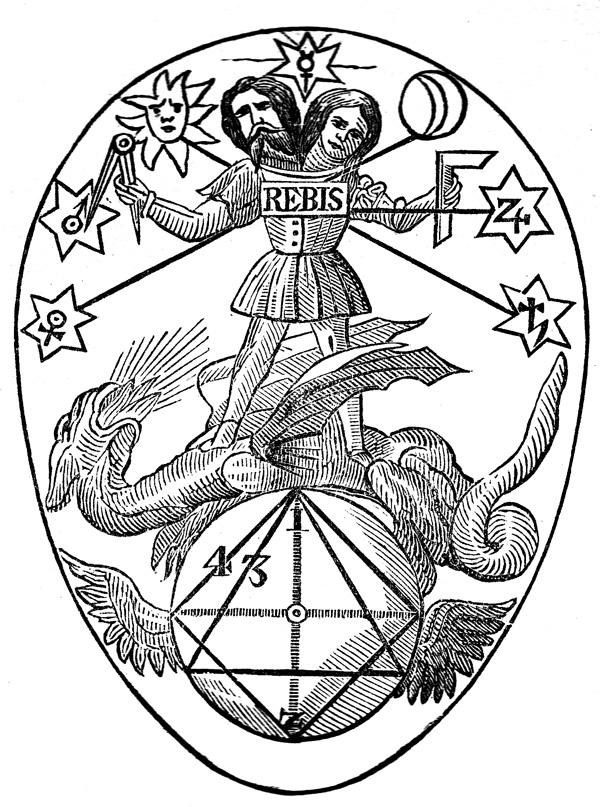 can reverse the process once we have gained this knowledge (Gnosis).
But it’s always helpful to proffer other frameworks to defining Gnosticism because of its seemingly protean manifestations and secretive aura—beyond the mainstream one of being an allegorizing and Platonic ancient heresy that advocated self and God knowledge, continuously suppressed by orthodox religions and smuggled by secret societies across history.
Using mythology is one framework, especially since the Gnostic themselves were so passionate about utilizing mythology from any surrounding tradition in order to explain their existentialist views.
Mythology is a chronicle of symbols and archetypes that point to the transcendent, but at the same time anchor the psyche to a clearer perspective of the immediate culture and cosmos. Mythology is more concerned with meaning than facts; and thus deeply expresses the essence of a movement or religion, even as they don different clothing in other times and places.
I think Jung Singer in her book, A Gnostic Book of Hours, put it better when she wrote; “Myths are true expressions of our inner selves, revealed cryptically in image, symbol, and metaphor. They are something like dreams: rationally they may not ring true, but in a psychological sense they express people’s inner processes through the use of ingenious devices that conceal what must be concealed and reveal what must be revealed.”
But as a narrative, myths often begin with questions, sometimes without ringing answers, but certainly pregnant a melody of meaning. Here are the questions and the myths that address the Gnostic ethos:
How did we get here?
The Myth of the Fallen Soul: Because of a cosmic cataclysm or angelic revolution, fragments of the ultimate Godhead (referred to as divine sparks), have fallen into alien domains. These shards of infinity are cast into material vessels—the bodies of humans or even animals—and lie in slumbering forgetfulness far away from their astral home. A modern Gnostic myth would be the movie The Truman Show, where the protagonist is placed in an ersatz environment away from his beloved and the real world.
Who is responsible?
The Myth of the Demiurge: Lesser agencies control the universe, hoarding the divine spark that often feeds their very power, and certainly perpetrating their slumbering forgetfulness through oppression or soothing chimeras (or both). Christian Gnostics often referred to their main adversary as the Demiurge (Greek for “public worker”), associating him with the Old Testament Jehovah. The Demiurge and his assistants, called the Archons, are the main antagonists in all forms of Gnosticism, and they keep the divine spark hidden from the ultimate Godhead. A modern Gnostic myth would be the films The Matrix, Dark City, and They Live.
Is there any hope to make it right?
The Myth of the Divine Feminine: A goddess-figure is the solution (and sometimes also the cause) to the current spiritual state of affairs. Her ethereal song stirs the divine spark into wakefulness. In some Gnostic narratives, she is the actual mother of the Demiurge; yet she is also the missing element of an unbalanced reality, the healing but untamed process of the universe. The Gnostics presented her in the aspect of Sophia, Mary Magdalene or Helen of Troy, just to name a few, switching roles from the damsel in distress to the actual warrior heroine. She is manifest and divine wisdom in all her aspects, calling all of us to arouse. A modern Gnostic myth would be the Arthurian mythos, or again The Matrix with the character of Trinity.
What is our role?
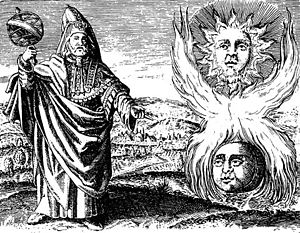
Hermesmage (Photo credit: Wikipedia)
The Myth of the Savior: Once awakened, a Savior arrives to counsel the divine spark on how to return to its astral home. The Savior in Gnosticism took on the form of such luminaries as Jesus Christ, Simon Magus, or Hermes Trismegistus. Often the Savior and the Divine Feminine work together or exchange responsibilities, in their eternal romance to restore Creation. Regardless, arcane rituals and mystic maps are tendered for the regaining of spiritual wholeness, after we have remembered our destiny and discovered a thirst for ultimate freedom. A modern Gnostic myth would be the movie Fight Club, where Tyler Durden and Marla instruct the protagonist in various ways on how to find his true nature; or again, in the Arthurian mythos where Arthur and Guinevere must find resolution before darkness is lifted over the land.
These four myths can overlap, sometimes taking evolving attributes of each other, and are often hidden themselves in other myths or allegory, even in discourse. An example is found in The Hermetica, where Hermes Trismegistus says; “Bright and luminous as you are, O Soul, by your own nature, you went to the world of darkness, and engaged in combat with it; and the world of darkness obscured your light, and encompassed you with darkness, and blinded you, and made you lose sight of all that you had seen, and forget all that you had known; and in the end, you were captured and held prisoner.”
Looking closely, one can see the Demiurge, the fallen Soul, and the continuous struggle of the Divine Feminine and Savior in just that passage. But Hermes eventually reveals the liberation of the divine spark later on in The Hermetica.
Gnosticism certainly contains other characteristics and elements, many still being debated, and the notion of Gnosis is certainly essential (but a complete topic in itself). Yet these four myths are useful cornerstones for detecting the many houses of heresy the Gnostic erected throughout history and secret history. Furthermore, one can begin seeing the Gnostic sensibility beyond facts and enter into the realms of meaning.
The mythic resonance of the Gnostics has certainly terrified mainstream religions for centuries, just as it has captivated artists and member of clandestine organizations. But it can also aid in understanding Gnosticism when it manifests through such lenses as artistic (Philip K. Dick/William Blake/Herman Melville), psychological (Carl Jung/Aldous Huxley), or historical (Paul of Tarsus/Valentinus/Rumi).
If not, the definition of Stevan Davis still remains appropriate. Sophia will continue to sing her song, calling her children home, but those who have ears to hear certainly have different ways to decipher that eternal soundtrack of the counterculture known as Gnosis.
Moe is the founder of GnosticWarrior.com. He is a father, husband, author, martial arts black belt, and an expert in Gnosticism, the occult, and esotericism.
by Moe | Apr 15, 2013 | Gnostic Warrior Podcast Archives
In this episode of Gnostic Warrior Radio, we have a discussion with 24 year ex-Navy SEAL, Michael Jaco.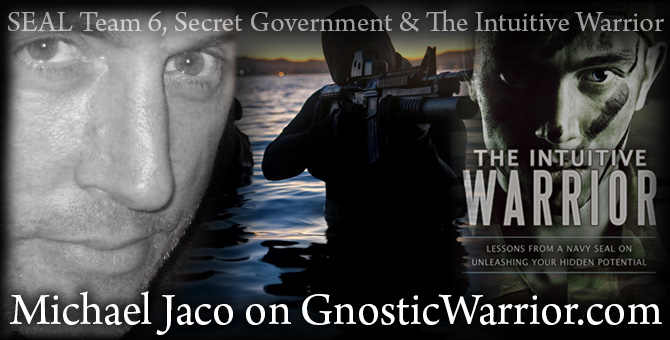
Michael was gracious enough to spend almost two hours with us in this interview, where he shares a lot of hidden insight into, not only how the Navy SEALs operate, but also the government, and his views on the secret hidden world we do not see. (more…)
Moe is the founder of GnosticWarrior.com. He is a father, husband, author, martial arts black belt, and an expert in Gnosticism, the occult, and esotericism.