by Moe | Aug 30, 2011 | Ecclesiastical History of England
AT that time, Naiton, King of the Picts, who inhabit the northern parts of Britain, taught by frequent meditation on the ecclesiastical writings, renounced the error whereby he and his nation had been holden till then, touching the observance of Easter, and brought himself and all his people to celebrate the catholic time of our Lord’s Resurrection. To the end that he might bring this to pass with the more ease and greater authority, he sought aid from the English, whom he knew to have long since framed their religion after the example of the holy Roman Apostolic Church. Accordingly, he sent messengers to the venerable Ceolfrid, abbot of the monastery of the blessed Apostles, Peter and Paul, which stands at the mouth of the river Wear, and near the river Tyne, at the place called Ingyruum, which he gloriously governed after Benedict, of whom we have before spoken; desiring, that he would send him a letter of exhortation, by the help of which he might the better confute those that presumed to keep Easter out of the due time; as also concerning the form and manner of tonsure whereby the clergy should be distinguished, notwithstanding that he himself had no small knowledge of these things. He also prayed to have master-builders sent him to build a church of stone in his nation after the Roman manner, promising to dedicate the same in honour of the blessed chief of the Apostles. Moreover, he and all his people, he said, would always follow the custom of the holy Roman Apostolic Church, in so far as men so distant from the speech and nation of the Romans could learn it. The most reverend Abbot Ceolfrid favourably receiving his godly desires and requests, sent the builders he desired, and likewise the following letter:
“To the most excellent lord, and glorious King Naiton, Abbot Ceolfrid, greeting in the Lord. We most readily and willingly endeavour, according to your desire, to make known to you the catholic observance of holy Easter, according to what we have learned of the Apostolic see, even as you, most devout king, in your godly zeal, have requested of us. For we know, that whensoever the lords of this world labour to learn, and to teach and to guard the truth, it is a gift of God to his Holy Church. For a certain profane writer has most truly said, that the world would be most happy if either kings were philosophers, or philosophers were kings. Now if a man of this world could judge truly of the philosophy of this world, and form a right choice concerning the state of this world, how much more is it to be desired, and most earnestly to be prayed for by such as are citizens of the heavenly country, and strangers and pilgrims in this world, that the more powerful any are in the world the more they may strive to hearken to the commands of Him who is the Supreme Judge, and by their example and authority may teach those that are committed to their charge, to keep the same, tqgether with themselves.
“There are then three rules given in the Sacred Writings, whereby the time of keeping Easter has been appointed for us and may in no wise be changed by any authority of man; two whereof are divinely established in the law of Moses; the third is added in the Gospel by reason of the Passion and Resurrection of our Lord. For the law enjoined, that the Passover should be kept in the first month of the year, and the third week of that month, that is, from the fifteenth day to the one-and- wentieth. It is added, by Apostolic institution, from the Gospel, that we are to wait for the Lord’s day in that third week, and to keep the beginning of the Paschal season on the same. Which threefold rule whosoever shall rightly observe, will never err in fixing the Paschal feast. But if you desire to be more plainly and fully informed in all these particulars, it is written in Exodus, where the people of Israel, being about to be delivered out of Egypt, are commanded to keep the first Passover, that the Lord spake unto Moses and Aaron, saying, ‘This month shall be unto you the beginning of months; it shall be the first month of the year to you. Speak ye unto all the congregation of Israel, saying, In the tenth day of this month they shall take to them every man a lamb, according to the house of their fathers, a lamb for an house.’ And a little after, ‘And ye shall keep it up until the fourteenth day of the same month; and the whole assembly of the congregation of Israel shall kill it in the evening.’ By which words it most plainly appears, that in the Paschal observance, though mention is made of the fourteenth day, yet it is not commanded that the Passover be kept on that day; but on the evening of the fourteenth day, that is, when the fifteenth moon, which is the beginning of the third week, appears in the sky, it is commanded that the lamb be killed; and that it was the night of the fifteenth moon, when the Egyptians were smitten and Israel was redeemed from long captivity. He says, ‘Seven days shall ye eat unleavened bread.’ By which words all the third week of that same first month is appointed to be a solemn feast. But lest we should think that those same seven days were to be reckoned from the fourteenth to the twentieth, He forthwith adds, ‘Even the first day ye shall put away leaven out of your houses; for whosoever eateth leavened bread, from the first day until the seventh day, that soul shall be cut off from Israel;’ and so on, till he says, ‘For in this selfsame day I will bring your army out of the land of Egypt.’
Moe is the founder of GnosticWarrior.com. He is a father, husband, author, martial arts black belt, and an expert in Gnosticism, the occult, and esotericism.
by Moe | Aug 30, 2011 | Ecclesiastical History of England
NOT long after, those monks also of the Scottish nation, who lived in the isle of Hii, with the other monasteries that were subject to them, were by the Lord’s doing brought to the canonical observance with regard to Easter, and the tonsure. For in the year of our Lord 716, when Osred was slain, and Coenred took upon him the government of the kingdom of the Northumbrians, the father and priest, Egbert, beloved of God, and worthy to be named with all honour, whom we have before often mentioned, came to them from Ireland, and was honourably and joyfully received. Being a most gracious teacher, and most devout in practising those things which he taught, and being willingly heard by all, by his pious and diligent exhortations, he converted them from that deep-rooted tradition of their fathers, of whom may be said those words of the Apostle, “That they had a zeal of God, but not according to knowledge.” He taught them to celebrate the principal solemnity after the catholic and apostolic manner, as has been said, wearing on their heads the figure of an unending crown. It is manifest that this came to pass by a wonderful dispensation of the Divine goodness; to the end, that the same nation which had willingly, and without grudging, taken heed to impart to the English people that learning which it had in the knowledge of God, should afterwards, by means of the English nation, be brought, in those things which it had not, to a perfect rule of life. Even as, contrarywise, the Britons, who would not reveal to the English the knowledge which they had of the Christian faith, now, when the English people believe, and are in all points instructed in the rule of the Catholic faith, still persist in their errors, halting and turned aside from the true path, expose their heads without a crown, and keep the Feast of Christ apart from the fellowship of the Church of Christ.
The monks of Hii, at the teaching of Egbert, adopted the catholic manner of conversation, under Abbot Dunchad, about eighty years after they had sent Bishop Aidan to preach to the English nation. The man of God, Egbert, remained thirteen years in the aforesaid island, which he had thus consecrated to Christ, as it were, by a new ray of the grace of fellowship and peace in the Church; and in the year of our Lord 729, in which Easter was celebrated on the 24th of April, when he had celebrated the solemnity of the Mass, in memory of the Resurrection of our Lord, that same day he departed to the Lord and thus finished, or rather never ceases endlessly to celebrate, with our Lord, and the Apostles, and the other citizens of heaven, the joy of that greatest festival, which he had begun with the brethren, whom he had converted to the grace of unity. And it was a wonderful dispensation of the Divine Providence, that the venerable man passed from this world to the Father, not only at Easter, but also when Easter was celebrated on that day, on which it had never been wont to be celebrated in those parts. The brethren rejoiced in the sure and catholic knowledge of the time of Easter, and were glad in that their father, by whom they had been brought into the right way, passing hence to the Lord should plead for them. He also gave thanks that he had so long continued in the flesh, till he saw his hearers accept and keep with him as Easter that day which they had ever before avoided. Thus the most reverend father being assured of their amendment, rejoiced to see the day of the Lord, and he saw it and was glad.
Next: Of the present state of the English nation, or of all Britain. [725-731 A.D.]
Index
Moe is the founder of GnosticWarrior.com. He is a father, husband, author, martial arts black belt, and an expert in Gnosticism, the occult, and esotericism.
by Moe | Aug 30, 2011 | Ecclesiastical History of England
IN the year of our Lord 725, being the seventh year of Osric, king of the Northumbrians, who had succeeded Coenred, Wictred, the son of Egbert, king of Kent, died on the 23rd of April, and left his three sons, Ethelbert, Eadbert, and Alric, heirs of that kingdom, which he had governed thirty-four years and a half. The next year Tobias, bishop of the church of Rochester, died, a most learned man, as has been said before; for he was disciple to those masters of blessed memory, Theodore, the archbishop, and Abbot Hadrian, wherefore, as has been said, besides having a great knowledge of letters both ecclesiastical and general, he learned both the Greek and Latin tongues to such perfection, that they were as well known and familiar to him as his native language. He was buried in the chapel of St. Paul the Apostle, which he had built within the church of St. Andrew for his own place of burial. After him Aldwulf took upon him the office of bishop, having been consecrated by Archbishop Bertwald.
In the year of our Lord 729, two comets appeared about the sun, to the great terror of the beholders. One of them went before the sun in the morning at his rising, the other followed him when he set in the evening, as it were presaging dire disaster to both east and west; or without doubt one was the forerunner of the day, and the other of the night, to signify that mortals were threatened with calamities at both times. They carried their flaming brands towards the north, as it were ready to kindle a conflagration. They appeared in January,, and continued nearly a fortnight. At which time a grievous blight fell upon Gaul, in that it was laid waste by the Saracens with cruel bloodshed; but not long after in that country they received the due reward of their Unbelief. In that year the holy man of God, Egbert, departed to the Lord, as has been said above, on Easter day; and immediately after Easter, that is, on the 9th of May, Osric, king of the Northumbrians, departed this life, after he had reigned eleven years, and appointed Ceolwulf, brother to Coenred who had reigned before him, his successor; the beginning and progress of whose reign have been so filled with many and great commotions and conflicts, that it cannot yet be known what is to be said concerning them, or what end they will have.
In the year of our Lord 731, Archbishop Bertwald died of old age, on the 13th of January, having held his see thirty-seven years, six months and fourteen days. In his stead, the same year, Tatwine, of the province of the Mercians, was made archbishop, having been a priest in the monastery called Briudun. He was consecrated in the city of Canterbury by the venerable men, Daniel, bishop of Winchester, Ingwald of London, Aldwin of Lichfield, and Aldwulf of Rochester, on Sunday, the 10th of June, being a man renowned for piety and wisdom, and of notable learning in Holy Scripture.
Thus at the present time, the bishops Tatwine and Aldwulf preside in the churches of Kent; Ingwald is bishop in the province of the East Saxons. In the province of the East Angles, the bishops are Aldbert and Hadulac; in the province of the West Saxons, Daniel and Forthere; in the province of the Mercians, Aldwin. Among those peoples who dwell beyond the river Severn to the westward, Walhstod is bishop; in the province of the Hwiccas, Wilfrid; in the province of Lindsey, Bishop Cynibert presides; the bishopric of the Isle of Wight belongs to Daniel, bishop of the city of Winchester. The province of the South Saxons, having now continued some years without a bishop, receives episcopal ministrations from the prelate of the West Saxons. All these provinces, and the other southern provinces, as far as the boundary formed by the river Humber, with their several kings, are subject to King Ethelbald.
But in the province of the Northumbrians, where King Ceolwulf reigns, four bishops now preside; Wilfrid in the church of York, Ethelwald in that of Lindisfarne, Acca in that of Hagustald, Pecthelm in that which is called the White House, which, as the number of the faithful has increased, has lately become an episcopal see, and has him for its first prelate. The Pictish people also at this time are at peace with the English nation, and rejoice in having their part in Catholic peace and truth with the universal Church. The Scots that inhabit Britain, content with their own territories, devise no plots nor hostilities against the English nation. The Britons, though they, for the most part, as a nation hate and oppose the English nation, and wrongfully, and from wicked lewdness, set themselves against the appointed Easter of the whole Catholic Church; yet, inasmuch as both Divine and human power withstand them, they can in neither purpose prevail as they desire; for though in part they are their own masters, yet part of them are brought under subjection to the English. In these favourable times of peace and calm, many of the Northumbrians, as well of the nobility as private persons, laying aside their weapons, and receiving the tonsure, desire rather both for themselves and their children to take upon them monastic vows, than to practise the pursuit of war. What will be the end hereof, the next age will see. This is for the present the state of all Britain; about two hundred and eighty-live years after the coming of the English into Britain, and in the 731st year of our Lord, in Whose kingdom that shall have no end let the earth rejoice; and Britain being one with them in the joy of His faith, let the multitude of isles be glad, and give thanks at the remembrance of His holiness.
Moe is the founder of GnosticWarrior.com. He is a father, husband, author, martial arts black belt, and an expert in Gnosticism, the occult, and esotericism.
by Moe | Aug 30, 2011 | Ecclesiastical History of England
I HAVE thought fit briefly to sum up those things which have been related at length under their particular dates, that they may be the better kept in memory.
In the sixtieth year before the Incarnation of our Lord, Caius Julius Caesar, first of the Romans invaded Britain, and was victorious, yet could not maintain the supreme power there. [I, 2.]
In the year of our Lord, 46, Claudius, being the second of the Romans who came to Britain, received the surrender of a great part of the island, and added the Orkney islands to the Roman empire. [I, 3.]
In the year of our Lord 167, Eleuther, being made bishop at Rome, governed the Church most gloriously fifteen years. To whom Lucius, king of Britain, sent a letter, asking to be made a Christian, and succeeded in obtaining his request. [I, 4.]
In the year of our Lord 189, Severus, being made emperor, reigned seventeen years; he fortified Britain with a rampart from sea to sea. [I, 5.]
In the year 381, Maximus, being made emperor in Britain, crossed over into Gaul, and slew Gratian. [I, 9.]
In the year 409, Rome was overthrown by the Goths, from which time the Romans ceased to rule in Britain. [I, 11.]
In the year 430, Palladius was sent by Pope Celestine to the Scots that believed in Christ to be their first bishop. [I, 13.]
In the year 449, Marcian being made emperor with Valentinian, reigned seven years; in whose time the English, being called in by the Britons, came into Britain. [I, 15.]
In the year 538, an eclipse of the sun came to pass on the 16th of February, from the first hour until the third.
In the year 540, an eclipse of the sun came to pass on the 20th of June, and the stars appeared during almost half an hour after the third hour of the day.
In the year 547, Ida began to reign; he was the founder of the royal family of the Northumbrians, and he reigned twelve years.
In the year 565, the priest, Columba, came out of Scotland, into Britain, to teach the Picts, and he built a monastery in the isle of Hii. [III, 4.]
In the year 596, Pope Gregory sent Augustine with monks into Britain, to preach the good tidings of the Word of God to the English nation. [I, 23.]
In the year 597, the aforesaid teachers arrived in Britain; being about the 150th year from the coming of the English into Britain. [I, 25.]
In the year 601, Pope Gregory sent the pall into Britain to Augustine, who was already made bishop; he sent also several ministers of the Word, among whom was Paulinus. [I, 29.]
In the year 603, a battle was fought at Degsastan. [I, 34.]
In the year 604, the East Saxons received the faith of Christ, under King Sabert, Mellitus being bishop. [II, 3.]
In the year 605, Gregory died. [II, 1.]
In the year 616, Ethelbert, king of Kent died. [II, 5.]
In the year 625, Paulinus was ordained bishop of the Northumbrians by Archbishop Justus. [II, 9.]
In the year 626, Eanfled, daughter of King Edwin, was baptized with twelve others, on the eve of Whit-Sunday. [lb.]
In the year 627, King Edwin was baptized, with his nation, at Easter. [II, 14.]
In the year 633, King Edwin being killed, Paulinus returned to Kent. [II, 20.]
In the year 640, Eadbald, king of Kent, died. [III, 8.]
In the year 642, King Oswald was slain. [III, 9.]
In the year 644, Paulinus, formerly bishop of York, but then of the city of Rochester, departed to the Lord. [III, 14.]
In the year 651, King Oswin was killed, and Bishop Aidan died. [Ibid.]
In the year 653, the Middle Angles, under their prince, Peada, were admitted to the mysteries of the faith. [III, 21.]
In the year 655 Penda was slain, and the Mercians became Christians. [III, 24.]
In the year 664, an eclipse came to pass; Earconbert, king of Kent, died; and Colman with the Scots returned to his people; a pestilence arose; Ceadda and Wilfrid were ordained bishops of the Northumbrians. [III, 26-28, IV, 1.]
Moe is the founder of GnosticWarrior.com. He is a father, husband, author, martial arts black belt, and an expert in Gnosticism, the occult, and esotericism.
by Moe | Aug 26, 2011 | Illustrations of Masonry
Illustrations of Masonry
by William Morgan
[1827]
Start Reading
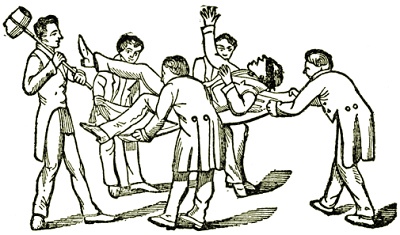
This book has a controversial backstory which is part of the mythology of anti-Freemasonry. ‘Captain’ William Morgan, the author, was a disappointed Freemason in Batavia, New York. Rejected by the local lodge, he announced that he was going to publish a work exposing Masonic rituals and secrets. Shortly before publication in 1826, he disappeared, and three Masons were later convicted of kidnapping him. Although claims were made that Morgan had been murdered, some say that he was forced to leave the US. Either way, it was good publicity for this book, which was published in 1827, but bad for the Masons. The incident led to widespread protests against Freemasons in the US, and eventually an anti-Masonic Party, which at its height in 1832 got seven electoral votes for William Wirt for President.
So why read this book? Stripped of the fevered historical background, and ignoring the publisher’s antimasonic introduction, this becomes simply one of the first published accounts of US Freemasonry in the early 19th century. It seems accurate, based on other published Monitors, such as Ducan’s. At this perspective, Illustrations is no more offensive than Robert’s Rules of Order, although it makes more interesting reading.
Production Notes: I have, as is the usual practice, silently cleaned up egregious punctuation errors in the text, particularly quotation marks. There were no obvious chapter breaks, so I have inserted file breaks at logical boundaries in the text. As usual, any text in small green type was added to the text by the transcriber.–J. B. Hare.
Title Page
Verso
Introduction
Illustrations of Masonry
Opening the Lodge
First Degree Initiation
Closing the Lodge
First Section of the Lecture on the First Degree
Second Section of the Lecture on the First Degree
Third Section of the Lecture on the First Degree
Second or Fellow Craft Degree Initiation
First Section of the Fellow Craft Mason Lecture
Second Section of the Fellow Craft Mason Lecture
Third, or Master Mason’s Degree
First Section of the Master Mason Lecture
Second Section of the Master Mason Lecture 1
Second Section of the Master Mason Lecture 2
Freemasonry at a Glance
Entered Apprentice Degree
Fellow Craft Degree
Master Mason’s Degree
Moe is the founder of GnosticWarrior.com. He is a father, husband, author, martial arts black belt, and an expert in Gnosticism, the occult, and esotericism.