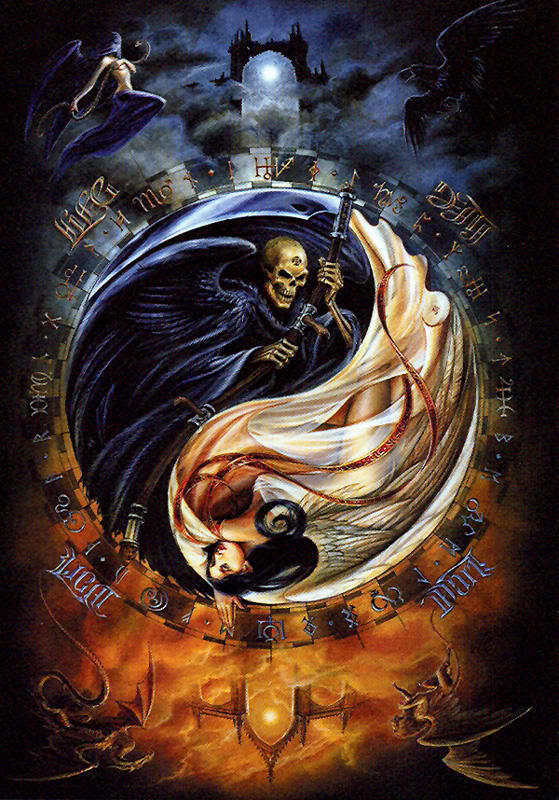
And Jesus asked him, saying, What is thy name? And he said. My name is Legion ; because we are many. (many devils were entered into him.)
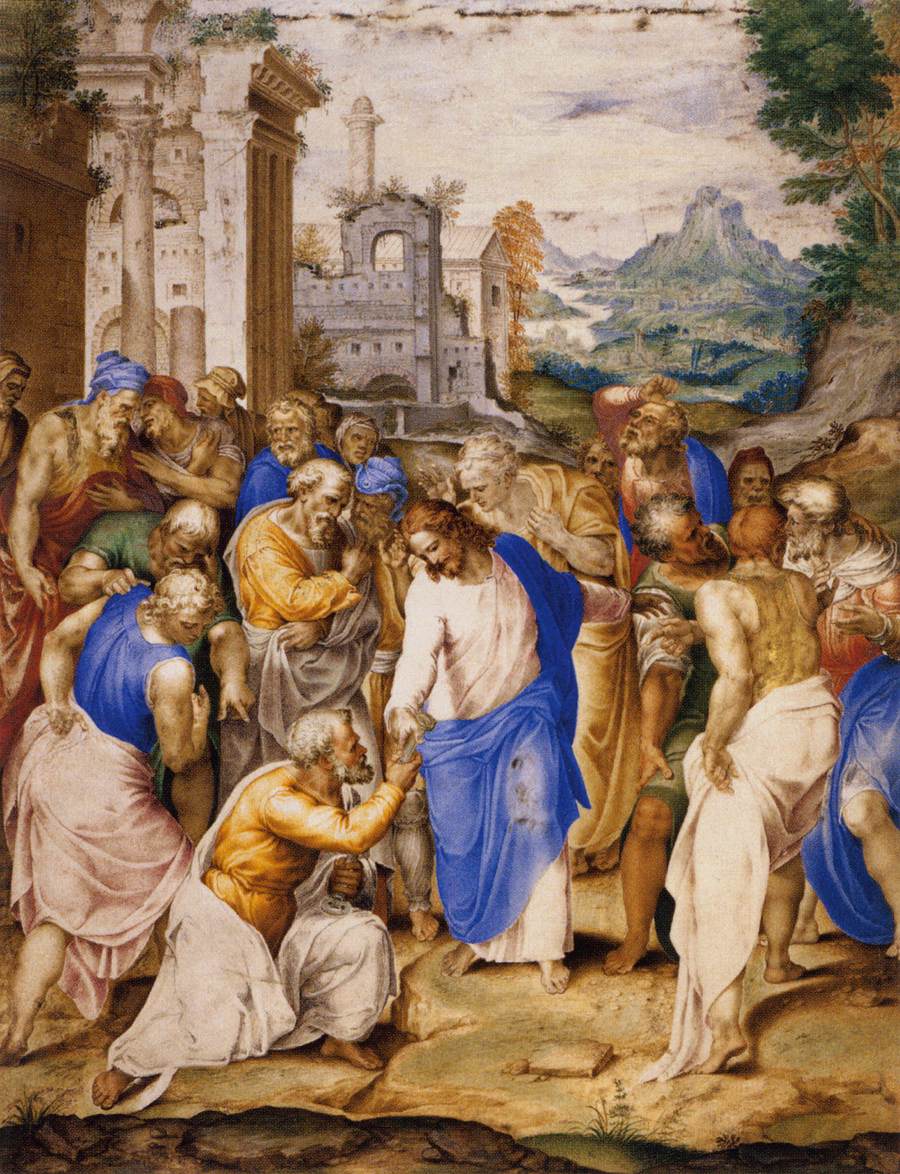
‘And he cured many that were sick of various diseases: and cast out many demons; and suffered not the demons to say that they knew him.” – Mark i. 34
Many bible interpreters and modern priests would say that the people Jesus had cured, were most likely crazy and/or mad lunatics. People who today, would be given medications or placed in mental hospitals.
The Father of medicine and a Koan from Kos, Hippocrates wrote a treatise on epilepsy and said, that these mental disorders, normally attributed to demons, was not more divine, or more sacred than other disorders; and that like other disorders, it was to be cured, not by charms, but by medicine.
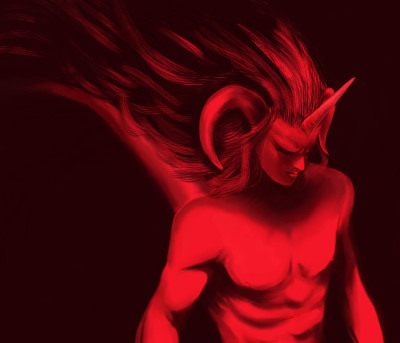
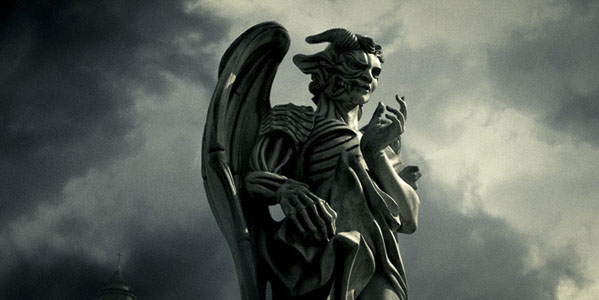
However, for many centuries it was said that many of these people were possessed by a legion of demons who would cause disorder and insanity. Demons who are said to have the power of entering into the bodies of any living man, and of tormenting them at will.
A legion is an army of men numbering in the thousands. Outside of Christianity, these demons are not all considered evil or bad.
Many ancient and current cultures from all around the world believe in both good and evil demons. Pagan priests had often attributed their divine inspiration to good demons. The ancient Jews had called them divine beings, and that they were the divine spirits of departed men who became demons. According to Plato, they hold a place in order between God and mortals.
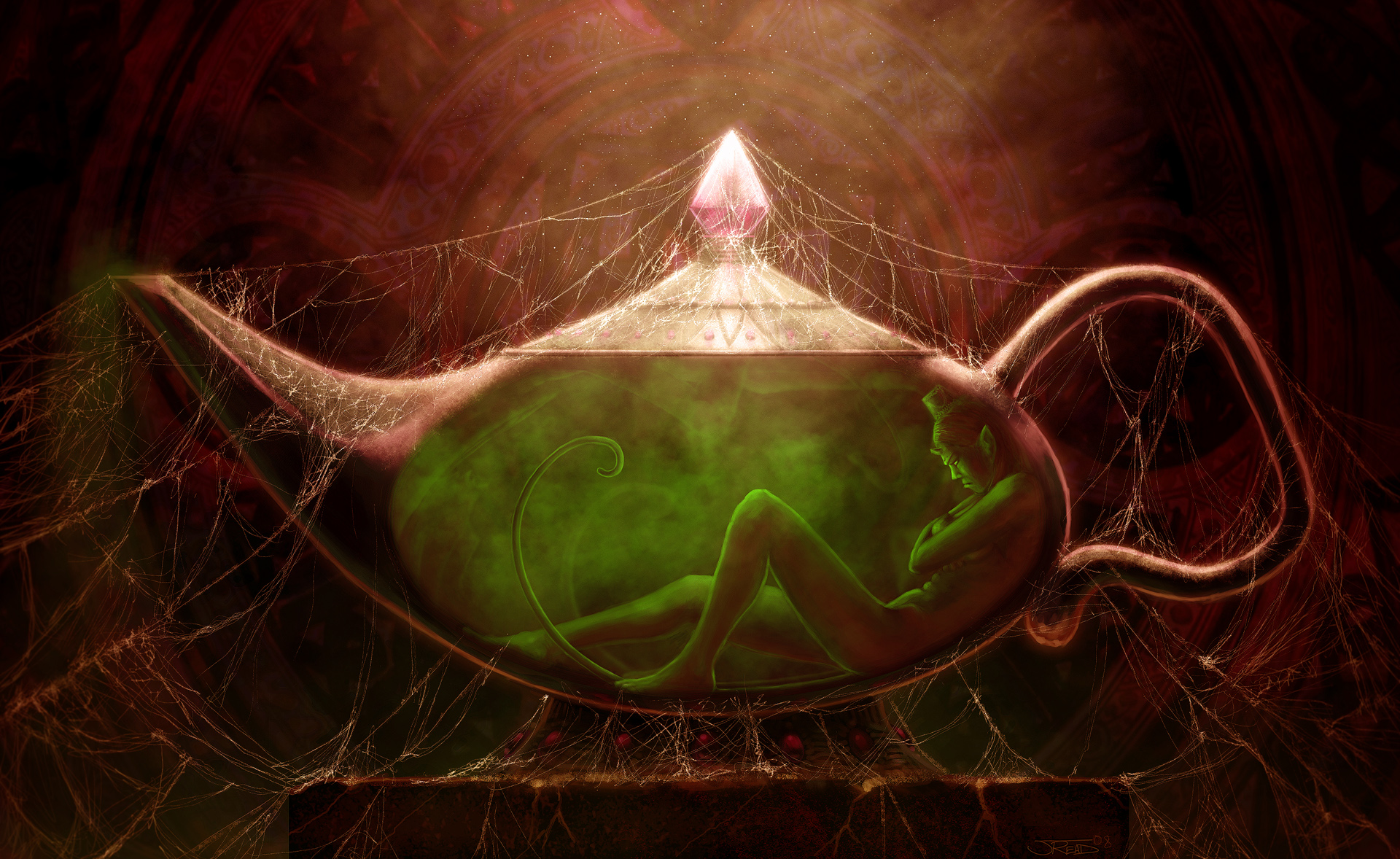
“These causes of our wickedness are derived from our parents, and from our constitutions, rather than from ourselves; for while we recoil from the works of our ancestors they are not idle.” – Plato
The 1st century Roman-Jewish historian and Roman advocate, Josephus had said, ”demons are the spirits of wicked men, who enter the living, and kill those who receive no help;” and again, “demoniacs are they, who are possessed by the spirits of wicked men.” The Jews believed that all demons, and Beelzebub, their prince, were in subjection of Samuel, the prince of the devils, or who is simply known today as Satan.
In the cult of Serapis, Beelzebul (Beelzeboul, Beelzebub, Beelsebab, Baalzebub or Ba’al) is prince of the Seraphim, just below Lucifer. The cult of Serapis had originated from the Greco-Egyptian priesthood under the Ptolemies. The testimony of Pausanias, says the temples of Serapis were the most famous at Alexandria, and the most ancient at Memphis. Tacitus, the Roman senator and historian had said that Serapis was worshipped as a type of universal deity that represented Jupiter, Osiris, Pluto, and sometimes Jupiter Ammon.
The Seraphim are six-winged beings that fly around the Throne of God crying “holy, holy, holy.” The seraphs hold 5th rank often in the Jewish angelic hierarchy and the highest rank in the Christian angelic hierarchy of angels that govern this current world. The various spellings of the Hebrew name Seraphs are the Greek Hellenized version of the Egyptian Osiris-Apis which is spelled Serapis, Sarapis (Σάραπις, Dorian Greek), Sor-apis (Σέραπις, Attic/Ionian Greek), Serapin (Greek Ὄφις), and the name ‘Seraphim’ being the plural form.
Francis of Assisi, also known as St. Francis, was considered by many people to be equal to Christ and to have possessed a great power of working miracles. He was the founder of the Cordeliers and Franciscans. He was also known as the Seraphic Father and Seraphic Saint because of a vision he saw on Mount Alverna where he witnessed a crucified seraph who perforated his feet, hands, and right side.
“If Satan Cast Out Satan, he his divided against himself. How then shall his kingdom stand?” (Matt. xii. 24. and seq)
“And the great dragon was thrown down, that ancient serpent, who is called the devil and Satan, the deceiver of the whole world—he was thrown down to the earth, and his angels were thrown down with him.” – Revelation 12:9
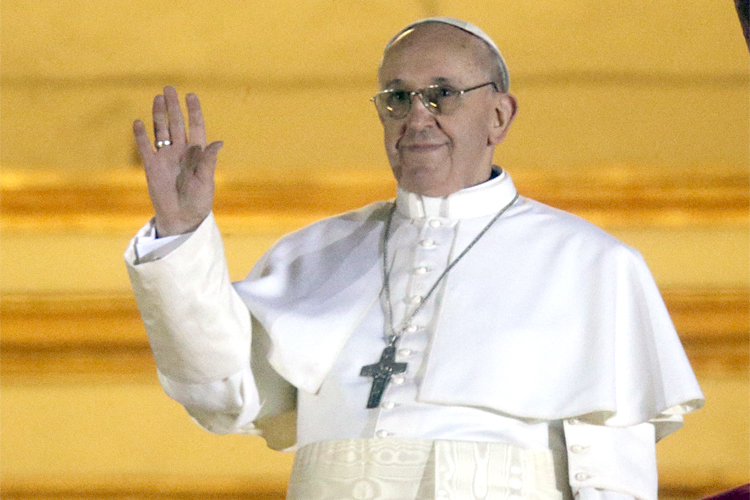
Just last year, Pope Francis had given a sermon in which he had reminded Catholics, “That Jesus fought the devil and you must too. All of these (people) were not possessed; they were mentally ill’. No! The presence of the devil is on the first page of the Bible, and the Bible ends as well with the presence of the devil, with the victory of God over the devil.”
There are some priests who, when they read this Gospel passage, this and others say: ‘But, Jesus healed a person with a mental illness’. They do not read this, no? It is true that at that time, they could confuse epilepsy with demonic possession; but it is also true that there was the devil! And we do not have the right to simplify the matter, as if to say: ‘All of these (people) were not possessed; they were mentally ill’. No! The presence of the devil is on the first page of the Bible, and the Bible ends as well with the presence of the devil, with the victory of God over the devil.
Do not confuse the truth. Jesus fights the devil: first criterion. Second criterion: he who is not with Jesus, is against Jesus. There are no attitudes in the middle. Third criterion: vigilance over our hearts because the devil is astute. He is never cast out forever. It will only be so on the last day.
“Then I saw an angel coming down from heaven, holding in his hand the key to the bottomless pit and a great chain. And he seized the dragon, that ancient serpent, who is the devil and Satan, and bound him for a thousand years, and threw him into the pit, and shut it and sealed it over him, so that he might not deceive the nations any longer, until the thousand years were ended. After that he must be released for a little while.” – Revelation 20:1-3
Moe is the founder of GnosticWarrior.com. He is a father, husband, author, martial arts black belt, and an expert in Gnosticism, the occult, and esotericism.
Like water, Neptune is recognized as a vitalizer and life-giver and in the ancient Mysteries was associated with the germinal agents. The fish, or spermatozoon, previous to its period of germination, was under his dominion. – Manly P. Hall
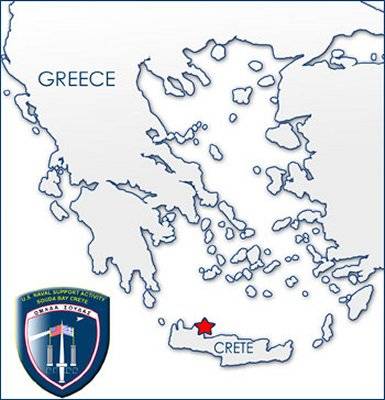
Neptune is God of the Sea to the “Sons of Neptune,” who are the great Initiates of the Sacred Isles of Crete. It is from this island, where we find the first true tales being told of sea-faring men, and who had formed the first navy under the leadership of the first law giving kings of the sea. A people known in myth and biblical stories, as the Minoans, Phoenicians, Curetes, Telchines, Philistines, Judeans, Greeks, the Sea Peoples, etc.
THE FIRST ORGANIZED NAVY
It is Neptune who is credited with building a Navy and inventing horsemanship. On July 23, there is a Roman Holiday called Neptunalia, that was made in honor of Neptune. When Neptune arrives on the lands he conquers, he not only arrives with his mighty navy, but also his hippocampus-like horses. Many Navy’s around the world still honor “King Neptune” in an ancient tradition of initiation called the “Line-crossing ceremony;”
an initiation rite, still current in many navies, coast guards, and merchant fleets. When ships cross the equator, “Pollywogs” (sailors who have not done such a crossing before) receive “subpoenas”to appear before Her Highness Amphitrite (often various dignitaries, who are all represented by the highest-ranking seamen). Some Pollywogs may be “interrogated” by King Neptune and his entourage. At the end of the ceremony — which in the past often included considerable hazing — they are initiated as Shellbacks or Sons of Neptune, and receive a certificate to that effect.
NEPTUNE AND THE NAVY OF CRETE
In the real Ancient world, the Cretans were well-known for their naval power, and as I mentioned above, they were called by names such as the Sea Peoples and the Philistines, which are two of the most documented sea faring tribes in history. The Ancient Egyptians had simply called them, the “Sea Peoples from Keftiu.” A Navy, who were mercenaries to Egyptian Pharaohs such as Ramesses II. The Sea Peoples are documented extensively in the reign of Ramesses III, who mentions them in the eastern Mediterranean. It was at this exact time, that we see the destruction of the Hittite states of Hatti, Ugarit, Ashkelon and Hazor. In the Medinet Habu temple reliefs, Ramesses’ details the attack of the Sea Peoples in lengthy inscriptions from the mortuary temple:
The foreign countries (ie. Sea Peoples) made a conspiracy in their islands, All at once the lands were removed and scattered in the fray. No land could stand before their arms: from Hatti, Qode, Carchemish, Arzawa and Alashiya on, being cut off [ie. destroyed] at one time. A camp was set up in Amurru. They desolated its people, and its land was like that which has never come into being. They were coming forward toward Egypt, while the flame was prepared before them. Their confederation was the Peleset, Tjeker, Shekelesh, Denyen and Weshesh, lands united. They laid their hands upon the land as far as the circuit of the earth, their hearts confident and trusting: “Our plans will succeed!”
In the Bible, Crete was also known under the old biblical name written in Greek, “Kaftor or Caphtor”; the Arabs had called it Kerith. The Greek historian, Pliny had said that the ancient Cretans were called Curetes, and that their king was Philistides (2). Hence, the Navy of the bible are the Sea Peoples, who were simply known as the biblical Philistines from Palestine. In other historical books as Pliny had mentioned, they were also called the Curetes (Kuretes, Kri’ti). Strabo had written, that these are the names of the various groups known as the Curetes, Corybantes, Dactyls, Cabiri, and Telchines, which are all names that are often used interchangeably with one another. The Latins would call them the Capadocians.
In ancient mythology, the Sea God Neptune is connected to the Island of Crete along with his brother, who happens to be the King of the Gods, Jupiter. Together they do battle against the Titans. Titan is known today as Saturn VI, and is the largest moon of Saturn. The largest moon of the planet Neptune has been given the name Triton, as Neptune is the Roman equivalent of Poseidon. Saturn’s largest moon Titan is one of several candidates for possible future colonization of the outer Solar System.(Wikipedia)
It was the King Jupiter who had deposed his father Saturn from the government of the universe and divided it into three portions, assigning the ocean to Neptune, the infernal regions to his brother Pluto, and retaining heaven and earth for himself. Together they accomplish enormous feats such as the building of the walls of Troy, the taming of the horse, the raising of the island Delos (Kos and now Dia) out of the sea, and the destruction of Hippolytus by a monster from the deep. Neptune’s symbol is the trident. The sons of Neptune were Triton, Phoresis, Proteus and Glaucus. The wife of Neptune was a sea nymph by the name of Amphitrite, a daughter of Nereus.
According to Hesiod‘s Theogony, Triton dwelt with his parents in a golden palace in the depths of the sea; Homer places his seat in the waters off Aegae. The story of the Argonauts places his home on the coast of Libya and rationalized by Diodorus Siculus as “then ruler over Libya.” Triton was the father of Pallas and foster parent to the goddess Athena. Pallas was killed by Athena during a fight between the two goddesses. Triton is also sometimes cited as the father of Scylla by Lamia. Triton can sometimes be multiplied into a host of Tritones, daimones of the sea.(Wikipedia)
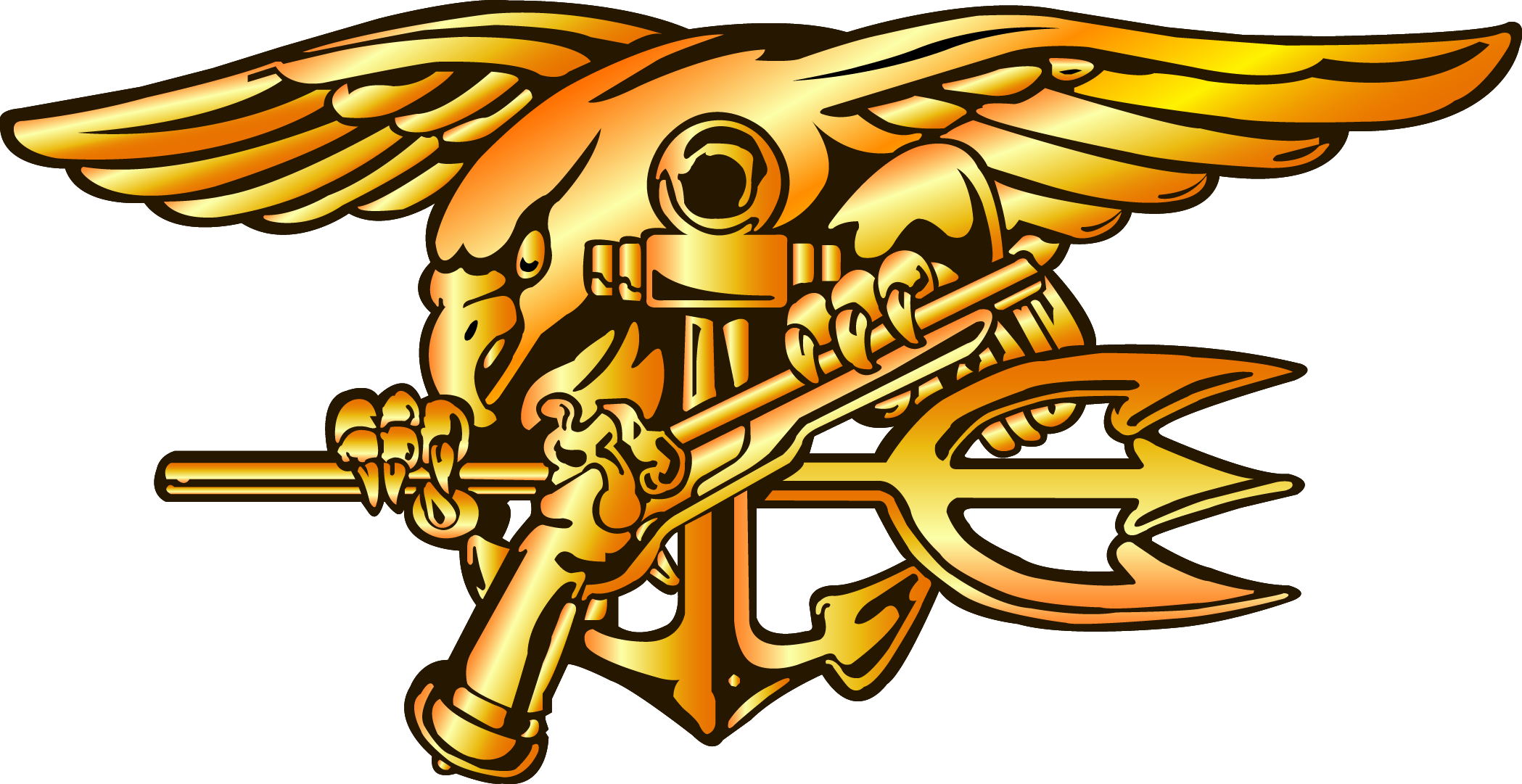
The mighty Tritons were a race of sea gods and goddesses born from Triton. Over time, Triton’s class and image came to be associated with a class of mermaid-like creatures, the Tritons (Τρίτωνες), which could be male or female, and usually formed the escort of marine divinities whose upper parts were human, and whose lower parts resembled fish. This part man and part fish we can surely witness today in the US Navy with their elite unit of God Men of the Sea, known to us as the Navy SEALS. These are the Triton’s of the modern world whose symbol is the Trident.
Neptune had caused earthquakes and deluges with his mighty trident. According to Hesiod, Oceanus was one of the Titans who was considered the ruler of the exterior waters encompassing the earth, and interior seas and rivers were assigned to Neptune.
Let us not forget what happened to the mythological island of Atlantis.
MODERN CONNECTIONS
These connections we can research today with the help of the famous 20th century French oceanic explorer, Jacque Cousteau who had also searched for the Lost Island of Atlantis in the year 1980. It was at this time, that he and his team had explored the islands of Crete looking for signs of the sunken Atlantis. Not only did they find many signs there, they had also found a virtual sunken city, a port, boats, treasures and mysterious walls that may someday verify that Crete and its surrounding islands such as Dia (Kos), may in fact be the true location known as the mythological Atlantis.
I wrote about this connection before in my article, Dragon Isle: The Kohen of the Lost Island of Dia. This evidence from Jacques Cousteau proves that people not only had inhabited the island of Kos (now known as Dia), but that it was also a major center and/or port at one time. In an old article in the Radio Times, Cousteau stated that the Minoan Port of Dia had once been active. He had claimed, that on Dia was the biggest and most important ports in the whole island of Crete. Here is the part of the official explanation of the discoveries that Jacques Cousteau had made when he had explored there:
The Undersea discoveries of Jacques Yves Cousteau in 1974-5, while searching for the lost Atlantis between Crete and Santorini, with a special bathyscape, are of great ecological and archeological interest, as seven wrecks were found on Dia. In 1976, Cousteau discovered some squared and rectangular rocks in the seabed that made up an artificial breakwater, which researchers named Cyclopean Walls. Cousteau suggested that there stood one of the biggest and most important ports in the whole island of Crete. The harbour appeared to have sunk due to the destruction caused in the 1450 BC volcano of Santorini. However, the port was later found to be much older, thus research became more complicated.
Today, the only visitors to the island would be a priest from Crete who performs mass on Dia (Kos) just once a year, but for the most part, the island is uninhabited except for a few protected animals. Please watch this video below at right around the 17 minute marker, to witness the section of film where Cousteau goes into Crete and his exploration of the Island of Dia (Kos).
The whole island is also covered with many ancient structures, evidence and ruins such as the location of ancient city of Knōsos that support these facts. Many Roman Emperors had ancestors who were Cretans or strong political connections. When Rome had conquered the Cretans and Kohens of Kos, Augustus Caesar had a city named after him called Caesaria, and later Constantine the Great had a retirement home there, where he had also died on Crete. The Jewish-Roman historian, Joesephus had married a royal Cretan woman as his fouth wife. For thousands of years, these islands were simply some of the most important political locations that you will find in all of written history.
It is from this sacred Holy Island of Crete, where the King Neptune was the great master of the seas with Zeus and his family. Zeus is the king of the gods and a mythological name for the planet Jupiter. Hence, AS ABOVE, SO BELOW. This relation with Neptune and Jupiter is explained by 33rd degree Freemason, Manly P. Hall in his “Lectures on Ancient Philosophy;”
A few words at this time concerning the symbolism of Neptune. While Neptune is popularly associated with the sea, he occultly signifies the albuminous part of the great egg of Jupiter. In certain schools of Orphic mysticism, the inferior universe (like the supreme, all-inclosing sphere) is symbolized by an egg. This lesser egg has Jupiter for a yolk, Neptune for the albumen, and Pluto for the shell. It is therefore evident that Neptune is not associated with the physical element of water but rather with the electrical fluids permeating the entire solar system. He is also associated with the astral world, a sphere of fluidic essences and part of the mirror of Maya, the illusion. As the connective between Jupiter and Pluto, Neptune represents a certain phase of material intellect which, like the element of water, is very changeable and inconstant. Like water, Neptune is recognized as a vitalizer and life-giver and in the ancient Mysteries was associated with the germinal agents. The fish, or spermatozoon, previous to its period of germination, was under his dominion.
Moe is the founder of GnosticWarrior.com. He is a father, husband, author, martial arts black belt, and an expert in Gnosticism, the occult, and esotericism.
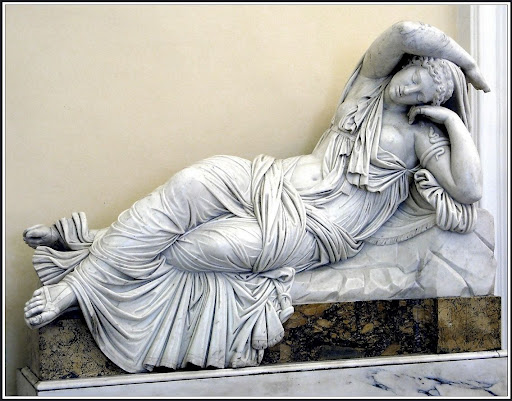
In the Vatican sits a beautiful Parian marble sculpture of a goddess who has a bracelet on the upper part of her left arm in the form of a serpent; called by the ancients, Ophis. The word ophis, is Greek for serpent. The name of the goddess is Ariadne who was originally worshipped on the holy island of Crete. She was the daughter of the famous law giver of Crete, King Minos; today she is known as the VaticanSleeping Ariadne, long called Cleopatra.
Ariadne was seduced by the mythical founder-king of Athens, son of Aegeus and Poseidon, Theseus who was sent to Crete in order to destroy the Minotaur bull. When Theseus arrived in Crete, with the help of Aphrodite; Ariadne had fallen deeply in love with Theseus and offered to help him out of the labyrinth, if he had agreed to marry her and take her back with him to Athens. In return for his promise of marriage, she gave him a ball of thread to help him find his way out of the labyrinth.
She was originally the “Mistress of the Labyrinth“, both a winding dance-ground and in the Greek view a prison with the dreaded Minotaur at its centre. Kerenyi notes a Linear B inscription from Knossos, “to all the gods, honey… to the mistress of the labyrinth honey” in equal amounts, suggesting to him that the Mistress of the Labyrinth was a Great Goddess in her own right. Professor Barry Powell has suggested she was Minoan Crete’s Snake Goddess.(Wikipedia)
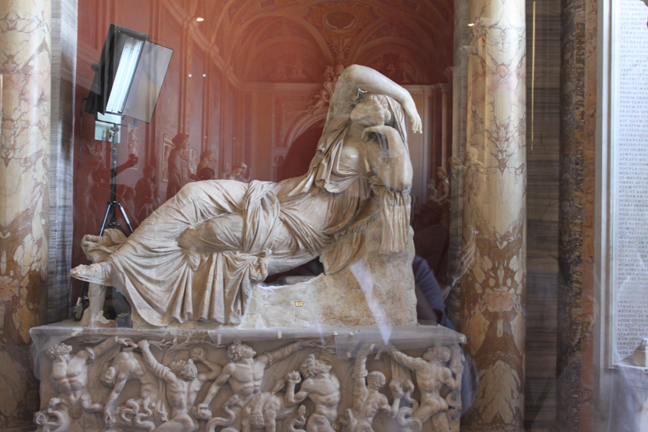
The colossal statue of Ariadne located in the Vatican was made in approximately 100 AD, during the reign and empire of the Roman Emperor, Hadrian. She is shown sleeping on the rocks of Naxos, where she had been left by Theseus after she had assisted him in freeing himself from the labyrinth of Crete, in which he had been imprisoned. Eventually she married the god Dionysus or Bachhus.
In the image below of the original statue, Ariadne lies there asleep in the Vatican; below her there are various daemons and serpents (Ophites), who are fallen or chained angels attempting to redeem themselves to a godlike status in order to reach heaven again. (1)
SOURCES:
1. A general and bibliographical dictionary of the fine arts By James Elmes
Moe is the founder of GnosticWarrior.com. He is a father, husband, author, martial arts black belt, and an expert in Gnosticism, the occult, and esotericism.
There are some priests who, when they read this Gospel passage, this and others say: ‘But, Jesus healed a person with a mental illness’. They do not read this, no? It is true that at that time, they could confuse epilepsy with demonic possession; but it is also true that there was the devil! And we do not have the right to simplify the matter, as if to say: ‘All of these (people) were not possessed; they were mentally ill’. No! The presence of the devil is on the first page of the Bible, and the Bible ends as well with the presence of the devil, with the victory of God over the devil.
Do not confuse the truth. Jesus fights the devil: first criterion. Second criterion: he who is not with Jesus, is against Jesus. There are no attitudes in the middle. Third criterion: vigilance over our hearts because the devil is astute. He is never cast out forever. It will only be so on the last day.
WHO IS THIS DEVIL AND ARE DEMONS REAL?
“Are they real, or are these papal claims just religious dogmas perpetuated in order to keep fear in the minds of the billion people who are members of the Catholic Church?”
The religious facts, are that the name of the devil has brought fear and mayhem into the minds of the people ever since it has been written and that this head prince of the demons had fallen when he turned his face away from God. To live, is to spell evil backwards and to be a devil, is to spell the word lived backwards. Hence, we live in a world that has been magically turned upside down, where there is a war for your soul here, and the never-ending spiritual warfare for our minds is a reality that many of us chained souls have come to know intimately.
To some people, the Devil is an invented character by the church, just like Jesus, who they say that his teachings were simply part of a secret Roman government plan that was hell-bent on subjugating the people they had conquered and their minds via religious dogmas. To other people who are more educated on these spiritual matters such as the early Church Fathers and some of the world’s best authorities on the occult, the devil and his legions of demons are as real as Jesus and the Pope.
In the Gospel of Luke, he explains who these demons are and who is their prince;
When Jesus had driven out a demon, some of the crowd said: “By the power of Beelzebul, the prince of demons, he drives out demons.” Others, to test him, asked him for a sign from heaven. But he knew their thoughts and said to them, “Every kingdom divided against itself will be laid waste and house will fall against house. And if Satan is divided against himself, how will his kingdom stand? For you say that it is by Beelzebul that I drive out demons. If I, then, drive out demons by Beelzebul, by whom do your own people drive them out? Therefore they will be your judges.
WHO WAS THE GREEK JEWISH DEMON BAALZEBUL THAT CATHOLICS CALL THE DEVIL OR SATAN?
In the cult of Serapis, Beelzebul (Beelzeboul, Beelzebub, Beelsebab, Baalzebub or Ba’al) is prince of the Seraphim, just below Lucifer. The cult of Serapis had originated from the Greco-Egyptian priesthood under the Ptolemies. The testimony of Pausanias, says the temples of Serapis were the most famous at Alexandria, and the most ancient at Memphis. Tacitus, the Roman senator and historian had said that Serapis was worshipped as a type of universal deity that represented Jupiter, Osiris, Pluto, and sometimes Jupiter Ammon.
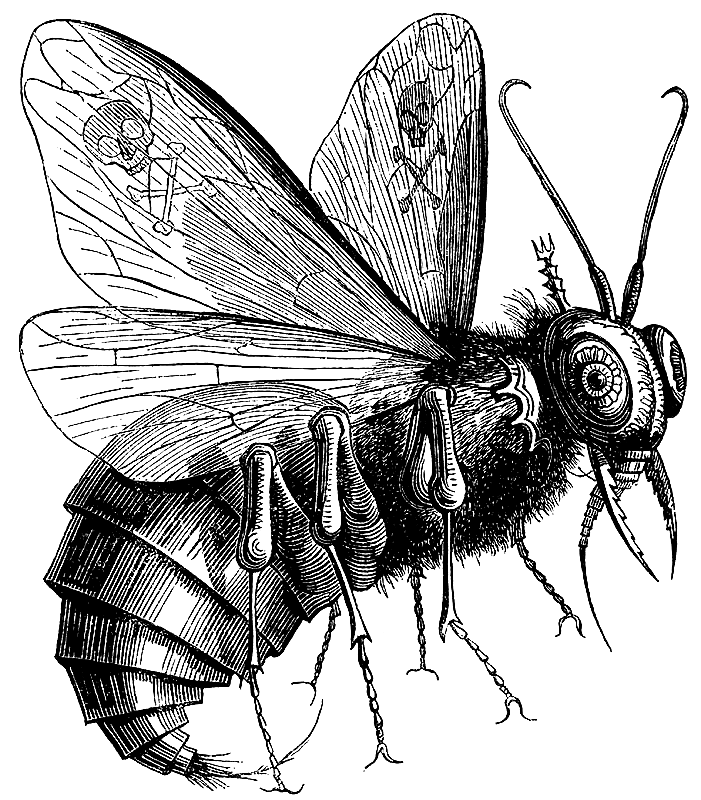
The name Beelzebul is a corruption of the Phoenician God ‘Ba’al’ (usually pronounced “bail”) and is mentioned in the Old Testament as the pagan idol of the Phoenicians, Ethiopians, Syrians and Greeks who had often worshiped Ba’al in conjunction with the fertility and war-goddess, Ashtaroth. The meaning of the term ‘Baal’, in both Gaelic and in Phoenician is – “the lord of heaven or lord of souls.” The plural of Baal is Baalim, or Baals (Judges 2:11, 10:10). Baalzebub or Beelzebul (bee-EL-ze-bull) is mentioned 2 Kings i, 2, and the name Beelzebul signifies the Lord of the Flies (which originally meant “Lord of everything that flies”), King of the Earth, and the Prince Daimon who is said to be the chief of spirits amongst the Jews.
Since only priests were allowed to utter his divine name, Hadad, Ba‛al was commonly used and few, if any Biblical uses of “Baʿal” refer to Hadad, the lord over the assembly of gods on the holy mount of Heaven. This is evident in the name Baal or Baalzebub becoming the corruption of Beelzebul, that is only found in the bible via the texts of the Acts of Pilate (also known as the Gospel of Nicodemus) and vary in whether they use Beelzebul or Beelzebub. The name is used by Hades as a secondary name for the Devil, but it may vary with each translation of the text; other versions give the name Beelzebub as Beelzebub, but separates him from the devil. The Gospel of Nicodemus is in two sections, with an appendix, Descensus ad Infernos—the Harrowing of Hell—that does not exist in the Greek texts, and is a later addition to the Latin versions. (Wikipedia)
Many Bible scholars translate the name David as Beloved, but the Hebrew root (dwd) that yields (dod), meaning beloved in general or uncle more specifically; King David’s most beloved son, Solomon. By the side of King Hadad, stood his son Ben-Hadad. In ancient Syrian, Hebrew and Arabic, Ben means son. It is the kings of Edom (Gen. xxxvi. 35) who were called “Hadad, the son of Bedad,” or Ben-[Ha]dad who are also known to us now as the Priests of Baal, serpents, dragons, wise ones, Giants, and the Nephilim who are the Sons of God that became the fallen ones.
Lucifer is another word for the Greek word, Phosphorus (Greek Φωσφόρος Phōsphoros), a name meaning “Light-Bringer” and the Morning Star. Baal, along with Lucifer and Leviathan, were the first three angels to fall, and Baal tempts men with pride and is opposed by St. Francis of Assisi. (Wikipedia) St. Francis was the founder of the Cordeliers and Franciscans. He was also known as the Seraphic Father and Seraphic Saint because of a vision he saw on Mount Alverna where he witnessed a crucified seraph who perforated his feet, hands, and right side. In the New Testament, Baal is identified as the Devil, “prince of the demons” and in Catholic demonology, is one of the seven princes of Hell according to Catholic views on Hell.(Wikipedia)
ARE DEMONS, SERPENTS AND DRAGONS EVIL?
The Greek word daimon does not carry the negative connotation as it does today with Catholics and Christians. This is explained by 33rd Degree Freemason, Master Rosicrucian and author, Manly P. Hall who had written in “The Secret Teachings of all Ages,” that the Christian Church had literally taken these elemental entities or angels and grouped them together under the title of demon, and that for to the average mind the word demon means an evil thing.
The Christian Church gathered all the elemental entities together under the title of demon. This is a misnomer with far-reaching consequences, for to the average mind the word demon means an evil thing, and the Nature spirits are essentially no more malevolent than are the minerals, plants, and animals. Many of the early Church Fathers asserted that they had met and debated with the elementals.
The Serpent was venerated for thousands of years in ancient Egypt, Phoenicia, Ethiopia, Greece and many other places around the world as an emblem of divinity, an oracle, and as a god. The Greeks called Apollo also by the name of Python, which is rendered the same as Ophis, Opis, Oupis, and Oub. Ophis represents divine Wisdom (Blavatsky). Apollo and Ophis were the sons of Zeus who is the god of light and the sun, truth and prophecy, healing, plague, music, poetry, and more. This Serpent-worship or what the church would call devil worship, had continued amongst the Samaritans in the West and in Europe, and with the Druids in Ireland, Scotland and Britain. The Masters of Wisdom, and all Initiates into the Sacred Mysteries are called Nagas, or Serpents of Wisdom . These Gnostic Serpent Priests of Wisdom from the East had went under various names such as the Ophites, and the Hivites who later became known as the Levites; all these names signify serpent. The Ophites were said to attribute all wisdom to the serpent, who was also the author of knowledge to men.
The biblical legend of the serpent is derived from Greek legends where one of the first Titans, Ophis; meaning serpent, and who ruled over Olympus with his queen; Eurynome was dethroned by the God of chaos and darkness, Cronus (Saturn or Satan) and the goddess of fertility and war, Rhea (Saturn’s Moon). In Greek mythology, Olympus was the home of the Twelve Olympian gods of the ancient Greek world. It formed itself after the gods defeated the Titans in the Titan War, and soon the palace was inhabited by the gods.
To the Phoenicians, Ethiopians, Syrians and Greeks who are the Jews of the Old Testament, Baal was their chief daimon (daemon or demon) or simply, their God. Ba’al would be the equivalent to Jesus in the New Testament, but Ba’al is the race or ancestor God of who we call today the Jewish people of the Old Testament and Jesus would be the new chosen son or messiah, Augustus Caesar with his blood to commemorate as the cornerstone of the newly built Roman Empire, and who under Roman and Cannon Law via the new law of the New Testament would abolish all old gods and teachings of the Old Testament.
From this point forward, Ba’al becomes the devil, their angels become evil ugly demons, and the people called the Phoenicians, Ethiopians, Syrians and Greeks, along with their religion become Jews. This spiritual event at the turn of the millenia marks the great dividing point between the Old Law under the Greek Ptolemy’s of the Old Testament and the New Law under the Caesars and Rome. Hence, Rome against the world and old spirit world via Vatican magic of the pen and backed by the sword of the Roman Army.
As I mentioned above, Baal is prince of the Seraphim just below Lucifer. The name ‘seraphim’ is the plural form of serpent and is also said to mean, “the burning ones.” Seraphs appear in the 2nd century BC Book of Enoch, where they are designated as drakones (δράκονες “serpents”) and are mentioned in conjunction with cherubs as the heavenly creatures standing nearest to the throne of God. Serapis is the Hellenized version of the Egyptian Osiris-Apis. The various spellings of the name Serapis are Sor-apis (Σέραπις, Attic/Ionian Greek), Sarapis (Σάραπις, Dorian Greek), Serapin (Greek Ὄφις), or in Hebrew Seraph.
Please also note that the great dragon, devil or diabolos is a drakones (δράκονες “serpent”), and is a heavenly creature standing nearest to the throne of God. All these names mean ‘serpent’ which is the symbol of wisdom, knowledge and Gnosis. Hence, the battle against the serpent or the Great Dragon is the battle of the Roman Church against knowledge and Gnosis.
It is the Old Serpent of the Genesis. Since the church was opposed to the serpent who brought this Gnosis and knowledge to men to make them wise, they had symbolically crucified the prince of the Seraphim, Jesus at Golgotha, the place of the skull, in order for the church to take the place of wisdom and the serpent and in which they would become the vicars of Christ. Therefor, Baal becomes Satan or the Old Serpent under Roman Catholic Church Law via the New Testament. A church that was simply against the religion and angels or Daimons (Demons) of the Ancient Greek Jews who had committed the sins of propagating wisdom and Gnosis, and for good reason.
But as Pope Francis says, “the devil is astute. He is never cast out forever. It will only be so on the last day.”
“Vigilance, because his strategy is this: ‘You became Christian. Advance in your faith. I will leave you. I will leave you tranquil. But then when you are used to not being so watchful and you feel secure, I will come back’. The Gospel today begins with the devil being cast out and ends with the devil coming back! St. Peter would say: ‘It is like a fierce lion that circles us’. It is like that.”
‘But, Father, you are a little ancient. You are frightening us with these things’. No, not me! It is the Gospel! And these are not lies: it is the Word of the Lord! Let us ask the Lord for the grace to take these things seriously. He came to fight for our salvation. He won against the devil! Please, let us not do business with the devil! He seeks to return home, to take possession of us. Do not relativize; be vigilant! And always with Jesus!”
Moe is the founder of GnosticWarrior.com. He is a father, husband, author, martial arts black belt, and an expert in Gnosticism, the occult, and esotericism.
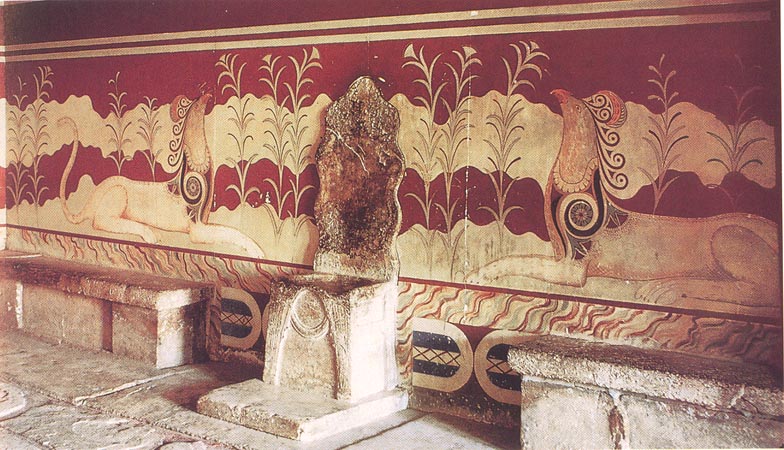
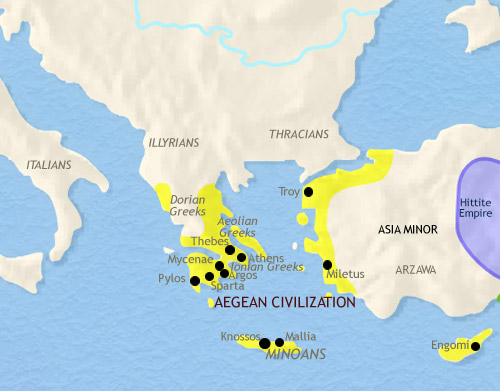
The city of Knossos on the island of Crete, Greece has a deep history in helping create modern civilization, that many people are unaware of. The history I speak of goes back to approximately 1600 B.C. and had flourished until approximately 70 A.D. This is the time when I believe, that their old culture and religion was destroyed in the great Judean rebellion and siege of Jerusalem by the new comers on the world scene and who happened to be their Italian cousins, the Romans.
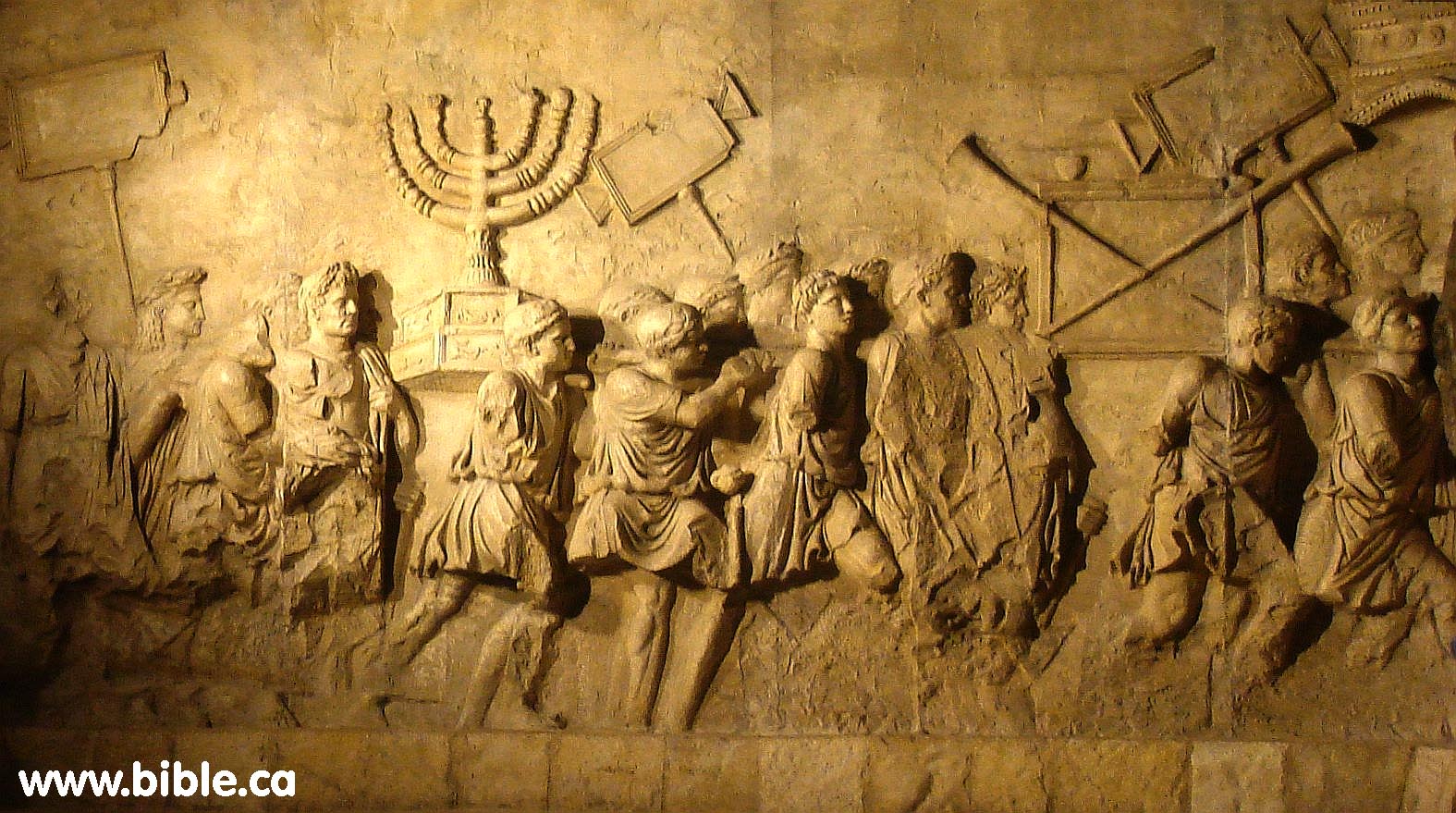
The destruction of the ancient Palace Temple (the Second Temple), the royal archives, and the entire city of Knossos had come at the orders of Roman Emperor, Nero who had sent Vespasian and his son Titus to Judea in order to subdue the Jewish nation in a massive invasion of the Holy Island of Crete in the year 67 A.D. Titus had served under his father on the island of Crete in the kingdom of Judaea (Greco-Egypt) during the First Jewish-Roman War. For winning this historic holy battle for the Romans, Titus would later become known as Saint Titus,Bishop of Crete and companion to the Apostle Paul.
The greatest of ancient Greek epic poets, Homer had written in his most famous works, the Iliad and the Odyssey, that the city of Knossos is mentioned along with Phaestos as having magnificent temples. But it is the city of Knossos that he clearly identifies as the most dominant city of a rich and populous land. Homer had called it, “Broad Knossos,” in which he tells us of the maze. In later times, archeologist, Sir Arthur Evans in the late 19th century would excavate the Temple at Knossos and change the name to the Minoans; he called the maze, the Labyrinth of the Minotaur Bull. Homer in the Odyssey sang: “One of the great islands of the world In midsea, in the wine-dark sea, is Crete, spacious and rich and populous.”(Hom. Od. XIX, 172ff). He also mentions, that rituals were held for the goddess Ilythyia in the cave of Amnisos.
Homer describes this period in history as an age that is called the “prehistoric period of Europe.” The Ages of the Old Law under the Old Testament before those of the Roman Catholic Church and the New Testament, in which the new law and religious customs of the 6th Age were born under the leadership of the first Roman Pope, Augustus Caesar. Hence, the law of Caesar. King Lucius, 2nd-century King of the Britons traditionally credited with introducing Christianity into Britain has said, “superior papal authority and dominion is derived from the law of the Caesars.”
Both the Iliad and the Odyssey were highly venerated ancient books by the Greeks that became, what I believe are the historical blue prints that would help shape the writings of the bible. If you study this history that runs parallel to biblical history, you will discover that the city and palaces of Knossos on Crete appear to be the main administration centers for the Jews in the bible. This same location of the great palace of Knossos may actually be allegorically known in the bible as the “Second Temple of Solomon”; the city of Knossos would be known as the “City of David,”AKA the “City of Jerusalem” that was eventually destroyed by the Romans who were led by the Emperor Titus. This makes perfect reasonable sense, since both historical evidence and archeological science verifies the city of Knossos was the birthplace, to not only modern civilization, but it was also the home of many Cretan Kings, royal Jewish families and the first Fathers and Saints of the Catholic Church.
I have found connections that also tie ancient Crete to ancient Judea and the Judaeans. The Cretans were called back then, the ‘Idaeans’ and according to Homer, one of their rulers was known as ‘Idomensus,’ the grandson of the ruler of Knossos. Idomensus was said to have fought side by side with the Achaeans against the Trojans in the Trojan War. The children of Idomensus were, whom Homer had called the royal and warlike ‘Idomen,‘ and who we would know of today as the Judeans (Idaeans, Tribe of Judah).
They were named after the mountain on Crete called Mount Ida where their God Zeus was hidden in a cave by his mother, the GreekTitanessRhea who then placed the infant Zeus in the care of the priesthood of the Curetes (Kuretes). These priests Strabo had written, were also known as the Corybantes, Dactyls, Cabiri, and Telchines which are names that are often used interchangeably with one another. This cave of Zeus sits just above the Plain of Nida on Mount Ida, to the southwest of Knossos. The mother of Zeus was also known in Latin as “Mater Idaea (Idaean Mother).” The name Mount Ida is where the Tribe of Judah had received their name, “the ‘Idaeans,” which is just an earlier spelling of the Judaeans. The reason for this spelling, is because at the time the letter ‘j’ was simply not used.
The Tribe of Judah is where we get the word Jew which is a derivative of the word Judah, referring to a descendant of the Kingdom of Judah, and a Jew was a word that the Romans had used in propaganda to apply to the followers of the old religions and pagan rites of their ancestors that had conflicted with the state approved Roman religion. The Biblical Judah (in Hebrew: Yehuda) is the original name of the Tribe of Judah, which is traditionally symbolized by a lion. (Wikipedia) In a previous article I had written, The First Jews of Crete, I had detailed some of my research into the Crete, Judaea and Jerusalem connections and where many of the world’s greatest historians call these people from Crete, the Idaeans.
Roman Senator and historian, Cornelius Tacitus (110 A.D.) had written that the Jews often traveled to Crete to celebrate the festival of Pentecost in Jerusalem and that they eventually were exiled from the island when Saturn was driven from his throne by the violence of Jupiter. The Cretans are called Idaeans, and then Judieans who eventually became fugitives from the island and who then settled on the nearest coast of Africa in the remotest corner of Libya. In, The Works of Tacitus, he explains the relationship with Crete, the Jewish people and the exodus from the island of Crete to the coast of Africa in Libya.
The Jews, we are told, escaping from the island of Crete, at the time when Saturn was driven from his throne by the violence of Jupiter, settled in the extreme parts of Libya. Their name is adduced as – a proof. Ida, it is alleged, is a well-known mountain in Crete: the neighboring Idaeans, by an addition to the name to adapt it to the language of barbarians, are ordinarily called Judieans. Some say that the population, overflowing throughout Egypt, in the reign of Isis, was relieved by emigration into the neighboring countries, under the conduct of Hierosolymus and Juda. Many state that they are the progeny of the Ethiopians) who were impelled by fear and detestation to change their abode in the reign of King Cepheus.
The Umbrian connection of Royal Republic of Rome to the Royal Jewish Families of Crete
The reason that I stated in the first paragraph that the Romans were cousins to the Greek Jews from Crete, is because for hundreds of years before the beginning of the Roman Republic Italy was populated by a group of these people. One of these tribes was known as the Umbrians (AKA – Ombrii, Gomerians, Cimmerians, Cymry, Kymry, Cumri, Cumbri, Cimbri, Humbri, and the Celtic people) who had settled in the Tuscany area of Italy, approximately 1,500-500 years before the building of Rome. The Umbrians who historians, Dionysius, Pliny, Florus, and others have written that they were the most ancient people of Italy. Pliny had said “the Greeks had called them the people of the thunderstorm because they “survived the deluge.” This would be the same tribe that had descended from the royal Jewish families of Crete.
Based on various key marriages of the Umbrians in Rome, some of these chosen Jewish families had sons who had risen to the highest honors in the Roman state. Some of whom would become Rome’s first emperors and who we can easily trace their ancestors to the island of Crete. One of these Italian Umbrians was named Nerva (Latin: Marcus Cocceius Nerva Caesar Augustus; 8 November, 30 AD – 27 January, 98 AD), who became the thirteenth Roman Emperor from 96 to 98. Emperor Nerva was born at Narnia, in Umbria, A.D. 27 according to Eutropius (8, 1), or A.D. 32 according to Dio Cassius (68, 4) and he had family who had come from Crete. Another highly venerated Roman Emperor with connection to the Umbrians and family ties to Crete, would happen to be the same man who would lead the destruction of Jerusalem and the Second Temple on Crete. His name I mentioned above, Roman Emperor Titus who would later become a Saint in the Church.
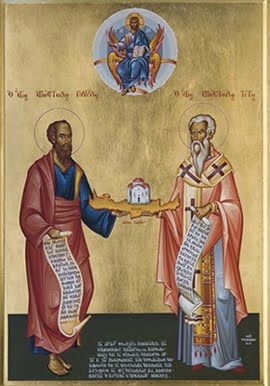
Here is an old image below of the church companions, Saint Paul and Saint Titus holding the Holy See of Crete in their hands, symbolizing their dual governorship of this region via the Holy Roman and Byzantine Empires.
The grandmother of Titus was Vespasia Polla (also known as Vespasia Pollia, born c. 15 BC, fl 1st century AD) who was a descendant of the Cretans through the Umbrians of Italy. Like Emperor Nerva, she was also from the town of Narnia. Polla’s husband was named Titus Flavius Sabinus and he was a customs official and banker in the province of Asia, where he was honored with statues dedicated “To an Honest Tax-gatherer.” They were the mother and father of the Roman emperorVespasian, and grandparents to the emperor Domitian. (Wikipedia)
These facts are just the beginning of the strong connections between early Rome and ancient Crete.
Polla’s eldest son was named, Titus Flavius T. f. T. n. Sabinus (AD 8–20 December 69 AD). He served as a legate under Aulus Plautius in Britain, along with his brother, Vespasian. He afterwards governed Moesia for seven years. Her youngest son, Vespasian had served as tribunus militum in Thrace, and was quaestor in Crete and Cyrene. A quaestor was a type of public official in the “cursus honorum” system who supervised the financial affairs of the state and conducted audits. In other words, he collected tribute in the form of taxes from his cousins for the Roman Empire. (Wikipedia)
In addition to these Jewish ties, the grandson of Vespasia Polla, Saint Titus had also had a controversial relationship with the Jewish queen Berenice. Berenice was a member of the Herodian Dynasty that ruled the Roman province of Judaea from the island of Crete between 39 BC and 92 AD. As I mentioned above, Crete was part of Judaea, and based on archaeological evidence and many historians, it was also home to the main city or cities that had governed this entire region with their Navy. Berenice was the daughter of King Herod Agrippa I and a sister of King Herod Agrippa II.
Berenice was also a client ruler of the parts of the Roman Empire, which is said to be modern-day Syria. The family court of Berenice was at Caesarea in Cappadocia and the city was named in honor of Augustus Caesar. Cappadocia is Latin for Crete, and most history surrounding the city of Augustus, Caesarea will often state that this city is in the province of Cappadocia. Caesarea is the precise location or near where it is written Saint Longinus, the Roman soldier pierced Jesus Christ in his side with a lance, the “Holy Lance.” Saint Longinus was said to have been baptized by the apostles of Crete, where he then became a monk who had converted many people to Christianity on the island, and he was eventually martyred under Octavius Augustus Caesar.
Caesarea from this point forward was the seat of the Roman prefect and “administrative capital” of the region beginning in 6 A.D. In the Acts of the Apostles, records that during this time, in 60, Paul of Tarsus appeared before this family court at Caesarea. (Wikipedia) Paul or Saul of Tarsus in no other than Paul the Apostle or Saint Paul who had lived on the beautiful island of Crete for two years. Paul is considered one of the most important apostles of our age and he had also founded several churches in Asia Minor and Europe.
My research shows that the main battle in this war was fought on and/or surrounding this very island. It was after the destruction of the Second Temple and Palaces in 70 A.D., that some of the Jewish Cretan kings and families of ancient Greece would become tributaries to Rome where they would still maintain part of their royal status, but more along the lines of Dukes and Templars from this point forward. With this new structure of government, this city and their plan had rose again into a much greater power than before and that still lasts to this very day.
After all, at the time, there was not one place in the world that had so many Greek Jews and royal Jewish families, as there was on this island of Crete. The 1st century Jewish-Roman Historian, Flavius Josephus had married a woman from a royal family on Crete who became his 4th wife and bore him two sons. Roman Emperor Titus would Siege Jerusalem and then destroy the Second Temple in Crete in the First Jewish-Roman War. For winning this war, from this point forward, he would become St. Titus the Apostle, an early Christian leader, and a companion of Saint Paul.
Therefor, it only makes perfect sense to reason that this island of Crete which is named after the Greek word for creation, Kri-ti is the birthplace to the first Gnostic Cities that gave the world many new inventions. This island would also be the stronghold of the ancient Jews who would at one time be formidable foes to Rome and then later would join them as allies under the banner of Christianity via the Universal Church, that we know today as the Catholic Church of the both the Roman and Byzantine Empires (Greece and Russia) with the Orthodox Church under the symbol of the Double Headed Eagle.
“The Lion of the Tribe of Judah has conquered.”
SOURCES:
All information is linked to in yellow and or is open source information from non-copyrighted material that can be easily verified via the internet search engines with some work and a lot of Gnosis.
Moe is the founder of GnosticWarrior.com. He is a father, husband, author, martial arts black belt, and an expert in Gnosticism, the occult, and esotericism.
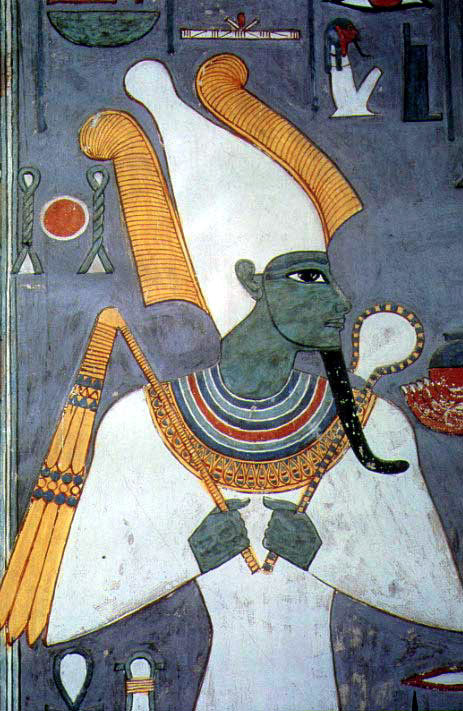
In Ancient Egyptian Mythology, the God Osiris was the most celebrated of all Egyptian Gods. He was the husband of Isis, father of Horus, and brother to his adversary, Set. Osiris is usually identified as the God of the afterlife, the underworld and the dead. He is also called the King of eternity, King of the living, Master of souls; He who appears as ram in Mendes, and the Sovereign of Amenti.(1) Another curious title that you will find for Osiris is the “Morning Star.”
This same Morning Star of Osiris found in the Book of the Dead, appears to be the same Morning Star that we can find in the Book of Revelation, where Saint John says, “I will give him the Morning Star (Rev. ii. 29).” The identification of Osiris IN Pyramid texts with the Morning Star, is of great antiquity. In the tomb of Pepi we read: “Isis and Nephtys adore thee that thou mayest not depart from them in thy name of Morning Star”, and in another passage (172) we read: “The sister of Pepi is Septet (Sothis), and the birth of Pepi is as the Morning Star.” (more…)
Moe is the founder of GnosticWarrior.com. He is a father, husband, author, martial arts black belt, and an expert in Gnosticism, the occult, and esotericism.

 into him.)
 “These causes of our wickedness are derived from our parents, and from our constitutions, rather than from ourselves; for while we recoil from the works of our ancestors they are not idle.” – Plato



 (dwd) that yields