Your blood contains DNA, which is like a history book

Moe is the founder of GnosticWarrior.com. He is a father, husband, author, martial arts black belt, and an expert in Gnosticism, the occult, and esotericism.

Moe is the founder of GnosticWarrior.com. He is a father, husband, author, martial arts black belt, and an expert in Gnosticism, the occult, and esotericism.
This quote is by Bro.’ Albert Pike (33°) from his Gnostic Masonic masterpiece, Morals and Dogma. Pike explains that the cradle of 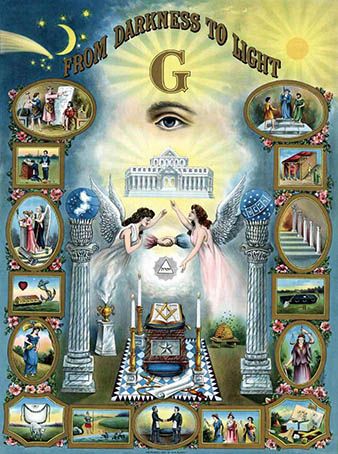 Gnosticism is probably to be looked for in Syria, and even in Palestine which I have said before was originally located on the Holy Gnostic Island of Crete. He also states that these teachings form a part of Masonry; in which, in the present mutilated condition of the symbolic Degrees, they are disguised and overlaid with fiction and absurdity, or present themselves as casual hints that are passed by wholly unnoticed.
As I have stated before, Freemasonry is based on the ancient religion and teachings of Gnosticism and the big G represents Gnosis.
Pike had said, “It is admitted that the cradle of Gnosticism is probably to be looked for in Syria, and even in Palestine. Most of its expounders wrote in that corrupted form of the Greek used by the Hellenistic Jews, and in the Septuagint and the New Testament; and there was a striking analogy between their doctrines and those of the Judeo-Egyptian Philo, of Alexandria; itself the seat of three schools, at once philosophic and religious–the Greek, the Egyptian, and the Jewish.
Pythagoras and Plato, the most mystical of the Grecian Philosophers (the latter heir to the doctrines of the former), and who had travelled, the latter in Egypt, and the former in Phœnicia, India, and Persia, also taught the esoteric doctrine and the distinction between the initiated and the profane.
The dominant doctrines of Platonism were found in Gnosticism. (more…)
Moe is the founder of GnosticWarrior.com. He is a father, husband, author, martial arts black belt, and an expert in Gnosticism, the occult, and esotericism.
By Albert Pike (33°) – “The Gnostics derived their leading doctrines and ideas from Plato and Philo, the Zend-avesta and the Kabalah, 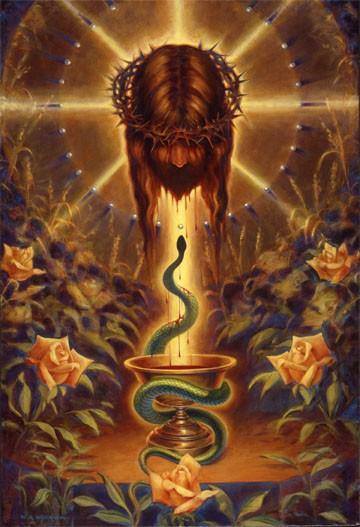 and the Sacred books of India and Egypt; and thus introduced into the bosom of Christianity the cosmological and theosophical speculations, which had formed the larger portion of the ancient religions of the Orient, joined to those of the Egyptian, Greek, and Jewish doctrines, which the Neo-Platonists had equally adopted in the Occident.
Emanation from the Deity of all spiritual beings, progressive degeneration of these beings from emanation to emanation, redemption and return of all to the purity of the Creator; and, after the re-establishment of the primitive harmony of all, a fortunate and truly divine condition of all, in the bosom of God; such were the fundamental teachings of Gnosticism.
The genius of the Orient, with its contemplations, irradiations, and intuitions, dictated its doctrines. Its language corresponded to its origin. Full of imagery, it had all the magnificence, the inconsistencies, and the mobility of the figurative style.
Behold, it said, the light, which emanates from an immense centre of Light, that spreads everywhere its benevolent rays; so do the spirits of Light emanate from the Divine Light. Behold, all the springs which nourish, embellish, fertilize, and purify the Earth: they emanate from one and the same ocean; so from the bosom of the Divinity emanate so many streams, which form and fill the universe of intelligences.
Behold numbers, which all emanate from one primitive number, all resemble it, all are composed of its essence, and still vary infinitely; and utterances, decomposable into so many syllables and elements, all contained in the primitive Word, and still infinitely various; so the world of Intelligences emanated from a Primary Intelligence, and they all resemble it, and yet display an infinite variety of existences.
It revived and combined the old doctrines of the Orient and the Occident; and it found in many passages of the Gospels and the Pastoral letters, a warrant for doing so. Christ himself spoke in parables and allegories, John borrowed the enigmatical language of the Platonists, and Paul often indulged in incomprehensible rhapsodies, the meaning of which could have been clear to the Initiates alone.”
By Albert Pike – Morals and Dogma, Knight of the East and West | Chapter 17 Part 1
Moe is the founder of GnosticWarrior.com. He is a father, husband, author, martial arts black belt, and an expert in Gnosticism, the occult, and esotericism.
“Labyrinths were symbolic of the involvement and illusions of the lower world through which wanders the soul of man in its search for 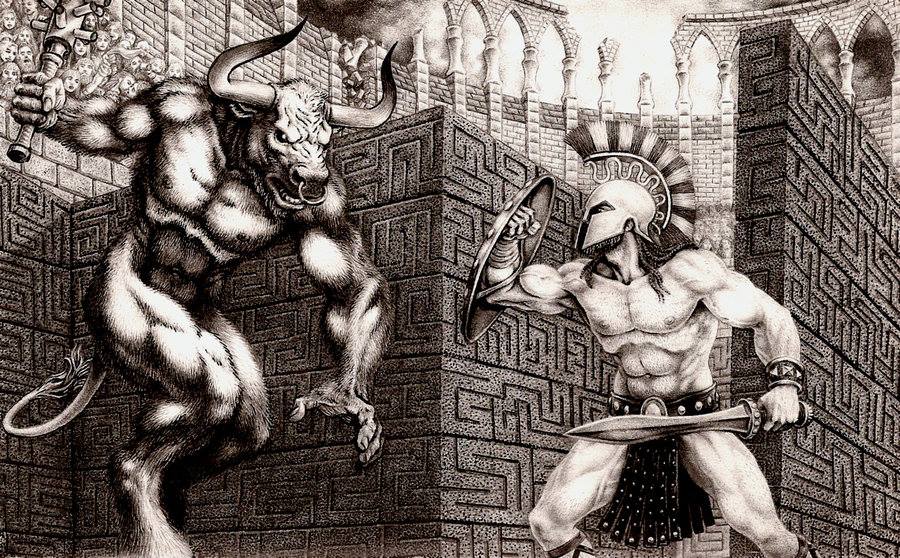 truth.
In the labyrinth dwells the lower animal man with the head of a bull (the Minotaur or Serapis), who seeks to destroy the soul entangled in the maze of worldly ignorance.
In this relation, Serapis (the Minotaur) becomes the Tryer or Adversary who tests the souls of those seeking union with the Immortals.”
Moe is the founder of GnosticWarrior.com. He is a father, husband, author, martial arts black belt, and an expert in Gnosticism, the occult, and esotericism.
By Manly P. Hall – “The twelve signs of the zodiac, like the Governors’ of the lower worlds, are symbolized by the twelve lines of the four 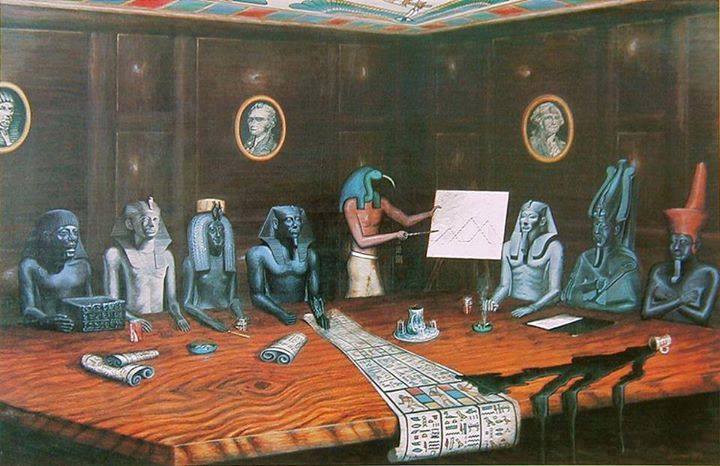 triangles–the faces of the Pyramid. In the midst of each face is one of the beasts of Ezekiel, and the structure as a whole becomes the Cherubim.
The three main chambers of the Pyramid are related to the heart, the brain, and the generative system–the spiritual centers of the human constitution. The triangular form of the Pyramid also is similar to the posture assumed by the body during the ancient meditative exercises.
The Mysteries taught that the divine energies from the gods descended upon the top of the Pyramid, which was likened to an inverted tree with its branches below and its roots at the apex. From this inverted tree the divine wisdom is disseminated by streaming down the diverging sides and radiating throughout the world.”
Moe is the founder of GnosticWarrior.com. He is a father, husband, author, martial arts black belt, and an expert in Gnosticism, the occult, and esotericism.
“Self-observation brings man to the realization of the necessity of self-change.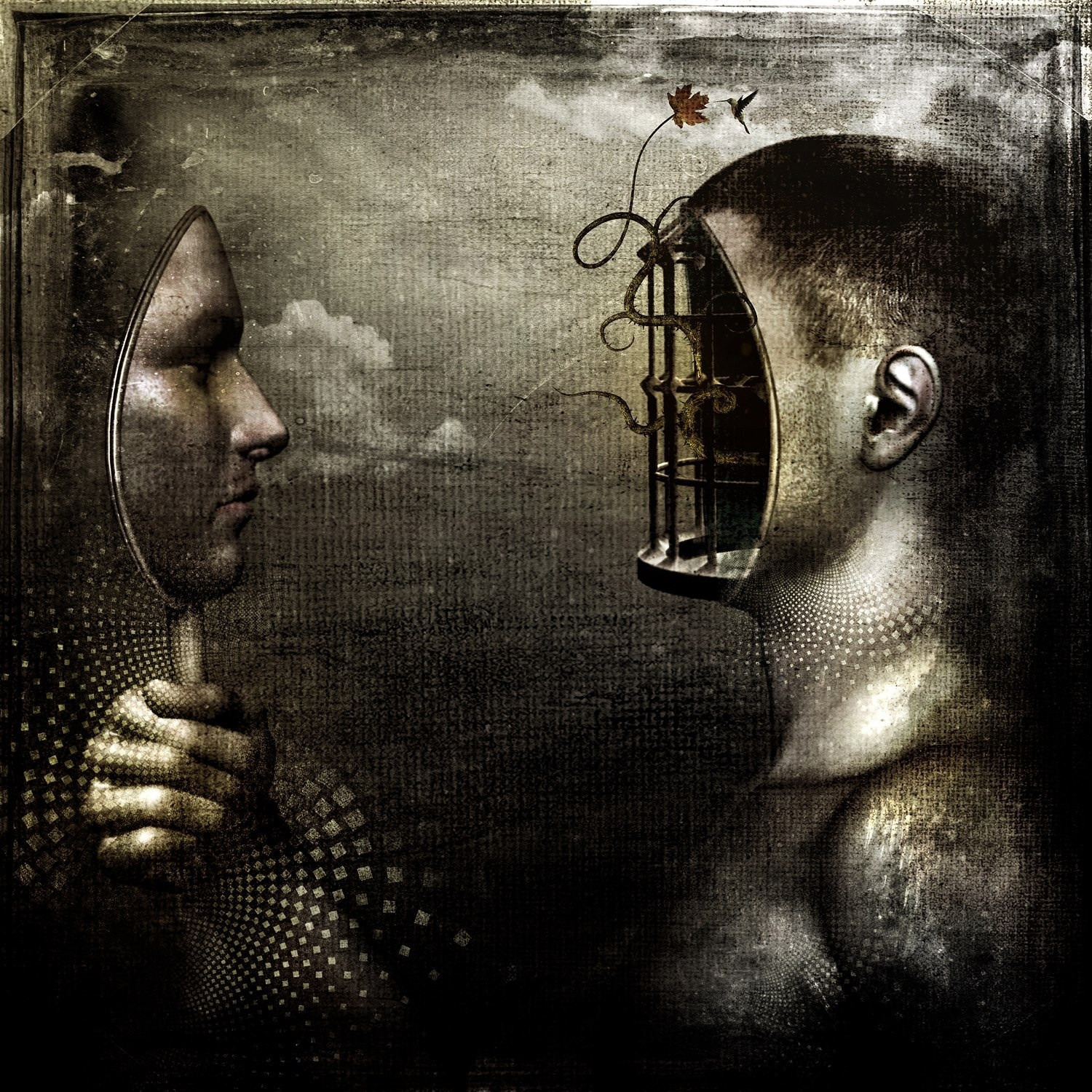
And in observing himself a man notices that self-observation itself brings about certain changes in his inner processes.
He begins to understand that self-observation is an instrument of self-change, a means of awakening.” – By Gurdjieff
Moe is the founder of GnosticWarrior.com. He is a father, husband, author, martial arts black belt, and an expert in Gnosticism, the occult, and esotericism.