by Moe
p. 136

IN this Degree you have been taught the important lesson, that none are entitled to advance in the Ancient and Accepted Scottish Rite, who have not by study and application made themselves familiar with Masonic learning and jurisprudence. The Degrees of this Rite are not for those who are content with the mere work and ceremonies, and do not seek to explore the mines of wisdom that lie buried beneath the surface. You still advance toward the Light, toward that star, blazing in the distance, which is an emblem of the Divine Truth, given by God to the first men, and preserved amid all the vicissitudes of ages in the traditions and teachings of Masonry. How far you will advance, depends upon yourself alone. Here, as everywhere in the world, Darkness struggles with Light, and clouds and shadows intervene between you and the Truth.
When you shall have become imbued with the morality of Masonry, with which you yet are, and for some time will be exclusively occupied,–when you shall have learned to practice all the virtues which it inculcates; when they become familiar to you as your Household Gods; then will you be prepared to receive its lofty philosophical instruction, and to scale the heights upon whose summit Light and Truth sit enthroned. Step by step men must advance toward Perfection; and each Masonic Degree is meant to be one of those steps. Each is a development of a particular duty; and in the present you are taught charity and benevolence;
p. 137
to be to your brethren an example of virtue; to correct your own faults; and to endeavor to correct those of your brethren.
Here, as in all the Degrees, you meet with the emblems and the names of Deity, the true knowledge of whose character and attributes it has ever been a chief object of Masonry to perpetuate. To appreciate His infinite greatness and goodness, to rely implicitly upon His Providence, to revere and venerate Him as the Supreme Architect, Creator, and Legislator of the universe, is the first of Masonic duties.
The Battery of this Degree, and the five circuits which you made around the Lodge, allude to the five points of fellowship, and are intended to recall them vividly to your mind. To go upon a brother’s errand or to his relief, even barefoot and upon flinty ground; to remember him in your supplications to the Deity; to clasp him to your heart, and protect him against malice and evil-speaking; to uphold him when about to stumble and fall; and to give him prudent, honest, and friendly counsel, are duties plainly written upon the pages of God’s great code of law, and first among the ordinances of Masonry.
The first sign of the Degree is expressive of the diffidence and humility with which we inquire into the nature and attributes of the Deity; the second, of the profound awe and reverence with which we contemplate His glories; and the third, of the sorrow with which we reflect upon our insufficient observance of our duties, and our imperfect compliance with His statutes.
The distinguishing property of man is to search for and follow after truth. Therefore, when relaxed from our necessary cares and concerns, we then covet to see, to hear, and to learn somewhat; and we esteem knowledge of things, either obscure or wonderful, to be the indispensable means of living happily. Truth, Simplicity, and Candor are most agreeable to the nature of mankind. Whatever is virtuous consists either in Sagacity, and the perception of Truth; or in the preservation of Human Society, by giving to every man his due, and observing the faith of contracts; or in the greatness and firmness of an elevated and unsubdued mind; or in observing order and regularity in all our words and in all our actions; in which consist Moderation and Temperance.
Masonry has in all times religiously preserved that enlightened faith from which flow sublime Devotedness, the sentiment of Fraternity fruitful of good works, the spirit of indulgence and peace,
p. 138
Moe is the founder of GnosticWarrior.com. He is a father, husband, author, martial arts black belt, and an expert in Gnosticism, the occult, and esotericism.
by Moe
p. 126
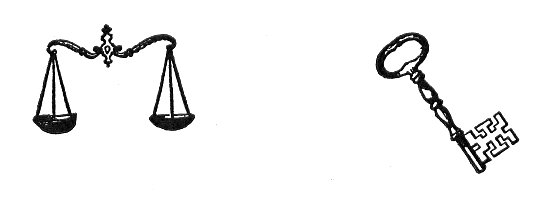
THE lesson which this Degree inculcates is JUSTICE, in decision and judgment, and in our intercourse and dealing with other men.
In a country where trial by jury is known, every intelligent man is liable to be called on to act as a judge, either of fact alone, or of fact and law mingled; and to assume the heavy responsibilities which belong to that character.
Those who are invested with the power of judgment should judge the causes of all persons uprightly and impartially, without any personal consideration of the power of the mighty, or the bribe of the rich, or the needs of the poor. That is the cardinal rule, which no one will dispute; though many fail to observe it. But they must do more. They must divest themselves of prejudice and preconception. They must hear patiently, remember accurately, and weigh carefully the facts and the arguments offered before them. They must not leap hastily to conclusions, nor form opinions before they have heard all. They must not presume crime or fraud. They must neither be ruled by stubborn pride of opinion, nor be too facile and yielding to the views and arguments of others. In deducing the motive from the proven act, they must not assign to the act either the best or the worst motives, but those which they would think it just and fair for the world to assign to it, if they themselves had done if; nor must they endeavor to make many little circumstances, that weigh nothing separately, weigh much together, to prove their own acuteness and sagacity. These are sound rules for every juror, also, to observe.
p. 127
In our intercourse with others, there are two kinds of injustice: the first, of those who offer an injury; the second, of those who have it in their power to avert an injury from those to whom it is offered, and yet do it not. So active injustice may be done in two ways–by force and by fraud,–of which force is lion-like, and fraud fox-like,–both utterly repugnant to social duty, but fraud the more detestable.
Every wrong done by one man to another, whether it affect his person, his property, his happiness, or his reputation, is an offense against the law of justice. The field of this Degree is therefore a wide and vast one; and Masonry seeks for the most impressive mode of enforcing the law of justice, and the most effectual means of preventing wrong and injustice.
To this end it teaches this great and momentous truth: that wrong and injustice once done cannot be undone; but are eternal in their consequences; once committed, are numbered with the irrevocable Past; that the wrong that is done contains its own retributive penalty as surely and as naturally as the acorn contains the oak. Its consequences are its punishment; it needs no other, and can have no heavier; they are involved in its commission, and cannot be separated from it. A wrong done to another is an injury done to our own Nature, an offence against our own souls, a disfiguring of the image of the Beautiful and Good. Punishment is not the execution of a sentence, but the occurrence of an effect. It is ordained to follow guilt, not by the decree of God as a judge, but by a law enacted by Him as the Creator and Legislator of the Universe. It is not an arbitrary and artificial annexation, but an ordinary and logical consequence; and therefore must be borne by the wrong-doer, and through him may flow on to others. It is the decision of the infinite justice of God, in the form of law.
There can be no interference with, or remittance of, or protection from, the natural effects of our wrongful acts. God will not interpose between the cause and its consequence; and in that sense there can be no forgiveness of sins. The act which has debased our soul may be repented of, may be turned from; but the injury is done. The debasement may be redeemed by after-efforts, the stain obliterated by bitterer struggles and severer sufferings; but the efforts and the endurance which might have raised the soul to the loftiest heights are now exhausted in merely regaining what
Moe is the founder of GnosticWarrior.com. He is a father, husband, author, martial arts black belt, and an expert in Gnosticism, the occult, and esotericism.
by Moe
p. 119
[Confidential Secretary.]
You are especially taught in this Degree to be zealous and faithful; to be disinterested and benevolent; and to act the peace-maker, in case of dissensions, disputes, and quarrels among the brethren.
Duty is the moral magnetism which controls and guides the true Mason’s course over the tumultuous seas of life. Whether the stars of honor, reputation, and reward do or do not shine, in the light of day or in the darkness of the night of trouble and adversity, in calm or storm, that unerring magnet still shows him the true course to steer, and indicates with certainty where-away lies the port which not to reach involves shipwreck and dishonor. He follows its silent bidding, as the mariner, when land is for many days not in sight, and the ocean without path or landmark spreads out all around him, follows the bidding of the needle, never doubting that it points truly to the north. To perform that duty, whether the performance be rewarded or unrewarded, is his sole care. And it doth not matter, though of this performance there may be no witnesses, and though what he does will be forever unknown to all mankind.
A little consideration will teach us that Fame has other limits than mountains and oceans; and that he who places happiness in the frequent repetition of his name, may spend his life in propagating it, without any danger of weeping for new worlds, or necessity of passing the Atlantic sea.
If, therefore, he who imagines the world to be filled with his actions
p. 120
and praises, shall subduct from the number of his encomiasts all those who are placed below the flight of fame, and who hear in the valley of life no voice but that of necessity; all those who imagine themselves too important to regard him, and consider the mention of his name as a usurpation of their time; all who are too much or too little pleased with themselves to attend to anything external; all who are attracted by pleasure, or chained down by pain to unvaried ideas; all who are withheld from attending his triumph by different pursuits; and all who slumber in universal negligence; he will find his renown straitened by nearer bounds than the rocks of Caucasus; and perceive that no man can be venerable or formidable, but to a small part of his fellow-creatures. And therefore, that we may not languish in our endeavors after excellence, it is necessary that, as Africanus counsels his descendants, we raise our eyes to higher prospects, and contemplate our future and eternal state, without giving up our hearts to the praise of crowds, or fixing our hopes on such rewards as human power can bestow.
We are not born for ourselves alone; and our country claims her share, and our friends their share of us. As all that the earth produces is created for the use of man, so men are created for the sake of men, that they may mutually do good to one another. In this we ought to take nature for our guide, and throw into the public stock the offices of general utility, by a reciprocation of duties; sometimes by receiving, sometimes by giving, and sometimes to cement human society by arts, by industry, and by our resources.
Suffer others to be praised in thy presence, and entertain their good and glory with delight; but at no hand disparage them, or lessen the report, or make an objection; and think not the advancement of thy brother is a lessening of thy worth. Upbraid no man’s weakness to him to discomfit him, neither report it to disparage him, neither delight to remember it to lessen him, or to set thyself above him; nor ever praise thyself or dispraise any man else, unless some sufficient worthy end do hallow it.
Remember that we usually disparage others upon slight grounds and little instances; and if a man be highly commended, we think him sufficiently lessened, if we can but charge one sin of folly or inferiority in his account. We should either be more severe to ourselves, or less so to others, and consider that whatsoever good any one can think or say of us, we can tell him of many unworthy and
Moe is the founder of GnosticWarrior.com. He is a father, husband, author, martial arts black belt, and an expert in Gnosticism, the occult, and esotericism.
by Moe
p. 114
THE Master Khu_ru_m was an industrious and an honest man. What he was employed to do he did diligently, and he did it well and faithfully. He received no wages that were not his due. Industry and honesty are the virtues peculiarly inculcated in this Degree. They are common and homely virtues; but not for that beneath our notice. As the bees do not love or respect the drones, so Masonry neither loves nor respects the idle and those who live by their wits; and least of all those parasitic acari that live upon themselves. For those who are indolent are likely to become dissipated and vicious; and perfect honesty, which ought to be the common qualification of all, is more rare than diamonds. To do earnestly and steadily, and to do faithfully and honestly that which we have to do–perhaps this wants but little, when looked at from every point of view, of including the whole body of the moral law; and even in their commonest and homeliest application, these virtues belong to the character of a Perfect Master.
Idleness is the burial of a living man. For an idle person is so useless to any purposes of God and man, that he is like one who is dead, unconcerned in the changes and necessities of the world; and he only lives to spend his time, and eat the fruits of the earth. Like a vermin or a wolf, when his time comes, he dies and perishes, and in the meantime is nought. He neither ploughs nor carries burdens: all that he does is either unprofitable or mischievous.
It is a vast work that any man may do, if he never be idle: and it is a huge way that a man may go in virtue, if he never go out of his way by a vicious habit or a great crime: and he who perpetually
p. 115
reads good books, if his parts be answerable, will have a huge stock of knowledge.
St. Ambrose, and from his example, St. Augustine, divided every day into these tertias of employment: eight hours they spent in the necessities of nature and recreation: eight hours in charity, in doing assistance to others, dispatching their business, reconciling their enmities, reproving their vices, correcting their errors, instructing their ignorance, and in transacting the affairs of their dioceses; and the other eight hours they spent in study and prayer.
We think, at the age of twenty, that life is much too long for that which we have to learn and do; and that there is an almost fabulous distance between our age and that of our grandfather. But when, at the age of sixty, if we are fortunate enough to reach it, or unfortunate enough, as the case may be, and according as we have profitably invested or wasted our time, we halt, and look back along the way we have come, and cast up and endeavor to balance our accounts with time and opportunity, we find that we have made life much too short, and thrown away a huge portion of our time. Then we, in our mind, deduct from the sum total of our years the hours that we have needlessly passed in sleep; the working-hours each day, during which the surface of the mind’s sluggish pool has not been stirred or ruffled by a single thought; the days that we have gladly got rid of, to attain some real or fancied object that lay beyond, in the way between us and which stood irksomely the intervening days; the hours worse than wasted in follies and dissipation, or misspent in useless and unprofitable studies; and we acknowledge, with a sigh, that we could have learned and done, in half a score of years well spent, more than we have done in all our forty years of manhood.
To learn and to do!–this is the soul’s work here below. The soul grows as truly as an oak grows. As the tree takes the carbon of the air, the dew, the rain, and the light, and the food that the earth supplies to its roots, and by its mysterious chemistry trans-mutes them into sap and fibre, into wood and leaf, and flower and fruit, and color and perfume, so the soul imbibes knowledge and by a divine alchemy changes what it learns into its own substance, and grows from within outwardly with an inherent force and power like those that lie hidden in the grain of wheat.
Moe is the founder of GnosticWarrior.com. He is a father, husband, author, martial arts black belt, and an expert in Gnosticism, the occult, and esotericism.
by Moe
p. 106

MASONRY is a succession of allegories, the mere vehicles of great lessons in morality and philosophy. You will more fully appreciate its spirit, its object, its purposes, as you advance in the different Degrees, which you will find to constitute a great, complete, and harmonious system.
If you have been disappointed in the first three Degrees, as you have received them, and if it has seemed to you that the performance has not come up to the promise, that the lessons of morality are not new, and the scientific instruction is but rudimentary, and the symbols are imperfectly explained, remember that the ceremonies and lessons of those Degrees have been for ages more and more accommodating themselves, by curtailment and sinking into commonplace, to the often limited memory and capacity of the Master and Instructor, and to the intellect and needs of the Pupil and Initiate; that they have come to us from an age when symbols were used, not to reveal but to conceal; when the commonest learning was confined to a select few, and the simplest principles of morality seemed newly discovered truths; and that these antique and simple Degrees now stand like the broken columns of a roofless Druidic temple, in their rude and mutilated greatness; in many parts, also, corrupted by time, and disfigured by modern additions and absurd interpretations. They are but the entrance to the great Masonic Temple, the triple columns of the portico.
You have taken the first step over its threshold, the first step toward the inner sanctuary and heart of the temple. You are in the path that leads up the slope of the mountain of Truth; and
p. 107
it depends upon your secrecy, obedience, and fidelity, whether you will advance or remain stationary.
Imagine not that you will become indeed a Mason by learning what is commonly called the “work,” or even by becoming familiar with our traditions. Masonry has a history, a literature, a philosophy. Its allegories and traditions will teach you much; but much is to be sought elsewhere. The streams of learning that now flow full and broad must be followed to their heads in the springs that well up in the remote past, and you will there find the origin and meaning of Masonry.
A few rudimentary lessons in architecture, a few universally admitted maxims of morality, a few unimportant traditions, whose real meaning is unknown or misunderstood, will no longer satisfy the earnest inquirer after Masonic truth. Let whoso is content with these, seek to climb no higher. He who desires to understand the harmonious and beautiful proportions of Freemasonry must read, study, reflect, digest, and discriminate. The true Mason is an ardent seeker after knowledge; and he knows that both books and the antique symbols of Masonry are vessels which come down to us full-freighted with the intellectual riches of the Past; and that in the lading of these argosies is much that sheds light on the history of Masonry, and proves its claim to be acknowledged the benefactor of mankind, born in the very cradle of the race.
Knowledge is the most genuine and real of human treasures; for it is Light, as Ignorance is Darkness. It is the development of the human soul, and its acquisition the growth of the soul, which at the birth of man knows nothing, and therefore, in one sense, may be said to be nothing. It is the seed, which has in it the power to grow, to acquire, and by acquiring to be developed, as the seed is developed into the shoot, the plant, the tree. “We need not pause at the common argument that by learning man excelleth man, in that wherein man excelleth beasts; that by learning man ascendeth to the heavens and their motions, where in body he cannot come, and the like. Let us rather regard the dignity and excellency of knowledge and learning in that whereunto man’s nature doth most aspire, which is immortality or continuance. For to this tendeth generation, and raising of Houses and Families; to this buildings, foundations, and monuments; to this tendeth the desire of memory, fame, and celebration, and in effect the strength of all other human desires.” That our influences shall
Moe is the founder of GnosticWarrior.com. He is a father, husband, author, martial arts black belt, and an expert in Gnosticism, the occult, and esotericism.
by Moe
p. 85
The consequence is, that those who feel themselves competent and qualified to serve the people, refuse with disgust to enter into the struggle for office, where the wicked and jesuitical doctrine that all is fair in politics is an excuse for every species of low villainy; and those who seek even the highest places of the State do not rely upon the power of a magnanimous spirit, on the sympathizing impulses of a great soul, to stir and move the people to generous, noble, and heroic resolves, and to wise and manly action; but, like spaniels erect on their hind legs, with fore-paws obsequiously suppliant, fawn, flatter, and actually beg for votes. Rather than descend to this, they stand contemptuously aloof, disdainfully refusing to court the people, and acting on the maxim, that “mankind has no title to demand that we shall serve them in spite of themselves.”
* * * * * * It is lamentable to see a country split into factions, each following this or that great or brazen-fronted leader with a blind, unreasoning, unquestioning hero-worship; it is contemptible to see it divided into parties, whose sole end is the spoils of victory, and their chiefs the low, the base, the venal and the small. Such a country is in the last stages of decay, and near its end, no matter how prosperous it may seem to be. It wrangles over the volcano and the earthquake. But it is certain that no government can be conducted by the men of the people, and for the people, without a rigid adherence to those principles which our reason commends as fixed and sound. These must be the tests of parties, men, and measures. Once determined, they must be inexorable in their application, and all must either come up to the standard or declare against it. Men may betray: principles never can. Oppression is one invariable consequence of misplaced confidence in treacherous man, it is never the result of the working or application of a sound, just, well-tried principle. Compromises which bring fundamental principles into doubt, in order to unite in one party men of antagonistic creeds, are frauds, and end in ruin, the just and natural consequence of fraud. Whenever you have settled upon your theory and creed, sanction no departure from it in practice, on any ground of expediency. It is the Master’s word.
p. 86
[paragraph continues] Yield it up neither to flattery nor force! Let no defeat or persecution rob you of it! Believe that he who once blundered in statesmanship will blunder again; that such blunders are as fatal as crimes; and that political near-sightedness does not improve by age. There are always more impostors than seers among public men, more false prophets than true ones, more prophets of Baal than of Jehovah; and Jerusalem is always in danger from the Assyrians.
Sallust said that after a State has been corrupted by luxury and idleness, it may by its mere greatness bear up under the burden of its vices. But even while he wrote, Rome, of which he spoke, had played out her masquerade of freedom. Other causes than luxury and sloth destroy Republics. If small, their larger neighbors extinguish them by absorption. If of great extent, the cohesive force is too feeble to hold them together, and they fall to pieces by their own weight. The paltry ambition of small men disintegrates them. The want of wisdom in their councils creates exasperating issues. Usurpation of power plays its part, incapacity seconds corruption, the storm rises, and the fragments of the incoherent raft strew the sandy shores, reading to mankind another lesson for it to disregard.
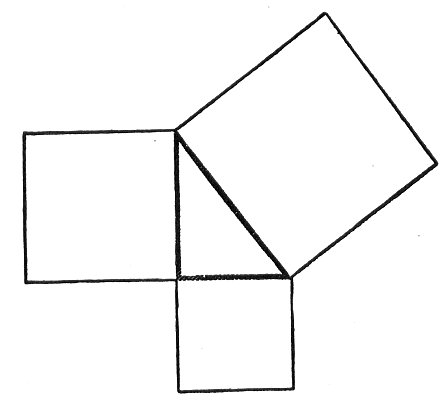
* * * * * * The Forty-seventh Proposition is older than Pythagoras. It is this: “In every right-angled triangle, the sum of the squares of the base and perpendicular is equal to the square of the hypothenuse.”
p. 87
The square of a number is the product of that number, multi-plied by itself. Thus, 4 is the square of 2, and 9 of 3.
| The first ten numbers are: |
1, 2, 3, 4, 5, 6, 7, 8, 9, 10; |
| their squares are |
1, 4, 9, 16, 25, 36, 49, 64, 81, 100; |
| and |
3, 5, 7, 9, 11, 13, 15, 17, 19 |
Moe is the founder of GnosticWarrior.com. He is a father, husband, author, martial arts black belt, and an expert in Gnosticism, the occult, and esotericism.