A massive network of ancient 12,000 year old underground tunnels has been discovered going across Europe from Scotland to Turkey. There are said to be literally thousands of these secret tunnels that are located north in Scotland, all the way down to the Mediterranean.
German archaeologist, Dr Heinrich Kusch had written a book that details these ancient underground stone age superhighway, published in German and called “Secrets Of The Underground Door To An Ancient World.”
Kusch says that these tunnels can be found under Neolithic settlements all over the continent. Most of them are just large enough for a person to barely squeeze through, but nothing else.
Ancient tunnels have been found all over the world.
In Bavaria, Germany there are hundreds of secret ancient underground tunnels connecting old farmhouses, churches and even cemeteries. Throughout New Zealand there are similar tunnels that have been found and also all over Mexico, and Central and South America.
Even here in the United States there are alleged to be underground tunnels that are discussed in the book, “Native American Myths & Mysteries (1991)” by Vincent H. Gaddis in a chapter IV titled Tunnels of the Titans;
“Throughout all the Americas there are legends of archaic avenues, racial memories of subterranean passages stretching for miles. After the great cataclysm the ancestral North Indians lived in the vast cavern complex until it was safe to return to the upper world. The story is spread through many tribes, from the kivas of the Pueblos to the lodges of the Blackfeet, from the campfires of the eastern woodland tribes before their dispersion.
“The Mandans of the northwestern states, some of whom had blue eyes and silky hair … They said the first man to emerge from the tunnels were the Histoppa or the “tattooed ones.” Having left safety too soon, they perished. The rest, who remained below, waited until a bright light dispelled the darkness on the surface…”
“The Apaches’ have a legend that their remote ancestors came from a large island in the eastern sea where there were great buildings and ports for ships. The Fire Dragon arose, and their ancestors had to flee to mountains far away to the south. Later they were forced to take refuge in immense and ancient tunnels through which they wandered for years…” (Page 39).
I assume this is just the tip of the iceberg when it comes to underground tunnel systems, and there are probably thousands more still waiting to be discovered.
Moe is the founder of GnosticWarrior.com. He is a father, husband, author, martial arts black belt, and an expert in Gnosticism, the occult, and esotericism.
Moe is the founder of GnosticWarrior.com. He is a father, husband, author, martial arts black belt, and an expert in Gnosticism, the occult, and esotericism.
The ancient serpent-god of the Gnostics from the East was Serapis. The various spellings of the name Serapis are Sor-apis (Σέραπις, Attic/Ionian Greek), Sarapis (Σάραπις, Dorian Greek), Serapin (Greek Ὄφις), or in Hebrew Seraph. All these names mean ‘serpent.’ The name ‘seraphim’ is the plural form of serpent and is also said to mean, “the burning ones.” Serapis is the Hellenized version of the Egyptian Osiris-Apis.
Manly P. Hall had written in the Secret Teachings of All Ages: “The Gnostic Mysteries were acquainted with the arcane meaning of Serapis, and through the medium of Gnosticism this god became inextricably associated with early Christianity. In fact, the Emperor Hadrian, while traveling in Egypt in A.D. 24, declared in a letter to Servianus that the worshipers of Serapis were Christians and that the Bishops of the church also worshiped at his shrine. He even declared that the Patriarch himself, when in Egypt, was forced to adore Serapis as well as Christ.”
Plutarch informs us that it was the Greco-Egyptain Pharoah, Ptolemy I who had introduced Serapis or serpent worship from Sinope in Asia Minor to the East, where he had taken the place of all the Gods as the supreme deity during reign of the Ptolemy Pharaohs. From this time thereafter, the multitude of gods from all around the world such as Osiris, Buddha, Cadmus, Quetzalcoatl, and Ku Kulcan, would all be depicted with the emblem of the serpent in an attempt to integrate this serpent deity into all these cultures as a one world religion.
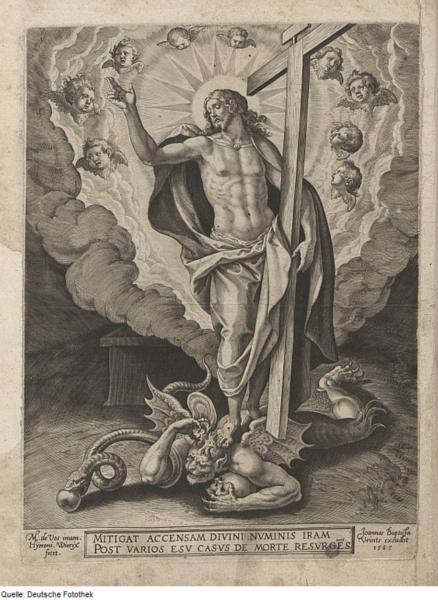
Serapis is the serpent on the cross that was also the precursor to the Christian Christ, who would take the serpents place upon the cross in this Sixth Age under the religion of Christianity. Before the Christian era, the most ancient worship of the serpent was practiced in many areas of the world. The serpent on the cross was still worshiped up to the 7th century in England under the Druids. Tacitus, the Roman senator and historian had said that Serapis was worshipped as a type of universal deity that represented Jupiter, Osiris, Pluto, and sometimes Jupiter Ammon. The cult of Serapis had originated from the Greco-Egyptian priesthood under the Ptolemies, and the testimony of Pausanias says the temples of Serapis were the most famous at Alexandria, and the most ancient at Memphis.
The Ancient Egyptians had primarily used animals or half human /animal hybrids to represent their Gods. But the Ancient Greeks would never worship an animal as a God. These facts can be seen today with the naked eye, such as in the artwork left by the Egyptians who incorporated many animals as gods, and also the Greeks who had strictly used men or women in their art to represent their gods. This is the reason why many of these gods appear to have merged or were made into hybrid gods, to appease the various cultures that these Pharaohs had conquered.
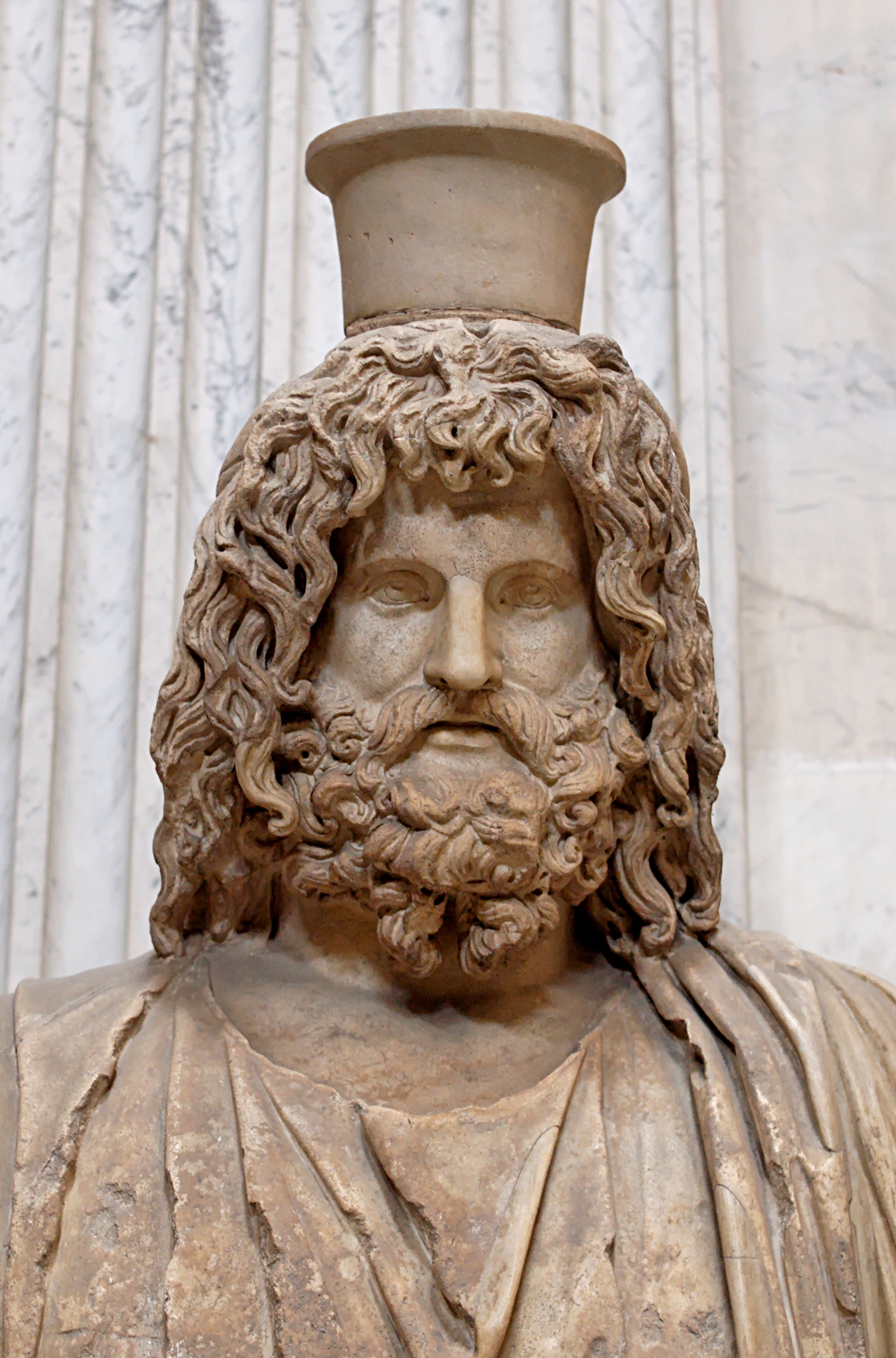
More information about this story comes down to us from Tacitus, who informs us that Serapis had appeared in a dream to Ptolemy as beautiful young man, and ordered him to Sinope in order to bring his statue to Egypt. The dream would align with the Greek influence on Serapis being depicted as a young man. The statue of Serapis, according to Macrobius, was of a human form, with a basket or bushel on his head, resembling plenty, and referring, as some say, to the history of Joseph’s supplying the Egyptians with corn.
The Seraphim are the first hierarchy of angels who some say are demons that were Cherubim and Thrones. In the bible under Isaiah 6:6, it is said– “Then one of the seraphim flew to me with a live coal in his hand, which he had taken with tongs from the altar.” Beelzebub was a prince of the Seraphim, just below Lucifer. Lucifer is another word for phosphorus. The Latin word corresponding to Greek Phosphorus is “Lucifer.” Phosphorus (Greek Φωσφόρος Phōsphoros), a name meaning “Light-Bringer”, is the Morning Star.
The serpent is the symbol of wisdom, knowledge and Gnosis. The Serpent was venerated in Egypt as an emblem of Divinity, an oracle, and as a god. This Serpent-worship continued amongst the Samaritans in the West and in Europe, and with the Druids in Ireland, Scotland and Britain. The Masters of Wisdom, and all Initiates into the Sacred Mysteries, are called Nagas, or Serpents of Wisdom (Blavatsky). These Gnostic Serpent Priests of Wisdom from the East had went under various names such as the Ophites, and the Hivites who later became known as the Levites; all these names signify serpent. The Ophites were said to attribute all wisdom to the serpent, who was also the author of knowledge to men. In the ritual of Zoroaster, serpents were esteemed as gods and the superintendents of the world.
Manly P. Hall had written about the serpent in his famous book, The Secret Teachings of all Ages – “The accepted theory that the serpent is evil cannot be substantiated. It has long been viewed as the emblem of immortality. It is the symbol of reincarnation, or metempsychosis, because it annually sheds its skin, reappearing, as it were, in a new body. There is an ancient superstition to the effect that snakes never die except by violence and that, if uninjured, they would live forever. It was also believed that snakes swallowed themselves, and this resulted in their being considered emblematic of the Supreme Creator, who periodically reabsorbed His universe back into Himself.”
In the 3rd century, Tertullian said, Manes had taught Serpent Worship in Asia Minor under the name of Christianity, with teachings such as ” Christ was an incarnation of the Great Serpent, who glided over the cradle of the Virgin Mary when she was asleep at the age of a year and a half.” The main serpent cult of Serapis at Alexandria survived until the late 4th century, when a Christian mob destroyed the Serapeum of Alexandria in 385. The cult was part of the general proscription of religions other than approved forms of Christianity under the Theodosian decree. (Wikipedia)
In Ancient England and Ireland, serpent worship would continue much longer up until the 6th century under the Druids, who were the Western descendants of the ancient serpent priests from the East. This would be the time when the Celtic Druid Church, under the leadership of the Iona Culdees had merged with the Roman Church to form a Universal Religion, known of today as Catholicism. The inner secret teachings of the serpent wisdom would be hidden from the masses, and replaced by an outer mystical religion veiled in allegory represented by Jesus Christ.
Moe is the founder of GnosticWarrior.com. He is a father, husband, author, martial arts black belt, and an expert in Gnosticism, the occult, and esotericism.
“Hell is empty and all the devils are here.” – William Shakespeare
“I am afraid that the schools will prove the very gates of hell, unless they diligently labor in explaining the Holy Scriptures and engraving them in the heart of the youth.” – Martin Luther
“The darkest places in hell are reserved for those who maintain their neutrality in times of moral crisis.” – Dante Alighieri
“Go to Heaven for the climate, Hell for the company.” – Mark Twain
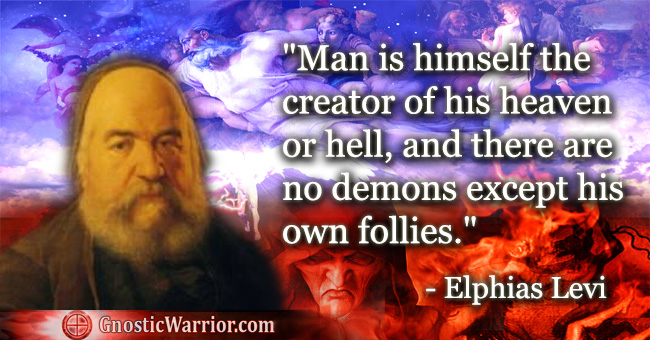
“We are each our own devil, and we make this world our hell” – Oscar Wilde
“Hell is a place, a time, a consciousness, in which there is no love.” – Richard Bach
“Each of us bears his own Hell” – Virgil
“I don’t like to commit myself about heaven and hell – you see, I have friends in both places.” – Mark Twain
“We are each our own devil, and we make this world our hell” – Oscar Wilde quotes
“It is better to conquer yourself than to win a thousand battles. Then the victory is yours. It cannot be taken from you, not by angels or by demons, heaven or hell.” – Buddha
“A man is born alone and dies alone; and he experiences the good and bad consequences of his karma alone; and he goes alone to hell or the Supreme abode.” – Chanakya
“The hottest place in Hell is reserved for those who remain neutral in times of great moral conflict.” – Martin Luther King, Jr.
“The mind is its own place and in itself, can make a Heaven of Hell, a Hell of Heaven.” – John Milton
Moe is the founder of GnosticWarrior.com. He is a father, husband, author, martial arts black belt, and an expert in Gnosticism, the occult, and esotericism.
Welcome to the new world order of crowd control and human tracking. There is a new special type of gun out on the market. A weapon that shoots SelectaDNA at a target in order for tracking purposes.
The UK security firm, Selectamark recently offered this weapon to the open market- available in pistol and rifle form, that shoots what they have coined “SelectaDNA High Velocity pellets.” There main clients appears to be law enforcement and military.
The guns shoot these DNA pellets that are uniquely-coded that can be used to mark someone so they can be easily tracked or apprehended.
What this uniquely-coded DNA pellet is made of, I’m not sure, but the word “DNA” in the name seems to give us a clue to what these chemical properties are. Is it animal DNA, just a marketing gimmick, or…?
Selectamark Managing Director Andrew Knights said: “On contact with the target the uniquely-coded SelectaDNA solution leaves a synthetic DNA trace mark that will enable the relevant authorities to confirm or eliminate that person from their involvement in a particular situation and could ultimately lead to arrest and prosecution.”
Moe is the founder of GnosticWarrior.com. He is a father, husband, author, martial arts black belt, and an expert in Gnosticism, the occult, and esotericism.

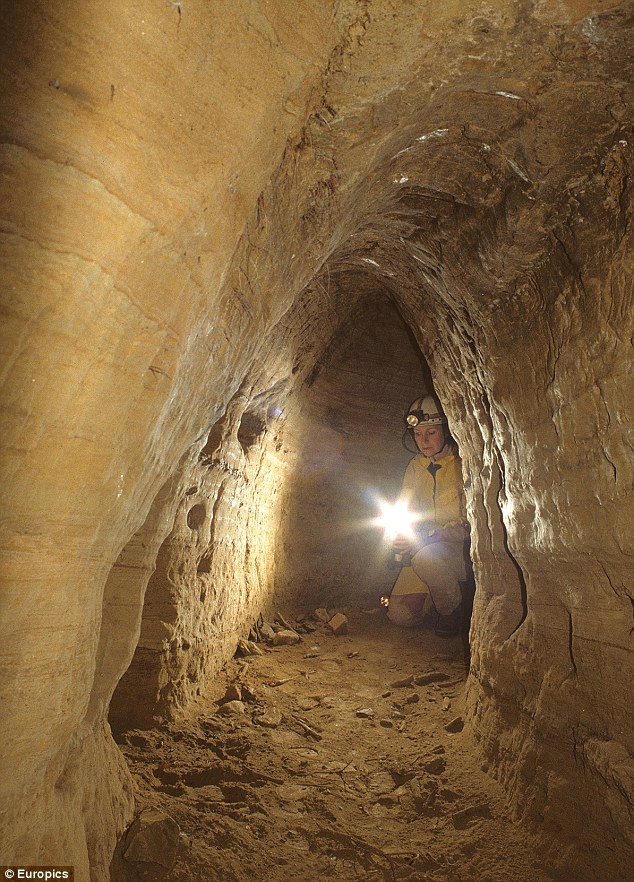 to Turkey. There are said to be literally thousands of these secret tunnels that are located north in Scotland, all the way down to the Mediterranean.