by Moe | Aug 26, 2011 | Morals and Dogma
p. 276
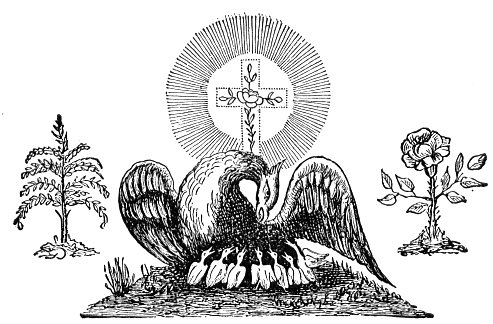
[Prince Rose Croix.]
EACH of us makes such applications to his own faith and creed, of the symbols and ceremonies of this Degree, as seems to him proper. With these special interpretations we have here nothing to do. Like the legend of the Master Khu_ru_m, in which some see figured the condemnation and sufferings of Christ; others those of the unfortunate Grand Master of the Templars; others those of the first Charles, King of England; and others still the annual descent of the Sun at the winter Solstice to the regions of darkness, the basis of many an ancient legend; so the ceremonies of this Degree receive different explanations; each interpreting them for himself, and being offended at the interpretation of no other.
In no other way could Masonry possess its character of Universality; that character which has ever been peculiar to it from its origin; and which enables two Kings, worshippers of different Deities, to sit together as Masters, while the walls of the first temple arose; and the men of Gebal, bowing down to the Phœnician Gods, to work by the side of the Hebrews to whom those Gods were abomination; and to sit with them in the same Lodge as brethren.
p. 277
You have already learned that these ceremonies have one general significance, to every one, of every faith, who believes in God, and the soul’s immortality.
The primitive men met in no Temples made with human hands. “God,” said Stephen, the first Martyr, “dwelleth not in Temples made with hands.” In the open air, under the overarching mysterious sky, in the great World-Temple, they uttered their vows and thanksgivings, and adored the God of Light; of that Light that was to them the type of Good, as darkness was the type of Evil.
All antiquity solved the enigma of the existence of Evil, by supposing the existence of a Principle of Evil, of Demons, fallen Angels, an Ahriman, a Typhon, a Siva, a Lok, or a Satan, that, first falling themselves, and plunged in misery and darkness, tempted man to his fall, and brought sin into the world. All believed in a future life, to be attained by purification and trials; in a state or successive states of reward and punishment; and in a Mediator or Redeemer, by whom the Evil Principle was to be overcome, and the Supreme Deity reconciled to His creatures. The belief was general, that He was to be born of a Virgin, and suffer a painful death. The Indians called him Chrishna; the Chinese, Kioun-tse; the Persians, Sosiosch; the Chaldeans, Dhouvanai; the Egyptians, Har-Oeri; Plato, Love; and the Scandinavians, Balder.
Chrishna, the Hindoo Redeemer, was cradled and educated among Shepherds. A Tyrant, at the time of his birth, ordered all the male children to be slain. He performed miracles, say his legends, even raising the dead. He washed the feet of the Brahmins, and was meek and lowly of spirit. He was born of a Virgin; descended to Hell, rose again, ascended to Heaven, charged his disciples to teach his doctrines, and gave them the gift of miracles.
The first Masonic Legislator whose memory is preserved to us by history, was Buddha, who, about a thousand years before the Christian era, reformed the religion of Manous. He called to the Priesthood all men, without distinction of caste, who felt themselves inspired by God to instruct men. Those who so associated themselves formed a Society of Prophets under the name of Samaneans. They recognized the existence of a single uncreated God, in whose bosom everything grows, is developed and transformed.
p. 278
[paragraph continues] The worship of this God reposed upon the obedience of all the beings He created. His feasts were those of the Solstices. The doctrines of Buddha pervaded India, China, and Japan. The Priests of Brahma, professing a dark and bloody creed, brutalized by Superstition, united together against Buddhism, and with the aid of Despotism, exterminated its followers. But their blood fertilized the new doctrine, which produced a new Society under the name of Gymnosophists; and a large number, fleeing to Ireland, planted their doctrines there, and there erected the round towers, some of which still stand, solid and unshaken as at first, visible monuments of the remotest ages.
Moe is the founder of GnosticWarrior.com. He is a father, husband, author, martial arts black belt, and an expert in Gnosticism, the occult, and esotericism.
by Moe | Aug 26, 2011 | Morals and Dogma
p. 261
the publicans, justice, equity, and fair dealing; the soldiery, peace, truth, and contentment; to do violence to none, accuse none falsely, and be content with their pay. He inculcated the necessity of a virtuous life, and the folly of trusting to their descent from Abraham.
He denounced both Pharisees and Sadducees as a generation of vipers, threatened with the anger of God. He baptized those who confessed their sins. He preached in the desert; and therefore in the country where the Essenes lived, professing the same doctrines. He was imprisoned before Christ began to preach. Matthew mentions him without preface or explanation; as if, apparently, his history was too well known to need any. “In those days,” he says, “came John the Baptist, preaching in the wilderness of Judea.” His disciples frequently fasted; for we find them with the Pharisees coming to Jesus to inquire why His Disciples did not fast as often as they; and He did not denounce them, as His habit was to denounce the Pharisees; but answered them kindly and gently.
From his prison, John sent two of his disciples to inquire of Christ: “Art thou he that is to come, or do we look for another?” Christ referred them to his miracles as an answer; and declared to the people that John was a prophet, and more than a prophet, and that no greater man had ever been born; but that the humblest Christian was his superior. He declared him to be Elias, who was to come.
John had denounced to Herod his marriage with his brother’s wife as unlawful; and for this he was imprisoned, and finally executed to gratify her. His disciples buried him; and Herod and others thought he had risen from the dead and appeared again in the person of Christ. The people all regarded John as a prophet; and Christ silenced the Priests and Elders by asking them whether he was inspired. They feared to excite the anger of the people by saying that he was not. Christ declared that he came “in the way of righteousness”; and that the lower classes believed him, though the Priests and Pharisees did not.
Thus John, who was often consulted by Herod, and to whom that monarch showed great deference, and was often governed by his advice; whose doctrine prevailed very extensively among the people and the publicans, taught some creed older than Christianity. That is plain: and it is equally plain, that the very large
p. 262
body of the Jews that adopted his doctrines, were neither Pharisees nor Sadducees, but the humble, common people. They must, therefore, have been Essenes. It is plain, too, that Christ applied for baptism as a sacred rite, well known and long practiced. It was becoming to him, he said, to fulfill all righteousness.
In the 18th chapter of the Acts of the Apostles we read thus: “And a certain Jew, named Apollos, born at Alexandria, an eloquent man, and mighty in the Scriptures, came to Ephesus. This man was instructed in the way of the Lord, and, being fervent in spirit, he spake and taught diligently the things of the Lord, knowing only the baptism of John; and he began to speak boldly in the synagogue; whom, when Aquilla and Priscilla had heard, they took him unto them, and expounded unto him the way of God more perfectly.”
Translating this from the symbolic and figurative language into the true ordinary sense of the Greek text, it reads thus: “And a certain Jew, named Apollos, an Alexandrian by birth, an eloquent man, and of extensive learning, came to Ephesus. He had learned in the mysteries the true doctrine in regard to God; and, being a zealous enthusiast, he spoke and taught diligently the truths in regard to the Deity, having received no other baptism than that of John.” He knew nothing in regard to Christianity; for he had resided in Alexandria, and had just then come to Ephesus; being, probably, a disciple of Philo, and a Therapeut.
“That, in all times,” says St. Augustine, “is the Christian religion, which to know and follow is the most sure and certain health, called according to that name, but not according to the thing itself, of which it is the name; for the thing itself, which is now called the Christian religion, really was known to the Ancients, nor was wanting at any time from the beginning of the human race, until the time when Christ came in the flesh; from whence the true religion, which had previously existed, began to be called Christian; and this in our days is the Christian religion, not as having been wanting in former times, but as having, in later times, received this name.” The disciples were first called “Christians,” at Antioch, when Barnabas and Paul began to preach there.
Moe is the founder of GnosticWarrior.com. He is a father, husband, author, martial arts black belt, and an expert in Gnosticism, the occult, and esotericism.
by Moe | Aug 26, 2011 | Morals and Dogma
p. 246
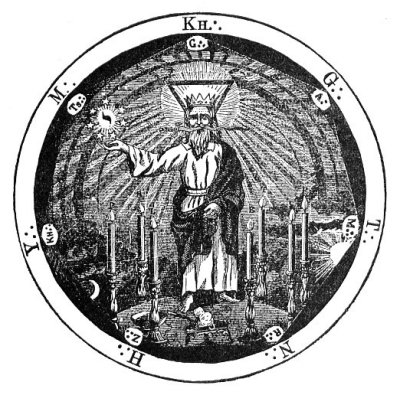
THIS is the first of the Philosophical Degrees of the Ancient and Accepted Scottish Rite; and the beginning of a course of instruction which will fully unveil to you the heart and inner mysteries of Masonry. Do not despair because you have often seemed on the point of attaining the inmost light, and have as often been disappointed. In all time, truth has been hidden under symbols, and often under a succession of allegories: where veil after veil had to be penetrated before the true Light was reached, and the essential truth stood revealed. The Human Light is but an imperfect reflection of a ray of the Infinite and Divine.
We are about to approach those ancient Religions which once
p. 247
ruled the minds of men, and whose ruins encumber the plains of the great Past, as the broken columns of Palmyra and Tadmor lie bleaching on the sands of the desert. They rise before us, those old, strange, mysterious creeds and faiths, shrouded in the mists of antiquity, and stalk dimly and undefined along the line which divides Time from Eternity; and forms of strange, wild, startling beauty mingled in the vast throngs of figures with shapes monstrous, grotesque, and hideous.
The religion taught by Moses, which, like the laws of Egypt, enunciated the principle of exclusion, borrowed, at every period of its existence, from all the creeds with which it came in contact. While, by the studies of the learned and wise, it enriched itself with the most admirable principles of the religions of Egypt and Asia, it was changed, in the wanderings of the People, by everything that was most impure or seductive in the pagan manners and superstitions. It was one thing in the times of Moses and Aaron, another in those of David and Solomon, and still another in those of Daniel and Philo.
At the time when John the Baptist made his appearance in the desert, near the shores of the Dead Sea, all the old philosophical and religious systems were approximating toward each other. A general lassitude inclined the minds of all toward the quietude of that amalgamation of doctrines for which the expeditions of Alexander and the more peaceful occurrences that followed, with the establishment in Asia and Africa of many Grecian dynasties and a great number of Grecian colonies, had prepared the way. After the intermingling of different nations, which resulted from the wars of Alexander in three-quarters of the globe, the doctrines of Greece, of Egypt, of Persia, and of India, met and intermingled everywhere. All the barriers that had formerly kept the nations apart, were thrown down; and while the People of the West readily connected their faith with those of the East, those of the Orient hastened to learn the traditions of Rome and the legends of Athens. While the Philosophers of Greece, all (except the disciples of Epicurus) more or less Platonists, seized eagerly upon the beliefs and doctrines of the East,–the Jews and Egyptians, before then the most exclusive of all peoples, yielded to that eclecticism which prevailed among their masters, the Greeks and Romans.
Under the same influences of toleration, even those who embraced Christianity, mingled together the old and the new, Christianity
p. 248
and Philosophy, the Apostolic teachings and the traditions of Mythology. The man of intellect, devotee of one system, rarely displaces it with another in all its purity. The people take such a creed as is offered them. Accordingly, the distinction between the esoteric and the exoteric doctrine, immemorial in other creeds, easily gained a foothold among many of the Christians; and it was held by a vast number, even during the preaching of Paul, that the writings of the Apostles were incomplete; that they contained only the germs of another doctrine, which must receive from the hands of philosophy, not only the systematic arrangement which was wanting, but all the development which lay concealed therein. The writings of the Apostles, they said, in addressing themselves to mankind in general, enunciated only the articles of the vulgar faith; but transmitted the mysteries of knowledge to superior minds, to the Elect,–mysteries handed down from generation to generation in esoteric traditions; and to this science of the mysteries they gave the name of Γνῶσις; [Gnosis].
Moe is the founder of GnosticWarrior.com. He is a father, husband, author, martial arts black belt, and an expert in Gnosticism, the occult, and esotericism.
by Moe | Aug 26, 2011 | Morals and Dogma
p. 241
WE no longer expect to rebuild the Temple at Jerusalem. To us it has become but a symbol. To us the whole world is God’s Temple, as is every upright heart. To establish all over the world the New Law and Reign of Love, Peace, Charity, and Toleration, is to build that Temple, most acceptable to God, in erecting which Masonry is now engaged. No longer needing to repair to Jerusalem to worship, nor to offer up sacrifices and shed blood to propitiate the Deity, man may make the woods and mountains his Churches and Temples, and worship God with a devout gratitude, and with works of charity and beneficence to his fellow-men. Wherever the humble and contrite heart silently offers up its adoration, under the overarching trees, in the open, level meadows, on the hill-side, in the glen, or in the city’s swarming streets; there is God’s House and the New Jerusalem.
The Princes of Jerusalem no longer sit as magistrates to judge between the people; nor is their number limited to five. But their duties still remain substantially the same, and their insignia and symbols retain their old significance. Justice and Equity are still their characteristics. To reconcile disputes and heal dissensions, to restore amity and peace, to soothe dislikes and soften prejudices, are their peculiar duties; and they know that the peacemakers are blessed.
Their emblems have been already explained. They are part of the language of Masonry; the same now as it was when Moses learned it from the Egyptian Hierophants.
Still we observe the spirit of the Divine law, as thus enunciated to our ancient brethren, when the Temple was rebuilt, and the book of the law again opened:
“Execute true judgment; and show mercy and compassion every man to his brother. Oppress not the widow nor the fatherless, the stranger nor the poor; and let none of you imagine evil against his brother in his heart. Speak ye every man the truth
p. 242
to his neighbor; execute the judgment of Truth and Peace in your gates; and love no false oath; for all these I hate, saith the Lord.
“Let those who have power rule in righteousness, and Princes in judgment. And let him that is a judge be as an hiding-place from the wind, and a covert from the tempest; as rivers of water in a dry place; as the shadow of a great rock in a weary land. Then the vile person shall no more be called liberal; nor the churl bountiful; and the work of justice shall be peace; and the effect of justice, quiet and security; and wisdom and knowledge shall be the stability of the times. Walk ye righteously and speak uprightly; despise the gains of oppression, shake from your hands the contamination of bribes; stop not your ears against the cries of the oppressed, nor shut your eyes that you may not see the crimes of the great; and you shall dwell on high, and your place of defence be like munitions of rocks.”
Forget not these precepts of the old Law; and especially do not forget, as you advance, that every Mason, however humble, is your brother, and the laboring man your peer! Remember always that all Masonry is work, and that the trowel is an emblem of the Degrees in this Council. Labor, when rightly understood, is both noble and ennobling, and intended to develop man’s moral and spiritual nature, and not to be deemed a disgrace or a misfortune.
Everything around us is, in its bearings and influences, moral. The serene and bright morning, when we recover our conscious existence from the embraces of sleep; when, from that image of Death God calls us to a new life, and again gives us existence, and His mercies visit us in every bright ray and glad thought, and call for gratitude and content; the silence of that early dawn, the hushed silence, as it were, of expectation; the holy eventide, its cooling breeze, its lengthening shadows, its falling shades, its still and sober hour; the sultry noontide and the stern and solemn midnight; and Spring-time, and chastening Autumn; and Summer, that unbars our gates, and carries us forth amidst the ever-renewed wonders of the world; and Winter, that gathers us around the evening hearth:–all these, as they pass, touch by turns the springs of the spiritual life in us, and are conducting that life to good or evil. The idle watch-hand often points to something within us; and the shadow of the gnomon on the dial often falls upon the conscience.
Moe is the founder of GnosticWarrior.com. He is a father, husband, author, martial arts black belt, and an expert in Gnosticism, the occult, and esotericism.
by Moe | Aug 26, 2011 | Morals and Dogma
p. 237
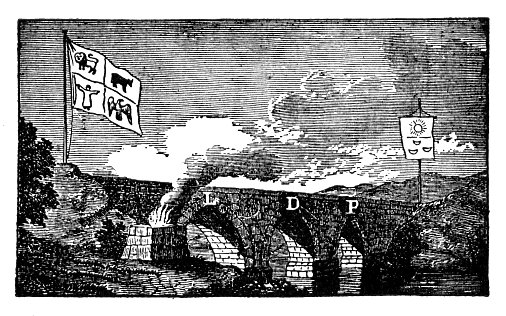
[Knight of the East, of the Sword, or of the Eagle.]
THIS Degree, like all others in Masonry, is symbolical. Based upon historical truth and authentic tradition, it is still an allegory. The leading lesson of this Degree is Fidelity to obligation, and Constancy and Perseverance under difficulties and discouragement.
Masonry is engaged in her crusade, against ignorance, intolerance, fanaticism, superstition, uncharitableness, and error. She does not sail with the trade-winds, upon a smooth sea, with a steady free breeze, fair for a welcoming harbor; but meets and must overcome many opposing currents, baffling winds, and dead calms.
The chief obstacles to her success are the apathy and faithlessness of her own selfish children, and the supine indifference of the world. In the roar and crush and hurry of life and business, and the tumult and uproar of politics, the quiet voice of Masonry is unheard and unheeded. The first lesson which one learns, who engages in any great work of reform or beneficence, is, that men are essentially careless, lukewarm, and indifferent as to everything that does not concern their own personal and immediate
p. 238
welfare. It is to single men, and not to the united efforts of many, that all the great works of man, struggling toward perfection, are owing. The enthusiast, who imagines that he can inspire with his own enthusiasm the multitude that eddies around him, or even the few who have associated themselves with him as co-workers, is grievously mistaken; and most often the conviction of his own mistake is followed by discouragement and disgust. To do all, to pay all, and to suffer all, and then, when despite all obstacles and hindrances, success is accomplished, and a great work done, to see those who opposed or looked coldly on it, claim and reap all the praise and reward, is the common and almost universal lot of the benefactor of his kind.
He who endeavors to serve, to benefit, and improve the world, is like a swimmer, who struggles against a rapid current, in a river lashed into angry waves by the winds. Often they roar over his head, often they beat him back and baffle him. Most men yield to the stress of the current, and float with it to the shore, or are swept over the rapids; and only here and there the stout, strong heart and vigorous arms struggle on toward ultimate success.
It is the motionless and stationary that most frets and impedes the current of progress; the solid rock or stupid dead tree, rested firmly on the bottom; and around which the river whirls and eddies: the Masons that doubt and hesitate and are discouraged; that disbelieve in the capability of man to improve; that are not disposed to toil and labor for the interest and well-being of general humanity; that expect others to do all, even of that which they do not oppose or ridicule; while they sit, applauding and doing nothing, or perhaps prognosticating failure.
There were many such at the rebuilding of the Temple. There were prophets of evil and misfortune–the lukewarm and the in-different and the apathetic; those who stood by and sneered; and those who thought they did God service enough if they now and then faintly applauded. There were ravens croaking ill omen, and murmurers who preached the folly and futility of the attempt. The world is made up of such; and they were as abundant then as they are now.
But gloomy and discouraging as was the prospect, with lukewarmness within and bitter opposition without, our ancient brethren persevered. Let us leave them engaged in the good work, and whenever to us, as to them, success is uncertain, remote, and
p. 239
contingent, let us still remember that the only question for us to ask, as true men and Masons, is, what does duty require; and not what will be the result and our reward if we do our duty. Work on, with the Sword in one hand, and the Trowel in the other!
Moe is the founder of GnosticWarrior.com. He is a father, husband, author, martial arts black belt, and an expert in Gnosticism, the occult, and esotericism.