by Moe | Aug 26, 2011 | Morals and Dogma
p. 218
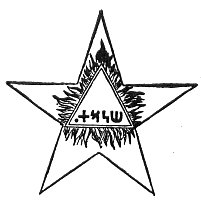
[Perfect Elu.]
IT is for each individual Mason to discover the secret of Masonry, by reflection upon its symbols and a wise consideration and analysis of what is said and done in the work. Masonry does not inculcate her truths. She states them, once and briefly; or hints them, perhaps, darkly; or interposes a cloud between them and eyes that would be dazzled by them. “Seek, and ye shall find,” knowledge and the truth.
The practical object of Masonry is the physical and moral amelioration and the intellectual and spiritual improvement of individuals and society. Neither can be effected, except by the dissemination of truth. It is falsehood in doctrines and fallacy in principles, to which most of the miseries of men and the misfortunes of nations are owing. Public opinion is rarely right on any point; and there are and always will be important truths to be substituted in that opinion in the place of many errors and absurd and injurious prejudices. There are few truths that public opinion has not at some time hated and persecuted as heresies; and few errors that have not at some time seemed to it truths radiant from the immediate presence of God. There are moral maladies, also, of man and society, the treatment of which requires not only boldness, but also, and more, prudence and discretion; since they are more the fruit of false and pernicious doctrines, moral, political, and religious, than of vicious inclinations.
Much of the Masonic secret manifests itself, without speech
p. 219
revealing it, to him who even partially comprehends all the Degrees in proportion as he receives them; and particularly to those who advance to the highest Degrees of the Ancient and Accepted Scottish Rite. That Rite raises a corner of the veil, even in the Degree of Apprentice; for it there declares that Masonry is a worship.
Masonry labors to improve the social order by enlightening men’s minds, warming their hearts with the love of the good, inspiring them with the great principle of human fraternity, and requiring of its disciples that their language and actions shall con-form to that principle, that they shall enlighten each other, control their passions, abhor vice, and pity the vicious man as one afflicted with a deplorable malady.
It is the universal, eternal, immutable religion, such as God planted it in the heart of universal humanity. No creed has ever been long-lived that was not built on this foundation. It is the base, and they are the superstructure. “Pure religion and undefiled before God and the Father is this, to visit the fatherless and widows in their affliction, and to keep himself unspotted from the world.” “Is not this the fast that I have chosen? to loose the bands of wickedness, to undo the heavy burdens, and to let the oppressed go free, and that ye break every yoke?” The ministers of this religion are all Masons who comprehend it and are devoted to it; its sacrifices to God are good works, the sacrifices of the base and disorderly passions, the offering up of self-interest on the altar of humanity, and perpetual efforts to attain to all the moral perfection of which man is capable.
To make honor and duty the steady beacon-lights that shall guide your life-vessel over the stormy seas of time; to do that which it is right to do, not because it will insure you success, or bring with it a reward, or gain the applause of men, or be “the best policy,” more prudent or more advisable; but because it is right, and therefore ought to be done; to war incessantly against error, intolerance, ignorance, and vice, and yet to pity those who err, to be tolerant even of intolerance, to teach the ignorant, and to labor to reclaim the vicious, are some of the duties of a Mason.
A good Mason is one that can look upon death, and see its face with the same countenance with which he hears its story; that can endure all the labors of his life with his soul supporting his body, that can equally despise riches when he hath them and
Moe is the founder of GnosticWarrior.com. He is a father, husband, author, martial arts black belt, and an expert in Gnosticism, the occult, and esotericism.
by Moe | Aug 26, 2011 | Morals and Dogma
p. 204
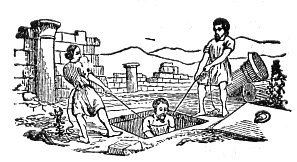 WHETHER the legend and history of this Degree are historically true, or but an allegory, containing in itself a deeper truth and a profounder meaning, we shall not now debate. If it be but a legendary myth, you must find out for yourself what it means. It is certain that the word which the Hebrews are not now permitted to pronounce was in common use by Abraham, Lot, Isaac, Jacob, Laban, Rebecca, and even among tribes foreign to the Hebrews, before the time of Moses; and that it recurs a hundred times in the lyrical effusions of David and other Hebrew poets.
We know that for many centuries the Hebrews have been forbidden to pronounce the Sacred Name; that wherever it occurs, they have for ages read the word Adonaï instead; and that under it, when the masoretic points, which represent the vowels, came to be used, they placed those which belonged to the latter word. The possession of the true pronunciation was deemed to confer on him who had it extraordinary and supernatural powers; and the Word itself, worn upon the person, was regarded as an amulet, a protection against personal danger, sickness, and evil spirits. We know that all this was a vain superstition, natural to a rude people, necessarily disappearing as the intellect of man became enlightened; and wholly unworthy of a Mason.
It is noticeable that this notion of the sanctity of the Divine Name or Creative Word was common to all the ancient nations. The Sacred Word HOM was supposed by the ancient Persians (who were among the earliest emigrants from Northern India) to
p. 205
be pregnant with a mysterious power; and they taught that by its utterance the world was created. In India it was forbidden to pronounce the word AUM or OM, the Sacred Name of the One Deity, manifested as Brahma, Vishna, and Seeva.
These superstitious notions in regard to the efficacy of the Word, and the prohibition against pronouncing it, could, being errors, have formed no part of the pure primitive religion, or of the esoteric doctrine taught by Moses, and the full knowledge of which was confined to the Initiates; unless the whole was but an ingenious invention for the concealment of some other Name or truth, the interpretation and meaning whereof was made known only to the select few. If so, the common notions in regard to the Word grew up in the minds of the people, like other errors and fables among all the ancient nations, out of original truths and symbols and allegories misunderstood. So it has always been that allegories, intended as vehicles of truth, to be understood by the sages, have become or bred errors, by being literally accepted.
It is true, that before the masoretic points were invented (which was after the beginning of the Christian era), the pronunciation of a word in the Hebrew language could not be known from the characters in which it was written. It was, therefore, possible for that of the name of the Deity to have been forgotten and lost. It is certain that its true pronunciation is not that represented by the word Jehovah; and therefore that that is not the true name of Deity, nor the Ineffable Word.
The ancient symbols and allegories always had more than one interpretation. They always had a double meaning, and sometimes more than two, one serving as the envelope of the other. Thus the pronunciation of the word was a symbol; and that pronunciation and the word itself were lost, when the knowledge of the true nature and attributes of God faded out of the minds of the Jewish people. That is one interpretation–true, but not the inner and profoundest one.
Men were figuratively said to forget the name of God, when they lost that knowledge, and worshipped the heathen deities, and burned incense to them on the high places, and passed their children through the fire to Moloch.
Thus the attempts of the ancient Israelites and of the Initiates to ascertain the True Name of the Deity, and its pronunciation, and the loss of the True Word, are an allegory, in which are represented
Moe is the founder of GnosticWarrior.com. He is a father, husband, author, martial arts black belt, and an expert in Gnosticism, the occult, and esotericism.
by Moe | Aug 26, 2011 | Morals and Dogma
p. 189
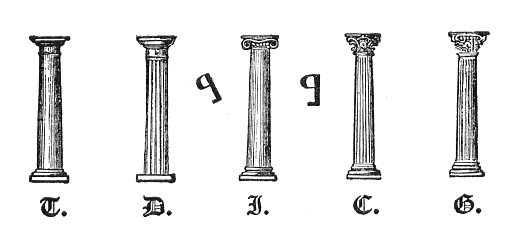
[Master Architect.]
THE great duties that are inculcated by the lessons taught by the working-instruments of a Grand Master Architect, demanding so much of us, and taking for granted the capacity to perform them faithfully and fully, bring us at once to reflect upon the dignity of human nature, and the vast powers and capacities of the human soul; and to that theme we invite your attention in this Degree. Let us begin to rise from earth toward the Stars.
Evermore the human soul struggles toward the light, toward God, and the Infinite. It is especially so in its afflictions. Words go but a little way into the depths of sorrow. The thoughts that writhe there in silence, that go into the stillness of Infinitude and Eternity, have no emblems. Thoughts enough come there, such as no tongue ever uttered. They do not so much want human sympathy, as higher help. There is a loneliness in deep sorrow which the Deity alone can relieve. Alone, the mind wrestles with the great problem of calamity, and seeks the solution from the Infinite Providence of Heaven, and thus is led directly to God.
There are many things in us of which we are not distinctly conscious: To waken that slumbering consciousness into life, and so to lead the soul up to the Light, is one office of every great ministration to human nature, whether its vehicle be the pen, the pencil, or the tongue. We are unconscious of the intensity and awfulness of the life within us. Health and sickness, joy and sorrow, success and disappointment, life and death, love and loss, are
p. 190
familiar words upon our lips; and we do not know to what depths they point within us.
We seem never to know what any thing means or is worth until we have lost it. Many an organ, nerve, and fibre in our bodily frame performs its silent part for years, and we are quite unconscious of its value. It is not until it is injured that we discover that value, and find how essential it was to our happiness and comfort. We never know the full significance of the words, “property,” “ease,” and “health;” the wealth of meaning in the fond epithets, “parent,” “child,” “beloved,” and “friend,” until the thing or the person is taken away; until, in place of the bright, visible being, comes the awful and desolate shadow, where nothing is: where we stretch out our hands in vain, and strain our eyes upon dark and dismal vacuity. Yet, in that vacuity, we do not lose the object that we loved. It becomes only the more real to us. Our blessings not only brighten when they depart, but are fixed in enduring reality; and love and friendship receive their everlasting seal under the cold impress of death.
A dim consciousness of infinite mystery and grandeur lies beneath all the commonplace of life. There is an awfulness and’ a majesty around us, in all our little worldliness. The rude peasant from the Apennines, asleep at the foot of a pillar in a majestic Roman church, seems not to hear or see, but to dream only of the herd he feeds or the ground he tills in the mountains. But the choral symphonies fall softly upon his ear, and the gilded arches are dimly seen through his half-slumbering eyelids.
So the soul, however given up to the occupations of daily life, cannot quite lose the sense of where it is, and of what is above it and around it. The scene of its actual engagements may be small; the path of its steps, beaten and familiar; the objects it handles, easily spanned, and quite worn out with daily uses. So it may be, and amidst such things that we all live. So we live our little life; but Heaven is above us and all around and close to us; and Eternity is before us and behind us; and suns and stars are silent witnesses and watchers over us. We are enfolded by Infinity. Infinite Powers and Infinite spaces lie all around us. The dread arch of Mystery spreads over us, and no voice ever pierced it. Eternity is enthroned amid Heaven’s myriad starry heights; and no utterance or word ever came from those far-off and silent spaces. Above, is that awful majesty; around us, everywhere, it stretches
Moe is the founder of GnosticWarrior.com. He is a father, husband, author, martial arts black belt, and an expert in Gnosticism, the occult, and esotericism.
by Moe | Aug 26, 2011 | Morals and Dogma
p. 176

[Elu of the Twelve.]
THE duties of a Prince Ameth are, to be earnest, true, reliable, and sincere; to protect the people against illegal impositions and exactions; to contend for their political rights, and to see, as far as he may or can, that those bear the burdens who reap the benefits of the Government.
You are to be true unto all men.
You are to be frank and sincere in all things.
You are to be earnest in doing whatever it is your duty to do.
And no man must repent that he has relied upon your resolve, your profession, or your word.
The great distinguishing characteristic of a Mason is sympathy with his kind. He recognizes in the human race one great family, all connected with himself by those invisible links, and that mighty net-work of circumstance, forged and woven by God.
Feeling that sympathy, it is his first Masonic duty to serve his fellow-man. At his first entrance into the Order, he ceases to be isolated, and becomes one of a great brotherhood, assuming new duties toward every Mason that lives, as every Mason at the same moment assumes them toward him.
Nor are those duties on his part confined to Masons alone. He assumes many in regard to his country, and especially toward the great, suffering masses of the common people; for they too are his brethren, and God hears them, inarticulate as the moanings of their misery are. By all proper means, of persuasion and influence,
p. 177
and otherwise, if the occasion and emergency require, he is bound to defend them against oppression, and tyrannical and illegal exactions.
He labors equally to defend and to improve the people. He does not flatter them to mislead them, nor fawn upon them to rule them, nor conceal his opinions to humor them, nor tell them that they can never err, and that their voice is the voice of God. He knows that the safety of every free government, and its continuance and perpetuity depend upon the virtue and intelligence of the common people; and that, unless their liberty is of such a kind as arms can neither procure nor take away; unless it is the fruit of manly courage, of justice, temperance, and generous virtue–unless, being such, it has taken deep root in the minds and hearts of the people at large, there will not long be wanting those who will snatch from them by treachery what they have acquired by arms or institutions.
He knows that if, after being released from the toils of war, the people neglect the arts of peace; if their peace and liberty be a state of warfare; if war be their only virtue, and the summit of their praise, they will soon find peace the most adverse to their interests. It will be only a more distressing war; and that which they imagined liberty will be the worst of slavery. For, unless by the means of knowledge and morality, not frothy and loquacious, but genuine, unadulterated, and sincere, they clear the horizon of the mind from those mists of error and passion which arise from ignorance and vice, they will always have those who will bend their necks to the yoke as if they were brutes; who, notwithstanding all their triumphs, will put them up to the highest bidder, as if they were mere booty made in war; and find an exuberant source of wealth and power, in the people’s ignorance, prejudice, and passions.
The people that does not subjugate the propensity of the wealthy to avarice, ambition, and sensuality, expel luxury from them and their families, keep down pauperism, diffuse knowledge among the poor, and labor to raise the abject from the mire of vice and low indulgence, and to keep the industrious from starving in sight of luxurious festivals, will find that it has cherished, in that avarice, ambition, sensuality, selfishness, and luxury of the one class, and that degradation, misery, drunkenness, ignorance, and brutalization of the other, more stubborn and intractable despots at home
Moe is the founder of GnosticWarrior.com. He is a father, husband, author, martial arts black belt, and an expert in Gnosticism, the occult, and esotericism.
by Moe | Aug 26, 2011 | Morals and Dogma
p. 160
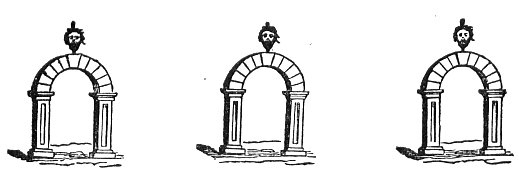
[Elu of the Fifteen.]
THIS Degree is devoted to the same objects as those of the Elu of Nine; and also to the cause of Toleration and Liberality against Fanaticism and Persecution, political and religious; and to that of Education, Instruction, and Enlightenment against Error, Barbarism, and Ignorance. To these objects you have irrevocably and forever devoted your hand, your heart, and your intellect; and whenever in your presence a Chapter of this Degree is opened, you will be most solemnly reminded of your vows here taken at the altar.
Toleration, holding that every other man has the same right to his opinion and faith that we have to ours; and liberality, holding that as no human being can with certainty say, in the clash and conflict of hostile faiths and creeds, what is truth, or that he is surely in possession of it, so every one should feel that it is quite possible that another equally honest and sincere with himself, and yet holding the contrary opinion, may himself be in possession of the truth, and that whatever one firmly and conscientiously believes, is truth, to him–these are the mortal enemies of that fanaticism which persecutes for opinion’s sake, and initiates crusades against whatever it, in its imaginary holiness, deems to be contrary to the law of God or verity of dogma. And education, instruction, and enlightenment are the most certain means by which fanaticism and intolerance can be rendered powerless.
No true Mason scoffs at honest convictions and an ardent zeal in the cause of what one believes to be truth and justice. But he
p. 161
does absolutely deny the right of any man to assume the prerogative of Deity, and condemn another’s faith and opinions as deserving to be punished because heretical. Nor does he approve the course of those who endanger the peace and quiet of great nations, and the best interest of their own race by indulging in a chimerical and visionary philanthropy–a luxury which chiefly consists in drawing their robes around them to avoid contact with their fellows, and proclaiming themselves holier than they.
For he knows that such follies are often more calamitous than the ambition of kings; and that intolerance and bigotry have been infinitely greater curses to mankind than ignorance and error. Better any error than persecution! Better any opinion than the thumb-screw, the rack, and the stake! And he knows also how unspeakably absurd it is, for a creature to whom himself and everything around him are mysteries, to torture and slay others, because they cannot think as he does in regard to the profoundest of those mysteries, to understand which is utterly beyond the comprehension of either the persecutor or the persecuted.
Masonry is not a religion. He who makes of it a religious belief, falsifies and denaturalizes it. The Brahmin, the Jew, the Mahometan, the Catholic, the Protestant, each professing his peculiar religion, sanctioned by the laws, by time, and by climate, must needs retain it, and cannot have two religions; for the social and sacred laws adapted to the usages, manners, and prejudices of particular countries, are the work of men.
But Masonry teaches, and has preserved in their purity, the cardinal tenets of the old primitive faith, which underlie and are the foundation of all religions. All that ever existed have had a basis of truth; and all have overlaid that truth with errors. The primitive truths taught by the Redeemer were sooner corrupted, and intermingled and alloyed with fictions than when taught to the first of our race. Masonry is the universal morality which is suitable to the inhabitants of every clime, to the man of every creed. It has taught no doctrines, except those truths that tend directly to the well-being of man; and those who have attempted to direct it toward useless vengeance, political ends, and Jesuitism, have merely perverted it to purposes foreign to its pure spirit and real nature.
Mankind outgrows the sacrifices and the mythologies of the childhood of the world. Yet it is easy for human indolence to
Moe is the founder of GnosticWarrior.com. He is a father, husband, author, martial arts black belt, and an expert in Gnosticism, the occult, and esotericism.