by Moe
p. 189
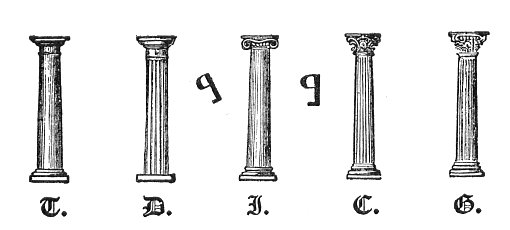
[Master Architect.]
THE great duties that are inculcated by the lessons taught by the working-instruments of a Grand Master Architect, demanding so much of us, and taking for granted the capacity to perform them faithfully and fully, bring us at once to reflect upon the dignity of human nature, and the vast powers and capacities of the human soul; and to that theme we invite your attention in this Degree. Let us begin to rise from earth toward the Stars.
Evermore the human soul struggles toward the light, toward God, and the Infinite. It is especially so in its afflictions. Words go but a little way into the depths of sorrow. The thoughts that writhe there in silence, that go into the stillness of Infinitude and Eternity, have no emblems. Thoughts enough come there, such as no tongue ever uttered. They do not so much want human sympathy, as higher help. There is a loneliness in deep sorrow which the Deity alone can relieve. Alone, the mind wrestles with the great problem of calamity, and seeks the solution from the Infinite Providence of Heaven, and thus is led directly to God.
There are many things in us of which we are not distinctly conscious: To waken that slumbering consciousness into life, and so to lead the soul up to the Light, is one office of every great ministration to human nature, whether its vehicle be the pen, the pencil, or the tongue. We are unconscious of the intensity and awfulness of the life within us. Health and sickness, joy and sorrow, success and disappointment, life and death, love and loss, are
p. 190
familiar words upon our lips; and we do not know to what depths they point within us.
We seem never to know what any thing means or is worth until we have lost it. Many an organ, nerve, and fibre in our bodily frame performs its silent part for years, and we are quite unconscious of its value. It is not until it is injured that we discover that value, and find how essential it was to our happiness and comfort. We never know the full significance of the words, “property,” “ease,” and “health;” the wealth of meaning in the fond epithets, “parent,” “child,” “beloved,” and “friend,” until the thing or the person is taken away; until, in place of the bright, visible being, comes the awful and desolate shadow, where nothing is: where we stretch out our hands in vain, and strain our eyes upon dark and dismal vacuity. Yet, in that vacuity, we do not lose the object that we loved. It becomes only the more real to us. Our blessings not only brighten when they depart, but are fixed in enduring reality; and love and friendship receive their everlasting seal under the cold impress of death.
A dim consciousness of infinite mystery and grandeur lies beneath all the commonplace of life. There is an awfulness and’ a majesty around us, in all our little worldliness. The rude peasant from the Apennines, asleep at the foot of a pillar in a majestic Roman church, seems not to hear or see, but to dream only of the herd he feeds or the ground he tills in the mountains. But the choral symphonies fall softly upon his ear, and the gilded arches are dimly seen through his half-slumbering eyelids.
So the soul, however given up to the occupations of daily life, cannot quite lose the sense of where it is, and of what is above it and around it. The scene of its actual engagements may be small; the path of its steps, beaten and familiar; the objects it handles, easily spanned, and quite worn out with daily uses. So it may be, and amidst such things that we all live. So we live our little life; but Heaven is above us and all around and close to us; and Eternity is before us and behind us; and suns and stars are silent witnesses and watchers over us. We are enfolded by Infinity. Infinite Powers and Infinite spaces lie all around us. The dread arch of Mystery spreads over us, and no voice ever pierced it. Eternity is enthroned amid Heaven’s myriad starry heights; and no utterance or word ever came from those far-off and silent spaces. Above, is that awful majesty; around us, everywhere, it stretches
Moe is the founder of GnosticWarrior.com. He is a father, husband, author, martial arts black belt, and an expert in Gnosticism, the occult, and esotericism.
by Moe
p. 176

[Elu of the Twelve.]
THE duties of a Prince Ameth are, to be earnest, true, reliable, and sincere; to protect the people against illegal impositions and exactions; to contend for their political rights, and to see, as far as he may or can, that those bear the burdens who reap the benefits of the Government.
You are to be true unto all men.
You are to be frank and sincere in all things.
You are to be earnest in doing whatever it is your duty to do.
And no man must repent that he has relied upon your resolve, your profession, or your word.
The great distinguishing characteristic of a Mason is sympathy with his kind. He recognizes in the human race one great family, all connected with himself by those invisible links, and that mighty net-work of circumstance, forged and woven by God.
Feeling that sympathy, it is his first Masonic duty to serve his fellow-man. At his first entrance into the Order, he ceases to be isolated, and becomes one of a great brotherhood, assuming new duties toward every Mason that lives, as every Mason at the same moment assumes them toward him.
Nor are those duties on his part confined to Masons alone. He assumes many in regard to his country, and especially toward the great, suffering masses of the common people; for they too are his brethren, and God hears them, inarticulate as the moanings of their misery are. By all proper means, of persuasion and influence,
p. 177
and otherwise, if the occasion and emergency require, he is bound to defend them against oppression, and tyrannical and illegal exactions.
He labors equally to defend and to improve the people. He does not flatter them to mislead them, nor fawn upon them to rule them, nor conceal his opinions to humor them, nor tell them that they can never err, and that their voice is the voice of God. He knows that the safety of every free government, and its continuance and perpetuity depend upon the virtue and intelligence of the common people; and that, unless their liberty is of such a kind as arms can neither procure nor take away; unless it is the fruit of manly courage, of justice, temperance, and generous virtue–unless, being such, it has taken deep root in the minds and hearts of the people at large, there will not long be wanting those who will snatch from them by treachery what they have acquired by arms or institutions.
He knows that if, after being released from the toils of war, the people neglect the arts of peace; if their peace and liberty be a state of warfare; if war be their only virtue, and the summit of their praise, they will soon find peace the most adverse to their interests. It will be only a more distressing war; and that which they imagined liberty will be the worst of slavery. For, unless by the means of knowledge and morality, not frothy and loquacious, but genuine, unadulterated, and sincere, they clear the horizon of the mind from those mists of error and passion which arise from ignorance and vice, they will always have those who will bend their necks to the yoke as if they were brutes; who, notwithstanding all their triumphs, will put them up to the highest bidder, as if they were mere booty made in war; and find an exuberant source of wealth and power, in the people’s ignorance, prejudice, and passions.
The people that does not subjugate the propensity of the wealthy to avarice, ambition, and sensuality, expel luxury from them and their families, keep down pauperism, diffuse knowledge among the poor, and labor to raise the abject from the mire of vice and low indulgence, and to keep the industrious from starving in sight of luxurious festivals, will find that it has cherished, in that avarice, ambition, sensuality, selfishness, and luxury of the one class, and that degradation, misery, drunkenness, ignorance, and brutalization of the other, more stubborn and intractable despots at home
Moe is the founder of GnosticWarrior.com. He is a father, husband, author, martial arts black belt, and an expert in Gnosticism, the occult, and esotericism.
by Moe
p. 160
[Elu of the Fifteen.]
THIS Degree is devoted to the same objects as those of the Elu of Nine; and also to the cause of Toleration and Liberality against Fanaticism and Persecution, political and religious; and to that of Education, Instruction, and Enlightenment against Error, Barbarism, and Ignorance. To these objects you have irrevocably and forever devoted your hand, your heart, and your intellect; and whenever in your presence a Chapter of this Degree is opened, you will be most solemnly reminded of your vows here taken at the altar.
Toleration, holding that every other man has the same right to his opinion and faith that we have to ours; and liberality, holding that as no human being can with certainty say, in the clash and conflict of hostile faiths and creeds, what is truth, or that he is surely in possession of it, so every one should feel that it is quite possible that another equally honest and sincere with himself, and yet holding the contrary opinion, may himself be in possession of the truth, and that whatever one firmly and conscientiously believes, is truth, to him–these are the mortal enemies of that fanaticism which persecutes for opinion’s sake, and initiates crusades against whatever it, in its imaginary holiness, deems to be contrary to the law of God or verity of dogma. And education, instruction, and enlightenment are the most certain means by which fanaticism and intolerance can be rendered powerless.
No true Mason scoffs at honest convictions and an ardent zeal in the cause of what one believes to be truth and justice. But he
p. 161
does absolutely deny the right of any man to assume the prerogative of Deity, and condemn another’s faith and opinions as deserving to be punished because heretical. Nor does he approve the course of those who endanger the peace and quiet of great nations, and the best interest of their own race by indulging in a chimerical and visionary philanthropy–a luxury which chiefly consists in drawing their robes around them to avoid contact with their fellows, and proclaiming themselves holier than they.
For he knows that such follies are often more calamitous than the ambition of kings; and that intolerance and bigotry have been infinitely greater curses to mankind than ignorance and error. Better any error than persecution! Better any opinion than the thumb-screw, the rack, and the stake! And he knows also how unspeakably absurd it is, for a creature to whom himself and everything around him are mysteries, to torture and slay others, because they cannot think as he does in regard to the profoundest of those mysteries, to understand which is utterly beyond the comprehension of either the persecutor or the persecuted.
Masonry is not a religion. He who makes of it a religious belief, falsifies and denaturalizes it. The Brahmin, the Jew, the Mahometan, the Catholic, the Protestant, each professing his peculiar religion, sanctioned by the laws, by time, and by climate, must needs retain it, and cannot have two religions; for the social and sacred laws adapted to the usages, manners, and prejudices of particular countries, are the work of men.
But Masonry teaches, and has preserved in their purity, the cardinal tenets of the old primitive faith, which underlie and are the foundation of all religions. All that ever existed have had a basis of truth; and all have overlaid that truth with errors. The primitive truths taught by the Redeemer were sooner corrupted, and intermingled and alloyed with fictions than when taught to the first of our race. Masonry is the universal morality which is suitable to the inhabitants of every clime, to the man of every creed. It has taught no doctrines, except those truths that tend directly to the well-being of man; and those who have attempted to direct it toward useless vengeance, political ends, and Jesuitism, have merely perverted it to purposes foreign to its pure spirit and real nature.
Mankind outgrows the sacrifices and the mythologies of the childhood of the world. Yet it is easy for human indolence to
Moe is the founder of GnosticWarrior.com. He is a father, husband, author, martial arts black belt, and an expert in Gnosticism, the occult, and esotericism.
by Moe
p. 149
[Elu of the Nine.]
ORIGINALLY created to reward fidelity, obedience, and devotion, this Degree was consecrated to bravery, devotedness, and patriot-ism; and your obligation has made known to you the duties which you have assumed. They are summed up in the simple mandate, “Protect the oppressed against the oppressor; and devote yourself to the honor and interests of your Country.”
Masonry is not “speculative,” nor theoretical, but experimental; not sentimental, but practical. It requires self-renunciation and self-control. It wears a stern face toward men’s vices, and interferes with many of our pursuits and our fancied pleasures. It penetrates beyond the region of vague sentiment; beyond the regions where moralizers and philosophers have woven their fine theories and elaborated their beautiful maxims, to the very depths of the heart, rebuking our littlenesses and meannesses, arraigning our prejudices and passions, and warring against the armies of our vices.
It wars against the passions that spring out of the bosom of a world of fine sentiments, a world of admirable sayings and foul practices, of good maxims and bad deeds; whose darker passions are not only restrained by custom and ceremony, but hidden even from itself by a veil of beautiful sentiments. This terrible solecism has existed in all ages. Romish sentimentalism has often covered infidelity and vice; Protestant straightness often lauds spirituality and faith, and neglects homely truth, candor, and generosity; and ultra-liberal Rationalistic refinement sometimes soars
p. 150
to heaven in its dreams, and wallows in the mire of earth in its deeds.
There may be a world of Masonic sentiment; and yet a world of little or no Masonry. In many minds there is a vague and general sentiment of Masonic charity, generosity, and disinterestedness, but no practical, active virtue, nor habitual kindness, self-sacrifice, or liberality. Masonry plays about them like the cold though brilliant lights that flush and eddy over Northern skies. There are occasional flashes of generous and manly feeling, transitory splendors, and momentary gleams of just and noble thought, and transient coruscations, that light the Heaven of their imagination; but there is no vital warmth in the heart; and it remains as cold and sterile as the Arctic or Antarctic regions. They do nothing; they gain no victories over themselves; they make no progress; they are still in the Northeast corner of the Lodge, as when they first stood there as Apprentices; and they do not cultivate Masonry, with a cultivation, determined, resolute, and regular, like their cultivation of their estate, profession, or knowledge. Their Masonry takes its chance in general and inefficient sentiment, mournfully barren of results; in words and formulas and fine professions.
Most men have sentiments, but not principles. The former are temporary sensations, the latter permanent and controlling impressions of goodness and virtue. The former are general and involuntary, and do not rise to the character of virtue. Every one feels them. They flash up spontaneously in every heart. The latter are rules of action, and shape and control our conduct; and it is these that Masonry insists upon.
We approve the right; but pursue the wrong. It is the old story of human deficiency. No one abets or praises injustice, fraud, oppression, covetousness, revenge, envy, or slander; and yet how many who condemn these things, are themselves guilty of them. It is no rare thing for him whose indignation is kindled at a tale of wicked injustice, cruel oppression, base slander, or misery inflicted by unbridled indulgence; whose anger flames in behalf of the injured and ruined victims of wrong; to be in some relation unjust, or oppressive, or envious, or self-indulgent, or a careless talker of others. How wonderfully indignant the penurious man often is, at the avarice or want of public spirit of another!
A great Preacher well said, “Therefore thou art inexcusable. O
p. 151
[paragraph continues] Man, whosoever thou art, that judgest; for wherein thou judgest another, thou condemnest thyself: for thou that judgest, doest the same things.” It is amazing to see how men can talk of virtue and honor, whose life denies both. It is curious to see with what a marvellous facility many bad men quote Scripture. It seems to comfort their evil consciences, to use good words; and to gloze over bad deeds with holy texts, wrested to their purpose. Often, the more a man talks about Charity and Toleration, the less he has of either; the more he talks about Virtue, the smaller stock he has of it. The mouth speaks out of the abundance of the heart; but often the very reverse of what the man practises. And the vicious and sensual often express, and in a sense feel, strong disgust at vice and sensuality. Hypocrisy is not so common as is imagined.
Moe is the founder of GnosticWarrior.com. He is a father, husband, author, martial arts black belt, and an expert in Gnosticism, the occult, and esotericism.
by Moe
p. 136
IN this Degree you have been taught the important lesson, that none are entitled to advance in the Ancient and Accepted Scottish Rite, who have not by study and application made themselves familiar with Masonic learning and jurisprudence. The Degrees of this Rite are not for those who are content with the mere work and ceremonies, and do not seek to explore the mines of wisdom that lie buried beneath the surface. You still advance toward the Light, toward that star, blazing in the distance, which is an emblem of the Divine Truth, given by God to the first men, and preserved amid all the vicissitudes of ages in the traditions and teachings of Masonry. How far you will advance, depends upon yourself alone. Here, as everywhere in the world, Darkness struggles with Light, and clouds and shadows intervene between you and the Truth.
When you shall have become imbued with the morality of Masonry, with which you yet are, and for some time will be exclusively occupied,–when you shall have learned to practice all the virtues which it inculcates; when they become familiar to you as your Household Gods; then will you be prepared to receive its lofty philosophical instruction, and to scale the heights upon whose summit Light and Truth sit enthroned. Step by step men must advance toward Perfection; and each Masonic Degree is meant to be one of those steps. Each is a development of a particular duty; and in the present you are taught charity and benevolence;
p. 137
to be to your brethren an example of virtue; to correct your own faults; and to endeavor to correct those of your brethren.
Here, as in all the Degrees, you meet with the emblems and the names of Deity, the true knowledge of whose character and attributes it has ever been a chief object of Masonry to perpetuate. To appreciate His infinite greatness and goodness, to rely implicitly upon His Providence, to revere and venerate Him as the Supreme Architect, Creator, and Legislator of the universe, is the first of Masonic duties.
The Battery of this Degree, and the five circuits which you made around the Lodge, allude to the five points of fellowship, and are intended to recall them vividly to your mind. To go upon a brother’s errand or to his relief, even barefoot and upon flinty ground; to remember him in your supplications to the Deity; to clasp him to your heart, and protect him against malice and evil-speaking; to uphold him when about to stumble and fall; and to give him prudent, honest, and friendly counsel, are duties plainly written upon the pages of God’s great code of law, and first among the ordinances of Masonry.
The first sign of the Degree is expressive of the diffidence and humility with which we inquire into the nature and attributes of the Deity; the second, of the profound awe and reverence with which we contemplate His glories; and the third, of the sorrow with which we reflect upon our insufficient observance of our duties, and our imperfect compliance with His statutes.
The distinguishing property of man is to search for and follow after truth. Therefore, when relaxed from our necessary cares and concerns, we then covet to see, to hear, and to learn somewhat; and we esteem knowledge of things, either obscure or wonderful, to be the indispensable means of living happily. Truth, Simplicity, and Candor are most agreeable to the nature of mankind. Whatever is virtuous consists either in Sagacity, and the perception of Truth; or in the preservation of Human Society, by giving to every man his due, and observing the faith of contracts; or in the greatness and firmness of an elevated and unsubdued mind; or in observing order and regularity in all our words and in all our actions; in which consist Moderation and Temperance.
Masonry has in all times religiously preserved that enlightened faith from which flow sublime Devotedness, the sentiment of Fraternity fruitful of good works, the spirit of indulgence and peace,
p. 138
Moe is the founder of GnosticWarrior.com. He is a father, husband, author, martial arts black belt, and an expert in Gnosticism, the occult, and esotericism.