by Moe
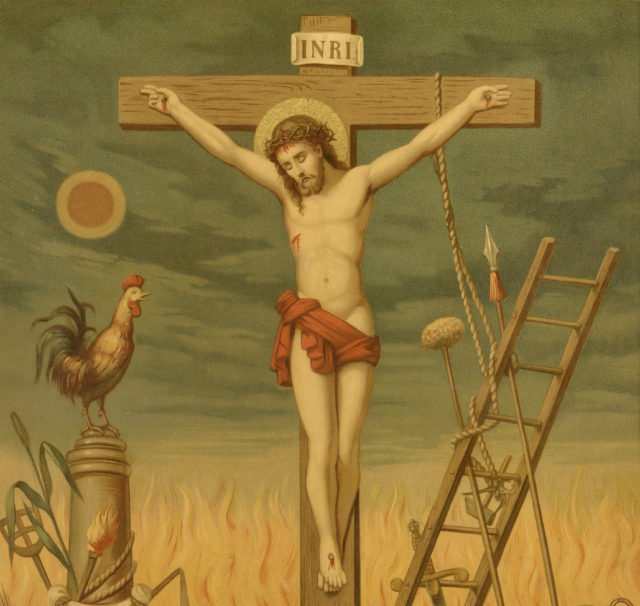
In satirizing the priestly functions of the High Priest of the Ancient Christian Mysteries, the 2nd century Greek Hellene Satirist, Lucian of Samosta had said, “A holy cock, a divine cock, a genius in the form of a cock, in short, a mysterious and supernatural cock, produced a very different effect in such a performance, on such an occasion, from what a mere natural cock could have done!”
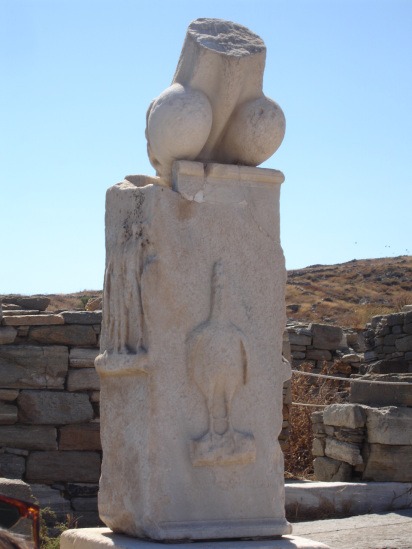
Lucian was ignorantly making fun of the “Holy, Sacred or Divine Cock” which was sanctified since the beginning of Civilization by the Priesthood as the Chief (Supreme/Head) Priest to be in charge of the Temple. Today in the Roman Catholic Church, the Holy Cock is styled “Peter” and we Catholics know him as our first Pope. Then it should be no surprise to you that in the English language, the word cock and Peter is slang for penis.
But let it be said once and for all, that not everyone who has a Peter or is named Peter has a Holy Cock!
(more…)
Moe is the founder of GnosticWarrior.com. He is a father, husband, author, martial arts black belt, and an expert in Gnosticism, the occult, and esotericism.

by Moe
Kepha (Kefa, Kepha, Cepha, Hepha) was the city where the Lord Jesus was judged by the Doctors of the Law of Israel ie: The Priesthood of Kepha and condemned to death. In the Scripture, the city of Kepha was said to be separated from the city known as Acco, or Ptolemais, by a large and beautiful harbor. To travel by sea from Acco to Kepha was approximately fifteen miles but by land the distance is double.

The word Kepha means “the head,” but also denote esoterically in religion as, “Ruler, Lord or a Cornerstone (Masonic), uniting two walls.” There are many alternate spellings of the word such as Cepha, Cephas, and most commonly in Scripture as ‘Caiphas.’
You will find many priests at this time who had taken the name of Kephas, Cephas and or Caiphas. For example, as I explained in my article, Simon (Saint Peter): Kepha of the Church and The Kepha (Head Priest) Holds the Keys to Heaven and Hell, Simon AKA Saint Peter is given a special “code name” by Jesus when he says, “Thou art Shemeun, (Simon,) the son of Jona (John): thou shalt be called Kepha.” (John 1:42)
Kepha AKA Simon (Saint Peter) was succeeded by five sons and this son-in-law (Jos., “Ant.,” 18, 2, If.; 20, 9, 1.) The family were all Sadducees (Jos., Talmud), and were especially adversarial to the Pharisees. Crete and the name of “Kephala” connect to the biblical history of the High Priests of Isreal known as the Kepha, Simon (Saint Peter) who was also known as “Simon Kephas” and Jesus who was a “member of this Brotherhood.”
According to Josephus, he was also called Caiaphas” and was made high priest (18–36 C.E.) at the time of Jesus’ activity and crucifixion by the Procurator Valerius Gratus (18 A.D.) and that he was removed by the Procurator Vitellius (36 A.D.). His successor was “Jonathan the son of Ananus,”(Annas of the NT) (Antiq. XVIII. ii. 2; iv. 3) .
Historical sources prove the influential priestly background of Joseph Caiaphas who was the son-in-law of Anan – son of Seth, a powerful and important priestly family in Jerusalem (John 18:13); the Mishnah (Par. 3:5) speaks of a high priest named Elioeneiai (*Elionaeus) ha-Kayyaf (ha-Kof), who some say may have been a son of Joseph Caiaphas.
Please keep in mind that Joseph Caiaphas is the same person we know as the Roman-Jewish Historian, Josephus AKA Titus Flavius Josephus born Yosef ben Matityahu who initially fought against the Romans during the First Jewish–Roman War as head of Jewish forces in Galilee.
Therefore, we can say that the Caiphas High Priest and his Brethren of Israel were the true the Doctors of the Law at the time. These hereditary High Priests and Doctors of the Law had ruled from what is known biblically as the “Palace or House/Hall of Kephas (Caiphas).” This was the place where the High Priest of Israel resided, and it was here that Jesus was tried by the Sanhedrin.
An important to note that Simon Kepha – AKA Saint Peter had denied Jesus in one of the courts of the Palace or House of Kephas which was the exact place as mentioned by St. Mark as the two cock-crowings (chap. xiv. 72), thus increasing the guilt of Peter’s denial.

As I had written in a previous article, The Kepha (Head Priest) Holds the Keys to Heaven and Hell, this location has been verified by science and history given the fact that on the ancient Holy Island of Crete sits the Temple of Knossos (AKA Gnosis) at the bottom of a hill that was once called “Kephala.” (AKA Kephala tou Tselevi)
This is also the exact location where archeologists have found “Kephala Tholos Tomb”, which sits north of the palace of Knossos. This was where King Kephalos (Cephalus) of Crete had ruled over the “Villages of Kephalos,” from the steep and lofty headland of Kephalos.
I would like to point out that this name of Kephala tou Tselevi is also an Apocalyptic clue to the historical and biblical origins of these hereditary Israelite High Priests and Doctors of the Law.
The name Kephala means Head, tou may signify king but in the Hebrew/Modern Phoenician, the equivalent is ta’ah which mostly means “deceived, leads them astray, leads to ruin, misled and or went astray.” We find the meaning of Tselevi points to the name of their biblical priesthood – The Levites which corresponds to the “specific roles and legal rites” they were given by Rome under the rules of both Julius and Agustus Caesars.
This is precisely why in the Scripture, the headland or hill of Kephalos was also known as the Mount of Tombs and is called by the Christians, “The Hill of Evil Counsel.” The place where it is said that the princes, priests, scribes and the elders of the law had conspired to arrest Jesus. As it is said in Matthew 26:3-5, “that by subtlety they might apprehend Jesus“, was held in the house of Caiphas.
The Tosefta which is said to be a compilation of the Jewish oral law mentions the House of Kaipha (AKA the Judgment Hall of Caiaphas) as a high-priestly family.(Yev. 1:10) The hill south of Jerusalem where this house is said by tradition to have stood is called the “Hill of Evil Counsel”.
This is why I believe that it was also called Kephala tou Tselevi for these were the same Levite priests who were the first High Priest of the Israelites with Aaron and his brother Moses who could be called the founders of the Levite Priesthood. Joseph was both a Levite Prince and the High Priest with the Coat of Many Colors.
Moe is the founder of GnosticWarrior.com. He is a father, husband, author, martial arts black belt, and an expert in Gnosticism, the occult, and esotericism.

by Moe
In the Greek New Testament, the Apostle Paul spoke of the married brothers of the Lord and the married Kephas (Saint Peter/Simon & His Desciples).
Paul speaks of having not the “same power” as the Lord and Simon when he proclaims, “Have we not power to lead about a sister, a wife, as well as other apostles, and as the brethren of the Lord, and Cephas?” (Greek: μὴ οὐκ ἔχομεν ἐξουσίαν ἀδελφὴν γυναῖκα περιάγειν, ὡς καὶ οἱ λοιποὶ ἀπόστολοι καὶ οἱ ἀδελφοὶ τοῦ Κυρίου καὶ Κηφᾶς – 1 Corinthians 9:5)
When the Apostle Paul speaks the Greek word εξουσιαν, it implies power and a right, that he and all other apostles, had a legal right to marry.
Paul speaking like a Gnostic, or who we can call a perfect Christian, says, “εσθιει, και πινει, και γαμει – εικονας εχει τους Αποστολους, He eats, and drinks, and marries – having the apostles for his example. Vid. Clem. Alex. Strom., lib. vii., c. 12.
The only married Apostles that we have direct evidence on good authority are Peter and Philip (Papias in Eus. H.E. iii. 39):
For example, it is certain Simon, Saint Peter AKA Kephas (Cephas) – the first Pope had a wife; see Matthew 8:14:
Then Jesus said to the centurion, “Go! As you have believed, so will it be done for you.” And his servant was healed at that very hour. When Jesus arrived at Peter’s house, He saw Peter’s mother-in-law sick in bed with a fever. He touched her hand, and the fever left her, and she got up and began to serve them.”
It also appears that the Lord’s brethren, James and Jude were married.
Paul speaks of the married brothers of Jesus and the oldest gospel, Mark, mentions James, Joses, Judas and Simon as his brothers and besides sisters (Mark vi. 3).
This was the time when Paul was evangelizing to the many Gnostic schools in Corinth which I know to be on Crete, who some of the disciples there declared, “I follow Paul”; another, “I follow Apollos”; another, “I follow Kephas”; still another, “I follow Christ.” (1 Corinthians 1:12)
The passages above indicate a select inner circle of men who were the “brethren of the Lord,” and the flesh-and-blood kinsmen of the man Jesus and some of these brethren continued in different schools or ministries.
The facts are that if we are to interpret these meanings truthfully, we will concur that “the Lord’s brethren” – The Apostles were either married men or had the legal right to marry.
And Saint Peter, the Prince (Son of a Monarch) of the Apostles First Pope was also married, yet was an apostle of Christ.
This is Christian Truth.
Moe is the founder of GnosticWarrior.com. He is a father, husband, author, martial arts black belt, and an expert in Gnosticism, the occult, and esotericism.
by Moe
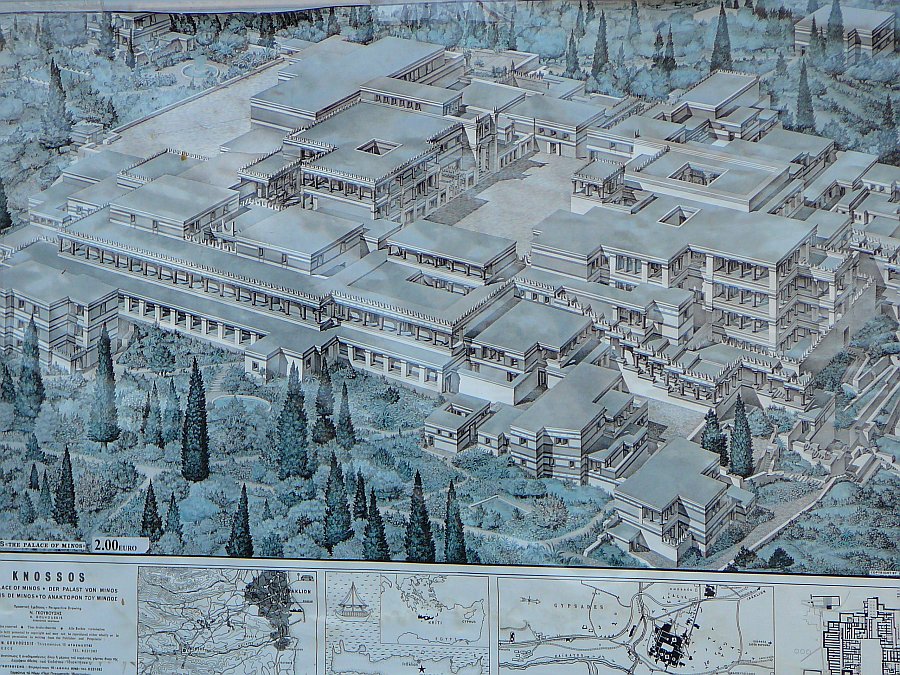
On the ancient Holy Island of Crete sits the Temple of Knossos (AKA Gnosis) at the bottom of a hill that was once called “Kephala” (Kephala tou Tselevi). It sits on the western bank of the Krateros river to the south of the modern city of Heraklion, also known as Iraklio.
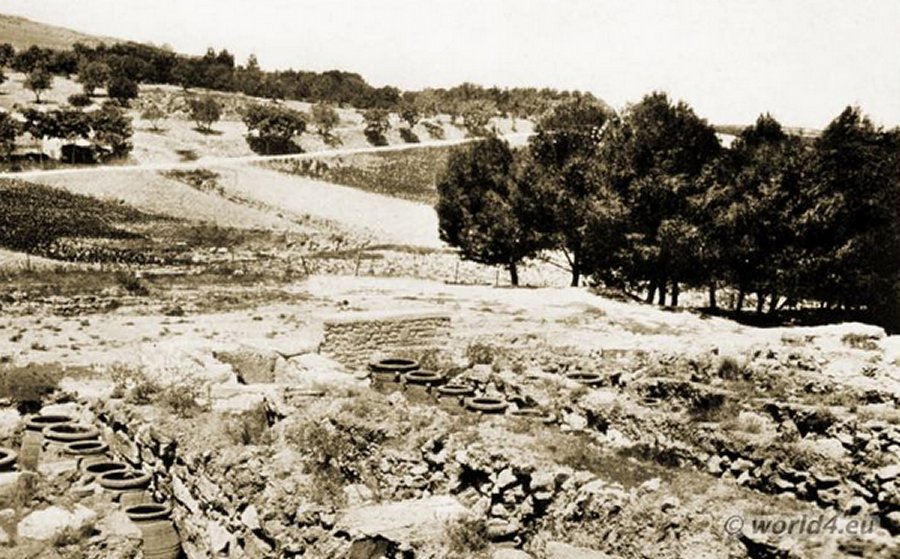
It is said that this location was chosen by ancient settlers for the site of the Palace of Knossos; the footprint of the Neolithic settlement at Kephala Hill was actually larger than the Bronze Age Palace of Knossos. This was the true first “Ancient City of Gnosis.”
We can find evidence of these facts encoded into the royal mythology of Ancient Crete with the story of King Kephalos (Cephalus) of Crete and Thorikos who was one of the twelve towns of the Synoekismos of Theseus. Kephalos is said to have come to Athens, married the princess Prokris, accidentally killed her, and was exiled from Athens (Mussies 1986: 44). The king is said to rule over the “villages of Kephalos,” from the steep and lofty headland of Kephalos.
Coincidentally, the discovery of what we know today as the “Kephala Tholos Tomb”, north of the palace of Knossos, proves that this mythology is based on true history as always was the case as it is in the Scripture which the two go hand and hand wherever the priesthood had travelled.
This royal tomb was found some 300 meters to the east-northeast from the Kephala hill. It came to light during what are described as “cleaning operations of the olive grove” by a small bulldozer, which resulted in the what they had called the removal of the “key of the tholos.”
Due to the circumstances of the discovery and the urgent need for protection of the site, the investigation started from the chamber, and the excavation team had to enter from the hole of the key. Escavations were eventually carried out in 1998 by the Greek Ministry of Culture under the direction of Theodoros Eliopoulos.
More evidence of the Cretan people known as the ‘Kepha’ is found mentioned in the Ancient Egyptian texts in conjunction with Crete which was called Keftiu and the same peoples who appear in the history and monuments of Egypt under the various names with one being “Kepha.”
The Ancient Egyptian, Ka is usually translated as ‘double’, because it represents a person’s double or what we can call their higher self. It also means spirit or spirit of the blood. Hence, a vessel in our bodies that carries our Ka (Spirit), is called a blood canal (Ka’nal).
The Ka Priests of Kepha – Holy Protectors of the Lord
In Ancient Egypt, the divine ka’s (Divine Angels and Good Demons) had served as guardians of Osiris who was often called the Ka of the Pyramids. In Ancient Greece, the divine Ka’s served as guardians of Zeus, the soul of this world.
These same said Ka’s – AKA guardians of Zeus and Osiris we find in Crete under a plethora of pseudo-names such as the Telchnines (Telknines, Telkhis, Telegonus, or Greek, Τελχῖνες) and Curetes who are placed has the Royal Guardiasn of the God Zeus. Strabo had written, that these are the names of the various groups of daimones or demons known as the Curetes (Kuretes), Corybantes, Dactyls, Cabiri, and Telchines which are names that are often used interchangeably with one another.
As I explained in my article, Simon (Saint Peter): Kepha of the Church, the word Kepha is derived from the Greek words “kepha, kephas and or kephalé,” which mean, “the head,” but also denote esoterically in religion as, “Ruler, Lord or a Cornerstone (Masonic), uniting two walls.” It is my belief that the original true story of Simon can be traced back to the ancient priesthood of the Holy Island of Crete and the City of Knossos (Gnosis).
Let me add that Simon was a fisherman and the great symbol of the Christians is a fish. The kephale (cephus, sefus) is a genus of the Cod-fishes, Cadidae, in which the head is remarkably large, depressed, and broad. Coincidentally, Crete was also once called by the Europeans – ‘Candia.’
Modern Evidence of the Villages of Kephalos
To this very day, you will find evidence of the Kepha like on Crete in Chania at a place called Kefali (Kephali). It is a small village with many old important Church sites with ancient frescoes such as Jesus and the washing of feet, fresco in the Byzantine church of Agios Athanasios or the Frescoes with Christ dead in Church of Metamorphosis tou Sotiros.
Kefali is located on the eastern side of Mount Elias, 60 km south west of Chania Town at a high altitude of 460 meters above the sea. The coastal road near Kefali to said to be one of Crete’s most beautiful and the mountainous village is surrounded by a beautiful verdant landscape and one of the nine villages, and close to the villages of Kissamos- Kaloudiana- Topolia- Elos- Kefali.
You will also find on Crete, Koukou Kefali, in English – Cuckoos Head (Rooster’s Head). It is located to the South-East of the village of Ano Zakro. There are “secret ancient ruins” here that were excavated as part of Arthur Evan’s so-called Minoan excavations and is called the Minoan villa “Tou Koukou to Kephali.”
Could these real life villages actually be scientific evidence of what is considered the “Villages of Kephalos,” from the steep and lofty headland of Kephalos?
This is an Apocalyptic possibility given the fact that there have been massive excavations done here and apparent secret political powers jockeying for control of these ancient holy sites. For example, what is titled, The Kastro Kallithea Archaeological Project: the 2016 study season – Schliemann at Knossos, this battle for the hill called Kephala tou Tselevi is detailed. Something tells me there is much more to this Biblical story…
The Canadian Institute in Greece reports:
The hill called Kephala tou Tselevi on the western bank of the Krateros river to the south of the city of Candia (modern Herakleio) on the island of Crete has come to be known world-wide as Knossos. Here at the beginning of the 20th century Arthur Evans began the excavations of a massive structure and portions of the surrounding settlement that we know today as the Palace of Minos.
Evans was not the first to excavate here,
however. Minos Kalokairinos (1843-1907), an olive merchant and antiquities collector from Candia, initiated the first test trenches on the hill for three weeks in December, 1878. He uncovered a portion of the West Magazines with their storage jars (pithoi) in situ and reached as far as the Throne Room. Given the political sensitivities of the time, as Crete was still under Ottoman rule, the Christian General Administrator of Crete, Fotiades Pashas, decided in 1879 that the excavations should stop. In 1880 he also refused the request of the French School in Athens to continue the excavations for the same reasons. Heinrich Schliemann of Troy and Mycenae fame entered the picture in 1886 seeking to dig at Knossos as well.
Evans did not arrive on the scene until 1894.”
The conclude, “What happened to deny Schliemann access to Knossos?”
One last note in regards to the place called Koukou Kefal Cuckoos Head (Rooster’s Head), as I mentioned in my article, Why Saint Peter is called Satan by Jesus, there is a peculiar reference to the rooster (Cock or Cuckoo) in Simon’s denial which takes us to Peter at Caesarea where he is preparing for a discussion with Simon Magus where there is a symbolic reference to Gnosis with the “rising at the first cock-crowing.”
Also, in the “Palace of Caiaphas” Peter renounces his Master three times, and as the cock crows thrice at his third denial. The name of Caiaphas is very close to Cephas or Kephas and most likely a reference to the same mythological Villages of Kephalos and the real towns and places called Kefal which can be witnessed by anyone on Crete
Double-Headed Defacto Rulers of Jerusalem and Successors to both Peter and Caesar
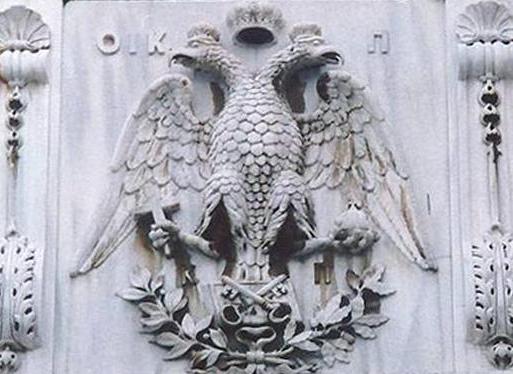
The use of Kephali is interesting given that Kephalee in Greek means Head and is said to be derived from the Phoenician /Hebrew, Kephal. A word who some say signifies, double.
An interesting note is that in the etymology of the compound word “Kephalos” we can find the words ke/ka, pha/pho and los or lus. If we are to dissect the meanings individually we will find that ke/ka is a word for ‘soul’, pha or pho is light or shining and los or lus which means little and can also mean esoterically;
‘Son’ as in “Little Son ie: Son of the Father ie: God” – “Sons of God.”
This is why in the Scripture, the Head Kephas can be found in relation to the “Son and Sons of God ie: Saints” who we know also hold the “Key to the Christian Mysteries ie: True Christian History/Gnosis.”
Interestingly enough, it has been said that the so-called Jewish origin of the symbol of the keys found in Revelation i. 18, iii. 7-9, (in Preuschen’s Zeitschrift ffir die neutest. Wissenschaft, iv. pp. 190192) that Kepha was the name given to a chamber in the temple where the keys were carefully preserved.
It makes perfect sense to call the land that the great city of Knossos, AKA Gnosis was built at the bottom of Kephala Hill upon by the name “head ruler” as being symbolically considered “as the ruler and the cornerstone of the world.” After all, as I have said numerous times, the island of Crete was considered for thousands of years as the holiest land in all the world and it was also known as the Center of the World and Soul of the World.
Control Crete, you hold the Royal Sceptre to the Soul of the World thus becoming the Double-Headed defacto rulers of Jerusalem and Rome as the legal successors to both Peter and Caesar.
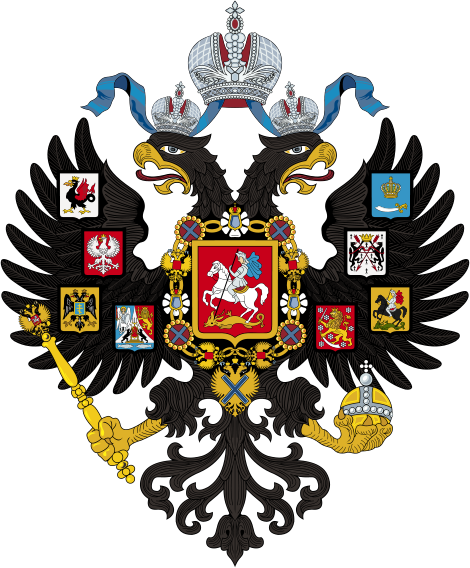
The Heavenly keys are held by the Sons of God, who holds the keys of Hades, by which the binding of demons and the gates of the lower world could be closed or opened. The Holy Protectors of Solomon’s Temple ie: Earth.
It should be no coincidence that Simon, AKA Kepha, AKA Saint Peter is the “Cornerstone of the Church” and he holds the Gnostic keys to the mysteries in his Right hand for it is said by the Lord;
“I will give you the keys of the kingdom of heaven; and whatever you bind on earth shall have been bound in heaven, and whatever you loose on earth shall have been loosed in heaven.”
Moe is the founder of GnosticWarrior.com. He is a father, husband, author, martial arts black belt, and an expert in Gnosticism, the occult, and esotericism.