by Moe | Jul 2, 2018 | Freemasonry, Gnosis, Mystical Christianity
We find in Ezekiel 11:22 that the “King of Tyre” is called a “cherub” and his home is located at the residence of Eden and the Mountian of God for it is said, “the king of Tyre is scornfully compared with one of these, and is assigned a residence in Eden and the mountain of God.”
As I mentioned in my previous article, Satan: Thou art the anointed royal cherub with Gnosis that covereth, Satan was a type of angel called a ‘cherub,” and he became a guardian of the Holy of Holies when he was “anointed as the cherub that covereth.” and a specific reference is made to Satan having been to a place known as the “Holy Mountain of God” and “walked up and down in the midst of the stones of fire.”
We also find that the King of Tyre is associated with Satan as he is described as the cherub in Eden mentioned in Ezekiel 28:13-14. This king is said by religious scholars to be identified with specifically Ithobaal III (Latin Ithobalus, Hebrew Ethbaal) (reigned 591–573 BCE) who according to the list of kings of Tyre of Josephus was reigning contemporary with Ezekiel at the time of the first fall of Jerusalem.
As I explained before, most Jewish writers and Christian Fathers conceived the cherubim as angels with special knowledge, understanding, and full of wisdom ie: Gnosis. We know that God had appointed them as guardians and protectors (Templars) as representatives of the Divine Wisdom of the Lord in the higher heavens.
If we are to look to the history provided to us on the Kings of Tyre, we will discover that they were instrumental in helping build one of Freemasonry’s most prized symbolic structures – Solomon’s Temple. It is said in Samuel 5:11, “And Hiram king of Tyre sent messengers to David, and cedar trees, also carpenters and masons who built David a house.”
Are Simon (Saint Peter), Satan, the Cherubim, the King of Tyre, Freemasons and the Catholic Church all connected with one another?
It is interesting that we know that Satan was, in fact, a real person and that he is also biblically associated with the order of angels known as the Cherubim and the King of Tyre. Masons are also associated with the Royal Gnostic we know of as Satan ie; Simon Magus (Saint Peter). Even more interesting is that in Ezekiel 28:12-19, the Fall of the King of Tyre who is driven from the Garden of Eden almost perfectly matches the description of the original fall of the First Gnostic, Simon Magus, AKA Satan.
The Fall of this Royal Masonic family can be plainly seen in Genesis iii. 24 by the cherubim placed before the garden of Eden, when Jehovah God “had driven out the man, He made to dwell on the east of Eden the cherubim, and the flame of a sword turning every way, to guard the way of the tree of life ”
It is clear that the “cherubim” signify a special race of beings or royal family/bloodline with “spiritual knowledge and wisdom ie: True Gnosis” in which they are anointed as “royal guards” with flaming swords who were placed before the garden of Eden which could not be approached except by good of love and charity; for this reason they are also said “to guard the way of the tree” which we can freely say today in the Masonic States of America were the “Guardians of Ancient Gnosticism.”
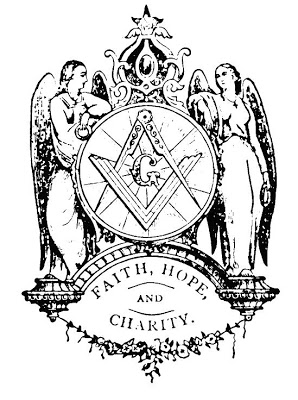
The Masonic Cherubim’s flaming swords “signifies the Word and truth combating against falsity and dispersing it, thus truth protecting” the way of “the tree of life” signifies True Gnosis from the Lord and the heavenly joy therefrom. From this, it is clear that the “two cherubim” represented guards of Mystical Christianity ie: Gnosis was not approached except by good of love and charity OR else!
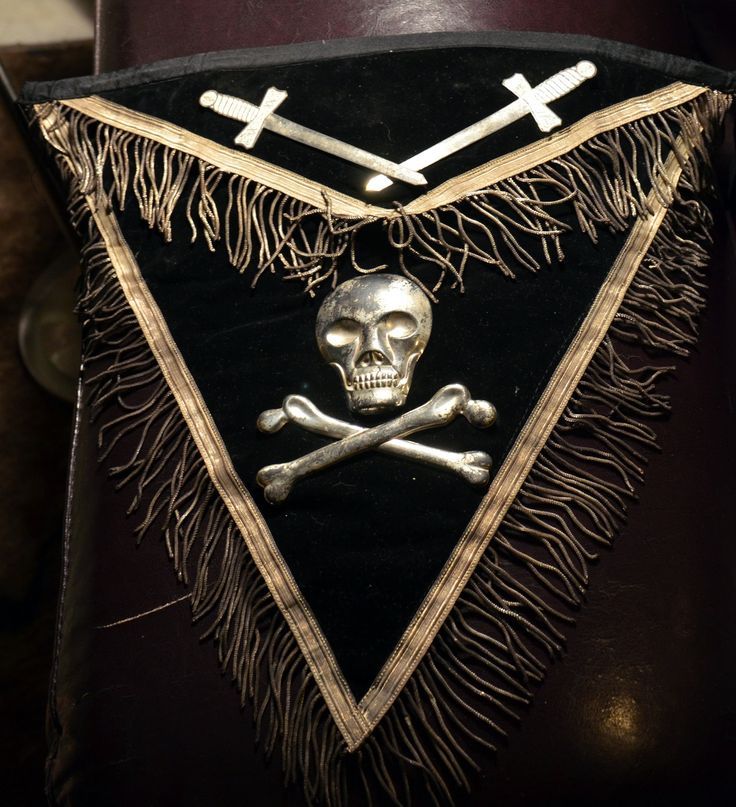
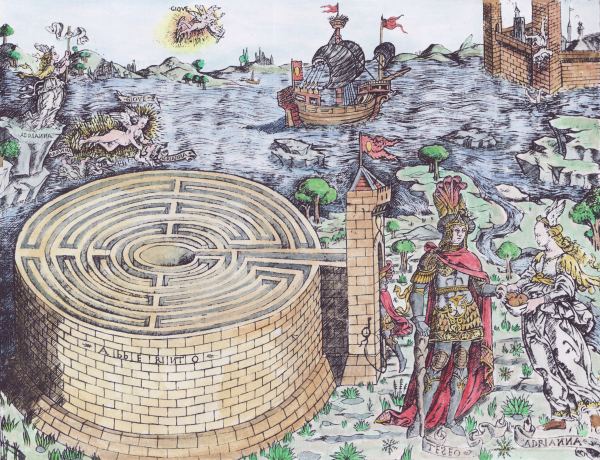
In my article, King Hiram: The Masonic Chief Architect from Crete, I explain ancient historical and mythical connections with religion and masonry originating on the Holy Island of Crete. A place I have also identified as “Pergamos. Where Satan’s throne is.” – Revelation 2:12
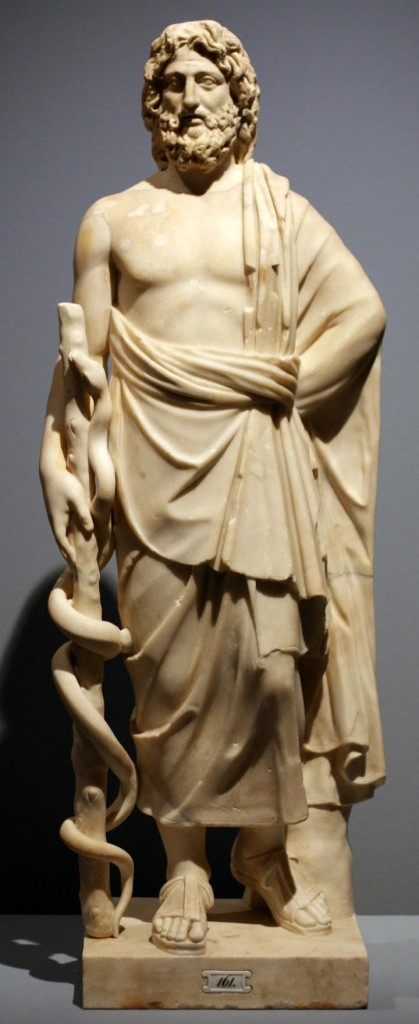
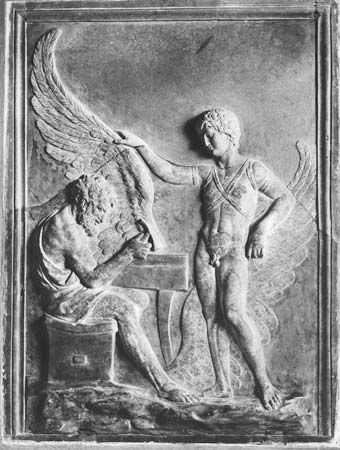
The same island where one of Hiram’s First Masons: The Cunning Daedalus Invented the Masonic Working Tools. 33rd Degree Freemason, Albert Gallatin Mackey had said Daedalus executed the Cretan labyrinth, the reservoir near Megaris in Sicily, the Temple of Apollo at Capua, and the celebrated altar sculptured with lions on the Libyan coast.
Mackay also said he was the inventor of a number of the “Working Tools” used in the various degrees of Masonry such as the compasses and square, the plumb-line and the axe, most of the tools used in carpentry, and of glue and his nephew, Perdix, is the reputed inventor of the third Great Light in Masonry, the Compasses, which are dedicated to the Craft. (page 945)
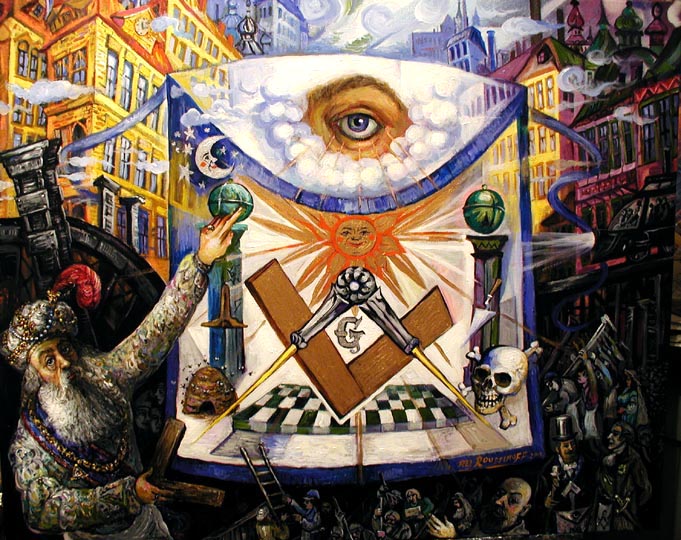
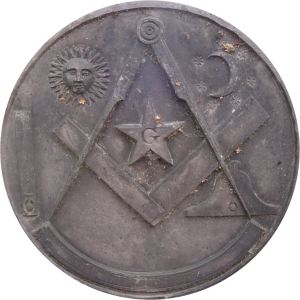
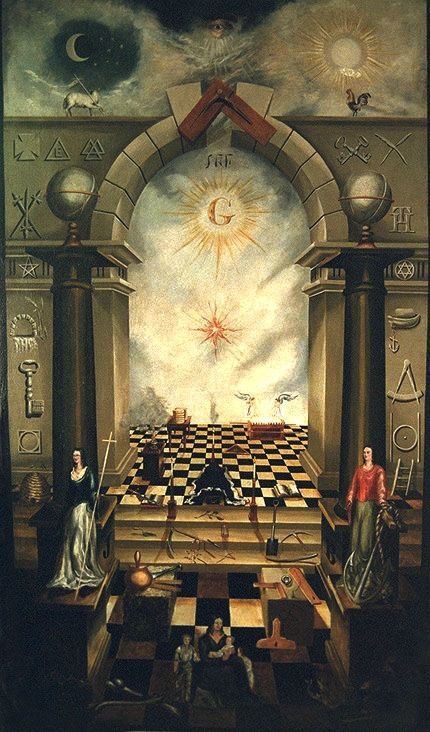
As I have explained on numerous occasions, the Freemasons are the inheritors of the world’s Gnostic mysteries with their most prized symbols – the letter G signifying Gnosis, the Blazing Star (Pentagram), and Compasses and Square.
It is said in the Scripture of the Great Fall of the Masonic King Hiram of Tyre in Ezekiel 28:12-19;
“Mortal, raise a lamentation over the king of Tyre, and say to him, Thus says the Lord GOD: You were the signet of perfection, full of wisdom and perfect in beauty. You were in Eden, the garden of God; every precious stone was your covering, carnelian, chrysolite, and moonstone, beryl, onyx, and jasper, sapphire, turquoise, and emerald; and worked in gold were your settings and your engravings. On the day that you were created, they were prepared.
With an anointed cherub as guardian, I placed you; you were on the holy mountain of God; you walked among the stones of fire. You were blameless in your ways from the day that you were created, until iniquity was found in you. In the abundance of your trade, you were filled with violence, and you sinned; so I cast you as a profane thing from the mountain of God (Holy Mountain), and the guardian cherub (Satan) drove you out from among the stones of fire.
Your heart was proud because of your beauty; you corrupted your wisdom for the sake of your splendor. I cast you to the ground; I exposed you before kings, to feast their eyes on you. By the multitude of your iniquities, in the unrighteousness of your trade, you profaned your sanctuaries. So I brought out fire from within you; it consumed you, and I turned you to ashes on the earth in the sight of all who saw you. All who know you among the peoples are appalled at you; you have come to a dreadful end and shall be no more forever.”
As I said before, Simon Magus, a man we know as the First Gnostic and also Satan was also called the “anointed cherub” and made a guardian of the Holy of Holies. We learn from Saint Irenaeus that Simon’s consort Helen is a converted slave and prostitute from the Phoenician city of Tyre.
Helen was considered the Lost Sheep with no Gnosis of her royal soul, forced to wander through the centuries from vessel to vessel (including that of Helen of Troy), until she ended up at the brothel in Tyre where Simon had discovered her.
The same Holy Island of Crete where Hiram is the Widow’s Son and his Sovereign Masons are world-renown.
Knowing she was the One, he purchased her from her master and she became his Gnostic disciple (student) during his travels and teachings.
it was said that their reunion (Union of Soul/Opposites/Duality Become One) represented the beginning of the redemption of the world, and was the model for the process of salvation ie: Gnosis to Simon’s followers – the True Gnostics being that of the exoteric Catholic Church and esoteric Freemasons.
Moe is the founder of GnosticWarrior.com. He is a father, husband, author, martial arts black belt, and an expert in Gnosticism, the occult, and esotericism.
by Moe | Jul 1, 2018 | Mystical Christianity, Satanism
It is said of the angel Satan in Ezekial 28:14 – “Thou art the anointed cherub that covereth; and I have set thee so: thou wast upon the holy mountain of God; thou hast walked up and down in the midst of the stones of fire.”
In the above passage we not only find that Satan was a type of angel called a ‘cherub,” he was officially “anointed as the cherub that covereth” and a specific reference is made to Satan having been to a place known as the “Holy Mountain of God” and “walked up and down in the midst of the stones of fire.”
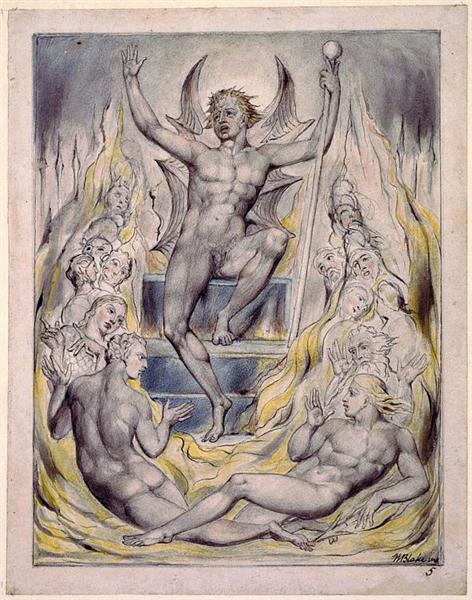
Before we venture into the mysteries of these biblical teachings, it is important that you first understand who is this “Satan Cherub.” In my previous article, “Who is Satan,” I explained how the Catholic Church – the very institution that has brought us this story in the Western World over the last 2,000 years or so had assigned the “title of Satan” to a specific person whom they also called the First Gnostic, Simon Magus.
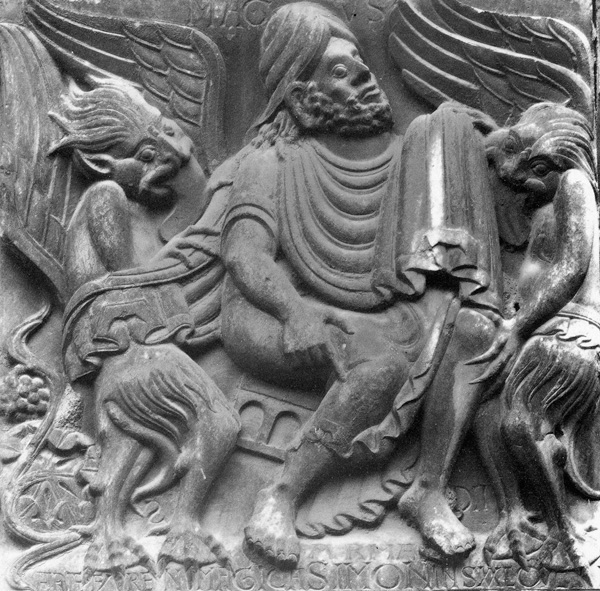
This same said Gnostic Satan became an “anointed cherub” which evidently shows the power and dominion given to him by God over the earth. In Satan’s temptation of Christ he asserts his authority and power: “And the devil said unto him, All this power will I give thee, and the glory of them: for that is delivered unto me; and to whomsoever, I will I give it.”
Also, please keep in mind the current Vicar of Christ, Pope Francis has gone on record several times during his pontificate mentioning Satan and the Devil. Francis had warned his fellow Catholics in December 2017, “Satan is not a metaphor or a nebulous concept but a real person armed with dark powers” and that he “is more intelligent than mere mortals and should never be argued with.”
With that said, we know that Satan is a person who should never be argued with and he is also more intelligent than mere mortals and also an angel of the order of the cherub. This is the same real person of whom Catholics number as the “Devil ie: the Great Dragon, the Liar, Deceiver and God of this Earth.”
The word cherub, or more appropriately, ker-ub whose meaning is an order of angelic beings as described allegorically in Ezekiel as four living creatures, each with four faces, and each has four wings, two stretched upward sustaining the throne of Yahweh; and two of them stretched downwards to cover the creatures themselves. The cherubim never turn but go straight forward, as do the wheels of the cherubic chariot, and they are full of eyes and are like burning coals of fire.”
We read from the Catholic Encyclopedia that according to Exodus, xxvi, 31, cherubim were embroidered on the Veil of the Tabernacle, separating the Holy Place from the Holy of Holies. “With blue and purple and scarlet and fine twined linen” they were made. How many such cherubim were embroidered on the Paroket, or Veil, we do not know. It is often supposed that as this veil screened the Holy Holies, two large-sized figures to represent guardian spirits or keepers were thereon depicted.”
Ezekiel 28:14 describes how God gave his anointed cherub – Satan an assignment to “cover”. This Hebrew word means to cover as a protector guard.and or fenced in hedge of protection.
Please note that the embroidered colors and material show us what these Cherubs are made of indicating that they are considered royalty. This would explain why Christ asserts Satan’s authority and assignment on earth to place a “cover or veil” over the Holy of Holies, and we now know that the Satan works for God and this is the reason why Satan is called ” the Prince of this World,” “the God of this World,” and “the Prince of the Power of the Air.”
The Catholic Encyclopedia explains the Cherubims association with perfect knowledge, wisdom and royalty;
“Indirectly we can gather from this passage that Cherubim were conceived to be in a state of perfection, wisdom, sinlessness, nearness to God on His Holy Mountain and of preternatural glory and happiness. Unfortunately, the words paraphrased as “with wings outstretched in protection” are difficult to translate: the Hebrew term may mean “cherub of anointing, who covers”, therefore a royal, anointed being, overshadowing others with its wings to shelter them.
If this be so, we must add royalty and beneficence to the characteristics of cherubim.”
So now we understand that not only is Satan ie: Simon Magus considered a royal guardian spirit of the Order of the Cherubim by the Catholic Church, he is called the “First Gnostic,” thus indicating a “spiritual knowledge” that ONLY Satan and his order would understand and recognize.
Namely, the secret teachings of Gnosis contained in mystical Christianity and Freemasonry that truly only the initiated could understand and explain.
This is why many most Jewish writers and Christian Fathers conceived the cherubim as angels with special knowledge, understanding, and full of wisdom.”
For example, Clement of Alexandria had said, “The name Cherubim intends to show much understanding (aisthesin pollen).”
St. Augustine comments on Psalms lxxix, 2, “Who sitteth upon the Cherubim;”
“Cherubim means the Seat of the Glory of God and is interpreted: Fullness of Knowledge. Though we realize that cherubim are exalted heavenly powers and virtues; yet if thou wilt, thou too shalt be one of the cherubim. For if cherubim means, Seat of God, remember what the Scripture says: The soul of the just is the Seat of Wisdom. ”
One of the most notable figures in Ecclesiastical History and a Doctor of the Church, Pope Gregory had said of the cherubim (Hom. in Ev., xxxiv, 10), means “the fullness of knowledge, and these most sublime hosts are thus called, because they are filled with a knowledge which is the more perfect as they are allowed to behold the glory of God more closely.”
I would simply say that the meaning of cherubim is “those initiated angels with true Gnosis of the most sacred mysteries on earth.”
Moe is the founder of GnosticWarrior.com. He is a father, husband, author, martial arts black belt, and an expert in Gnosticism, the occult, and esotericism.
by Moe | Jun 29, 2018 | Mystical Christianity
Speaking of the Boundless Power (ie: Infinite Power or Fire) he possessed, Simon Magus famously proclaimed in his Great Declaration, “He who has stood, stands and will stand.”
For this reason, it was said that Simon had called himself the “Standing One.”
We find the allegorized Gnostic story of Simon’s supposed battle with Paul and Peter in the Clementine writings, where he is said to call himself the manifested power of the great hidden Deity (“Hel Kisai” = “Elkesai” in Gnostic lore; “Recognitiones,” i. 72, ii. 37; comp. “the one who will stand [abide] forever”; “Recognitiones,” ii. 7, iii. 11; “Homilies,” ii. 24).
According to a rare Gnostic document, the Actus Petri cum Simone, after St. Paul had left Rome, a stir arose in that city, about a man called Simon, who was at Aricia, who had worked many miracles, and said he was the great power (magnam virtutem) of God, and without God did nothing.
It is said that Simon receives a summons: ‘Thou art in Italy God, thou art the saviour of the Romans; hasten quickly to Rome.’
He promises to come the next day at the seventh hour, flying through the air at the city gate. At the appointed time smoke is seen approaching, and suddenly Simon appears in the midst. The brethren are in a state of great consternation because Paul is away, and they are left without any to comfort them, and the greater number fall away.”
Simon still tries to deceive the people by pretended miracles, but Peter exposes him. He then explains to the Men of Rome, “do you think that Peter has shown himself stronger than me, and has overcome me? And do you follow him? Tou are deceived. To-morrow, leaving you impious and godless men, I will fly to God, whose power I am, having been weakened. If, then, you have fallen, I am he that standeth (4 ‘ErrW), and I go to the Father, and will say to him, ‘ Me, the Standing One, thy son, they wished to overthrow; but having refused to agree with them, I have come to thyself.”
The people come together to see him fly. He appears flying over Rome. Peter prays, and he falls down, having his leg broken in three places. The people stone him, and all follow Peter. Simon is taken to Aricia, and then to Terracina, where he dies.”
This story is also related in the Clementine Homilies by two of Simon’s purported pupils, Aquila and Nicetas who give us the history of Simon. They had written, “He was educated at Alexandria, and skilled in the wisdom of the Greeks and in magic He wishes to be considered the highest virtue – higher than the Creator of the world.
He calls himself the Standing One, as signifying that he will always be firmly established, and having no cause of corruption In him.
The Creator of the world is not the highest God, nor will the dead lie raised. He denies Jerusalem and substitutes Mt. Gerizim. He puts himself In the place of Christ. He perverts the Law by his own interpretation of it. He was the chief of the disciples of John the Hemerobaptist. As our Lord had 11 apostles symbolizing the 12 months of the year, so John had SO, of whom one was a woman named Helena, thus symbolizing the 2Jty days in a month. The death of John occurred during the absence of Simon in Alexandria, and Dositheus succeeded to his place.
Simon, on his return, desiring the headship, pretended to be a disciple, and then accused Dositheus of not delivering the teaching correctly. Dositheus then attempted to beat him with a rod, whereupon Simon became a cloud of smoke. Dositheus, knowing that he was not himself the ‘Standing One,’ said, ‘If you are the Standing One, I will worship you.’ Simon claims that he is, becomes head of the sect, and Dositheus shortly afterward dies.”
When I search for any interpretations of this famous quote, it has been said that Simon did so imitate that he is Jesus ie: The Standing One. Hippolytus, one of the most important 3rd-century theologians in the Roman Catholic Church teaches that there is some infinite power that is at the root of the universe, but that he (Simon) believes that he was “a power above all apparently on the earth.”
One of the greatest Greek Hellenistic Christian theologians, Origen of Alexandria, reported that this was one of his greatest doctrines that he possessed “Divine Supremacy” or “Power” which is “eternal – past, present and future ie: immortal,”
From both Hippolytus and Origen, they relate what Simon allegedly calls by the names of Boundless Power, Infinite Power or Fire” and what Hippolytus says is an Infinite Power in which Simon somehow played a part or was connected to this “Infinite Power or Fire.”
By doing so, he had what Origen called “Divine Supremacy” or “Power” and I interpret that he became well-known by the Brotherhood as an immortal soul for “He who has stood, stands and will stand,” in the Infinite Power or Fire.
In the Scripture, an interpretation of Simon’s immortal connection to the Infinite Power or Fire we might find in Malachi iii. 6, where it is said, “ I am the Lord, I change not,” or in Revelation 1:8, 17-18: “I am Alpha and Omega … the First and the Last, and the Living One, and I was dead, and, behold, I am alive unto the æon of æons,” ie: AAA ΩΩΩ = The Living Space of Spaces, Æon of Æons.
This would be akin to what some people call in our modern day becoming “awake, illuminated, enlightened or what I just like to call a True Gnostic.” However, in the case of Simon, his fellow Samaritans, and the Gnostics who walked the path after him, he became what we can call a Christ, Messiah, and even a God-man ie: Jesus to the people who heard his immortal teachings and believed in his conversion story.
The writings of many great historians, Church Fathers, and Saints claimed that Simon was a God and apparently so did Roman Emperors and the Gentiles for many hundreds of years. According to a fellow Samaritan who lived at the time of Simon and was also a famous Greek historian, Saint Justin had said;
“All of Samaria practices the teachings of Simon about Jesus” (Apol. 1:6).
Speaking of the Boundless Power/Universal Fire that makes him the Standing One, it was said that Simon alleges that the nature of fire is twofold; and one portion of this twofold (nature) he calls a something secret, and another (a something) manifest.
Hippolytus explains best what Simon and these Ancient Gnostics had meant when speaking of the Universal Fire:
“And he asserts that the secret is concealed in the manifest parts of the fire, and that the manifest parts of the fire have been produced from the secret. And he says that all the parts of the fire, visible and invisible, have been supposed to be in possession of a capacity of perception.
The world, therefore, he says, that is begotten, has been produced from the unbegotten fire.
And it commenced, he says, to exist thus: The Unbegotten One took six primal roots of the principle of generation from the principle of that fire. For he maintains that these roots have been generated in pairs from the fire; and these he denominates Mind and Intelligence, Voice and Name, Ratiocination and Reflection. Anti he asserts that in the six roots, at the same time, resides the indefinite power, which he affirms to be Him that stood, stands, and will stand. And when this one has been formed into a figure, He will, according to this heretic, exist in the six powers substantially and potentially.”
And He will be in magnitude and perfection one and the same with that unbegotten and indefinite power, possessing no attribute in any respect more deficient than that unbegotten, and unalterable, and indefinite power. If, however, He who stood, stands, and will stand, continues to exist only potentially in the six powers, and has not assumed any definite figure, He becomes, says Simon, utterly evanescent, and perishes.
Hippolytus concludes, “And this takes place in the same manner as the grammatical or geometrical capacity, which, though it has been implanted in man’s soul, suffers extinction when it does not obtain (the assistance of) a master of either of these arts, who would indoctrinate that soul into its principles.
Now after He was taken up again to the Father, there arose some, saying, “I am Christ,” like Simon Magus and the rest, “whose names we have not time at present to mention” (Hippolytus. On the End of the World, Chapter IX. Excerpted from Ante-Nicene Fathers, Volume 5. Edited by Alexander Roberts & James Donaldson. American Edition, 1886. Online Edition Copyright © 2005 by K. Knight).”
St Cyril of Jerusalem (a.d. 346) in the sixth of his Catechetical Lectures had said of Simon Magus, “was the father of all heresy.” Cyrill states that “After being cast out by the Apostles he came to Rome where, having joined to himself a profligate woman of the name of Helen, he gave out that it was he who appeared as the father on Mt. Sinai (Holy Mountain), and afterwards, not in the flesh, but in appearance [ioaiau) as Jesus Christ, and, finally, as the Holy Ghost, according to the promise of Christ.”
St. Cyrill further stated, “His success at Rome was so great that the emperor Claudius erected a statue to him with the inscription Simoni Deo Sancto.”
Moe is the founder of GnosticWarrior.com. He is a father, husband, author, martial arts black belt, and an expert in Gnosticism, the occult, and esotericism.
by Moe | Jun 27, 2018 | Quotes
Moe is the founder of GnosticWarrior.com. He is a father, husband, author, martial arts black belt, and an expert in Gnosticism, the occult, and esotericism.
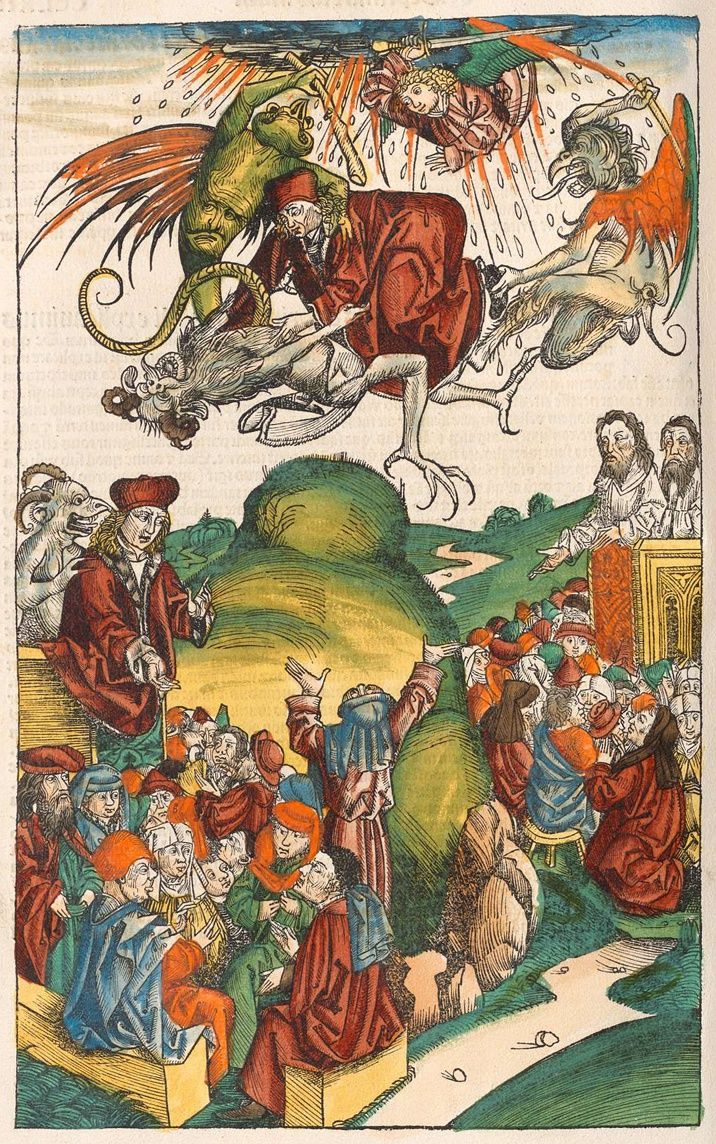
by Moe | Jun 24, 2018 | Gnosis, Satanism
Perhaps no other figure in modern human history has been talked about, attacked, demonized and slandered more than “Satan”.
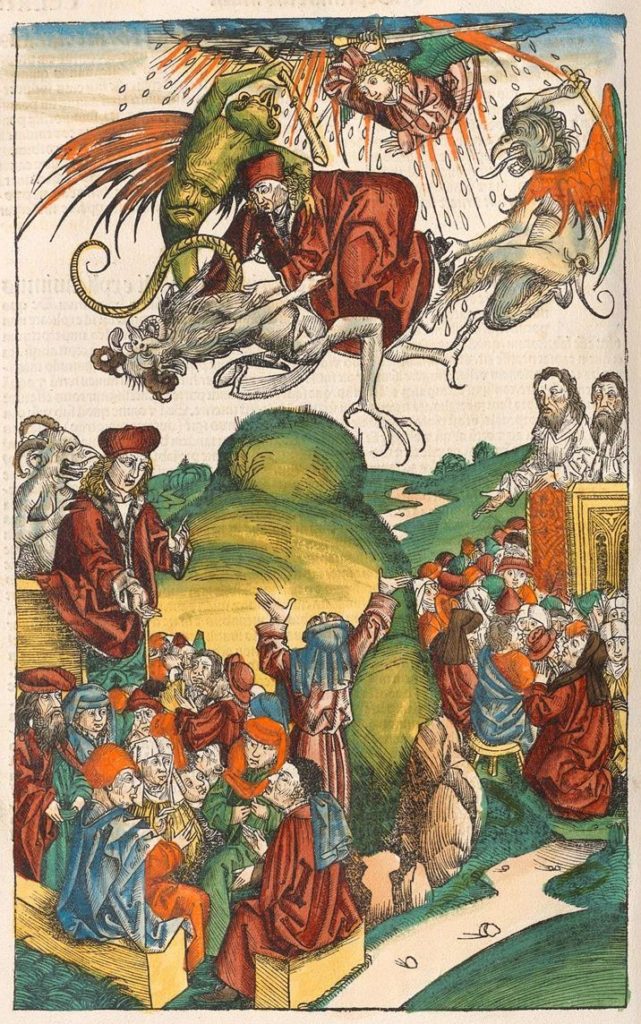
In the Christian world, Satan has been known by various names such as the adversary, the Liar, the Great Dragon, the Prince of Evil Spirits, and God of this World, to name a few.
What I find fascinating is that when I researched the dark history of the early Catholic Church’s viewpoints about an evil man who they like to call a Liar and deceiver, I discovered that there was actually a real person who they called Satan and they battled as their adversary with words and magic.
In fact, they also called him the first Gnostic.
The same Church who has carried the story of Satan for thousands of years has brought the Accuser to us in the year 2018 by stating that Satan is in fact, a real person.
For example, the Catholic Pope Francis who is the Vicar of Christ to over a billion people says that Satan is, in fact, a real person who is more intelligent than us. In December 2017, Francis told a Catholic television channel TV2000, “He is evil, he’s not like fog. He’s not a diffuse thing, he is a person. One must not talk to Satan, if you start talking to Satan you are lost, he is more intelligent than us.”
The Pope said, gesturing with his hands, “He’s more intelligent than us, and he’ll turn you upside down, he’ll make your head spin. “He always pretends to be polite – he does it with priests, with bishops. That’s how he enters your mind. But it ends badly if you don’t realize what is happening in time. (We should tell him) go away!” he said.
So, who is this Satan that Pope Francis talking about?
If we want to find out who the Church gave the label of Satan, all you have to do is research who the Church Fathers had called Satan and who were their main adversaries and accusers at that time.
And who do we find? – THE GNOSTICS!
The same group the Chruch had battled as “their adversaries” in the early years of Catholicism and the same doctrines of Gnosticism of whom our modern Pope Francis has been warning fellow Catholics about.
This all makes perfect sense. After all, the word Satan is derived from the ancient Greek Σατάν (Satán) and the Hebrew שָׂטָן (Sātān) which means “adversary, the accuser, to show enmity to, oppose, plot against,” from root s-t-n “one who opposes, or obstructs.”
The Gnostics were adversarial to the Church and Rome. They would be the men of knowledge who opposed the Church’s teachings and would plot against her aims.
As I mentioned above, no other figure has been talked about, attacked, demonized and slandered more than “Satan” and in the same hellish breath, in the history of the Church, no other person in the world has been demonized and slandered more than Simon Magus (Simon the Sorcerer, or Simon the Magician).
If you look through the history of the Church, there has only been one alleged real person who was called Satan and that person is Simon Magus. Not only was he called the firstborn of Satan but he was also given the most illustrious title of the “First Gnostic.”
What fascinates me about this story now that I’m a grown man who doesn’t scare so easily is that why would a person who is labeled the “First Gnostic” also be considered the Son of Satan?
After all, the word Gnostic is simply from the ancient Greek gnōstikos, from gnōstos which means “known and to know” based on “cognitive or intellectual learning.” In other words, to be a conscious being. A person who we would call today “awake” or “illuminated.”
If we look at the infamous long history of the Church and how it made war on all knowledge it deemed heretical. The burning of millions of books and people for the knowledge they possessed can easily fan the sulfuric flames of hell for eternity.
It is obvious to me that the early Church made a war on what we would simply call today “knowledge” and on the men who knew, AKA the Gnostics with their chief leader, “Simon Magus.”
The Church Fathers had given him the titles of not only the “First Gnostic” but also the devilish title of “Satan” and his followers would also be slandered with names such as the antichrists, demons, and children of the devil.
2nd century Church Father, Church representative Saint Irenaeus went to battle with the heretics in his Five Books Against Heresies, today also known as “On the Detection and Overthrow of the So-Called Gnosis. Irenaeus had helped lead the attack on Gnosticism and attack on the Gnostic God Simon.
From this point forward Simon Magus became an apostate to the Chruch because his teachings of Gnosis (Spiritual Knowledge) were considered heretical to the Church. He would be officially known in Christianity as the “father of all heresies” and a man who would be given the name of “Satan.”
Irenaeus said that Siom was one of the founders of Gnosticism and calls him and his followers, “offshoots of Satan.” He (B. i. ch. xxiii.) traces the origins of all sorts of heresies to Simon and speaks of him keeping the prostitute Helena. According to Irenæus, Simon Peter was the vicar of Jesus Christ, and Simon Jupiter (Magus), was the ‘firstborn of Satan’ and ‘the first of all heretics’.
Now, if we look to Simon’s own people, he was known as a God.
Perhaps, this is why the Roman Latins who recently conquered these same said people decided to launch one of the oldest and fiercest propaganda campaigns against Simon and his followers. Something to think about as you read on.
The Greek philosopher-Apologist in the early Christian Church, Saint Justin Martyr, had said Simon was a native of Cæsarea and was known as a God to his people. In his First Apology (XXVI), Martyr stated;
“After the ascension of Christ into heaven, the devils brought forward certain persons, who said that they were gods; and these not only are not persecuted by you but are even held in honor. Simon, a Samaritan from the village of Gitton, who in the days of Claudius Caesar, by the assistance of devils, performed miracles in your royal city of Rome, and was accounted as a god, as a god was honoured with a statue, which was placed in the river Tiber between the two bridges, and had this inscription in Latin;
“Simoni Deo Sancto,” “To Simon the holy God.”
Martyr concluded, “And almost all the Samaritans, and a few even of other nations, worship him, and acknowledge him as the first god.”
In Acts 8:9—10, the Samaritan the Gnostic Magus is given the title “the Great Power of God” (NIV) or “the power of God that is called Great” (NRSV), thus perhaps identifying him as either God himself, a lesser god, or a powerful representative of God.
Early Church theologian, Origen of Alexandria writes, “It escapes the notice of Celsus that the Simonians do not in any way acknowledge Jesus as the Son of God, but they call Simon “the Power of God.”
This title of “the Power of God” is very similar to Satan’s title of the “Prince of the Power of the Air.”
Origen writes, “It escapes the notice of Celsus that the Simonians do not in any way acknowledge Jesus as the Son of God, but they call Simon the Power of God.” In the time of Origen the followers of Simon had dwindled in number to such a degree that he writes, “I do not think it possible to find that all the followers of Simon in the whole world are more than thirty: and perhaps I have said more than there really are” (Conlr. Cels., i.57, quoted by Alford, Gr NT, Acts 8 9).
It is interesting to note that Simon Magus was once known as a God in Rome because he was later symbolized as the Supreme Leader of the Gnostics and their heresies were said to derive its origin from Simon. For this reason to the Church Fathers, he would officially become known in the Scripture as “Satan.”
This person was a Samaritan by birth, from whence he went to Alexandria to receive his education. What many people do not know is that Simon (Satan) was the favorite disciple (student) of John the Baptist and please keep in mind that John the Baptist was also the teacher of Jesus.
This means that Satan, AKA Simon knew Jesus and vice versa.
It was said that Simons alleged great sin was that he had tried to purchase the gift of the power of working miracles like Philip’s conferring the Holy Ghost by the laying on of hands. His request refused because of the unworthy motives which had prompted it and he was cursed by Peter.
In the New Testament, Simon, I mean Satan is “the great dragon,” “old serpent,” “devil,” and “Satan who deceives the whole world.” Simon was also known as the “Prince of the Power of the Air, the spirit which worketh in the children of disobedience, and the evil hosts of the heavenly places, the rulers of the darkness of this world.”
To the Church, Simon Magus would be known as the First Gnostic was also Satan. The immortal adversary of the Church of Rome and the accuser of Thy False Brethren who is a power of the left hand of God, and has authority to do harm to those who know not God.
As I mentioned above, Pope Francis has claimed that Satan is not a metaphor or a nebulous concept but a real person armed with dark powers. The Pope made these remarks during a television interview in December 2017 and has made similar claims all throughout his papacy.
Quite possibly, this is the Apocalypse and the Pope and the Vatican know that Satan is back…
As it is said in 2 Corinthians 11:14 – “If their master himself, who is the “prince of darkness,” the most alien to light, does so, it is less marvelous in the case of them who are his servants.” (Lu 22:54; Eph 6:12″)
The first and last Gnostic. The Alpha and Omega. The rock I will build my Church.
Moe is the founder of GnosticWarrior.com. He is a father, husband, author, martial arts black belt, and an expert in Gnosticism, the occult, and esotericism.