Horus the Brave, the offspring of the Sun, Allglorious: whom the Sun has chosen, and the valiant Ares (Mars) has endowed. His goodness remains for ever, whom Ammon loves, who fills with good the temple of the Phoenix. To him the Gods have granted life, Horus the brave, the son of Heron Rhamestes, the king of the world: He has protected Egypt and subdued her neighbours: Him the Sun loves. The gods have granted him great length of life. He is Rhamestes, the Lord of the World, the Immortal. –The Obelisk of Heliopolis Third Verse
The Phoenix is one of the most sacred symbols to the brotherhood we know of as the Order of the Quest. It symbolizes the morning star who is the son of the sun, the father in which we celebrate through the rising of this most glorious fire-bird from the flames into immortality and reincarnation. The phoenix is the son and the messiah that has risen to become the soul of the Sun-GodRa.
This is represented today with the obelisk of the Porta del Popolo in Rome pictured to the right where we can find near the top an adoration of Ra with the words, ‘Rameses II, son of Ra, who rilled the temple of the Phoenix [ha-t-bennu] with his splendors.’ There is also seen in the Vatican on the wooden coffin of Hetepher-t-s a picture where it seen a hawk and a Phoenix with the words, ‘Glory be to Ra in the underworld!’ ‘Glory be to Ra when he rises!’
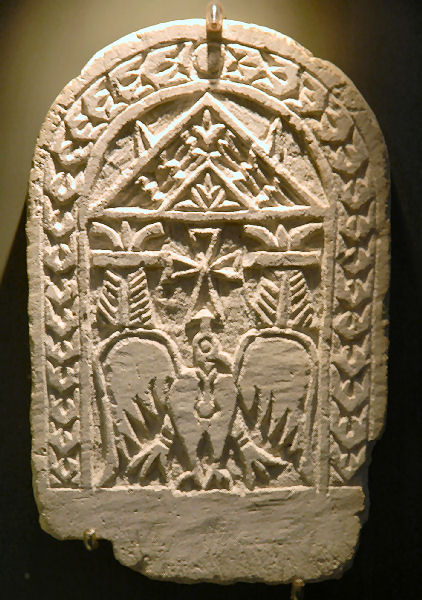
As Manly P. Hall said in his book, The Lost Keys of Freemasonry – “These were the immortals to whom the term ‘phoenix’ was applied, and their symbol was the mysterious two-headed bird, now called an eagle , a familiar and little understood Masonic emblem .”
Moe is the founder of GnosticWarrior.com. He is a father, husband, author, martial arts black belt, and an expert in Gnosticism, the occult, and esotericism.
He erected the pillars at the portico of the temple. The pillar to the south he named Jakin and the one to the north Boaz. – 1 Kings 7:21
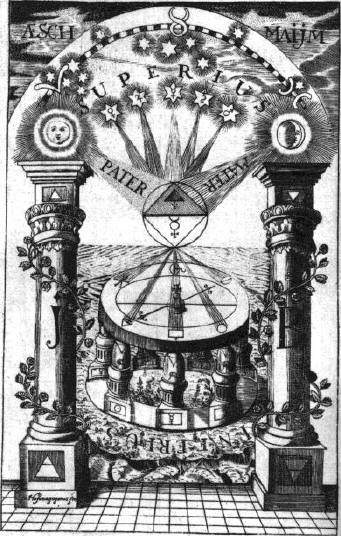
One of the most prolific symbols and allegorical key figures that you will find in freemasonry are the two pillars of Boaz and Jachin. The reason that you will always find these pillars in association with freemasonry is because they are the custodians of the Temple of Solomon.
It is both Boaz and Jachin whom are represented as masons that were employed in the building the world-wide temple of the Universal Church under their great master, Hiram Abiff. To honor this occasion, an immortal symbol of their work was created and these two pillars were respectively consecrated.
It is pretty easy to understand this allegory based just on the paragraph above. These two pillars are simply symbolic of the Freemasons whom are the builders of the Temple of Solomon in which they complete the work in building this temple under their Grand Master, HiRam Abiff.
Please keep in mind that when I refer to the Temple of Solomon, I’m not speaking about an actual physical building, but a spiritual world wide structure of human souls who are the living stones, AKA Masons in building the Temple. This is key to understanding the mystery.
It is said that in the degree of perfect master that the two pillars of Boaz and Jachin are fixed crossways and the candidate is asked ” Are you a perfect master ? Where the candidate answers “I have seen the circle and the square enclosing the two columns. (more…)
Moe is the founder of GnosticWarrior.com. He is a father, husband, author, martial arts black belt, and an expert in Gnosticism, the occult, and esotericism.
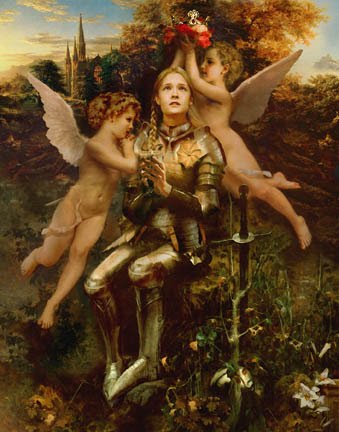
“I am prepared here is my keen edged sword, Decked with five Flower-de-luces on each side.” – Joan of Arc
The facts are that when you see an ancient symbol that is used today by a country on their flag or royalty via their coat of arms that can also be traced back to ancient civilizations, you can be certain that it is the very same royal brotherhood using the same old royal symbols to honor their ancestors. It is really that royally simple.
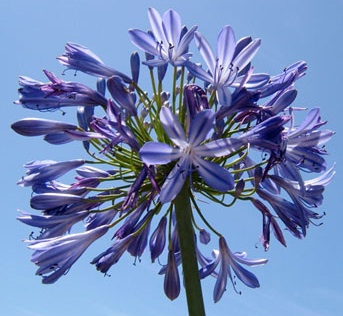
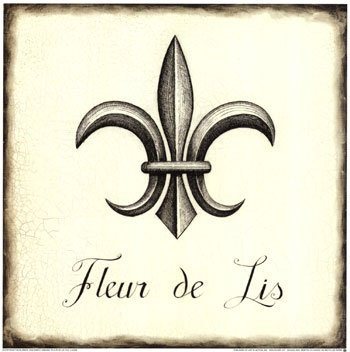
The fleur-de-lis or fleur-de-lys in French literally means “lily flower” (fleur means flower, and lis means lily or iris). However, let me state that when you see this symbol emblazoned today on various flags or engraved on royal crowns, the fleur-de-lis does not represent the lily flower, but the Trinity of the Brotherhood. For it is and emblem of a blood line of divine majesty and the symbol of a particular royal Brotherhood that had originated long before the foundation of Rome, or the founding royal houses of France.
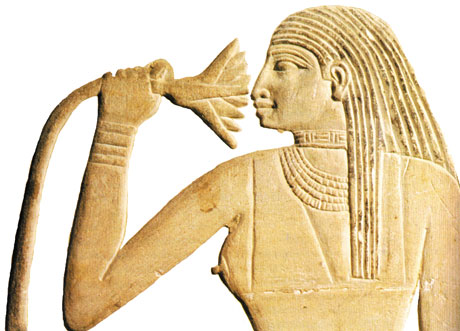
The fleur-de-lis is modeled after the lotus in Egypt that was associated with the psychotropic Nile Lily. The Nile is where this same brotherhood had originated. Therefor it is only fitting that they would choose an ancient Egyptian symbol for “plant” meaning “Tree of Life” that was three sacred lotus lilies as their symbol. It is the fleur-de-lis that has now replaced he Lily as a symbol of royalty of this same said Brotherhood to honor the three glorious lilies of Jesus, Mary, and Joseph.
The white fleur-de-lis, often called the Annunciation of the Blessed Virgin Mary, the flower of the Queen of Heaven, the Blessed Virgin Mary and a symbol of purity or whiteness. This day is held in like reverence by the Latin, Greek and Reformed Churches everywhere, as the day when the Angel brought the happy tidings to the Blessed Virgin Mary of the Incarnation of the Son of God as told in the Gospel of St. Luke 1 28, “And coming in, he said to her, “Greetings, favored one! The Lord is with you.”
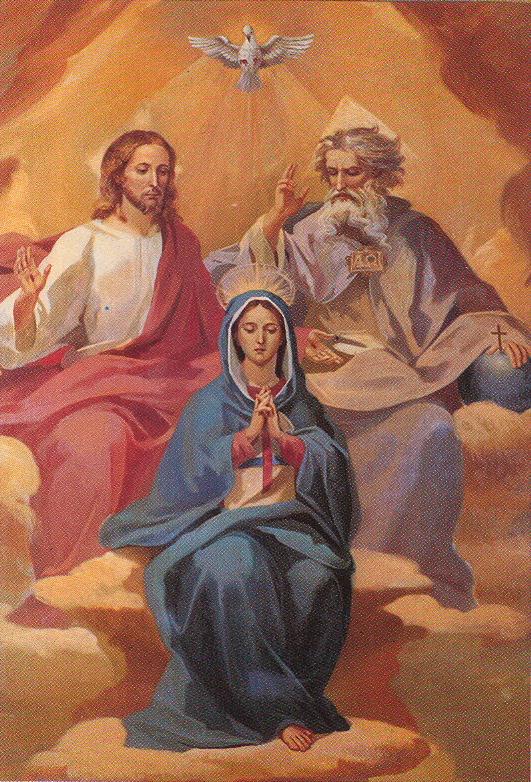
Catholic.com says under “Full of Grace,” that “These blessings included her role as the New Eve (corresponding to Christs role as the New Adam), her Immaculate Conception, her spiritual motherhood of all Christians, and her Assumption into heaven.” Hence, the ever-blessed Cleopatra VII is the spiritual mother of all Christians and the New Eve of the New Testament. Augustus Caesar is the New Christ and the New Adam. When Catholics recite The Hail Mary which says “Hail Mary, full of grace. The Lord is with thee. Blessed art thou amongst women, and blessed is the fruit of thy womb, Jesus. Holy Mary, Mother of God, pray for us sinners, now and at the hour of our death, Amen.”
Hence, when the Hail Mary prayer is said, it is done for the Mary and her seeds (children/blood line) of the Blessed Trinity represented by the fleur-de-lis who the Virgin Mary is the New Eve via the New Testament in this 6th Age. This Mary and Eve is no other than Cleopatra VII who you will also find her under other names such as Mariamne I, and she is also called Mariamne the Hasmonean.
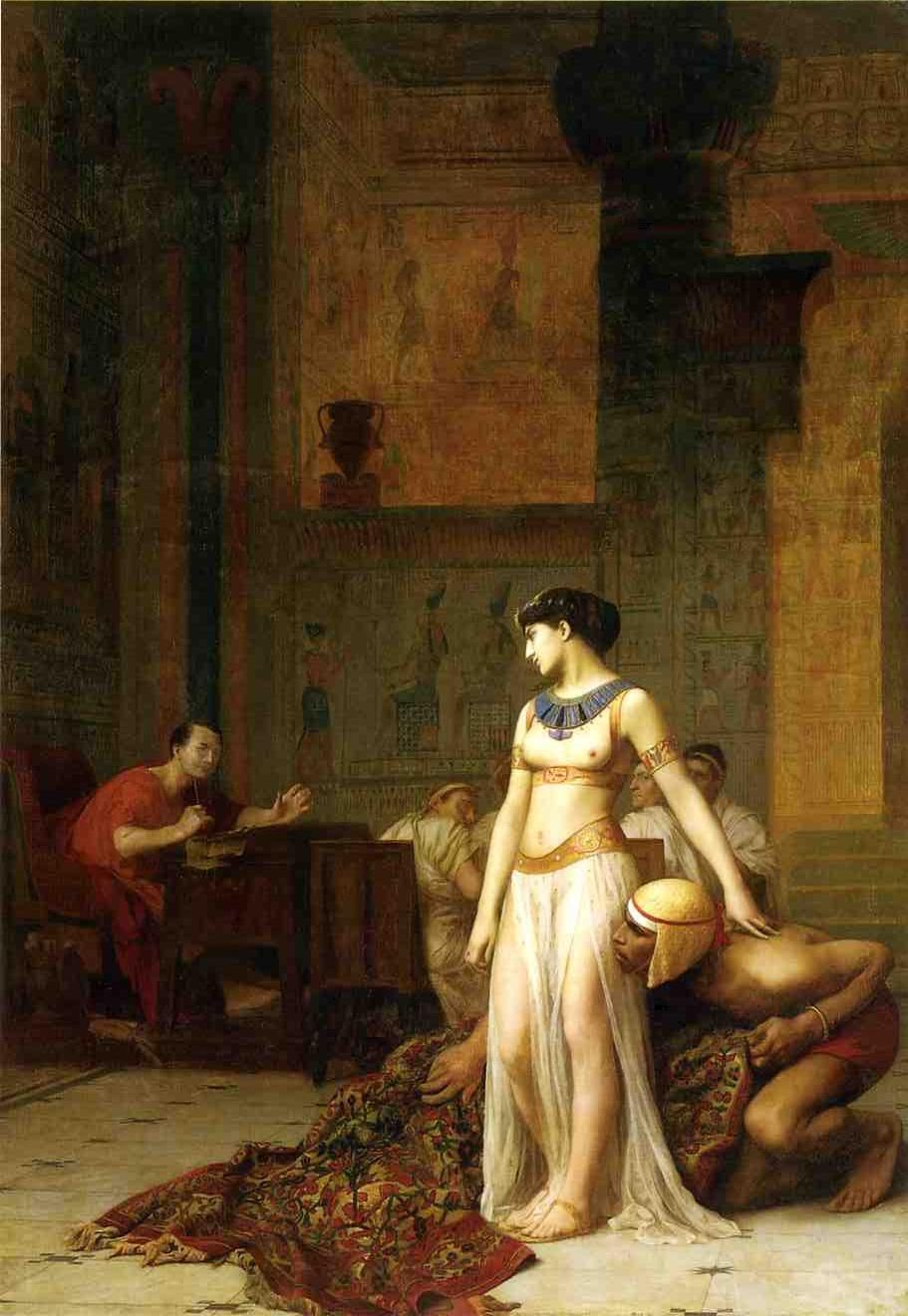
Monsieur Sonnini discovered an Egyptian statue, holding a sceptre, which terminated in a fleur-de-lis. The Blessed Virgin Mary, the last Pharaoh of Egypt, Cleopatra VII was of the family of Ptolemy and had always appeared in public clothed in a robe sacred to Isis, her head adorned with a crown of golden lily leaves. Cleopatra was a descendant of the Ptolemaic dynasty who are an ancient Greek family sometimes also known as the Lagids or Lagides who descend from Ptolemy I’s father, Lagus. After the reign of Alexander the Great, they would be known as the Macedonian Greeks or the Hasmoneans, Maccabees, or Asmonians whose family emblem is also an eagle. This royal family ruled during the Ptolemaic Empire in Egypt which was called the Hellenistic period. In 305 BC, he declared himself King Ptolemy I, later known as “Soter” (savior). What this means is that this particular family who wrote both the Old and New Testaments, had made their Kings into Saviors, Messiahs, Christs and the KING OF KINGS.
Their rule lasted for 275 years, from 305 BC to the time of Cleopatra VII in 30 BC when Rome united with Egypt under the Savior and Messiah, Augustus Caesar. This same family you will find ancient times that his family had lived amongst various peoples such as the Assyrians, Greeks, Persians, Romans and the Egyptians. You can even trace this symbol into ancient Egypt depicted in artwork and also the headdresses of the Egyptian sphinxes.
You will find this symbol throughout history as an ornament on the crowns, scepters, thrones, seals, coins, etc. of not only French Kings, but also on Greek, Roman, German, English, Spanish, Egyptian, Syrian and Babylonian Kings.
Moe is the founder of GnosticWarrior.com. He is a father, husband, author, martial arts black belt, and an expert in Gnosticism, the occult, and esotericism.
Now, all this is diabolical in the highest degree, and is not this intuition of the symbols of a lost science something truly marvellous, for it is transcendent magic which, basing the universe on the two pillars of Hermes and Solomon, has divided the metaphysical world into two intellectual zones, one white and luminous, comprising positive ideas, the other black and opaque, including those which are negative, and which has given to the synthetic notion of the first the name of God, and to the synthesis of the second the name of the devil, or Satan. – Éliphas Lévi
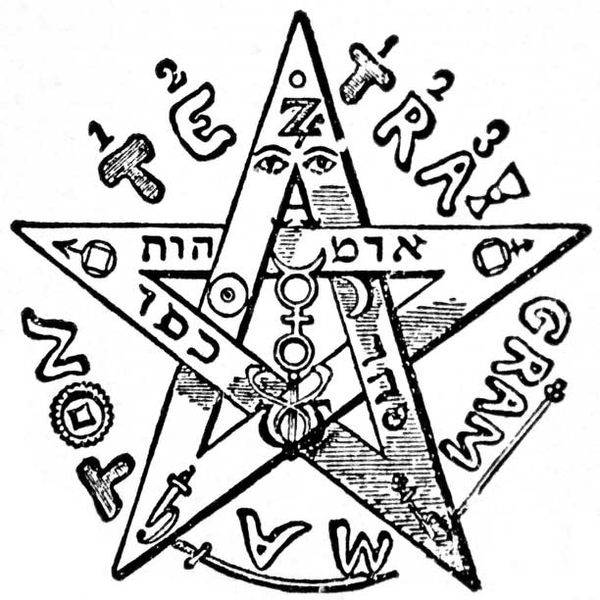
Not many people are aware that there are two main types of pentagrams in the occult world with two very different meanings. One is used by the right hand path and the other by the left hand path. Once you have the complete understanding of the pentagram, you will be able decipher the key of the two worlds that is the illusion we live in.
In its simplest form, the pentagram represents man or woman.
The upright pentagram such as the one above and to the right is the symbol that we can say is used for good by followers of the right hand path, the divine feminine and soul. The upright person who is in control of his passions whose divine reason through their intellect, soul and spirit have risen above his or her animal and lower natures which now dominates this being who is considered like a Christ or Buddha.
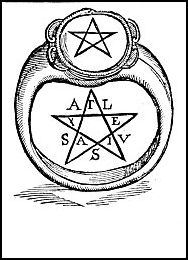
It is a type of an astrological magic and good luck charm. In ancient Roman times and medieval Christian churches, the Pentagram was painted or carved on their doors to ward off evil spirits. This was also done by the Babylonians and many other ancient cultures throughout history. It is associated with the “Druid’s-foot,” 3 pentalpha, and the the fairy-cross. Amongst the Pythagoreans (signum Pythagoricum), in the time of and after Pythagoras, a signet ring bearing the pentagram was worn by members of the Pythagorean brotherhood.
Moe is the founder of GnosticWarrior.com. He is a father, husband, author, martial arts black belt, and an expert in Gnosticism, the occult, and esotericism.
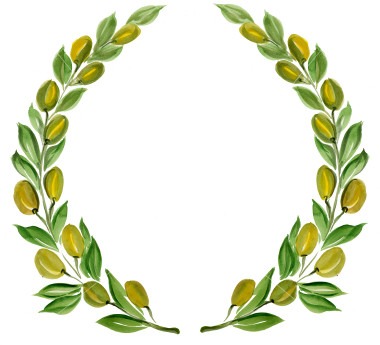
The olive branch in Western culture, derived from the customs of Ancient Greece, symbolizes peace or victory and was worn by brides. The use of the olive as a symbol of peace dates at least to the fifth century BCE
PAINTINGS OR PICTURE IMAGES
On a medal of the Emperor Augustus, Peace holds in one hand a branch of olive, and in the other a lighted torch with which she has just fired a pile of martial trophies, indicative of the extinction of war.
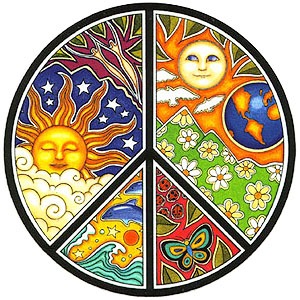
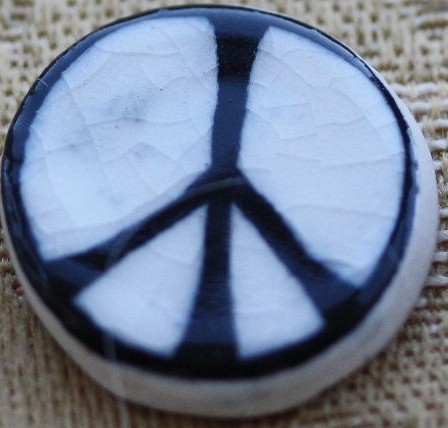
The first peace badge, 1958, made in ceramic for the Campaign for Nuclear Disarmament by Eric Austen from Gerald Holtom’s original design.
Peace via the hand sign. Can we all give peace a chance?
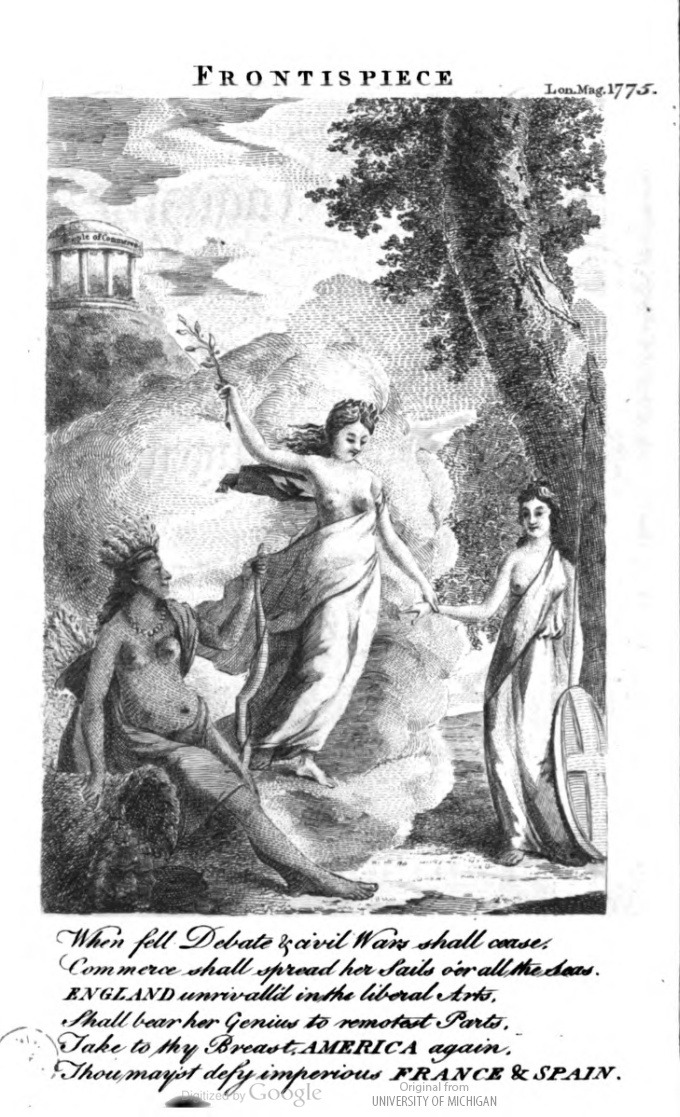
An engraving from The London Magazine, January 1775, showing the Goddess of Peace bringing an olive branch to America and Britannia.
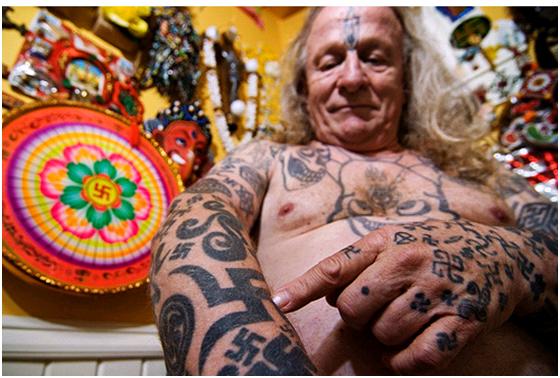
The intention of the ManWoman (yes, that is his name) is to regain the real meaning of the swastika, which was an ancient symbol for peace until the Nazis used it for their mischief. he wants to get a point across: swastikas are a sign of peace, not of killing Jews. ManWoman has taught many people that the swastika is a symbol for peace and he intends to spread peace and love whereever he goes
The peace flag flown from a balcony in Italy
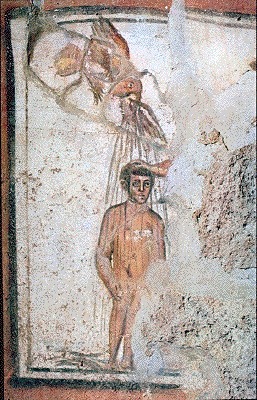
Early Christian representation of baptism, Catacombs of Marcellinus and Peter, Rome, 3rd to 4th century CE, showing dove with branch.
Masonic Symbols.猶eace.
Amongst the most important doctrines of Masonry is that of the connection of Peace and Unity with Plenty. The Freemason is taught that it is by peaceful labour that he is to live, diligently carrying on whatever may his be proper occupation. And as in operative masonry, no work can be carried on without the combined labours of many, the benefit of unity is apparent. But so it is, likewise, in almost all the works in which men can engage. They cannot carry out their schemes unaided, but must secure the co-operation of others. Unity is strength in the family, in the nation, in the Masonic Brotherhood, in every association of men. Freemasonry, therefore, teaches and in many ways seeks to impress upon all the members of the Order, the importance of living in peace, even according to the apostolic rule, “As much as lieth in you, live peaceably with all men.” A good and worthy Freemason must be no brawler, he must not be contentious, nor given to strife.
Peace is represented in masonic symbolism as a matron holding forth ears of corn in her hand, crowned with leaves of olive, and laurel, and with roses. The matronly form and aspect are well suited to convey the ideas of dignity and calm happiness. The ears of corn are symbolical of plenty, and are held forth in the hand of the figure of peace, because plenty is the reward of peaceful labour, when brethren dwell together in unity, no one disturbing his neighbour or hindering him in his work, but each helpful to the rest. The crown of olive, laurel, and roses, is symbolical of the joy which peace diffuses. The leaves of the olive suggest the thought of its oil, as used for the anointing of the head. “Thou anointest my head with oil,” says David (Ps. xxiii. 5), recounting the abundant blessings which he had received from God. The ancients were accustomed to anoint the head profusely with oil upon all festive occasions. The leaves of the laurel suggest the idea of triumph, and remind us that a great victory is always won whenever peace is established, and wherever it is maintained; a victory more truly glorious than that of the warrior in the field of battle; a victory over the evil passions of the human heart. The roses are a fit symbol of joy. When peace prevails, men can take delight in those things which gratify the aesthetic taste, that love of the beautiful which has been implanted in us by God, to be the source of much pure enjoyment.
Another symbol of peace is the caduceus, or white staff, which, according to the custom of the ancients, was carried by ambassadors as an emblem of their office and purpose, when they went to treat of peace. It is unnecessary to add anything in explanation of this symbol. The reference to the ancient use of the caduceus is enough for this purpose.
SOURCE: Freemasonry: its symbolism, religious nature, and law of perfection By Izett Paton – 1873

 Horus the Brave, the offspring of the Sun, Allglorious: whom the Sun has chosen, and the valiant Ares (Mars) has endowed. His goodness remains for ever, whom Ammon loves, who fills with good the temple of the Phoenix. To him the Gods have granted life, Horus the brave, the son of Heron Rhamestes, the king of the world: He has protected Egypt and subdued her neighbours: Him the Sun loves. The gods have granted him great length of life. He is Rhamestes, the Lord of the World, the Immortal. – The Obelisk of Heliopolis Third Verse
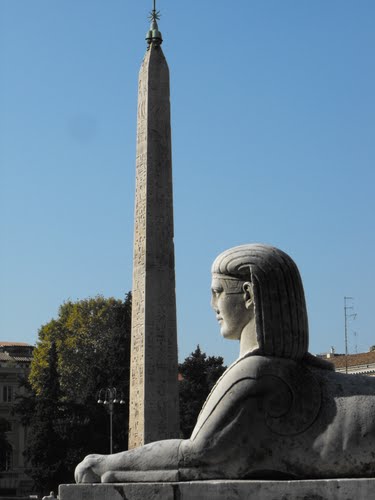 top an adoration of Ra with the words, ‘Rameses II, son of Ra, who rilled the temple of the Phoenix [ha-t-bennu] with his splendors.’ There is also seen in the Vatican on the wooden coffin of Hetepher-t-s a picture where it seen a hawk and a Phoenix with the words, ‘Glory be to Ra in the underworld!’ ‘Glory be to Ra when he rises!’