by Moe
As the honorific inscriptions said of the birthday of the Roman Emperor Augustus, so said after them all Christians of the natal day of 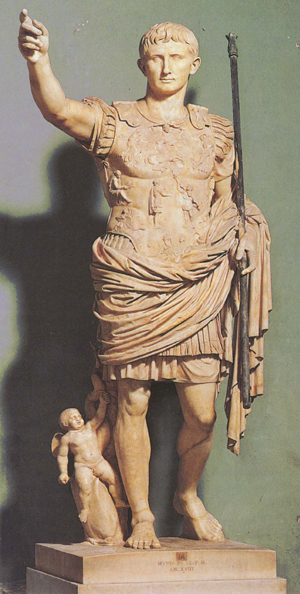 Jesus:
“This day has given the earth an entirely new The New aspect.
The world would have gone to destruction Era Two Thousand had there not streamed forth from him who is now born a common blessing.
“Rightly does he judge who recognises in this birth-day the beginning of life and of all the powers of life; now is that time ended when men pitied themselves for being born.
“From no other day does the individual or the community receive such benefit as from this natal day, full of blessing to all.
“The Providence which rules over all has filled this man with such gifts for the salvation of the world as designate him as Saviour for us and for the coming generations; of wars he will make an end, and establish all things worthily. (more…)
Moe is the founder of GnosticWarrior.com. He is a father, husband, author, martial arts black belt, and an expert in Gnosticism, the occult, and esotericism.
by Moe
Some of the most famous authors and historians such as Josephus and Tacitus had written that the first converts to the Christian faith under Rome were said to come from Crete. It was these Cretan Jews to whom Saint Peter preached on the memorable day of Pentecost, where he had converted three thousand of them to Christianity and who would then preach the gospel on their return from Jerusalem.
The Romans-Jewish historian Josephus confirms this in his book, “The Works of Flavius Josephus;”
“The tradition is, that the Jews ran away from the island of Crete, and settled themselves on the coast of Libya, and this at the time when Saturn was driven out of his kingdom by the power of Jupiter: an argument for it is fetched from their name. The mountain Ida is famous in Crete; and the neighbouring inhabitants are named, which, with a barbarous augment, becomes the name of Jud [Jews.] Some say they were a people who were very numerous in Egypt, under the reign of Isis, and that the Egyptians got free from that burden by sending them into the adjoining countries, under their captains Hierosolymus and Judas.”
Roman Senator and historian, Cornelius Tacitus (110 A.D.) had written that the Jews often traveled to Crete to celebrate the festival of Pentecost in Jerusalem and that they eventually were exiled from the island when Saturn was driven from his throne by the violence of Jupiter. The Cretans are called Idaeans, and then Judieans who eventually became fugitives from the island and who then settled on the nearest coast of Africa in the remotest corner of Libya. They are said to be descendants of the Ethiopians which would connect them to the children of Moses who is said to be the Father of Ethiopia. (The Works of Tacitus: By Cornelius Tacitus – Page 265)
CRETE or CANDIA: Island in the Mediterranean, about 55 miles south of the Morea. Jews had settled there long before the Christian era (1 Mace. xv. 23 mentions Jews in Gortynia, Crete). Philo speaks of the Jews of Crete (“ Legatio ad uaium,” ed. Mangey, ii. 587). About 43.0. the false
[graphic]
Alexander, on his way to Rome, visited the Jewish communities of Crete, which, believing him to be a scion of the Hasmoncans, provided him with large sums of money (Josephus, “Ant.” xvii. 12, §1). Cretan Jews residing in Jerusalem are mentioned in Acts ii. 11. Crete fell into the hands of the R0mans in 67 0.15. ; and the Jewish communities there shared the fate of others under the dominion of Rome: they were treated as Roman citizens under the pagan emperors, but became the objects of persecution as soon as Christianity had become established. Thus, under Theodosius II. (408), the Cretan Jews were expelled. The period of their banishment, however, must have been of very short duration; for it is recorded that in 440 a pseudoMessiah arose among them, and that the faith of the Cretan Jews in him _was so great that they neglected their business, abandoned their property, and Waited for the day on which the new Moses would lead them dry-shod through the sea into the Promised Land (Socrates, “Historia Ecclesiastica,” vii. 36).
Later, the Apostle Paul would go to Crete in order to live for two years as part of a missionary effort of Rome, where he too was successful like his predecessor Peter in converting many of the island’s inhabitants, who were now called Jews, and bind them to Christianity. Before Paul had left Crete, he had appointed the newly converted Roman Gentile, Titus as Bishop to the island, in order that he ordain elders in every city. The facts that two of the most important Roman Catholic Saints and one of the most powerful bishops had spent a lot of time and resources in Crete, proves that this island was most likely the main capital to the Jewish people in this region of the world.
It is here where we can also find actual physical evidence supporting the story of Hiram and Solomon’s Temple. More so than in modern day Israel which many researchers, and even a recent New York Times story shows that some researchers and author have serious doubts that Israel is the true location of the first and second Temple due to the fact there has never been found actual real evidence of Solomon’s Temple. However, if we are to study the ancient history, biblical texts and the many ruins of Crete such at Knossos, we will find a mountain of evidence and stories that would substantiate what I have been saying for over three years which is that Crete is the true first home of the Phoenician Hebrews and Solomon’s Temple.
The reason modern day Israel become the final destination for many of these people is because the Romans conquered the island of Crete, and after the destruction of the second temple, they were deported and forbidden by Roman law to return punishable by death. I have explained this story in many of my previous articles such as, The Siege of Jerusalem and the Destruction of the Second Temple in Crete, Crete: The Lost Island of Atlantis, and The Origins of the Kohen Priesthood to name a few.
In fact, it wasn’t until in 2011 when 300 Jews were allowed to come back to Crete in what was called “the Season of Our Freedom” to reestablish a Jewish community in Crete. Professor Mel Alexenberg, Head of the School of the Arts in Jerusalem and former professor of art and education at Columbia University had written this on his blog;
“We celebrated the Season of Our Freedom participating in reestablishing a Jewish community in Crete where Jews lived for 2 millennia.
In 1944, the Nazis herded the Jews of this Greek island into a ship that was torpedoed. All 300 Cretan Jews drowned en route to Auschwitz.
For Pesach 2011/5771, 300 Jews flew into Crete from 3 continents to create a Jewish community in a holiday village overlooking Daios Cove.
The entire village was rendered kosher for Passover. Circular hand-made matzot and rectangular machine-made matzot were served at meals.”
Moe is the founder of GnosticWarrior.com. He is a father, husband, author, martial arts black belt, and an expert in Gnosticism, the occult, and esotericism.
by Moe
I will be like the dew to Israel; He will blossom like the lily, And he will take root like the cedars of Lebanon. His shoots will 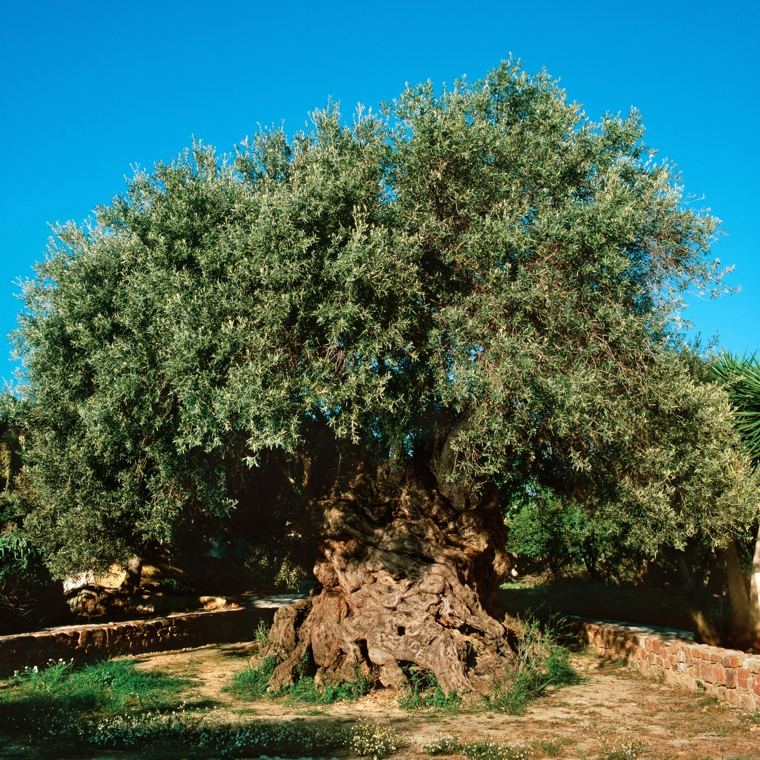 sprout, And his beauty will be like the olive tree And his fragrance like the cedars of Lebanon. Hosea 14:5-6
For the purpose of this article, I would like to mainly focus on the Olive Tree spoken about in the Scripture and the first cultivators of Olives who were the same people involved in writing the Hebrew Bible and Old Testament, being that of the Phoenicians and later Greek Athenians. For example, there is an ancient olive tree in Crete known as the Finix (Phoenix) Olive that is said to be over 2,000 years old.
A tree that I believe is the biblical Olive tree of Abraham pictured to the right. It symbolizes the covenants made by the People of the Book being that of the ancient Israelites and Gentiles that was originally made in the Land of Canaan, which I believe to be the Holy Island of Crete and the focus of this article.
In 1997, the tree was declared a protected natural monument, and in October 2009, the Olive Tree Museum of Vouves was inaugurated in a nearby 19th-century house, displaying the traditional tools and process of olive cultivation. Branches from the tree were used to weave victors’ wreaths for the winners of the 2004 Athens Olympics and the 2008 Beijing Olympics.(wikipedia) (more…)
Moe is the founder of GnosticWarrior.com. He is a father, husband, author, martial arts black belt, and an expert in Gnosticism, the occult, and esotericism.
by Moe
“Corresponding to the rays of his crown, are the seven vowels, the elements of his name. The usual triple “S.S.S.”and bar, and 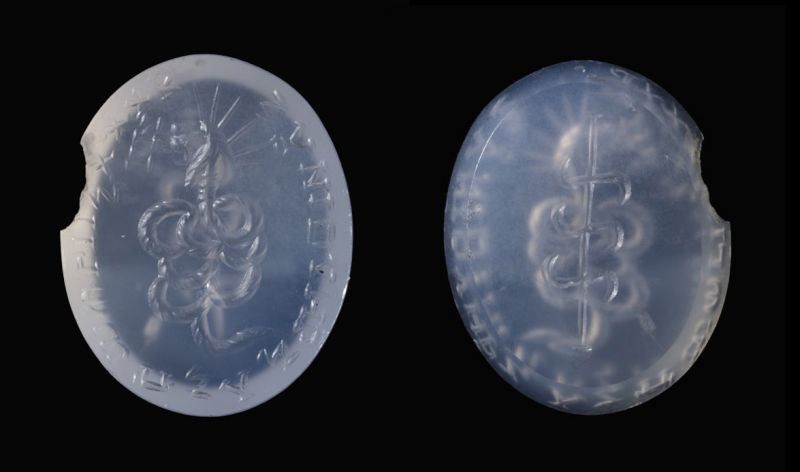 the name “XNOTBIC,” are the reverse of this Gnostic gem.” (The Rosicrucians: Their Rites and Mysteries By Hargrave Jennings)
The triple “S.S.S.”and bar Gnostic gem that Hargrave Jennings mentioned above, you will find today in various forms such as the Papal Cross, triple cross that is the Seal of the Grand Master of the Templars, and also the 33° Sovereign Grand Commander of the Ancient and Accepted Scottish Rite.
This cross is not evil, but esoteric in origin and an ancient sign of the Gnostic priestly authority as to the Brotherhood of man. The Papal, Templar and Masonic connections to the triple bar cross indicate their Sovereign authority over the Gnostic mysteries and their Orders, which I will explain below. (more…)
Moe is the founder of GnosticWarrior.com. He is a father, husband, author, martial arts black belt, and an expert in Gnosticism, the occult, and esotericism.
by Moe
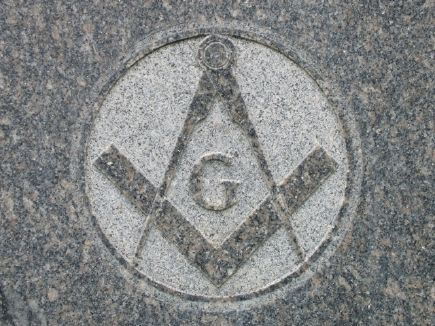 “Benedict crossed the ocean and passed into Gaul, when he made inquiry for masons who could build him a church of stone after the Roman style, which he always loved.” – Saint Bede, Doctor of the Catholic Church and Father of English History
In my search for the beginning origins of freemasonry, my path has led me to a most mysterious and almost forgotten medieval time that seems to be lost in history. It was an era with very little brotherly unity, when various peoples such as the Saxons, Picts, Angles, and other pagan tribes, along with the Celtic Druid Priesthood had held sway in much of what we know today as England, Ireland, Scotland, and France in the 6th, 7th, 8th, and 9th centuries.
This was also the pivotal period in the past when some of these kingdoms, tribes, and members of this same Druid priesthood would make an alliance with the Roman Church to create a new unified Brotherhood called the “Universal Church (Catholic).” This would be the same exact time in history where you will find stone masons (freemasons) that were specifically hired by this new Christian Brotherhood to perform a mass building campaign for the Universal Church across the world. (more…)
Moe is the founder of GnosticWarrior.com. He is a father, husband, author, martial arts black belt, and an expert in Gnosticism, the occult, and esotericism.
by Moe
In the Hebrew bible of the Old Testament and in the New Testament, the Holy of Holies (Kodesh Hakodashim) sits behind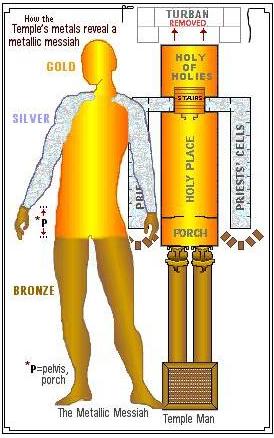 the two pillars and refers to the inner sanctuary of the Tabernacle where God was believed to be present. It is further described as an inner shrine housing the Ark of the Covenant guarded by two-winged golden cherubim, and an outer chamber (Holy Place) with a golden lampstand, table for showbread, and altar of incense.
The meaning of tabernacle(Hebrew: מִשְׁכַּן, mishkan), is “a dwelling place or to take up temporary residence; especially: to inhabit a physical body.” This allegorical description above of the Holy of Holies as an inner shrine and a temporary residence to inhabit a physical body, tells us esoterically where this tabernacle is located.
It is not only a man-made building or structure, but also part of the human body, and that in science we can simply call the tabernacle our skull which holds the chalice for our brains, with the winged golden cherubim guarding our thoughts being our hippocampus or ammon’s horn; a subject I have written about many times.
This is the beginning explanation of the hidden esoteric meanings behind some of these gnostic biblical stories that were meant to teach initiates to know thyself and to reach a state of true gnosis. This wonderful gnostic story is further explained by Manly P. Hall who had written about this in the Initiates of the Flame: (more…)
Moe is the founder of GnosticWarrior.com. He is a father, husband, author, martial arts black belt, and an expert in Gnosticism, the occult, and esotericism.