by Moe
p. 129
OPINIONS of authorities differ widely concerning the origin of playing cards, the purpose for which they were intended, and the time of their introduction into Europe. In his Researches into the History of Playing Cards, Samuel Weller Singer advances the opinion that cards reached Southern Europe from India by way of Arabia. It is probable that the Tarot cards were part of the magical and philosophical lore secured by the Knights Templars from the Saracens or one of the mystical sects then flourishing in Syria. Returning to Europe, the Templars, to avoid persecution, concealed the arcane meaning of the symbols by introducing the leaves of their magical book ostensibly as a device for amusement and gambling. In support of this contention, Mrs. John King Van Rensselaer states:
“That cards were brought by the home-returning warriors, who imported many of the newly acquired customs and habits of the Orient to their own countries, seems to be a well-established fact; and it does not contradict the statement made by some writers who declared that the gypsies–who about that time began to wander over Europe–brought with them and introduced cards, which they used, as they do at the present day, for divining the future.” (See The Devil’s Picture Books.)
Through the Gypsies the Tarot cards may be traced back to the religious symbolism of the ancient Egyptians. In his remarkable work, The Gypsies, Samuel Roberts presents ample proof of their Egyptian origin. In one place he writes: “When Gypsies originally arrived in England is very uncertain. They are first noticed in our laws, by several statutes against them in the reign of Henry VIII.; in which they are described as ‘an outlandish people, calling themselves Egyptians,–who do not profess any craft or trade, but go about in great numbers, * * *.'” A curious legend relates that after the destruction of the Serapeum in Alexandria, the large body of attendant priests banded themselves together to preserve the secrets of the rites of Serapis. Their descendants (Gypsies) carrying with them the most precious of the volumes saved from the burning library–the Book of Enoch, or Thoth (the Tarot)–became wanderers upon the face of the earth, remaining a people apart with an ancient language and a birthright of magic and mystery.
Court de Gébelin believed the word Tarot itself to be derived from two Egyptian words, Tar, meaning “road,” and Ro, meaning “royal.” Thus the Tarot constitutes the royal road to wisdom. (See Le Monde Primitif.) In his History of Magic, P. Christian, the mouthpiece of a certain French secret society, presents a fantastic account of a purported initiation into the Egyptian Mysteries wherein the 22 major Tarots assume the proportions of trestleboards of immense size and line a great gallery. Stopping before each card in turn, the initiator described its symbolism to the candidate. Edouard Schuré, whose source of information was similar to that of Christian’s, hints at the same ceremony in his chapter on initiation into the Hermetic Mysteries. (See The Great Initiates.) While the Egyptians may well have employed the Tarot cards in their rituals, these French mystics present no evidence other than their own assertions to support this theory. The validity also of the so-called Egyptian Tarots now in circulation has never been satisfactorily established. The drawings are not only quite modem but the symbolism itself savors of French rather than Egyptian influence.
The Tarot is undoubtedly a vital element in Rosicrucian symbolism, possibly the very book of universal knowledge which the members of the order claimed to possess. The Rota Mundi is a term frequently occurring in the early manifestoes of the Fraternity of the Rose Cross. The word Rota by a rearrangement of its letters becomes Taro, the ancient name of these mysterious cards. W. F. C. Wigston has discovered evidence that Sir Francis Bacon employed the Tarot symbolism in his ciphers. The numbers 21, 56, and 78, which are all directly related to the divisions of the Tarot deck, are frequently involved in Bacon’s cryptograms. In the great Shakespearian Folio of 1623 the Christian name of Lord Bacon appears 21 times on page 56 of the Histories. (See The Columbus of Literature.)
Moe is the founder of GnosticWarrior.com. He is a father, husband, author, martial arts black belt, and an expert in Gnosticism, the occult, and esotericism.
by Moe
p. 133
THERE is no doubt that much of the material recorded in the first five books of the Old Testament is derived from the initiatory rituals of the Egyptian Mysteries. The priests of Isis were deeply versed in occult lore, and the Israelites during their captivity in Egypt learned from them many things concerning the significance of Divinity and the manner of worshiping It. The authorship of the first five books of the Old Testament is generally attributed to Moses, but whether or not he was the actual writer of them is a matter of controversy. There is considerable evidence to substantiate the hypothesis that the Pentateuch was compiled at a much later date, from oral traditions. Concerning the authorship of these books, Thomas Inman makes a rather startling statement: “It is true that we have books which purport to be the books of Moses; so there are, or have been, books purporting to be written by Homer, Orpheus, Enoch, Mormon, and Junius; yet the existence of the writings, and the belief that they were written by those whose name they bear, are no real evidences of the men or the genuineness of the works called by their names. It is true also that Moses is spoken of occasionally in the time of the early Kings of Jerusalem; but it is clear that these passages are written by a late hand, and have been introduced into the places where they are found, with the definite intention of making it appear that the lawgiver was known to David and Solomon.” (See Ancient Faiths Embodied in Ancient Names.)
While this noted scholar undoubtedly had much evidence to support his belief, it seems that this statement is somewhat too sweeping in character. It is apparently based upon the fact that Thomas Inman doubted the historical existence of Moses. This doubt was based upon the etymological resemblance of the word Moses to an ancient name for the sun. As the result of these deductions, Inman sought to prove that the Lawgiver of Israel was merely another form of the omnipresent solar myth. While Inman demonstrated that by transposing two of the ancient letters the word Moses (משה) became Shemmah (שמה), an appellation of the celestial globe, he seems to have overlooked the fact that in the ancient Mysteries the initiates were often given names synonymous with the sun, to symbolize the fact that the redemption and regeneration of the solar power had been achieved within their own natures. It is far more probable that the man whom we know as Moses was an accredited representative of the secret schools, laboring–as many other emissaries have labored–to instruct primitive races in the mysteries of their immortal souls.
The true name of the Grand Old Man of Israel who is known to history as Moses will probably never be ascertained. The word Moses, when understood in its esoteric Egyptian sense, means one who has been admitted into the Mystery Schools of Wisdom and ~as gone forth to teach the ignorant concerning the will of the gods and the mysteries of life, as these mysteries were explained within the temples of Isis, Osiris, and Serapis. There is much controversy concerning the nationality of Moses. Some assert that he was a Jew, adopted and educated by the ruling house of Egypt; others hold the opinion that he was a full-blooded Egyptian. A few even believe him to be identical with the immortal Hermes, for both these illustrious founders of religious systems received tablets from heaven supposedly written by the finger of God. The stories told concerning Moses, his discovery in the ark of bulrushes by Pharaoh’s daughter, his adoption into the royal family of Egypt, and his later revolt against Egyptian autocracy coincide exactly with certain ceremonies through which the candidates of the Egyptian Mysteries passed in their ritualistic wanderings in search of truth and understanding. The analogy can also be traced in the movements of the heavenly bodies.
It is not strange that the erudite Moses, initiated in Egypt, should teach the Jews a philosophy containing the more important principles of Egyptian esotericism. The religions of Egypt at the time of the Israelitic captivity were far older than even the Egyptians themselves realized. Histories were difficult to compile in those days, and the Egyptians were satisfied to trace their race back to a mythological period when the gods themselves walked the earth and with their own power established the Double Empire of the Nile. The Egyptians did not dream that these divine progenitors were the Atlanteans, who, forced to abandon their seven islands because of volcanic cataclysms, had immigrated into Egypt–then an Atlantean colony–where they established a great philosophic and literary center of civilization which was later to influence profoundly the religions and science of unnumbered races and peoples. Today Egypt is forgotten, but things Egyptian will always be remembered and revered. Egypt is dead–yet it lives immortal in its philosophy, and architectonics.
Moe is the founder of GnosticWarrior.com. He is a father, husband, author, martial arts black belt, and an expert in Gnosticism, the occult, and esotericism.
by Moe
p. 137
WHO were the Rosicrucians? Were they an organization of profound thinkers rebelling against the inquisitional religious and philosophical limitations of their time or were they isolated transcendentalists united only by the similarity of their viewpoints and deductions? Where was the “House of the Holy Spirit, ” in which, according to their manifestoes, they met once a year to plan the future activities of their Order? Who was the mysterious person referred to as “Our Illustrious Father and Brother C.R.C.”? Did those three letters actually stand for the words “Christian Rosie Cross”? Was Christian Rosencreutz, the supposed author of the Chymical Nuptials, the same person who with three others founded “The Society of the Rose Cross”?
What relationship existed between Rosicrucianism and mediæval Freemasonry? Why were the destinies of these two organizations so closely interwoven? Is the “Brotherhood of the Rose Cross” the much-sought-after link connecting the Freemasonry of the Middle Ages with the symbolism and mysticism of antiquity, and are its secrets being perpetuated by modern Masonry? Did the original Rosicrucian Order disintegrate in the latter part of the eighteenth century, or does the Society still exist as an organization, maintaining the same secrecy for which it was originally famous? What was the true purpose for which the “Brotherhood of the Rose Cross” was formed? Were the Rosicrucians a religious and philosophic brotherhood, as they claimed to be, or were their avowed tenets a blind to conceal the true object of the Fraternity, which possibly was the political control of Europe? These are some of the problems involved in the study of Rosicrucianism.
There are four distinct theories regarding the Rosicrucian enigma. Each is the result of a careful consideration of the evidence by scholars who have spent their lives ransacking the archives of Hermetic lore. The conclusions reached demonstrate clearly the inadequacy of the records available concerning the genesis and early activities of the “Brethren of the Rose Cross.”
THE FIRST POSTULATE
It is assumed that the Rosicrucian Order existed historically in accordance with the description of its foundation and subsequent activities published in its manifesto, the Fama Fraternitatis, which is believed to have been written in the year 1610, but apparently did not appear in print until 1614, although an earlier edition is suspected by some authorities. Intelligent consideration of the origin of Rosicrucianism requires a familiarity with the contents of the first and most important of its documents. The Fama Fraternitatis begins with a reminder to all the world of God’s goodness and mercy, and it warns the intelligentsia that their egotism and covetousness cause them to follow after false prophets and to ignore the true knowledge which God in His goodness has revealed to them. Hence, a reformation is necessary, and God has raised up philosophers and sages for this purpose.
In order to assist in bringing about the reformation, a mysterious person called “The Highly Illuminated Father C.R.C.,” a German by birth, descended of a noble family, but himself a poor man, instituted the “Secret Society of the Rose Cross.” C.R.C. was placed in a cloister when only five years of age, but later becoming dissatisfied with its educational system, he associated himself with a brother of Holy Orders who was setting forth on a pilgrimage to the Holy Land. They started out together, but the brother died at Cyprus and C.R.C! continued alone to Damascus. Poor health prevented him from reaching Jerusalem, so he remained at Damascus, studying with the philosophers who dwelt there.
While pursuing his studies, he heard of a group of mystics and Qabbalists abiding in the mystic Arabian city of Damcar. Giving up his desire to visit Jerusalem, he arranged with the Arabians for his transportation to Damcar. C.R.C. was but sixteen years of age when he arrived at Damcar. He was received as one who had been long expected, a comrade and a friend in philosophy, and was instructed in the secrets of the Arabian adepts. While there, C.R.C. learned the Arabic tongue and translated the sacred book M into Latin; and upon returning to Europe he brought this important volume with him.
After studying three years in Damcar, C.R.C. departed for the city of Fez, where the Arabian magicians declared further information would be given him. At Fez he was instructed how to communicate with the Elementary inhabitants [probably the Nature spirits], and these disclosed to him many other great secrets of Nature. While the philosophers in Fez were not so great as those in Damcar, the previous experiences of C.R.C. enabled him to distinguish the true from the false and thus add greatly to his store of knowledge.
Moe is the founder of GnosticWarrior.com. He is a father, husband, author, martial arts black belt, and an expert in Gnosticism, the occult, and esotericism.
by Moe
p. 141
TRUSTWORTHY information is unavailable concerning the actual philosophical beliefs, political aspirations, and humanitarian activities of the Rosicrucian Fraternity. Today, as of old, the mysteries of the Society are preserved inviolate by virtue of their essential nature; and attempts to interpret Rosicrucian philosophy are but speculations, anything to the contrary notwithstanding.
Evidence points to the probable existence of two distinct Rosicrucian bodies: an inner organization whose members never revealed their identity or teachings to the world, and an outer body under the supervision of the inner group. In all probability, the symbolic tomb of Christian Rosencreutz, Knight of the Golden Stone, was in reality this outer body, the spirit of which is in a more exalted sphere. For a period of more than a century subsequent to 1614, the outer body circulated tracts and manifestoes under either its own name or the names of various initiated members. The purpose of these writings was apparently to confuse and mislead investigators, and thus effectively to conceal the actual designs of the Fraternity.
When Rosicrucianism became the philosophical “fad” of the seventeenth century, numerous documents on the subject were also circulated for purely commercial purposes by impostors desirous of capitalizing its popularity. The cunningly contrived artifices of the Fraternity itself and the blundering literary impostures of charlatans formed a double veil behind which the inner organization carried on its activities in a manner totally dissimilar to its purposes and principles as publicly disseminated. The Fratres Rosa Crucis naively refer to the misunderstandings which they have for obvious reasons permitted to exist concerning themselves as being “clouds” within which they labor and behind which they are concealed.
An inkling of the substance of Rosicrucianism–its esoteric doctrines–can be gleaned from an analysis of its shadow–its exoteric writings. In one of the most important of their “clouds,” the Confessio Fraternitatis, the Brethren of the Fraternity of R.C. seek to justify their existence and explain (?) the purposes and activities of their Order. In its original form the Confessio is divided into fourteen chapters, which are here epitomized.
CONFESSIO FRATERNITATIS R. C. AD ERUDITOS EUROPÆ
Chapter I. Do not through hasty judgment or prejudice misinterpret the statements concerning our Fraternity published in our previous manifesto–the Fama Fraternitatis. Jehovah, beholding the decadence of civilization, seeks to redeem humanity by revealing to the willing and by thrusting upon the reluctant those secrets which previously He had reserved for His elect. By this wisdom the godly shall be saved, but the sorrows of the ungodly shall be multiplied. While the true purpose of our Order was set forth in the Fama Fraternitatis, misunderstandings have arisen through which we have been falsely accused of heresy and treason. In this document we hope so to clarify our position that the learned of Europe will be moved to join with us in the dissemination of divine knowledge according to the will of our illustrious founder.
Chapter II. While it is alleged by many that the philosophic cide (sic. JBH) of our day is sound, we declare it to be false and soon to die of its own inherent weakness. just as Nature, however, provides a remedy for each new disease that manifests itself, so our Fraternity has provided a remedy for the infirmities of the world’s philosophic system. The secret philosophy of the R.C. is founded upon that knowledge which is the sum and head of all faculties, sciences, and arts. By our divinely revealed system–which partakes much of theology and medicine but little of jurisprudence–we analyze the heavens and the earth; but mostly we study man himself, within whose nature is concealed the supreme secret. If the learned of out day will accept our invitation and join themselves to our Fraternity, we will reveal to them undreamed-of secrets and wonders concerning the hidden workings of Nature.
Chapter III. Do not believe that the secrets discussed in this brief document are lightly esteemed by us. We cannot describe fully the marvels of our Fraternity lest the uninformed be overwhelmed by our astonishing declarations and the vulgar ridicule the mysteries which they do not comprehend. We also fear that many will be confused by the unexpected generosity of our proclamation, for not understanding the wonders of this sixth age they do nor realize the great changes which are to come. Like blind men living in a world full of light, they discern only through the sense of feeling. [By sight is implied spiritual cognition: by feeling, the material senses.]
Moe is the founder of GnosticWarrior.com. He is a father, husband, author, martial arts black belt, and an expert in Gnosticism, the occult, and esotericism.
by Moe
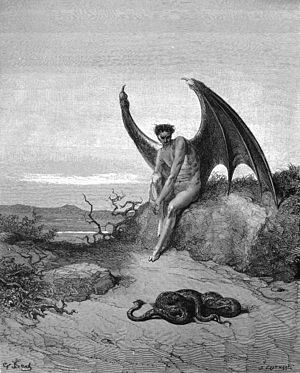
Image via Wikipedia
p. 145
IN his well-known work, The Rosicrucians, Their Rites and Mysteries, Hargrave Jennings reproduces five Qabbalistic charts which he declares to be genuine Rosicrucian drawings. He gives no information concerning their origin nor does he attempt an elucidation of their symbolism. A recent writer who reproduced one of these charts correlated it to the emblematic tomb of Father C.R.C., thus exposing the true nature of Christian Rosencreutz.
The five plates reproduced in Hargrave Jennings’ book are part of a series of fifteen diagrams which appear in The Magical, Qabbalistical, and Theosophical Writings of Georgius von Welling, on the Subject of Salt, Sulphur, and Mercury. This extremely rare volume was published at Frankfort and Leipzig in 1735 and 1760. The numbers and figures on the charts refer to the chapters and sections of the Writings. These fifteen charts constitute a remarkable and invaluable addition to the few other known admittedly authentic Qabbalistic and Rosicrucian diagrams.
Lucifer is the greatest mystery of symbolism. The secret knowledge of the Rosicrucians concerning Lucifer is nowhere so plainly set forth as in these plates, which virtually reveal his true identity, a carefully guarded secret about which little has been written. Lucifer is represented by the number 741.
Von Welling does not give a complete exposition of the fifteen charts; to have done so would have been contrary to the principles of Qabbalistic philosophy. The deeper significance of the symbols is revealed only by profound study and contemplation.
TABLE I, Figures 1-11. Figure 1 is a Ptolemaic chart showing the true relationship existing between the primordial elements. Its secret significance is as follows: The outer ring enclosed by the lines A and B is the region of Schamayim, a Qabbalistic name for the Supreme Deity, signifying the expanse of the heavens, or a spiritual fiery water. Schamayim is “The Ocean of Spirit, ” within which all created and uncreated things exist and by the life of which they are animated. In the lower worlds Schamayim becomes the astral light.
The space between B and C marks the orbits or planes of the seven Spiritual Intelligences called the Divine Planets (not the visible planets). According to the Mysteries, the souls of men enter the lower worlds through ring B, the fixed stars. All creation reflects the glory of Schamayim, the energy that filters into the spheres of the elements through the windows of the stars and planets. Between C and D lies the region of the subtle, spiritual air, a subdivision of ether. D to E marks the surface of the earth and sea, by which are also meant grades of ether. E to F marks the lower region, called “The Gathering of the Waters and the Production of the Virgin Earth, ” or “Ares. ” The alchemists called this “quicksand,” the true mystic foundation of the solid earth. F to G marks the circle of the subterranean air, which is more dense and coarse than that in the outer space, C to D. In this denser atmosphere the stellar influences and celestial impulses are crystallized into corporeal spirits, thus forming the multitude of forms which exist without knowledge of their own fiery source. G is the region of the central fire of the element earth, a coarse fire in contradistinction to the divine fiery Schamayim. The sphere of the starry heavens likewise has its opposite in the sphere of the subterranean air; and the sphere of the upper air (or subtle vaporous water) has its opposite in the sphere E to F. The focal point, D to E, between the three higher and the three lower spheres, is called “The Reservoir.” It receives impressions from both the superior and the inferior regions and is common to both.

Image via Wikipedia
Moe is the founder of GnosticWarrior.com. He is a father, husband, author, martial arts black belt, and an expert in Gnosticism, the occult, and esotericism.
by Moe
p. 153
ALCHEMY, the secret art of the land of Khem, is one of the two oldest sciences known to the world. The other is astrology. The beginnings of both extend back into the obscurity of prehistoric times. According to the earliest records extant, alchemy and astrology were considered as divinely revealed to man so that by their aid he might regain his lost estate. According to old legends preserved by the Rabbins, the angel at the gate of Eden instructed Adam in the mysteries of Qabbalah and of alchemy, promising that when the human race had thoroughly mastered the secret wisdom concealed within these inspired arts, the curse of the forbidden fruit would be removed and man might again enter into the Garden of the Lord. As man took upon himself “coats of skins” (physical bodies) at the time of his fall, so these sacred sciences were brought by him into the lower worlds incarnated in dense vehicles, through which their spiritual transcendental natures could no longer manifest themselves. Therefore they were considered as being dead or lost.
The earthly body of alchemy is chemistry, for chemists do not realize that half of The Book of Torah is forever concealed behind the veil of Isis (see the Tarot), and that so long as they study only material elements they can at best discover but half of the mystery. Astrology has crystallized into astronomy, whose votaries ridicule the dreams of ancient seers and sages, deriding their symbols as meaningless products of superstition. Nevertheless, the intelligentsia of the modern world can never pass behind the veil which divides the seen from the unseen except in the way appointed–the Mysteries.
What is life? What is intelligence? What is force? These are the problems to the solution of which the ancients consecrated their temples of learning. Who shall say that they did not answer those questions? Who would recognize the answers if given? Is it possible that under the symbols of alchemy and astrology lies concealed a wisdom so abstruse that the mind of this race is not qualified to conceive its principles?
The Chaldeans, Phœnicians, and Babylonians were familiar with the principles of alchemy, as were many early Oriental races. It was practiced in Greece and Rome; was the master science of the Egyptians. Khem was an ancient name for the land of Egypt; and both the words alchemy and chemistry are a perpetual reminder of the priority of Egypt’s scientific knowledge. According to the fragmentary writings of those early peoples, alchemy was to them no speculative art. They implicitly believed in the multiplication of metals; and in the face of their reiterations both the scholar and the materialist should be more kindly in their consideration of alchemical theorems. Evolutionists trace the unfoldment of the arts and sciences up through the growing intelligence of the prehistoric man, while others, of a transcendental point of view, like to consider them as being direct revelations from God.
Many interesting solutions to the riddle of alchemy’s origin have been advanced. One is that alchemy was revealed to man by the mysterious Egyptian demigod Hermes Trismegistus. This sublime figure, looming through the mists of time and bearing in his hand the immortal Emerald, is credited by the Egyptians as being the author of all the arts and sciences. In honor of him all scientific knowledge was gathered under the general title of The Hermetic Arts. When the body of Hermes was interred in the Valley of Ebron (or Hebron), the divine Emerald was buried with it. Many centuries afterward the Emerald was discovered–according to one version, by an Arabian initiate; according to another, by Alexander the Great, King of Macedon. By means of the power of this Emerald, upon which were the mysterious inscriptions of the Thrice Great Hermes–thirteen sentences in all–Alexander conquered all the then known world. Not having conquered himself, however, he ultimately failed. Regardless of his glory and power, the prophecies of the talking trees were fulfilled, and Alexander was cut down in the midst of his triumph. (There are persistent rumors to the effect that Alexander was an initiate of high order who failed because of his inability to withstand the temptations of power.)
Moe is the founder of GnosticWarrior.com. He is a father, husband, author, martial arts black belt, and an expert in Gnosticism, the occult, and esotericism.