by Moe
p. 669
“The soul of the world,” says Macrobius, “is nature itself” [as the soul of man is man himself], “always acting through the celestial spheres which .it moves, and which but follow the irresistible impulse it impresses on them. The heavens, the sun, great seat of generative power, the signs, the stars, and the planets act only with the activity of the soul of the Universe. From that soul, through them, come all the variations and changes of sublunary nature, of which the heavens and celestial bodies are but the secondary causes. The zodiac, with its signs, is an existence, immortal and divine, organized by the universal soul, and producing, or gathering in itself, all the varied emanations of the different powers that make up the nature of the Divinity.”
This doctrine, that gave to the heavens and the spheres living souls, each a portion of the universal soul, was of extreme antiquity. It was held by the old Sabæans. It was taught by Timæus, Plato, Speusippus, Iamblichus, Macrobius, Marcus Aurelius, and Pythagoras. When once men had assigned a soul to the Universe, containing in itself the plenitude of the animal life of particular beings, and even of the stars, they soon supposed that soul to be essentially intelligent, and the source of intelligence of all intelligent beings. Then the Universe became to them not only animated but intelligent, and of that intelligence the different parts of nature partook. Each soul was the vehicle, and, as it were, the envelope of the intelligence that attached itself to it, and could repose nowhere else. Without a soul there could be no intelligence; and as there was a universal soul, source of all souls, the universal soul was gifted with a universal intelligence, source of all particular intelligences. So the soul of the world contained in itself the intelligence of the world. All the agents of nature into which the universal soul entered, received also a portion of its intelligence, and the Universe, in its totality and in its parts, was filled with intelligences, that might be regarded as so many emanations from the sovereign and universal intelligence. Wherever the divine soul acted as a cause, there also was intelligence; and thus Heaven, the stars, the elements, and all parts of the Universe, became the seats of so many divine intelligences. Every minutest portion of the great soul became a partial intelligence, and the more it was disengaged from gross matter, the more active and intelligent it was. And all the old adorers of nature, the theologians, astrologers, and poets, and the most distinguished philosophers, supposed that the stars were so many animated and intelligent beings, or
p. 670
eternal bodies, active causes of effects here below, whom a principle of life animated, and whom an intelligence directed, which was but an emanation from, and a portion of, the universal life and intelligence of the world.
The Universe itself was regarded as a supremely intelligent being. Such was the doctrine of Timæus of Locria. The soul of man was part of the intelligent soul of the Universe, and therefore itself intelligent. His opinion was that of many other philosophers. Cleanthes, a disciple of ZENO, regarded the Universe as God, Or as the unproduced and universal cause of all effects produced. He ascribed a soul and intelligence to universal nature, and to this intelligent soul, in his view, divinity belonged. From it the intelligence of man was an emanation, and shared its divinity. Chrysippus, the most subtle of the Stoics, placed in the universal reason that forms the soul and intelligence of nature, that divine force or essence of the Divinity which he assigned to the world moved by the universal soul that pervades its every part.
An interlocutor in Cicero’s work, De Natura Deorum, formally argues that the Universe is necessarily intelligent and wise, because man, an infinitely small portion of it, is so. Cicero makes the same argument in his oration for Milo. The physicists came to the same conclusion as the philosophers. They supposed that movement essentially belonged to the soul, and the direction of regular and ordered movements to the intelligence. And, as both movement and order exist in the Universe, therefore, they held, there must be in it a soul and an intelligence that role it, and are not to be distinguished from itself; because the idea of the Universe is but the aggregate of all the particular ideas of all things that exist.
Moe is the founder of GnosticWarrior.com. He is a father, husband, author, martial arts black belt, and an expert in Gnosticism, the occult, and esotericism.
by Moe
p. 647
The intellect of the Atheist would find matter everywhere; but no Causing and Providing Mind: his moral sense would find no Equitable Will, no Beauty of Moral Excellence, no Conscience enacting justice into the unchanging law of right, no spiritual Order or spiritual Providence, but only material Fate and Chance. His affections would find only finite things to love; and to them the dead who were loved and who died yesterday, are like the rainbow that yesterday evening lived a moment and then passed away. His soul, flying through the vast Inane, and feeling the darkness with its wings, seeking the Soul of all, which at once is Reason, Conscience, and the Heart of all that is, would find no God, but a Universe all disorder; no Infinite, no Reason, no Conscience, no Heart, no Soul of things; nothing to reverence, to esteem, to love, to worship, to trust in; but only an Ugly Force, alien and foreign to us, that strikes down those we love, and makes us mere worms on the hot sand of the world. No voice would speak from the Earth to comfort him. It is a cruel mother, that great Earth, that devours her young,–a Force and nothing more. Out of the sky would smile no kind Providence, in all its thousand starry eyes; and in storms a malignant violence, with its lightning-sword, would stab into the darkness, seeking for men to murder.
No man ever was or ever can be content with that. The evidence of .God has been ploughed into Nature so deeply, and so deeply woven into the texture of the human soul, that Atheism has never become a faith, though it has sometimes assumed the shape of theory. Religion is natural to man. Instinctively he turns to God and reverences and relies on Him. In the Mathematics of the Heavens, written in gorgeous diagrams of fire, he sees law, order, beauty, harmony without end: in the ethics of the little nations that inhabit the ant-hills he sees the same; in all Nature, animate and inanimate, he sees the evidences of a Design, a Will, an Intelligence, and a God,–of a God beneficent and loving as well as wise, and merciful and indulgent as well as powerful.
To man, surrounded by the material Universe, and conscious of the influence that his material environments exercised upon his fortunes and his present destiny;–to man, ever confronted with the splendors of the starry heavens, the regular march of the
p. 648
seasons, the phenomena of sunrise and moonrise, and all the evidences of intelligence and design that everywhere pressed upon and overwhelmed him, all imaginable questions as to the nature and cause of these phenomena constantly recurred, demanding to be solved, and refusing to be sent away unanswered. And still, after the lapse of ages, press upon the human mind and demand solution, the same great questions–perhaps still demanding it in vain.
Advancing to the period when man had ceased to look upon the separate parts and individual forces of the Universe as gods,–when he had come to look upon it as a whole, this question, among the earliest, occurred to him, and insisted on being answered: “Is this material Universe self-existent, or was it created? Is it eternal, or did it originate?”
And then in succession came crowding on the human mind these other questions:
“Is this material Universe a mere aggregate of fortuitous combinations of matter, or is it the result and work of intelligence, acting upon a plan?
“If there be such an Intelligence, what and where is it? Is the material Universe itself an Intelligent being? Is it like man, a body and a soul? Does Nature act upon itself, or is there a Cause beyond it that acts upon it?
“If there is a personal God, separate from the material Universe, that created all things, Himself uncreated, is He corporeal or incorporeal, material or spiritual, the soul of the Universe or wholly apart from it? and if He be Spirit, what then is spirit?
“Was that Supreme Deity active or quiescent before the creation; and if quiescent during a previous eternity, what necessity of His nature moved Him at last to create a world; or was it a mere whim that had no motive?
Moe is the founder of GnosticWarrior.com. He is a father, husband, author, martial arts black belt, and an expert in Gnosticism, the occult, and esotericism.
by Moe
p. 625
limiting the sacerdotal power, by teaching the intelligent laity the folly and absurdity of the creeds of the populace. They were therefore necessarily changed by the religious systems of the countries into which they were transplanted. In Greece, they were the Mysteries of Ceres; in Rome, of Bona Dea, the Good Goddess; in Gaul, the School of Mars; in Sicily, the Academy of the Sciences; among the Hebrews, they partook of the rites and ceremonies of a religion which placed all the powers of government, and all the knowledge, in the hands of the Priests and Levites. The pagodas of India, the retreats of the Magi of Persia and Chaldea, and the pyramids of Egypt, were no longer the sources at which men drank in knowledge. Each people, at all informed, had its Mysteries. After a time the Temples of Greece and the School of Pythagoras lost their reputation, and Freemasonry took their place.
Masonry, when properly expounded, is at once the interpretation of the great book of nature, the recital of physical and astronomical phenomena, the purest philosophy, and the place of deposit, where, as in a Treasury, are kept in safety all the great truths of the primitive revelation, that form the basis of all religions. In the modern Degrees three things are to be recognized: The image of primeval times, the tableau of the efficient causes of the Universe, and the book in which are written the morality of all peoples, and the code by which they must govern themselves if they would be prosperous.
The Kabalistic doctrine was long the religion of the Sage and the Savant; because, like Freemasonry, it incessantly tends toward spiritual perfection, and the fusion of the creeds and Nationalities of Mankind. In the eyes of the Kabalist, all men are his brothers; and their relative ignorance is, to him, but a reason for instructing them. There were illustrious Kabalists among the Egyptians and Greeks, whose doctrines the Orthodox Church has accepted; and among the Arabs were many, whose wisdom was not slighted by the Mediæval Church.
The Sages proudly wore the name of Kabalists. The Kabalah embodied a noble philosophy, pure, not mysterious, but symbolic. It taught the doctrine of the Unity of God, the art of knowing and explaining the essence and operations of the Supreme Being, of spiritual powers and natural forces, and of determining their action by symbolic figures; by the arrangement of the alphabet,
p. 626
the combinations of numbers, the inversion of letters in writing and the concealed meanings which they claimed to discover therein. The Kabalah is the key of the occult sciences; and the Gnostics were born of the Kabalists.
The science of numbers represented not only arithmetical qualities, but also all grandeur, all proportion. By it we necessarily arrive at the discovery of the Principle or First Cause of things, called at the present day THE ABSOLUTE.
Or UNITY,–that loftiest term to which all philosophy directs itself; that imperious necessity of the human mind, that pivot round which it is compelled to group the aggregate of its ideas: Unity, this source, this centre of all systematic order, this principle of existence, this central point, unknown in its essence, but manifest in its effects; Unity, that sublime centre to which the chain of causes necessarily ascends, was the august Idea toward which all the ideas of Pythagoras converged. He refused the title of Sage, which means one who knows. He invented, and applied to himself that of Philosopher, signifying one who is fond of or studies things secret and occult. The astronomy which he mysteriously taught, was astrology: his science of numbers was based on Kabalistical principles.
The Ancients, and Pythagoras himself, whose real principles have not been always understood, never meant to ascribe to numbers, that is to say, to abstract signs, any special virtue. But the Sages of Antiquity concurred in recognizing a ONE FIRST CAUSE (material or spiritual) of the existence of the Universe. Thence, UNITY became the symbol of the Supreme Deity. It was made to express, to represent God; but without attributing to the mere, number ONE any divine or supernatural virtue.
Moe is the founder of GnosticWarrior.com. He is a father, husband, author, martial arts black belt, and an expert in Gnosticism, the occult, and esotericism.
by Moe
p. 603
which represented the Deity coming forth out of the incomprehensible mystery of His nature, and revealing Himself at those critical epochs which either in the physical or moral world seemed to mark a new commencement of prosperity and order. Combating the power of Evil in the various departments of Nature, and in successive periods of time, the Divinity, though varying in form, is ever in reality the same, whether seen in useful agricultural or social inventions, in traditional victories over rival creeds, or in physical changes faintly discovered through tradition, or suggested by cosmogonical theory. As Rama, the Epic hero armed with sword, club, and arrows, the prototype of Hercules and Mithras, he wrestles like the Hebrew Patriarch with the Powers of Darkness; as Chrishna-Govinda, the Divine Shepherd, he is the Messenger of Peace, overmastering the world by music and love. Under the human form he never ceases to be the Supreme Being. “The foolish” (he says, in Bhagavad Ghita), “unacquainted with my Supreme Nature, despise me in this human form, while men of great minds, enlightened by the Divine principle within them, acknowledge me as incorruptible and before all things, and serve me with undivided hearts.” “I am not recognized by all,” he says again, “because concealed by the supernatural power which is in me; yet to me are known all things past, present, and to come; I existed before Vaivaswata and Menou. I am the Most High God, the Creator of the World, the Eternal Poorooscha (Man-World or Genius of the World). And although in my own nature I am exempt from liability to birth or death, and am Lord of all created things, yet as often as in the world virtue is enfeebled, and vice and injustice prevail, so often do I become manifest and am revealed from age to age, to save the just, to destroy the guilty, and to reassure the faltering steps of virtue. He who acknowledgeth me as even so, doth not on quitting this mortal frame enter into another, for he entereth into me; and many who have trusted in me have already entered into me, being purified by the power of wisdom. I help those who walk in my path, even as they serve me.”
Brahma, the creating agent, sacrificed himself, when, by descending into material forms, he became incorporated with his work; and his mythological history was interwoven with that of the Universe. Thus, although spiritually allied to the Supreme, and Lord of all creatures (Prajapati), he shared the imperfection and
p. 604
corruption of an inferior nature, and, steeped in manifold and perishable forms, might be said, like the Greek Uranus, to be mutilated and fallen. He thus combined two characters, formless form, immortal and mortal, being and non-being, motion and rest. As Incarnate Intelligence, or THE WORD, he communicated to man what had been revealed to himself by the Eternal, since he is creation’s Soul as well as Body, within which the Divine Word is written in those living letters which it is the prerogative of the self-conscious spirit to interpret.
The fundamental principles of the religion of the Hindi’s consisted in the belief in the existence of One Being only, of the immortality of the soul, and of a future state of rewards and punishments. Their precepts of morality inculcate the practice of virtue as necessary for procuring happiness even in this transient life; and their religious doctrines make their felicity in a future state to depend upon it.
Besides their doctrine of the transmigration of souls, their dogmas may be epitomized under the following heads: 1st. The existence of one God, from Whom all things proceed, and to Whom all must return. To him they constantly apply these expressions–The Universal and Eternal Essence; that which has ever been and will ever continue; that which vivifies and pervades all things; He who is everywhere present, and causes the celestial bodies to revolve in the course He has prescribed to them. 2d. A tripartite division of the Good Principle, for the purposes of Creation, Preservation, and Renovation by change and death. 3d. The necessary existence of an Evil Principle, occupied in counteracting the benevolent purposes of the first, in their execution by the Devata or Subordinate Genii, to whom is entrusted the control over the various operations of nature.
Moe is the founder of GnosticWarrior.com. He is a father, husband, author, martial arts black belt, and an expert in Gnosticism, the occult, and esotericism.
by Moe
p. 581
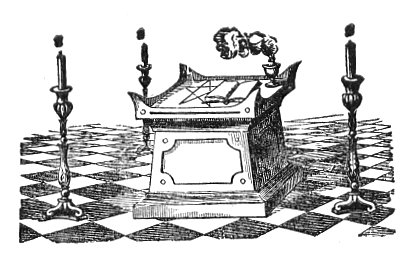 GOD is the author of everything that existeth; the Eternal, the Supreme, the Living, and Awful Being; from Whom nothing in the Universe is hidden. Make of Him no idols and visible images; but rather worship Him in the deep solitudes of sequestered forests; for He is invisible, and fills the Universe as its soul, and liveth not in any Temple!
Light and Darkness are the World’s Eternal ways. God is the principle of everything that exists, and the Father of all Beings. He is eternal, immovable, and Self-Existent. There are no bounds to His power. At one glance He sees the Past, the Present, and the Future; and the procession of the builders of the Pyramids, with us and our remotest Descendants, is now passing before Him. He reads our thoughts before they are known to ourselves. He rules the movements of the Universe, and all events and revolutions are the creatures of His will. For He is the Infinite Mind and Supreme Intelligence.
In the beginning Man had the WORD, and that WORD was from God: and out of the living power which, in and by that WORD, was communicated to man, came the LIGHT of his existence. Let no man speak the WORD, for by it THE FATHER made light and darkness, the world and living creatures!
p. 582
The Chaldean upon his plains worshipped me, and the sea-loving Phœnician. They builded me temples and towers, and burned sacrifices to me upon a thousand altars. Light was divine to them, and they thought me a God. But I am nothing–nothing; and LIGHT is the creature of the unseen GOD that taught the true religion to the Ancient Patriarchs: AWFUL, MYSTERIOUS, THE ABSOLUTE.
Man was created pure; and God gave him TRUTH, as He gave him LIGHT. He has lost the truth and found error. He has wandered far into darkness; and round him Sin and Shame hover evermore. The Soul that is impure, and sinful, and defiled with earthly stains, cannot again unite with God, until, by long trials and many purifications, it is finally delivered from the old calamity; and Light overcomes Darkness and dethrones it, in the Soul.
God is the First; indestructible, eternal, UNCREATED, INDIVISIBLE. Wisdom, Justice, Truth, and Mercy, with Harmony and Love, are of His essence, and Eternity and Infinitude of Extension. He is silent, and consents with MIND, and is known to Souls through MIND alone. In Him were all things originally contained, and from Him all things were evolved. For out of His Divine SILENCE and REST, after an infinitude of time, was unfolded the WORD, or the Divine POWER; and then in turn the Mighty, ever-acting, measureless INTELLECT; and from the WORD were evolved the myriads of suns and systems that make the Universe; and fire, and light, and the electric HARMONY, which is the harmony of spheres and numbers: and from the INTELLECT all Souls and intellects of men.
In the Beginning, the Universe was but ONE SOUL. HE was THE ALL, alone with TIME and SPACE, and Infinite as they.
—— HE HAD THIS THOUGHT: “I Create Worlds:” and lo! the Universe, and the laws of harmony and motion that rule it. the expression of a thought of God; and bird and beast, and every living thing but Man: and light and air, and the mysterious cur-rents, and the dominion of mysterious numbers!
—— HE HAD THIS THOUGHT: “I Create Man, whose Soul shall be my image, and he shall rule.” And lo! Man, with senses, instinct, and a reasoning mind!
—— And yet not MAN! but an animal that breathed, and saw, and thought: until an immaterial spark from God’s own
p. 583
[paragraph continues] Infinite Being penetrated the brain, and became the Soul: and lo, MAN THE IMMORTAL! Thus, threefold, fruit of God’s thought, is Man; that sees and hears and feels; that thinks and reasons; that loves and is in harmony with the Universe.
Before the world grew old, the primitive Truth faded out from men’s Souls. Then man asked himself, “What am I? and how and whence am I? and whither do I go?” And the Soul, looking inward upon itself, strove to learn whether that “I” were mere matter; its thought and reason and its passions and affections mere results of material combination; or a material Being enveloping an immaterial Spirit: . . and further it strove, by self-examination, to learn whether that Spirit were an individual essence, with a separate immortal existence, or an infinitesimal portion of a Great First Principle, inter-penetrating the Universe and the infinitude of space, and undulating like light and heat: . . and so they wandered further amid the mazes of error; and imagined vain philosophies; wallowing in the sloughs of materialism and sensualism, of beating their wings vainly in the vacuum of abstractions and idealities.
Moe is the founder of GnosticWarrior.com. He is a father, husband, author, martial arts black belt, and an expert in Gnosticism, the occult, and esotericism.
by Moe
p. 578
THIS is the first of the really Chivalric Degrees of the Ancient and Accepted Scottish Rite. It occupies this place in the Calendar of the Degrees between the 26th and the last of the Philosophical Degrees, in order, by breaking the continuity of these, to relieve what might otherwise become wearisome; and also to remind you that, while engaged with the speculations and abstractions of philosophy and creeds, the Mason is also to continue engaged in the active duties of this great warfare of life. He is not only a Moralist and Philosopher, but a Soldier, the Successor of those Knights of the Middle Age, who, while they wore the Cross, also wielded the Sword, and were the Soldiers of Honor, Loyalty, and Duty.
Times change, and circumstances; but Virtue and Duty remain the same. The Evils to be warred against but take another shape, and are developed in a different form.
There is the same need now of truth and loyalty as in the days of Frederic Barbarossa.
The characters, religious and military, attention to the sick and wounded in the Hospital, and war against the Infidel in the field, are no longer blended; but the same duties, to be performed in another shape, continue to exist and to environ us all.
The innocent virgin is no longer at the mercy of the brutal Baron or licentious man-at-arms; but purity and innocence still need protectors.
War is no longer the apparently natural State of Society; and for most men it is an empty obligation to assume, that they will not recede before the enemy; but the same high duty and obligation still rest upon all men.
Truth, in act, profession, and opinion, is rarer now than in the days of chivalry. Falsehood has become a current coin, and circulates with a certain degree of respectability; because it has an actual value. It is indeed the great Vice of the Age–it, and its twin-sister, Dishonesty. Men, for political preferment, profess
p. 579
whatever principles are expedient and profitable. At the bar, in the pulpit, and in the halls of legislation, men argue against their own convictions, and, with what they term logic, prove to the satisfaction of others that which they do not themselves believe, Insincerity and duplicity are valuable to their possessors, like estates in stocks, that yield a certain revenue: and it is no longer the truth of an opinion or a principle, but the net profit that may be realized from it, which is the measure of its value.
The Press is the great sower of falsehood. To slander a political antagonist, to misrepresent all that he says, and, if that be impossible, to invent for him what he does not say; to put in circulation whatever baseless calumnies against him are necessary to defeat him,–these are habits so common as to have ceased to excite notice or comment, much less surprise or disgust.
There was a time when a Knight would die rather than utter a lie, or break his Knightly word. The Knight Commander of the Temple revives the old Knightly spirit; and devotes himself to the old Knightly worship of Truth. No profession of an opinion not his own, for expediency’s sake or profit, Or through fear of the world’s disfavor; no slander of even an enemy; no coloring or perversion of the sayings or acts of other men; no insincere speech and argument for any purpose, or under any pretext, must soil his fair escutcheon. Out of the Chapter, as well as in it, he must speak the Truth, and all the Truth, no more and no less; or else speak not at all.
To purity and innocence everywhere, the Knight Commander owes protection, as of old; against bold violence, or those, more guilty than murderers, who by art and treachery seek to slay the soul; and against that want and destitution that drive too many to sell their honor and innocence for food.
In no age of, the world has man had better opportunity than now to display those lofty virtues and that noble heroism that so distinguished the three great military and religious Orders, in their youth, before they became corrupt and vitiated by prosperity and power.
Moe is the founder of GnosticWarrior.com. He is a father, husband, author, martial arts black belt, and an expert in Gnosticism, the occult, and esotericism.