by Moe
p. 543
Baptism was one of their most important ceremonies; and the Basilideans celebrated the 10th of January, as the anniversary of the day on which Christ was baptized in Jordan.
They had the ceremony of laying on of hands, by way of purification; and that of the mystic banquet, emblem of that to which they believed the Heavenly Wisdom would one day admit them, in the fullness of things [Πλήρωμα].
Their ceremonies were much more like those of the Christians than those of Greece; but they mingled with them much that was borrowed from the Orient and Egypt: and taught the primitive truths, mixed with a multitude of fantastic errors and fictions.
The discipline of the secret was the concealment (occultatio) of certain tenets and ceremonies. So says Clemens of Alexandria.
To avoid persecution, the early Christians were compelled to use great precaution, and to hold meetings of the Faithful [of the Household of Faith] in private places, under concealment by darkness. They assembled in the night, and they guarded against the intrusion of false brethren and profane persons, spies who might cause their arrest. They conversed together figuratively, and by the use of symbols, lest cowans and eavesdroppers might overhear: and there existed among them a favored class, or Order, who were initiated into certain Mysteries which they were bound by solemn promise not to disclose, or even converse about, except with such as had received them under the same sanction. They were called Brethren, the Faithful, Stewards of the Mysteries, Superintendents, Devotees of the Secret, and ARCHITECTS.
In the Hierarchiæ, attributed to St. Dionysius the Areopagite, the first Bishop of Athens, the tradition of the sacrament is said to have been divided into three Degrees, or grades, purification, initiation, and accomplishment or perfection; and it mentions also, as part of the ceremony, the bringing to sight.
The Apostolic Constitutions, attributed to Clemens, Bishop of Rome, describe the early church, and say: “These regulations must on no account be communicated to all sorts of persons, because of the Mysteries contained in them.” They speak of the Deacon’s duty to keep the doors, that none uninitiated should enter at the oblation. Ostiarii, or doorkeepers, kept guard, and gave notice of the time of prayer and church-assemblies; and also by private
p. 544
signal, in times of persecution, gave notice to those within, to en-able them to avoid danger. The Mysteries were open to the Fideles or Faithful only; and no spectators were allowed at the communion.
Tertullian, who died about A. D. 216, says in his Apology: “None are admitted to the religious Mysteries without an oath of secrecy. We appeal to your Thracian and Eleusinian Mysteries; and we are especially bound to this caution, because if we prove faithless, we should not only provoke Heaven, but draw upon our heads the utmost rigor of human displeasure. And should strangers betray us? They know nothing but by report and hearsay. Far hence, ye Profane! is the prohibition from all holy Mysteries.”
Clemens, Bishop of Alexandria, born about A. D. 191, says, in his Stromata, that he cannot explain the Mysteries, because he should thereby, according to the old proverb, put a sword into the hands of a child. He frequently compares the Discipline of the Secret with the heathen Mysteries, as to their internal and recondite wisdom.
Whenever the early Christians happened to be in company with strangers, more properly termed the Profane, they never spoke of their sacraments, but indicated to one another what they meant by means of symbols and secret watchwords, disguisedly, and as by direct communication of mind with mind, and by enigmas.
Origen, born A. D. 134 or 135, answering Celsus, who had objected that the Christians had a concealed doctrine said: “Inasmuch as the essential and important doctrines and principles of Christianity are openly taught, it is foolish to object that there are other things that are recondite; for this is common to Christian discipline with that of those philosophers in whose teaching some things were exoteric and some esoteric: and it is enough to say that it was so with some of the disciples of Pythagoras.”
Moe is the founder of GnosticWarrior.com. He is a father, husband, author, martial arts black belt, and an expert in Gnosticism, the occult, and esotericism.
by Moe
p. 524
 WHILE you were veiled in darkness, you heard repeated by the Voice of the Great Past its most ancient doctrines. None has the right to object, if the Christian Mason sees foreshadowed in Chrishna and Sosiosch, in Mithras and Osiris, the Divine WORD that, as he believes, became Man, and died upon the cross to redeem a fallen race. Nor can he object if others see reproduced, in the WORD of the beloved Disciple, that was in the beginning with God, and that was God, and by Whom everything was made, only the LOGOS of Plato, and the WORD or Uttered THOUGHT or first Emanation of LIGHT, Or the Perfect REASON of the Great, Silent, Supreme, Uncreated Deity, believed in and adored by all.
We do not undervalue the importance of any Truth. We utter no word that can be deemed irreverent by any one of any faith. We do not tell the Moslem that it is only important for him to believe that there is but one God, and wholly unessential whether Mahomet was His prophet. We do not tell the Hebrew that the Messiah whom he expects was born in Bethlehem nearly two thousand years ago; and that he is a heretic because he will not so believe. And as little do we tell the sincere Christian that Jesus of Nazareth was but a man like us, or His history but the unreal revival of an older legend. To do either is beyond our jurisdiction. Masonry, of no one age, belongs to all time; of no one religion, it finds its great truths in all.
To every Mason, there is a GOD; ONE, Supreme, Infinite in Goodness, Wisdom, Foresight, Justice, and Benevolence; Creator, Disposer, and Preserver of all things. How, or by what intermediates He creates and acts, and in what way He unfolds and manifests Himself, Masonry leaves to creeds and Religions to inquire.
To every Mason, the soul of man is immortal. Whether it
p. 525
emanates from and will return to God, and what its continued mode of existence hereafter, each judges for himself. Masonry was not made to settle that.
To every Mason, WISDOM or INTELLIGENCE, FORCE or STRENGTH, and HARMONY, or FITNESS and BEAUTY, are the Trinity of the attributes of God. With the subtleties of Philosophy concerning them Masonry does not meddle, nor decide as to the reality of the supposed Existences which are their Personifications: nor whether the Christian Trinity be such a personification, or a Reality of the gravest import and significance.
To every Mason, the Infinite Justice and Benevolence of God give ample assurance that Evil will ultimately be dethroned, and the Good, the True, and the Beautiful reign triumphant and eternal. It teaches, as it feels and knows, that Evil, and Pain, and Sorrow exist as part of a wise and beneficent plan, all the parts of which work together under God’s eye to a result which shall be perfection. Whether the existence of evil is rightly explained in this creed or in that, by Typhon the Great Serpent, by Ahriman and his Armies of Wicked Spirits, by the Giants and Titans that war against Heaven, by the two co-existent Principles of Good and Evil, by Satan’s temptation and the fall of Man, by Lok and the Serpent Fenris, it is beyond the domain of Masonry to decide, nor does it need to inquire. Nor is it within its Province to determine how the ultimate triumph of Light and Truth and Good, over Darkness and Error and Evil, is to be achieved; nor whether the Redeemer, looked and longed for by all nations, hath appeared in Judea, or is yet to come.
It reverences all the great reformers. It sees in Moses, the Lawgiver of the Jews, in Confucius and Zoroaster, in Jesus of Nazareth, and in the Arabian Iconoclast, Great Teachers of Morality, and Eminent Reformers, if no more: and allows every brother of the Order to assign to each such higher and even Divine Character as his Creed and Truth require.
Thus Masonry disbelieves no truth, and teaches unbelief in no creed, except so far as such creed may lower its lofty estimate of the Deity, degrade Him to the level of the passions of humanity, deny the high destiny of man, impugn the goodness and benevolence of the Supreme God, strike at those great columns of Masonry, Faith, Hope, and Charity, or inculcate immorality, and disregard of the active duties of the Order.
Moe is the founder of GnosticWarrior.com. He is a father, husband, author, martial arts black belt, and an expert in Gnosticism, the occult, and esotericism.
by Moe
p. 504
In ancient times the mark Tau was set on those who had been acquitted by their judges, as a symbol of innocence. The military commanders placed it on soldiers who escaped unhurt from the field of battle, as a sign of their safety under the Divine Protection.
It was a sacred symbol among the Druids. Divesting a tree of part of its branches, they left it in the shape of a Tau Cross, preserved it carefully, and consecrated it with solemn ceremonies. On the tree they cut deeply the word THAU, by which they meant God. On the right arm of the Cross, they inscribed the word HESULS, on the left BELEN or BELENUS, and on the middle of the trunk THARAMIS. This represented the sacred Triad.
It is certain that the Indians, Egyptians, and Arabians paid veneration to the sign of the Cross, thousands of years before the coming of Christ. Everywhere it was a sacred symbol. The Hindus and the Celtic Druids built many of their Temples in the form of a Cross, as the ruins still remaining clearly show, and particularly the ancient Druidical Temple at Classerniss in the Island of Lewis in Scotland. The Circle is of 12 Stones. On each of the sides, east, west, and south, are three. In the centre was the image of the Deity; and on the north an avenue of twice nineteen stones, and one at the entrance. The Supernal Pagoda at Benares is in the form of a Cross; and the Druidical subterranean grotto at New Grange in Ireland.
The Statue of Osiris at Rome had the same emblem. Isis and Ceres also bore it; and the caverns of initiation were constructed in that shape with a pyramid over the Sacellum.
Crosses were cut in the stones of the Temple of Serapis in Alexandria; and many Tau Crosses are to be seen in the sculptures of Alabastion and Esné, in Egypt. On coins, the symbol of the Egyptian God Kneph was a Cross within a Circle.
The Crux Ansata was the particular emblem of Osiris, and his sceptre ended with that figure. It was also the emblem of Hermes, and was considered a Sublime Hieroglyphic, possessing mysterious powers and virtues, as a wonder-working amulet.
The Sacred Tau occurs in the hands of the mummy-shaped figures between the forelegs of the row of Sphynxes, in the great avenue leading from Luxor to Karnac. By the Tau Cross the
p. 505
[paragraph continues] Cabalists expressed the number 10, a perfect number, denoting Heaven, and the Pythagorean Tetractys, or incommunicable name of God. The Taft Cross is also found on the stones in front of the door of the Temple of Amunoth III, at Thebes, who reigned about the time when the Israelites took possession of Canaan: and the Egyptian Priests carried it in all the sacred processions.
Tertullian, who had been initiated, informs us that the Tau was inscribed on the forehead of every person who had been admitted into the Mysteries of Mithras.
As the simple Tau represented Life, so, when the Circle, symbol of Eternity, was added, it represented Eternal Life.
At the Initiation of a King, the Tau, as the emblem of life and key of the Mysteries, was impressed upon his lips.
In the Indian Mysteries, the Tau Cross, under the name of Tiluk, was marked upon the body of the candidate, as a sign that he was set apart for the Sacred Mysteries.
On the upright tablet of the King, discovered at Nimroud, are the names of thirteen Great Gods (among which are YAV and BEL); and the left-hand character of every one is a cross composed of two cuneiform characters.
The Cross appears upon an Ancient Phœnician medal found in the ruins of Citium; on the very ancient Buddhist Obelisk near Ferns in Ross-shire; on the Buddhist Round Towers in Ireland, and upon the splendid obelisk of the same era at Forres in Scot-land.
Upon the facade of a temple at Kalabche in Nubia are three regal figures, each holding a Crux Ansata.
Like the Subterranean Mithriatic Temple at New Grange in Scotland, the Pagodas of Benares and Mathura were in the form of a Cross. Magnificent Buddhist Crosses were erected, and are still standing, at Clonmacnoise, Finglas, and Kilcullen in Ireland. Wherever the monuments of Buddhism are found, in India, Ceylon, or Ireland, we find the Cross: for Buddha or Boudh was represented to have been crucified.
Moe is the founder of GnosticWarrior.com. He is a father, husband, author, martial arts black belt, and an expert in Gnosticism, the occult, and esotericism.
by Moe
p. 481
She learned that Osiris had, through mistake, had connection with her sister Nephte, which she discovered by a crown of leaves of the melilot, which he had left behind him. Of this connection a child was born, whom Isis, aided by her dogs, sought for, found, reared, and attached to herself, by the name of Anubis, her faithful guardian. The third full Moon occurs in Cancer, domicile of the Moon. The paranatellons of that sign are, the crown of Ariadne or Proserpine, made of leaves of the melilot, Procyon and Canis Major, one star of which was called the Star of Isis, while Sirius himself was honored in Egypt under the name of Anubis.
Isis repaired to Byblos, and seated herself near a fountain, where she was found by the women of the Court of a King. She was induced to visit his Court, and became the nurse of his son. The fourth full Moon was in Leo, domicile of the Sun, or of Adonis, King of Byblos. The paranatellons of this sign are the flowing water of Aquarius, and Cepheus, King of Ethiopia, called Regulus, or simply The King. Behind him rise Cassiopeia his wife, Queen of Ethiopia, Andromeda his daughter, and Perseus his son-in-law, all paranatellons in part of this sign, and in part of Virgo.
Isis suckled the child, not at her breast, but with the end of her finger, at night. She burned all the mortal parts of its body, and then, taking the shape of a swallow, she flew to the great column of the palace, made of the tamarisk-tree that grew up round the coffin containing the body of Osiris, and within which it was still enclosed. The fifth full Moon occurred in Virgo, the true image of Isis, and which Eratosthenes calls by that name. It pictured a woman suckling an infant, the son of Isis, born near the Winter Solstice. This sign has for paranatellons the mast of the Celestial Ship, and the swallow-tailed fish or swallow above it, and a portion of Perseus, son-in-law of the King of Ethiopia.
Isis, having recovered the sacred coffer, sailed from Byblos in a vessel with the eldest son of the King, toward Boutos, where Anubis was, having charge of her son Horus; and in the morning dried up a river, whence arose a strong wind. Landing, she hid the coffer in a forest. Typhon, hunting a wild boar by moonlight, discovered it, recognized the body of his rival, and cut it into fourteen pieces, the number of days between the full and new Moon, and in every one of which days the Moon loses a portion of the light that at the commencement filled her whole disk. The sixth full Moon occurred in Libra, over the divisions separating which
p. 482
from Virgo are the Celestial Ship, Perseus, son of the King of Ethiopia and Boötes, said to have nursed Horus. The river of Orion that sets in the morning is also a paranatellon of Libra, as are Ursa Major, the Great Bear or Wild Boar of Erymanthus, and the Dragon of the North Pole, or the celebrated Python from which the attributes of Typhon were borrowed. All these surround the full Moon of Libra, last of the Superior Signs, and the one that precedes the new Moon of Spring, about to be reproduced in Taurus, and there be once more in conjunction with the Sun.
Isis collects the scattered fragments of the body of Osiris, buries them, and consecrates the phallus, carried in pomp at the Pamylia, or feasts of the Vernal Equinox, at which time the congress of Osiris and the Moon was celebrated. Then Osiris had returned from the shades, to aid Horus his son and Isis his wife against the forces of Typhon. He thus reappeared, say some, under the form of a wolf, or, others say, under that of a horse. The Moon, fourteen days after she is full in Libra, arrives at Taurus and unites herself to the Sun, whose fires she thereafter for fourteen days continues to accumulate on her disk from new Moon to full. Then she unites with herself all the months in that superior portion of the world where light always reigns, with harmony and order, and she borrows from him the force which is to destroy the germs of evil that Typhon had, during the winter, planted everywhere in nature. This passage of the Sun into Taurus, whose attributes he assumes on his return from the lower hemisphere or the shades, is marked by the rising in the evening of the Wolf and the Centaur, and by the heliacal setting of Orion, called the Star of Horns, and which thenceforward is in conjunction with the Sun of Spring, in his triumph over the darkness or Typhon.
Moe is the founder of GnosticWarrior.com. He is a father, husband, author, martial arts black belt, and an expert in Gnosticism, the occult, and esotericism.
by Moe
p. 458
three times a day, at Sunrise, Noon, and Sunset, bowing themselves three times before the Sun. They invoked the Stars and the Intelligences which inhabited them, offered them sacrifices, and called the fixed stars and planets gods. Philo says that the Chaldæans regarded the stars as sovereign arbiters of the order of the world, and did not look beyond the visible causes to any invisible and intellectual being. They regarded NATURE as the great divinity, that exercised its powers through the action of its parts, the Sun, Moon, Planets, and Fixed Stars, the successive revolutions of the seasons, and the combined action of Heaven and Earth. The great feast of the Sabæans was when the Sun reached the Vernal Equinox: and they had five other feasts, at the times when the five minor planets entered the signs in which they had their exaltation.
Diodorus Siculus informs us that the Egyptians recognized two great Divinities, primary and eternal, the Sun and Moon, which they thought governed the world, and from which everything receives its nourishment and growth: that on them depended all the great work of generation, and the perfection of all effects produced in nature. We know that the two great Divinities of Egypt were Osiris and Isis, the greatest agents of nature; according to some, the Sun and Moon, and according to others, Heaven and Earth, or the active and passive principles of generation.
And we learn from Porphyry that Chæremon, a learned priest of Egypt, and many other learned men of that nation, said that the Egyptians recognized as gods the stars composing the zodiac, and all those that by their rising or setting marked its divisions; the subdivisions of the signs into decans, the horoscope and the stars that presided therein, and which were called Potent Chiefs of Heaven: that considering the Sun as the Great God, Architect, and Ruler of the World, they explained not only the fable of Osiris and Isis, but generally all their sacred legends, by the stars, by their appearance and disappearance, by their ascension, by the phases of the moon, and the increase and diminution of her light; by the march of the sun, the division of time and the heavens into two parts, one assigned to darkness and the other to light; by the Nile and, in fine, by the whole round of physical causes.
Lucian tells us that the bull Apis, sacred to the Egyptians, was the image of the celestial Bull, or Taurus; and that Jupiter Ammon, horned like a ram, was an image of the constellation Aries. Arid Clemens of Alexandria assures us that the four principal
p. 459
sacred animals, carried in their processions, were emblems of the four signs or cardinal points which fixed the seasons at the equinoxes and solstices, and divided into four parts the yearly march of the sun. They worshipped fire also, and water, and the Nile, which river they styled Father, Preserver of Egypt, sacred emanation from the Great God Osiris; and in their hymns in which they called it the god crowned with millet (which grain, represented by the pschent, was part of the head-dress of their kings), bringing with him abundance. The other elements were also revered by them: and the Great Gods, whose names are found inscribed on an ancient column, are the Air, Heaven, the Earth, the Sun, the Moon, Night, and Day. And, in fine, as Eusebius says, they regarded the Universe as a great Deity, composed of a great number of gods, the different parts of itself.
The same worship of the Heavenly Host extended into every part of Europe, into Asia Minor, and among the Turks, Scythians, and Tartars. The ancient Persians adored the Sun as Mithras, and also the Moon, Venus, Fire, Earth, Air, and Water; and, having no statues or altars, they sacrificed on high places to the Heavens and to the Sun. On seven ancient pyrea they burned incense to the Seven Planets, and considered the elements to be divinities. In the Zend-Avesta we find invocations addressed to Mithras, the stars, the elements, trees, mountains, and every part of nature. The Celestial Bull is invoked there, to which the Moon unites herself; and the four great stars, Taschter, Satevis, Haftorang, and Venant, the great Star Rapitan, and the other constellations which watch over the different portions of the earth.
Moe is the founder of GnosticWarrior.com. He is a father, husband, author, martial arts black belt, and an expert in Gnosticism, the occult, and esotericism.
by Moe
p. 435
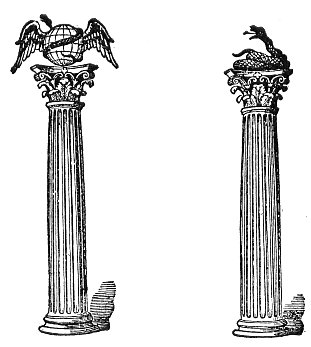 THIS Degree is both philosophical and moral. While it teaches the necessity of reformation as well as repentance, as a means of obtaining mercy and forgiveness, it is also devoted to an explanation of the symbols of Masonry; and especially to those which are connected with that ancient and universal legend, of which that of Khir-Om Abi is but a variation; that legend which, representing a murder or a death, and a restoration to life, by a drama in which figure Osiris, Isis and Horus, Atys and Cybele, Adonis and Venus, the Cabiri, Dionusos, and many another representative of the active and passive Powers of Nature, taught the Initiates in the Mysteries that the rule of Evil and Darkness is but temporary, and that that of Light and Good will be eternal.
Maimonides says: “In the days of Enos, the son of Seth, men fell into grievous errors, and even Enos himself partook of their infatuation. Their language was, that since God has placed on high the heavenly bodies, and used them as His ministers, it was evidently His will that they should receive from man the same
p. 436
veneration as the servants of a great prince justly claim from the subject multitude. Impressed with this notion, they began to build temples to the Stars, to sacrifice to them, and to worship them, in the vain expectation that they should thus please the Creator of all things. At first, indeed, they did not suppose the Stars to be the only Deities, but adored in conjunction with them the Lord God Omnipotent. In process of time, however, that great and venerable Name was totally forgotten, and the whole human race retained no other religion than the idolatrous worship of the Host of Heaven.”
The first learning in the world consisted chiefly in symbols. The wisdom of the Chaldæans, Phœnicians, Egyptians, Jews; of Zoroaster, Sanchoniathon, Pherecydes, Syrus, Pythagoras, Socrates, Plato, of all the ancients, that is come to our hand, is symbolic. It was the mode, says Serranus on Plato’s Symposium, of the Ancient Philosophers, to represent truth by certain symbols and hidden images.
“All that can be said concerning the Gods,” says Strabo, “must be by the exposition of old opinions and fables; it being the custom of the ancients to wrap up in enigma and allegory their thoughts and discourses concerning Nature; which are therefore not easily explained.”
As you learned in the 24th Degree, my Brother, the ancient Philosophers regarded the soul of man as having had its origin in Heaven. That was, Macrobius says, a settled opinion among them all; and they held it to be the only true wisdom, for the soul, while united with the body, to look ever toward its source, and strive to return to the place whence it came. Among the fixed stars it dwelt, until, seduced by the desire of animating a body, it descended to be imprisoned in matter. Thenceforward it has no other resource than recollection, and is ever attracted toward its birth-place and home. The means of return are to be sought for in itself. To re-ascend to its source, it must do and suffer in the body.
Thus the Mysteries taught the great doctrine of the divine nature and longings after immortality of the soul, of the nobility of its origin, the grandeur of its destiny, its superiority over the animals who have no aspirations heavenward. If they struggled in vain to express its nature, by comparing it to Fire and Light,–if they erred as to its original place of abode, and the mode of its
p. 437
descent, and the path which, descending and ascending, it pursued among the stars and spheres, these were the accessories of the Great Truth, and mere allegories designed to make the idea more impressive, and, as it were, tangible, to the human mind.
Let us, in order to understand this old Thought, first follow the soul in its descent. The sphere or Heaven of the fixed stars was that Holy Region, and those Elysian Fields, that were the native domicile of souls, and the place to which they re-ascended, when they had recovered their primitive purity and simplicity. From that luminous region the soul set forth, when it journeyed toward the body; a destination which it did not reach until it had undergone three degradations, designated by the name of Deaths; and until it had passed through the several spheres and the elements. All souls remained in possession of Heaven and of happiness, so long as they were wise enough to avoid the contagion of the body, and to keep themselves from any contact with matter. But those who, from that lofty abode, where they were lapped in eternal light, have looked longingly toward the body, and toward that which we here below call life, but which is to the soul a real death; and who have conceived for it a secret desire,–those souls, victims of their concupiscence, are attracted by degrees toward the inferior regions of the world, by the mere weight of thought and of that terrestrial desire. The soul, perfectly incorporeal, does not at once invest itself with the gross envelope of the body, but little by little, by successive and insensible alterations, and in proportion as it removes further and further from the simple and perfect substance in which it dwelt at first. It first surrounds itself with a body composed of the substance of the stars; and afterward, as it descends through the several spheres, with ethereal matter more and more gross, thus by degrees descending to an earthly body; and its number of degradations or deaths being the same as that of the spheres which it traverses.
Moe is the founder of GnosticWarrior.com. He is a father, husband, author, martial arts black belt, and an expert in Gnosticism, the occult, and esotericism.