by Moe
p. 325
THE true Mason is a practical Philosopher, who, under religious emblems, in all ages adopted by wisdom, builds upon plans traced by nature and reason the moral edifice of knowledge. He ought to find, in the symmetrical relation of all the parts of this rational edifice, the principle and rule of all his duties, the source of all his pleasures. He improves his moral nature, becomes a better man, and finds in the reunion of virtuous men, assembled with pure views, the means of multiplying his acts of beneficence. Masonry and Philosophy, without being one and the same thing, have the same object, and propose to themselves the same end, the worship of the Grand Architect of the Universe, acquaintance and familiarity with the wonders of nature, and the happiness of humanity attained by the constant practice of all the virtues.
As Grand Master of all Symbolic Lodges, it is your especial duty to aid in restoring Masonry to its primitive purity. You have become an instructor. Masonry long wandered in error. Instead of improving, it degenerated from its primitive simplicity, and retrograded toward a system, distorted by stupidity and ignorance, which, unable to construct a beautiful machine, made a complicated one. Less than two hundred years ago, its organization was simple, and altogether moral, its emblems, allegories, and ceremonies easy to be understood, and their purpose and object readily to be seen. It was then confined to a very small number of Degrees. Its constitutions were like those of a Society of Essenes, written in the first century of our era. There could be seen the primitive Christianity, organized into Masonry, the school of Pythagoras without incongruities or absurdities; a Masonry simple and significant, in which it was not necessary to torture the mind to discover reasonable interpretations; a Masonry at once religious and philosophical, worthy of a good citizen and an enlightened philanthropist.
Innovators and inventors overturned that primitive simplicity.
p. 326
[paragraph continues] Ignorance engaged in the work of making Degrees, and trifles and gewgaws and pretended mysteries, absurd or hideous, usurped the place of Masonic Truth. The picture of a horrid vengeance, the poniard and the bloody head, appeared in the peaceful Temple of Masonry, without sufficient explanation of their symbolic meaning: Oaths out of all proportion with their object, shocked the candidate, and then became ridiculous, and were wholly disregarded. Acolytes were exposed to tests, and compelled to perform acts, which, if real, would have been abominable; but being mere chimeras, were preposterous, and excited contempt and laughter only. Eight hundred Degrees of one kind and another were invented: Infidelity and even Jesuitry were taught under the mask of Masonry. The rituals even of the respectable Degrees, copied and mutilated by ignorant men, became nonsensical and trivial; and the words so corrupted that it has hitherto been found impossible to recover many of them at all. Candidates were made to degrade themselves, and to submit to insults not tolerable to a man of spirit and honor.
Hence it was that, practically, the largest portion of the Degrees claimed by the Ancient and Accepted Scottish Rite, and before it by the Rite of Perfection, fell into disuse, were merely communicated, and their rituals became jejune and insignificant. These Rites resembled those old palaces and baronial castles, the different parts of which, built at different periods remote from one another, upon plans and according to tastes that greatly varied, formed a discordant and incongruous whole. Judaism and chivalry, superstition and philosophy, philanthropy and insane hatred and longing for vengeance, a pure morality and unjust and illegal revenge, were found strangely mated and standing hand in hand within the Temples of Peace and Concord; and the whole system was one grotesque commingling of incongruous things, of contrasts and contradictions, of shocking and fantastic extravagances, of parts repugnant to good taste, and fine conceptions overlaid and disfigured by absurdities engendered by ignorance, fanaticism, and a senseless mysticism.
An empty and sterile pomp, impossible indeed to be carried out, and to which no meaning whatever was attached, with far-fetched explanations that were either so many stupid platitudes or themselves needed an interpreter; lofty titles, arbitrarily assumed, and to which the inventors had not condescended to attach any explanation
Moe is the founder of GnosticWarrior.com. He is a father, husband, author, martial arts black belt, and an expert in Gnosticism, the occult, and esotericism.
by Moe
p. 312
THE true Mason labors for the benefit of those who are to come after him, and for the advancement and improvement of his race. That is a poor ambition which contents itself within the limits of a single life. All men who deserve to live, desire to survive their funerals, and to live afterward in the good that they have done mankind, rather than in the fading characters written in men’s memories. Most men desire to leave some work behind them that may outlast their own day and brief generation. That is an instinctive impulse, given by God, and often found in the rudest human heart; the surest proof of the soul’s immortality, and of the fundamental difference between man and the wisest brutes. To plant the trees that, after we are dead, shall shelter our children, is as natural as to love the shade of those our fathers planted. The rudest unlettered husbandman, painfully conscious of his own inferiority, the poorest widowed mother, giving her life-blood to those who pay only for the work of her needle, will toil and stint themselves to educate their child, that he may take a higher station in the world than they;–and of such are the world’s greatest benefactors.
In his influences that survive him, man becomes immortal, before the general resurrection. The Spartan mother, who, giving her son his shield, said, “WITH IT, OR UPON IT!” afterward shared the government of Lacedæmon with the legislation of Lycurgus; for she too made a law, that lived after her; and she inspired the Spartan soldiery that afterward demolished the walls of Athens, and aided Alexander to conquer the Orient. The widow who gave Marion the fiery arrows to burn her own house, that it might no longer shelter the enemies of her infant country, the house where she had lain upon her husband’s bosom, and where her children had been born, legislated more effectually for her State than Locke or Shaftesbury, or than many a Legislature has done, since that State won its freedom.
It was of slight importance to the Kings of Egypt and the
p. 313
[paragraph continues] Monarchs of Assyria and Phœnicia, that the son of a Jewish woman, a foundling, adopted by the daughter of Sesostris Ramses, slew an Egyptian that oppressed a Hebrew slave, and fled into the desert, to remain there forty years. But Moses, who might other-wise have become Regent of Lower Egypt, known to us only by a tablet on a tomb or monument, became the deliverer of the Jews, and led them forth from Egypt to the frontiers of Palestine, and made for them a law, out of which grew the Christian faith; and so has shaped the destinies of the world. He and the old Roman lawyers, with Alfred of England, the Saxon Thanes and Norman Barons, the old judges and chancellors, and the makers of the canons, lost in the mists and shadows of the Past, these are our legislators; and we obey the laws that they enacted.
Napoleon died upon the barren rock of his exile. His bones, borne to France by the son of a King, rest in the Hôpital des Invalides, in the great city on the Seine. His Thoughts still govern France. He, and not the People, dethroned the Bourbon, and drove the last King of the House of Orleans into exile. He, in his coffin, and not the People, voted the crown to the Third Napoleon; and he, and not the Generals of France and England, led their united forces against the grim Northern Despotism.
Mahomet announced to the Arabian idolaters the new creed, “There is but one God, and Mahomet, like Moses and Christ, is His Apostle.” For many years unaided, then with the help of his family and a few friends, then with many disciples, and last of all with an army, he taught and preached the Koran. The religion of the wild Arabian enthusiast converting the fiery Tribes of the Great Desert, spread over Asia, built up the Saracenic dynasties, conquered Persia and India, the Greek Empire, Northern Africa, and Spain, and dashed the surges of its fierce soldiery against the battlements of Northern Christendom. The law of Mahomet still governs a fourth of the human race; and Turk and Arab, Moor and Persian and Hindu, still obey the Prophet, and pray with their faces turned toward Mecca; and he, and not the living, rules and reigns in the fairest portions of the Orient.
Moe is the founder of GnosticWarrior.com. He is a father, husband, author, martial arts black belt, and an expert in Gnosticism, the occult, and esotericism.
by Moe
p. 295
What other immortality than one of selfishness could this creature enjoy? Of what other is it capable? Must not immortality commence here and is not life a part of it? How shall death change the base nature of the base soul? Why have not those other animals that only faintly imitate the wanton, savage, human cruelty and thirst for blood, the same right as man has, to expect a resurrection and an Eternity of existence, or a Heaven of Love?
The world improves. Man ceases to persecute,–when the persecuted become too numerous and strong, longer to submit to it. That source of pleasure closed, men exercise the ingenuities of their cruelty on the animals and other living things below them. To deprive other creatures of the life which God gave them, and this not only that we may eat their flesh for food, but out of mere savage wantonness, is the agreeable employment and amusement of man, who prides himself on being the Lord of Creation, and a little lower than the Angels. If he can no longer use the rack, the gibbet, the pincers, and the stake, he can hate, and slander, and delight in the thought that he will, hereafter, luxuriously enjoying the sensual beatitudes of Heaven, see with pleasure the writhing agonies of those justly damned for daring to hold opinions contrary to his own, upon subjects totally beyond the comprehension both of them and him.
Where the armies of the despots cease to slay and ravage, the armies of “Freedom” take their place, and, the black and white commingled, slaughter and burn and ravish. Each age re-enacts the crimes as well as the follies of its predecessors, and still war licenses outrage and turns fruitful lands into deserts, and God is thanked in the Churches for bloody butcheries, and the remorseless devastators, even when swollen by plunder, are crowned with laurels and receive ovations.
Of the whole of mankind, not one in ten thousand has any aspirations beyond the daily needs of the gross animal life. In this age and in all others, all men except a few, in most countries, are born to be mere beasts of burden, co-laborers with the horse and the ox. Profoundly ignorant, even in “civilized” lands, they think and reason like the animals by the side of which they toil. For them, God, Soul, Spirit, immortality, are mere words, without any real meaning. The God of nineteen-twentieths of the Christian
p. 296
world is only Bel, Moloch, Zeus, or at best Osiris, Mithras, or Adonaï, under another name, worshipped with the old Pagan ceremonies and ritualistic formulas. it is the Statue of Olympian Jove, worshipped as the Father, in the Christian Church that was a Pagan Temple; it is the Statue of Venus, become the Virgin Mary. For the most part, men do not in their hearts believe that God is either just or merciful. They fear and shrink from His lightnings and dread his wrath. For the most part, they only think they believe that there is another life, a judgment, and a punishment for sin. Yet they will none the less persecute as Infidels and Atheists those who do not believe what they themselves imagine they believe, and which yet they do not believe, because it is incomprehensible to them in their ignorance and want of intellect. To the vast majority of mankind, God is but the reflected image, in infinite space, of the earthly Tyrant on his Throne, only more powerful, more inscrutable, and more implacable. To curse Humanity, the Despot need only be, what the popular mind has, in every age, imagined God.
In the great cities, the lower strata of the populace are equally without faith and without hope. The others have, for the most part, a mere blind faith, imposed by education and circumstances, and not as productive of moral excellence or even common honesty as Mohammedanism. “Your property will be safe here,” said the Moslem; “There are no Christians here.” The philosophical and scientific world becomes daily more and more unbelieving. Faith and Reason are not opposites, in equilibrium; but antagonistic and hostile to each other; the result being the darkness and despair of scepticism, avowed, or half-veiled as rationalism.
Moe is the founder of GnosticWarrior.com. He is a father, husband, author, martial arts black belt, and an expert in Gnosticism, the occult, and esotericism.
by Moe
p. 276
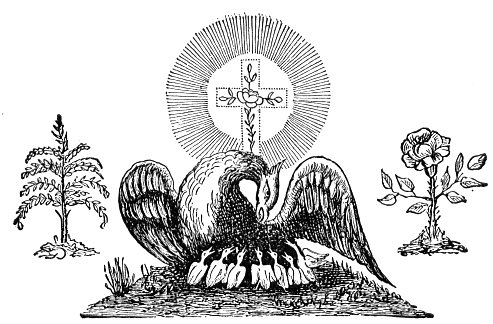
[Prince Rose Croix.]
EACH of us makes such applications to his own faith and creed, of the symbols and ceremonies of this Degree, as seems to him proper. With these special interpretations we have here nothing to do. Like the legend of the Master Khu_ru_m, in which some see figured the condemnation and sufferings of Christ; others those of the unfortunate Grand Master of the Templars; others those of the first Charles, King of England; and others still the annual descent of the Sun at the winter Solstice to the regions of darkness, the basis of many an ancient legend; so the ceremonies of this Degree receive different explanations; each interpreting them for himself, and being offended at the interpretation of no other.
In no other way could Masonry possess its character of Universality; that character which has ever been peculiar to it from its origin; and which enables two Kings, worshippers of different Deities, to sit together as Masters, while the walls of the first temple arose; and the men of Gebal, bowing down to the Phœnician Gods, to work by the side of the Hebrews to whom those Gods were abomination; and to sit with them in the same Lodge as brethren.
p. 277
You have already learned that these ceremonies have one general significance, to every one, of every faith, who believes in God, and the soul’s immortality.
The primitive men met in no Temples made with human hands. “God,” said Stephen, the first Martyr, “dwelleth not in Temples made with hands.” In the open air, under the overarching mysterious sky, in the great World-Temple, they uttered their vows and thanksgivings, and adored the God of Light; of that Light that was to them the type of Good, as darkness was the type of Evil.
All antiquity solved the enigma of the existence of Evil, by supposing the existence of a Principle of Evil, of Demons, fallen Angels, an Ahriman, a Typhon, a Siva, a Lok, or a Satan, that, first falling themselves, and plunged in misery and darkness, tempted man to his fall, and brought sin into the world. All believed in a future life, to be attained by purification and trials; in a state or successive states of reward and punishment; and in a Mediator or Redeemer, by whom the Evil Principle was to be overcome, and the Supreme Deity reconciled to His creatures. The belief was general, that He was to be born of a Virgin, and suffer a painful death. The Indians called him Chrishna; the Chinese, Kioun-tse; the Persians, Sosiosch; the Chaldeans, Dhouvanai; the Egyptians, Har-Oeri; Plato, Love; and the Scandinavians, Balder.
Chrishna, the Hindoo Redeemer, was cradled and educated among Shepherds. A Tyrant, at the time of his birth, ordered all the male children to be slain. He performed miracles, say his legends, even raising the dead. He washed the feet of the Brahmins, and was meek and lowly of spirit. He was born of a Virgin; descended to Hell, rose again, ascended to Heaven, charged his disciples to teach his doctrines, and gave them the gift of miracles.
The first Masonic Legislator whose memory is preserved to us by history, was Buddha, who, about a thousand years before the Christian era, reformed the religion of Manous. He called to the Priesthood all men, without distinction of caste, who felt themselves inspired by God to instruct men. Those who so associated themselves formed a Society of Prophets under the name of Samaneans. They recognized the existence of a single uncreated God, in whose bosom everything grows, is developed and transformed.
p. 278
[paragraph continues] The worship of this God reposed upon the obedience of all the beings He created. His feasts were those of the Solstices. The doctrines of Buddha pervaded India, China, and Japan. The Priests of Brahma, professing a dark and bloody creed, brutalized by Superstition, united together against Buddhism, and with the aid of Despotism, exterminated its followers. But their blood fertilized the new doctrine, which produced a new Society under the name of Gymnosophists; and a large number, fleeing to Ireland, planted their doctrines there, and there erected the round towers, some of which still stand, solid and unshaken as at first, visible monuments of the remotest ages.
Moe is the founder of GnosticWarrior.com. He is a father, husband, author, martial arts black belt, and an expert in Gnosticism, the occult, and esotericism.
by Moe
p. 261
the publicans, justice, equity, and fair dealing; the soldiery, peace, truth, and contentment; to do violence to none, accuse none falsely, and be content with their pay. He inculcated the necessity of a virtuous life, and the folly of trusting to their descent from Abraham.
He denounced both Pharisees and Sadducees as a generation of vipers, threatened with the anger of God. He baptized those who confessed their sins. He preached in the desert; and therefore in the country where the Essenes lived, professing the same doctrines. He was imprisoned before Christ began to preach. Matthew mentions him without preface or explanation; as if, apparently, his history was too well known to need any. “In those days,” he says, “came John the Baptist, preaching in the wilderness of Judea.” His disciples frequently fasted; for we find them with the Pharisees coming to Jesus to inquire why His Disciples did not fast as often as they; and He did not denounce them, as His habit was to denounce the Pharisees; but answered them kindly and gently.
From his prison, John sent two of his disciples to inquire of Christ: “Art thou he that is to come, or do we look for another?” Christ referred them to his miracles as an answer; and declared to the people that John was a prophet, and more than a prophet, and that no greater man had ever been born; but that the humblest Christian was his superior. He declared him to be Elias, who was to come.
John had denounced to Herod his marriage with his brother’s wife as unlawful; and for this he was imprisoned, and finally executed to gratify her. His disciples buried him; and Herod and others thought he had risen from the dead and appeared again in the person of Christ. The people all regarded John as a prophet; and Christ silenced the Priests and Elders by asking them whether he was inspired. They feared to excite the anger of the people by saying that he was not. Christ declared that he came “in the way of righteousness”; and that the lower classes believed him, though the Priests and Pharisees did not.
Thus John, who was often consulted by Herod, and to whom that monarch showed great deference, and was often governed by his advice; whose doctrine prevailed very extensively among the people and the publicans, taught some creed older than Christianity. That is plain: and it is equally plain, that the very large
p. 262
body of the Jews that adopted his doctrines, were neither Pharisees nor Sadducees, but the humble, common people. They must, therefore, have been Essenes. It is plain, too, that Christ applied for baptism as a sacred rite, well known and long practiced. It was becoming to him, he said, to fulfill all righteousness.
In the 18th chapter of the Acts of the Apostles we read thus: “And a certain Jew, named Apollos, born at Alexandria, an eloquent man, and mighty in the Scriptures, came to Ephesus. This man was instructed in the way of the Lord, and, being fervent in spirit, he spake and taught diligently the things of the Lord, knowing only the baptism of John; and he began to speak boldly in the synagogue; whom, when Aquilla and Priscilla had heard, they took him unto them, and expounded unto him the way of God more perfectly.”
Translating this from the symbolic and figurative language into the true ordinary sense of the Greek text, it reads thus: “And a certain Jew, named Apollos, an Alexandrian by birth, an eloquent man, and of extensive learning, came to Ephesus. He had learned in the mysteries the true doctrine in regard to God; and, being a zealous enthusiast, he spoke and taught diligently the truths in regard to the Deity, having received no other baptism than that of John.” He knew nothing in regard to Christianity; for he had resided in Alexandria, and had just then come to Ephesus; being, probably, a disciple of Philo, and a Therapeut.
“That, in all times,” says St. Augustine, “is the Christian religion, which to know and follow is the most sure and certain health, called according to that name, but not according to the thing itself, of which it is the name; for the thing itself, which is now called the Christian religion, really was known to the Ancients, nor was wanting at any time from the beginning of the human race, until the time when Christ came in the flesh; from whence the true religion, which had previously existed, began to be called Christian; and this in our days is the Christian religion, not as having been wanting in former times, but as having, in later times, received this name.” The disciples were first called “Christians,” at Antioch, when Barnabas and Paul began to preach there.
Moe is the founder of GnosticWarrior.com. He is a father, husband, author, martial arts black belt, and an expert in Gnosticism, the occult, and esotericism.
by Moe
p. 246
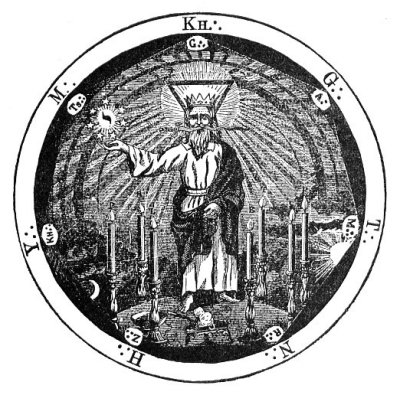
THIS is the first of the Philosophical Degrees of the Ancient and Accepted Scottish Rite; and the beginning of a course of instruction which will fully unveil to you the heart and inner mysteries of Masonry. Do not despair because you have often seemed on the point of attaining the inmost light, and have as often been disappointed. In all time, truth has been hidden under symbols, and often under a succession of allegories: where veil after veil had to be penetrated before the true Light was reached, and the essential truth stood revealed. The Human Light is but an imperfect reflection of a ray of the Infinite and Divine.
We are about to approach those ancient Religions which once
p. 247
ruled the minds of men, and whose ruins encumber the plains of the great Past, as the broken columns of Palmyra and Tadmor lie bleaching on the sands of the desert. They rise before us, those old, strange, mysterious creeds and faiths, shrouded in the mists of antiquity, and stalk dimly and undefined along the line which divides Time from Eternity; and forms of strange, wild, startling beauty mingled in the vast throngs of figures with shapes monstrous, grotesque, and hideous.
The religion taught by Moses, which, like the laws of Egypt, enunciated the principle of exclusion, borrowed, at every period of its existence, from all the creeds with which it came in contact. While, by the studies of the learned and wise, it enriched itself with the most admirable principles of the religions of Egypt and Asia, it was changed, in the wanderings of the People, by everything that was most impure or seductive in the pagan manners and superstitions. It was one thing in the times of Moses and Aaron, another in those of David and Solomon, and still another in those of Daniel and Philo.
At the time when John the Baptist made his appearance in the desert, near the shores of the Dead Sea, all the old philosophical and religious systems were approximating toward each other. A general lassitude inclined the minds of all toward the quietude of that amalgamation of doctrines for which the expeditions of Alexander and the more peaceful occurrences that followed, with the establishment in Asia and Africa of many Grecian dynasties and a great number of Grecian colonies, had prepared the way. After the intermingling of different nations, which resulted from the wars of Alexander in three-quarters of the globe, the doctrines of Greece, of Egypt, of Persia, and of India, met and intermingled everywhere. All the barriers that had formerly kept the nations apart, were thrown down; and while the People of the West readily connected their faith with those of the East, those of the Orient hastened to learn the traditions of Rome and the legends of Athens. While the Philosophers of Greece, all (except the disciples of Epicurus) more or less Platonists, seized eagerly upon the beliefs and doctrines of the East,–the Jews and Egyptians, before then the most exclusive of all peoples, yielded to that eclecticism which prevailed among their masters, the Greeks and Romans.
Under the same influences of toleration, even those who embraced Christianity, mingled together the old and the new, Christianity
p. 248
and Philosophy, the Apostolic teachings and the traditions of Mythology. The man of intellect, devotee of one system, rarely displaces it with another in all its purity. The people take such a creed as is offered them. Accordingly, the distinction between the esoteric and the exoteric doctrine, immemorial in other creeds, easily gained a foothold among many of the Christians; and it was held by a vast number, even during the preaching of Paul, that the writings of the Apostles were incomplete; that they contained only the germs of another doctrine, which must receive from the hands of philosophy, not only the systematic arrangement which was wanting, but all the development which lay concealed therein. The writings of the Apostles, they said, in addressing themselves to mankind in general, enunciated only the articles of the vulgar faith; but transmitted the mysteries of knowledge to superior minds, to the Elect,–mysteries handed down from generation to generation in esoteric traditions; and to this science of the mysteries they gave the name of Γνῶσις; [Gnosis].
Moe is the founder of GnosticWarrior.com. He is a father, husband, author, martial arts black belt, and an expert in Gnosticism, the occult, and esotericism.