ble absurdity. But in 1 Samuel x., his anointing by Samuel and initiation are described; and at verse 6th, Samuel uses this significant language: ” . . . the Spirit of the Lord will come upon thee and thou shalt prophesy with them, and shalt be turned into another man.” The phrase above quoted is thus made plain — he had received one degree of initiation and was symbolically described as “a child one year old.” The Catholic Bible, from which the text is quoted, with charming candor says in a foot-note: “It is extremely difficult to explain” (meaning that Saul was a child of one year). But undaunted by any difficulty the Editor, nevertheless, does take upon himself to explain it, and adds: “A child of one year. That is, he was good and like an innocent child.” An interpretation as ingenious as it is pious; and which if it does no good can certainly do no harm.If the explanation of the kabalists is rejected, then the whole subject falls into confusion; worse still — for it becomes a direct plagiarism from the Hindu legend. All the commentators have agreed that a literal massacre of young children is nowhere mentioned in history; and that, moreover, an occurrence like that would have made such a bloody page in Roman annals that the record of it would have been preserved for us by every author of the day. Herod himself was subject to the Roman law; and undoubtedly he would have paid the penalty of such a monstrous crime, with his own life. But if, on the one hand, we have not the slightest trace of this fable in history, on the other, we find in the
Page 201
official complaints of the Synagogue abundant evidence of the persecution of the initiates. The Talmud also corroborates it.
The Jewish version of the birth of Jesus is recorded in the Sepher-Toldos Jeshu in the following words:
“Mary having become the mother of a Son, named Jehosuah, and the boy growing up, she entrusted him to the care of the Rabbi Elhanan, and the child progressed in knowledge, for he was well gifted with spirit and understanding.
“Rabbi Jehosuah, son of Perachiah, continued the education of Jehosuah (Jesus) after Elhanan, and initiated him in the secret knowledge”; but the King, Janneus, having given orders to slay all the initiates, Jehosuah Ben Perachiah, fled to Alexandria, in Egypt, taking the boy with him.
While in Alexandria, continues the story, they were received in the house of a rich and learned lady (personified Egypt). Young Jesus found her beautiful, notwithstanding “a defect in her eyes,” and declared so to his master. Upon hearing this, the latter became so angry that his pupil should find in the land of bondage anything good, that “he cursed him and drove the young man from his presence.” Then follow a series of adventures told in allegorical language, which show that Jesus supplemented his initiation in the Jewish Kabala with an additional acquisition of the secret wisdom of Egypt. When the persecution ceased, they both returned to Judea.
The real grievances against Jesus are stated by the learned author of Tela Ignea Satanae (the fiery darts of Satan) to be two in number: 1st, that he had discovered the great Mysteries of their Temple, by having been initiated in Egypt; and 2d, that he had profaned them by exposing them to the vulgar, who misunderstood and disfigured them. This is what they say:
“There exists, in the sanctuary of the living God, a cubical stone, on which are sculptured the holy characters, the combination of which gives the explanation of the attributes and powers of the incommunicable name. This explanation is the secret key of all the occult sciences and forces in nature. It is what the Hebrews call the Scham hamphorash. This stone is watched by two lions of gold, who roar as soon as it is approached. The gates of the temple were never lost sight of, and the
Page 202
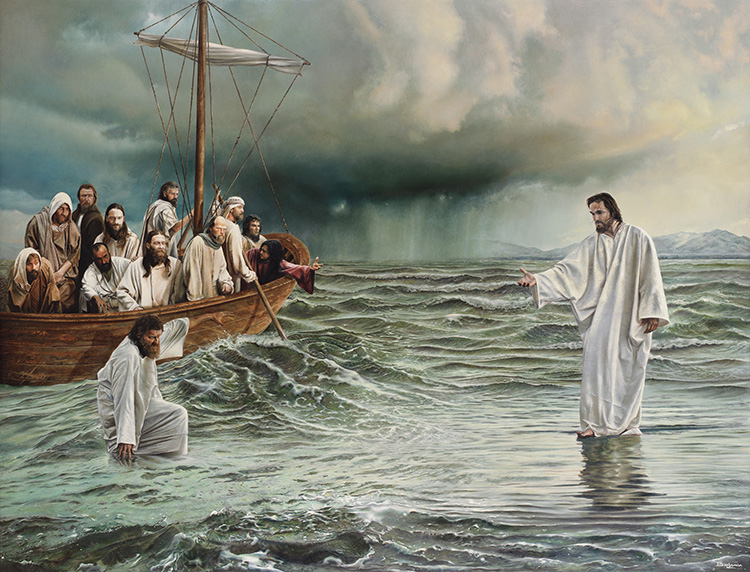
door of the sanctuary opened but once a year, to admit the High Priest alone. But Jesus, who had learned in Egypt the ‘great secrets’ at the initiation, forged for himself invisible keys, and thus was enabled to penetrate into the sanctuary unseen. . . . He copied the characters on the cubical stone, and hid them in his thigh; after which, emerging from the temple, he went abroad and began astounding people with his miracles. The dead were raised at his command, the leprous and the obsessed were healed. He forced the stones which lay buried for ages at the bottom of the sea to rise to the surface until they formed a mountain, from the top of which he preached.” The Sepher Toldos states further that, unable to displace the cubical stone of the sanctuary, Jesus fabricated one of clay, which he showed to the nations and passed it off for the true cubical stone of Israel.
Moe is the founder of GnosticWarrior.com. He is a father, husband, author, martial arts black belt, and an expert in Gnosticism, the occult, and esotericism.