It is a most suggestive fact that there is not a word in the so-called
Page 193
sacred Scriptures to show that Jesus was actually regarded as a God by his disciples. Neither before nor after his death did they pay him divine honors. Their relation to him was only that of disciples and “master”; by which name they addressed him, as the followers of Pythagoras and Plato addressed their respective masters before them. Whatever words may have been put into the mouths of Jesus, Peter, John, Paul, and others, there is not a single act of adoration recorded on their part, nor did Jesus himself ever declare his identity with his Father. He accused the Pharisees of stoning their prophets, not of deicide. He termed himself the son of God, but took care to assert repeatedly that they were all the children of God, who was the Heavenly Father of all. In preaching this, he but repeated a doctrine taught ages earlier by Hermes, Plato, and other philosophers. Strange contradiction! Jesus, whom we are asked to worship as the one living God, is found, immediately after his Resurrection, saying to Mary Magdalene: “I am not yet ascended to my Father; but go to my brethren, and say unto them, I ascend unto my Father and your Father, and to my God and your God!” (John xx. 17.)
Does this look like identifying himself with his Father? “My Father and your Father, my God and your God,” implies, on his part, a desire to be considered on a perfect equality with his brethren — nothing more. Theodoret writes: “The haeretics agree with us respecting the beginning of all things. . . . But they say there is not one Christ (God), but one above, and the other below. And this last formerly dwelt in many; but the Jesus, they at one time say is from God, at another they call him a SPIRIT.” This spirit is the Christos, the messenger of life, who is sometimes called the Angel Gabriel (in Hebrew, the mighty one of God), and who took with the Gnostics the place of the Logos, while the Holy Spirit was considered Life. With the sect of the Nazarenes, though, the Spiritus, or Holy Ghost, had less honor. While nearly every Gnostic sect considered it a Female Power, whether they called it Binah, , Sophia, the Divine Intellect, with the Nazarene sect it was the Female Spiritus, the astral light, the genetrix of all things of matter, the chaos in its evil aspect, made turbido by the Demiurge. At the creation of man, “it was light on the side of the FATHER, and it was light (material light) on the side of the MOTHER. And this is the ‘two-fold man,’ ” says the Sohar. “That day (the last one) will perish the seven badly-disposed stellars, also the sons of man, who have confessed the Spiritus, the Messias (false), the Deus, and the MOTHER of the SPIRITUS shall perish.”
Page 194
Jesus enforced and illustrated his doctrines with signs and wonders; and if we lay aside the claims advanced on his behalf by his deifiers, he did but what other kabalists did; and only they at that epoch, when, for two centuries the sources of prophecy had been completely dried up, and from this stagnation of public “miracles” had originated the skepticism of the unbelieving sect of the Sadducees.
Describing the “heresies” of those days, Theodoret, who has no idea of the hidden meaning of the word Christos, the anointed messenger, complains that they (the Gnostics) assert that this Messenger or Delegatus changes his body from time to time, “and goes into other bodies, and at each time is differently Manifested. And these (the overshadowed prophets) use incantations and invocations of various demons and baptisms in the confession of their principles. . . . They embrace astrology and magic, and the mathematical error,” (?) he says.
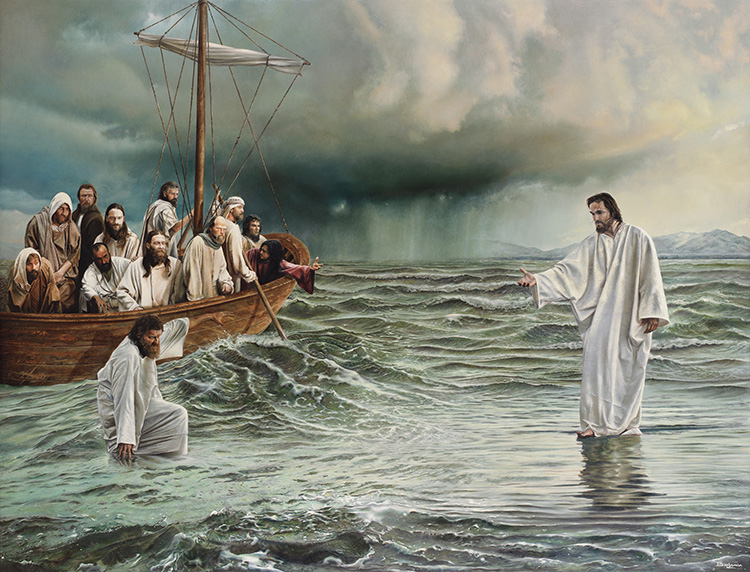
This “mathematical error,” of which the pious writer complains, led subsequently to the rediscovery of the heliocentric system, erroneous as it may still be, and forgotten since the days of another “magician” who taught it — Pythagoras. Thus, the wonders of healing and the thaums of Jesus, which he imparted to his followers, show that they were learning, in their daily communication with him, the theory and practice of the new ethics, day by day, and in the familiar intercourse of intimate friendship. Their faith was progressively developed, like that of all neophytes, simultaneously with the increase of knowledge. We must bear in mind that Josephus, who certainly must have been well-informed on the subject, calls the skill of expelling demons “a science.” This growth of faith is conspicuously shown in the case of Peter, who, from having lacked enough faith to support him while he could walk on the water from the boat to his Master, at last became so expert a thaumaturgist, that Simon Magus is said to have offered him money to teach him the secret of healing, and other wonders. And Philip is shown to have become an AEthrobat as good as Abaris of Pythagorean memory, but less expert than Simon Magus.
Moe is the founder of GnosticWarrior.com. He is a father, husband, author, martial arts black belt, and an expert in Gnosticism, the occult, and esotericism.