by Moe | Aug 26, 2011 | Morals and Dogma
p. 160
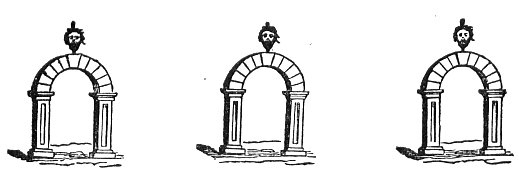
[Elu of the Fifteen.]
THIS Degree is devoted to the same objects as those of the Elu of Nine; and also to the cause of Toleration and Liberality against Fanaticism and Persecution, political and religious; and to that of Education, Instruction, and Enlightenment against Error, Barbarism, and Ignorance. To these objects you have irrevocably and forever devoted your hand, your heart, and your intellect; and whenever in your presence a Chapter of this Degree is opened, you will be most solemnly reminded of your vows here taken at the altar.
Toleration, holding that every other man has the same right to his opinion and faith that we have to ours; and liberality, holding that as no human being can with certainty say, in the clash and conflict of hostile faiths and creeds, what is truth, or that he is surely in possession of it, so every one should feel that it is quite possible that another equally honest and sincere with himself, and yet holding the contrary opinion, may himself be in possession of the truth, and that whatever one firmly and conscientiously believes, is truth, to him–these are the mortal enemies of that fanaticism which persecutes for opinion’s sake, and initiates crusades against whatever it, in its imaginary holiness, deems to be contrary to the law of God or verity of dogma. And education, instruction, and enlightenment are the most certain means by which fanaticism and intolerance can be rendered powerless.
No true Mason scoffs at honest convictions and an ardent zeal in the cause of what one believes to be truth and justice. But he
p. 161
does absolutely deny the right of any man to assume the prerogative of Deity, and condemn another’s faith and opinions as deserving to be punished because heretical. Nor does he approve the course of those who endanger the peace and quiet of great nations, and the best interest of their own race by indulging in a chimerical and visionary philanthropy–a luxury which chiefly consists in drawing their robes around them to avoid contact with their fellows, and proclaiming themselves holier than they.
For he knows that such follies are often more calamitous than the ambition of kings; and that intolerance and bigotry have been infinitely greater curses to mankind than ignorance and error. Better any error than persecution! Better any opinion than the thumb-screw, the rack, and the stake! And he knows also how unspeakably absurd it is, for a creature to whom himself and everything around him are mysteries, to torture and slay others, because they cannot think as he does in regard to the profoundest of those mysteries, to understand which is utterly beyond the comprehension of either the persecutor or the persecuted.
Masonry is not a religion. He who makes of it a religious belief, falsifies and denaturalizes it. The Brahmin, the Jew, the Mahometan, the Catholic, the Protestant, each professing his peculiar religion, sanctioned by the laws, by time, and by climate, must needs retain it, and cannot have two religions; for the social and sacred laws adapted to the usages, manners, and prejudices of particular countries, are the work of men.
But Masonry teaches, and has preserved in their purity, the cardinal tenets of the old primitive faith, which underlie and are the foundation of all religions. All that ever existed have had a basis of truth; and all have overlaid that truth with errors. The primitive truths taught by the Redeemer were sooner corrupted, and intermingled and alloyed with fictions than when taught to the first of our race. Masonry is the universal morality which is suitable to the inhabitants of every clime, to the man of every creed. It has taught no doctrines, except those truths that tend directly to the well-being of man; and those who have attempted to direct it toward useless vengeance, political ends, and Jesuitism, have merely perverted it to purposes foreign to its pure spirit and real nature.
Mankind outgrows the sacrifices and the mythologies of the childhood of the world. Yet it is easy for human indolence to
Moe is the founder of GnosticWarrior.com. He is a father, husband, author, martial arts black belt, and an expert in Gnosticism, the occult, and esotericism.
by Moe | Aug 26, 2011 | Morals and Dogma
p. 149
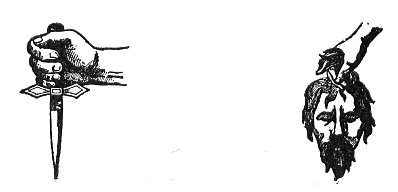
[Elu of the Nine.]
ORIGINALLY created to reward fidelity, obedience, and devotion, this Degree was consecrated to bravery, devotedness, and patriot-ism; and your obligation has made known to you the duties which you have assumed. They are summed up in the simple mandate, “Protect the oppressed against the oppressor; and devote yourself to the honor and interests of your Country.”
Masonry is not “speculative,” nor theoretical, but experimental; not sentimental, but practical. It requires self-renunciation and self-control. It wears a stern face toward men’s vices, and interferes with many of our pursuits and our fancied pleasures. It penetrates beyond the region of vague sentiment; beyond the regions where moralizers and philosophers have woven their fine theories and elaborated their beautiful maxims, to the very depths of the heart, rebuking our littlenesses and meannesses, arraigning our prejudices and passions, and warring against the armies of our vices.
It wars against the passions that spring out of the bosom of a world of fine sentiments, a world of admirable sayings and foul practices, of good maxims and bad deeds; whose darker passions are not only restrained by custom and ceremony, but hidden even from itself by a veil of beautiful sentiments. This terrible solecism has existed in all ages. Romish sentimentalism has often covered infidelity and vice; Protestant straightness often lauds spirituality and faith, and neglects homely truth, candor, and generosity; and ultra-liberal Rationalistic refinement sometimes soars
p. 150
to heaven in its dreams, and wallows in the mire of earth in its deeds.
There may be a world of Masonic sentiment; and yet a world of little or no Masonry. In many minds there is a vague and general sentiment of Masonic charity, generosity, and disinterestedness, but no practical, active virtue, nor habitual kindness, self-sacrifice, or liberality. Masonry plays about them like the cold though brilliant lights that flush and eddy over Northern skies. There are occasional flashes of generous and manly feeling, transitory splendors, and momentary gleams of just and noble thought, and transient coruscations, that light the Heaven of their imagination; but there is no vital warmth in the heart; and it remains as cold and sterile as the Arctic or Antarctic regions. They do nothing; they gain no victories over themselves; they make no progress; they are still in the Northeast corner of the Lodge, as when they first stood there as Apprentices; and they do not cultivate Masonry, with a cultivation, determined, resolute, and regular, like their cultivation of their estate, profession, or knowledge. Their Masonry takes its chance in general and inefficient sentiment, mournfully barren of results; in words and formulas and fine professions.
Most men have sentiments, but not principles. The former are temporary sensations, the latter permanent and controlling impressions of goodness and virtue. The former are general and involuntary, and do not rise to the character of virtue. Every one feels them. They flash up spontaneously in every heart. The latter are rules of action, and shape and control our conduct; and it is these that Masonry insists upon.
We approve the right; but pursue the wrong. It is the old story of human deficiency. No one abets or praises injustice, fraud, oppression, covetousness, revenge, envy, or slander; and yet how many who condemn these things, are themselves guilty of them. It is no rare thing for him whose indignation is kindled at a tale of wicked injustice, cruel oppression, base slander, or misery inflicted by unbridled indulgence; whose anger flames in behalf of the injured and ruined victims of wrong; to be in some relation unjust, or oppressive, or envious, or self-indulgent, or a careless talker of others. How wonderfully indignant the penurious man often is, at the avarice or want of public spirit of another!
A great Preacher well said, “Therefore thou art inexcusable. O
p. 151
[paragraph continues] Man, whosoever thou art, that judgest; for wherein thou judgest another, thou condemnest thyself: for thou that judgest, doest the same things.” It is amazing to see how men can talk of virtue and honor, whose life denies both. It is curious to see with what a marvellous facility many bad men quote Scripture. It seems to comfort their evil consciences, to use good words; and to gloze over bad deeds with holy texts, wrested to their purpose. Often, the more a man talks about Charity and Toleration, the less he has of either; the more he talks about Virtue, the smaller stock he has of it. The mouth speaks out of the abundance of the heart; but often the very reverse of what the man practises. And the vicious and sensual often express, and in a sense feel, strong disgust at vice and sensuality. Hypocrisy is not so common as is imagined.
Moe is the founder of GnosticWarrior.com. He is a father, husband, author, martial arts black belt, and an expert in Gnosticism, the occult, and esotericism.
by Moe | Aug 26, 2011 | Morals and Dogma
p. 136
IN this Degree you have been taught the important lesson, that none are entitled to advance in the Ancient and Accepted Scottish Rite, who have not by study and application made themselves familiar with Masonic learning and jurisprudence. The Degrees of this Rite are not for those who are content with the mere work and ceremonies, and do not seek to explore the mines of wisdom that lie buried beneath the surface. You still advance toward the Light, toward that star, blazing in the distance, which is an emblem of the Divine Truth, given by God to the first men, and preserved amid all the vicissitudes of ages in the traditions and teachings of Masonry. How far you will advance, depends upon yourself alone. Here, as everywhere in the world, Darkness struggles with Light, and clouds and shadows intervene between you and the Truth.
When you shall have become imbued with the morality of Masonry, with which you yet are, and for some time will be exclusively occupied,–when you shall have learned to practice all the virtues which it inculcates; when they become familiar to you as your Household Gods; then will you be prepared to receive its lofty philosophical instruction, and to scale the heights upon whose summit Light and Truth sit enthroned. Step by step men must advance toward Perfection; and each Masonic Degree is meant to be one of those steps. Each is a development of a particular duty; and in the present you are taught charity and benevolence;
p. 137
to be to your brethren an example of virtue; to correct your own faults; and to endeavor to correct those of your brethren.
Here, as in all the Degrees, you meet with the emblems and the names of Deity, the true knowledge of whose character and attributes it has ever been a chief object of Masonry to perpetuate. To appreciate His infinite greatness and goodness, to rely implicitly upon His Providence, to revere and venerate Him as the Supreme Architect, Creator, and Legislator of the universe, is the first of Masonic duties.
The Battery of this Degree, and the five circuits which you made around the Lodge, allude to the five points of fellowship, and are intended to recall them vividly to your mind. To go upon a brother’s errand or to his relief, even barefoot and upon flinty ground; to remember him in your supplications to the Deity; to clasp him to your heart, and protect him against malice and evil-speaking; to uphold him when about to stumble and fall; and to give him prudent, honest, and friendly counsel, are duties plainly written upon the pages of God’s great code of law, and first among the ordinances of Masonry.
The first sign of the Degree is expressive of the diffidence and humility with which we inquire into the nature and attributes of the Deity; the second, of the profound awe and reverence with which we contemplate His glories; and the third, of the sorrow with which we reflect upon our insufficient observance of our duties, and our imperfect compliance with His statutes.
The distinguishing property of man is to search for and follow after truth. Therefore, when relaxed from our necessary cares and concerns, we then covet to see, to hear, and to learn somewhat; and we esteem knowledge of things, either obscure or wonderful, to be the indispensable means of living happily. Truth, Simplicity, and Candor are most agreeable to the nature of mankind. Whatever is virtuous consists either in Sagacity, and the perception of Truth; or in the preservation of Human Society, by giving to every man his due, and observing the faith of contracts; or in the greatness and firmness of an elevated and unsubdued mind; or in observing order and regularity in all our words and in all our actions; in which consist Moderation and Temperance.
Masonry has in all times religiously preserved that enlightened faith from which flow sublime Devotedness, the sentiment of Fraternity fruitful of good works, the spirit of indulgence and peace,
p. 138
Moe is the founder of GnosticWarrior.com. He is a father, husband, author, martial arts black belt, and an expert in Gnosticism, the occult, and esotericism.
by Moe | Aug 26, 2011 | Morals and Dogma
p. 42
folded back upon themselves. In the vast cosmical changes the universal life comes and goes in unknown quantities, enveloping all in the invisible mystery of the emanations, losing no dream from no single sleep, sowing an animalcule here, crumbling a star there, oscillating and winding in curves; making a force of Light, and an element of Thought; disseminated and indivisible, dissolving all save that point without length, breadth, or thickness, The MYSELF; reducing everything to the Soul-atom; making everything blossom into God; entangling all activities, from the highest to the lowest, in the obscurity of a dizzying mechanism; hanging the flight of an insect upon the movement of the earth; subordinating, perhaps, if only by the identity of the law, the eccentric evolutions of the comet in the firmament, to the whirlings of the infusoria in the drop of water. A mechanism made of mind, the first motor of which is the gnat, and its last wheel the zodiac.
A peasant-boy, guiding Blücher by the right one of two roads, the other being impassable for artillery, enables him to reach Waterloo in time to save Wellington from a defeat that would have been a rout; and so enables the kings to imprison Napoleon on a barren rock in mid-ocean. An unfaithful smith, by the slovenly shoeing of a horse, causes his lameness, and, he stumbling, the career of his world-conquering rider ends, and the destinies of empires are changed. A generous officer permits an imprisoned monarch to end his game of chess before leading him to the block; and meanwhile the usurper dies, and the prisoner reascends the throne. An unskillful workman repairs the compass, or malice or stupidity disarranges it, the ship mistakes her course, the waves swallow a Cæsar, and a new chapter is written in the history of a world. What we call accident is but the adamantine chain of indissoluble connection between all created things. The locust, hatched in the Arabian sands, the small worm that destroys the cotton-boll, one making famine in the Orient, the other closing the mills and starving the workmen and their children in the Occident, with riots and massacres, are as much the ministers of God as the earthquake; and the fate of nations depends more on them than on the intellect of its kings and legislators. A civil war in America will end in shaking the world; and that war may be caused by the vote of some ignorant prize-fighter or crazed fanatic in a city or in a Congress, or of some stupid boor in an obscure country parish. The
p. 43
electricity of universal sympathy, of action and reaction, pervades everything, the planets and the motes in the sunbeam. FAUST, with his types, or LUTHER, with his sermons, worked greater results than Alexander or Hannibal. A single thought sometimes suffices to overturn a dynasty. A silly song did more to unseat James the Second than the acquittal of the Bishops. Voltaire, Condorcet, and Rousseau uttered words that will ring, in change and revolutions, throughout all the ages.
Remember, that though life is short, Thought and the influences of what we do or say are immortal; and that no calculus has yet pretended to ascertain the law of proportion between cause and effect. The hammer of an English blacksmith, smiting down an insolent official, led to a rebellion which came near being a revolution. The word well spoken, the deed fitly done, even by the feeblest or humblest, cannot help but have their effect. More or less, the effect is inevitable and eternal. The echoes of the greatest deeds may die away like the echoes of a cry among the cliffs, and what has been done seem to the human judgment to have been without result. The unconsidered act of the poorest of men may fire the train that leads to the subterranean mine, and an empire be rent by the explosion.
The power of a free people is often at the disposal of a single and seemingly an unimportant individual;–a terrible and truthful power; for such a people feel with one heart, and therefore can lift up their myriad arms for a single blow. And, again, there is no graduated scale for the measurement of the influences of different intellects upon the popular mind. Peter the Hermit held no office, yet what a work he wrought!
* * * * * * From the political point of view there is but a single principle,–the sovereignty of man over himself. This sovereignty of one’s self over one’s self is called LIBERTY. Where two or several of these sovereignties associate, the State begins. But in this association there is no abdication. Each sovereignty parts with a certain portion of itself to form the common right. That portion is the same for all. There is equal contribution by all to the joint sovereignty. This identity of concession which each makes to all, is EQUALITY. The common right is nothing more or less than the protection of all, pouring its rays on each. This protection of each by all, is FRATERNITY.
Moe is the founder of GnosticWarrior.com. He is a father, husband, author, martial arts black belt, and an expert in Gnosticism, the occult, and esotericism.