by Moe | Aug 30, 2011 | Ecclesiastical History of England
AT this time a memorable miracle, and like to those of former days, was wrought in Britain; for, to the end that the living might be roused from the death of the soul, a certain man, who had been some time dead, rose again to the life of the body, and related many memorable things that he had seen; some of which I have thought fit here briefly to describe. There was a certain householder in that district of the Northumbrians which is called Incuneningum, who led a godly life, with all his house. This man fell sick, and his sickness daily increasing, he was brought to extremity, and died in the beginning of the night; but at dawn he came to life again, and suddenly sat up, whereat all those that sat about the body weeping fled away in great terror, only his wife, who loved him better, though trembling and greatly afraid, remained with him. And he comforting her, said, “Fear not, for I am now in very deed risen from death whereof I was holden, and permitted again to live among men; nevertheless, hereafter I must not live as I was wont, but after a very different manner.” Then rising immediately, he went to the oratory of the little town, and continuing in prayer till day, forthwith divided all his substance into three parts; one whereof he gave to his wife, another to his children, and the third, which he kept himself, he straightway distributed among the poor. Not long after, being set free from the cares of this world, he came to the monastery of Mailros, which is almost enclosed by the winding of the river Tweed, and having received the tonsure, went apart into a place of abode which the abbot had provided, and there he continued till the day of his death, in so great contrition of mind and mortifying of the body, that even if his tongue had been silent, his life would have declared that he had seen many things either to be dreaded or coveted, which were hidden from other men.
Thus he related what he had seen. “He that led me had a countenance full of light, and shining raiment, and we went in silence, as it seemed to me, towards the rising of the summer sun. And as we walked we came to a broad and deep valley of infinite length; it lay on our left, and one side of it was exceeding terrible with raging flames, the other no less intolerable for violent hail and cold snows drifting and sweeping through all the place. Both sides were full of the souls of men which seemed to be tossed from one side to the other as it were by a violent storm; for when they could no longer endure the fervent heat, the hapless souls leaped into the midst of the deadly cold; and finding no rest there, they leaped back again to be burnt in the midst of the unquenchable flames. Now whereas an innumerable multitude of misshapen spirits were thus tormented far and near with this interchange of misery, as far as I could see, without any interval of rest, I began to think that peradventure this might be Hell, of whose intolerable torments I had often heard men talk. My guide, who went before me, answered to my thought, saying, ‘Think not so, for this is not the Hell you believe it to be.’
“When he had led me farther by degrees, sore dismayed by that dread sight, on a sudden I saw the place before us begin to grow dark and filled with shadows. When we entered into them, the shadows by degrees grew so thick, that I could see nothing else, save only the darkness and the shape and garment of him that led me. As we went on ‘through the shades in the lone night,’ lo! on a sudden there appeared before us masses of foul flame constantly rising as it were out of a great pit, and falling back again into the same. When I had been led thither, my guide suddenly vanished, and left me alone in the midst of darkness and these fearful sights. As those same masses of fire, without intermission, at one time flew up and at another fell back into the bottom of the abyss, I perceived that the summits of all the flames, as they ascended were full of the spirits of men, which, like sparks flying upwards with the smoke, were sometimes thrown on high, and again, when the vapours of the fire fell, dropped down into the depths below. Moreover, a stench, foul beyond compare, burst forth with the vapours, and filled all those dark places.
Moe is the founder of GnosticWarrior.com. He is a father, husband, author, martial arts black belt, and an expert in Gnosticism, the occult, and esotericism.
by Moe | Aug 26, 2011 | Morals and Dogma
p. 149
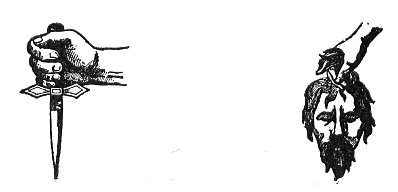
[Elu of the Nine.]
ORIGINALLY created to reward fidelity, obedience, and devotion, this Degree was consecrated to bravery, devotedness, and patriot-ism; and your obligation has made known to you the duties which you have assumed. They are summed up in the simple mandate, “Protect the oppressed against the oppressor; and devote yourself to the honor and interests of your Country.”
Masonry is not “speculative,” nor theoretical, but experimental; not sentimental, but practical. It requires self-renunciation and self-control. It wears a stern face toward men’s vices, and interferes with many of our pursuits and our fancied pleasures. It penetrates beyond the region of vague sentiment; beyond the regions where moralizers and philosophers have woven their fine theories and elaborated their beautiful maxims, to the very depths of the heart, rebuking our littlenesses and meannesses, arraigning our prejudices and passions, and warring against the armies of our vices.
It wars against the passions that spring out of the bosom of a world of fine sentiments, a world of admirable sayings and foul practices, of good maxims and bad deeds; whose darker passions are not only restrained by custom and ceremony, but hidden even from itself by a veil of beautiful sentiments. This terrible solecism has existed in all ages. Romish sentimentalism has often covered infidelity and vice; Protestant straightness often lauds spirituality and faith, and neglects homely truth, candor, and generosity; and ultra-liberal Rationalistic refinement sometimes soars
p. 150
to heaven in its dreams, and wallows in the mire of earth in its deeds.
There may be a world of Masonic sentiment; and yet a world of little or no Masonry. In many minds there is a vague and general sentiment of Masonic charity, generosity, and disinterestedness, but no practical, active virtue, nor habitual kindness, self-sacrifice, or liberality. Masonry plays about them like the cold though brilliant lights that flush and eddy over Northern skies. There are occasional flashes of generous and manly feeling, transitory splendors, and momentary gleams of just and noble thought, and transient coruscations, that light the Heaven of their imagination; but there is no vital warmth in the heart; and it remains as cold and sterile as the Arctic or Antarctic regions. They do nothing; they gain no victories over themselves; they make no progress; they are still in the Northeast corner of the Lodge, as when they first stood there as Apprentices; and they do not cultivate Masonry, with a cultivation, determined, resolute, and regular, like their cultivation of their estate, profession, or knowledge. Their Masonry takes its chance in general and inefficient sentiment, mournfully barren of results; in words and formulas and fine professions.
Most men have sentiments, but not principles. The former are temporary sensations, the latter permanent and controlling impressions of goodness and virtue. The former are general and involuntary, and do not rise to the character of virtue. Every one feels them. They flash up spontaneously in every heart. The latter are rules of action, and shape and control our conduct; and it is these that Masonry insists upon.
We approve the right; but pursue the wrong. It is the old story of human deficiency. No one abets or praises injustice, fraud, oppression, covetousness, revenge, envy, or slander; and yet how many who condemn these things, are themselves guilty of them. It is no rare thing for him whose indignation is kindled at a tale of wicked injustice, cruel oppression, base slander, or misery inflicted by unbridled indulgence; whose anger flames in behalf of the injured and ruined victims of wrong; to be in some relation unjust, or oppressive, or envious, or self-indulgent, or a careless talker of others. How wonderfully indignant the penurious man often is, at the avarice or want of public spirit of another!
A great Preacher well said, “Therefore thou art inexcusable. O
p. 151
[paragraph continues] Man, whosoever thou art, that judgest; for wherein thou judgest another, thou condemnest thyself: for thou that judgest, doest the same things.” It is amazing to see how men can talk of virtue and honor, whose life denies both. It is curious to see with what a marvellous facility many bad men quote Scripture. It seems to comfort their evil consciences, to use good words; and to gloze over bad deeds with holy texts, wrested to their purpose. Often, the more a man talks about Charity and Toleration, the less he has of either; the more he talks about Virtue, the smaller stock he has of it. The mouth speaks out of the abundance of the heart; but often the very reverse of what the man practises. And the vicious and sensual often express, and in a sense feel, strong disgust at vice and sensuality. Hypocrisy is not so common as is imagined.
Moe is the founder of GnosticWarrior.com. He is a father, husband, author, martial arts black belt, and an expert in Gnosticism, the occult, and esotericism.
by Moe | Aug 26, 2011 | Morals and Dogma
p. 136
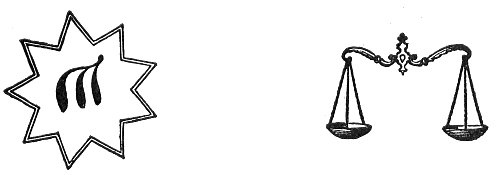
IN this Degree you have been taught the important lesson, that none are entitled to advance in the Ancient and Accepted Scottish Rite, who have not by study and application made themselves familiar with Masonic learning and jurisprudence. The Degrees of this Rite are not for those who are content with the mere work and ceremonies, and do not seek to explore the mines of wisdom that lie buried beneath the surface. You still advance toward the Light, toward that star, blazing in the distance, which is an emblem of the Divine Truth, given by God to the first men, and preserved amid all the vicissitudes of ages in the traditions and teachings of Masonry. How far you will advance, depends upon yourself alone. Here, as everywhere in the world, Darkness struggles with Light, and clouds and shadows intervene between you and the Truth.
When you shall have become imbued with the morality of Masonry, with which you yet are, and for some time will be exclusively occupied,–when you shall have learned to practice all the virtues which it inculcates; when they become familiar to you as your Household Gods; then will you be prepared to receive its lofty philosophical instruction, and to scale the heights upon whose summit Light and Truth sit enthroned. Step by step men must advance toward Perfection; and each Masonic Degree is meant to be one of those steps. Each is a development of a particular duty; and in the present you are taught charity and benevolence;
p. 137
to be to your brethren an example of virtue; to correct your own faults; and to endeavor to correct those of your brethren.
Here, as in all the Degrees, you meet with the emblems and the names of Deity, the true knowledge of whose character and attributes it has ever been a chief object of Masonry to perpetuate. To appreciate His infinite greatness and goodness, to rely implicitly upon His Providence, to revere and venerate Him as the Supreme Architect, Creator, and Legislator of the universe, is the first of Masonic duties.
The Battery of this Degree, and the five circuits which you made around the Lodge, allude to the five points of fellowship, and are intended to recall them vividly to your mind. To go upon a brother’s errand or to his relief, even barefoot and upon flinty ground; to remember him in your supplications to the Deity; to clasp him to your heart, and protect him against malice and evil-speaking; to uphold him when about to stumble and fall; and to give him prudent, honest, and friendly counsel, are duties plainly written upon the pages of God’s great code of law, and first among the ordinances of Masonry.
The first sign of the Degree is expressive of the diffidence and humility with which we inquire into the nature and attributes of the Deity; the second, of the profound awe and reverence with which we contemplate His glories; and the third, of the sorrow with which we reflect upon our insufficient observance of our duties, and our imperfect compliance with His statutes.
The distinguishing property of man is to search for and follow after truth. Therefore, when relaxed from our necessary cares and concerns, we then covet to see, to hear, and to learn somewhat; and we esteem knowledge of things, either obscure or wonderful, to be the indispensable means of living happily. Truth, Simplicity, and Candor are most agreeable to the nature of mankind. Whatever is virtuous consists either in Sagacity, and the perception of Truth; or in the preservation of Human Society, by giving to every man his due, and observing the faith of contracts; or in the greatness and firmness of an elevated and unsubdued mind; or in observing order and regularity in all our words and in all our actions; in which consist Moderation and Temperance.
Masonry has in all times religiously preserved that enlightened faith from which flow sublime Devotedness, the sentiment of Fraternity fruitful of good works, the spirit of indulgence and peace,
p. 138
Moe is the founder of GnosticWarrior.com. He is a father, husband, author, martial arts black belt, and an expert in Gnosticism, the occult, and esotericism.
by Moe | Aug 26, 2011 | Morals and Dogma
p. 126
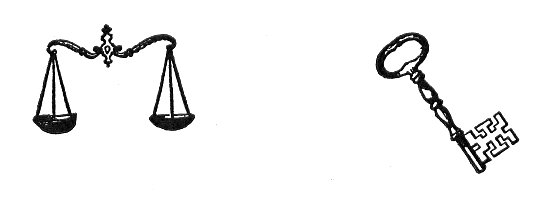
THE lesson which this Degree inculcates is JUSTICE, in decision and judgment, and in our intercourse and dealing with other men.
In a country where trial by jury is known, every intelligent man is liable to be called on to act as a judge, either of fact alone, or of fact and law mingled; and to assume the heavy responsibilities which belong to that character.
Those who are invested with the power of judgment should judge the causes of all persons uprightly and impartially, without any personal consideration of the power of the mighty, or the bribe of the rich, or the needs of the poor. That is the cardinal rule, which no one will dispute; though many fail to observe it. But they must do more. They must divest themselves of prejudice and preconception. They must hear patiently, remember accurately, and weigh carefully the facts and the arguments offered before them. They must not leap hastily to conclusions, nor form opinions before they have heard all. They must not presume crime or fraud. They must neither be ruled by stubborn pride of opinion, nor be too facile and yielding to the views and arguments of others. In deducing the motive from the proven act, they must not assign to the act either the best or the worst motives, but those which they would think it just and fair for the world to assign to it, if they themselves had done if; nor must they endeavor to make many little circumstances, that weigh nothing separately, weigh much together, to prove their own acuteness and sagacity. These are sound rules for every juror, also, to observe.
p. 127
In our intercourse with others, there are two kinds of injustice: the first, of those who offer an injury; the second, of those who have it in their power to avert an injury from those to whom it is offered, and yet do it not. So active injustice may be done in two ways–by force and by fraud,–of which force is lion-like, and fraud fox-like,–both utterly repugnant to social duty, but fraud the more detestable.
Every wrong done by one man to another, whether it affect his person, his property, his happiness, or his reputation, is an offense against the law of justice. The field of this Degree is therefore a wide and vast one; and Masonry seeks for the most impressive mode of enforcing the law of justice, and the most effectual means of preventing wrong and injustice.
To this end it teaches this great and momentous truth: that wrong and injustice once done cannot be undone; but are eternal in their consequences; once committed, are numbered with the irrevocable Past; that the wrong that is done contains its own retributive penalty as surely and as naturally as the acorn contains the oak. Its consequences are its punishment; it needs no other, and can have no heavier; they are involved in its commission, and cannot be separated from it. A wrong done to another is an injury done to our own Nature, an offence against our own souls, a disfiguring of the image of the Beautiful and Good. Punishment is not the execution of a sentence, but the occurrence of an effect. It is ordained to follow guilt, not by the decree of God as a judge, but by a law enacted by Him as the Creator and Legislator of the Universe. It is not an arbitrary and artificial annexation, but an ordinary and logical consequence; and therefore must be borne by the wrong-doer, and through him may flow on to others. It is the decision of the infinite justice of God, in the form of law.
There can be no interference with, or remittance of, or protection from, the natural effects of our wrongful acts. God will not interpose between the cause and its consequence; and in that sense there can be no forgiveness of sins. The act which has debased our soul may be repented of, may be turned from; but the injury is done. The debasement may be redeemed by after-efforts, the stain obliterated by bitterer struggles and severer sufferings; but the efforts and the endurance which might have raised the soul to the loftiest heights are now exhausted in merely regaining what
Moe is the founder of GnosticWarrior.com. He is a father, husband, author, martial arts black belt, and an expert in Gnosticism, the occult, and esotericism.
by Moe | Aug 26, 2011 | Morals and Dogma
p. 106
MASONRY is a succession of allegories, the mere vehicles of great lessons in morality and philosophy. You will more fully appreciate its spirit, its object, its purposes, as you advance in the different Degrees, which you will find to constitute a great, complete, and harmonious system.
If you have been disappointed in the first three Degrees, as you have received them, and if it has seemed to you that the performance has not come up to the promise, that the lessons of morality are not new, and the scientific instruction is but rudimentary, and the symbols are imperfectly explained, remember that the ceremonies and lessons of those Degrees have been for ages more and more accommodating themselves, by curtailment and sinking into commonplace, to the often limited memory and capacity of the Master and Instructor, and to the intellect and needs of the Pupil and Initiate; that they have come to us from an age when symbols were used, not to reveal but to conceal; when the commonest learning was confined to a select few, and the simplest principles of morality seemed newly discovered truths; and that these antique and simple Degrees now stand like the broken columns of a roofless Druidic temple, in their rude and mutilated greatness; in many parts, also, corrupted by time, and disfigured by modern additions and absurd interpretations. They are but the entrance to the great Masonic Temple, the triple columns of the portico.
You have taken the first step over its threshold, the first step toward the inner sanctuary and heart of the temple. You are in the path that leads up the slope of the mountain of Truth; and
p. 107
it depends upon your secrecy, obedience, and fidelity, whether you will advance or remain stationary.
Imagine not that you will become indeed a Mason by learning what is commonly called the “work,” or even by becoming familiar with our traditions. Masonry has a history, a literature, a philosophy. Its allegories and traditions will teach you much; but much is to be sought elsewhere. The streams of learning that now flow full and broad must be followed to their heads in the springs that well up in the remote past, and you will there find the origin and meaning of Masonry.
A few rudimentary lessons in architecture, a few universally admitted maxims of morality, a few unimportant traditions, whose real meaning is unknown or misunderstood, will no longer satisfy the earnest inquirer after Masonic truth. Let whoso is content with these, seek to climb no higher. He who desires to understand the harmonious and beautiful proportions of Freemasonry must read, study, reflect, digest, and discriminate. The true Mason is an ardent seeker after knowledge; and he knows that both books and the antique symbols of Masonry are vessels which come down to us full-freighted with the intellectual riches of the Past; and that in the lading of these argosies is much that sheds light on the history of Masonry, and proves its claim to be acknowledged the benefactor of mankind, born in the very cradle of the race.
Knowledge is the most genuine and real of human treasures; for it is Light, as Ignorance is Darkness. It is the development of the human soul, and its acquisition the growth of the soul, which at the birth of man knows nothing, and therefore, in one sense, may be said to be nothing. It is the seed, which has in it the power to grow, to acquire, and by acquiring to be developed, as the seed is developed into the shoot, the plant, the tree. “We need not pause at the common argument that by learning man excelleth man, in that wherein man excelleth beasts; that by learning man ascendeth to the heavens and their motions, where in body he cannot come, and the like. Let us rather regard the dignity and excellency of knowledge and learning in that whereunto man’s nature doth most aspire, which is immortality or continuance. For to this tendeth generation, and raising of Houses and Families; to this buildings, foundations, and monuments; to this tendeth the desire of memory, fame, and celebration, and in effect the strength of all other human desires.” That our influences shall
Moe is the founder of GnosticWarrior.com. He is a father, husband, author, martial arts black belt, and an expert in Gnosticism, the occult, and esotericism.