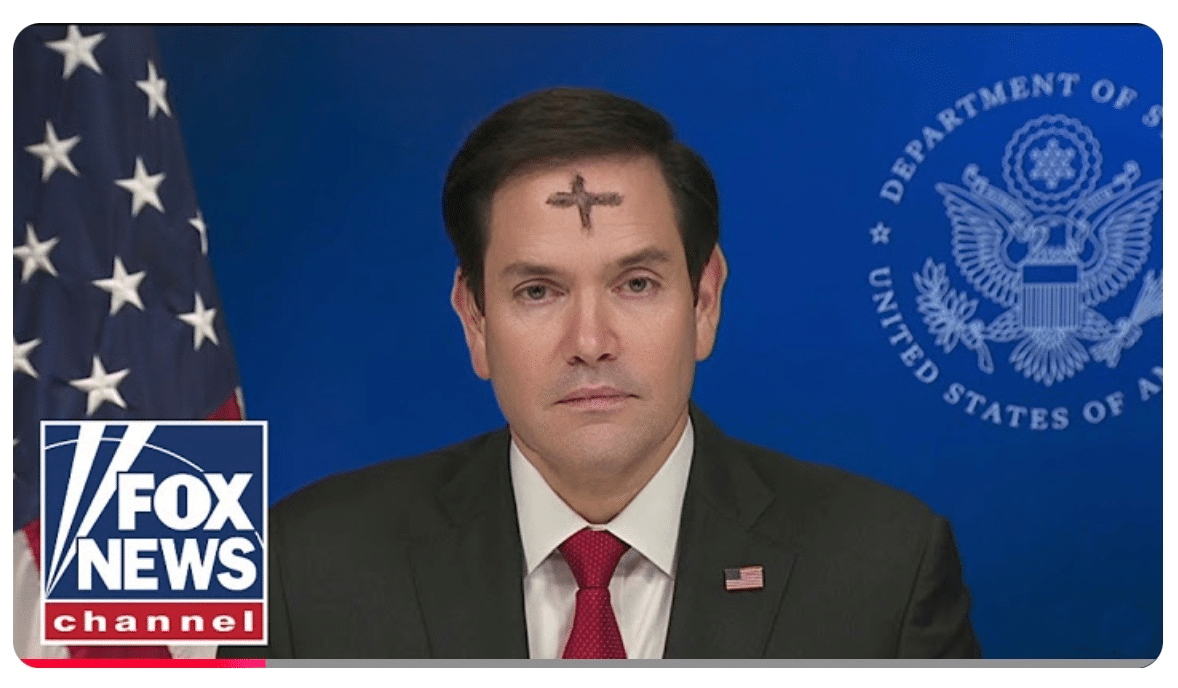
On March 5, 2025, U.S. Secretary of State Marco Rubio had appeared on on Fox TV with a large black cross on his forehead as part of the Roman Catholic “Ash Wednesday” tradition that signifies the beginning of a 40-day period of penance, reflection and fasting leading up to Resurrection Sunday.
The ash used is traditionally made from burned palm fronds from the previous year’s Palm Sunday, mixed with holy water. As the priest applies it, they typically say the words “Remember that you are dust, and to dust you shall return,” a phrase drawn from Genesis 3:19, meant to remind believers of mortality and the need for repentance.
We can trace this ancient tradition of over 2,000 years to early Christians who also wore the mark.
The Church Fathers Tertullian, Origen, Cyprian, and Jerome said that Mark of the Tau was a Christian custom of repeatedly tracing the sign of the Tau cross on their own foreheads to symbolize the value of the human mind.
Tertullian confirms the practice when he writes that, throughout the ordinary actions of daily life, “we trace upon the forehead the sign.”
Scripture tells us that the saved people of Israel had the sign of the Tau marked upon their foreheads. In Revelation, the Tau is called “the seal of our God on the foreheads of His servants” (Revelation 7:2–4). Revelation’s sealing imagery recalls the protective mark described in Ezekiel 9:4–6.
The ancient symbol on the forehead invites the modern seeker to look deeper.
Scripture presents the Mark of the Tau as a mark of moral distinction, divine ownership, and protection; neuroscience presents as a protein with the same name at the center of memory, neuronal order, and degeneration.
As I will attempt to explain in this essay, these descriptions remind me of our immune system and microbiota, whose collective genes greatly outnumber our own. What our ancestors may have called ministering spirits or angels inhabit and influence our gastrointestinal tracts, blood, and brain—exerting a direct influence upon our senses, that is, our thoughts, behaviors, actions, and health.
This essay explores how our microbiota, together with the teachings of the Tau and salvation, may relate to religion, esotericism, human biology, neuroscience, and quality of life.
Like the angels of the Bible, modern science has shown that these microscopic inhabitants help shape the human mind and, in doing so, the destiny of mankind.
We also find today that tau pathology is the primary cause of many neurodegenerative diseases, such as dementia and Alzheimer’s disease, which involve the accumulation of abnormal tau protein in the brain and are collectively referred to as tauopathies. Deaths from Alzheimer’s disease have increased 134% between 2000 and 2024.
A 2026 review calls the gut-brain axis “a dynamic, bidirectional communication network” integrating neural, endocrine, immune, and metabolic pathways that regulate physiology and behavior.
This science converges with ancient Scripture, as we find that the Mark of the Tau was for the guidance of the angelic executors of God’s commands—a mark or sign of favorable distinction.
These angels are said to be the executors of God’s wrath and also to deliver people, such as Lot, from danger (Genesis 18–19; Exodus 12–14). As St. Paul says, “Sit at My right hand until I make Your enemies a footstool for Your feet.” He then asks, ““Are they not all ministering spirits, sent to minister for them, who shall receive the inheritance of salvation?” (Hebrews 1:14).
The word ministering means learning about and attending to others’ needs or helping or caring for someone or something.
It is as if these angels or spirits were with us at all times or were sewn into the fabric of our being and bodies from the day we were created.
St. Basil (Homily on Psalm 43) said that our guardian angels can act upon our senses (Summa Theologiae, I, q. 111, a. 4) and upon our imaginations (ibid., a. 3), but not upon our wills except per modum suadentis—that is, by working on our intellect and thus upon our will through the senses and the imagination (I, q. 106, a. 2; q. 111, a. 2).
Aquinas writes, “Both a good and a bad angel by their own natural power can move the human imagination,” while maintaining that the will remains free to consent or resist.
The prophet Ezekiel speaks of the Tau as the mark distinguishing those who were to be saved, on account of their sorrow for their sins, from those who, as idolaters, were to be slain.
The Hebrew word translated as “mark” is taw, the name of the final letter of the Hebrew alphabet, and commentators note that its ancient written form resembled a cross.
“Go through the city, walk through Jerusalem, and mark Tau upon the foreheads of the men who sigh and mourn for all the abominations that are committed in the midst thereof.
“To the others, I heard the Lord say: ‘Pass through the city after him and strike! Do not look on them with pity or show any mercy! Old men, youths and maidens, women and children—wipe them out! But do not touch anyone marked with the Tau on the forehead. Begin at My sanctuary’” (Ezekiel 9:4–6).
It is as if the people of Jerusalem were divided into two camps based on their mental health.
According to the Jewish Encyclopedia:
The cross as a Christian symbol or “seal” came into use at least as early as the second century (see Apost. Const. iii. 17; Epistle of Barnabas, xi–xii; Justin, Apologia, i. 55–60; Dial. cum Tryph. 85–97); and the marking of a cross upon the forehead and the chest was regarded as a talisman against the powers of demons (Tertullian, De Corona, iii; Cyprian, Testimonies, xi. 21–22; Lactantius, Divinæ Institutiones, iv. 27, and elsewhere).
Christians used to swear by the power of the cross (Apocalypse of Mary, viii, in James, Texts and Studies, iii, 118).
Tertullian says, “Frontem crucis signaculo terimus” (De Corona, iii)—that is, “We Christians wear out our foreheads with the sign of the cross.” He also said, “The Greek letter Tau and our Latin letter T are the true form of the cross, which, according to the Prophet, will be imprinted on our foreheads in the true Jerusalem” (Against Marcion, III, xxii).
The original meaning of Tau—Taw or Tav—in Hebrew is “mark.” It was the twenty-second letter of the alphabet and later came to represent the letter T in Greek.
The mark was how God’s angelic executors were able to find, save, or destroy people based on how they thought, spoke, lived, and acted.
“For He shall give His angels charge over thee, to keep thee in all thy ways” (Psalm 91:11).
On one side, there were people who were said to be truly sorry for their sins and adamantly opposed to the culture of sin, idolatry, and abominations.
They were said to be marked by the Lord with the Tau in order to be saved.
This means that the people chosen by God to be saved by the mark of the Tau seemed to have control and power over their own bodies and minds.
It was a type of spiritual mark or metaphysical representation that acted as a sign for the people chosen by God to be saved because they were not controlled by the supernatural or infernal forces of Satan or the Devil.
These people who had the mark were also adamantly opposed to sin and the evil acts committed by their fellow countrymen.
On the other side of the camp were the damned.
These were people who accepted and encouraged the sins of Sodom and, in doing so, bore the mark of the theta upon their foreheads.
They were under the direct control of Satan or the Devil—a type of beast that was no longer human.
They were people our ancestors may have called demons or people possessed by the Devil.
Today, we can say they simply lost their minds. Schizoid. . . .
In doing so, they were marked by ministering spirits for destruction and death.
THE TAU PROTEIN
I find these ancient biblical stories interesting because, as they relate to modern times, we find what is called the tau protein, which is found mainly in the neurons of the central nervous system and in the brain’s frontal lobe, under the forehead. Modern reviews describe tau as a major microtubule-associated protein in mature neurons.
It is associated with the mark of the Tau on the forehead of the early Christians as an indication of a sound or strong mind and, as I will show, human consciousness.
This supports my contention that tau is involved in the creative processes and in preserving the health of the brain, as well as in destructive processes, as I will show.
Tau is a phosphoprotein—a protein that contains chemically bound phosphate—critical to neuronal function, memory, cellular activity, and habituation, a form of non-associative learning. As one modern review states, “Tau plays a key role in regulating microtubule dynamics, axonal transport and neurite outgrowth,” and these functions are modulated through site-specific phosphorylation.
Tau is phosphorylated in a normal, healthy brain, and it becomes abnormally hyperphosphorylated in dementia and Alzheimer’s disease. Hyperphosphorylated tau forms a major component of the paired helical filaments and neurofibrillary tangles found in Alzheimer’s disease.
The phosphorylation process plays a key role in metabolism and immune response. It plays a critical role in regulating much of what determines our health and lifespan through cell cycles, growth, and apoptosis.
A protein being phosphorylated is like drinking an energy drink before a workout—it prepares a molecule for some specialized task.
It is what I believe is the “energy beacon” or antenna that fungi and molds use as a signaling pathway within the host, one that can regulate or corrupt protein activity and alter the expression of many genes at the cellular level.
Cells also secrete various proteins that become part of the extracellular matrix or participate in intercellular communication.
Oxidative phosphorylation is the process in which protons move through ATP synthase, releasing energy that causes the rotor and central shaft of ATP synthase to rotate. The mechanical energy from this rotation is converted into chemical energy as phosphate is added to ADP to form ATP. Biochemical research describes ATP synthase as a rotary motor driven by an electrochemical proton gradient.
The release of a phosphate group from ATP through hydrolysis releases usable energy and changes ATP to ADP.
The word phosphorus derives from the Greek phōsphoros, meaning “light-bearer.”
In Latin, the corresponding word is lucifer, meaning “light-bringer” or “morning star.”
“How art thou fallen from heaven, O Lucifer, son of the morning! How art thou cut down to the ground, which didst weaken the nations!” (Isaiah 14:12).
Phosphorus also helps nerves and muscles do their jobs. In the form of phospholipids, phosphorus is a component of cell-membrane structure and of the body’s key energy source, adenosine triphosphate, or ATP. The National Institutes of Health identifies phosphorus as a component of bones, teeth, DNA, RNA, phospholipids, and ATP.
The tau protein helps make sure the brain operates properly by supporting neuronal transport and microtubule stability, which are necessary for overall neurological fitness. It is a microtubule-associated protein, or MAP (Weingarten et al., 1975; Witman et al., 1976).
Researchers describe tau’s role in microtubule stabilization and axonal transport as crucial to neuronal function.
Physicist Roger Penrose of the University of Oxford claimed that the brain acts as a quantum computer and that protein structures called microtubules play a role in human consciousness by exploiting quantum effects. Penrose and anesthesiologist Stuart Hameroff developed this proposal as the Orchestrated Objective Reduction, or Orch OR, theory, which attributes conscious experience to proposed quantum processes in neuronal microtubules.
This may explain why, when the tau protein is corrupted by some process, it creates mental pathologies that lead people to lose their minds, memories, and consciousness.
After all, a quantum effect is the change that one quantum system causes in another.
Since tau’s health and regulation are critical for brain function, this may explain why tau pathology, or tauopathies, leads to cognitive impairment, mental illness, and diseases such as dementia and Alzheimer’s disease. Scientific reviews link tau’s misfolding, abnormal hyperphosphorylation, loss of normal function, and toxic gain of function to Alzheimer’s disease and other neurodegenerative disorders
It is as if there is an underlying or hidden cause that creates the effects of these mental illnesses and diseases, and tau is a key marker of these conditions.
The metaphysical and biological mark of those who are not to be saved—the damned.
Hence: “Pass through the city after him and strike! Do not look on them with pity or show any mercy! Old men, youths and maidens, women and children—wipe them out! But do not touch anyone marked with the Tau on the forehead. Begin at My sanctuary” (Ezekiel 9:4–6).
The mark, I contend, may have been the tau protein, which acts like a cellular signal or magnet of sorts for the angelic executors of God’s commands to destroy the mentally ill and some who are so sick that they act like what our ancestors may have called evil demons.
This story becomes even more interesting as it relates to the science of the human mind and human behavior.
Scripture tells us that Jesus, a thirty-three-year-old wise man from the land of Judea—Idumea, Crete—was brought to Golgotha, also known as the “Place of a Skull,” and crucified upon a Tau cross with two others, one on each side, with Jesus in the middle. John states, “Carrying His own cross, He went out to the Place of the Skull, which in Aramaic is called Golgotha” (John 19:17).
Miraculously, after the crucifixion upon the Tau cross, Jesus is resurrected.
The original Phoenician, or Hebrew, meaning of resurrect or resurrection is “raising up” or “rising up”—to cause someone to stand or rise, or to raise someone from sleep or from the dead. To resurrect is for man to be “raised up” to live in the spiritual realms, or what is called being “born again” or “born from above”—spiritually regenerated (John 3:3–5).
Man is “raised up together, and made to sit together in the heavenly places,” or spiritual realms, in Jesus Christ (Ephesians 2:1, 5–6; Colossians 2:12–13).
We can say that man is now conscious and aware, raised from his former ignorant state of being medically brain-dead and controlled by sin—“The soul who sins will die” (Ezekiel 18:20).
“The wages of sin is death” (Romans 6:23), which is the repayment you receive from being your own “god.”
Hence, although physically alive, you can be spiritually “dead” (1 Timothy 5:6; Revelation 3:1).
The death of Jesus is not the end of His life or a state of nonexistence, but the separation of the mind from the Light, or what Christians call the “Source of Life—God the Father.”
The resurrection of Jesus represents His rising from a metaphysical, sleep-like state, or from being unenlightened, to become righteous—that is, enlightened by the power of Almighty God, His Father.
It is as if He was formerly in a sleep-like state under the sway of the Devil, which would be a sentence of mental illness and disease that would equate to death.
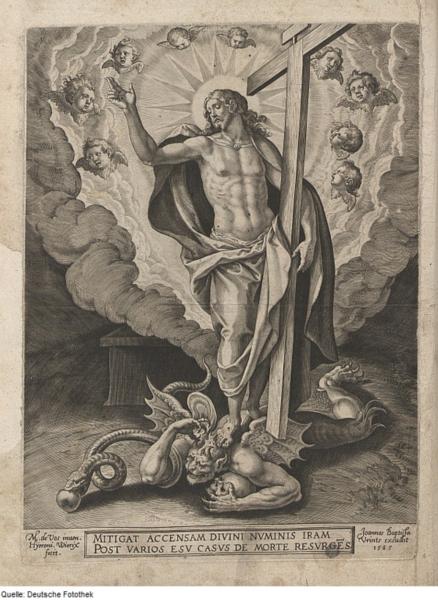
This is why, in ancient Christian iconography, Jesus with a halo is often depicted in a cloud of light, pointing toward the heavens with His right hand.
In His left hand, He holds the Tau cross as He stands upon the Devil, whom He has conquered but who is still alive as he clutches a human skull. In Byzantine resurrection art, the cross could function as a symbol of victory, while skull imagery commonly represented Golgotha, Adam’s grave, and Christ’s victory over death.
Jesus Christ is called the substitute Adam or the “last Adam,” who tasted death and overcame death on our behalf. He went to Hell to experience eternal death on our behalf (Hebrews 2:9; 1 Corinthians 15:45–47).
The Spirit of God raised Him from the grave, triumphant over all the powers of darkness that had sought to hold Him in their grip (Psalm 22:6–8, 14–18).
The resurrection of the righteous rests on their union with God through Christ (John 5:28–29).
The resurrection symbolizes the awakening and enlightenment of consciousness that occurs when someone stops abusing himself and others, or what Christians call “sinning.”
This is when a person like Jesus truly uses his senses and brain to think and process information—to use logic and reason rather than merely react emotionally or regurgitate knowledge.
The Hebrews would have called such a person behemah, or a behemoth, and the Greeks would have called such people automatons. In Scripture, they are referred to as beasts, so-called men whose number is 666, representing the carbon matter in which their minds dwell and by which they are controlled.
For, “If Jesus Christ is not risen, then our preaching is empty and your faith is also empty. . . . You are still in your sins!” (1 Corinthians 15:14, 17).
The ancient Tau would signify a metaphysical seal or sign in a person’s head indicating that he was a servant, or light, of God, as in the case of the “resurrected Jesus.”
In John 19:17, we read, “Carrying His own cross, He went out to the Place of the Skull, which in Hebrew is called Golgotha.” We also read, “At the place where Jesus was crucified, there was a garden, and in the garden a new tomb in which no one had ever been laid” (John 19:41).
Saint Mark (14:32) calls it chorion, “a place” or “estate”; St. John (18:1) speaks of it as kepos, a “garden” or “orchard.” In the East, a field shaded by numerous fruit trees and surrounded by a wall of loose stone or a quickset hedge forms the el bostan, the garden (Catholic Encyclopedia, 1913).
The word chorion, from the Greek chōros, means a uniquely designated land: anything from a garden to an estate, a country or territory, or even a whole realm, such as the realm of the dead.
The Galatians of the Bible descended from the Gauls, and in Paul’s famous complaint about the foolish Galatians who had allowed themselves to become bewitched (Galatians 3:1), he also appears to state that the Gauls had reached Christ-awareness but lost it.
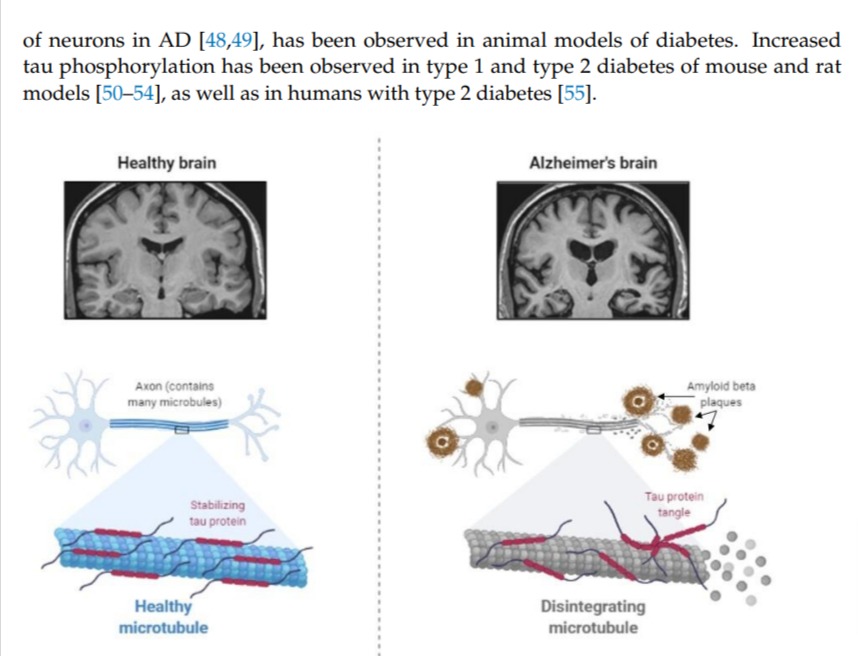
Tau is found in the nuclei of neurons. Tau pathology is the main cause of many neurodegenerative diseases, such as dementia and Alzheimer’s disease, which involve the accumulation of abnormal tau protein in the brain and are referred to collectively as tauopathies.
Nuclear tau has been localized near rDNA and within regions involved in rDNA transcription and pre-rRNA processing, leading researchers to propose roles in chromosomal stability, transcription, and rRNA maturation.
Within these people’s brains are neurofibrillary tangles—intracellular aggregates of tau-protein filaments—and amyloid plaques, which are extracellular aggregates of amyloid-beta peptides. Researchers have suggested that tau may participate in rRNA-coding DNA transcription and rRNA processing. Modern reviews identify amyloid-beta deposits and neurofibrillary tangles as major pathological features of Alzheimer’s disease.
In my article, “Memory Stealers: How Fungi (Molds) Steal a Person’s Memories”, I explain how several studies have shown that the autopsied brains of Alzheimer’s patients were infected with, often, multiple types of fungi or molds. Published studies have reported fungal proteins, DNA, cells, and hyphae in brain samples from Alzheimer’s patients, and one sequencing study found five fungal genera common to all nine patients examined.
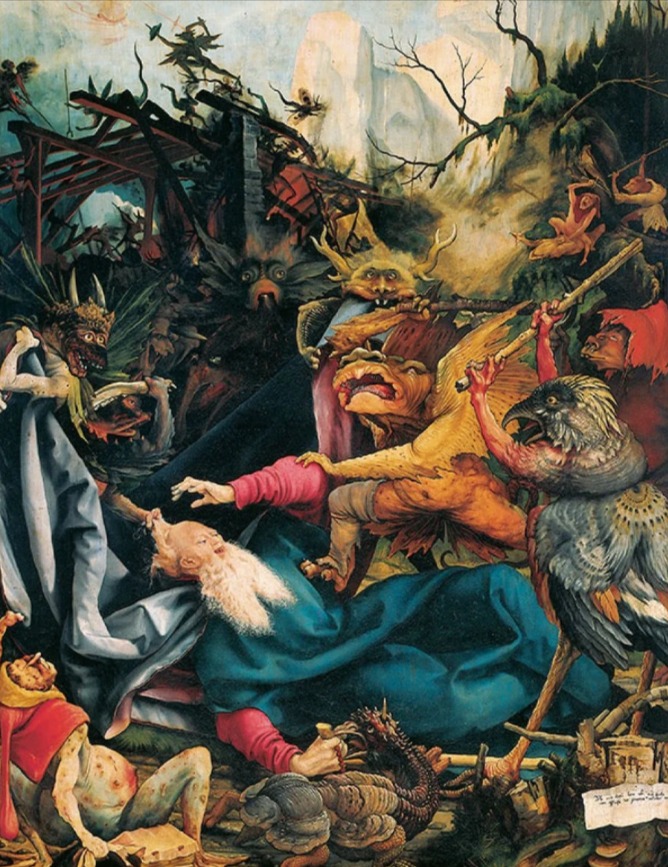
This becomes fascinating because the Tau cross is historically associated with Saint Anthony of Egypt and became known as Saint Anthony’s cross, while the fungal disease ergotism later became known as Saint Anthony’s fire.
Medical historians identify “St. Anthony’s fire” with several conditions across time, including ergotism, erysipelas, and herpes zoster, with gangrenous ergotism forming one major historical use of the name.
It was known as Holy Fire—Ignis Sacer—or St. Anthony’s Fire in the Middle Ages because of the burning sensations that resulted in the body rotting or decaying through gangrene of the limbs. Medical literature describes medieval ergotism as poisoning caused by eating rye contaminated with Claviceps purpurea, producing burning pain, vasoconstriction, and gangrene.
Ergot made people mentally ill by causing them to appear agitated, hallucinate, convulse, and behave as if they were crazy or demon-possessed. Historical accounts distinguish convulsive ergotism from gangrenous ergotism, both caused by alkaloids from ergot-contaminated grain.
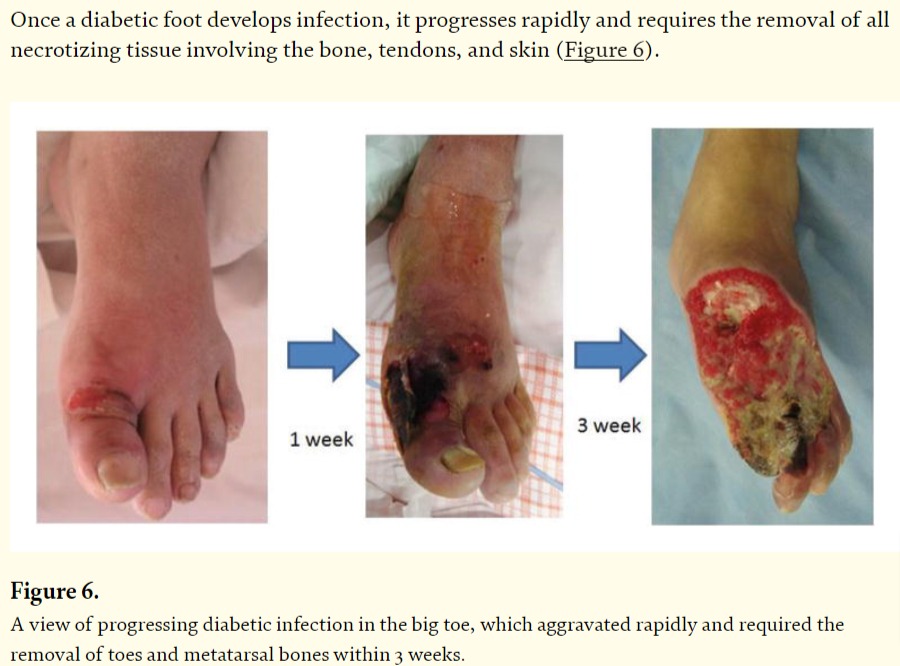
If the fungal disease was left untreated, it restricted blood flow to an infected person’s extremities, resulting in gangrene in the later stages and causing fingers, toes, hands, and feet to drop from the body.
This reminds me of what we call diabetes today.
It is a disease that can cause the limbs to rot and decay to the point that they must be amputated.
This condition may be the source of “dancing epidemics.” Dancing epidemics, also known as dancing plagues or tarantism, occurred between the fourteenth and seventeenth centuries CE. Various medieval chronicles described groups of people engaging in this behavior, sometimes for months on end.
Medical historians agree that the precise cause remains uncertain, although ergot poisoning, psychogenic illness, religious ritual, and social distress have all been proposed.
These dances appeared to be involuntary and were possibly the result of ergot poisoning, vengeful spirits, supernatural fears, the bite of a tarantula or scorpion, and the distress of poverty and hardship in everyday life, combined with natural disasters.
In honor of St. Anthony’s life and struggles, the Order of Hospitallers of St. Anthony was established in 1095 CE in the medieval French province of Dauphiné. The order established centers to care for people afflicted with ergotism, and it became known for treating those suffering from the disease.
The walls of the hospital were painted red to mimic the burning sensations experienced by those suffering from the illness.
The monks wore black robes adorned with a blue Tau cross.
Conclusion
The mark of the tau challenges every generation to remain conscious.
It asks whether the individual can recognize corruption without becoming corrupted, confront suffering without surrendering reason, and explore hidden knowledge without abandoning truth.
That is where ancient wisdom and modern science can meet.
Microbes and immune messengers attend to countless biological needs without conscious direction. They can support health, respond to threats, and influence the chemical environment in which thought and emotion occur.
They are not literally angels, according to science. Yet a modern gnostic may treat the comparison as a symbolic bridge: what earlier cultures personified as invisible powers, modern laboratories may describe as cellular systems, microbial ecologies, and biochemical messengers.
The ancient tau signifies a seal in the forehead of God’s servants.
It identifies those whose minds remain alive to corruption and whose conduct reflects that awareness.
The tau on the forehead marks those who still see.
The tau within neurons participates in the architecture that allows human beings to perceive, remember, and respond.
One belongs to revelation and symbol; the other belongs to molecular biology.
The disciplined reading therefore separates three levels:
Scripture presents a theological drama of sin, judgment, salvation, death, and resurrection.
Esoteric interpretation reads that drama as an inner transformation of consciousness.
Neuroscience studies the biological structures and processes that make memory, cognition, and behavior possible.
These levels can converse without collapsing into one another.
Modern tau is a protein essential to neuronal organization.
When properly regulated, it supports microtubule dynamics and axonal transport; when pathologically altered, it can aggregate into structures associated with dementia and the erosion of memory.
Initial symptoms include difficulties in memory and mood changes, but the disease gradually progresses to impair communication and judgment, behavioral changes, and deficits in movement and motor skills, such as difficulties with swallowing, which often becomes a contributing cause of death.
“The wages of sin is death” (Romans 6:23), which is the repayment you receive from being your own “god.”
Moe is the founder of GnosticWarrior.com. He is a father, husband, author, martial arts black belt, and an expert in Gnosticism, the occult, and esotericism.


![How Theodore visited all places; how the Churches of the English began to be instructed in the study of holy Scripture, and in the catholic truth, and how Putta was made bishop of the Church of Rochester in the roam of Damianus [669 A.D.] | Book 4 | Chapter 2](https://www.gnosticwarrior.com/wp-content/plugins/contextual-related-posts/default.png "How Theodore visited all places; how the Churches of the English began to be instructed in the study of holy Scripture, and in the catholic truth, and how Putta was made bishop of the Church of Rochester in the roam of Damianus [669 A.D.] | Book 4 | Chapter 2")