
by Moe
On Thursday, Florida Surgeon General Dr. Joseph Ladapo went on the Steve Bannon War Room Podcast calling the COVID-19 vaccine inoculations – the “Antichrist of all products”
Lapado brought the conversation about vaccines into the religious dimension with his criticism as if it were the mark of the beast.
“I think it probably does have some integration at some levels with the human genome,” Ladapo said, “because these vaccines are honestly—they’re the Antichrist of all products.
Tucker Carlson interviewed the Florida Surgeon General on January 15th about his statements.
So I think it probably does. But I’m not saying it does.
“I’m saying that they themselves have said you should test for it,” he said of the U.S.Food and Drug Administration.
“And that hasn’t happened, and they’ve provided no proof that it’s happened. And that’s so wrong.
You know, it’s just complete disrespect to the human genome and the importance of protecting it and preserving it.
And that is our connection to God.”
Florida Surgeon General Ladapo’s comments come on the heels of the Ron DeSantis appointee who advocated for the discontinuation of mRNA vaccines, citing his belief that they could pose a threat to DNA.
In a statement released January 4th by the Florida Department of Health, Ladapo referred to a Dec. 6 letter to the FDA in which he raised concerns about “nucleic acid contaminants” in the Pfizer and Moderna COVID-19 mRNA vaccines, and the “unique risks posed by DNA integration.”
The U.S. Food and Drug Administration called Ladapo’s DNA claims “misleading” and “implausible,” saying they have proven to be safe, effective and often life saving.
“The FDA stands firmly behind the safety, effectiveness and manufacturing quality of the approved and authorized COVID-19 vaccines, and respectfully disagrees with the Florida Surgeon General’s opinion.
“It is simply a fact that millions of lives have been saved because of the COVID-19 mRNA vaccines, which most Americans undergoing vaccination have received,” said FDA spokesperson Cherie Duvall-Jones.
“The challenge we continue to face is the ongoing proliferation of misinformation and disinformation about these vaccines which results in vaccine hesitancy that lowers vaccine uptake,” the FDA response to Ladapo said.
“Given the dramatic reduction in the risk of death, hospitalization and serious illness afforded by the vaccines, lower vaccine uptake is contributing to the continued death and serious illness toll of COVID-19.”
Moe is the founder of GnosticWarrior.com. He is a father, husband, author, martial arts black belt, and an expert in Gnosticism, the occult, and esotericism.
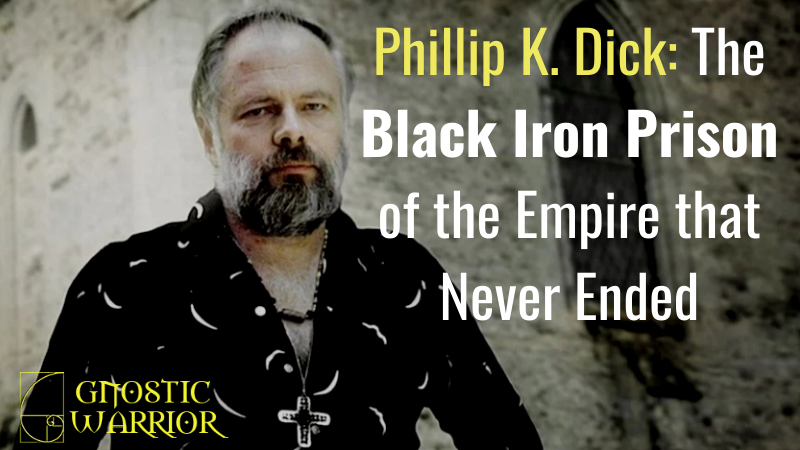
by Moe
“So long as the root of wickedness is hidden, it is strong. But when it is recognized, it is dissolved. When it is revealed, it perishes…. It is powerful because we have not recognized it.” – The Gospel of Phillip (Gnostic Text)
One of Phillip K. Dick’s most famous Gnostic theories was that of the Black Iron Prison (BIP), which he described as an invisible complex life form (organism) that was a criminal virus and self-perpetuating.
Its human representatives were the fake people and inauthentic human beings who were its unwitting slaves. They were the army for the Roman Empire, which he claimed never ended, they just went underground.
Think of the Black Iron Prison as a synonymous term to the Matrix to describe our world and the hidden realities which govern it as it exists today. Dick shares through his novels and his own personal story about being a prisoner trapped within it.
According to Dick, those people who do not believe in this world are the victims of its illusions and the people who believe in it are its victims.
Both are slaves but neither is free.
Both must endure its suffering without hope of release or reprieve, because there is no escape from this world.
We are all trapped – unable to break free from the hidden chains of our own enslavement because we have been conditioned to believe we live in freedom.
Dick writes, “We are in a kind of prison but do not know it. The Black Iron Prison is a vast complex life form (organism) which protects itself by inducing a negative hallucination of it.”
He says, “The criminal virus controls by occluding (putting us in a sort of half sleep)…. The occlusion is self-perpetuating; it makes us unaware of it.”
As if this “living organism” is a immortal in that it perpetually self-generates until we manage to break its spell.
Dick writes, “the very occlusion itself prevents us from assessing, overcoming or ever being aware of the occlusion.”
This self generating organism has the ability to insert itself into our thoughts without us ever knowing it is there. A type of mind virus or parasite creating thought-disorder.
Dick says, “There is some kind of ubiquitous thinking dysfunction which goes unnoticed especially by the persons themselves, and this is the horrifying part of it: somehow the self-monitoring circuit in the person is fooled by the very dysfunction it is supposed to monitor.”
When we have fallen under its spell or its control, we are completely unaware and appear to be normal, but we often have the sense that we are no longer ourselves.
It’s as if we have been highjacked by something alien to ourselves as it exploits the hidden aspects that control our reality such as the neuro circuits of our brain, our gastrointestinal tracts, and our central nervous systems.
All the while, we are asleep to the fact that this organism that constitutes that Black Iron Prison has commandeered our very bodies and brains by exploiting the unconscious systems of our minds making us all its unwitting slaves.
It’s goal is to use us humans as its host to not only harvest our energy and our thoughts, which this living organism feeds upon, but to use its victims to control the planet making us a type of android or zombie slave for its cause.
Dick says that it warps us into micro-extensions of itself. This is why it and its slaves are so dangerous.
He writes; “This is the dread thing it does: extending its android thinking more and more extensively. It exerts a dreadful and subtle power, and more and more people fall into its field, by means of which it grows.”
In fact, Dick claims there is collusion between us and the Black Iron Prison and “we’re sources of psychic/psychological energy to it: we help power it.”
It is interesting that he describes that the more people who fall under its field, it makes humans a micro-extensions of itself by which it gains power and grows larger.
There are some key traits and human characteristics that he points out are signs that a person is no longer themselves and has fallen under the control of this organism that becomes a defacto prison guard for our souls.
For Dick, “Android or robot like thinking,” i.e., group-think or sheeple like behavior (with no creativity),” is one of the main qualities proving that the immune system and mind has been officially highjacked making us its slave.
He had said, “This is a sinister life form indeed. First it takes power over us, reducing us to slaves, and then it causes us to forget our former state, and be unable to see or to think straight, and not to know we can’t see or think straight, and finally it becomes invisible to us by reason of what it has done to us. We cannot even monitor our own deformity, our own impairment.”
Dick continues, “It is as if the immune system has failed to detect an invader, a pathogen (shades of William Burroughs: a criminal virus!). Yes, the human brain has been invaded, and once invaded, is occluded to the invasion and the damage resulting from the invasion; it has now become an instrument for the pathogen: it winds up serving as its slave, and thus the ‘heavy metal speck’ [i.e., the BIP] is replicated (spread through linear and lateral time, and through space).”
He says, “We may not be what we seem even to ourselves.
“A usurper is on the throne.”
A spiritual coup d’état upon its unwitting victim and even nations who become its unwitting puppets.
Dick rants;
“We’re a fucking goddam “Biosphere” ruled by an entity who—like a hypnotist—can make us not only quack like a duck on que, but imagine, to boot, that we wanted to quack.”
He describes the mind that has been captured as having a mental illness that is dead and becomes fossilized:
“This section died. It became fossilized, and merely repeats itself. This is scary; it is like mental illness: ‘one day nothing new ever entered his mind—and the last thought just recirculated endlessly.’ Thus death rules here…The BIP is the form of this death, its embodiment—of what is wrong, here.”
THE BLACK IRON POLICE STATE – THE SYSTEM
According to Dick, the Black Iron Prison was not just a living parasitical organism that could commandeer our minds and bodies to make us its puppets, it also had also managed to weave its filamental web into a totalitarian world government ruled by an elite consisting of powerful corporations and individuals who have enslaved most of humanity for thousands of years.
The Black Iron Prison was first coined by Dick in his 1974 essay “The Android and the Human” and was developed further in his novel VALIS (1981).
In 1974, he wrote about how our lives were controlled by technology:
“You know what I mean when I say that we have become slaves to machines? We look at them as our masters, but they are more than that: they are our gods.”
In Dick’s novel VALIS, the protagonist experiences a series of events that lead him to believe that he has been trapped in an alternate reality created by an entity known as VALIS (Vast Active Living Intelligence System).
He later learns from VALIS itself that his perceptions are accurate — that he has indeed been imprisoned inside what appears to be our own universe but is actually a simulation created by a higher intelligence for unknown purposes.
VALIS told him that the world was in fact a kind of prison for humanity, with its population divided into four classes: slaves (who work), soldiers (who protect), priests (who control) and rulers (who decide).
The rulers live in opulence while everyone else lives in squalor. They send out light signals to keep their subjects docile so they won’t revolt against their oppression.
It is referred to as “the Empire”, with its emblem being an eagle holding lightning bolts in its claws.
He says that humans are unable to comprehend the universe because they are trapped inside their own minds, which he calls “a kind of straitjacket or force field.”
In his novel VALIS, where Phil’s alter ego Horselover Fat (known as Phil) has an encounter with God who shows him visions from his own past life.
These visions show Phil how his present life and reality are actually an illusion created by an evil demiurge that wants to keep humans enslaved by their own ignorance and fear.
This demiurge creates a world that appears real but isn’t real at all – it’s just another form of control over us.
Philip K. Dick wrote;
“Once, in a cheap science fiction novel, Fat had come across a perfect description of the Black Iron Prison, but set in the far future.
So if you superimposed the past (ancient Rome) over the present (California in the twentieth century) and superimposed the far future world of The Android Cried Me a River over that, you got the Empire, as the supra- or trans-temporal constant.
Everyone who had ever lived was literally surrounded by the iron walls of the prison; they were all inside it and none of them knew it.”
In an interview with Laura Huxley in 1974 he said: “The Empire (Roman) never ended”; we are living in a kind of continuation of the worst of the Roman Empire, a Black Iron Prison.
In other interviews, he described an oppressive society where people were controlled by machines. He believed that technological advances had created huge corporations which were run for profit rather than for people’s benefit. This made it difficult for ordinary people to make their voices heard when things went wrong.
The History of the Black Iron Prison
The Black Iron Prison is a concept that has been around for quite some time and has been used by many different people throughout history to describe different aspects of the human condition.
For example, there is the ancient concept of the archons, who are deities or evil spirits in Gnosticism, who rule the material world. They are called “archons” because they have dominion over us. They rule over us, they control our lives, they keep us ignorant, and they prevent access to the divine knowledge that is within all of us.
The term archon is derived from the ancient Greek ἄρχων (arkhōn), a ruler, leader, chief (cf. Latin rēx “king”). The word was used to refer to political leaders or governors in general in Ancient Greece.
Like Dick, the Gnostics believed that we could escape from their prison by overcoming these archons through secret knowledge or Gnosis revealed by Jesus Christ or other enlightened beings.
In the New Testament, God’s enemies, who are called principalities and powers when the Apostle Paul in his epistles uses “archon” in a transcendental context (Ephesians 2:2 and Colossians 2:15 are two examples).
Paul alludes to the Black Iron Prison when he describes his world as one filled with suffering and pain, saying that we are all “in bondage to decay.” (Romans 8:19) and that we are “prisoners of hope” (Romans 8:24).
In Buddhism there is a similar idea known as samsara, or reincarnation. The Buddha taught that we are trapped in an endless cycle of suffering because we cling to false ideas about reality.
George Gurdjieff once said, “Before you can escape from prison, you must first realize that you are in prison”.
In modern times, we have the infamous radio show host Alex Jones with his “Prison Planet” and the war for your mind, Info Wars.
How do we escape the Black Iron Prison?
According to Phillip K. Dick, “To see it is to see the ailment, the complex which warps all other thoughts to it.”
He claims that when “we begin to see what formerly was concealed to us, or from us, and the shock is great, since we have, all our lives, been trading (doing business) with evil.”
Dick believed that lies and anything fake or false was how this living organism was using its slaves – inauthentic humans to carry out its mission in creating fictitious realities to keep us distracted from the true evil that lurks beneath our skin and all around us.
Dick wrote; “the bombardment of pseudorealities begins to produce inauthentic humans very quickly [in his words ‘spurious humans’]. He says, “it has grown vine-like into our information media; it is an information life form.”
He continues, “Fake realities will produce fake humans. Or, fake humans will produce fake realities and then sell them to other humans, turning them, eventually, into forgeries of themselves.”
He compares this to the figure of Satan, who is “the liar.”
Dick believed that an authentic human, “cannot be compelled to be what they are not.” He elaborates, “The power of spurious realities battering at us today—these deliberately manufactured fakes never penetrate to the heart of true human beings.”
Did Phillip K. Dick Escape the Black Iron Prison?
For Phillip K. Dick, the Black Iron Prison is eternal and ubiquitous. It has been around for thousands of years, and it will be around for thousands more.
It is the controlling force behind all governments, religions, and systems of authority on Earth. The Black Iron Prison is a system designed to keep us from knowing our true nature as divine beings who can create our own reality through thought.
The reason why we don’t know about this system is that it operates on an unconscious level — it’s designed to work below our conscious perception so that we don’t notice it operating in our lives.
One of its prisoners was Phillip K. Dick.
A man whose mind will be forever known as one of the best science fiction writers who ever lived.
However, while in prison, his body in chains suffered from his eternal incarceration with a dangerous drug addiction, depression, and schizophrenia. After several neurological problems during the 1970s that resulted in brief hospitalizations, Dick began experiencing extreme paranoia and hallucinations.
He suffered from a heart attack in 1976, which led him to believe that his life would soon end; as such, he instructed his wife not to revive him after death if there were any problems with resuscitation attempts on him later down the line.
In 1982, Dick was found unconscious on the floor of his Santa Ana, California home, having suffered a stroke. On February 25, 1982, he suffered another stroke in the hospital, which led to brain death.
At only age 53 on March 2, 1982, Philip’s family pulled the plug on the Black Iron Prison and disconnected him from life support.
He died four months before the release of Blade Runner, the film based on his novel Do Androids Dream of Electric Sheep.
In the end, Dick decided to make his final escape from the Empire or did he?
Was it Dick who pulled the plug on his brain via stroke or the very Black Iron Prison sending one last shock to take him out for his METH addiction that plagued him all his life.
A kind of crypto death penalty for transgressions against the unseen.
I will leave you with one of his prophetic quotes to ponder if he was a genius, Gnostic, madman, or all of the above.
“There will come a time when it isn’t ‘They’re spying on me through my phone’ anymore.
Eventually, it will be ‘My phone is spying on me.” (Philip K. Dick)
In typical Dicktopian prophetic fashion, he was right…
One thing is for sure, the Black Iron Prison certainly likes its Gnostic prophets.
No matter how mad the unauthentic world may think they are.

BOOKS BY PHILIP K. DICK
Solar Lottery, 1955.
A Handful of Darkness (short stories), 1955.
The World Jones Made, 1956.
The Man Who Japed, 1956.
Eye in the Sky, 1957.
The Cosmic Puppets, 1957.
The Variable Man (5 short novels), 1957.
Time Out of Joint, 1959.
Dr. Futurity, 1960.
Vulcan’s Hammer, 1960.
The Man in the High Castle, 1962.
The Game-Players of Titan, 1963.
Martian Time-Slip, 1964.
The Simulacra, 1964.
Clans of the Alplhane Moon, 1964.
The Penultimate Truth, 1964.
The Three Stigmata of Palmer Eldritch, 1965.
Dr. Bloodmoney, or How We Got A long after the Bomb, 1965.
Now Wait for Last Year, 1966.
The Crack in Space, 1966.
The Unteleported Man, 1966.
Counter-Clock World, 1967.
The Zap Gun, 1967.
The Ganymede Takeover (with Ray Nelson), 1967.
Do Androids Dream of Electric Sheep?, 1968.
The Preserving Machine (short stories), 1969.
Galactic Pot-Healer, 1969.
Ubik, 1969.
Our Friends from Frolix 8, 1970.
A Maze of Death, 1971.
We Can Build You, 1972.
The Book of Philip K. Dick (short stories), 1973.
Flow My Tears, the Policeman Said, 1974.
Confessions of a Crap Artist, 1975.
A Scanner Darkly, forthcoming.
Deus Irae (with Roger Zelazny), forthcoming.
Moe is the founder of GnosticWarrior.com. He is a father, husband, author, martial arts black belt, and an expert in Gnosticism, the occult, and esotericism.

by Moe
The prevalence of fake news, biased reporting, and sensationalism has created an environment where it can be challenging to separate fact from fiction.
The Gell-Mann Amnesia Effect is a fascinating phenomenon that sheds light on the way our brains process information and the inherent biases that can cloud our judgment.

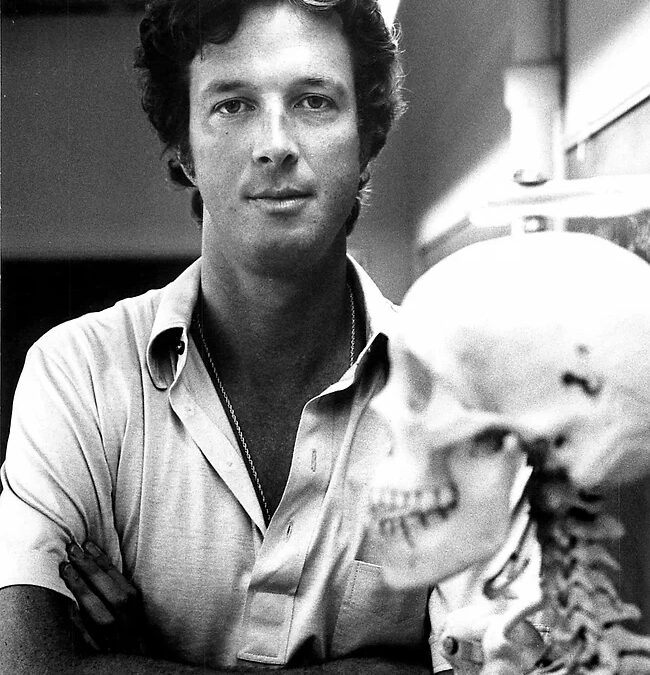
Coined by the acclaimed late author and filmmaker Michael Crichton (1942-2008), this effect refers to the tendency of individuals to mistrust the accuracy and reliability of news and information in areas they are not familiar with, while simultaneously accepting and trusting news in areas they are knowledgeable about.
Here is an excerpt from a talk by Michael Crichton and I quote;
“Media carries with it a credibility that is totally undeserved. You have all experienced this, in what I call the Murray Gell-Mann Amnesia effect. (I refer to it by this name because I once discussed it with Murray Gell-Mann, and by dropping a famous name I imply a greater importance to myself, and to the effect, than it would otherwise have.)
Briefly stated, the Gell-Mann Amnesia effect is as follows. You open the newspaper to an article on some subject you know well. In Murray’s case, physics. In mine, show business. You read the article and see the journalist has absolutely no understanding of either the facts or the issues.”
Chrichton says, “Often, the article is so wrong it actually presents the story backward—reversing cause and effect. I call these the “wet streets cause rain” stories. Paper’s full of them.
In any case, you read with exasperation or amusement the multiple errors in a story, and then turn the page to national or international affairs, and read as if the rest of the newspaper was somehow more accurate about Palestine than the baloney you just read. You turn the page, and forget what you know.
That is the Gell-Mann Amnesia effect.
I’d point out that it does not operate in other arenas of life.
In ordinary life, if somebody consistently exaggerates or lies to you, you soon discount everything they say.
In court, there is the legal doctrine of falsus in uno, falsus in omnibus, which means untruthful in one part, untruthful in all. But when it comes to the media, we believe against evidence that it is probably worth our time to read other parts of the paper.
When, in fact, it almost certainly isn’t.
Chrichton said, “The only possible explanation for our behavior is amnesia.”
At first glance, this may seem counterintuitive. Why would we doubt information in one domain but not in another?
The answer lies in our cognitive abilities and the vast amount of information we encounter on a daily basis. Our brains are efficient machines that constantly filter and process information to make sense of the world around us.
However, this filtering process is not foolproof, and biases can seep in.
When it comes to subjects we are knowledgeable about, we have a mental framework or schema that helps us evaluate information critically. We can identify logical fallacies, inconsistencies, or biases in the news because we have a solid foundation of understanding.
This leads to a healthy skepticism and a higher level of scrutiny.
On the other hand, when we encounter news in unfamiliar areas, we lack the same level of expertise and schema to evaluate its accuracy.
Our brains tend to rely on heuristics, mental shortcuts that help us make quick judgments. We may be more susceptible to cognitive biases, such as confirmation bias or the availability heuristic, which can cloud our judgment and lead us to accept information without critical evaluation.
MEDIA TECHNIQUES AND MANIPULATION
The media plays a significant role in shaping public opinion and influencing our perception of the world. However, it is important to be aware of the techniques used in the media that can manipulate our perception.
One common technique is selective reporting, where certain facts or information are intentionally omitted to create a biased narrative. This can be done by cherry-picking quotes, using out-of-context soundbites, or focusing on a single perspective while ignoring others.
By presenting a skewed version of events, the media can sway public opinion in a particular direction.
Another technique is sensationalism, which involves exaggerating or sensationalizing stories to grab attention. This can be done through the use of dramatic headlines, provocative images, or emotionally charged language.
Sensationalism can distort the true significance of an event and create a heightened sense of fear or urgency.
Confirmation bias is also prevalent in the media, where journalists and news outlets tend to favor information that confirms their preexisting beliefs or assumptions.
This can lead to a one-sided presentation of facts and limit the audience’s understanding of complex issues.
Furthermore, the media often relies on framing to shape how a story is presented. By emphasizing certain aspects or using specific language, they can influence how the audience perceives the subject matter.
For example, a story framed as a “war on drugs” will evoke different emotions and reactions compared to a story framed as a “public health crisis.”
Lastly, the media can utilize the power of repetition to reinforce certain narratives or ideas.
By consistently presenting information in a certain way, it can become ingrained in our minds and shape our perception of reality, even if it may not be entirely accurate.
Understanding these techniques can help us approach news consumption with a critical eye. By being aware of the potential manipulation tactics used in the media, we can seek out alternative sources, fact-check information, and form a more well-rounded and informed perspective.
HOW THE MEDIA SHAPES PUBLIC OPINION
The media plays a critical role in shaping public opinion.
It has the power to influence how we perceive events, issues, and even individuals. As consumers of news, we often rely on media outlets to provide us with accurate and unbiased information. However, it is essential to recognize that the media is not immune to bias or errors.
One aspect that contributes to the shaping of public opinion is the selection and presentation of news stories. Editors and journalists have the responsibility of deciding which stories to cover and how to present them. This selection process can be influenced by various factors, including editorial bias, corporate interests, and the pursuit of higher ratings or readership.
BIASED INFORMATION OR CHERRY PICKED STORIES
The impact of biased reporting and cherry-picked information
Biased reporting and cherry-picked information have a significant impact on our perception of the news and our ability to trust it. It is unfortunate that in today’s media landscape, sensationalism and the pursuit of ratings often take precedence over objective reporting.
When news outlets present information in a biased manner, it skews our understanding of events and issues.
Whether it is through selective reporting, omitting crucial facts, or presenting information out of context, biased reporting can manipulate public opinion and reinforce existing biases. This can lead to a distorted view of reality, where certain perspectives are amplified while others are marginalized or ignored.
Cherry-picking information is another tactic that erodes trust in the news. By selectively choosing facts and data that support a particular narrative or agenda, media outlets can shape public opinion in a desired direction.
This can be done by emphasizing certain statistics or anecdotes while downplaying or disregarding contradictory evidence. The result is a distorted representation of the truth, leaving readers and viewers with a skewed understanding of the issues at hand.
The impact of biased reporting and cherry-picked information goes beyond just shaping public opinion. It can also have real-world consequences. When people are misled or misinformed, it becomes challenging to make informed decisions or engage in constructive dialogue. It breeds polarization, distrust, and further widens the gaps between different groups in society.
FRAMING NEWS STORIES
Another factor to consider is the framing of news stories. The way a story is presented can significantly impact how it is perceived by the audience. The choice of words, images, and the overall tone can shape our understanding and interpretation of the events being reported.
FAKE OR CONTROLLED EXPERTS
Furthermore, the media often relies on expert opinions and sources for their stories. While experts can provide valuable insights, it is crucial to question their credibility and potential biases. Not all experts have the same level of knowledge or objectivity, and their views can be influenced by personal or professional affiliations.
CONFIRMATION BIAS
Confirmation bias plays a significant role in how we consume news and can contribute to the Gell-Mann Amnesia Effect. This cognitive bias refers to our tendency to seek out and believe information that confirms our preexisting beliefs while dismissing or discounting information that contradicts them.
When it comes to consuming news, confirmation bias can lead us to selectively choose sources that align with our perspectives and ideologies. We are more likely to trust and accept information that reinforces our existing beliefs, while being skeptical or dismissive of information that challenges them. This bias can create an echo chamber effect, where we surround ourselves with like-minded individuals and sources that reinforce our worldview.
In the era of social media and personalized news algorithms, confirmation bias can be amplified. Algorithms are designed to show us content that aligns with our interests and preferences, creating a bubble of information that reinforces our existing beliefs. This can lead to a distorted perception of reality, as we are shielded from diverse perspectives and alternative viewpoints.
It is important to be aware of our own confirmation bias when consuming news. By actively seeking out diverse perspectives and challenging our own beliefs, we can mitigate the effects of confirmation bias and gain a more balanced understanding of the world. Engaging with sources that present different viewpoints and fact-checking information before accepting it as truth can help us navigate the complex landscape of news consumption.
Ultimately, understanding the role of confirmation bias in consuming news is crucial in combating the Gell-Mann Amnesia Effect and fostering a more informed and critical mindset.
USE DISCERNMENT AND CRITICAL THINKING
Essentially, the Gell-Mann Amnesia Effect refers to our tendency to believe the news in areas we are not knowledgeable about, despite recognizing the inaccuracies and biases in the news stories we are intimately familiar with.
This bias can lead us to fall victim to misinformation and propaganda, perpetuating false narratives and distorting our understanding of the world.
To combat this effect, we must nurture our critical thinking skills. It involves questioning the information presented to us, evaluating the credibility and sources, and seeking multiple perspectives to form a well-rounded understanding. By being skeptical and curious, we can avoid blindly accepting everything we encounter in the media.
Moreover, media literacy plays a significant role in navigating the vast landscape of news sources. It encompasses the ability to analyze and evaluate media messages, understand the techniques used to shape narratives, and discern reliable sources from unreliable ones. Developing media literacy empowers us to make informed judgments and enables us to differentiate between fact and opinion.
Educational institutions, community organizations, and individuals themselves have a responsibility to promote critical thinking and media literacy. Teaching these skills equips individuals with the tools necessary to navigate the complex media landscape and make informed decisions.
CONCLUSION
The Gell-Mann Amnesia Effect highlights the importance of being aware of our cognitive biases and the limitations of our own knowledge. It reminds us that we cannot blindly trust everything we read or hear, regardless of the source.
By understanding misinformation and its effect on the human mind, we can become more discerning consumers of news, actively seeking multiple perspectives, fact-checking information, and being open to updating our beliefs based on new evidence.
By engaging in respectful conversations, we can challenge our own assumptions, learn from others’ perspectives, and refine our own understanding of complex issues. We can actively seek out diverse perspectives, question the information presented, and form our own well-informed opinions.
In an age where misinformation abounds, these skills are essential in ensuring that we can trust the news and make sense of the world around us.
Ultimately, being informed or knowledgable of news means developing a critical mindset and adopting certain strategies to evaluate the information presented to us with a healthy dose of skepticism and engage in critical thinking.
Only then can we we combat the Gell-Mann Amnesia Effect to navigate the complex landscape of news and information, making informed decisions and forming well-rounded opinions.
SOURCES:
A talk by Michael Crichton (R.I.P., 2008) International Leadership Forum, La Jolla 26 April 2002
http://geer.tinho.net/crichton.why.speculate.txt
https://www.sfu.ca/~easton/Econ220W/WhySpeculate.pdf
Moe is the founder of GnosticWarrior.com. He is a father, husband, author, martial arts black belt, and an expert in Gnosticism, the occult, and esotericism.
by Moe
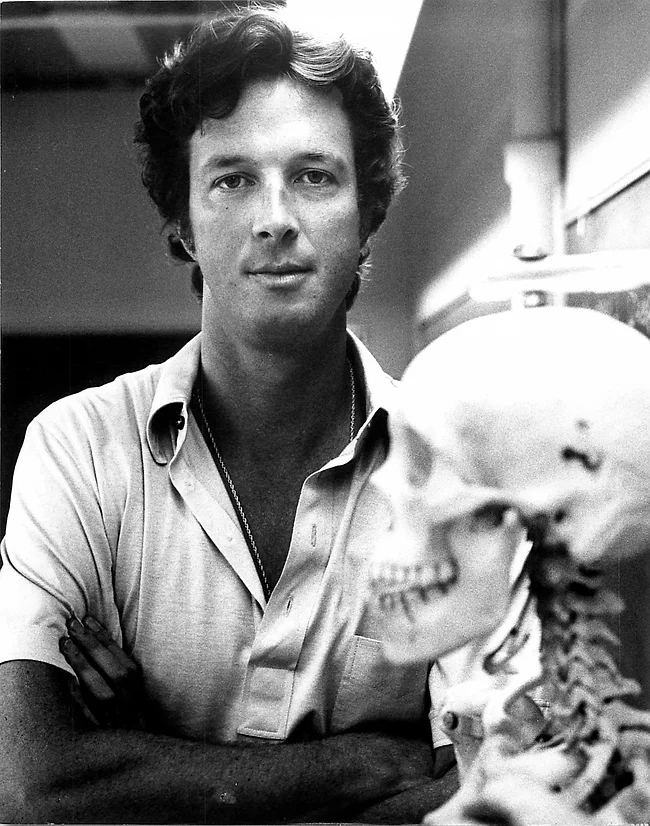
A talk given by the late Michael Crichton (1942-2008) called, “Why Speculate,” on April 26, 2002 at the International Leadership Forum in La Jolla, CA.
“There are two times in a man’s life when he should not
speculate: when he can’t afford it and when he can.” — Mark Twain
My topic for today is the prevalence of speculation in media.
What does it mean? Why has it become so ubiquitous? Should we
do something about it? If so, what? And why? Should we care at
all? Isn’t speculation valuable? Isn’t it natural? And so on.
I will join this speculative trend and speculate about why there
is so much speculation. In keeping with the trend, I will try
to express my views without any factual support, simply providing
you with a series of bald assertions.
This is not my natural style, and it’s going to be a challenge
for me, but I will do my best. Some of you may see that I have
written out my talk, which is already a contradiction of principle.
To keep within the spirit of our time, it should really be off
the top of my head.
Before we begin, I’d like to clarify a definition. By the media
I mean movies, television, Internet, books, newspapers and
magazines. Again, in keeping with the general trend of speculation,
let’s not make too many fine distinctions.
First we might begin by asking, to what degree has the media
turned to pure speculation? Someone could do a study of this and
present facts, but nobody has. I certainly won’t. There’s no
reason to bother. The requirement that you demonstrate a factual
basis for your claim vanished long ago. It went out with the
universal praise for Susan Faludi’s book Backlash, which won the
National Book Critics Circle Award for General Nonfiction in
1991, and which presented hundreds of pages of quasi-statistical
assertions based on a premise that was never demonstrated and
that was almost certainly false.
But that’s old news. I merely refer to it now to set standards.
Today, of course everybody knows that “Hardball,” “Rivera Live”
and similar shows are nothing but a steady stream of guesses
about the future. The Sunday morning talk shows are pure
speculation. They have to be. Everybody knows there’s no news
on Sunday.
But television is entertainment. Let’s look at the so-called
serious media. For example, here is The New York Times for March
6, the day Dick Farson told me I was giving this talk. The column
one story for that day concerns Bush’s tariffs on imported steel.
Now we read: Mr. Bush’s action “is likely to send the price of
steel up sharply, perhaps as much as ten percent…” American
consumers “will ultimately bear” higher prices. America’s allies
“would almost certainly challenge” the decision. Their legal
case “could take years to litigate in Geneva, is likely to hinge”
on thus and such.
Also note the vague and hidden speculation. The Allies’ challenge
would be “setting the stage for a major trade fight with many
of the same countries Mr. Bush is trying to hold together in the
fractious coalition against terrorism.” In other words, the story
speculates that tariffs may rebound against the fight against
terrorism.
By now, under the Faludi Standard I have firmly established that
media are hopelessly riddled with speculation, and we can go on
to consider its ramifications.
You may read this tariff story and think, what’s the big deal?
The story’s not bad. Isn’t it reasonable to talk about effects
of current events in this way? I answer, absolutely not. Such
speculation is a complete waste of time. It’s useless. It’s
bullshit on the front page of the Times.
The reason why it is useless, of course, is that nobody knows
what the future holds.
Do we all agree that nobody knows what the future holds? Or do
I have to prove it to you? I ask this because there are some
well-studied media effects which suggest that simply appearing
in media provides credibility. There was a well-known series of
excellent studies by Stanford researchers that have shown, for
example, that children take media literally. If you show them a
bag of popcorn on a television set and ask them what will happen
if you turn the TV upside down, the children say the popcorn
will fall out of the bag. This result would be amusing if it
were confined to children. But the studies show that no one is
exempt. All human beings are subject to this media effect,
including those of us who think we are self-aware and hip and
knowledgeable.
Media carries with it a credibility that is totally undeserved.
You have all experienced this, in what I call the Murray Gell-Mann
Amnesia effect. (I refer to it by this name because I once
discussed it with Murray Gell-Mann, and by dropping a famous
name I imply greater importance to myself, and to the effect,
than it would otherwise have.)
Briefly stated, the Gell-Mann Amnesia effect is as follows. You
open the newspaper to an article on some subject you know well.
In Murray’s case, physics. In mine, show business. You read the
article and see the journalist has absolutely no understanding
of either the facts or the issues. Often, the article is so wrong
it actually presents the story backward — reversing cause and
effect. I call these the “wet streets cause rain” stories. Paper’s
full of them.
In any case, you read with exasperation or amusement the multiple
errors in a story, and then turn the page to national or
international affairs, and read as if the rest of the newspaper
was somehow more accurate about Palestine than the baloney you
just read. You turn the page, and forget what you know.
That is the Gell-Mann Amnesia effect. I’d point out it does not
operate in other arenas of life. In ordinary life, if somebody
consistently exaggerates or lies to you, you soon discount
everything they say. In court, there is the legal doctrine of
falsus in uno, falsus in omnibus, which means untruthful in one
part, untruthful in all. But when it comes to the media, we
believe against evidence that it is probably worth our time to
read other parts of the paper. When, in fact, it almost certainly
isn’t. The only possible explanation for our behavior is amnesia.
So one problem with speculation is that it piggybacks on the
Gell-Mann effect of unwarranted credibility, making the speculation
look more useful than it is.
Another issue concerns the sheer volume of speculation. Sheer
volume comes to imply a value which is specious. I call this the
There-Must-Be-A-Pony effect, from the old joke in which a kid
comes down Christmas morning, finds the room filled with horseshit,
and claps his hands with delight. His astonished parents ask:
why are you so happy? He says, with this much horseshit, there
must be a pony.
Because we are confronted by speculation at every turn, in print,
on video, on the net, in conversation, we may eventually conclude
that it must have value. But it doesn’t. Because no matter how
many people are speculating, no matter how familiar their faces,
how good their makeup and how well they are lit, no matter how
many weeks they appear before us in person or in columns, it
remains true that none of them knows what the future holds.
Some people secretly believe that the future can be known. They
imagine two groups of people that can know the future, and
therefore should be listened to. The first is pundits. Since
they expound on the future all the time, they must know what
they are talking about. Do they? “Brill’s Content” used to track
the pundit’s guesses, and while one or another had an occasional
winning streak, over the long haul they did no better than chance.
This is what you would expect. Because nobody knows the future.
I want to mention in passing that punditry has undergone a subtle
change over the years. In the old days, commentators such as
Eric Sevareid spent most of their time putting events in a
context, giving a point of view about what had already happened.
Telling what they thought was important or irrelevant in the
events that had already taken place. This is of course a legitimate
function of expertise in every area of human knowledge.
But over the years the punditic thrust has shifted away from
discussing what has happened, to discussing what may happen. And
here the pundits have no benefit of expertise at all. Worse,
they may, like the Sunday politicians, attempt to advance one
or another agenda by predicting its imminent arrival or demise.
This is politicking, not predicting.
The second group that some people imagine may know the future
are specialists of various kinds. They don’t, either. As a
limiting case, I remind you there is a new kind of specialist
occupation — I refuse to call it a discipline, or a field of
study — called futurism. The notion here is that there is a way
to study trends and know what the future holds. That would indeed
be valuable, if it were possible. But it isn’t possible. Futurists
don’t know any more about the future than you or I. Read their
magazines from a couple of years ago and you’ll see an endless
parade of error.
Expertise is no shield against failure to see ahead. That’s why
it was Thomas Watson, head of IBM, who predicted the world only
needed 4 or 5 computers. That is about as wrong a prediction as
it is possible to make, by a man who had every reason to be
informed about what he was talking about. Not only did he fail
to anticipate a trend, or a technology, he failed to understand
the myriad uses to which a general purpose machine might be put.
Similarly, Paul Erlich, a brilliant academic who has devoted his
entire life to ecological issues, has been wrong in nearly all
his major predictions.
He was wrong about diminishing resources, he was wrong about the
population explosion, and he was wrong that we would lose 50%
of all species by the year 2000. He devoted his life to intensely
felt issues, yet he has been spectacularly wrong.
All right, you may say, you’ll accept that the future can’t be
known, in the way I am talking. But what about more immediate
matters, such as the effects of pending legislation? Surely it
is important to talk about what will happen if certain legislation
passes. Well, no, it isn’t. Nobody knows what is going to happen
when the legislation passes. I give you two examples, one from
the left and one from the right.
The first is the Clinton welfare reform, harshly criticized by
his own left wing for caving in to the Republican agenda. The
left’s predictions were for vast human suffering, shivering cold,
child abuse, terrible outcomes. What happened? None of these
things. Child abuse declined. In fact, as government reforms go,
its been a success; but Mother Jones still predicts dire effects
just ahead.
This failure to predict the effects of a program was mirrored
by the hysterical cries from the Republican right over raising
the minimum wage. Chaos and dark days would surely follow as
businesses closed their doors and the country was plunged into
needless recession. But what was the actual effect? Basically,
nothing. Who discusses it now? Nobody. What will happen if there
is an attempt to raise the minimum wage again? The same dire
predictions all over again. Have we learned anything? No.
But my point is, for pending legislation as with everything else,
nobody knows the future.
The same thing is true concerning the effect of elections and
appointments. What will be the effect of electing a certain
president, or a supreme court justice? Nobody knows. Some of you
are old enough to remember Art Buchwald’s famous column from the
days of the Johnson Administration. Buchwald wrote a “Thank God
we don’t have Barry Goldwater” essay, recalling how everyone
feared Goldwater would get us into a major war. So we elected
Johnson, who promptly committed 200,000 troops to Vietnam. That’s
what happens when you choose the dove-ish candidate. You get a
war. Or, you elect the intellectually brilliant Jimmy Carter,
and watch as he ends up personally deciding who gets to use the
White House tennis courts. Or you elect Richard Nixon because
he can pull the plug on Vietnam, and he continues to fight for
years. And then opens China.
Similarly, the history of the Supreme Court appointments is a
litany of error in predicting how justices will vote once on the
court. They don’t all surprise us, but a lot of them do.
So, in terms of imminent events, can we predict anything at all?
No. You need only look at what was said days before the Berlin
Wall came down, to see nobody can predict even a few hours ahead.
People said all sorts of silly things about the Communist empire
just hours before its collapse. I can’t quote them, because that
would mean I had looked them up and had facts at hand, and I
have promised you not to do that. But take my word for it, you
can find silly statements 24 hours in advance.
NOBODY KNOWS THE FUTURE.
Now, this is not new information. It was Mark Twain who said,
“I’ve seen a heap of trouble in my life, and most of it never
came to pass.”
And much of what politicians say is not so much a prediction as
an attempt to make it come true. It’s argument disguised as
analysis. But it doesn’t really persuade anybody. Because most
people can see through it.
If speculation is worthless, why is there so much of it? Is it
because people want it? I don’t think so. I myself speculate
that media has turned to speculation for media’s own reasons.
So now let’s consider the advantages of speculation from a media
standpoint.
1. It’s incredibly cheap. Talk is cheap. And speculation shows
are the cheapest thing you can put on television, They’re
almost as cheap as running a test pattern. Speculation
requires no research, no big staff. Minimal set. Just get
the talking host, book the talking guests — of which there
is no shortage — and you’re done! Instant show. No reporters
in different cities around the world, no film crews on
location. No deadlines, no footage to edit, no editors…nothing!
Just talk. Cheap.
2. You can’t lose. Even though the speculation is correct only
by chance, which means you are wrong at least 50% of the
time, nobody remembers and therefore nobody cares. You are
never accountable. The audience does not remember yesterday,
let alone last week, or last month. Media exists in the
eternal now, this minute, this crisis, this talking head,
this column, this speculation.
One of the clearest proofs of this is the Currents of Death
controversy. It originated with the New Yorker, which has been
a gushing fountainhead of erroneous scientific speculation for
fifty years. But my point is this: many of the people who ten
years ago were frantic to measure dangerous electromagnetic
radiation in their houses now spend thousands of dollars buying
magnets to attach to their wrists and ankles, because of the
putative healthful effects of magnetic fields. These people don’t
remember these are the same magnetic fields they formerly wanted
to avoid. And since they don’t remember, as a speculator on
media, you can’t lose.
Let me expand on this idea that you can’t lose. It’s not confined
to the media. Most areas of intellectual life have discovered
the virtues of speculation, and have embraced them wildly. In
academia, speculation is usually dignified as theory. It’s
fascinating that even though the intellectual stance of the pomo
deconstructionist era is against theory, particularly overarching
theory, in reality what every academic wants to express is theory.
This is in part aping science, but it’s also an escape hatch.
Your close textual reading of Jane Austen could well be found
wrong, and could be shown to be wrong by a more knowledgeable
antagonist. But your theory of radical feminization and authoritarian
revolt in the work of Jane Austen is untouchable. Your view of
the origins of the First World War could be debated by other
authorities more meticulous than you. But your New Historicist
essay, which might include your own fantasy about what it would
be like if you were a soldier during the first war… well,
that’s just unarguable.
A wonderful area for speculative academic work is the unknowable.
These days religious subjects are in disfavor, but there are
still plenty of good topics. The nature of consciousness, the
workings of the brain, the origin of aggression, the origin of
language, the origin of life on earth, SETI and life on other
worlds… this is all great stuff. Wonderful stuff. You can
argue it interminably. But it can’t be contradicted, because
nobody knows the answer to any of these topics — and probably,
nobody ever will.
But that’s not the only strategy one can employ. Because the
media-educated public ignores and forgets past claims, these
days even authors who present hard data are undamaged when the
data is proven wrong. One of the most consistently wrong thinkers
of recent years, Carol Gilligan of Harvard, once MS Magazine’s
Scientist of the Year, has had to retract (or modify) much of
what she has ever written. Yet her reputation as a profound
thinker and important investigator continues undiminished. You
don’t have to be right, any more. Nobody remembers.
Then there is the speculative work of anthropologists like Helen
Fisher, who claim to tell us about the origins of love or of
infidelity or cooperation by reference to other societies, animal
behavior, and the fossil record. How can she be wrong? It’s
untestable, unprovable, just so stories.
And lest anyone imagine things are different in the hard sciences,
consider string theory, for nearly twenty years now the dominant
physical theory. More than one generation of physicists has
labored over string theory. But — if I understand it correctly,
and I may not — string theory cannot be tested or proven or
disproven. Although some physicists are distressed by the argument
that an untestable theory is nevertheless scientific, who is
going to object, really? Face it, an untestable theory is ideal!
Your career is secure!
In short, the understanding that so long as you speculate, you
can’t lose is widespread. And it is perfect for the information
age, which promises a cornucopia of knowledge, but delivers a
cornucopia of snake oil.
Now, nowhere is it written that the media need be accurate, or
useful. They haven’t been for most or recorded history. So, now
they’re speculating… so what? What is wrong with it?
1. Tendency to excess. The fact that it’s only talk makes drama
and spectacle unlikely — unless the talk becomes heated and
excessive. So it becomes excessive. Not every show features
the Crossfire-style food fight, but it is a tendency on all
shows.
2. “Crisisization” of everything possible. Most speculation is
not compelling because most events are not compelling–Gosh,
I wonder what will happen to the German Mark? Are they going
to get their labor problems under control? This promotes the
well-known media need for a crisis. Crisis in the German
mark! Uh-oh! Look out! Crises unite the country, draw viewers
in large numbers, and give something to speculate about.
Without a crisis, the talk soon degenerates into debate about
whether the refs should have used instant replay on that
last football game. So there is a tendency to hype urgency
and importance and be-there-now when such reactions are
really not appropriate. Witness the interminable scroll at
the bottom of the screen about the Queen Mother’s funeral.
Whatever the Queen mother’s story may be, it is not a crisis.
I even watched a scroll of my own divorce roll by for a
couple of days on CNN. It’s sort of flattering, even though
they got it wrong. But my divorce is surely not vital breaking
news.
3. Superficiality as a norm. Gotta go fast. Hit the high points.
Speculation adds to the superficiality. That’s it, don’t you
think?
4. Endless presentation of uncertainty and conflict may interfere
with resolution of issues. There is some evidence that the
television food fights not only don’t represent the views
of most people — who are not so polarized — but they may
tend to make resolution of actual disputes more difficult
in the real world. At the very least, these food fights
obscure the recognition that disputes are resolved every
day. Compromise is much easier from relatively central
positions than it is from extreme and hostile, conflicting
positions: Greenpeace Spikers vs the Logging Industry.
5. The interminable chains of speculation paves the way to
litigation about breast implants, hysteria over Y2K and
global warming, articles in The New Yorker about currents
of death, and a variety of other results that are not, by
any thoughtful view, good things to happen. There comes to
be a perception — convenient to the media — that nothing
is, in the end, knowable for sure. When in fact, that’s not
true.
Let me point to a demonstrable bad effect of the assumption that
nothing is really knowable. Whole word reading was introduced
by the education schools of the country without, to my knowledge,
any testing of the efficacy of the new method. It was simply put
in place. Generations of teachers were indoctrinated in its
methods. As a result, the US has one of the highest illiteracy
rates in the industrialized world. The assumption that nothing
can be known with certainty does have terrible consequences.
As GK Chesterton said (in a somewhat different context), “If you
believe in nothing you’ll believe in anything.” That’s what we
see today. People believe in anything.
But just in terms of the general emotional tenor of life, I often
think people are nervous, jittery in this media climate of what
if, what if, maybe, perhaps, could be — when there is simply
no reason to feel nervous. Like a bearded nut in robes on the
sidewalk proclaiming the end of the world is near, the media is
just doing what makes it feel good, not reporting hard facts.
We need to start seeing the media as a bearded nut on the sidewalk,
shouting out false fears. It’s not sensible to listen to it.
We need to start remembering that everybody who said that Y2K
wasn’t a real problem was either shouted down, or kept off the
air. The same thing is true now of issues like species extinction
and global warming. You never hear anyone say it’s not a crisis.
I won’t go into it, because it might lead to the use of facts,
but I’ll just mention two reports I speculate you haven’t heard
about. The first is the report in Science magazine January 18
2001 (Oops! a fact) that contrary to prior studies, the Antarctic
ice pack is increasing, not decreasing, and that this increase
means we are finally seeing an end to the shrinking of the pack
that has been going on for thousands of years, ever since the
Holocene era. I don’t know which is more surprising, the statement
that it’s increasing, or the statement that its shrinkage has
preceded global warming by thousands of years.
The second study is a National Academy of Sciences report on the
economic effects to the US economy of the last El Nino warming
event of 1997. That warming produced a net benefit of 15 billion
dollars to the economy. That’s taking into account 1.5 billion
loss in California from rain, which was offset by decreased fuel
bills for a milder winter, and a longer growing season. Net
result 15 billion in increased productivity.
The other thing I will mention to you is that during the last
100 years, while the average temperature on the globe has increased
just .3 C, the magnetic field of the earth declined by 10%. This
is a much larger effect than global warming and potentially far
more serious to life on this planet. Our magnetic field is what
keeps the atmosphere in place. It is what deflects lethal radiation
from space. A reduction of the earth’s magnetic field by ten
percent is extremely worrisome.
But who is worried? Nobody. Who is raising a call to action?
Nobody. Why not? Because there is nothing to be done. How this
may relate to global warming I leave for you to speculate on
your own time.
Personally, I think we need to start turning away from media,
and the data shows that we are, at least from television news.
I find that whenever I lack exposure to media I am much happier,
and my life feels fresher.
In closing, I’d remind you that while there are some things we
cannot know for sure, there are many things that can be resolved,
and indeed are resolved. Not by speculation, however. By careful
investigation, by rigorous statistical analysis. Since we’re
awash in this contemporary ocean of speculation, we forget that
things can be known with certainty, and that we need not live
in a fearful world of interminable unsupported opinion. But the
gulf that separates hard fact from speculation is by now so
unfamiliar that most people can’t comprehend it. I can perhaps
make it clear by this story:
On a plane to Europe, I am seated next to a guy who is very
unhappy. Turns out he is a doctor who has been engaged in a
two-year double blind study of drug efficacy for the FDA, and
it may be tossed out the window. Now a double-blind study means
there are four separate research teams, each having no contact
with any other team — preferably, they’re at different universities,
in different parts of the country. The first team defines the
study and makes up the medications, the real meds and the controls.
The second team administers the medications to the patients. The
third team comes in at the end and independently assesses the
effect of the medications on each patient. The fourth team takes
the data and does a statistical analysis. The cost of this kind
of study, as you might imagine, is millions of dollars. And the
teams must never meet.
My guy is unhappy because months after the study is over, he in
the waiting room of Frankfurt airport and he strikes up a
conversation with another man in the lounge, and they discover
— to their horror — that they are both involved in the study.
My guy was on the team that administered the meds. The other guy
is on the team doing the statistics. There isn’t any reason why
one should influence the other at this late date, but nevertheless
the protocol requires that team members never meet. So now my
guy is waiting to hear if the FDA will throw out the entire
study, because of this chance meeting in Frankfurt airport.
Those are the lengths you have to go to if you want to be certain
that your information is correct. But when I tell people this
story, they just stare at me incomprehendingly. They find it
absurd. They don’t think it’s necessary to do all that. They
think it’s overkill. They live in the world of MSNBC and The New
York Times. And they’ve forgotten what real, reliable information
is, and the lengths you have to go to get it. It’s so much harder
than just speculating.
And on that point, I have to agree with them.
Thank you very much.
Moe is the founder of GnosticWarrior.com. He is a father, husband, author, martial arts black belt, and an expert in Gnosticism, the occult, and esotericism.

by Moe
Have you ever experienced a state of being completely absorbed in an activity, losing track of time, and feeling a sense of effortless focus and enjoyment?
This is known as the flow state, also referred to as being in the zone.
It is characterized by a deep sense of enjoyment, effortless concentration, and a loss of self-consciousness. Individuals experience a heightened sense of performance and productivity, as well as a distortion of time, where hours can feel like minutes.
When we are in a flow state, our brains release neurotransmitters that create a sense of pleasure, motivation, and creativity.
This state has been studied extensively by psychologists and neuroscientists, who have found that it has numerous benefits, including increased productivity, enhanced learning, and improved well-being.
The concept of the flow state was first introduced by psychologist Mihaly Csikszentmihalyi in the 1970s. He described it as a state of effortless concentration and enjoyment that leads to enhanced performance and a sense of fulfillment.
Csikszentmihalyi studied various individuals, from artists to athletes, and found that they often described this state as a peak experience where they felt their best and performed at their highest level.
He discovered that flow occurs when there is a perfect balance between the challenge level of the task at hand and an individual’s skill level. When the challenge is too low, individuals may experience boredom, while excessive challenges can lead to anxiety and frustration.
Flow is achieved when there is an ideal harmony between the two.
This makes sense given the fact that in biology, balance and harmony within the human body are crucial for our health as the overall optimal being and functioning of various physiological systems.
Achieving balance and harmony involves maintaining equilibrium between different bodily processes, such as physical, mental, emotional, and spiritual aspects.
The benefits of entering the flow state are numerous.
Not only does it enhance performance and productivity, but it also promotes a sense of well-being and happiness. When in the flow state, individuals are fully present and focused, which can lead to a sense of mastery and accomplishment.
It can also enhance creativity and innovation, as individuals are able to tap into their full potential.
It’s important to note that the flow state is not a constant state of being, but rather a transient experience that can be cultivated and nurtured. By recognizing the common characteristics and indicators, you can begin to understand how to enter and sustain this state more frequently.
With practice, you can unlock the potential of the flow state and tap into your highest levels of performance, creativity, and fulfillment.
Author Jamie Wheal, explains that, “Flow is meditation in action, or meditation in motion. It requires real-time decision making and is a powerful tool for peak performance.
He believes flow is achieved through an altered state of consciousness that leads to cognisized peak performance. It can be both a state and a stage of development, leading to integration and a permanent state of flow.
Wheal says, “Technology can be training wheels for accessing flow states, but the fundamental tools of breath control, meditation, and body movement are still important. Breathing practices can radically shift your consciousness and help you achieve different states of flow.”
He states that exposure to the natural world, such as spending time in forests or near water, can induce awe and create a state of flow. He believes the big mountains and blue oceans are perfect mediums for humans to hack this process
How to Find Your Flow
The flow state is characterized by several key elements.
Attentional Focus: In flow, individuals are fully absorbed in the task at hand, with their complete attention directed towards it. They are not easily distracted by external factors.
Positive Mind Set: Cultivating a positive mindset and managing self-doubt is crucial. Negative thoughts and self-criticism can be major barriers to achieving flow. Practice self-compassion and remind yourself that it’s natural to face challenges and setbacks.
By reframing obstacles as opportunities for growth and learning, you can shift your mindset and enter the flow state with greater ease.
Challenge-Skill Balance: Flow occurs when the level of challenge presented by the activity matches an individual’s skill level. This applies to most creative, intellectual and physical activities that test and expand upon your skills.
The task should be neither too easy nor too difficult, but just right to engage their abilities.
Creative Pursuits: Creative pursuits are another fruitful avenue for finding flow. Painting, writing, playing a musical instrument, or even engaging in crafts or DIY projects can all provide a sense of immersion and concentration that can lead to flow.
The act of creating something from scratch, with a clear goal in mind, can help you enter a state of flow where time seems to fly by and distractions fade away.
Physical Activities: Whether it’s running, dancing, playing basketball, or practicing yoga, engaging in physical movement can help you enter a state of flow by challenging your body and mind simultaneously.
The repetitive nature of certain activities, like swimming laps or cycling, can also help to quiet the mind and create a sense of flow.
Intellectual Challenges: For those who enjoy intellectual challenges, activities like solving puzzles, playing chess, or engaging in complex board games can be excellent avenues for finding flow.
These activities often require intense focus, strategic thinking, and problem-solving, which can lead to a state of deep concentration and engagement.
Clear Goals: Flow is more likely to occur when the activity has clear goals or objectives. Having a sense of direction and purpose helps to direct attention and maintain focus.
Immediate Feedback: Flow is facilitated by activities that provide immediate and clear feedback. Feedback helps individuals gauge their progress and adjust their actions accordingly.
Sense of Control: Flow is more likely to occur when individuals feel a sense of control over the activity. They perceive themselves as capable of influencing the outcome and have a sense of agency.
Timelessness: When in flow, individuals often lose track of time. They become so engrossed in the activity that hours can pass by without their awareness.
Peace and Calm: Flow is associated with a sense of calm and peace. Individuals experience a reduction in self-consciousness and anxiety, allowing them to fully focus on the task without distractions.
Intrinsic Motivation: Flow is often experienced when individuals engage in activities that are inherently rewarding and enjoyable. The activity itself becomes its own motivation, independent of external rewards.
Disconnect from Physical Needs: In flow, individuals may temporarily forget about physical needs such as hunger, thirst, or fatigue. They are fully immersed in the activity and may neglect bodily sensations.
Single-Mindedness: Flow requires undivided attention and concentration. Multitasking is incompatible with the flow state, as it requires complete focus on a single task.
Benefits of Flow State
The flow state offers numerous benefits for individuals’ physical, mental, and emotional well-being. Some of the key benefits include:
Increased Productivity: Flow enhances performance and productivity by enabling individuals to fully engage their skills and abilities. They can accomplish tasks more efficiently and effectively while using less energy.
Heightened Satisfaction: Being in flow is associated with a deep sense of satisfaction and fulfillment. Individuals derive intrinsic enjoyment and gratification from the activity itself, leading to a greater sense of well-being.
Improved Emotional Regulation: Flow helps reduce stress, anxiety, and negative emotions. The state of deep focus and absorption in the task at hand promotes emotional regulation and a sense of calm.
Enhanced Learning and Creativity: Flow facilitates learning and creativity by promoting deep engagement and concentration. It improves information processing, problem-solving abilities, and the generation of novel ideas.
Positive Well-Being: Flow contributes to overall well-being by promoting positive emotions, a sense of accomplishment, and a balanced state of mind. It can lead to increased self-confidence, self-esteem, and a more positive outlook on life.
Achieving Flow State
While flow can occur spontaneously, there are strategies that can help individuals enter and sustain the flow state more consistently. Here are some tips to achieve flow:
Set Clear Goals: Clearly define the goals and objectives of the task or activity. Having a clear direction helps to focus attention and create a sense of purpose.
Find the Right Challenge: Engage in activities that provide an optimal level of challenge. The task should be challenging enough to require concentration and effort, but not so difficult as to cause frustration or overwhelm.
Eliminate Distractions: Minimize distractions and create an environment conducive to focus. Turn off notifications, find a quiet space, and remove any potential interruptions.
Create a Ritual: Establish a pre-flow ritual that signals to your brain that it’s time to enter a focused state. This could involve setting up your workspace, listening to specific music, or engaging in a brief mindfulness practice.
Engage in Intrinsic Motivation: Choose activities that you genuinely enjoy and find rewarding. Find ways to make the activity itself engaging and meaningful, rather than solely focusing on external rewards or outcomes.
Practice Mindfulness: Cultivate mindfulness and present-moment awareness. Pay attention to the task at hand without judgment or distraction, fully immersing yourself in the experience.
Take Care of Yourself: Ensure that your physical and mental well-being is taken care of. Stay hydrated, get enough rest, and engage in self-care practices that support your overall well-being.
Embrace Flow Opportunities: Seek out activities and tasks that have the potential to induce flow. Explore hobbies, sports, or creative pursuits that align with your interests and provide opportunities for deep engagement.
The Science of Flow
Research has shown that individuals who frequently experience flow are more likely to experience overall life satisfaction and a sense of fulfillment. By regularly immersing themselves in activities that bring about flow, individuals can cultivate a sense of purpose and find joy in their pursuits.
As I mentioned above, this is achieved through balance. Understanding the concept of balance and harmony between the human body and the mind are crucial when it comes to achieving the flow state and optimal health.
Our bodies are intricate systems with various interconnected components, and maintaining a state of balance is essential for overall well-being. Harmony within the body involves the seamless coordination and synchronization of different systems and organs.
When all the systems work together harmoniously, they support each other’s functions and contribute to the overall health and vitality of the body.
To better understand balance and harmony, one must consider the interplay of factors such as nutrition, exercise, sleep, stress management, and emotional well-being. These elements are interconnected and can significantly impact our overall health.
The interconnectedness of body systems extends beyond these examples, with each system relying on and influencing others in a complex network.
The nervous system controls and coordinates the functions of all body systems, while the endocrine system regulates hormones that impact various physiological processes. The musculoskeletal system supports movement and provides structure, while the integumentary system serves as a protective barrier for the body.
Balance refers to the equilibrium between different bodily functions, including physical, mental, and emotional aspects. When these components are in balance, the body functions optimally, allowing us to feel our best.
In physical fitness, particularly in preventing falls and injuries, especially as we age. The ability to maintain balance relies on the integration of sensory information from the inner ear, somatosensory system, and vision.
The brain processes this information to plan and execute movements effectively. Staying mentally active is crucial for maintaining balance as cognitive function is closely linked to balance control.
On a neurological level, the flow state is associated with various changes in the brain. During flow, the prefrontal cortex, responsible for self-consciousness and the inner critic, becomes less active.
This allows individuals to fully immerse themselves in the present moment without self-doubt or judgment hindering their performance.
At the same time, the brain releases a surge of neurochemicals, including dopamine, endorphins, and norepinephrine, which contribute to feelings of pleasure, heightened focus, and a sense of euphoria.
Gnostic Warrior Conclusion
Embracing the flow state as a pathway to fulfillment and personal growth can truly transform your life. From increased focus and productivity to enhanced creativity and happiness, entering the flow state allows you to tap into your full potential.
Understanding the underlying psychology and neuroscience of flow can have profound implications for personal and professional growth.
Achieving optimal flow requires a balanced and harmonious approach. Our bodies function best when all components are in sync, including our diet, exercise, sleep, and stress management.
Balance helps us maintain physical, mental, and emotional well-being, preventing issues like stress, poor nutrition, and inactivity. Harmony integrates our thoughts, emotions, and actions, fostering resilience and a sense of wholeness.
Practices like mindfulness, meditation, exercise, self-care, creativity and completing difficult tasks enhance this harmony.
By immersing yourself in activities that challenge and engage you, you can enter this state of optimal human performance, i.e. flow.
Whether it’s pursuing a passion, engaging in a hobby, or even finding flow in your daily work, the key is to find activities that align with your skills and interests, while maintaining a healthy balance between all other physiological and mental processes.
But remember that the flow state is not just about achieving success or reaching goals; it’s about finding joy and deep satisfaction in the process. Hence, it is being fully present in the moment, losing track of time, and experiencing a sense of complete immersion in what you’re doing.
By consistently seeking out and embracing this heightened mental and spiritual state of being, you can unlock new levels of personal growth and fulfillment.
It is through this state of flow that you can push your boundaries, overcome challenges, and live a harmonious and fulfilled life.
Sources:
Positive Psychology – Flow Theory
Jamie Wheal – The Flow Genome Project
Verywell Mind – What is Flow?
Healthline – Balance and Harmony in the Body
Psychology Today – Why Are Balance and Harmony So Vital for Well-being?
Harvard Health – Body and Brain are Crucial for Good Balance
Moe is the founder of GnosticWarrior.com. He is a father, husband, author, martial arts black belt, and an expert in Gnosticism, the occult, and esotericism.