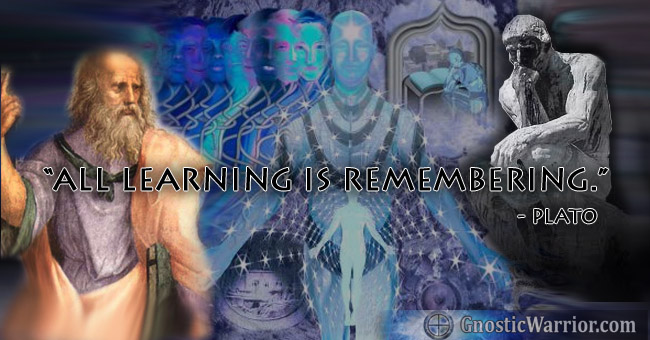
Plato: All Learning is Remembering

Moe is the founder of GnosticWarrior.com. He is a father, husband, author, martial arts black belt, and an expert in Gnosticism, the occult, and esotericism.

Moe is the founder of GnosticWarrior.com. He is a father, husband, author, martial arts black belt, and an expert in Gnosticism, the occult, and esotericism.
The question when obtaining money in this world is, “Are you willing to sell your soul or not in order to get it?”
Here is a great Pink Floyd music video from the 80’s called, ‘Money’ from their 1973 album, “Dark Side of the Moon” that talks about this very thing.
Pink Floyd – Money (Official Music Video) from BigDaddyAEL1964 on Vimeo.
Moe is the founder of GnosticWarrior.com. He is a father, husband, author, martial arts black belt, and an expert in Gnosticism, the occult, and esotericism.
Many of the early Church Fathers asserted that they had met and debated with the elementals. — Manly P. Hall; The Secret 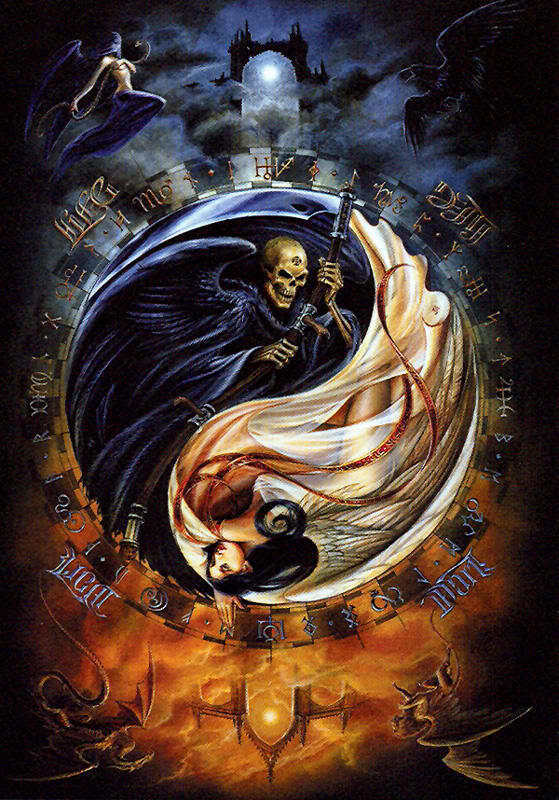 Teachings of all Ages
In today’s society, these early Church Fathers who Manly P. Hall had said “met and debated with the elementals,” would simply be labeled crazy by the modern medical establishment. In the early beginnings of the church, many of these men who heard or met with spirits were usually martyred for their divine nature or locked in prisons. People such as Saint John and Saint George. These Saints who the Church holds in such high regard would now most likely be placed on soul killing drugs such as Prozac or possibly locked up against their own will. Hence, if we operated the world back then as we do now, their simply wouldn’t be a 1 billion strong Catholic Church, and the immortal wisdom of the Church Fathers would be gone from the pages of history because they would be considered to have a severe mental disorder.
Here is a verse from the Roman poet, Ovid, of the soul coming from the Gods, or Demons;
God is in us, Commerces of the throne of God, that spirit from above came down.
What these Church Fathers were spiritually experiencing for them to be able to foresee future things or simply prophecy, is what is called ‘soothsaying.’ The German magician, occult writer, theologian, astrologer, and alchemist, Cornelius Agrippa had explained what soothsaying is, in his massive body of work “Three Books Concerning Occult Philosophy;”
Soothsaying is that which the priests or others were stricken withall, and discerned the causes of things, and foresaw future things, viz. when Oracles and Spirits descend from the Gods or from Demons upon them, and are delivered by them; which descendings the Platonists call the falling down of superior souls on our souls; and Mercurius calls them the senses of the Demons, and the spirits of Demons. Of which sort of Demons the Ancients called Eurideae, and Pythonae, who, as the Ancients believed, were wont to enter into the bodies of men, and make use of the voyces, and tongues, for the prediction of things to come; of which Plutarch also made mention in his dialogue of the causes of defect of Oracles.
What I have found interesting in the course of my research into people who have heard voices throughout history, is that at one time before the advent of Christianity, these people were not considered crazy or lunatics. They were simply called divine and gods. Men such as Moses, Saint John, Saint George and even philosophers such as Socrates, or divine French warrior women like Joan of Arc. These famous people are just a small list of highly divine souls throughout history who had heard voices in which they had actually acted upon. Hence, at one time not too long ago, this type of communication with the spirit world was the norm for thousands of years, rather than the exception that we see today.
The facts are in this modern world in the year 2013, when someone acts akin to a Church Father, Saint or a famous Greek philosopher such as Socrates who say that they are hearing voices in their head; the common medical diagnosis would be that they suffer from some type of mental illness. An illness, that they say is brought on by their own psychosis and that is labeled by doctors as a sickness in which they use psychotropic drugs to sedate the person into mental and DNA oblivion in order for these voices to cease. The blood is where the mind is, and this is where these drugs do their dirty business.
In my previous article on Demons, I had written that the Ancient Greeks had called these voices demons that were a divinity or supernatural being of nature between the gods and humans, and who appeared to men, both to do them service, and to injure them. The Greek poet, Hesiod had written that the people of the Golden Age were transformed into demons by the will of Zeus (Jupiter), to benevolently serve mortals as their guardian spirits; “good beings who dispense riches…[nevertheless], they remain invisible, known only by their acts.” Socrates had claimed that a friendly spirit, whom he called his daemon, was his spirit guide who had helped him on many important occasions in his life, and also restrained him from committing bad or harmful acts.
Cornelius Agrippa had written in, “Three Books Concerning Occult Philosophy,” that when people purify themselves in body and mind, this makes it a fit and pure temple of the Gods, in which the divine spirits may dwell;
Now the second phrensie [phrensy] proceeds from Dionysius: this doth by expiations exterior, and interior, and by conjurations, by mysteries, by solemnities, rites, temples, and observations divert the soul into the mind, the supream [supreme] part of it self, and makes it a fit and pure temple of the Gods, in which the divine spirits may dwell, which the soul then possessing as the associate of life, is filled by them with felicity, wisdom, and oracles, not in signs, and marks, or conjectures, but in a certain concitation of the mind, and free motion: So Bacchus did soothsay to the Beotians, and Epimenides to the people of Cous, and the Sybil [Sibyl] Erithea to the Trojans. Sometimes this phrensie [phrensy] happens through a clear vision, sometimes by an express voyce:
So Socrates was governed by his Demon, whose counsel he did diligently obey, whose voyce [voice] he did often hear with his ears, to whom also the shape of a Demon did often appear. Many prophesying spirits also were wont to shew themselves, and be associats with the souls of them that were purified; examples of which there are many in sacred Writ, as in Abraham, and his bond maid Hagar, in Jacob, Gideon, Elias, Tobias, Daniel, and many more. So Adam had familiarity with the Angel Raziel. Shem the son of Noah with Jophiel; Abraham with Zadkiel: Isaac and Jacob with Peliel; Joseph, Joshua and Daniel with Gabriel; Moses with Metattron [Metatron]; Elias with Malhiel; Tobias the younger with Raphael; David with Cerniel; Mannoah with Phadael; Cenez with Cerrel; Ezekiel with Hasmael; Esdras with Uriel; Solomon with Michael. Sometimes the spirits by vertue of the souls enter into, and seize upon organical bodies, whether of brutes or men, and using the souls thereof as the basis, utter voyces [voices] through organical instruments, as is manifest in Baalams Ases, and in Saul, on whom the spirit of the Lord fell, and Prophecyed.
Of these Apollo in his answers in Porphyry thus;
Phebean fulgor charmed, did from on high
Come down, and through pure air was silently
Conveyed; came into souls well purified
With a sonorous breath, a voyce uttered
Through a mortal throat —–
With the advent of Christianity and the Universal Church, this knowledge of the spirit world, demons and angels had become taboo and a crime under Roman Law. As a result of these reforms, eventually the God of Healing via the Rod of Asclepius, would be officially changed to the Caduceus, Rod of Hermes under the God of Commerce. This change where they once had a divine outlook on these spiritual communications, would be seriously refined by the black magick medical cartel who would then officially make any type of communications with the spirit world to be a sign of mental illness, in which they would put labels on people such as them being “schizophrenic or psychotic.” Some of these people who were once considered divine in the Ancient World, would be labeled bat shit crazy in today’s society. Lunatics who are drugged and institutionalized into the darkness of complete spiritual oblivion.
In a sense, the modern black sorcerers in white coats kill the divine spark of the soul in order to save the beast which governs our current world with a sickle, clock and human ignorance of these occult (hidden) manners. A type of spiritual warfare, fought both in the heavens above and the current hell below on earth, where the battle is over the body of man who is the temple of God.
Hence, a war for your soul and why 666 is the number of the beast……
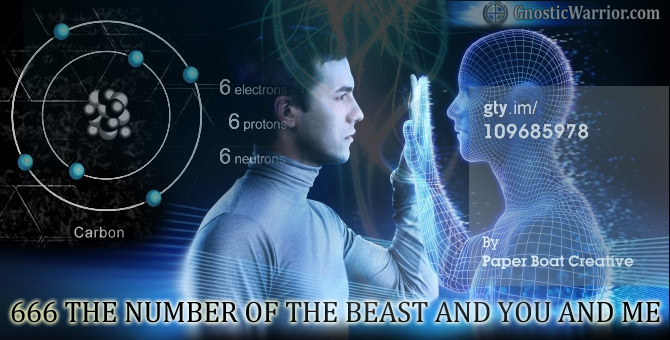
Man was created on the sixth day. The number 6 represents man and is not a perfect number. Therefor 666 is “man’s” number, and stops short of the perfect number seven. The two first letters in the name of “Christ,” are Ch and R, and they represent seven hundred (700), the perfect number. Our body has 7 parts, the head, chest, abdomen, two legs and two arms. Christ was crucified at Golgotha, which was the place of the skull.
Moe is the founder of GnosticWarrior.com. He is a father, husband, author, martial arts black belt, and an expert in Gnosticism, the occult, and esotericism.
The Cretans are well-known and are mostly named along with the Philistines or Pallitini in the Bible: 2 Sam. viii, 18, xv. 18, 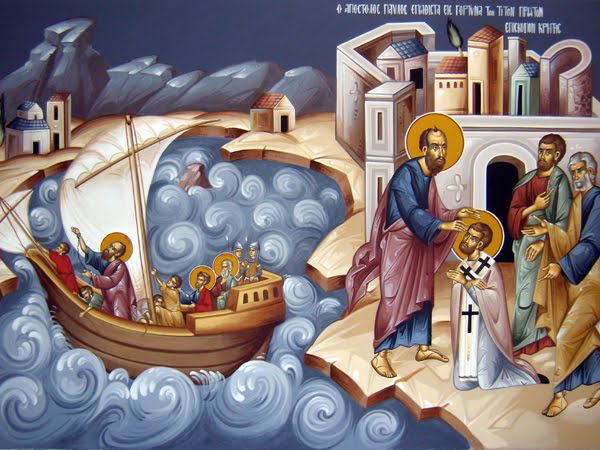 xx. 23. – Godfrey Higgins
Many of you who come to my website probably do not know why I have been writing about the island of Crete so much lately. I do not blame you, but in the same breath, if you want to know true history and how our current world was creat-ed, then you might want to pay attention to these articles I’m sharing with you on this most mysterious island located in the Mediterranean Sea.
As I had written before, Crete was called Keftiu by the Ancient Egyptians, it was also known under the old biblical name written in Hebrew “Kaftor or Caphtor”, and the Arabs had called it Kerith. The Latins had called Crete, Cappadocia and the Europeans had named it Candia. During the rule of the Turks, the name of the island had changed to ‘Kriti’, which is Greek for the English Crete.
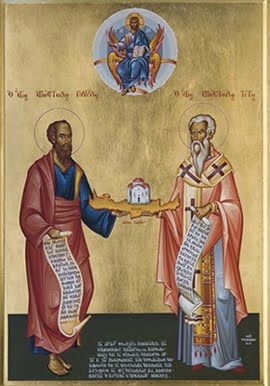 The name Crete is derived from the Greek word Kriti (Kri-ti), which means ‘creation.’ The meaning of the English word Cre’ate, is “to form out of nothing, to creo, creatum – cause to exist.” Hence, FIAT LUX.
I believe that the island of Crete was named after a word meaning creation, because it was one of the main starting points where the modern civilization that we see today in the West was created. A holy island that was once the home to many of the most important ancient Greek Jewish families from the East, who some of these same Cretans families would eventually join Rome under the banner of the Christian Brotherhood. Hence, the introduction into Christianity of the “Roman Jews” such as the Apostle Paul and the 1st century Jewish Roman historian, Josephus Flavius. Two very important people, who both had strong relations and histories to Crete. My theory simply coincides with the “mythical Minoans” from Crete, who in fiction are said to be the first culture to introduce the arts to the Western World. When in reality, it was the people of Crete and their descendants, the Jews who many had become Christians in Universal Brotherhood with Rome at the beginning of this Age. Later they would form the Byzantine Empire and both the Greek and Russian Orthodox Churches.
There are not many places at this time in the world that were as important and so rich in history, than the island of Crete. When we couple this reality with the mythical tales and biblical history behind this holy island, my theories on Crete start to take shape as a fact. Here is a partial list of the research I have done lately with supporting facts, myths, firsts, events and people from this holy island that help substantiate my creation theory.
Moe is the founder of GnosticWarrior.com. He is a father, husband, author, martial arts black belt, and an expert in Gnosticism, the occult, and esotericism.
Saint George (Greek: Γεώργιος – Georgios, or Latin: Georgius; c. 275/281 – 23 April 303 AD), surnamed George of Capadocia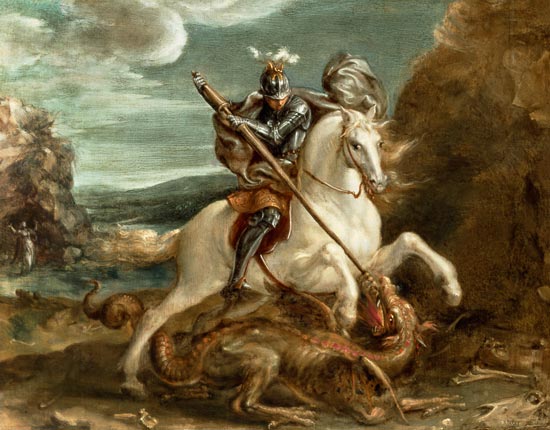 (Latin for the island of Crete) is one of the most honored Saints that you will find in both the Western and Eastern Christian churches. He was born into a highly influential Greek Christian royal family, from the holy island of Crete, Greece located in the Mediterranean Sea. His father’s name was Gerontius and was a leader in the newly established Greco-Roman military, who had trained Saint George in the art of war since he was a young boy. The meaning of the name George is “worker of the land” (i.e., farmer).
The island of Crete was the birthplace of several saints such as George that are now highly venerated in both the Western and Eastern Christian churches. It was at one time the main land for the Greek Jews who would eventually join forces with the Romans under the banner of Christianity after the destruction of Jerusalem. The Greek historian Homer had said, “various tribes jostled each other in that island.” The Apostle Paul had lived on the beautiful island Crete for two years. Hence, for many centuries before and during the advent of Christianity, the island of Crete was one of the most important holy lands for the Ancient Jews and also the first converts to Christianity and the Saints.
These were dangerous times for all and the true beginnings of the fierce religious wars that would rage on for many centuries between the various religious factions, royal families, and the people who were often just as dangerous as the former. A fact, that George would come to understand all too well.
George was made the bishop of Nicomedia in Crete during the late 3rd century A.D., which would become the place of his Martyrdom. (1) Nicomedia was the ancient capital of Bithynia, an important stronghold for a certain ancient Jewish family, that I believe became the Greek Byzantine Empire and one of the most influential families in early beginnings of Christianity. In the year 324, it was at Nicomedia that Licinius resigned his share of the imperial purple to his rival Constantine the Great, and Licinius would become a Roman emperor under Constantine from 308 to 324. Constantine the Great frequently traveled to Nicomedia in Crete and had made this city his place of residence. He later died near his home in the year 337.’ Photius the Great was Patriarch of Constantinople from 858 to 867, and from 877 to 886; he had said that he was of a Nicomedian race, and born in Nicomedia. (2)
The Greek Church was the first to honor Saint George and they had often depicted him in images with a Dragon under his feet and the crowned virgin Mary at his side representing the Church. The Grecians in their Menologe call him the Holy, Glorious, and Great Martyr. Before the young George had become a Saint, he served as a soldier under his father on the island of Crete in the Roman army. George of Cappadocia was also fiercely against any form of paganism and the ancient rites of the Jews. His stance against the Jewish people on the island had made him many enemies and he was said to be especially harsh against his foes, often “inflicting imprisonment and scourges on men and women after the fashion of a tyrant.”
The shout arose, “Away with George!” and “in a moment,” says the Fragmentist, they threw him into prison, with Diodorus and Dracontius, the master of the mint, who had overthrown a pagan altar which he found standing there (Ammian.). The captives were kept in irons until the morning of Dec. 24. Then the pagan mob again assembled, dragged them forth with “horrible shouts” of triumph, and kicked them to death. They flung the mangled body of George on a camel, which they led through every part of the city, dragging the two other corpses along with ropes, and eventually burned the remains on the shore, casting the ashes into the sea.
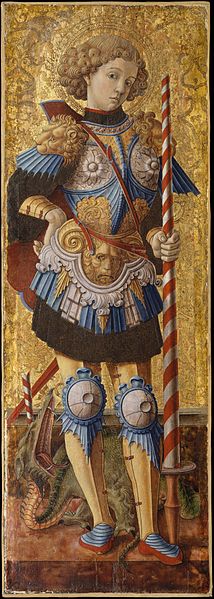 In the early 6th century, the wife of the first French King, Clovis had erected Altars to St. George in France. A Roman librarian, Anastasius had said that Pope Leo II about 683 built a Church in Rome which was known as the Church of St. George and St. Sebastian. One of the first literary references in England to Saint George was made by one of his descendants, the 7th century Northrumbian Father of English history and Doctor of the Church, Saint Bede in his books, Ecclesiastical History and Martyrologies. From this point forward, the Great Martyr of Crete whose birthday and death would be parallel with that which preserved Easter and Christmas to Northern Europe, by turning pagan festivals to commemorate Christian events.
In attempting to Christianize the pagan Jews of Crete and George’s harsh stance against their old religion, he would eventually suffer a violent death which would later lead to him being highly venerated around the world by his fellow Christian Brothers as one of the first Greek martyrs, Saints, and Patrons. For his martyrdom during the early beginnings of Christianity, George in the year 1220 A.D. would become honored as the patron Saint of England, and he has been the guardian saint of Russia since the early 14th century when they had released themselves from Mongol dominion. Saint George is also the patron Saint to many countries such as Greece, England, Russia, Romania, Israel, Iraq, and the Grand Protector to many important cities such as Genoa, Barcelona, and Moscow, just to name a few.
SOURCES:
1. The Lives of Saints Page 145
2. Transactions of the Royal Society of Literature of the United Kingdom, Volume 1 By Royal Society of Literature (Great Britain) PAGE 35
3. Wikipedia
4. Linked to in yellow
Moe is the founder of GnosticWarrior.com. He is a father, husband, author, martial arts black belt, and an expert in Gnosticism, the occult, and esotericism.