The First Jews of Crete
Before the advent of Christianity in the Roman Empire, the people of the world were mainly separated by race, tribe and/or land. The meaning of the word ‘religion’ is to tie or bind.  Hence, when the Romans had created the new religion of Christianity, their goal was to tie and bind people of various races into the folds of the Roman Empire under the banner of this Universal Religion. Any people who practiced their ancient tribal rights or religion, that was not part of this new government approved religion of Rome, were now considered pagan or barbaric in nature; a people that would be given a new religious label, where forever thereafter, they would be known as the ‘Jews.’
Many of these ancient people of these lands, who were now called Jews by the Romans, were from some of the most powerful tribal families that were related by blood from the old Greek empire and other countries such as Egypt, Ethiopia and Libya. Their religion, priesthood and combined military powers were the biggest threat to this new Roman Empire and religion. Therefor, the Romans would engage in a massive military campaign in the regions of these people, in order to subjugate them and to bind them by religion unto the empire under the symbol of the fasces.
One of the main strongholds and possibly the capital for these ancient tribes that are now considered Jewish people was on the ancient island of Crete, which I believe was once the main capital to the Jewish people of the Old Testament. Some of the most famous authors and historians such as Josephus and Tacitus had written that the first converts to the Christian faith under Rome were said to come from Crete. It was these Cretan Jews to whom Saint Peter preached on the memorable day of Pentecost, where he had converted three thousand of them to Christianity and who would then preach the gospel on their return from Jerusalem. Later, the Apostle Paul would go to Crete in order to live for two years as part of a missionary effort of Rome, where he too was successful like his predecessor Peter in converting many of the island’s inhabitants, who were now called Jews, and bind them to Christianity. Before Paul had left Crete, he had appointed the newly converted Roman Gentile, Titus as Bishop to the island, in order that he ordain elders in every city. The facts that two of the most important Roman Catholic Saints and one of the most powerful bishops had spent a lot of time and resources in Crete, proves that this island was most likely the main capital to the Jewish people in this region of the world.
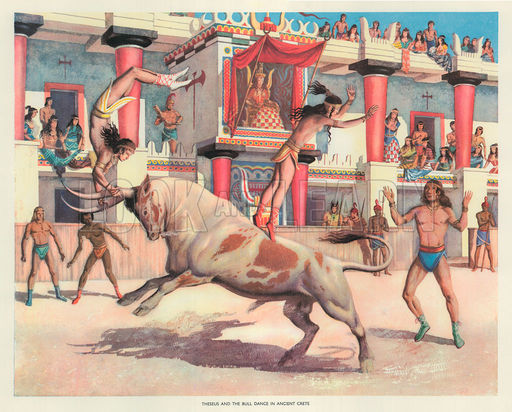 This makes perfect Jewish sense, because Crete is where their God Zeus was born and the island where most of their legends, myths and Greek epics had originated. Roman Senator and historian, Cornelius Tacitus (110 A.D.) had written that the Jews often traveled to Crete to celebrate the festival of Pentecost in Jerusalem and that they eventually were exiled from the island when Saturn was driven from his throne by the violence of Jupiter. The Cretans are called Idaeans, and then Judieans who eventually became fugitives from the island and who then settled on the nearest coast of Africa in the remotest corner of Libya. In, The Works of Tacitus, he explains the relationship with Crete, the Jewish people and the exodus from the island of Crete to the coast of Africa in Libya;
The Jews, we are told, escaping from the island of Crete, at the time when Saturn was driven from his throne by the violence of Jupiter, settled in the extreme parts of Libya. Their name is adduced as – a proof. Ida, it is alleged, is a well-known mountain in Crete: the neighboring Idaeans, by an addition to the name to adapt it to the language of barbarians, are ordinarily called Judieans. Some say that the population, overflowing throughout Egypt, in the reign of Isis, was relieved by emigration into the neighboring countries, under the conduct of Hierosolymus and Juda. Many state that they are the progeny of the Ethiopians) who were impelled by fear and detestation to change their abode in the reign of King Cepheus.
This exile of the Cretan Jews, I had written about in my previous articles such as, Crete: The Lost Island of Atlantis and Crete: The Land of Milk and Honey in Canaan. It is interesting that Tacitus says that the Jews traveled to Crete in order to celebrate the festival of Pentecost in Jerusalem, because he appears to simply allude to the fact that Old Jerusalem is on the island of Crete. This does not seem to be a mistake in my eyes of reason, but a well placed truth that we also can verify with other very important authors who point out that the people of Jupiter from Crete, were named “Jud [Jews.]” This author who called the people of Crete Jud (Jews), was no other than the most famous 1st century Jewish-Roman historian, Josephus Flavius.
In a sign of blood to commemorate this new major political alliance between Rome and Crete, Josephus would divorce his third wife at around the age of 75, to then marry a Greek Jewish woman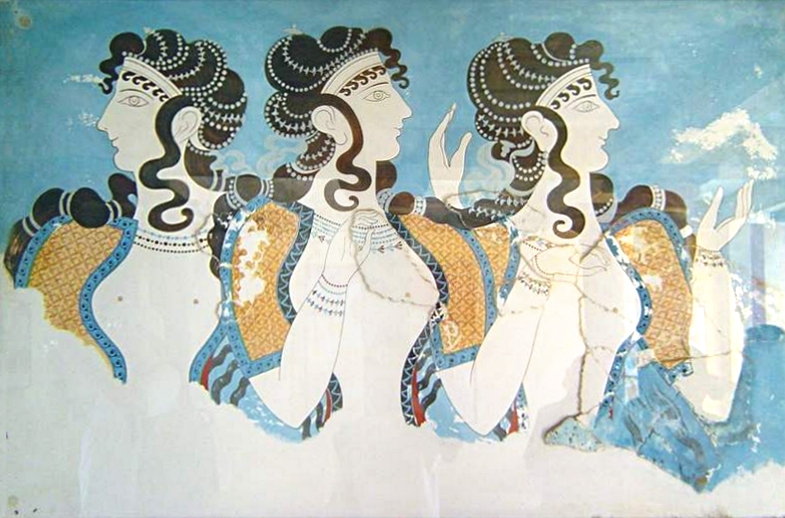 from Crete. She was a member of a very distinguished family who had bore him two sons, Flavius Justus and Simonides-Agrippa. Josephus is simply one of the most important Jews and people in early Roman history, and who is one of the keys in connecting these two people into one empire. Hence, it only makes sense that he would marry a woman from one of the most powerful Jewish families from the most powerful Jewish state on the island of Crete, for political purposes. He had also written about the exodus of Jews from Crete in a similar manner to Tacitus in his book, “The Works of Flavius Josephus;”
The tradition is, that the Jews ran away from the island of Crete, and settled themselves on the coast of Libya, and this at the time when Saturn was driven out of his kingdom by the power of Jupiter: an argument for it is fetched from their name. The mountain Ida is famous in Crete; and the neighbouring inhabitants are named, which, with a barbarous augment, becomes the name of Jud [Jews.] Some say they were a people who were very numerous in Egypt, under the reign of Isis, and that the Egyptians got free from that burden by sending them into the adjoining countries, under their captains Hierosolymus and Judas.
In the Ancient Egyptian texts, Crete was called Keftiu. In the bible, it was known by the names such as Kaftor, or Caphtor in the Land of Canaan. This island was also part of Palestine, where the island’s inhabitants were known as the infamous Sea Peoples and the foes of Israel, the Philistines. The Latins had called Crete in their native language, Cappadocia, and the people, Cappadocian. Later it would also be known as Candia and Arcadia.
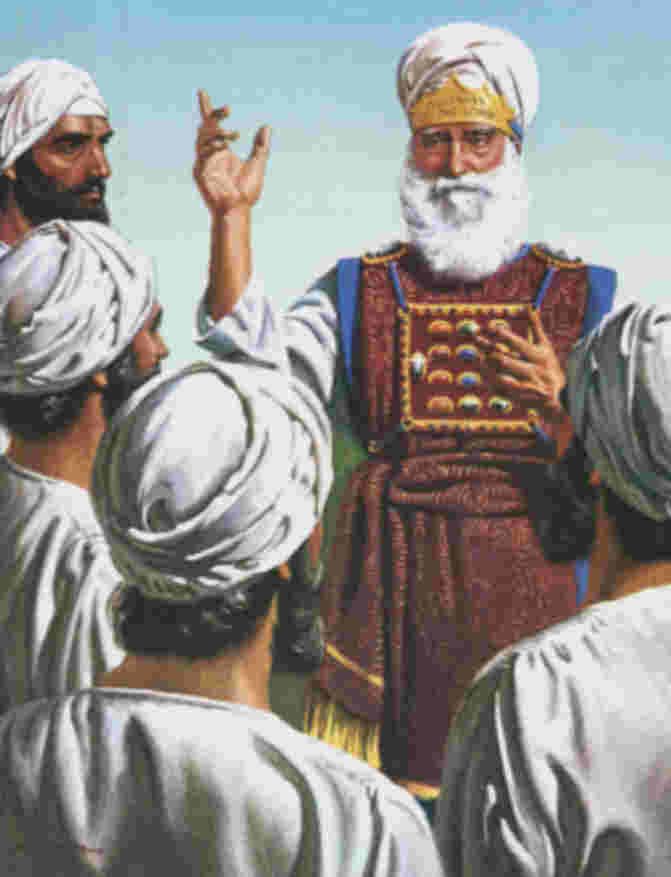 The priests of the Cretan Jewish people were known by several names such as the Curetes (Kuretes), Corybantes, Dactyls, Cabiri, and Telchines who the 1st century Greek philosopher and historian, Strabo had said were names that are often used interchangeably with one another. These priests were placed in charge of protecting Zeus (Jupiter or Jove) by his mother Rhea from his vengeful father Cronus (Saturn or Satan). Rhea was worshiped under the symbol of the Moon as they had carried the Ark. For many centuries, they had practiced their religious rites, magic and tribal customs there in Crete, before they would release them unto the world.
Today, many of these priests from Crete would be known in the Judaic religion as Jewish Samaritans, or as the Tribe of Levi. Many very important biblical characters come from this tribe, such as Moses, Aaron, John the Baptist, and Barnabas who was born in Ancient Greece on an island near Crete called Cyprus. Some of their tribe had come to the Roman empire in Italy, where they had settled in the hills of Tuscany. They were known in these lands as the Umbrians, and in the North as the Northumbrians. In Ireland from their home base on the Island of Iona, they were known as the Culdee Druids of the Celtic Church who themselves converted to Christianity, and had also helped convert these mighty pagan countries in the badlands of the North to Christianity. Some of the Levite priests from this tribe would join Rome under the New Testament (New Law) via Roman Law with Augustus Caesar as their first official Pontifex Maximus (Pope). He would become their savior because he had established peace via PAX RAMONA by abolishing all other religions and cults, to then help incorporate a new Universal Religion at the beginning of this age, that we know of as Catholicism under the brotherhood banner of Christianity. A religion, that the same Levite priests who would be called Jews in places such as Greece, were now Christians bound together under Roman Law. Hence, the New Testament of Rome with Augustus Caesar as Pope and the Levites as priests, would begin the great divide between these ancient Greek tribes that are now considered Jewish for their pagan practices.
In Greek mythology, Crete was where the God Zeus was born to his mother, Rhea and his vengeful father Cronus. Cronus sired six children by Rhea: Hestia, Hades, Demeter, Poseidon, Hera, and Zeus in that order, but swallowed them all as soon as they were born except Zeus, since Cronus had learned from Gaia and Uranus that he was destined to be overcome by his own child as he had overthrown his own father. When Zeus was about to be born, however, Rhea sought Uranus and Gaia to devise a plan to save him, so that Cronus would get his retribution for his acts against Uranus and his own children. Rhea gave birth to Zeus in Crete, handing Cronus a stone wrapped in swaddling clothes, which he promptly swallowed. Then she hid Zeus in a cave on Mount Ida in Crete. (Wikipedia)
The king and greatest of all gods, Zeus (Jupiter) was now hidden in a cave in the dark by his mother the moon goddess, Rhea who would be the light to lead us through the night. The moon goddess would now be placed in charge of religion, and the ancient priesthood from Crete would be the defacto protectors. According to Sextus Empyricus, the Trojan war was fought over a statue of the moon goddess.
Rhea is called the Mother of the Gods, Mother of the World, Goddess of Heaven and the Goddess of War, just to name a few of her titles. The second largest moon of the planet Saturn is named after her. Saturn is known in the occult, as the dark planet and planet of chaos. One of Rhea’s symbols is the moon, and in ancient Crete one of their main emblems was also the moon which can often be found on Cretan seals that served as their magical talismans. In the Cretan Vocabulary, one of the names for the moon was Diana. It is said that in ancient Crete, a common practice was ritual prostitution by devotees to the Moon goddess as it was in Cyprus, Libya, Syria, Asia Minor, and Palestine.
The Greeks had also esteemed a goddess they had called, ‘Cybele’ who was often depicted crowned with a crescent moon, to be the same with Rhea. I had spoken about these magicians from this island and how part of their magic was writing and using word play such as allegory, where they perfected that art of concealing truths in allegorical stories, parables, poems and pseudo history. A form of magic and word play that made them some of the best wordsmiths this world has ever known. Hence, the many stories and various names of gods and goddesses over the last few thousand years, can be attributed to these people, who through Babylon and the Tower of Babel, they had employed this word magic upon the world.
The goddess of the moon and mother of Crete, Rhea was also known at various times throughout history by many names such as Diana, Ma, Enyo, Selene, Ishtar, Astarte, Isis, Hecate, Artemis, Magna Mater or “Mary or Mari (Ma-Ri).” Speaking of Isis, the Greek historian Ptolemy had called her the goddess of a ten-thousand names. The meaning ‘ma’ is mother, and ‘ri’ means queen. Hence, the meaning of Mary is “queen mother.” In the etymology of the name Rhea, Plato and Chrysippus connected the word with “ῥέω” (rheo), “flow”, “discharge.” This discharge may be a toxic gas with a pungent irritating smell, like that which flows from volcanoes and also our veins from the result of war and chaos called Sulfur Dioxide. The same type of discharge event, that ended up with a volcano off the coast of Crete exploding and causing earthquakes and tidal waves, that were said to cause the end of this Ancient Jewish island civilization. Hence, the Lost Tribes of Israel driven out of his kingdom by the power of Jupiter at the time of Saturn.
Is there any hope for the Lost Tribes of Israel? There may be, because an ancient myth tells of the god of heaven seeks the lost moon – goddess, at last finds her, and celebrates with her a holy marriage.
SUPPORTING RESEARCH & INFORMATION:
In the year of Christ, 424, in the reign of Theodosius the younger, another Pseudo-Messiah arose in the island of Crete, who said, that he was Moses, and sent from heaven to carry the Jews in Crete, on dry ground, through the sea, and persuaded several of them to throw themselves into the sea.
A New Literal Translation, from the Original Greek of All the …, Volume 4 By James Macknight page 352
The first converts to the Christian faith in Crete, being, as was observed, those Cretian Jews to whom Peter preached on the memorable day os Pentecost, and those Jews in Crete, to whom Peter’s converts preached the gospel on their return from Jerusalem, they were all, or most of them, very zealous of the law of Moses. Wherefore, when Paul came into Crete, and converted numbers of the idolatrous inhabitants, we may believe, that the more early Christians in Crete, would address the new converts with great warmth, and insist on their obeying the law of Moses, as absolutely necessary to their salvation. Moreover, to render the law accceptable to these new converts, they no doubt followed the course in which their brethren in other churches walked. They amused the new converts with vain talking, and Jewish fables, and commandments of men, and foolish questions about the law.
Nay, they went so far as to affirm, that the sacrifices, and purifications enjoined by the law, duly performed, would procure pardon for them, though they continued in the practice of sin. To this doctrine the Cretians, many of whom were very wicked, lent a willing ear ; in so much, that these corrupt teachers, who seem to have been natives of Crete, and to have been infected with the vices of their countrymen, subverted whole families, Tit. i. 11.
The errors and bad practices of the Judaizing teachers, and of their disciples, the apostle, when he came into Crete, observed, and opposed by wholesome instructions and sharp rebukes. But well knowing how diligent they were in spreading their errors, Paul left Titus in Crete to restrain them. And that he might have a number of fit persons clothed with proper authority, to assist him in opposing the Judaizers, and in maintaining the truth, he ordered him, at parting, to ordain elders, that is, bishops and deacons in every city. But that he might be at no loss to know who were fit to be invested with these offices, and what line of conduct he himself was to pursue, in discharging the duties of his ministry, the apostle, when he came to Colosse, wrote to him this letter, in which he described -the qualifications of the persons who were worthy to be ordained elders, commanded him to rebuke the Judaizers sharply, and mentioned the errors he was particularly to oppose, the doctrines he was earnestly to inculcate, .and the precepts he was constantly to enjoin; that none of the Cretians, whether teach people, might fail in their duty through want of information.
By comparing the epistle to Titus with the two epistles to Timothy, we learn, that the Judaizing teachers were every where indefatigable in propagating their erroneous doctrine concerning the necessity of obedience to the law of Moses, as the oirly means of obtaining salvation; and that in the most distant countries, they uniformly taught the fame doctrine, for the purpose of rendering the practice of sin consistent with the hope of salvation: and that to draw disciples after them, they encouraged them in sin, by the vicious practices which they themselves followed, in the persuasion that they would be pardoned through the efficacy of the levitical sacrifices. Only, from the apostle’s so earnestly commanding Titus in Crete, and Timothy in Ephefus, to oppose these errors, it is probable that the Judaizing teachers were more numerous and successful in Ephefus ‘and Crete, than in other places.
However, as Titus was a Gentile convert, whose interest it was to maintain the freedom of the Gentiles from the law of Moses, and a teacher of long standing in the faith, the apostle was not so full in his directions and exhortations to him, as to Timothy, neither did he iecommend to him meekness, lenity, and patience in teaching, as he did to Timothy, but rather sharpness, chap. i. 13. ii. 13. Perhaps Titus was a person os a soft and mild temper: whereas Timothy being a younger man, maj have been of a more ardent spirit, which needed to be somewhat restrained.- CHAP. CHAP. I. ‘ View.View and lllujlration of the Matters contained in this Chapter.
‘IN the inscription of this epistle, St. Paul asserted his apostleship, not with a view to raise himself in the estimation of Titus, but to make the false teachers in Crete, and all in every age, who shall read this letter, sensible that every thing he ordered Titus to inculcate, was of divine authority, ver. 1, 2.— And by calling Titus his genuine son by the common faith, he insinuated to the Cretians, not only that he had converted hiin, but that he was a teacher of the fame virtuous, dispositions with himself, and as such he gave him his apostolical benediction, ver. 3, 4.—Next, he put Titus in mind that he had left him in Crete, to ordain elders in every city where churches had been planted, ver. 5. — And to direct him in that important business, he described to him the character and qualifications necessary in bishops and deacons, that ordaining to these offices none but persons of that description, they might be able both to instruct the people, and to confute gainsayers, ver. 6.—9.—-
Especially them of the circumcision in Crete, whose character the apostle explained, ver. 10 and whose mouth he told him it was necessary to stop, because they subverted whole families, by teaching the efficacy of the Jewish sacrifices and purifications to obtain pardon for sinners, even while they continued in their sins, Wherefore, the apostle ordered Titus sharply to reprove both the teachers and the people who held such doctrines, and to charge them no longer to give heed to Jewish fables and precepts of men, calculated to support that pernicious error; particularly the precepts concerning meats and sacrifices, taught by men who turned away the truth, when it offered itself to them, ver. 13, 14.—Withal, to give the faithful an abhorrence of such teachers, the apostle observed that both their understanding and their conscience was polluted, ver. 15.— They professed to know God, but in works they denied him.Paul a servant of God. In some of his other epistles, Paul calk himself, JaXoj Iwra X|»r«. a lond-man of Jesus Christ. But the present is the only one, in which he calls himself, JaXof 0s«, a lond-man of God. This appellation he took, probably because the Judaizers in Crete affirmed, that he had apostatized from God, when, as an apostle of Christ he received into God’s church the uncircumcised Gentiles, and thereby freed them from obeying the law of Moses, as a term of salvation.
The life of Our Lord and Saviour Jesus Christ By John Fleetwood PAGE 511
TITUS was a Gentile by religion and birth, but converted by St. Paul, who calls him his son. St. Jerome says that he was St. Paul’s interpreter: and that, probably, because he might write what Si. Paul dictated, or explained in Latin what this apostle said in Greek; or rendered into Greek what St. Paul said in Hebrew or Syriac. St. Paul took him with him to Jerusalem, when he went thither in the year 51 of the vulgar ?pra, about deciding the question which was then started, whether the converted Gentiles ought to be made subject to the ceremonies of the law? Some would then have obliged him to circumcise Titus; but neither he nor Titus would consent to it. Titus was’ sent by the same apostle to Corinth, upon occasion of some disputes which then divided the church. He was very well received by the Corinthians, and very much satisfied with their ready compliance: but would receive nothing from them, imitating thereby the disinterestedness of his master.
From hence he went to St. Paul in Macedonia, and gave him an account of the state of the church at Corinth. A little while after, the apostle desired hiiii to return again to Corinth, to set things in order preparatory to his coming. Titus readily under
took this journey, and departed immediately, carrying with him St. Paul’s second letter to the Corinthians. Titus was made bishop of the isle of Crete, about the 63d year of Christ, when St. Paul was obliged to quit that island, in order to take care of the other churches. The following year he wrote to him, to desire that as soon as he should hayp sent Tychicus or Artemas to him for supplying his place in Crete, Titus would come to him to Nicopolis in Macedonia, or to Nicopolis in Epirus, upon the Gulf of Ambracia, where the apostle intended to pass his winter. *
The subject of this epistle is to represent to Titus what are the qualities that a bishop should be endued with. As the principal function which Titus was to exercise in the Isle of Crete was to ordain priests and bishops, it was highly incumbent on him to make a discreet choice. The apostle also gives him a sketch for the advice and instructions which he was to propound to all sorts of persons; to the aged, both men and women; to young people of each sex: to slaves or servants. He exhorts him to keep a strict authority over the Cretans; and to reprove them with severity, as being a people addicted to lying, wickedness, idleness, and gluttony. And as many Converted Jews were in the churches of Crete, he exhorts Titus to oppose their vain traditions and Jewish fables: and at the same time to shew them that the observation of the legal ceremonies is no longer necessary; that the distinction’of meat is now abolished; and that every thing is pure and clean to those who are so themselves: he puts him in mind of exhorting the faithful to be obedient to temporal power ; to avoid disputes, quarrels, and slander: to apply themselves to honest callings; and to shun the company of an heretic, after the first and second-admonition. •
The epistle to Titus has always been acknowledged by the church. The Marcionites did not receive it, nor did the Basilidians, and some other heretics; but Titian, the. head of the Encratics, received it, and preferred it before all the rest. It is not certainly known from what place it was written, nor by whom it was sent.
Titus was deputed to preach the Gospel in Dalmatia; and he was still there in the year 65, when the apostle wrote his second, epistle to Timothy. He afterwards returned into Crete; from whence it is said he propagated the Gospel into the neighboring islands. He died at the age of 94, and was buried in Crete. We are assured that the cathedral of the city of Candia is dedicated to his name; and that his head is preserved there entire. The Greeks keep his festival on the 25th of August, and the Latins on the 4th of January.

Moe is the founder of GnosticWarrior.com. He is a father, husband, author, martial arts black belt, and an expert in Gnosticism, the occult, and esotericism.