Greeks: A Plague of Frogs Upon Egypt
The frog is the emblem of Apollo, who was known in Ancient Greece as a “healer and god-protector from evil.” Apollo is the 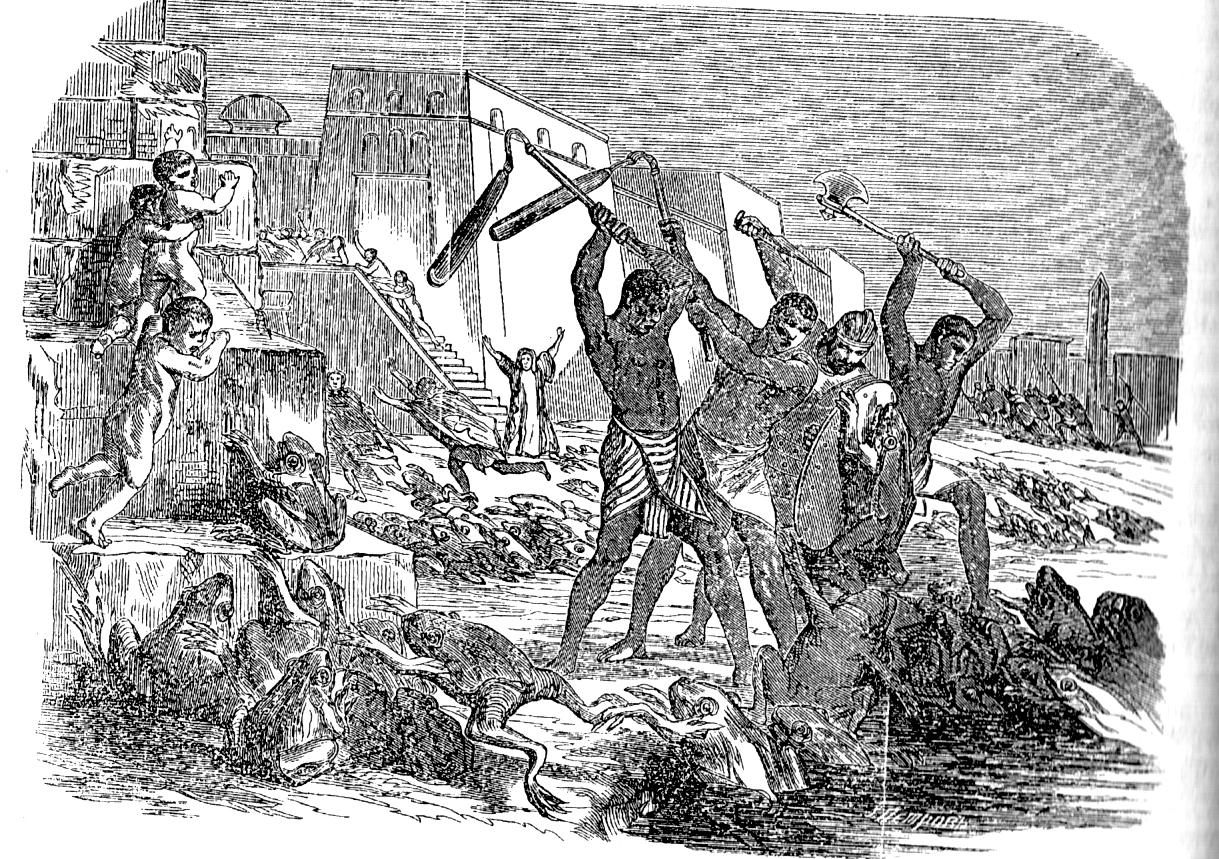 son of Zeus and Leto, and has a twin sister, the chaste huntress Artemis. The frog is the main symbol of the Men of Crete, who were known in Latin as the Cappadocians, and in the bible as the Philistines. They had come to the Land of Canaan from the island of Crete, that was known biblically as Caphtor. They were a class of warriors, priests, magicians and merchants. The frog was also known as a symbol of the Arcadians and the people of Argos as an emblem for them to keep at home, in what we know today as the Ancient Greek Empire.
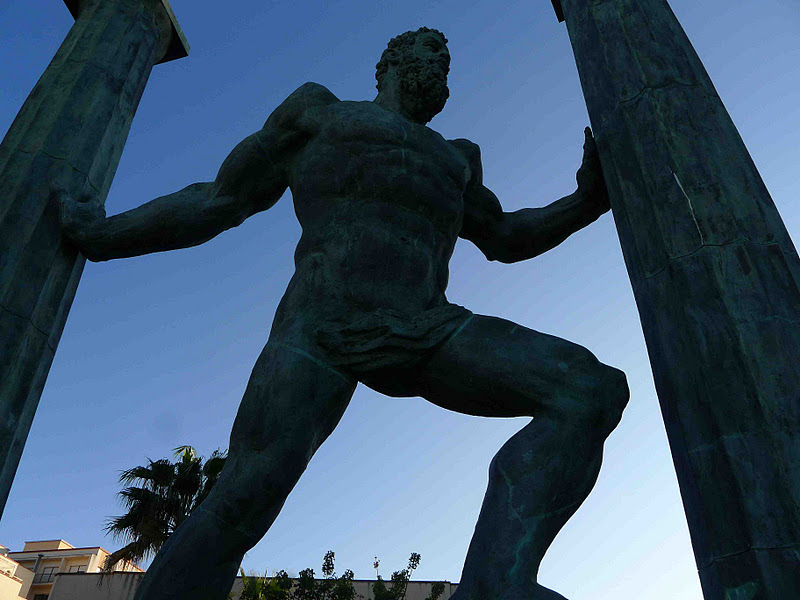
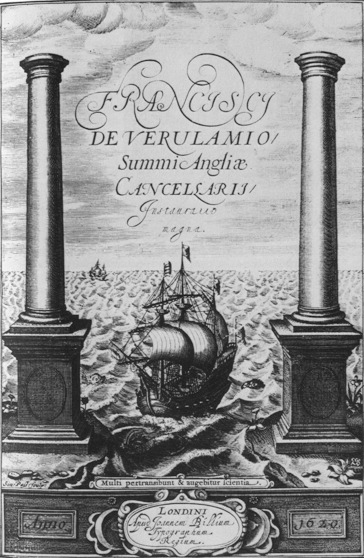
In the 5th century BC, Plato had said that the Greeks had lived in “a small part of the world between the Pillars of Heracles and Phasis, living about the sea like ants or frogs around a pond.” This pond Plato was speaking about was actually more like a massive collective body of water consisting of, back then, all of the Aegean and Mediterranean Seas. Aristotle would simply call the Greeks “frogs.”
What we all need to understand, is that the Ancient Greeks were not only the pioneers of sea, they were also the inventors of modern-day philosophy and a new method of writing, in which they had used what is called ‘allegory.‘ An allegory has a hidden spiritual meaning that transcends the literal sense of a sacred text. This can take the form of just any type of writing, from poems, to short stories, to massive epics. Allegorical writing is a way in which the author hides the true spiritual meaning of real life stories, behind words with similar meanings in the stories and poems they had written. Hence, this is why the Greeks had become frogs in their literature, and why we see them again in the bible in the plague of frogs that would wreak havoc and chaos upon Egypt.
The Greeks referring to themselves as frogs is a recurring theme in Greek literature such as the work of Homer titled, The combat between the Frogs and the Mice (Batrachomyomachia). We also find frogs again in the comedy,”The Frogs” by the Ancient Greek playwright Aristophanes. It is a story of the god Dionysus, who, despairing of the state of Athens’ tragedians, travels to Hades to bring the playwright Euripides back from the dead.(Wikipedia) This paragraph below is from the opening, and that I feel describes how the Ancient Greeks, such as Aristophanes were thinking when they had included the symbology of frogs within their literature;
“But remember these men also, your own kinsmen, sire and son,
Who have oftimes fought beside you, spilt their blood on many seas;
Grant for that one fault the pardon which they crave you on their knees.
You whom nature made for wisdom, let your vengeance fall to sleep;
Greet as kinsmen and Athenians, burghers true to win and keep,
Whosoe’er will brave the storms and fight for Athens at your side!” —Murray translation, from l. 697(Wikipedia)
These same ancient frogs around the pond of the Aegean and Mediterranean Seas, who we know of as Greeks, must be the  same frogs spoken about in the bible as in Exodus 8, where it is said in the time of Moses that a plague of frogs was sent upon the Egyptians and the Pharaoh.
The Lord said to Moses: “Go to Pharaoh, and fay to him: ‘ Thus faith ** the Lord: Let go my people, that they may serve me. For if thou refuse to let “go of my people, | lo! I will infest thy whole country with frogs. For the river shall 3 “so swarm with frogs, that they shall come up and enter into thy houses, and into “thy bed-chambers, and on thy beds; and into the houses of thy servants and of “thy people; and into thine ovens and thy kneading-troughs. On thyself, and on 4 ** all thy servants, and on all thy people shall the frogs come up.'”
In the bible they were called the Philistines or the Sea Peoples in Egypt who had invaded the land in a swarm of frogs. This story in Exodus details this and also how they had entered into every fabric of their culture, right down to the womb of the women, in which they had left their tadpoles who would later grow up to become the Greco-Egyptian Empire. It appears that from this point forward, the Greeks would be aligned with Egypt as mercenaries who ruled the Sea with complete approval and blessings from the Pharaohs of Egypt. Hence, they would be brothers not only in war, but also in blood, making this combined military force and navy the largest the world has ever seen. A military and commercial empire that would allow them to dominate the land and the seas easily for over 2,000 years, until approximately the arrival of the Scandinavian Vikings under the leadership of Prince Rus in the Byzantine Empire in the 9th Century AD.
As I mentioned above, the frogs were a symbol of Apollo for the Greeks, and in the bible these frogs had come upon Egypt like a plague. These frogs were the Greeks that Plato and Aristotle had spoken about. This makes sense because there is a tremendous amount of evidence supporting many centuries of Greek dominion and influence on Egypt. These facts can clearly be seen with some of the Hyksos Pharaohs, the Ramesside dynasties, and also the Greco-Egyptian Empire after the time Alexander the Great had conquered Egypt.
This same plague of frogs also appear to match who the Egyptians had called, the Sea Peoples. A people who came from the sea attacking Egypt and who were apparently of unknown origins. In all actuality, they were simply the Greeks who were called in the bible, the Philistines who were also known to be part of the Sea Peoples. The island we know today as Crete in Greece was said to be originally colonized by the people of Palestine. The name Palestine is derived from Philistine. The presence of the “unclean spirit” in the land (Palestine) is foretold, Zec 13:2, in connection with idolatrous prophets. They were said to have left Crete and arrived in Canaan at the beginning of the 12th century B.C.E. Their biblical tribe was part of the Sea Peoples, and the mercenary soldiers maintained by the kings after David, Philistines and Cretans are mentioned together. In the bible, they are referred to as the descendants of the Casluchim in Genesis 10:14 and Exodus 13:17. (Wikipedia)
With this information above, we can safely say that the Greeks were called frogs, and who in the bible were the plague of frogs who came upon Egypt. They would also be known as the Philistines, and on Egyptian monuments, they are the infamous and unknown Sea Peoples. These people had originally partly resided on the fifth largest island in the Mediterranean Sea, that we know of today as Crete, and that was once known as Caphtor and Palestine. The name Palestine is derived from the Philistines who we know were also the Men of Crete (Latin Cappadocians) and who were the mercenary soldiers maintained by the kings after David.
This same island of Crete happens to be the birthplace of the greatest of all Greek Gods, Zeus and had also birthed countless Greek legends that still last to this very day. The Cretans would be known under the Latin name of Cappadocians, and in the bible as the Philistines who would become known as a Tribe of Israel under the name of Benjamin. The English name Benjamin is derived from the Hebrew name, “Banu- Yamina,” meaning, “the Son of the right hand.” The Son of the right hand is described when Moses delivered Israel from Pharaoh, in which Moses became the “right hand of God.” Hence, follow the right hand path of God to heaven like Moses, or follow the left hand path of Cain or Lucifer to become fallen.
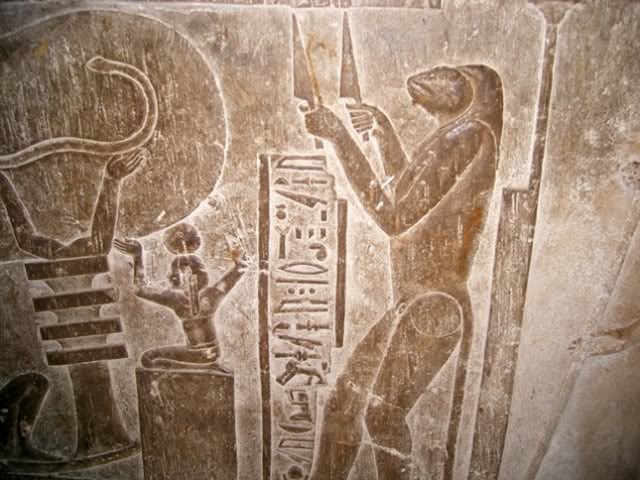 In my article, Symbolism of the Frog; I had explained that in ancient Egypt, the frog was a symbol of regeneration and the amulet of the frog was associated with resurrection. There is a lamp of terra-cotta in the shape of a frog in an Egyptian Museum, with the inscription ETS1 EIMI ANATACIC: “I am the resurrection.” They also had a frog headed Goddess of resurrection who they called Heqt or Heqet pictured to the left;
This amulet is typical of teeming life and of the resurrection. The frog-headed goddess Heqt, the wife of Khnemu, was associated with the resurrection, and this amulet, when laid upon the body of the dead, was intended to transfer to it her power. The frog is often represented on the upper part of the Greek and Roman terra-cotta lamps which are found in Egypt, and on one of them written in Greek is the legend, “I am the “resurrection.”(2)
The Greeks and Romans associated frogs with the planet Venus for fertility and harmony, and also with the goddess Aphrodite. Later it appears that the symbology and worship of the frog was forbidden in the Roman Empire for in the Liber de Hcerisibus (xi.) of Philaster, Bishop of Brescia, the frog worshippers {ranarum cultores) are mentioned as a heretical Christian sect. It is no surprise to me that these people would be mainly of Greek or Eastern descent from the lands in which they had originaly come from to Rome. Here is an excerpt from the book, Animal Symbolism in Ecclesiastical Architecture by Edward Payson Evans, that explains who these frog worshippers were;
and a law of the year 428 forbade Arians, Macedonians, and Batrachitians to reside within the limits of the Roman Empire. It may have been due to this tendency to worship frogs that their entrails were used as charms in ancient times (Juvenal, iii. 44), and prescribed as a potent medicament by mediaeval quacksalvers.
To the Jews, a frog is applied to a timid and degraded man, who morally turns and returns on all sides. The Hebrew name of the frog, is written in all vowels “TSPR,” meaning to turn, to convert one’s self, in a physical as in a moral sense; The second root of the name of the frog is Do, which signifies science, knowledge wisdom.
The Ancient Greeks of Crete were known to be Magi and also fire kindlers. Hence, they were the pagans and Jews of their day whose teachings were contrary to that of the church and deemed heretical. They had believed in reincarnation, and I assume would practice these rites in their places and temples where they were said to have worshiped the goddess of War, Ma. This may be the reason why in Europe the symbol of the frog was considered bad. It had went from being a symbol of fertility and resurrection in the East, to the Ancient Egyptians, Ancient Greek Arcadians and later with the Romans.
Three black frogs were the original arms of France and the first king of the Franks, Clovis who had three frogs in his original coat 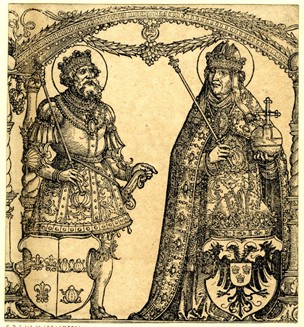 of arms. Clovis was the first king to unite all of the Frankish tribes under one ruler (Pictured to the right). Over in Scotland, the frog is a symbol meaning good luck. However, we find this attitude towards the frog as a symbol of good would later change to bad during the middle ages, in Christianized European folklore where frogs were now associated with witches, or familiar spirits who had magical powers.
FROGS OF THE APOCALYPSE
We see frogs again in the vision of Saint John in Revelation 16:13, where he sees a vision of the dragon, the beast and the false prophet spewing three unclean spirits out of their mouths in the form of frogs who create armies of the earth that Satan attempts to use to defeat the army of Christ from heaven.
I will leave you with some words by Homer from, “The Battle of the Frogs and Mice;”
Where in thick files the thronged combatants” ‘- ‘
Wave hi h their lances long (such as in force’_ u -‘ ‘
And number never filled embattled plain Since the dread Centaur-race, or impious brood
Of Giants). smiling asked, which heavenly powers
Would fight for Mice, and which for Frogs; and thus‘
Addressed Minerva: “ Thou, my daughter dear,
Wilt certes combat for the ,Mice; for these
Aye in thy shrine are skipping to and fro,
Pleased with the savory scraps of sacrifice.”
To whom Minerva: “ Never, mighty Sire,
My aid, however required, to that vile‘ race
0 Mice can I afford. To me they work
Evils innumerable, my chaplets oft
Nibbling, and dipping in my holy oil
Their sacrilegious whiskers; and, to fill
The measure of their crimes, they’ve spoiled my robe;
The robe that I with such expense and care‘, ~
Of finest thread and nicest texture wove.- ‘‘ ~
This have they spoiled, and witlmnseemly holes‘
Deformed, while me vile‘earthly duns beset
To pay the mender costs and interest; ‘
For ’twas of borrowed, and these demands
It moves my spleen to think I cannot pay.
Yet neither will I aid the Frogs; for they,
When fainting from the battle I return
And lay me down to rest, with ceaseless croak
Disturb my slumbers: often all night long
With aching head and unclosed eyes I lie
Tumbling, ’till cocks proclaim the rising morn.
But come, ye Powers, let’s leave them to themselves,
Nor venture there; for close and hand to hand
Their desperate combat‘ is, tho’ Gods oppose:
Here stand we, and overlook the conflict dire.” ‘ *
She spake; and strait the Gods, with one accord
Her words approving, all together throng.
Now forth from either host advanced in view‘ ‘
A herald steps, due signal to proclaim; _ V ,
While hovering beetles wind aloft in air ‘ ‘1‘ ‘1
The sullen blast of war; ‘and Jove on high
In thunders rolling o’er the welkin wide
Gives dreadful note of preparation.

Moe is the founder of GnosticWarrior.com. He is a father, husband, author, martial arts black belt, and an expert in Gnosticism, the occult, and esotericism.