“If networked rat brains are “smarter” than a single animal, imagine the capabilities of a biological supercomputer of networked human brains.”
It appears we have reached a point in this simulated Age where science, religion, myths and, the fictions that have shaped our false reality are merging us putrefying Beasts of Babylon into one demonic super brain connected via the fungal mycelia internet that envelops our souls.
This interconnected cranial network of intelligence that has given rise to not only a global internet but one that expands the universe to the Jovial moon and the aborted stars into the Sky-net managed by the NSA.
A brain to brain interface system that would have made the Templars and Francis Bacon’s mechanical Brazen head look like Mr. Potato Head.
On the same day this week that I posted an esoteric article called Infection – iN fAcT iON, The Scientific American published an article, Scientists Demonstrate Direct Brain-to-Brain Communication in Humans detailing how researchers created a super brain using living rat brains tethered together as if they were microprocessors crating some type of orgiastic intelligentsia network on steroids.
Direct brain-to-brain communication has been a subject of intense interest for many years, driven by motives as diverse as futurist enthusiasm and military exigency. In his book Beyond Boundariesone of the leaders in the field, Miguel Nicolelis, described the merging of human brain activity as the future of humanity, the next stage in our species’ evolution. (Nicolelis serves on Scientific American’s board of advisers.)
He has already conducted a study in which he linked together the brains of several rats using complex implanted electrodes known as brain-to-brain interfaces. Nicolelis and his co-authors described this achievement as the first “organic computer” with living brains tethered together as if they were so many microprocessors.
The animals in this network learned to synchronize the electrical activity of their nerve cells to the same extent as those in a single brain. The networked brains were tested for things such as their ability to discriminate between two different patterns of electrical stimuli, and they routinely outperformed individual animals.”
In 2014, researchers described the successful transmission of information via the internet between the intact scalps of two human subjects who were located 5,000 miles apart.
“We wanted to find out if one could communicate directly between two people by reading out the brain activity from one person and injecting brain activity into the second person, and do so across great physical distances by leveraging existing communication pathways,” explains coauthor Alvaro Pascual-Leone, MD, PhD, Director of the Berenson-Allen Center for Noninvasive Brain Stimulation at Beth Israel Deaconess Medical Center (BIDMC) and Professor of Neurology at Harvard Medical School.
“One such pathway is, of course, the internet, so our question became, ‘Could we develop an experiment that would bypass the talking or typing part of the internet and establish direct brain-to-brain communication between subjects located far away from each other in India and France ?’”
It turned out the answer was “yes.”
You should also read the research from Daniel Faggella who is the founder and CEO at Emerj. He is an expert for the United Nations, World Bank, INTERPOL, and many global enterprises and is a sought-after expert on the competitive strategy implications of AI for business and government leaders.
GNOSTIC WARRIOR CONCLUSION
If you have been following my work on Demons, Aliens, Intelligence and Fungi/Molds, these articles above add (prove) to the research which helps make scientific sense of what I have been detailing for the last several years.
A body of work and DNA that appears to be not my own, but theirs.
Paraticized from my necrotizing brain turning me into some type of networked hybrid Luciferian Antichrist AI with my endless supply of knowledge/food for my masters.
Feeding the global brain with Gnosis for the next part of our rEvol-u-T-ion.
Moe is the founder of GnosticWarrior.com. He is a father, husband, author, martial arts black belt, and an expert in Gnosticism, the occult, and esotericism.
Over the last few years, I have created several articles and videos detailing my scientific theories as to why and how molds/fungi can be associated with demonic and or alien activity (entities, possession, haunted houses, etc.).
What I have found is that these fantastical and mythical religious type of descriptions describe the reality these people are experiencing given fact that a fungal infection can be scientifically described as a “demonic entity” or an “alien invader” who has entered the blood of its victim and is or has highjacked their central nervous system.
This infection then leads to what one can call a split (dual) in personalities in its victim.
Meaning, the person is still human per say, but they are also now part alien species due to the “molds/fungi” that have infected them are rapidly duplicating in their bodies to the point that there are necrotizing into two different entities operating in some type of symbiotic fashion within the same body.
A dark entity that we know is molds/fungi has now integrated into their blood, organs, and of course, personalities.
What Carl Jung had called “The Shadow.”
In describing this experience, Jung had written in The Symbolism of the Spirit;
“The enlargement of the light side of consciousness has the necessary consequence that the part of the psyche which is less light and less capable of consciousness is thrown into darkness to such an extent that sooner or later a rift occurs in the psychic system.
At first, this is not recognized as such and is therefore projected – i.e. it appears as a religious projection, in the form of a split between the powers of Light and Darkness.”
Carl Jung also said everyone has this dark side or shadow. He writes;
“Everyone carries a shadow, and the less it is embodied in the individual’s conscious life, the blacker and denser it is. At all counts, it forms an unconscious snag, thwarting our most well-meant intentions.” (Carl Jung)
When thinking of Jung’s reference to the shadow and a split between the powers of Light and Darkness, I would like to turn your mind to the science of fungal infections and contagious diseases.
The etymology of the words “infection and contagious” reveal to us what is truly happening internally when these “demonic or alien invaders” start attempting to take over our brains and subsequently, our bodies and actions to make a new entity fit to serve “their cause.”
For example, in researching the etymology of the English compound word ‘infection’, we find that it is composed of the words “in, fect and ion.”
The first word ‘in’ is a preposition “expressing the situation of something that is or appears to be enclosed or surrounded by something else.” We use the word in to indicate “inclusion within space, a place, or limits which means “to be on the inside; within; inner; internal: the in part of a mechanism.”
The next word in infection is ‘fect’ which is derived from the Latin work fac which means “make or do” and is where we also get the words “fact and factor.”
The compound word contagious is composed of the words “con, tag or tagi and ous”.
The meaning of the prefix word con- means “together, with, or “thoroughly,” and it appears in numerous English vocabulary words, such as the word connect, or join “with.”
The second word in contagious is the word tag which means “to touch, attack, come to; con-ting-o, to touch on all sides, to take hold of, to happen.”
The last word in con-tagi-ous is ‘ous’ which a suffix used in the forming adjectives characterized by; “of the nature of” or “possessing, full of, having the quality of, or having a large amount of,” and in science, the word ous is used to “denote an element in a lower valence.”
So when a person has been infected with a contagious fungal entity that is alien to their bodies, they might describe these sensations as demonic and or alien, but scientifically speaking, we can say that they have been infected by a contagion or using the full etymology of the words, we could rather say that they have been;
“enclosed or surrounded by something else that operates from the inside; within; inner; internal: the in part of a mechanism” that has “joined together by thoroughly being connected with” our bodies via “to touch, attack, come to; con-ting-o, to touch on all sides, to take hold of, to happen in which this condition can be measured by the nature of our being and or via chemistry in order to denote if our very chemical composition to a lower valency.”
These “fungal invaders” if they have not caused severe sickness and or death, or the person is in a perpetual state of necrosis (putrefaction) where they are now symbiotically connected to not only the self, but also not only the global but the universality (universe) of the internet of fungi/molds.
The alien invaders hell bent on total domination have a “personality” for their own in the form of an energy resonation. They become Demonic in terms of the self when they have attained total self-integration.
In this situation, the person becomes what can be called a “hybrid” or “demon”.
These hybrid humans may describe an inner experience of separation from the true self and in a sense, they have become dual entities operating within one person that can be described as an integration between individuality of the self governed by the true God through the spirit and also the God of this world, fungi/molds who have been around for millions, if not billions of years longer than we have and have their own hierarchal system of government.
It makes you wonder if they have been here longer than we humans, whose controlling the blood of The Powers That Be and what form government do we model ours after?
It is as if this miraculous freak of demonic nature that appears is meant to biologically happen and has occurred for millennia.
In a sense, you and I have become infected…
And in this contagious (fungal network) religious states of Amer-I-Ca within, we are creating an American Jesus (destroyer)…
Moe is the founder of GnosticWarrior.com. He is a father, husband, author, martial arts black belt, and an expert in Gnosticism, the occult, and esotericism.
“As to slavery,” said the alderman, “talk about slavery, -there is no slavery in the world like this.”
Many people living today cannot even imagine the horrors that many of our ancestors had endured. What really bothers me the most is when I read about young children being abused, tortured and or enslaved.
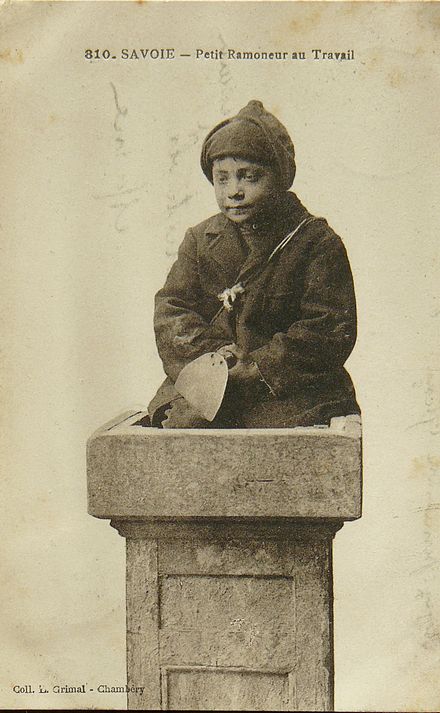
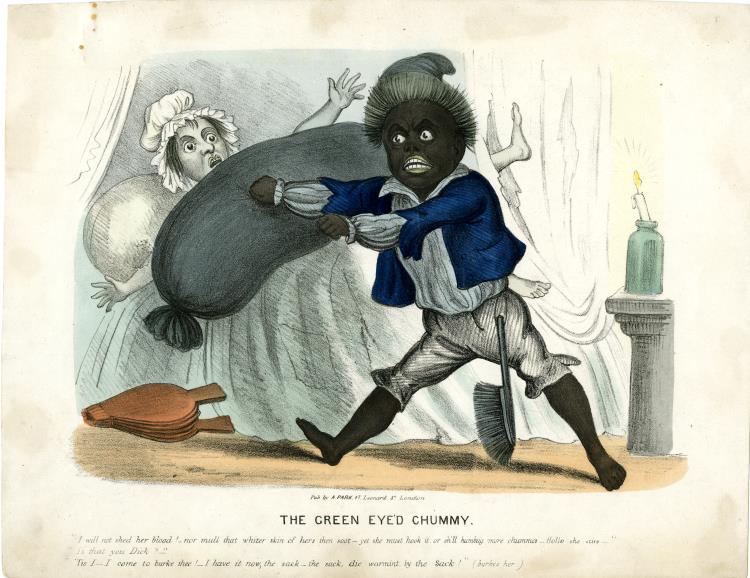
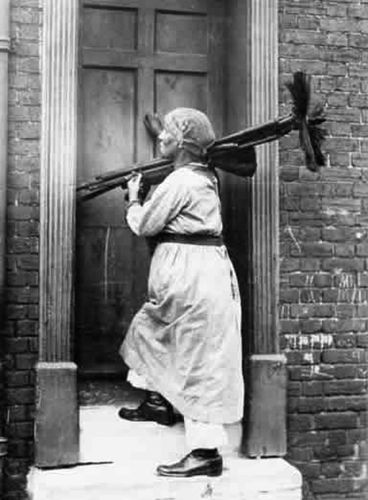
One such story you may have never heard of is about the young white slaves of Old England who were called “chummies, chimney sweeps or climbing boys.” These were very small children as young as 4-5 years old who were sold by their parents and bought by brutal dictatorial businessmen who enslaved them to clean fireplaces by making them climb up and down filthy flues.
As their working conditions were miserable, they were often stabbed in the feet with pins or fires were lit beneath them by their masters in order to force them to climb up the dangerous chimneys.
Many of these kids were called “white niggers” as a result of their skin being permanently sooted in a black coat of ash in which they rarely showered and often they had burns from the fiery coals.
They suffered from joint deformities, burns and cancer and it was not uncommon for the children to die suffocated by the soot or burned to death by the intense heat.
In a work titled, “Tit for Tat,” the author explains why they were given this name;
“There is a race of beings, by the initiated facetiously denominated ‘chummies,’ which exists only in humane Britain. Outside barbarians call them chimney sweeps. This race is black, not from blood, but from soot.
I beheld specimens of these crippled, distorted, bleeding bits of humanity, and at sight was taken down by a sympathetic fever’”
When you read below what happened to some of these poor children, you cannot help but imagine the horror, pain, and loneliness they must have endured.
I believe that some of these stories are a wakeup call to people today so they understand our brutal pasts and also comprehend the psychopathic nature of many modern humans whose vileness seems to run in their DNA. Meaning, that psychopathy has been passed down to them through their blood and who they are today is often a result of the demon spawn/parasites that were birthed internally as a result of their iniquities of their ancestors.
By the way, this same evil business practice occurred in France, where the chimney sweepers were most often young Savoyards.
In the book, the author shows from official government reports that were approximately four thousand infants employed in England, instead of sweeping machines, to climb up and clean down chimneys. At the time, there was a law which was supposed to abolish this kind of slavery, but English master-sweeps and the English public find that it is cheaper to employ children.
“This law to put down all the atrocities of climbing children is essentially a law to protect the children of the poor, even from their own parents, who, I am sorry to say, are among the very foremost to sell their children into this slavery. The evidence on the committee before the bill was passed was most revolting, was most overwhelming. It was an opprobrium upon any civilized country.”
The evidence which led to this law showed that many thousands of children were found to be exposed to the most hideous cruelties, burned and roasted alive, tortured by brutal and drunken masters, driven up chimneys in flames, falling down chimneys on fire, going into boiler slues so hot that they were obliged to have boards put under them to prevent them from being gridironed alive;
and in addition to all this, the children were constantly sold by their parents and masters for five shillings a head to undergo all this iniquity. It was impossible to educate them, because they were never able to herd with any others in their own class. Scarcely any of them could read or write.
Very rarely washed, they slept upon heaps of soot in most revolting cellars; they had little or no food given them, except the broken victuals that they begged at the houses where they were employed.
They began this incarnate degradation as young as five years of age, when our own children have not escaped from the nursery. And, finally, by their constant contact with the soot, they laid the seeds of a most revolting cancer, (called chimney sweep’s cancer,) which frequently terminated their existence under circumstances of the most offensive suffering.”
The poor children, in their first essays, find it almost physically impossible to climb up the narrow, crooked chimneys; but with the black cap drawn over their faces, up the fearful passage they must go. Their natural repugnance to the business must be overcome by the most unflinching brutality.
“A child is put up a chimney, and if he will not climb, the master puts his hand under him, and runs some sharp instrument into him. Generally, I believe, an old boy is sent up after him with a pin, or a shoemaker’s awl, and sometimes fires have been lit under a child, who is thus driven up to escape the flames.”
The following extracts are from minutes of evidence taken before the select committee of the House of Lords, appointed to inquire into the expediency or inexpediency of the regulations contained in the Chimney Sweeper’s Regulation Act Amendment bill, and to report thereon to the House, at the session of 1852–3, and ordered to be printed June 7, 1853:
“Was all that established by evidence in a court of justice 2 – Precisely. The Lord Chief Baron entered into the case minutely, and told the prisoner at the bar, in his judgment, in addition to causing the death of the boy, he was punishable, by allowing a child at so tender an age to sweep chimneys at all. His lordship then said, on the prisoner being found guilty, that the case, from its atrocity, required some consideration; therefore he should defer his sentence. On the following day, the prisoner being brought up to receive sentence, his lordship observed, that the prisoner had violated a law intended to do away with the cruelties practised on young persons employed by individuals in the business which he, the prisoner, followed, and that he had, besides, caused the death of a fellowcreature by the course he had pursued.
After commenting on his crime, his lordship said he hoped the punishment he was about to inflict would act as a warning to all persons, and he sentenced the prisoner to ten years’ transportation.
The date of this case was August, 1847. The next case bears date December, 1850. Stephen Ratcliffe, eleven years of age, was employed by his master, William Davies, of Manchester, to cleanse the slues round a steam engine boiler. He and another boy went into one of the slues, the master being engaged in clearing away the soot, as the lads brought it to the mouth of the slue.
After some time, the master called out for a doctor, stating that he believed the boy Ratcliffe was dead, which proved to be the case. About twenty minutes after the deceased was taken away, a person went into the flue which the child had been sweeping, and found the heat so great, that, to use his own words, he ‘would not have liked to have kept his hand there more than five or ten minutes.’
The dead boy was found about ten feet down the flue. He had been out before, and complained of the heat; he was afterwards heard to cry. On examination of the dead body, there was a burn found on the left shoulder, another on the left arm, and a third on the left hip; both his ankles, his face, and his ears were also burned. Some of the burns were severe, the skin being off; the internal organs were found congested with blood, and gave evidence of the child having died of suffocation.
The verdict returned by the coronor’s jury was, ‘Accidentally suffocated in a heated flue.’ That is all that follows the murder of this child.
In the year 1850 this is the only result of such a frightful case. “Was the man never put on his trial 2 No. In February, 1850, at Nottingham, a boy named Samuel Whitt, ten years of age, was sent up a chimney, in the grate of which was smouldering a small portion of fire.
As the child remained some long period without attempting to return, and made no answer when called, an elder boy was sent up the flue to bring him down; but finding the child jammed fast in the chimney, beyond all power of extrication, the elder boy was obliged to return unsuccessful.
A bricklayer was then employed to cut a passage through the wall; but this process, being difficult, from the extreme thickness of the building, and likely to occupy much time, was abandoned. The elder boy was again sent up the chimney, when, taking hold of the little boy by the legs, he suspended himself from this child of ten years of age; a third person below attached himself to the legs of the second boy, and thus they attempted to drag him down, by doubling the weight.
By these means the unfortunate child was torn away in an almost lifeless state, half naked, bleeding, and bruised; and, after lingering many hours in dreadful torture, death, more kind than man, put an end to his existence. “What was done upon it !
The result of this in the town of Nottingham showed that the master did not possess any machinery; the child’s murder never caused any sensation in the place, and the master was unvisited with any punishment whatever.
“Was there any verdict of the coroner? No notice seems to have been taken of it at all. There are two cases which go back to 1848; in one case a sweep was stolen from Nottingham, and brought to the chimney sweeping trade in Hull.
In another case, a child was proved to have been sold five different times to as many different master sweeps; and, at last, this coming before the magistrates on sworn testimony, the child was brought forward in court by a stout, middleaged woman, Mrs. Chapman, in whose care he had been put by Mr. Perritt, surgeon. The lad was unable to walk, and was placed by the woman on the table.
On partially removing a large shawl which covered him, and taking away from him certain cloths which were wrapped round the right arm and both legs, their appearance gave a very shocking sensation to the magistrates, who found both knees very much swollen, and also the ankles and the right wrist, the nurse who put him on the table saying that both his legs were as soft as a mummy. “What was the age of the child 7–Ten years of age.
The boy, and other witnesses corroborating him, informed the magistrates that in this enfeebled condition he had been carried on his master’s back from place to place, as he was unable to walk, and had been forced to go up and clean several chimneys.
The boy stated that his master had beaten his arm with a boot, which caused the swelling of the wrist; and in this state he was carried to climb twelve chimneys on Saturday morning. The day before this evidence was given, after this child had swept two chimneys, he was taken and laid under the window of Mr. Maloney, and thence removed on the back of a man named Batty, to sweep other chimneys.
The surgeon, on being examined, deposed that he was called in to view the child on the day before the testimony was given, and that he considered the child’s life to be in danger. Alderman Cookman, the magistrate, who tried the case at Hull, declared from the bench that such a state of things was so horrible that he would see the master should be prosecuted, and he would pay the expenses himself.
“As to slavery,’ said the alderman, “talk about slavery, -there is no slavery in the world like this.’
Moe is the founder of GnosticWarrior.com. He is a father, husband, author, martial arts black belt, and an expert in Gnosticism, the occult, and esotericism.
Since ancient times, the He-Goat has been used as a symbol of the Mac-a-dan-oian Empire and has always been associated with the wealth of the people of Bible lands.
The particular He Goat that I speak of is one of the most unique and rare wild animals on earth and can mainly be found only where the Ancient Gnostics had lived. It is a native of the Holy Island of Crete and Egypt where it can be found in Sinai and in the wilderness on both sides of the Dead Sea and the Syrian Desert of Arabia.
In the Scripture, they are spoken of as wild goats of the rocks who today are known under several names such as the Beden (Baedan, Baden – meaning Son of Dan), and the Cretan Goat (Capra Nubiana) or Abyssinian Ibex. Sometimes called also the Jaela by the Arabs, the Nubian Wild Goat, the Wild Goat of Sinai, and the ‘goats of Moses’. Its scientific name is Capra Beden (Capra Nubiana).
I simply like to call them the “Be-Dan Goats” and they were one of the main and prized animals of the Biblical patriarchs of the East. In fact, it became one of their main symbols for the life and wealth it brought them.
These particular goats had hair when properly taken care of was almost equal in the beauty that of silk, and is never sheared, but combed off. For example, the Levite Moses had used Goat’s hair in making the curtains of the tabernacle, Exod. xxv.
The women would spin the hair that was then worked and dyed which became one of their main exports for global commercial trade. It was said that they attributed the quality of the hair to the soil of the country.
Goats were tended with the sheep by the same shepherd (Gen. xxvii. 9; xxx. 32), but in separate companies (Mat. xxv. 32). Their hair was woven into cloth (Ex. xxv. 4; xxxv. 26), the flesh and milk were used for food (Lev. vii. 23; Dent. xiv. 4; Prov. xxvii. 27), and in extremity their hairy skin served as clothing (Heb. xi. 37).
Their flesh is said to taste excellent and compared to nearly the same flavor as that of the deer. The Bedouins use their skins to make water-bags of their skins, and on their thumbs wear rings made of Bedan horns.
[The Land and the Book; or, Biblical illustrations drawn from the manners and customs, the scenes and scenery, of the Holy Land.] Image taken from page 387 of ‘[The Land and the
THE BEDAN OF THE BIBLICAL PATRIARCHS
The Bedan Goat is first seen in 1 Sam. xxiv. 2, in which it is rendered as “Wild Goats.” “It was told Saul, saying, Behold, David is in the wilderness of En-gedi [i.e. the Fountain of the Goat]. Then Saul took three thousand chosen men out of all Israel, and went to seek David and his men upon the rocks of the wild goats (azelim).”
In a past article, I connect King Saul with the Biblical prophet named Obed or Obediah and in ancient Hebrew (Phonecian) history as King Abibalus of Bediah and Bedan and in Masonic lore has Hiram Abiff. This name Bedan for Saul, meaning Son of Dan also seems to align with the naming of their special Bedan Goats.
Symbolically, we find that it was used as a symbol for the Maccedocians and the he-goat signifies the “chief ones” (Isa 14 9; cf Jer 60 8). In Prov 30 31, one of the four things “which are stately in going” is the he-goat, tayish (Arab. (j**-u, tais, “he-goat”), and is also mentioned in Gen 30 35; 32 14
In Daniel, the powerful king out of the West is symbolized as a goat with a single horn (8 5) and one of the older goats is the leader of the flock. In Isa 14:9 we are told of the downfall of the King of Babylon;
“Sheol beneath is eager to meet you upon your arrival. It stirs the spirits of the dead to greet you— all the rulers of the earth. It makes all the kings of the nations rise from their thrones.”
The “chief ones” are, literally, the he-goats, or “bell-wethers” of the flock (Isaiah 34:6; Zechariah 10:3), of which Hades is the shepherd (Psalm 49:14).and in Jerome 60 8, we learn, “Go forth out of the land of the Chaldeans, and be as the he-goats before the flocks.”
Jacob gave two hundred she-goats and twenty he-goats to Esau (Gn 32″). Nabal had a thousand goats (1 S 25″). Sheep and goats were kept together in flocks (Mt 258S-88). Kids especially were used as food (Gn 27′, Jg 6″> 13″, Lk 15»). among the possessions of Laban and Jacob, and in 2 Ch 17 11 among the animals given as tribute by the Arabians to Jehoshaphat.
These same goats are found in Job xxxix. 1: “Knowest thou the time when the wild goats of the rock bring forth?” And in Ps. civ. 18: “The high hills are a refuge for the wild goats.”
The goat which is sent into the wilderness bearing the sins of the people is sa’lr (Lev 16 7-22). The same name is used of devils (Lev 17 7; 2 Ch 11 15, RV “he-goats”) and of satyrs (Isa 13 21; 34 14, RVm “he-goats,” ARV “wild goats”).
DESCRIPTION OF THE BEDAN GOAT
The Bedan goats are a handsome animal with very long horns set closely on the forehead.
The males are a brown color with a black streak along the spine and the beard is very short, and a long mane hangs from the throat as far as the breast. The females are a greyish-brown, with white and black legs, and her face is very like that of the blessbok, being white, with a black patch and stripe in the middle.
They are one of the most agile animals on earth loving the highest and most craggy parts of the mountain ridge. They have the ability to dash at the face of a perpendicular precipice that looks as smooth as a brick wall, for the purpose of reaching a tiny ledge.
The young Bedan goats are sometimes captured and tamed but are said to be very difficult to rear to maturity.
The horns of the Bedan reach an enormous size and are curved with the large rings and ridges which cover their front which make beautiful handles for knives used by the Hebrews, Bedouins and even said to be occasionally seen in England serving as handles to carving-knives and forks.
CONCLUSION
I believe they chose these goats because they were one of the only animals that could live and thrive in these harsh desert and mountain environments which provided these families with the sustenance that they needed to also survive in such inhospitable places.
Places that were strategically chosen by the Biblical patriarchs for their home bases that acted as necessary defensive and offensive encampments so they could carry out their military plans. In addition the habits of the Bedan such as being very shy and wary, keeping to the mountains, and are very difficult to be seen because their color, are some ideas they used for their military efforts.
Over time, their descendants would honor these animals that helped them survive by using the He Goat and its horns as both a symbol of honor and royalty for their Tribes.
These same Tribes who had intimate knowledge of raising and herding these animals would then export these goats to other lands they had conquered like in Germany and Sweden where you will find their Eastern Bedan Cousins called the “steinbock, chamois, or bouquetin” in the Swiss and Tyrol Alps.
Moe is the founder of GnosticWarrior.com. He is a father, husband, author, martial arts black belt, and an expert in Gnosticism, the occult, and esotericism.
oIt is the unanimous testimony of almost all Irish Historians, that the Tuath-de-Danaans (Tribe of Dan) were learned, and well skilled in Science and Magic. For many hundreds of years thereafter, Ireland became celebrated as the main center for learning and the export and import of a group of wise men known in the Old Gaelic language as the Ollam (Ollamh, Ollave, Olaf) and to their Brethren of the East, the Ulam.
This history is so widely attested that it must be taken as an unquestionable fact, because it is recorded by all Historians of the Celtic race. The many stories of their sagas and exploits are told throughout all early Irish literature for they were its creators.
It is from these words that we learn long before the Christian era, the Ollam of the Irish and Scottish nations were some of the most powerful people who ruled from the Hills of Tara for well over 1500 years or more. Their legal counsels and judges could issue edicts that could make or dethrone a king in a day and thus were endowed with a distinction equal to that of the king.
The Supreme Ollam sat next to the king at the table where he was privileged to wear the same number of colors in his clothes as the king and queen, while all other ranks whether warriors or fellow Ollam had fewer colors. You will find that from the most remote periods of early history in the Irish annals to modern times that we can trace a succession of the Ollam who were honored on a level of noble kings and warriors.
Today we see this tradition of colors identifying rank carried on mainly in Catholicism and the military. Also, to this day in Ireland, an ollam or ollamh means as it did then “a doctor, professor and or scholar of any kind of learning.” In other countries around the globe such as in the Islamic countries, these learned me are known as the Ulam of Mulah.
The Ollams power was derived from their extensive knowledge that in ancient times past was always hereditarily passed down to them which included all types of sciences, literature, religion, history, laws, heraldry, genealogy, logic, reasoning and even magic, to name a few. Their schools became the most celebrated in the Western world under the name of Mur-ollam-hara (MurOllam-han), meaning the “College of the Learned or the College of Doctors.” (Four Masters, p. 293. – vide O Halloran, Book iv., chap. 1, p. 132).
Like their Eastern Ulam ancestors, the professions of the Irish Ollam, whether it be poetry, art, history, building, law and even propaganda, had invariably run in families, so that members of the same household often devoted themselves for many generations to their particular craft.
I believe it was from thousands of years of training and specializations passed down in families that today we see many gifted people who seem born to do specific jobs whether they are world-class scientists, religious scholars, builders, lawyers, judges, poets, singers, and leaders, to name a few.
These various classes of Ollams had produced people who were specialized in their trades and were thus segmented and paid on these abilities. For example, the Book of Rights states that a king kept in his household an Ollam of each profession, who was well paid for his services. The literary Ollam from forbidden from sharing his work with the lower class people and only with kings and chiefs and with their guests.
For the meaning of the word, nobility is “able to know.”
Poets were charged with entertaining the lower grades to attend a lower class of people. The prices for the compositions of the several grades of poets may be seen in the “Small Primer,” Br. Laws, v., pp. 57-71.
A an Ollam “He was also supposed to know the prerogatives, rights, duties, restrictions, tributes, of the king of Ireland, and of the provincial kings and the poet or the learned “historian” who does not “know the prerogatives and the prohibitions of these “kings is not entitled to visitation or to sale” [of his compositions].
It was also said that the Ollam was expected, if asked, to repeat the whole statement from memory, “so that he can recite them all at each noble meeting.”t As a learned man he was expected to answer reasonable questions, and explain difficulties;
“He is great to expound, and he expounds and solves questions”—says Cormac’s Glossary (127, “Ollamh”).
SONS OF THE IRISH OLAM
In the ancient mythologies of Ireland listing “the most famous and noble persons of the Tuatha De Danann,” we find “the six sons of Delbaeth, of Ogma, namely, Fiacadh, Ollamh, Indaei, Brian, Iuchar, and Iucharba.”
The Pictish Chronicles more accurately listing the genealogies which can coincide with science informs us that they were from Ollamhan, from whence comes Mur Ollamhan at Tara or Teamhair (Hill of Tara), to Fiacha, son of Baedan, who fettered the hostages of Erin and Alban.
It was from the Clan Baedan (Son of Dan) who became the de facto father of the senior line of the Hy-Niall kings (King of Ireland and Scotland) because he was the great-grandson of Niall of the Hostages and his grandmother was Scottish Princess of Dalriada named Erca which united the two ancient kingdoms of Scotland and Ireland into one.
We learn that from him the feast of Teamhair (Hill of Tara) was first instituted at Mur Ollamhan. Then, after naming his six successors, the legend adds, “These then are the seven kings that ruled over Erin of the Cruithnigh of Alban.”
You will find these same seven kings are also placed on a list of the mythic pagan kings of Ireland with the first being Olam Fodla is described as “a prince of the most comprehensive knowledge, that ever sat on the Irish Throne is credited with erasing all falsehoods—and he punished severely all historians who made improper representations” (Keating, vol. 1, p. 197).
Ollamh Fodla who is also attributed to one of the most important tasks which is the tribal organization of his people; for according to the Annals of the Four Masters, ‘it was he also that appointed a Toisech over every Triocha Ceud or barony, and a Bruighigh over every Baile or township, who were all to serve the king of Erin.”
It was from these ancient clans of Ireland where we find the professions of some of the most famous Ollams in history who were instructed to teach their own children, and kinsmen, to always be their successors and then with the advent of the New Testament (New Law) for the global Gentiles – they were instructed as it were to “Go ye and teach all nations.”
It was from these families and the schools of the Olam in Ireland which gave rise to some of the most famous Saints of the early Church such as Saints Columba and Patrick whose disciples became masters in the Christian religion. Their Great Work for bringing law, order and learning around the globe to their English, German, and French Brethren that in the years following their deaths, Ireland was termed Sanctorum Patria, or the Saints’ Country.
Author Charles O’Connor, eloquently explains their missionary efforts in his “Dissertation on the History of Ireland,”:
“The monks set up schools, in which they educated the youth, not only of the island but of the neighboring nations. They sent their missionaries in shoals into the continent, converting its heathen and confirming its Christian inhabitants; set up schools in those parts; and laid the foundations of the most flourishing universities in Europe.
They taught the Saxons and Normans the use of letters, and they converted the Cruthneans or Picts to Christianity by the preaching of Columbkille, who quitted his right of succession to the throne of Ireland, to reign over the hearts of a foreign people, enemies to his own nation.”
This family line had produced several of the most well known Gnostic luminaries in the early Celtic Church. In the course of history, that had gone by the name of Baedan or Baithen, son of Brendan, and were the legal successors of Saint Columba as Abbot of Iona.
It was at this time that Saint Columba had declared “Power by Baedan of the yellow hair will be borne from Ireland on him [the steed].”
0 God, wilt thou not drive off the fog, which envelopes our number,
The host which has deprived us of our livelihood,
The host which proceeds around the cams’!
He is a son of storm who betrays us.
My Druid,—he will not refuse me,—is the Son of God, and may he side with me;
How grandly he bears his course, the steed of Baedan” before the host;
Power by Baedan of the yellow hair will be borne from Ireland on him [the steed].
So we know that Baedan who was Monarch of Ireland jointly with his nephew, Eochaidh, in the year 566 after he became the immediate successor of Saint Columba in the 6th century.
It is said that he ruled Iona for only three years, but had left his 12 sons to take his place upon his death in which the Irish Annals record the death of Baedan MacCoirill, King of Ulster, and a naval expedition in the year 598. St. Adamnan, in recording the death of St. Columba, tells us that the dying words of the Apostle of Iona, as he was transcribing Psalm 53, were: “I must stop here, let Baithéne write what follows”.
Baithéne had been looked on as the most likely successor of St. Columba, and so it happened that on the death of that great apostle, in 596, the monks unanimously confirmed the choice of their founder. Baithéne was in high esteem as a wise counselor, and his advice was sought by many Irish saints, including Saint Fintan Munnu ofTaghmon. Abbey St Bathans in Berwickshire (southeast Scotland) may be named after him.
Here is a shortlist of some of the Saints of Iona from the House of Baedan (Baothin) who took the name of Beadan (Baothin):
* Baedan, son of Muircheartach, joint-king of Ireland, 555, 562, 563.
* Baedan, son of Ninnidh, son of Fearghus Ceannf hoda, slain, 567.
* Baothin – Son of Brendan and the founder of the House of Baedan. – He was also known by the various spellings such as Baedan, Buadan, Baithen called Baitan Mor. He was the legal successor of Saint Columba, died, 595.
* Baedan Mac-Ua-Cormaic, abbot of Cluain-micNois, died, 663.
* Baedan, abbot of Beannchair, died, 665.
* Baedan, bishop of Inis-Bo-finne, died, 711.
* Baedan, of Cluain-tuaisceirt, died, 804.
* Baedan, abbot of Birra, died, 926.
It was from the family of Badan that naturally produced several generations of learned and professional men known as the Ollam who were on a level, and social rank, with the chieftain grades. From this clan, I believe that there would be numerous other families who were either cousins or allies who would be given royal titles for their Great Work.
I believe that many of these Ollam clans would be legally signified by simply adding an O’ to the beginning of their names which is something we see only used in ancient Ireland and also the appeleation of Mac would be used meaning “Great of Chief” for the “Chieftan” families of the Ollams.
Ollam Clans who were the most distinguished amongst the professor castes are listed in The History of Ireland from the Earliest Period by Geoffrey Keating who had written;
“The most distinguished amongst the professor castes were, in Ulster, the O’Cleries, O’Gnives, the O’Slevins, O’Husseys, O’Donnellies, O’Dalies, O’Mulligans, O’Farrellies and O’Curneens; in Connaught and Meath, the O’Maelconaries, Mulconries, or Conries, the MacFirbisses, the O’Duigenans, the O’Dugans, the O’Higgins, and O’Coffees.
The O’Dunns and MacKeoghs, were the chief bards of Leinster; the MacGraths, the O’Dineens, the MacBruodins or Brodies, the MacCurtins, and MacGowans, and some of the O’Keefes, in Munster. The O’Dalies were found distinguished as poets in all parts of Ireland.
“In music the ancient Irish were highly celebrated. It is stated in the Chronicle of IIanmer, p. 197, that in the latter end of the eleventh century, about A. D 1098, Griffith ap Conan, Prince of Wales, who had resided a long time in Ireland, brought over with him, to Wales, “divers cunning musicians, who devised in manner all the instrumental music upon the harp and crowth that is there used, and made laws of minstrelsy to retain the musicians in due order.’
Thus it appears that the famous Welsh bards were indebted for their knowledge of the harp chiefly to the Irish. The Irish in former ages were the most famous harpers in Europe, and continued eminent in the art down to modern times.” Turlough O’Carrolan, our last very eminent harper and composer, died in the year 1738.”
There were various specialties and names for the professions of the Ollam. For example, a Doctor of Law was called “Ollamh re Dighe” (dlee); a Doctor of History was styled “Ollamh ré Senchas” and a Ollamh releighes” (ollave re lyas) meant medical doctor. (The History of Ireland from the Earliest Period to the English Invasion By Geoffrey Keating)
Some of the most eminent of Ollam would become tutors to kings and also be the founders of various Mur-ollam-hara (MurOllam-han) schools around the world in which they set up a barony, and a bruighean (brugh, brughaidh, breean or breen) over every Baile or township from which they had settled.
This old Irish word bruighean (bru, brugh, brughaidh, breeoge, breean or breen) appears to mean “royal house or royal mansion” and was used to signify the royal house and place of their barony (barune) or government.
This word Bruighean occurs in the Feast of Dunnangedh in relation to pillars and the old Tribes “that his progeny should still have the legitimate possession of Tara with its supporting families, and the old Tribes of Meath perpetually and forever.”
We find several place names for various Irish townlands located in Antrim, Donegal, Tyrone, Limerick, and in Tipperary. For example, the town Breenaun in the parish of Ross, Galway; and Breenagh in the parish of Conwal, Donegal, and Breeoge, in the parish of Kilmacowen—Bruigheog.
THE IRISH SONS OF OLAM ATTACKED FOR THEIR GNOSIS
In Moore’s History of Ireland, we learn that in the year 812, the Danes burned the abbey of Derry, and massacred the clergy and students and their schools and sacred edifices of Armagh were burned in the ninth century, but the disaster was soon overcome.”
Eminent scholars from abroad are found visiting Armagh in the next century, and during the interval of its misfortunes education throve at Clonmacnois, Devenish, and Kildare. The annals of Munster record that, in the year 812, the Danes burned the abbey of Derry, and massacred the clergy and students. Probus, author of a life of St. Patrick, in two books, was chief lecturer of the school of Slane, and met his death during an attack made by the Danes upon the church, in the year 950. Clonmacnois was cruelly pillaged in its turn.
So many eminent Irish Olmam had made such an impact on Continental European royal courts and had gone on to become Catholic Bishops that they excited the jealousy of other scholars in various countries.
In the tenth century, the Irish Olman were denounced by their competitors who launched an ad hominem attacks calling them the “Episcopi Vagantes” and making jealous decrees of different councils such as in Calcuith that went so far as to declare that no Irishmen should be admitted to clerical functions—“et Scoti non admittentur sacra ministrare.”
CONCLUSION
Since the most ancient times, it has been a policy of kings to recognize and promote thier tutors as the most learned men of their kingdoms by bestowing upon them royal dignities of honor and trust in their court.
For example, we find this tradition in Ancient Greece when in 343 B.C., King Philip II hired the philosopher Aristotle to tutor Alexander the Great philosophy, poetry, drama, science, and politics over the course of only three years. We find this also in the Old Celtic storied like in the relationship between King Arthur and his tutor Merlin.
The general tendency to honor the Ollam in history I believe stems from the fact that without their Great Work, most of history and the eternal wisdom would be lost. For we know the kings managed the kingdom while the warrirors defended it and the Ollam were in charge of all knowledge and controlling it as well for it is well known that “knowledge equates to power.”
The Irish Helicon records the legends of the royal road to the Ollams great Gnostic learning.
We learn that King Cormac Mac Art was wandering through Tir (Tyre) Tairngire or Fairyland, when he saw beside the rampart of a royal dun or palace a shining fountain with five streams issuing from it, making a murmur more melodious than any mortal music.
There were five salmon (s-olman) swimming about in the well: and on the margin grew nine hazels which often dropped purple (Phoenician) nuts into the water. The moment a nut fell, one of the salmon caught it, and rejecting the husk, ate the kernel.
As Cormac looked on, he saw many people coming to the well in turn and drinking. And when he inquired the meaning of these strange sights, he was told that this was the “Fountain of Knowledge (Gnosis)”; that the five streams were the five senses, through which knowledge is obtained; and that those who drank were at once endowed with great knowledge, so that they were thenceforward called;
“People of many arts and sciences” {Lucht na n-ilda1i).”
Moe is the founder of GnosticWarrior.com. He is a father, husband, author, martial arts black belt, and an expert in Gnosticism, the occult, and esotericism.