by Moe | Sep 26, 2019 | Freemasonry, History of the Brotherhood
The ancient Kings (Lords) of the East had two forms of government in which the king employed a governor to rule over their empire’s stone quarries, commerce, religion, and military by the royal title of “Tirshatha” (Turshatha, Tarshatha, Tursha, Tuirsha, תּרשׁתא, tirshāthā’, Ἁθερσαθά, Hathersathá).
In the Bible, one of the most important and if not favorite of the Tirshatha (Turshatha) is mentioned by the Prophet Erza who calls Zerubbabel (Zorobabel) “the man for the occasion.”
For example, we learn in the Scripture that “Nehemiah presided as Tirshatha at the national sealing.” “Nehemiah did not become Tirshatha of Jerusalem until the twentieth of Artaxerxes,” and “Eliashib, the grandson of Jeshua, was a high priest when Nehemiah was made Tirshatha.”
According to the Book of Ezra 1:1-2, “With the blessing of Cyrus, Zerubbabel, and Jeshua the high priest leads marked out as the representative of the Persian king.”
After leading their return from the 20 years of Babylonish captivity, it appears that Zerubbabel who we know by his official title that he was sealed as the legal representative of the Persian king, the “Tirshatha for Persia.”
The word is used of officers and governors under the Assyrian (2Ki 18:24; Isa 36:9), Babylonian (Jer 51:57; Eze 23:6,23; see also Ezr 5:3,14; Ezr 6:7; Da 3:2-3,27; Da 6:7 [Hebrews 8]), Median (Jer 51:28), and Persian (Es 8:9; Es 9:3) monarchies. Under this last we find it applied to the rulers of the provinces bordered by the Euphrates (Ezr 8:36; Ne 2:7,9; Ne 3:7), and to the governors of Judaea, Zerubbabel, and Nehemiah (comp. Mal 1:8).
Like me, one of the world’s most famous physicists and mathematicians during the 17th-century scientific revolution, Sir Issac Newton who happened to be an excellent Biblical scholar, had cofounded using math and logic had Zerubbabel (Ezra 2:63; Neh 7:65, 70), and Nehemiah (Neh 8:9; 10:1) because they are one and the same persons
Newton had written;
“Comparing, therefore, the Books of Ezra and Nehemiah together, the history of the Jews is, that they returned from captivity under Zerubbabel In The First Of Cyrus, dwelt in their cities until the seventh month, and then coming to Jerusalem, they first built the altar” (Ezra iii. 2), “and in the first day of the seventh began to offer the daily burnt-offerings, and read in the book of the law, and they kept a solemn feast, and sealed the covenant.”
I believe that this title was given to both Zerubbabel (Ezra 2:63; Neh 7:65, 70), and Nehemiah (Neh 8:9; 10:1) because they are one and the same persons which can easily be sorted out given the facts that they lived at the same time, they were both from the Tribe of Judah, and assigned by the Persian royalty as governors and priests which at the time was only assigned to one person or Tirshatha.
It appears that after the 20 years of captivity and upon his return to Jerusalem, Zerubbabel then takes on the surname (holy name) of “Nehemiah” (Neh. viii. 9, x. 1) after he becomes “sealed on the head” and becomes a national hero for his Great Work of rebuilding the walls of Jerusalem, for the first time since their destruction by Nebochenezzer.
You will find that all the priests who came up with Zerubbabel (Nehemiah xii. 1), are exactly the same priests who sealed the covenant with Nehemiah and Ezra at the time of the feast (Nehemiah x. 1). Among those sealed and my readers should find no surprise was Obadiah who was one of the priests who signed and sealed the same covenant (Neh. x. 5.) who may be cofounded with Iddo, Neh. xii. 4. who returned with Zerubbabel. (See Sir Isaac Newton)
The key to understanding this chronology is found after Nehemiah arrives at Jerusalem when he now expressly speaks of “the former governors who had been before him, and were chargeable to the people.”
This passage clearly shows us that before they were conquered by the Persians and upon their appointment of the Persian Tirshatha as a legal representative or governor who we can say is “chargeable for the king (Lord),” the former Kings and governors of Judah were “chargeable to the people.”
Later, in the time when Cyrus’s son Darius had ruled Persia, Zerubbabel is famously credited with the future independence of his people by laying the foundation of the Second Temple in Jerusalem soon after and restoring that city to its former state and dignity, as a fortified town.
This may be the reason why we find the Tarshatha immortally honored by modern Masons as the degree of Knight of the East in the Ancient and Accepted Scottish Rite, according to the modern ritual of the Southern Jurisdiction of the United States, for Tirshatha, and applied to the presiding officer of a Council of Princes of Jérusalem. (An Encyclopedia of Freemasonry and Its Kindred Sciences, Volume 2)
According to the prophet Haggai who prophecizes; “On that day, says the Lord of Hosts, I will take you Zerubbabel, son of Shealtiel, my servant, and wear you like a signet ring; for it is you whom I have chosen. This is the word of the Lord of Hosts’” (Hag. 2:23).
Here we have another important clue as to the identity of these people with the words “he is chosen, a servant to the Lord and signet ring.”
Erza tells us how Zerubbabel, now named “Nehemiah” came to Jerusalem as “viceroy of Tirshatha,” clad with full powers, rebuilt the walls and adopted and enforced the legal reforms for the next twelve years.
Josephus that “after the death of Cambyses, and the slaughter of the Magi, but under the reign of Darius, Zorobabel was superior to the rest in the solution of problems; and thereby obtained this favor of the King, that the temple should be built.”
Josephus writes, “After the slaughter of the Magi, who, upon the death of Cambyses, attained the government of the Persians for a year, those families which were called the seven families of the Persians appointed Darius, the son of Hystaspes, to be their King.
Now he, while he was a private man, had made a vow to God, that if he came to be King, he would send all the vessels of God that were in Babylon to the temple at Jerusalem.
Now it so fell out, that about this time Zorobabel, who had been made governor of the Jews that had been in captivity, came to Darius, from Jerusalem: for there had been an old friendship between him and the King.
He was also, with two others, thought worthy to be guards of the King’s body; and obtained that honour which he hoped for.”
For his great Work, Zerubbabel was immortally enshrined as a prince of the blood-royal where he is emphatically called, the Prince, of the kings of the earth, Rev. i. 5. the King of kings and Lord of lords, Rev. xix. 16.
In Neh. ix. 38. and x. 1, 28, 29. it is said, “And because of all this, we make a future covenant, and write it ; and our princes, Levites, and priests seal unto it.
Now those that sealed were Nehemiah the Tarshatha, and the rest of the people, the priests, the Levites, the porters, the singers, the nethinins, and all they that had separated themselves from the people of the lands unto the law of God, their wives, their fons and their daughters, every one having knowledge and having understanding;
They clave to their brethren, their nobles, and entered into a curse and into an oath, to walk in God’s law, which was given by Moses, the servant of God, and to observe and do all the commandments of the L O R D our God, and his judgments and his statutes.”
SCIENTIFIC PROOF OF THE TIRSHATHA IN EGYPT
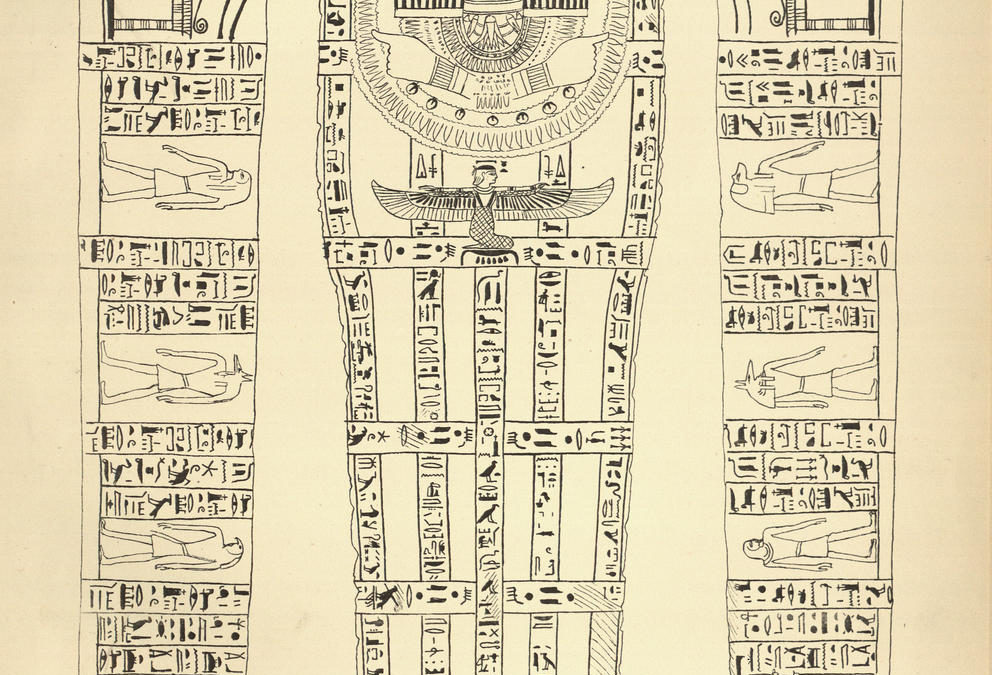
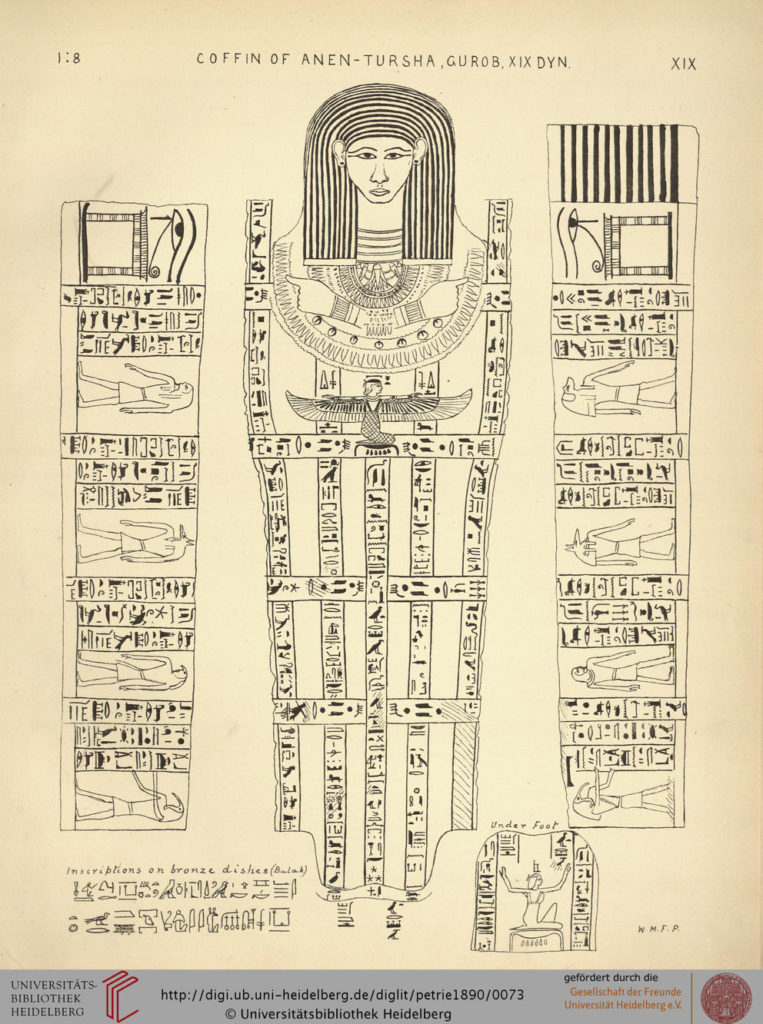
In my previous article, Tyre-Egypt: God’s Ancient Stone Masons of the Tora, I share my research in regards to a Tirshatha discovered in 1889 when an Egyptian archaeologist found what has been described as a “yellow-haired mummy” or “blonde person” that was a high or royal named Ш, wml Ё Ш Ъ Ш l, “An-Tursha”, “Anen-Tursha” or “Stone, Rock or Pillar of the Tursha”, and was governor of Heliopolis.
This mummy was found at a famous ancient stonemasons quarry called today Tura, Egypt that had produces some of the most famous and prized limestones in all the world. The stones mined here helped finish the pyramids and for the royal sarcophagus.
Some of the most powerful rulers for the Pharoah had ruled the Southern Kingdom of Egypt from this region which happened to produce not only some of the worlds finest stones and masons but also scribes, priests, and one of the world’s most powerful Navy operations.
The stonemason’s town of Tura bordered the Nile and thus the Mediterranean giving them exclusive access not only to the Pharoah but also Naval military access and the power of commerce for the region which must have been the most important shipping port in all the world.
These ancient facts I believe were the beginning stones for the foundation of the wealth for the noble families of Tyre who we now know were the king’s governors as late as the time of King Cyrus and as early as the 15th century BC in Tura, Egypt with the archaeological find of “An-Tursha”, “Anen-Tursha” who was governor of Heliopolis.
As I explained in the article, the native name of Heliopolis was I͗wnw (“The Pillars or The Stones”) which again connects to the people of stone ie: Tyre (Tur, Tor, Tora etc) to Tura, Egypt and also the Tursha (Sea Peoples). In Roman Egypt, the city belongs to the province Augustamnica, causing it to appear as Heliopolis in Augustamnica when it needed to be distinguished from Baalbek. Today, it remains a titular see of the Roman Catholic Church.
THE WORDS THAT BOTH CONCEAL AND REVEAL
Not surprisingly, the Levitical Scribes have encoded a special etymological meaning into the name of Zerubbabel and Tirshatha to signify a clue to his regal authority and role as a witness.
Like most names in the Scripture, they are composed of compound words that I believe are meant to relay a special message to their descendants and is meant to be understood only for the initiated ie: a select few (sealed by the sacrificial Oaths and reincarnated of the royal blood).
MEANING OF TIRSHATHA
It is said that the name Tirshatha is a Persian word for “Governor, His Excellency or His Reverence” title is used interchangeably with ‘governor,” and apparently represents an important or royal person who is “appointed by the King for a special mission.”
The meaning I have found in these names whether it be Tirshatha, Turshatha, Tursha, or Tuirsha is a bit different than the current narrative.
My research shows that they are compound words composed of Tir or Tur and Sha and sometimes with the appellation of tha at the end.
As I detailed in my previous article, Tyre-Egypt: God’s Ancient Stone Masons of the Tora, the ancient words variously spelled as tir, tur, tor and tyr can be used interchangeably to mean “rock, stone and or mountain” in which later times it became to be known as the equivalent of “governor, Lord, master or King.”
Especially when used in reference to their Tirshatha descendants and names of their cities which they ruled such as Old Tyre and New Tyre along with many other cities around the seafaring globe.
The word sha or shu are used frequently in the narratives of the Old Testament often in association with the servants (slaves) of the King ie: governors, the state religion and or the official names for the Levite priest or Prophet.
For example, Jo-shu-a was servant to Moses, Eli-sha to Elijah, and Eli-sha himself had a servant, Gehazi or a sha-ash’gaz (Heb. ttfttf. shahash-gaz’; Sept. Vat, gai), the appropriate name (meaning in Persian, servant of the beautiful) of a Persian eunuch, the keeper of the women in the court of Ahasuerus (Esth. 11:14), B. C. about 525.
The word Shaddai (sha’da-i), (Heb. “Ds, shaddah’ee, the Almighty; Vulg. in Pentateuch, Omtiipotens) is an epithet or name applied to Jehovah, sometimes with (Gen. xvii: 1; Exod. vi:3), and sometimes without (Gen. xlix:25; Kutli i:20, 21, and elsewhere), the prefix El for God.
In the Authorized Version the name is given as El-Shaddai where it first occurs; but is everywhere else rendered by ‘Almighty,’ which is the true signification, the word being plural of excellence from the singular, ‘mighty,’ ‘powerful.’
In the Scrip-tur, we meet a Levite named Shabbethai (sha-beth’a-i), who was a chief of the Levites who assisted Nehemiah in instructing the people in the law (Neh. viii :7; xi :i6) and assisted in enumerating those who had married foreign wives (Ezra x:i5), B. C. about 450.
One one of David’s famous guards was named Shabia or Shama (sha-ma, nHeb. shaw-maw) (1 Chron. xi:44; v:8).
Several very important people are named Shalum (shal’lum), (Heb. Bw, shafloom’, retribution)such as the 15th king of Israel who followed the death of Jeroboam If (B. C. 772), his son Zechariah was slain in the presence of the people by Shallum, who by this act extinguished the dynasty of Jehu.
Shallum is a king of Judah, son of Josiah (Jer. xxii: 11), better known by the name of Jehoahaz (B. C. 781). He was spared in the desert when the earth opened and swallowed up his father (Num. xvi:3i). His descendants had an office in the temple, to take care of the cakes that were fried there.
Shallum is listed as a Son of Shaul, a descendant of Simeon (1 Chron. iv:23), Levite priest, descended from Bani, who married a foreign wife (Ezra x:42)(Ezra x:24) and the last son of Napthali (1 Chron. vii 113).
Later we have a man named Shadrach who is listed as one of the three friends of Daniel who were delivered from the burning, fiery furnace.
We also have Shamir (sha’mir) who is called a “Kohathite Levite, son of Michah, and a servant under David in the sanctuary (1 Chron. xxiv:24). He is given the title of “A precious stone, named in Jer. xvii: 1; Ezek. iii:9; Zech. vii:i2. and is listed as a city of Judah (Josh. xv:48) and a city in the mountains of Ephraim, where Tola lived and was buried (Judg. x:l, 2).
Let me please add that there is also an infamous Masonic worm named Shamir (sha’mir) whom King Solomon had used to help him build Solomon’s Temple.
In the Hebrew tradition and as it is written in the Torah, we find that ten things were created on the eve of the Sabbath,” and among which is the Shamir. The story relates how Solomon sent his general Benaiah (Obediah, Bediah, Beda, Bedard) armed with his signet ring of Solomon to the King of demons, Asmodeus, with orders to bring unto him Shamir (the worm).
This Shamir was the “most excellent servant” who had helped Solomon with the stones of the Temple; “there was neither hammer nor axe, nor any tool of iron, heard in the house while it was in building.” (1 Kings vi, 7)
THE MEANING OF ZERUBBABEL
The compound word Zerubbabel contains the four words zer, ub, bab, and el.
The meaning of zer, zur, zir, and or zor are variations of the words sur, sar, and or sor which synonyms for the words “rock, stone, and or mountain.”
For instance, in the Scripture, the name Zu’ri-el means my rock is God; the meaning of Bethzur (beth’-zur) is House of the rock; place of rock and Zu’ri-shad’da-i, the Almighty is my rock.
The name Zer is mentioned in the Bible as one of the fortified cities in the territory of the tribe of Naphtali and is identical to one of two variants of the name of the Phoenician city Tyre (צר and צור). We know that Hiram’s mother was from Naphtali and he was one of the most famous Kings of Tyre (1 Kings 7:13-14).
As I explained in my article, the word Tyre is derived from the ancient word for rock, stone and or mountain which was tur, tar, tir, tyr etc.
The next word in Zer-ub-bab-el is ub which is synonymous with the words ab, eb, and or ib which is variously translated as “Father, origin, source, a fountain and or something proceeding from a fountain.” For example, Ab means father in Arabic, and Abi becomes “my father”.
Ab is one of the most popular appellations in the Scripture with names such as;
Abimelech, Ab-im’-me-lek, father of the king; Abi’hdd, the father of praise or confession; Abijah, the father of God; Ab-i’-jak, the will of the Lord. Abi’jam, father of the sea; Abinadab, Ab-in’-na-dab, father of willingness, Abiram, Ab-i’-ram, a high father, and Abishalom, Ab-bish’-a-lom, the father of peace; Ab’ner, father of light, the son of the father. Ab-ra-ham, the father of a great multitude; and A’bram, a high father, the father of elevation.
The last word in Zer-ub-bab-el is el which means “God” and is also spelled al, and il.
” Adon (ruler) into his palace” instead of “Adon (Lord) into his temple”—has first made congruous and clear— to the writer, at least. “Behold I will send my harbinger and he shall prepare the way before me. The ruler whom ye crave (Nehemiah) shall come suddenly to his palace, even the herald of the covenant whom ye demand. Lo, he will come, saith Jahveh Sabaoth. But who (of the transgressors) will bear the day of his coming? Who will stand when he appeareth? For he is like the refiner’s fire and the lye of washers,” etc. In the last chapter of his memoir, Nehemiah records in few words how literally he sat as a refiner and purified the sons of Levi. Those who would not repent and part with their alien wives were relentlessly banished.
We learn from Josephus in Chapter 5 that “Upon the death of Darius, his son Xerxes inherited his father’s Kingdom, and so did he inherit his piety towards God. For he did all things suitably to his father relating to divine worship; and he was exceeding friendly to the Jews.”
The Greeks called Cyrus by the name Artaxerxes and Xerxes is the abbreviated version of the same name.
After the death of Xerxes, the Kingdom came to be transferred to his son Cyrus; whom the Greeks called Artaxerxes.
At the time, Nehemiah AKA Zerubabbael was still Tirshatha for the Persians – AKA Governor of the Jews and the son of Jeshua, whose name was Joacim, and was the High Priest who was very skillful in the laws of Moses; and was well acquainted with the Persian royal house.
Joacim is credited with writing to the other governors of Syria the following epistle in order to have his priests and Masonic Levites to start rebuilding the Temple;
“Xerxes, King of Kings, to Esdras, the priest, and reader of the divine law, greeting. I think it agreeable to that love which I bare to mankind, to permit those of the Jewish nation that are so disposed, as well as those of the priests and Levites, that are in our Kingdom, to go together to Jerusalem.”
Later Josephus tells us that Nehemiah was one of those Jews that had been carried captive, who was cup-bearer to King Xerxes. After hearing about the destruction of Jerusalem, Nehemiah shed tears and said, “How long, O Lord, wilt thou overlook our nation; while it suffers so great miseries; and while we are made the prey and spoil of all men?”
King Xerxes cast his eyes on Nehemiah; and seeing him look sad, he asked him, why he was sad? Whereupon he prayed to God to give him favour, and afford him the power of persuading by his words; and said:
“How can I, O King, appear otherwise than thus, and not be in trouble; while I hear that the walls of Jerusalem, the city where are the sepulchres of my fathers, are thrown down to the ground; and that its gates are consumed by fire. But do thou grant me the favor to go and build its wall, and to finish the building of the temple.”
Josephus concludes; “Accordingly the King freely granted him what he asked and gave him an epistle to be carried to Adeus the governor of Syria, and Phoenecia, and Samaria. Wherein he sent to him to pay due honor to Nehemiah; and to supply him with what he wanted for his building.”
It is no surprise that given his stature an Ancient Freemason, we find in modern Freemasonry that Zerubbabel is called the “Prince of Jerusalem” and part of the Royal Arch degree ceremony in which a Master Mason is advanced to Companion is called Exaltation.
Holy Royal Arch Chapters are governed by three Principals, who conjointly rule the Chapter, sitting together in the east of the assembly.
It makes sense that Zerubbabel is also known as “the receiver of an apocalypse” who in the seventh-century Apocalypse of Zerubbabel is also known as Sefer Zerubbabel which is said to contain the prophecy given to him from God.
This is the word of the Lord to Zerubbabel:
“Not by might nor by power, but by My Spirit,’ says the Lord of hosts.”
“Who art thou, O great mountain before -Zerubbabel?
Thou shalt become a plain, and he shall bring forth the headstone (capstone) thereof with shoutings, crying, Grace, Grace, unto it.
The hands of Zerubbabel have laid the foundations of this house, his hands shall also finish it, and thou shalt know that the Lord of Hosts hath sent me unto you.
For who hath despised the day of small things.”
Moe is the founder of GnosticWarrior.com. He is a father, husband, author, martial arts black belt, and an expert in Gnosticism, the occult, and esotericism.
by Moe | Sep 22, 2019 | Freemasonry, History of the Brotherhood, Latest Media
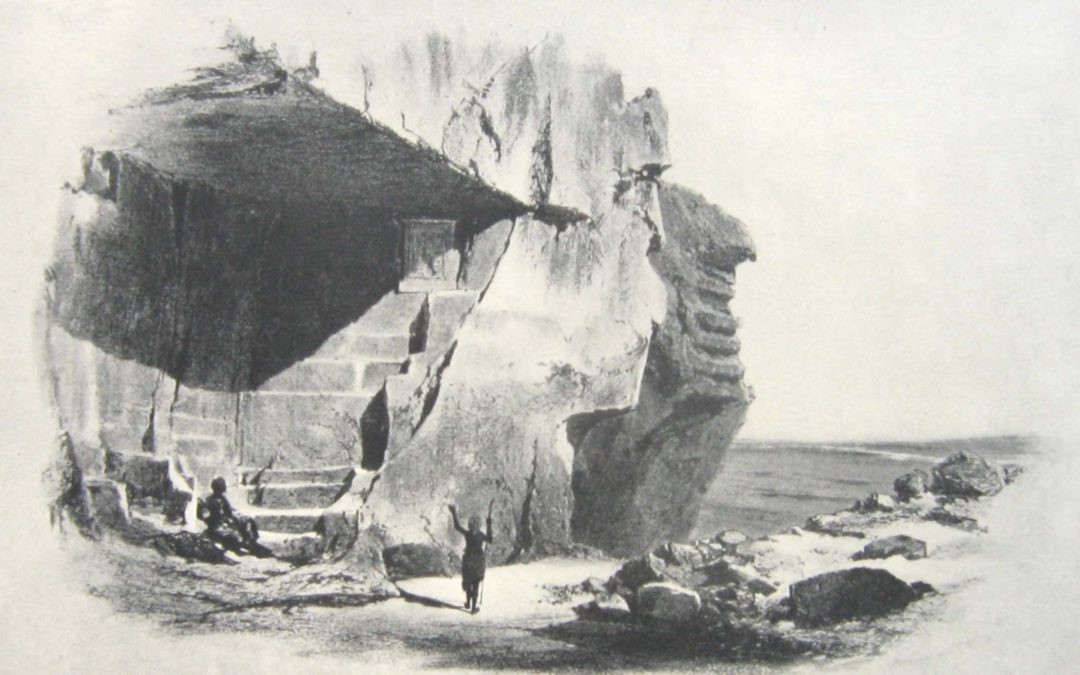
In my search for the ancient meaning of Tyre, I have come to the etymological revelation that it is derived from the word for special type of ancient Egyptian limestone rock called today “Tura or Tora.”
Today, you will find these holy stone quarries of Tyre, Egypt located in the modern town of Tora in the Cairo Governorate.
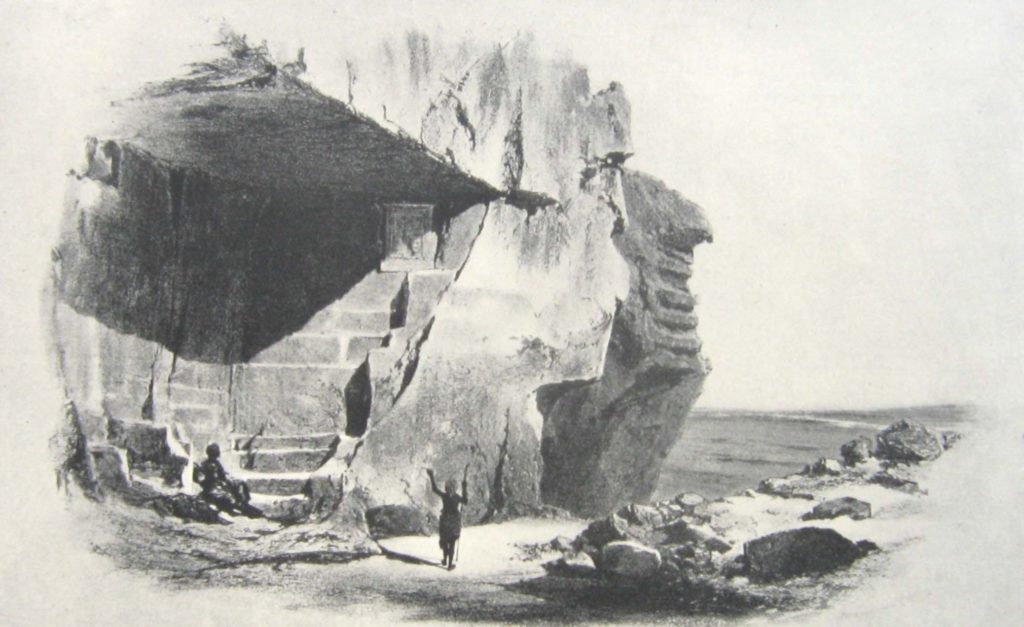
Please keep in mind that as you read my research below, the Old city of Tyre is documented in Masonic mythology as being the home to the de-facto king of the Freemasons, Hiram Abiff. A person who I have also connected to in previous articles to the first King of Tyre, Abibalus (Obediah, Abi-Beda etc.) and also King Saul who was credited biblically as the first king of the combined kingdoms of Judah and Isreal.
It is also important to note that the men of Tyre ie: The Tyranians were not only builders – ie: Masons, they were also employed in the arts of shipbuilding, writing, linguistics, history, Babylonian magic, religion, weapons-making, military planning, and most of all, commerce which all can be easily corroborated via historical, biblical, and now scientific accounts which validate one another.
THE MYTHS OF TYRE AND THE MANY DIFFERENT SPELLINGS THROUGH TIME
In studying the etymology of the word Tyre, I have found that it has been spelt variously over the last 2,000 plus years as Tiryns, Tyrsenoi, Tyresenes, Tyros, Tyrus, Tyrosh, Tyrion, Tyrseni, Tarshish, Tarsus, Tura, Turan, Tora, and or Tursha to name a few.
To give you a small example of the different spellings found in the course of my research, we can find that Tyre is spelt numerous ways in the Bible such as Tarshish – (‘the ships of Tarshish’) and xxxviii. 13 (‘merchants of Tarshish ’).
The expression ‘the ships of Tarshish’ which occurs several times in the Bible (1 K.x.22: xxii.48: Ps. xlviii. 7: Is. ii. 16: xxiii. l, 14 (in connection with Tyre) and has also been identified with the Hebrew name for Tartessus or South Spain and with Carthage (so the Septuagint Ezekiel and in Is. xxiii. in a passage which refers to Tyre), with Tarsus.
I have also found multiple locations of the city Tyre in which the Mother City was known as Palaetyrus (ancient Tyr) and was located on the mainland in the classical sources. Meaning, there were two Tyres which I will explore more in-depth in a future article.
In Greek mythology, Tyros or Tyro was the Goddess-mother of the Tyrians and Tyrrhenians, or Tyrsenians whose father was named Cretheus (Crete) along with Sidero (Sidon), and Eolus, who are credited as the founders of cities in Hellas.
All the great historians and poets mention the Men of Tyre under the name of the place they call Tyree or Tyry and the people under the appellation of the Tiryns, Tyrsenoi, Tyresenes, and or the Tyrsenians. The Greeks had called the Etruscans by the name of the Tyrsenoi.
As early as the 15th-14th centuries BC, we hear of a place and a people known as the Tiryns who are both expert Masons and mariners of the Sea.
The Penny Encyclopedia gives us this description:
“The Greeks attributed most architectural works § were characterised by rude massiveness and great antiquity to the Cyclopes, and such works were consequently described as Cyclopean. Homer (Iliad, ii. 559) calls Tiryns the ‘walled, or rather the ‘wally ‘Tiryns: and Pausanias (ii.25), 1000 years after him, thus describes the remains, as they existed in the second century of our aera.
“The ruins of Tiryns, he observes, “were on the right of the road leading from Argos to Epidaurus. The wall of the fortification, which still remains, is the work of the Cyclopes, and is built of unwrought stones, so large that not even the least of them could be even moved by a pair of mules.”
In mythology, King Proetus was the reputed founder of Tiryns, was succeeded by his son Megapenthes, who exchanged Tiryns for the kingdom of Argos with Perseus, son of Danaë and Jove, the mythic founder of Mycenae (Pausanias, II., 16).
At the time of the Trojan war, Homer (Iliad, ii. 559) represents it as being subject to the kings of Argos. Subsequently, it was partially destroyed by the Argives.
The date of that event is uncertain; but from two passages of Herodotus (vi. 83, and ix. 28), in which mention is made of Tiryns, it appears that it existed up to B.c. 480, and it is probable that it was overthrown about the same time as Mycenae, B.C. 468. (Clinton, Fasti Hell., ii., p. 425.)
According to Strabo (viii., p. 373), the Tirynthians, on leaving their homes, retired to #. idaurus : according to Pausanias (ii. 25),
There was an ancient tradition that there was an old people called Tyrsenes in the north Aegean Sea who was later identified with the Attic Pelasgians and rulers of Athens.
We read about Tyrsenoi in Homer’s Hymns to Dionysos, about how the god Dionysos appeared as a youth on the sea-shore, and was seized by Tyrsenian pirates (Sea Peoples), who in vain attempt to bind him.
Thucydides identifies the Pelasgoi with the Tyrsenoi.
Tiryns is today called an ancient archaeological site in Argolis in the Peloponnese and the location from which mythical hero Heracles performed his 12 labors.
There is also the legend of the Cretan king’s general named “Taurus” who carried off Europa after having taken Tyre by storm.
When speaking of the Tyranians, the great Roman poet Tibullus had said, “Prima ratem ventis credere docta Tyros.”
It is easy to see how the Greek myths of the Tyrsenoi from Tiryns and the Tyr-senian pirates or the Tyr-senoi can be connected to the Tursha AKA Sea Peoples and ultimately to Tyre. It is in the meanings of these various words where I believe we can easily discover the secret origins of these people from Tyre – the Tyranians (Tyrrhenians)., meaning their original homeland.
Words that I believe can also be etymologically connected to a special book where they document their history and laws known universally as the “Torah” AKA Tur-ah – the Hebrew or Phoenician Bible which is also known as the Old Testament. We also know of these collective writings as the scripture of skrip’-tur in which Moses was given the Laws upon stone tablets of Turs.
THE ETYMOLOGY OF TYRE
All this research leads us to the true meaning of Tyre which I have found is derived from the old word for rock or stone which was anciently called “Tur, Tsur, Tzor, Tor, Tora, Toorah, Tura,” to name a few. These words are variously translated to also mean mountain for it is from the mountain which we obtain the rock or stone to build.
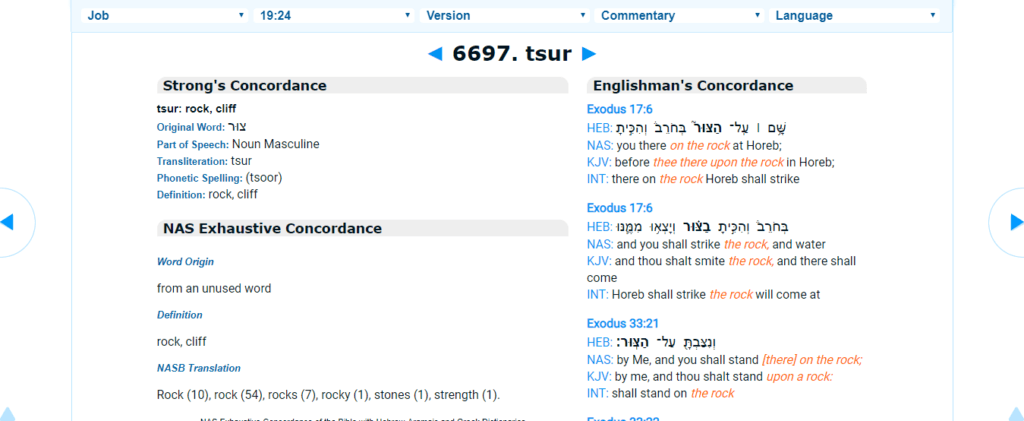
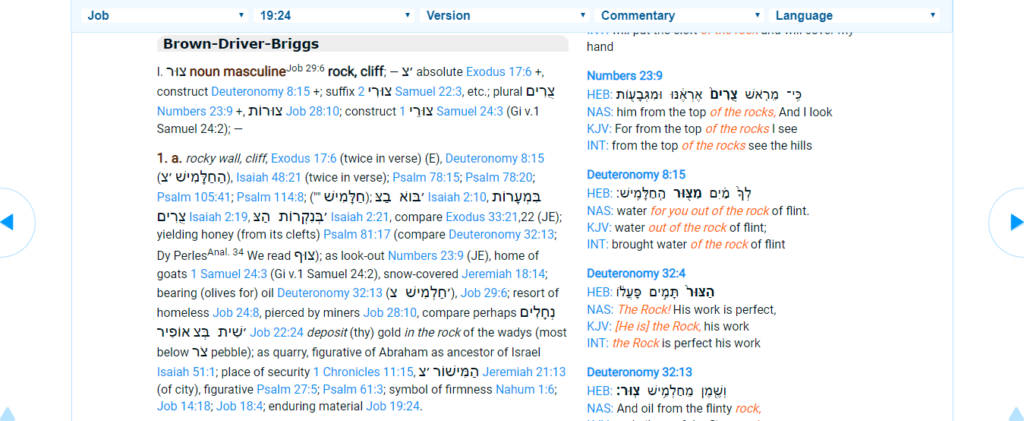
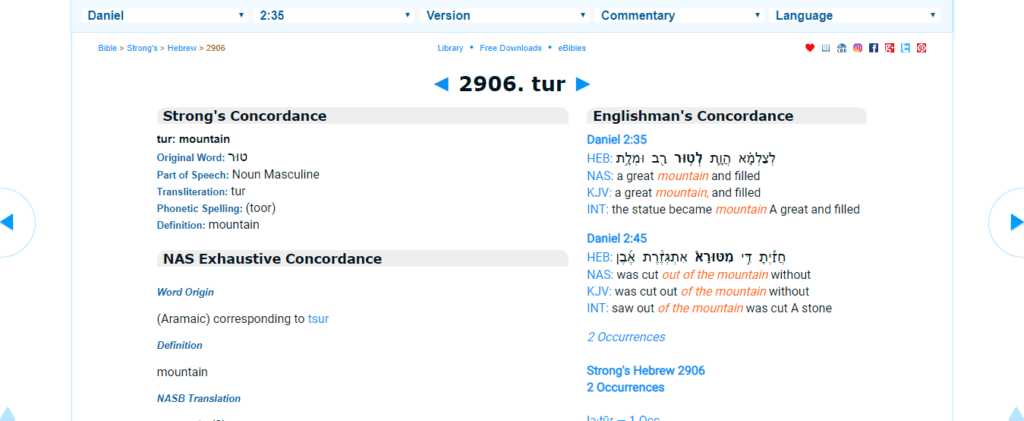
The main revelation of this word is found in one of the oldest cities in the world that housed one of the most infamous of all rock quarries in Egypt and the world.
A city called Tura and someday we may call it again, “Old Tyre.”
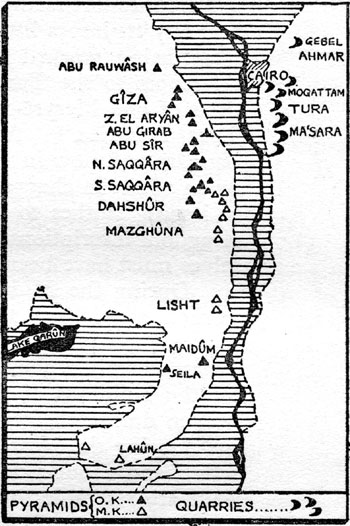
Tura or Tora, Toorah etc. (Egyptian Arabic: طرة Tora IPA: [ˈtˤoɾˤɑ]) is the exact location where Ancient Egyptians or who we may call Masonic Tyranians drew massive quantities of special type of limestone that was the most prized in all the world because it was the strongest, whitest, and most beautiful.
It is alleged by some researchers that approximately or precisely 144,000 of these highly polished Tura limestones were carefully interlocked together by Masons who decorated the exterior of the Great Pyramid of Giza. The brilliant result was the whole structure was illuminated white in the light of the reflected sun.
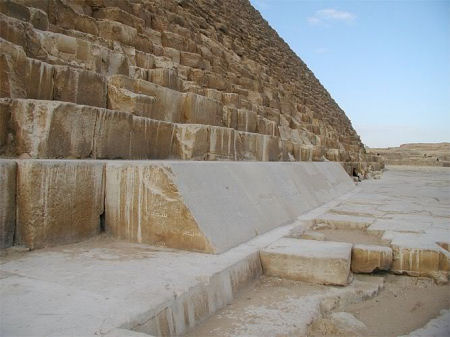
This unique stone is described today as creamy in colour and the denser the stone, the stronger which the densest stones can be found in Tura ie: Old Cairo. The greater the density the less the water absorbed and the cracking load is not much under the breaking load.
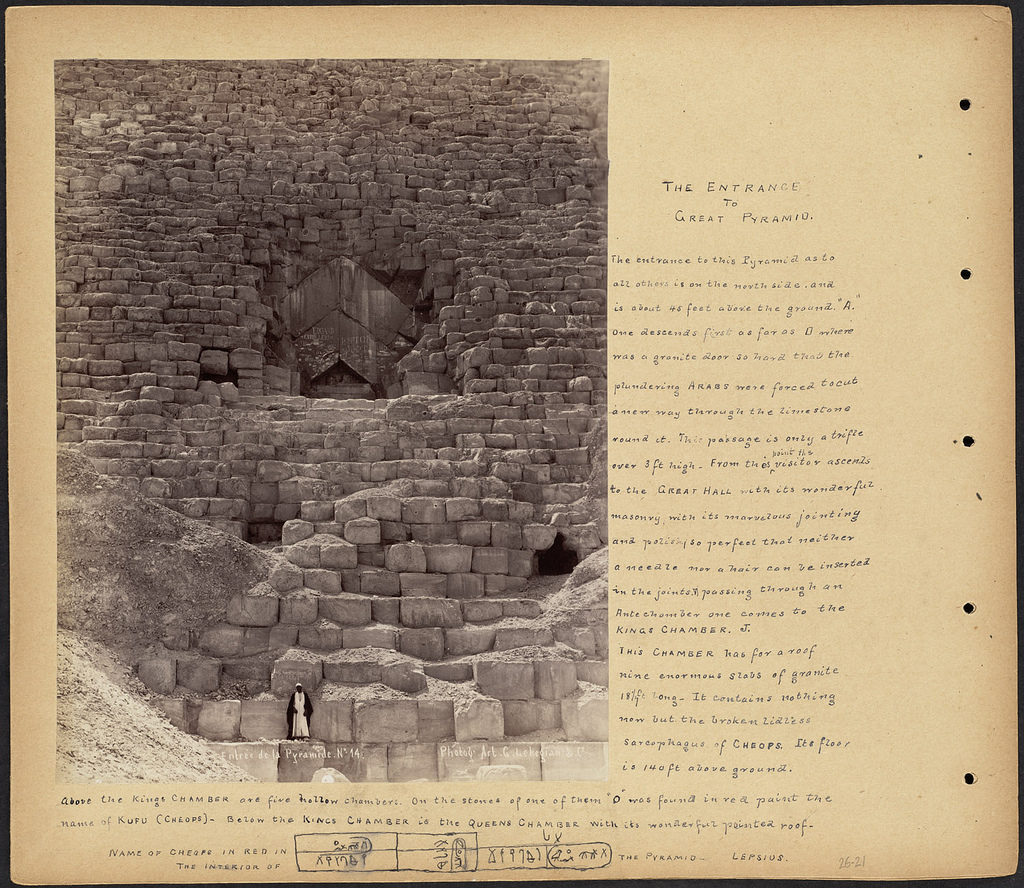
In Etruscan mythology, the “God of the boundary stone” was called “Turm” which can easily be connected with Tur.
A turret (tur-ret) is a little stone tower (from Lat. turris, Gk. rvpaa, tyrsis, riippa, tyrris, tower).
Another precious tur or stone of a beautiful blue colour worth mentioning is called “tur-cois, tur-kis or turquoise” which was highly prized by the Ancient Egyptians, who opened Turquoise mines in the Wadi Maghara, in the Desert of Sinai.
An Arabian authority on precious stones, Ahmed Teifascite, born about 1253, in writing about the turquoise quotes from Aristotle as follows;
“The turquoise is a stone with which the Kings of Damascus never failed to adorn their necks and hands and to employ for many other purposes because, among the great, the stone possesses the property of removing from its wearer the danger of being killed. Furthermore, when reduced to powder it is of assistance in case of stings from scorpions and dangerous and venomous reptiles.”
It appears through time, the words tor, tur, tyr, tir, tora, tura etc. became known to also variously mean mountain, chief, Lord, God, and or prince for their descendants.
For example, in ancient Egypt, the Pharoah had a turdannu (turtan), meaning “commander-in-chief” (POTUS) in charge of the administrative affairs of Egypt.
We find the Anglo-Saxon word fir, and tyr, meaning lord, prince, chief, as well as glory, dominion, power and Tyr in the Edda who was the name of the god corresponding to Mars.
Tur is the meaning of mountain in Aramaic.
The meaning of Tartar is a hard calcified deposit that forms on the teeth and contributes to their decay and also means an unkind or angry person and a member of any of the various tribes, chiefly Mongolian and Turkish, who, originally under the leadership of Genghis Khan.
A Scottish Highlander or Scotsman was known as a “Tartan” in ancient days. These Tartans wore a special type of clothing called tartaryn (“rich material”), from Middle French tartarin (“Tartar cloth”), and Middle French tiretaine (“cloth of mixed fibers”), from Old French tiret (“kind of cloth”), from tire (“oriental cloth of silk”), from Medieval Latin tyrius (“material from Tyre”), from Latin Tyrus (“Tyre”).
There are the gods of Old Asia Minor, Tar and Tarku who are clearly connected with the word Tara or Tora for it is the Esthonian word for “God,” and with Tar, “chief.”
Then we see the Akkadian Tur-an who is the “Chief of the Sky.”
The Report and Transactions – The Devonshire Association for the …, Volume 7 further documents;
Lu Gibson’s edition of Camden’s Britannia, we are informed that Brent Tor is a name signifying ‘a high rocky place.’
Pliny mentions dyr as a Mauritanian word for Mount Atlas. Taurus is the same designation Latinized in Asia.
For the Arabs, Tours is an elevated spot in the Gulf of Suez.
In Norway, Tours is the name of one of the highest mountains.
King—”The word occurs in both Somersetshire {Glastonbury Tor) and Derbyshire, and is apparently cognate with the Hebrew Tsoor = a rock, and the Phenician Tor = Tyre (compare also the Turkish dagh, and the form which occurs so frequently in the Caucasus).” pp. 208-9.
Moore—” Tor. A rude rack [? rock. W. P.] on the top of a hill.”
Bannister—” Torr. Prominence or hill {tor, a belly); a peak {tour, tower); water {dour).” Halliwell—” Tor. A bill. Devon.”
Grove—” Tor. A high rock; as Mam-tor, a high rock in Derbyshire. North.”
Prince—”Brewer, Lord William, was bom …. most likely at Tor Brewer, so called of old from the torrs and rocks which abound in these parts, and this noble family. But of latter times … it is commonly stiled Tor-Mohun.”
The best explanation that I have found similar to my own is by author Sir William Smith in his book, A Dictionary of the Bible: Red-Sea-Zuzims. Sir Smith writes;
“TYRE (nix, n’s, i.e. Tzór: Túpos: Tyrus: Josh. xix. 29; 2 Sam. xxi ‘. 7; Is. xxiii. 1; Ez. xxvi. 15, xxvii. 2, &c.). A celebrated commercial city of antiquity, situated in Phoenicia, on the eastern coast of the Mediterranean Sea, in latitude 33° 17’ N. (Admiral Smythe’s Mediterranean, p. 469).
Its Hebrew name “Tzór” signifies a rock; which well agrees with the site of Sár, the modern town, on a rocky peninsula, formerly an island.
From the word “Tzör” were derived two names of the city, in which the first letters differed from each other, though both had a feature of their common parent: 1st, the Aramaic word Tura, whence the Greek word Turos, probably pronounced Tyros, which finally prevailed in Latin, and, with slight changes, in the modern languages of the West; and, 2ndly, Sara, or Sarra, which occurs in Plautus (Truc. ii. 6, 58, “purpuram ex Sarā tibi attuli”), and which is familiar to scholars through the well-known line of Virgil, “Ut gemmá bibat, et Sarrano dormiat ostro” (Georg. ii. 506; comp. Aul. Gell. xiv. 6; Silius Italicus, xv.203; Juvenal, X. 30).
According to a passage of Probus (ad Virg. Geory. ii. 115), as quoted by Mr. Grote (History of Greece, iii. 353), the form “Sara” would seem to have occurred in one of the Greek epics now lost, which passed under the name of Homer. Certainly, this form accords best with the modern Arabic name of Sár. PALAETYRUs, or Old Tyre.
There is no doubt that, previous to the siege of the city by Alexander the Great, Tyre was situated on an island; but, according to the tradition of the inhabitants, if we may believe Justin (xi. 10), there was a city on the mainland before there was a city on the island; and the tradition receives some colour from the name of Palaetyrus, or Old Tyre, which was borne in Greek times by a city on the continent, 30 stadia to the south (Strabo, xii. 11,24).
But a difficulty arises in supposing that Palaetyrus was built before Tyre, as the word Tyre evidently means “a rock,” and few persons who have visited the site of Palaetyrus can seriously suppose that any rock on the surface there can have given rise to the name.
To escape this difficulty, Hengstenberg makes the suggestion that Palaetyrus meant Tyre that formerly existed; “quae quondam fuit;” and that the name was introduced after the destruction of the greater part of it by Nebuchadnezzar, to distinguish it from that part of Tyre which continued to be in existence (De rebus Tyriorum, p. 26).
Movers, justly deeming this explanation unlikely, suggests that the original inhabitants of the city on the mainland possessed the island as part of their territory, and named their city from the characteristic features of the island, though the island itself was not then inhabited (Das Phönizische Alterthum, vol. ii. gt. i. p. 173). This explanation is possible; but other explanations are equally possible.”
In my opinion, the words whether it be Tzör, Tura, Tora and Tyre, they are all etymologically connected through history to the word stone or rock with similar meanings in various languages and we also find these names of some of the most important coastal and commerce settlements where they have left their cornerstones around the globe which I will explore in a future article.
AN OLD DESCRIPTION OF THE ANCIENT EGYPTIAN TOWN OF TORA (TURA, TYRE)
I thought it would be interesting to the reader to read this account from a book written in 1885 called “Lower Egypt, with the Fayûm and the peninsula of Sinai,” by Karl Baedeker gives us a clear account of the importance of this city. Baedeker writes;
“The railway to Helwān, which was constructed mainly for the purpose of connecting the great military establishments at Tura with the Citadel, runs from the Place Méhémet Ali, in a South direction. It skirts the base of the Mokattam, on the slopes of which are the interesting ruins of a mosque, and traverses the burial-ground of the Mamelukes (p. 327). To the right lies the oldest part of Cairo, with the Mosque of Tulān (p. 265).
On the same side, we next observe the Necropolis of Imām Shafe’i (p. 327), beyond which is the valley of the Nile, with the various groups of pyramids rising above it (p. 404). Before reaching (4 M.) Basātīn, a village situated in one of the angles of a triangular piece of arable land which extends a considerable way into the desert, we perceive the Jewish burial-ground on the left, and, farther on, the broad Wädi et-Tih (p. 339), which separates the Mokattam range from the Gebel Tura.
Traversing a tract of desert sand, the line approaches the Nile, on which lies the village of Tura.
A little to the right are the large military establishments and gunpowder mills. On the hill stand the ruins of an old fort. 91/9 M. Massara, a village on the Nile, is noted for the slabs of stone obtained in the neighbourhood, known as ‘palattes’, and used for paving purposes in almost every house of the better class in Egypt.
From either Tura or Masara we may visit the Quarries of Tura (p. 405), which yielded material for the construction of the ancient temples, and are still worked.”
THE EGYPTIAN TYRE, TURA, AND TURSHA CONNECTIONS
The Masons have left their stones of Tura (Tyre) that were used for many building projects who some estimate for approximately six thousand years at least. It was said that the architects of the pyramids made their quarrymen (Masons) tunnel into the mountains for hundreds of yards until they found a bed of stone suitable for their work, and traces of their excavations are still visible to this day.
Upon the ancient Egyptian monuments dated in approximately as early as 1300 B.C. or before, you will find the men of Tyre are called by the name the “Tuirsha, Tursha and or Turusa” who are clearly classified as a “maritime people” who had “invaded Egypt” and are listed as among the enemies of Egypt.
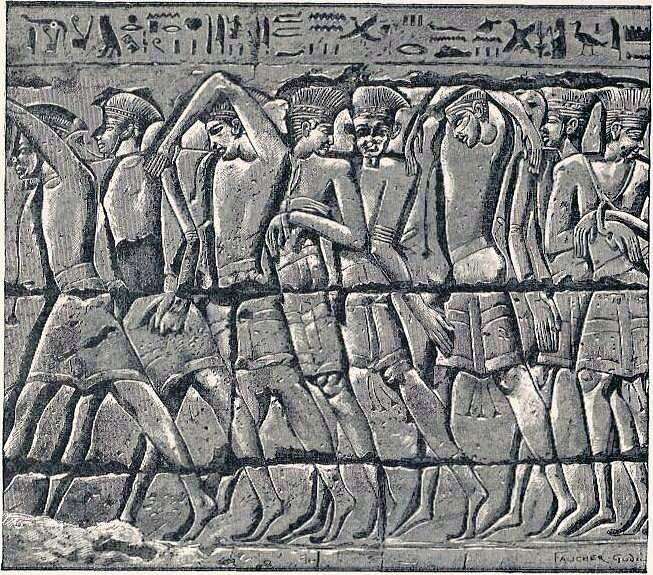
It is documented that during the reign of Meneptah, the Tursha invaded Egypt from the coastlands in alliance with the Libyans, Achaeans, and other coastal tribes from Asia Minor. It is said in the great inscription which records the defeat of these “Sea Peoples” or who we may now call the “Tyranian invaders.”
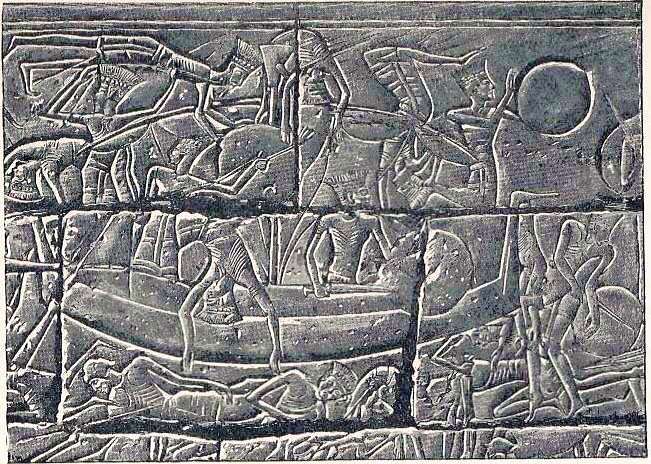
“The Tursha took the lead in this war, all the warriors from that country having brought their wives and their children.”
The fact that the Tursha (Men of Tyre) found a home in Egypt from the West by the time of Rameses III during the so-called great invasion of Greco-Asiatic and European tribes which has been generally accepted by most historians.
It is the mysterious but powerful people the Egyptians called the Tursha whom I have connected to the royal family of Tyre and their book, the Torah (Tura or Tora).
We that Moses upon his entrance into the Promise Land on top of a Holy Mountain (rock) was given the history and laws of his people that he had written down on “stone tablets.”
Stone tablets that are said to be composed of five books that are collectively called the “Tora.”
It is evident that these special stones or Tora (Tyre) play a significant revelatory clue to the immortal origins of these people and serve as cornerstones for future prophets to identify and reconcile this lost but revealable history.
These facts I believe can be further substantiated via a discovery made in 1889 when an Egyptian archaeologist named Mr. Flinders Petrie AKA Rock or Stone 😉 was excavating at Gurob in the Fayoum where he exhumed what has been described as a “yellow-haired mummy.”
This blonde person is described in the hieroglyphs as a high or ryal official who is called Ш, wml Ё Ш Ъ Ш l, “An-Tursha”, “Anen-Tursha” or “Stone, Rock or Pillar of the Tursha”, who, according to the rest of the inscription, was governor of Heliopolis.
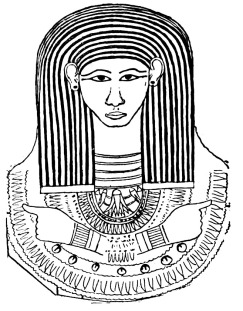
The yellow hair ie: blonde hair and the lower lobe of “An-Tursha or Anen-Tursha’s ear is pierced indicating his foreign ethnicity which I believe to be of Tyrian origin.
To be a governor of Heliopopolis, you had to be a very important person who was in charge of all Lower Egypt and the coastal ports as well as the country’s religion and the Pharoah’s stonemasons.
The native name of Heliopolis was I͗wnw (“The Pillars or The Stones”) which again connects to the people of stone ie: Tyre (Tur, Tor, Tora etc) to Tura, Egypt and also the Tursha (Sea Peoples). In Roman Egypt, the city belongs to the province Augustamnica, causing it to appear as Heliopolis in Augustamnica when it needed to be distinguished from Baalbek. Today, it remains a titular see of the Roman Catholic Church.
The mummy, Anen-Tursha is described in The Discoveries in Crete and Their Bearing on the History of Ancient History by Ronald Montagu Burrows who says that the Tursha can be connected “with the group of names of invading tribes which can now with scarcely a doubt be equated with Achaeans, Teucri, and Danai.”
Burrows had written;
“It has been known for some years that there was buried in Egypt, at Gurob in the Fay urn, not much later than 1300 B.c., a high official called An-Tursha, or ” Pillar of the Tursha.”
The name is followed by the ethnic and the country determinatives, and the type of the mummy’s face, and the piercing of the lower lobe of its ear, are recognised by Professor Petrie as non-Egyptian.
It has been argued that this implies a settlement of foreigners called Tursha in the neighbourhood, and the name has been connected with the Thuirsha or Turusha who trouble Egypt with the Akaiuasha in the reign of Merenptah, 1234—1214 B.c.’ The name thus falls into line with the group of names of invading tribes which can now with scarcely a doubt be equated with Achaeans, Teucri, and Danai.”
Biblically speaking, if the Tursha are who I believe we can connect to the Men of Tyre and can also possibly be equated with the Danai ie: the Tribe of Dan, we can start to make more revelatory sense of this confusing history to make ORDO AB CHAO.
In researching both men of Tyre and Tribe of Dan, you will find that they were an interrelated royal family of mariners, shipbuilders, Masons, and judges of their people (race) through a very important son who in the bible is called Obed or Obediah and the Widow’s Son and Masonically speaking, he is known as Hiram Abiff who it is no surprise to me is also known as the Widow’s Son.
These connections can be found in the Scripture in the seventh chapter of the first book of Kings where it says;
“And king Solomon sent and fetched Hiram out of Tyre. He was a widow’s son of the tribe of Naphtali, and his father was a man of Tyre, a worker in brass: and he was filled with wisdom, and understanding, and cunning to work all works in – brass. And he came to king Solomon, and wrought all his work’ (ver. l3, l4).”
The connection to the Tribe of Dan is found via another parallel passage in the second chapter of the second book of Chronicles, ver. 13 where it says;
“Now I have sent a cunning man, endued with understanding, of Huram my father’s,’ (or perhaps Humm Abi by name,) ‘ the son of a woman of the daughters of Dan, and his father was a man of Tyre, skilful to work in gold.”
In researching the Sea Peoples known in ancient Egypt as the Tursha, you can clearly see how these same foreign yellow-haired people can be connected to the Men of Tyre which as I have mentioned can also be spelt, Tir, Tyr, Tar, and or Tur. Not only were the Tursha Sea People who were masters of the sea ie: boat builders and navigators, they were also classified as being stonemasons and traders ie: businessmen.
Several slabs of rock (Tora) bearing figures and hieroglyphics have been found in one of the great stone halls of Tura, Egypt.
An inscription on one of the chambers tells us that during the reign of Amenophis III. a new part of the quarry was opened. Una, an officer who lived in the reign of Pepi I., was sent to Tura by this king to bring back a white limestone sarcophagus with its cover, libation stone, etc.
In one presentation, it shows King Amenophis III. (18th Dynasty) sacrificing to the gods Ammon, Horus, and Hersheft; and on the other we find him worshipping Ammon accompanied by Anubis, Sekhet, and Hathor.
An inscription on one of the massive stone slabs reads;
“His Majesty ordered new halls (het-u) to be opened, for the purpose of quarrying the light-coloured and excellent stone of An for the construction of his buildings founded for perpetuity, after His Majesty had found that the halls of Rufui (Troja) had been tending to great decay since the time of those who had existed at the beginning (i.e. former generations). These were newly established by His Majesty”.
Another inscription from the time of Pharoah Nectanebus II., reads thus;
“This excellent quarry of Rufu was opened in order to construct the temple of Thoth, the twice great, the double Aperu, the fooler of the divine speech, etc. May (its) continuance be everlasting!”
Hence, “And I also say to you that you are Peter, and upon this rock, I will build My church; and the gates of Hades shall not overpower it.” (Matthew 16:18).
MY APOCALYPTIC CONCLUSION
It is obvious to me that the name that Masons hold to this day as one of their most important Kings, Hiram Abiff hails from a city that is variously called Tyre, Tyrus, Tarshish, and as we have learned from this research, we can also add Tora to the list.
Given the fact that they are Masons of whom their ancient ancestors were Stonemasons who hail from the city of the stone, Tora, Egypt which can also be called Tyre, Egypt and now can be used interchangeably.
It is revealed to us that these ancient people we know variously as the Men of Tyre and the Stonemasons of Tora have a longheld tradition going back approximately 3,300 years of holding onto their true names relating to the “stone” said in different languages but all relating to one another.
For example, we find evidence of these same Stonemasons of Tyre (Tora) more recently in ancient Ireland in an important location under their name that was anciently called Tyr-Owen, Tyroot and today, Tyrone which is now an inland county of the province of Ulster, in Ireland once known as Tyr-Owen, and was the territory of the O’Neills, descendants of Neal of the Nine Hostages, king of Ireland, and virtually sovereigns of the greatest part of the north of Ireland for several centuries after the English settlement under King Henry II.
The Penny Encyclopædiarecords this history;
“In a writ of Henry III., the head of the sept is styled King of Kenilum or Tiroen.
The chief seat of the family was at Dungannon, which, though several times taken and sacked by the English force in their attempts to reduce the country to obedience to the royal authority, continued to be so until the close of the reign of Elizabeth, when it was burned by IIugh O’Neill, earl of Tyrone, to prevent its falling into the hands of Lord Mountjoy, who then commanded the queen’s forces in Ireland.”
In the next part of this article, I will attempt to explain how these Ancient Masonic Tyranians of Tora, Egypt can be connected to the Masonic Tyranians of the Promise Land on the Holy Island of Crete.
PART II: They have laid Tyre’s “stones and dust in the midst of the water” (Ezek. xxvi. 12).
Moe is the founder of GnosticWarrior.com. He is a father, husband, author, martial arts black belt, and an expert in Gnosticism, the occult, and esotericism.
by Moe | Sep 15, 2019 | History of the Brotherhood, Latest Media
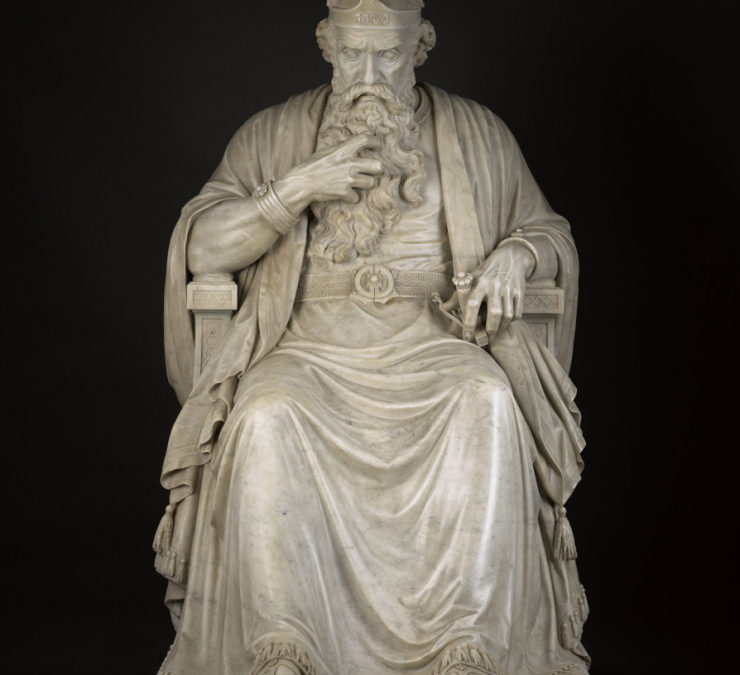
Saul, according to the Hebrew Bible, was the first king of the combined Kingdoms of Israel and Judah. His reign is traditionally placed at approximately in the 10-11 century BCE, which marked a transition from a tribal society to statehood.
It is important to point out that Saul is a descendant of the Tribe of Judah and rightful heir but that he is listed as the first king of two combined Kingdoms being that of “Israel and Judah.”
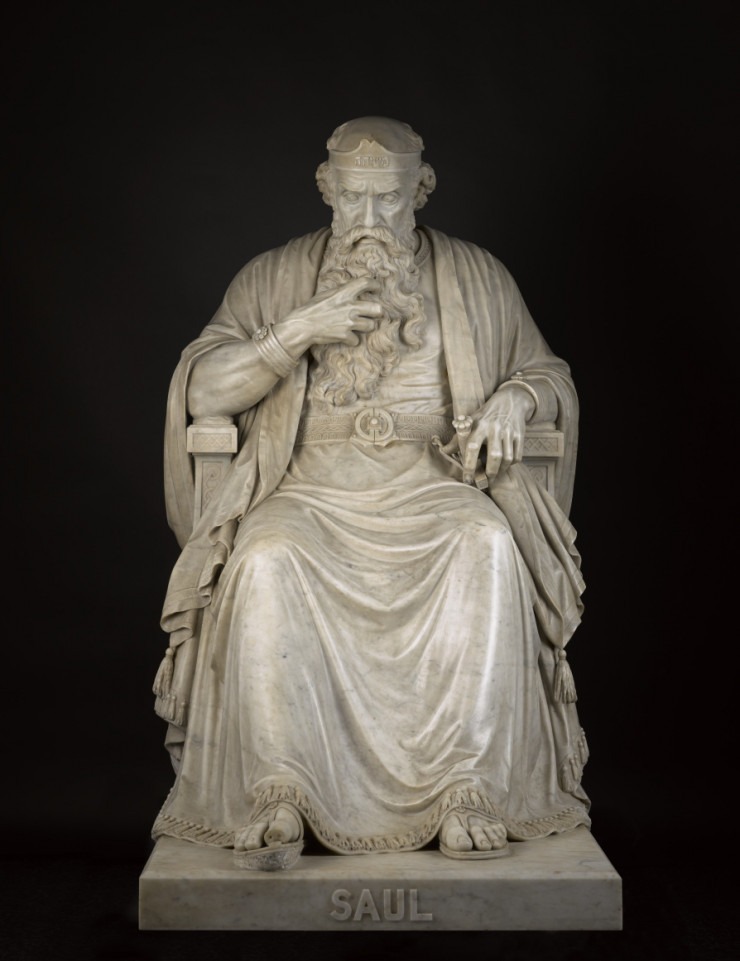
The Hebrew Bible likewise connects prophets with kings of Judah and Israel from the first (Saul) to the last (Zedekiah).
In this article, I would like to share with you my research showing that King Saul can be connected to many other names in history from around the same time like in the Bible to an important prophet named Obed or Obediah and in ancient Hebrew (Phonecian) history as King Abibalus of Bediah and Bedan and in Masonic lore has Hiram Abiff.
Most scholars and researchers might easily be deceived into thinking that two, three and even four or more different persons were intended to be documented by the ancient authorities when passing down this history.
However, I have found that these names have been changed from the true birthname to a given surname or royal title and to add to the confusion, a biblical name and or narrative that comes down to us by the Church Doctors who were charged with doctoring the original writings in order to conceal the truth from the profane ie: uninitiated.
Last but not least, we now have 2,000 plus years of different authors writing in several different languages spanning hundreds of years to the point we are at today where making sense of the Babylonian chaos seems like an impossible task.
However, as I have proved in previous articles such as King Hiram’s Son: Ithobaal, Abibalus: King Hiram’s Father is the Widow’s Son and The Widow’s Son, it will be observed that these different names (surnames, biblical names, etc.) are of the same or similar signification, and they can be connected to one another in which initiated readers who have done their true Gnostic work could make no mistake at the various connections.
IS KING SAUL’S REAL NAME KING ABIBALUS OR BIBLICALLY AS OBED OR OBEDIAH?
Before I go in-depth into this research in future articles, I would first like to point out the many striking similarities between all these people whether it be King Saul, Obed, Obediah and or King Abilalus who I believe can be proved to be all the same persona rendered “otherwise called,” accurately enough.
For example, here are some significant biblical and historical synchronicities that simply cannot be ignored;
ALL THESE KINGS HAD SONS NAMED ITHOBAAL WHO WAS MURDERED
King Saul named his fourth son Ithobaal (Ἰθόβαλος; Hebrew Ethbaal, Ishba’al, Latin – Ithóbalos, Εἰθώβαλος; Eithṓbalos – meaning with Baal).
King Hiram had a son named Ithobaal (Ἰθόβαλος; Hebrew Ethbaal, Ishba’al, Latin – Ithóbalos, Εἰθώβαλος; Eithṓbalos – meaning with Baal)
King Abibalus had a son named Ithobaal (Ἰθόβαλος; Hebrew Ethbaal, Ishba’al, Latin – Ithóbalos, Εἰθώβαλος; Eithṓbalos – meaning with Baal).
THEY WERE ALL FIRST KINGS OF VERY IMPORTANT KINGDOMS
Saul was the first king of the United Kingdoms of Israel and Judah
King Abibalus was the first king of Tyre (Byblos)
An Obediah is listed as a son of Jonathan, who is the son of Saul.
Obediah was a royal official and or prince of his family.
THEY ALL HAVE STRONG TRIBE OF JUDAH CONNECTIONS
King Saul was from the Tribe of Judah
Obediah is listed in the genealogy of the tribe of Judah and as the grandfather of David (1 Chronicles 3:21) (B.C. 470.)
An Obadiah was sent out by King Jehoshaphat of Judah to teach the law in the cities
Obadiah is a book of the Old Testament about the conquest of Jerusalem in 586 BC during the reign of King Zedekiah, the last King of Judah.
The last verses of the book of Obadiah reveal that Judah will be saved and the kingdom shall be the Lord’s.
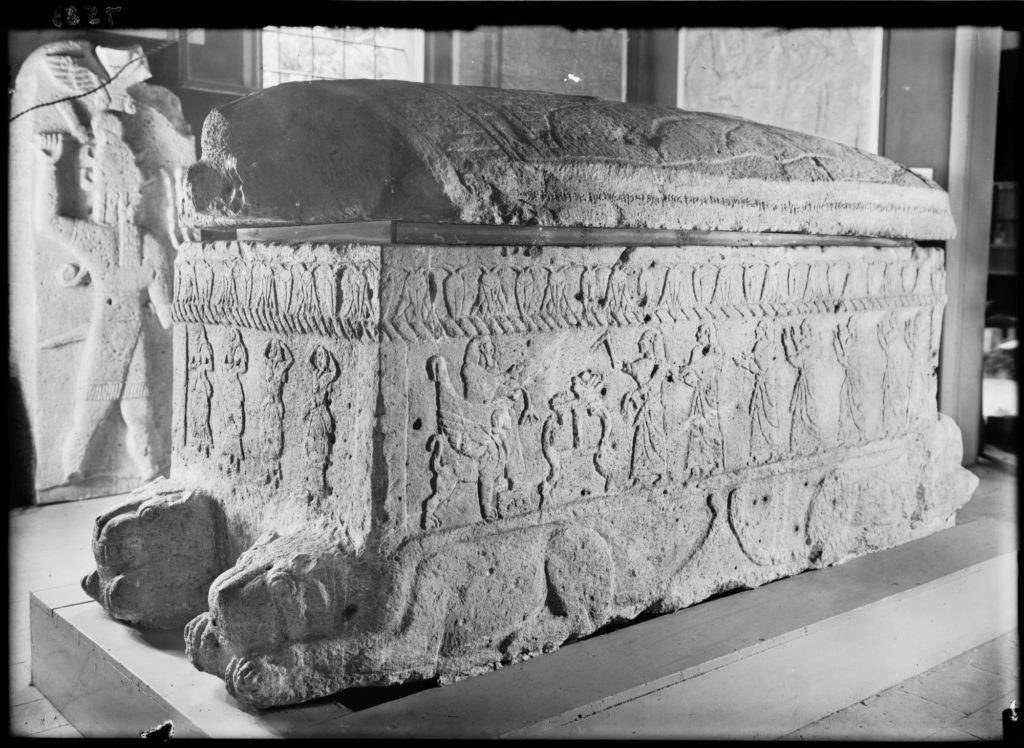
King Abibalus’ (Hiram Abiff – Father Hiram) coffin has lions decorating the exterior indicating his possible tribal affiliation to Judah.
THEY WERE IN CHARGE OF OR GOVERNORS OF PALACE/TEMPLES AND RELIGION FOR THE KING
Hiram was in charge of building projects for King Solomon.
Obadiah, who was in charge of the palace. lit.(‘al-habbayith [tH5921/1004, ZH6584/1074]) An officer of high rank in the court of Ahab, who is described as “Obadiah who was over the house”(1Ki 18:3).
SERVANTS TO THE KING
King Saul sent three different groups of servants who prophesied to King David.
Now there was a servant of Saul’s household named Ziba.https://biblehub.com/hebrew/strongs_6717.htm
They summoned him to appear before David, and the king said to him, “Are you Ziba?” “At your service,” he replied. (2 Samuel 9:2 )
King David calls himself Saul’s servant three times in the bible. (l7:32, 34, 36)
King David says “I am the son of your servant Jessee of Bethlehem.”
Hiram was a servant to King Solomon whom he gave supplies and Masons.
Obed means servant and Obediah means servant of God.
TYRE CONNECTIONS
At the end of the reign of King Saul, King Abibaal had arisen in Tyre.
His son Hiram came to rule at the time when King David was engaged in bringing the whole of Israel into subjection.
During the reigns of David and Solomon, Israel had a warm relationship with the people of Tyre (1 Kings 5: Iff.).
ALL OF THEM REIGNED OR LIVED IN OR AROUND THE 10TH CENTURY BC
King Saul reigned approximately in the 10th century BC.
King Abibalus or Abi-Baal reigned approximately in the 10th century BC about the end of the right of King Saul and the same time that David was the king by the tribe of Judah.
40 YEARS
Like King Saul and King David, King Solomon reigned for 40 years.
PRIESTS AND PROPHETS OF BAAL
Abibalus was a priest of Baal.
Obediah was a priest of Baal and hid one hundred of the Lord’s prophets in caves and gave them supplies.
In “The Babylonians (Against the Greeks, 1.21)” Josephus said Nebuchadnezzar besieged Tyre for thirteen years in the days of Ithobaal [III], their king; after him reigned Baal [II], ten years; after him were judges appointed, who judged the people.
CONCLUSION
It is obvious that from these various synchronicities and what appear to be surnames and birth name changes that Saul who is called the first King of the United Kingdoms of Judah and Israel can also be connected to the first King of Tyre (Byblos or Giblim) whose name was Abibalus who I have tied to Hiram Abiff that then connects us to Obed or Obediah of whom both are famously known as “The Widow’s Son.”
To be continued…
Moe is the founder of GnosticWarrior.com. He is a father, husband, author, martial arts black belt, and an expert in Gnosticism, the occult, and esotericism.
by Moe | Sep 15, 2019 | Freemasonry, History of the Brotherhood, Latest Media
In the Ancient Craft of Masonry, Hiram is called the architect of the Temple and the Widow’s Son from the tribe of Naphtali who was the son of a Tyrian bronze worker, contracted by Solomon to cast the bronze furnishings and ornate decorations for the new temple.
It is said that from this reference, the term “Son of the Widow” is synonymous with Freemason and all Freemasons are designated as “Sons of the Widow,” or sons of Hiram. (1)
For such an important person, you would think that there would be some information regarding the true identity of this man, but if we study Masonic literature, the Bible and ancient history, you will not find one person who is named “Hiram Abiff”.
The name Hiram Abiff is only used in Freemasonry.
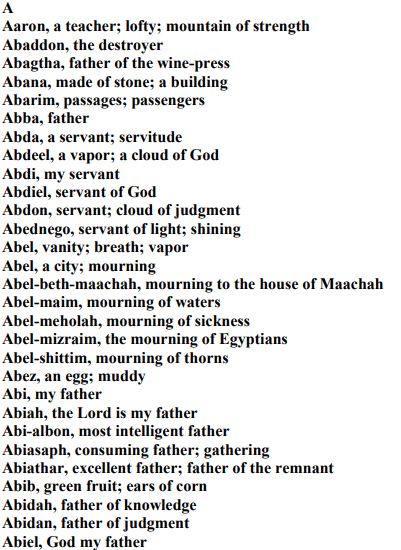
However, when we research Freemasonic history along with both the Old and New Testaments, we will discover that the name Abiff appears to be derived from the title Ob, Obe, Obi, Ab or Abi which means father or my father and was among the Hebrews (Phoenicians) often bestowed as a title of honor and dignity, on the chief advisers and intimate friends of the king. (2)
The person who I have found to be one of if not “the most important widow’s sons” in both the Old and New Testament was a man known as “Obed or Obediah” which I believe the modern Masonic version of the name “Hiram Abiff” is meant possibly to both conceal and represent the same person.
The names of “Obed or Obadiah” were common in Israel for the Tribe of Judah from the days of David and I believe that Abiff or Abi (Obe, Oba etc) are just different spellings of the same name throughout time depending on the language and or era it was written.
It appears that this particular family had a tradition of using the appellation of either Abi, Abdi or Obe to their names that signify their royal rank both as “Patriarchs (Fathers or Peters) and judges of their people (race).”
Names related and or connected to Obed or Obadiah such as Badiah, Obadyah or Obadyahu and old Phoenician as Ebed or Abad, Abibalus, the Greek as Ióbéd and Obed; Septuagint is Obdios and Jehoiada, or as Abadias (ab-a-di’as), and Abdiou and afterward Obed-edom and his sons were assigned to be keepers of the doors of the temple, (1 Chron.)
When we tie these names and thus history together into the true meaning of the name “Hiram Abiff”, what we will find is that the appellation of the “Widow’s Son” does not apply to King Hiram’s son, but most likely to his father whose name who was really the first King of the Hebrews (Tyre/ Byblos/Phoenicians).
For example, some names found related to Abi (Abdi, Obe, Oba, etc.) are, for example, Abijah which is translated “Yahweh is a father,” or “is my father” which is found in the parallel passage in 2 Chronicles 29:1 and Abishai, “father of Jesse,” denotes one to whom Jesse is father, and so with Abihud, “father of Judah,” Abiel, “father of God, and more importantly as it relates to this story, Abidan is “father of a judge.”
In relation to the story of Hiram Abiff as a servant for Kings David and Solomon of Isreal, you will also find a servant in the Bible a prophet of Baal, a Levite named Obadiah who is one of the most important men in the Old Testament being that he is;
1. The governor of the King of Isreal, Ahab’s palace (1 Kin. 18:3-7, 16).
2. Grandfather of King David and the head of a family of Judah (1 Chr. 3:21).
As you can witness for yourself, this man, Obadiah was a very important person who was not only the governor for the King of Israel’s palace (AKA the Temple), he was also the grandfather of King David and the head of a family of Judah.
Last but not least and has it relates to this story, he was the son of the most important widow of the Old Testament. Let me please explain…
If we are to research the history of the Old Testament (Law), we will find that there was only one person who we can truly document that could be “legally” identified as a “widow’s son” under the old Phoenician (Hebrew) laws in Israel.
In ancient Israel, if a wife’s husband was to die without children, it was looked upon with great unhappiness for a man to die without an heir. Widowhood, as well as barrenness, was a kind of shame and reproach in Israel: Isa. liv. 4, “Thou shalt forget the shame of thy youth,” passed away in celibacy and barrenness, “and shalt not remember the reproach of thy widowhood any more.”
This is why a “widow” was allowed to marry the brother of her deceased spouse, in order to raise children and the continuation of estates in the same family and to perpetuate a man’s name in Israel which became a law.
As I mentioned in a previous article, Abibalus: King Hiram’s Father is the Widow’s Son, who is a prime example of a VERY IMPORTANT widow marrying in such fashion in the bloodline of Hiram is Ruth, who married Boaz, after she had been refused by a nearer kinsman.
Of course, Freemasons will recognize the name Boaz is one of their main symbols of the teachings of Masonry in which Boaz was one of the two pillars which stood on the porch of Solomon’s Temple, the First Temple in Jerusalem and also the Tribe of Judah (Masonic Archons).
Please keep in mind that Boaz is the name of the left hand, or north pillar, that stood at the porch of King Solomon’s Temple.
Ruth is said to be a “Moabitess, having been married to the son of Elimelech, of the tribe of Judah, after the death of her husband and father-in-law, accompanied Naomi, her mother-in-law, into the land of Israel, from love to her, and to true religion.”
They arrive in Bethlehem at the beginning of barley harvest in a state of dire poverty and after the death of her son, Naomi was going to sell “her son’s inheritance and land” unless she can find a Goel who could assert his inheritance rights through her daughter in law, Ruth.
The meaning of Goel comes from the word lig’ol (“to redeem”), hence meaning “redeemer”, or a person who is the closest relative charged with the duty of restoring the rights of another and avenging his wrongs.
In Mathew, the great Masonic secret is revealed, “Boaz begot Obed by Ruth, Obed begot Jesse, and Jesse begot David the king.” (Matthew 1:5–6 NKJV) Boaz is said to be of the clan of Elimelech (Judah) – meaning “God is King or My God if King.”
Boaz was from a royal family and he was also a wealthy landowner and businessmen in Bethlehem when he met Naomi and her daughter-in-law Ruth who we know had the legal rights to the “Crown of Israel”.
By marrying Ruth, he would relinquish his former ancestral rights before the elders of the city, and by legal process gave up his claim, Boaz by marrying Ruth possessed the whole right of Elimelech ie: Israel.
Interestingly, when we search for more information and or history about one of the most important Old Testament prophets who is known as the Widow’s Son and is named Oded or Obediah, there is said to be nothing to be found in the sacred records respecting the life of Obadiah, and the time in which he lived.
But if we fast forward to today, there is a lot of history that syncretizes to who we know of as Obed or Obadiah and there is new archaeological evidence that shines a light on the widow’s son’s true name and this royal family who happens to be the true Patriarchs for the Tribe of Judah.
For example, evidence can be found via an ancient Phoenician seal bears the inscription “Obadiah the servant of the King.”
Some of this new evidence I recently revealed in my previous articles, The World’s Oldest Curse: King Hiram’s Masonic Curse and King Hiram’s Son: Ithobaal.
To recap this research, I explain that King Hiram’s son’s real name was Ithobaal (Ἰθόβαλος; Hebrew Ethbaal, Ishba’al, Latin – Ithóbalos, Εἰθώβαλος; Eithṓbalos – meaning with Baal) and King Hiram’s real name was known under many different spellings of the name Obadiah, Obadias, Ebed, Abibalus, Abidan, Abdi-Heba, Beda, etc. and or Ahirom, Ahiram, Amram, and Hiram which are Masonic alternative spellings of the same name which can all be used interchangeably.
The widow’s son who we know as Obediah in the Old Testament and many other spellings throughout time is documented by the ancient historian and priest of Byblos, Sanchuniathon or Sanchoniatho (Phoenician: 𐤎𐤊𐤍𐤉𐤕𐤍) who had dedicated his books on Phoenician history to King Abedbalos, Abibalos, or Abi’Baal (Phoenician: 𐤀𐤁𐤅𐤁𐤏𐤋, Latin: Abibalus both meaning “My father is Baal”).
He was the first king of Tyre (AKA Byblos, Berytus etc.) who reigned in the 10th century BC and it was said that Sanchuniathon’s book was approved by this king and other investigators.
The spelling of the name Abed-balos, Abi-balos, or Abi’Baal is very close to Obed or Obed-iah and the reason why I can connect him to the same person Sanchuniathon lists as Abibalos (Abibalus), king of Berytus but the Roman-Jewish historian, Josephus Flavus, writing in Latin, had written that King Abibalus was the first king of Tyre and Hiram whom he calls his son as the second king.
According to Josephus and Menander from the time of King Abibalus to the death of King Hiram’s son, Ithobaal or Ethbaal, which occurred about the time of the fall of Troy, was 169 years.
As I mentioned in the previous article, a new or rather old English spelling for Obediah for our modern era is Beda which is based on archaeologists working for the Institute of Archaeology of the Hebrew University and the Israel Antiquities Authority (IAA) discovered a 3,000-year-old clay jar with ancient Phoenician writing in which they deciphered the meaning in 2015 which read;
“Ishba’al, son of Beda”.
The meaning they say is “man of Baal, son of Beda.”
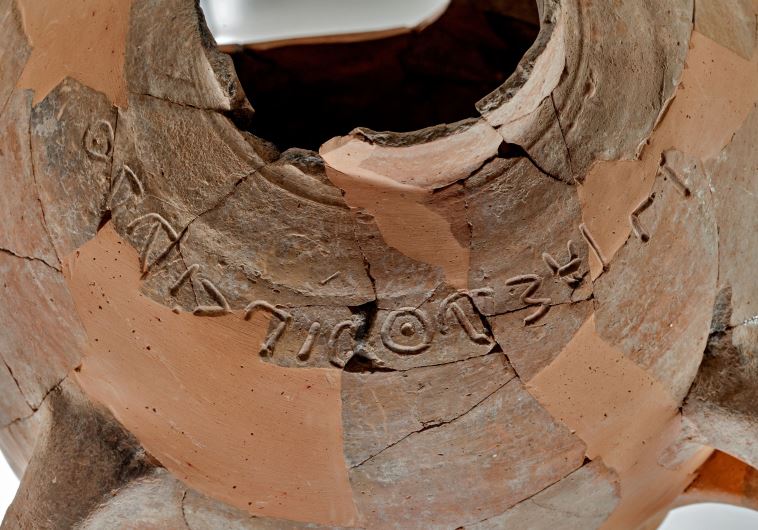
The scientists working on the discovery claimed that “The name Beda is unique and does not occur in ancient inscriptions or in the biblical tradition” but this name we can easily connect in ancient history to King Abedbalos and in the Bible to a prophet of Baal named Obadiah.
There are several Obeds or Obadiahs listed as the name of 13 Israelites in the Old Testament and as I mentioned above, the most notable is the grandfather of King David who is the son of Boaz and Ruth – the Moabite widow (Widow’s Son) Ruth 4:17, Ruth 4:21 = 1 Chronicles 2:12; Ruth 4:22
It is important to note that Obed or Obadiah, AKA the widow’s son is also listed as the governor of Ahab’s palace (1 Kin. 18:3-7, 16) and as a descendant of David, he is the “head of a family”(1 Chr. 3:21).
The reason he is considered in charge of the Tribe of Judah and a master of Jerusalem is the fact that he is a son of Boaz through Salomon whose father Nashon was appointed by Moses, upon God’s command, as prince and military commander of the Tribe of Judah and one of the leaders of the tribes of Israel.
Salmon is the patrilineal great-great-grandfather of David mentioned in 1 Chronicles 2:10-11, Ruth 4:20,21, Matthew 1:4-5 and Luke 3:32
The son of Nashon: he married Rahab, by whom he had Boaz. 1 Chron. ii. 11, 51, 54; Ruth iv. 20, 21.
Nashon’s role is variously translated as “leader” and census-taker, one of the “heads of their ancestral houses, the leaders of the tribes”, “first .. over the whole company”, and “prince of the sons of Judah”.
In the Tribe of Judah and his brothers; from Judah, Pharez and Zarah, by Tamar; from Pharez, Hezron ; from Hezron, Aram ; from Aram, Aminadab ; from Aminadab, Nashon ; from Nashon, Salmon ; from Salmon, Boaz, by Rahab; from Boaz, Obed, by Ruth.
As you can witness, Nashon is one of the most important people in the Scripture from the Old Testament given the fact that he was “legally appointed” as leader and prince of the sons of Judah whose most important son was Boaz who happened to marry a widow from another tribe named Ruth in order to produce a new son named Obed or Obediah who would then become the “widow’s son.”
Nahshon was, through Boaz, the direct male ancestor of David, and thus of Solomon and all of the kings of the Kingdom of Judah and Nahshon is also mentioned in the New Testament in the genealogy of Jesus.
With that said, Obed of the Old Testament plays a critical role in the New Testament by uniting a divided Israel of two kingdoms (Pillars of Jachin and Boaz) into one bloodline in which he represents the Widow’s Son.
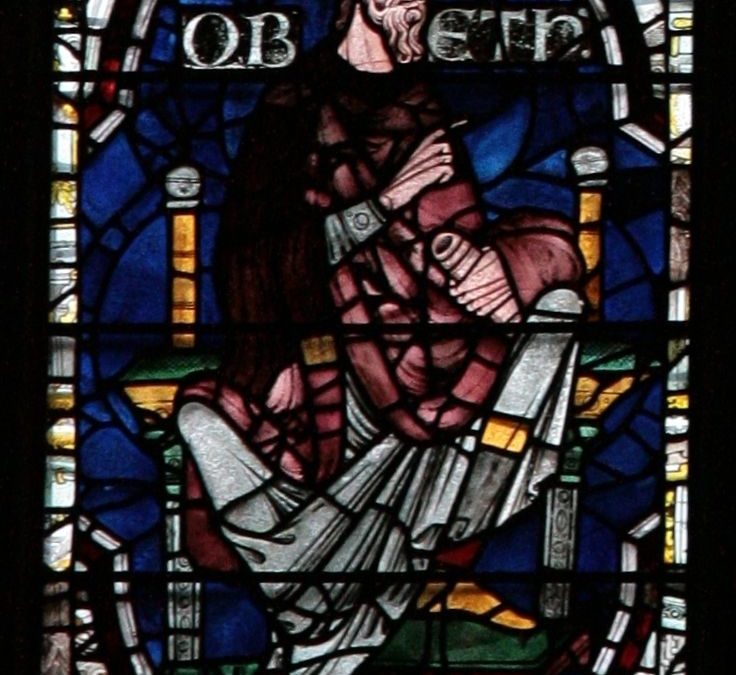
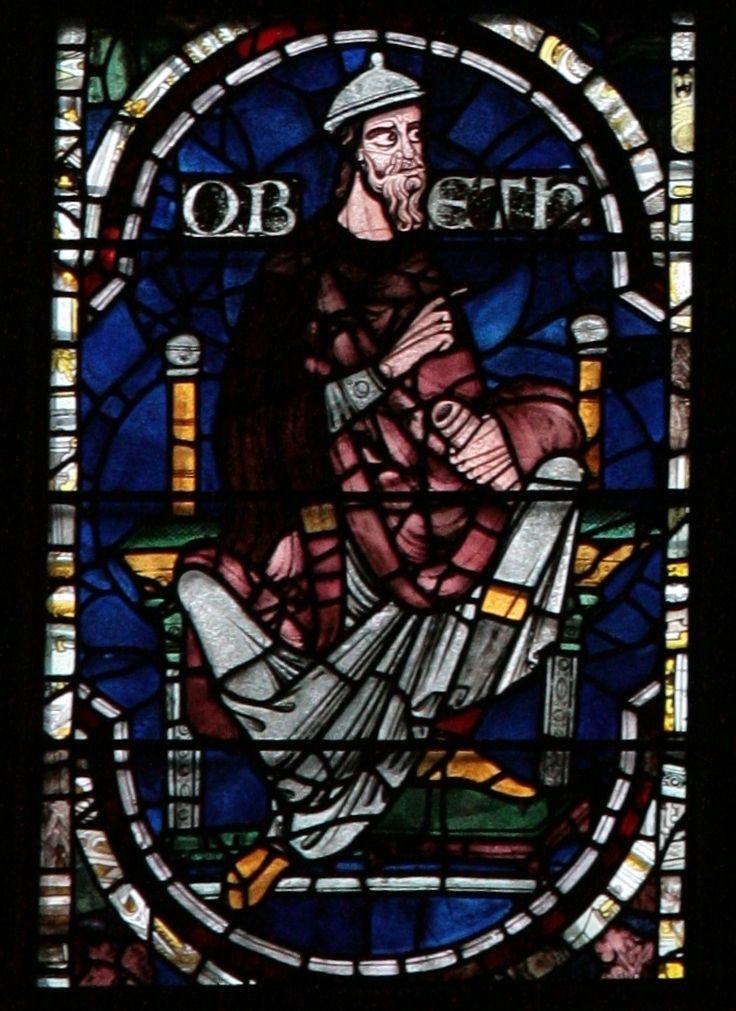
Here is an image of Obed who is named Obeth at the Kent England Canterbury Cathedral in The West Window Of The Nave Stained Glass Window showing Obed in the center between what appear to be the two Masonic pillars of Boaz and Jachin.
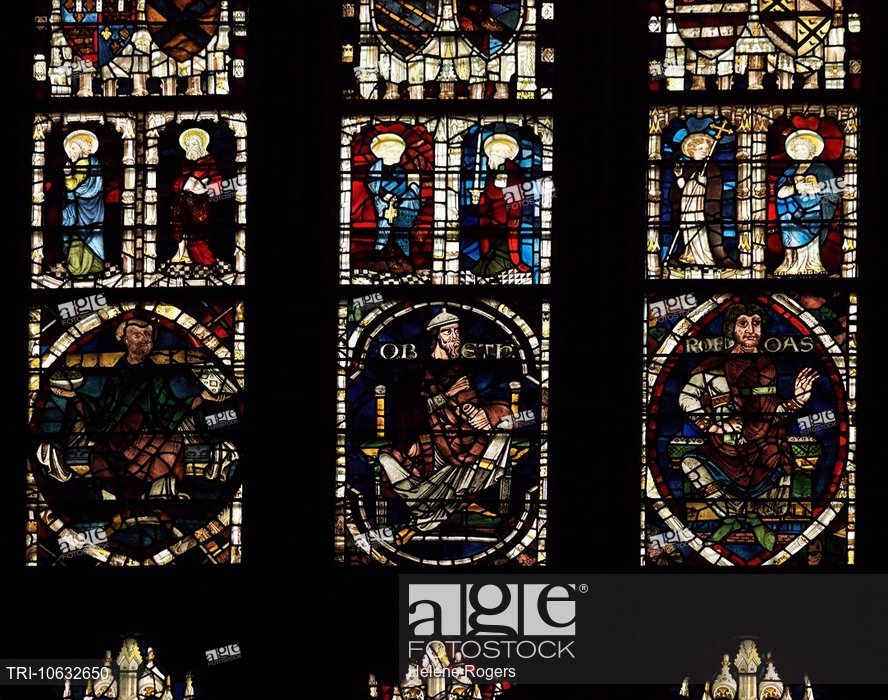
We find Obed being honored in Kent, England because this is an early medieval kingdom of Judah was said to be founded in the 5th century by a people called the Jutes – members of a Germanic people from continental Europe, some of whom settled in Britain after the withdrawal of the Romans.
Father of English History and Doctor of the Churhc, Saint Bede (lived AD 673-735) said that the King of Britain had brought the Jutes into Britain to protect his realm from Scots (from Northern Ireland) and Picts (from Scotland).
Bede had written; “The new-comers were of the three strongest races of Germany, namely, Saxons, Angles and Jutes. “Of Jutish origin are the men of Kent, and the Wihtsaetan; that is the tribe dwelling in the Isle of Wight.”
The Jutes and men of Kent play into the prophecy as I mentioned in my article, The Masonic Archons of the Tribe of Judah.
It is from the Kingdom of Kent where it has been prophesied in the bible as leading by ad hoc leaders known as Judges.
Not surprisingly, this is the precise location where we find all the Kings, Queens, Princes and Princesses of the United Kingdom hail from ruling by way of the monarchy.
The word “monarch” (Latin: monarcha) comes from the Greek language word μονάρχης, monárkhēs (from μόνος monos, “one, singular”, and ἄρχω árkhō, “to rule” (compare ἄρχων arkhon, “leader, ruler, chief”) which referred to a single, at least nominally absolute ruler of hereditary rule.
Hence, the reason in the bible why this tribe is referred to as leading by ad hoc leaders known as Judges to rule “their people,” and why currently out of 44 nations, 16 of them recognise Queen Elizabeth II as their head of state.
In addition, today we find their Masonic descendants represented in the Old Kingdom of Jute, which was originally Juteland or the land of the Jutes, and is now known as the Kingdom of Kent. Jutland, is regarded as Judah’s land. An adjective for Jute is “Jutish,” pronounced jootish.
The Grand Master of Freemasonry from the Kingdom of Judah AKA Kent, and is called the Duke of Kent.
According to the prophecy of Jacob, concerning the time of the corning Messiah, “Obed begat Jesse, and Jesse begat David, of whom, Christ came, who is God over all blessed forevermore.” (Gen. xlix. 10)
To be continued…
SOURCES:
1. Source: Mackey’s Encyclopedia of Freemasonry
2. A Lexicon of Freemasonry (Page 137) Albert Gallatin MACKEY – 1845
3. Other sources noted above and or can be easily researched using Google 😉
Moe is the founder of GnosticWarrior.com. He is a father, husband, author, martial arts black belt, and an expert in Gnosticism, the occult, and esotericism.

by Moe | Sep 3, 2019 | Latest Media, Science
Researchers at Massachusetts Institute of Technology (MIT) have developed what is being called a “snake robot” that’s designed to crawl through the blood vessels in your brain to cure disease.
Scientists at MIT are still testing this method but plan on using this magnetically controlled threadlike robot to surf through the complex vasculature of the human brain in order to deliver clot-reducing therapies to patients who have suffered from aneurysms or strokes.
The team has demonstrated how the robotic thread can be controlled through a life-size silicone replica of the brain’s blood vessels showing how the robot can be controlled just like guiding a thread through the eye of a needle.
https://www.youtube.com/channel/UCFe-pfe0a9bDvWy74Jd7vFg?feature=embeds_subscribe_title
Over the past few years, the team has built up expertise in both hydrogels — biocompatible materials made mostly of water — and 3-D-printed magnetically-actuated materials that can be designed to crawl, jump, and even catch a ball, simply by following the direction of a magnet.
“Stroke is the number five cause of death and a leading cause of disability in the United States,” Xuanhe Zhao, an associate professor of mechanical engineering at MIT, said in a statement.
“If acute stroke can be treated within the first 90 minutes or so, patients’ survival rates could increase significantly. If we could design a device to reverse blood vessel blockage within this ‘golden hour,’ we could potentially avoid permanent brain damage. That’s our hope.”
The researchers said they plan in the near future that endovascular surgeries that incorporate existing magnetic technologies, such as pairs of large magnets, the directions of which doctors can manipulate from just outside the operating room, away from the fluoroscope imaging the patient’s brain, or even in an entirely different location.
Moe is the founder of GnosticWarrior.com. He is a father, husband, author, martial arts black belt, and an expert in Gnosticism, the occult, and esotericism.