Happy Valentine’s Day: Feast of the Wolf
“Benjamin shall ravin as a wolf; in the morning he shall devour the prey, and at night he shall divide the spoil.” – Genesis 49:27
Happy Feast of the Wolf, or should I say to Americans today, Happy Valentine’s Day?
Many of us celebrate the countless holidays that fill our year, but we really don’t truly understand both the significance and history behind some of these days we celebrate. One of these holy-days of the year is Valentine’s Day. In this article, I hope to illuminate your loved filled Valentines of chocolate hearts, stuffed fuzzy dogs, and the sharing of love with some large sprinkles of historical truth from the AS ABOVE and SO BELOW.
The current new American Holiday, Valentine’s Day had only started in about the mid-19th century. However, before the advent of the relatively new American Valentines, this ancient celebration had first originated thousands of years ago from the ancient fertility rites that were held during pagan times from February 13 through 15.
This was when the “Feast of the Wolf,” known as the “Lupercalia Festival” had first originated on the Greek island of Crete, and was later imported into Rome. A time of year, that was also known as the Ides of February. Later during the establishment of the Catholic Church in Rome, this pagan celebration would be changed into a Christian Holiday called the “The Festival of the Purification of the Virgin,” and also “The Procession on the Day of St. Mary or Saint Mary’s Day
The old festival of the Lupercalia was all about spiritual cleansing when each year they had performed the rites of the Lupercalia, 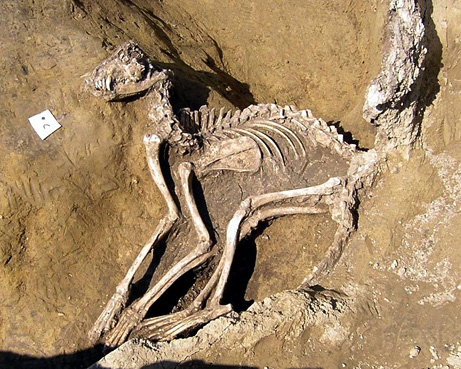 which was mainly based on fertility magic. It was a very ancient celebration for the Cretans and Romans, where a goat and a dog were sacrificed, and salt meal cakes prepared by the Vestal Virgins were burnt.
It was also celebrated with games, and the winner was rewarded with a suit of brazen armour. With these rites, it was said that evil spirits were to be averted and to purify the city.
WHY DO WE CELEBRATE THIS TIME OF YEAR?
IT IS AN AS ABOVE, SO BELOW CELEBRATION!
In the ancient Athenian calendar, the period between mid-January and mid-February was the month of Gamelion, dedicated to the sacred marriage of the Greek God Zeus and Hera. (Wikipedia) In mythology, Zeus represents the planet Jupiter who is also the real king of planets in the AS ABOVE. This festival was honored at this time of year to celebrate Jupiter, which is the only planet visible throughout the night in February 2014.
This is when it is on the “cusp” of the incoming Sign of Pisces, whose ruler happens to also be the King, Jupiter. NASA describes this event as “The bright ‘star’ overhead after the Sun sets in the winter of 2014, it is our closest gas giant, Jupiter and the red supergiant Betelgeuse, 650 times bigger than the Sun, which is one of the shoulders of the ‘Great Hunter’ (Orion Constellation).”

Here is a great video below by Space.com that explains how after the sun sets on these winter days, a bright star shines in the night sky. However, this star is not really a star, but the King of all Planets, Jupiter. The ruddy planet of war, the planet Mars also shows its light this time of year. In addition, Sirius and the constellation of Orion appear to own the winter sky. In this video, you can see how Canis Major is dominated by the Dog Star, Sirius, and is on the footsteps of Orion with its heart called the “red supergiant Betelgeuse.”
This is why during the festival of the Lupercalia, the priests would sacrifice a dog to signify the Dog Star. This time of year also brings about Saturn (Set of Satan) in the early morning hours and one of the morning stars, the planet Venus which blazes a path out of the Eastern sky. Through a telescope, you can clearly see its crescent shape that looks similar to the moon which is the symbol of the Ancient Goddesses who represent Venus such as Isis, Ishtar, and Hecate.
Earlier in the month of February is also significant, because on February 10th, both Jupiter and the moon are shining together and becoming a full moon on Valentine’s Day. This AS ABOVE, SO BELOW event also coincides with the Festival of the Wolf, or Lupercalia, because we all know that wolves howl at full moons. Here is some current information on this wolf howl event from Space.com;
This evening, observers may notice a very bright, silvery “star” shining with a steady glow to the right or lower right of the moon. That’s not a star, however, but in reality, the biggest planet in our solar system: Jupiter. Both moon and planet will keep each other company as they move across the night sky through the course of the night.
The 1st century Greek historian, and biographer, Plutarch mentions during the festival a blood-ritual, “the blood symbolizing the bloodshed and terror of that time” and connects its origin with war. This makes sense since Valentine’s Day is essentially a “red holy-day.”
In “Plutarch’s Lives of Romulus, Lycurgus, Solon and Others,” he writes;
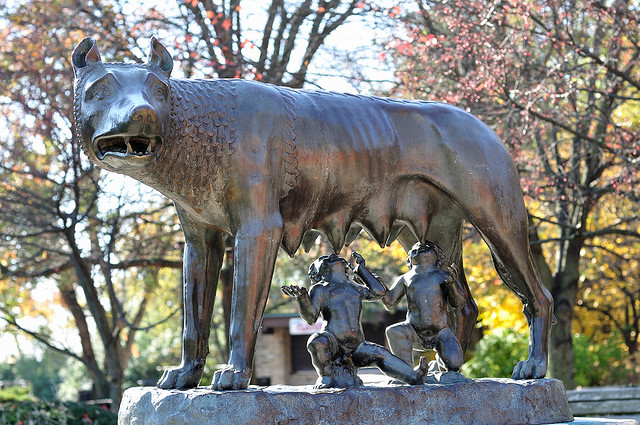
As for the Lupercalia, by the time, it should seem to be a feast of lustration ; for it was celebrated on one of the inauspicious days of the month of February, which name denotes it to be the month of Purifying; and the day was formerly called Februata. But the true meaning of Lupercalia is the Feast of Wolves; and it seems, for that reason, to be very ancient, as received from the Arcadians, who came over with Evander. This is the general opinion. But the term may be derived from Lupa, a she wolf; for we see the Luperci begin their course from the place where they say Romulus was exposed.
However, if we consider the ceremonies, the reason of the name seems hard to guess:
For first, goats are killed; then two noblemen’s sons are introduced and some are to stain their foreheads with a bloody knife, others to wipe off the stain directly, with wool steeped in milk, which they bring for that purpose. When it is wiped off, the young men are to laugh. After this they cut the goat’s skins in pieces, and run about all naked, except their middle, and lash with those thongs all they meet . The young women avoid not the stroke, as they think it assists conception and childbirth. Another thing that propels this feast is, for the Luperci to sacrifice a dog.
The festival of the Lupercalia was held by the Luperci, who were the priests of Pan. The priests would run up and down the city streets naked, having only a girdle of the sacrificial victim’s skins around their waist, and thongs of the same in their hands as they would whip bystanders and especially married women that were alleged to make them prolific.
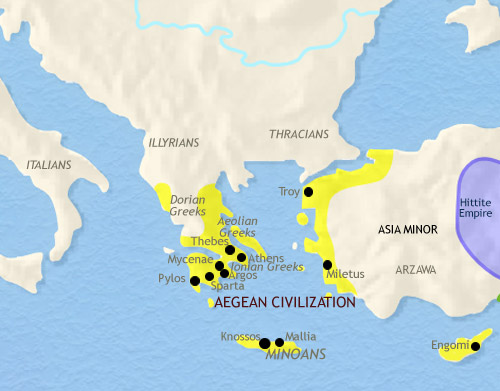 These rites had come to Rome by way of the Holy Island of Crete. It was on Crete (Also known as Arcadia, Candia and in Latin, Cappadocia), where the priests of Pan had first originated and worshiped on the mountain called Lycaeus. However, it was said that they originally had used to sacrifice humans instead of a goat and dog.
The Cretans and Luperci had also called Lycaeus the Sacred Mountain. Lycaeus is also known by the names of Mount Olympus and more commonly today, as Mount Ida. In ancient Greek Mythology, this was the same mountain where the God, Zeus was born, educated and hidden in a cave.
This story was then assimilated into Rome with a similar mythological event, wherein Rome there is a cave which was believed to have sheltered the founders of Rome, Remus and Romulus.
These festivals were banned for several years and later the restoration of the Rites of the Lupercalia in Rome from Crete is mentioned among the works of Augustus Caesar. They were not abolished until the time of the rule of the Byzantine Emperor, Anastasius in 518 AD.
It was on Crete, where the priesthood known by many names such as the Luperci, Telchines, Curetes, Corbanytes , and the Priesthood of Jupiter Ammon etc. were placed in charge of protecting Zeus (Jupiter or Jove) by his mother Rhea from his vengeful father, Cronus (Saturn). I have written several articles on this ancient priesthood and also the island of Crete, in article such as,Crete: The Lost Island of Atlantis;
Herodotus had said that the Curetes had come to Crete with the Phoenician Prince Cadmus. In Latin Crete is called, “Cappadocia or Cappadocian” who were known as a large tribe of the Magi and are also called fire-kindlers. Herodotus tells us that the name of the Cappadocians was applied to them by the Persians, while the Greeks had simply called them, “Syrians” or “White Syrians.” The Latin name of the Cappadocians were known as “the men of Caphtor”, who we can call today, “the men of Crete.”
HOW WAS THE LUPERCALIA CHANGED TO A CHRISTIAN HOLIDAY?
The pagan festival of the Lupercalia that contained blood and naked men running down the streets whipping people, would later change into a more respectable human Christian Holiday and Feast of the Purification that would officially be celebrated on the day of February 14, 40 days after Epiphany (from the ancient Greek ἐπιφάνεια, epiphaneia, “manifestation, striking appearance”). The Father of English History and Doctor of the Church, Saint Bede had written on these pagan events and heathen rites that were specifically practiced by the people of Sicily;
The procession of Candlemas consigned the Lupercalia to oblivion, and the Ambarvalia only yielded to the rustic pomps of the Rogations. As the peasants of Enna, in Sicily, could not detach themselves from the joyful festivals they always held after harvest in honour of Ceres, the Feast of the Visitation was retarded on their account, and they offered on the altar of Christ the ripe wheat-ears with which they had garlanded their idols.
Lupercalia and its procession had existed before, the feast of our Lady, but that the Christian religion had happily changed this ancient pagan custom of purification. He further states;
The people, priests and ministers, go in procession, with lighted wax tapers in their hands, singing hymns through the principal streets. The tapers, in his tunc, were consecrated for this purpose on Christmas day, and inscribed with the year of our Lord, which, commenced on that day observed on January 6, commemorating the manifestation of Christ to the gentiles in the persons of the Magi.
 HAPPY FEAST OF THE WOLF!
It was said that a dog was sacrificed during these rites because they were enemies to the wolf. This is interesting because of the connection to the biblical Tribe of Benjamin, where “In the Blessing of Jacob, Benjamin is referred to as a ravenous wolf.” The tribe of Benjamin were well known as great warriors who played an important role in Israelite history. The name Benjamin is derived from Banu-yamina.The ancient texts found in this city of Mari that date from 18B.C.were written in the Akkadian-language, and refer to the Amorites by the name of the warlike tribe, ‘Banuyamina.’
Both names meaning, “the Son of the right hand” as described when Moses delivered Israel from Pharaoh, he became the right hand of God. In Colossians 1:16 – “For by him were all things created, that are in heaven, and that are in earth, visible and invisible, whether [they be] thrones, or dominions, or principalities, or powers: all things were created by him, and for him;” Christ also ascended to heaven and sat down in the place of authority at the right hand of God as written in Peter 3:22 – Who is gone into heaven, and is on the right hand of God; angels and authorities and powers being made subject unto him.
Genesis 49:27 – Benjamin shall ravin as a wolf – It is plain, Jacob was guided in what he said by a spirit of prophecy, and not by natural affection, else he would have spoken with more tenderness of his beloved son Benjamin, concerning whom he only foretells, that his posterity should be a warlike tribe, strong and daring, and that they should enrich themselves with the spoil of their enemies, that they should be active in the world, and a tribe as much feared by their neighbours as any other; in the morning he shall devour the prey which he seized and divided overnight.

Moe is the founder of GnosticWarrior.com. He is a father, husband, author, martial arts black belt, and an expert in Gnosticism, the occult, and esotericism.