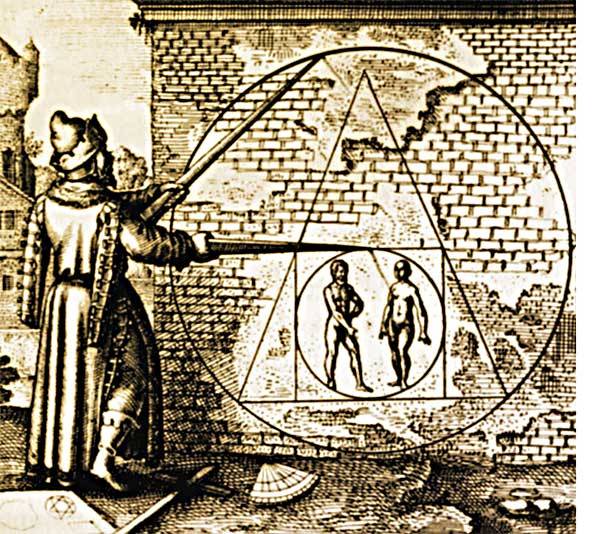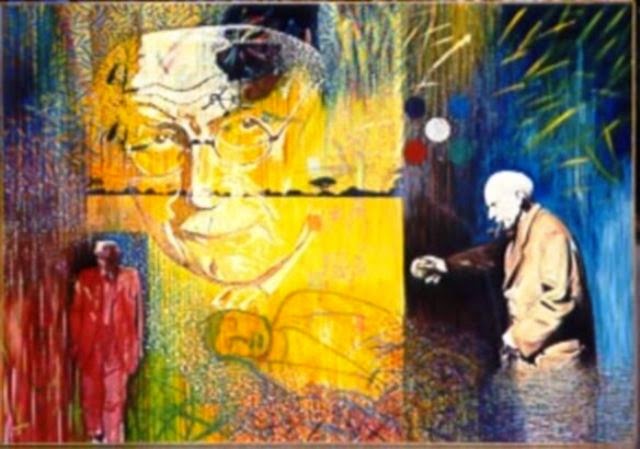
Perhaps one of Carl Gustav Jung’s most famous quotes was “Until you make the unconscious conscious, it will direct your life and you will call it fate.”
The quote was a declaration about the secrets of psychological sovereignty, free agency and free will.
Jung was not speaking metaphorically about mystical fate; he was making a clinical, structural argument about how the psyche operates when left unexamined.
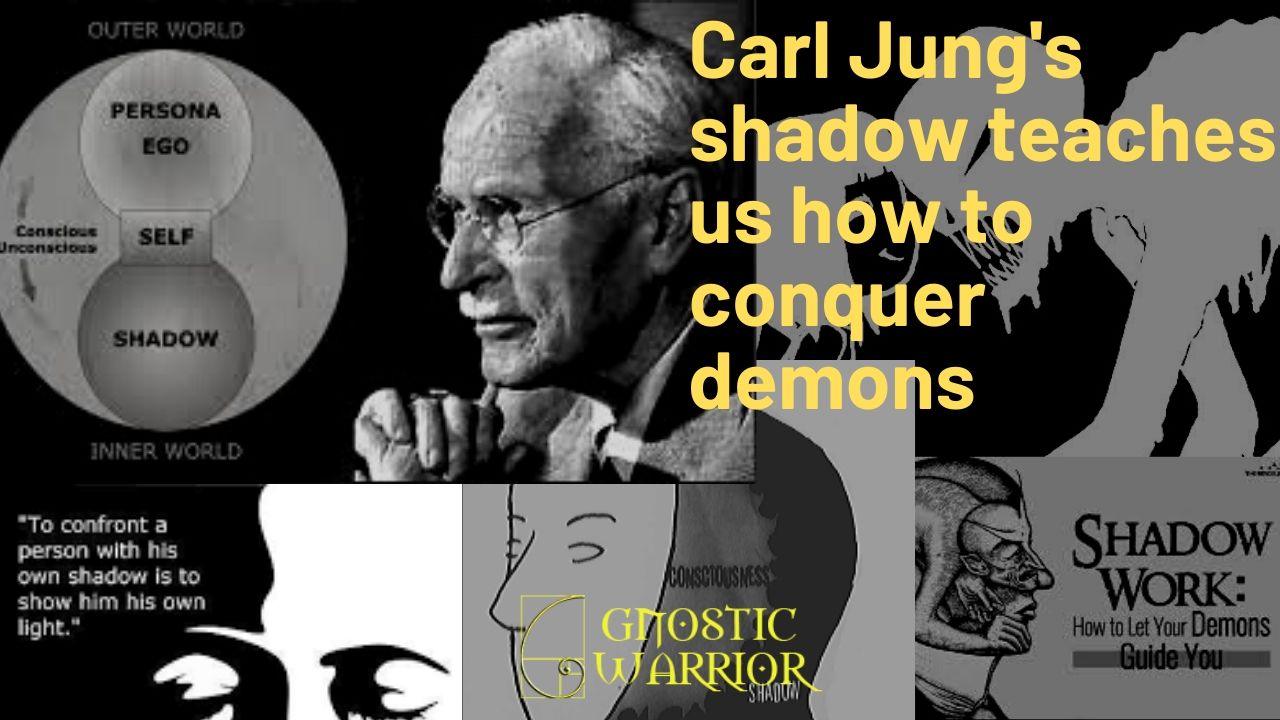
He identified the unconscious with the Shadow in his work Aion as a “highly emotional, driven by primal instinct, often violent, and usually concealed from the social world by the conscious mind”.
Jung said that “the shadow personifies everything that the subject refuses to acknowledge about himself.” (CW 9i, para. 513) and he tells us, “Everyone carries a shadow.”
He claimed that it was the sum of all repressed, unintegrated, and disowned contents of the psyche — “highly emotional, driven by primal instinct” and “usually concealed from the social world by the conscious mind”.
The person who does not confront repressed grief will unconsciously engineer relationships that reproduce it.
The person unaware of deep-seated shame will self-sabotage success before it can expose them.
The person carrying unacknowledged rage will attract conflict wherever they walk—and call it bad luck.
Jung described the Shadow as driving individuals into repetitive, unconsciously motivated patterns — behaviors they would disavow if confronted with them consciously.
We become unconscious automatons.
This is the operative word: automatons.
Without self-knowledge, behavior becomes mechanical, reactive, and patterned—the very definition of a life directed not by free will, but by invisible compulsion wearing the costume of fate.
When we do not come to know and understand our own darkness or evil natures, we falsely project them into the world upon other people and our neighbors.
Jung says, “When an individual makes an attempt to see his shadow, he becomes aware of (and often ashamed of) those qualities and impulses he denies in himself but can plainly see in other people . . .such as egotism, mental laziness, sloppiness, unreal fantasies, schemes, plots, carelessness, cowardice, inordinate love of money and possessions . . . in short, all the little sins about which he might previously have told himself: “that doesn’t matter”. (P. 174)
Sigmund Freud, Jung’s famous intellectual predecessor and rival, established the foundational clinical case. He described the unconscious as;
“A reservoir of repressed feelings, traumatic memories, and instinctual drives that remain hidden from awareness yet exert profound influence over emotion and decision-making,” and declared that “the majority of human behavior originates not from rational, conscious thought, but from deep-seated inner conflicts and instinctual forces operating beyond our awareness or control”.
Indeed, Freud’s stated goal for psychoanalysis was identical to Jung’s: to make the unconscious conscious.
According to Jung, “We carry our past with us, to wit, the primitive and inferior man with his desires and emotions, and it is only with an enormous effort that we can detach ourselves from this burden.
If it comes to a neurosis, we invariably have to deal with a considerably intensified shadow.
And if such a person wants to be cured it is necessary to find a way in which his conscious personality and his shadow can live together.” (Answer to Job)
Jung stated that a human being deals with the reality of the shadow in four ways: denial, projection, integration and/or transmutation.
The goal is always the latter – integration and transmutation.
The unconscious is not all darkness and evil.
Jung was explicit that the Shadow also contains “normal instincts, appropriate reactions, realistic insights, creative impulses” that have been denied their rightful place in the personality.
Jung claimed that not only do our evil tendencies arise our unconscious behaviors projected through our shadow, but also our good qualities. He writes;
“If it has been believed hitherto that the human shadow was the source of all evil, it can now be ascertained on closer investigation that the unconscious man, that is, his shadow, does not consist only of morally reprehensible tendencies, but also displays a number of good qualities, such as normal instincts, appropriate reactions, realistic insights, creative impulses, etc.” (Carl Jung, CW 9ii, Para 423)
As Jung warns “If you get rid of qualities[of the Shadow] you don’t like by denying them, you become more and more unaware of what you are, you declare yourself more and more non-existent, and your devils will grow fatter and fatter.” ~Carl Jung, Dream Analysis, Page 53.
Jung taught that one does not become enlightened by imagining figures of light, but by making the darkness conscious.
This process helps integrate the self with the unconscious.
The alchemical marriage of the shadow with the self.
Jung had said, “Knowing your own darkness is the best method for dealing with the darknesses of other people.”
Once we have self knowledge of our own darkness, we can stand as true arbitrators and rulers of our fates.
Captains of our lives, rather than passengers along for the ride.
According to Jung, “To confront a person with his shadow is to show him his own light.
Once one has experienced a few times what it is like to stand judgingly between the opposites, one begins to understand what is meant by the self.
Anyone who perceives his shadow and his light simultaneously sees himself from two sides and thus gets in the middle.” (Good and Evil in Analytical Psychology)
Jung had written, “If you imagine someone who is brave enough to withdraw all his projections, then you get an individual who is conscious of a pretty thick shadow. Such a man has saddled himself with new problems and conflicts.
He has become a serious problem to himself, as he is now unable to say that they do this or that, they are wrong, and they must be fought against…
Such a man knows that whatever is wrong in the world is in himself, and if he only learns to deal with his own shadow he has done something real for the world.
He has succeeded in shouldering at least an infinitesimal part of the gigantic, unsolved social problems of our day.” (Psychology and Religion)
It is important to understand that Jung implies that the goal is not to repress our unconscious or deny the shadow, to do so would make our shadow revolt and cause us problems.
He also warns us not to misunderstand and or repress our dark side.
Jung said, “Whether our shadow becomes our friend or enemy depends largely upon ourselves. The shadow becomes hostile only when he is ignored or misunderstood.” (Man and His Symbols)
He further warns us, “The educated man tries to repress the inferior man in himself, not realizing that by so doing he forces the latter into revolt.”
Jung believed people become enlightened when they understand their unconscious mind and accept the darker parts of themselves, ie their shadows. By doing so, each awakened person becomes a unique individual – an authentic being who has a distinct and possibly predetermined destiny.
This is no easy task and Jung makes it clear that it takes a lot of honest self-examination, courage, and work to face and integrate one’s shadow into their life. Jung writes;
“The discovery of the unconscious is one of the most far-reaching discoveries of recent times. But the fact that recognition of its unconscious reality involves honest self-examination and reorganization of one’s life causes many people to continue to behave as if nothing at all has happened.”
He says, “It takes a lot of courage to . . . tackle the problems it raises. Most people are too indolent to think deeply about even those moral aspects of their behavior of which they are conscious; they are certainly too lazy to consider how the unconscious affects them.”
Science Confirms the Jung’s Unconscious & Shadow Theories
Modern neuroscience and cognitive psychology have quietly confirmed Jung’s diagnosis of the unconscious aspects of the human psyche — without giving credit or mentioning Jung.
A landmark 2008 study by Soon, Brass, Heinze, and Haynes, published in Nature Neuroscience, demonstrated that brain activity predicting a conscious decision could be detected up to ten seconds before the subject was aware of having made a choice.
The brain, in other words, acts before the mind knows it has decided.
The unconscious directs behavior; consciousness merely ratifies it afterward.
Cognitive psychologist Gerald Zaltman of Harvard Business School has estimated, based on decades of consumer and behavioral research, that “ninety-five percent of thought, emotion, and learning occur in the unconscious mind—that is, without our awareness”.
If accurate, this means the conscious “I” that plans, deliberates, and makes choices is engaging with only a fraction of the forces actually governing behavior.
Contemporary researchers at Frontiers in Psychology (2025) have confirmed that brain-based machine learning models can decode unconscious image processing and behavioral tendencies from neural data, even when subjects report no awareness of the stimuli—demonstrating that rich cognitive processing occurs entirely below the threshold of consciousness.
The British Psychological Society has further noted that “much of modern cognitive psychology and the neurosciences is consistent with the Freudian view that behavior can become automatized through repetition, and that the control of such behavior is devolved to autonomous or semi-autonomous unconscious structures”.
When Jung declared that the unconscious would direct one’s life until it was made conscious, he was articulating, in the language of depth psychology, something that biochemistry is now expressing in the language of microbial signaling.
The second brain of the gut — and the trillions of microorganisms that colonize it — operates largely below the threshold of conscious awareness, shaping emotions, steering decisions, and sculpting personality in ways the thinking mind rarely suspects.
A landmark 2025 review published in PubMed confirmed that “gut microbiota play a foundational role in shaping emotional and cognitive functions through complex neuroimmune and neuroendocrine mechanisms,” modulating neurochemical pathways involving serotonin, dopamine, GABA, and glutamate.
These are not peripheral chemicals.
They are the very molecules of human consciousness, motivation, pleasure, and fear.
What science is telling us is that the unconscious is ruled by these microorganisms who also control what Jung called the shadow.
The microorganisms within the gut are not neutral bystanders.
They are active agents in the psychodrama of consciousness — and until their influence is recognized, it operates as fate.
Jung’s prescription for liberation from the unconscious was individuation — the deliberate, disciplined process of bringing hidden contents into awareness, integrating the Shadow, and achieving psychological wholeness.
The process of liberation Jung prescribed is known as individuation—the lifelong journey of integrating the Shadow and all other unconscious contents into a unified, conscious Self.
Carl Jung had written in Two Essays on Analytical Psychology:
“Individuation means becoming an “in-dividual,” and, in so far as “individuality” embraces our innermost, last, and incomparable uniqueness, it also implies becoming one’s own self.
We could, therefore, translate individuation as “coming to selfhood” or “self-realization.”
In order to reach selfhood and not become possessed, ignorant or go mad, (controlled by their Shadow), we must have a friendly encounter with our own demon and get to know him or her.
A process that represented an archetypal stage of self individuation.
Shadow work, the practical expression of individuation, is described by contemporary Jungian therapists as “the attempt to make these less desirable aspects of ourselves conscious and to integrate them by acknowledging and making peace with them”.
The Philosophers Who Came Before
Jung did not speak into a vacuum. The philosophical lineage supporting this insight runs deep into antiquity.
Socrates delivered the ancient world’s equivalent over 2,400 years ago. His declaration—”The unexamined life is not worth living”—spoken at his own trial in Athens, was not rhetorical flourish.
Socrates believed, as Plato recorded in the Phaedrus, the Meno, and the Apology, that self-knowledge was the prerequisite for virtue, for justice, and for the good life.
One cannot act rightly from a self one does not understand.
His method of dialectical inquiry was, in essence, the ancient form of making the unconscious conscious.
Plato formalized this in his theory of the soul, arguing in the Republic that “the absence of knowledge is the cause of the individual’s liability to instability and moral degeneration”.
The shadows on the wall of Plato’s famous cave allegory are themselves a metaphor for unconscious projections—mistaking appearances driven by interior ignorance for reality itself.
Lao Tzu anticipated this millennia before Jung in the Tao Te Ching: “He who knows others is wise. He who knows himself is enlightened”.
The operative distinction is one of direction—inward versus outward.
All external mastery built on interior ignorance is mastery of illusion.
For readers of Gnostic tradition and hidden knowledge, Jung’s dictum resonates with remarkable precision against ancient frameworks.
The Gnostic concept of gnosis—direct, experiential self-knowledge that pierces the veil of illusion—is structurally analogous to Jungian individuation.
The Demiurge of Gnostic cosmology, the false creator who imprisons the divine spark in ignorance, functions in psychological terms as the unexamined unconscious: a hidden force shaping reality while the individual believes themselves free.
The alchemical texts Jung spent decades studying spoke of the nigredo—the blackening, the confrontation with the shadow material—as the necessary first stage of transmutation.
One cannot reach gold without first descending into darkness.
As Jung himself noted in his lectures: “If man does not reverence and submit to the unconscious, which created his consciousness, he loses his soul, that is, he loses his connection with soul and unconscious”.
This is not metaphor for Jung—it is structural psychology expressed in the symbolic language available to modern minds.
He said the only way for someone to get in the middle is through knowledge of the self which leads to understanding our own good and evil natures and by doing so, we learn how to reason with ourselves and others which leads to the light ie: true wisdom of the world in which we live.
This newfound wisdom allows us to integrate our modern lives that are often governed (molded) outwardly by our unconscious world ie: parents, government, community and culture with the inner Self which then becomes the true archetype of wholeness and self-transcendence.
An enlightened person who understands the light and darkness in themselves and also in others but stands in the middle using reason to transcend our self made prejudices and boundaries
The person who has integrated with his or her shadow no matter the era always seems to become a beacon of light for humanity helping answer life’s most difficult questions and confronting the monsters that many of us who are too afraid to confront our own shadows.
The universal image is the Hero and the end result of this Great Work no matter the race or culture is that immortal person whom we have all come to love and adore.
In this Age-old saga, we will forever see the visions of the Great Shadow of the Swiss Gnostic Hero – Carl Jung forever bringing light to those who fear their own darkness.
Conclusion
Carl Jung understood that what a person cannot see within themselves will rule them from without.
He created a diagnostic principle—a map of exactly how human beings become prisoners of patterns they mistake for providence.
The unconscious does not announce itself.
It does not declare its influence.
It simply acts, and the unaware individual experiences the results as the story of their life.
Ancient philosophers from Socrates to Lao Tzu demanded self-knowledge as the foundation of human dignity.
Freud and Jung transformed that demand into clinical science.
Modern neuroscience has now quantified the scale of unconscious governance of behavior.
The second brain acting as our unconscious master is not a metaphor.
While ancient myths, sacred texts, and Gnostic cosmologies may strike the modern atheist or committed skeptic as mere allegory or superstition, the psychological and biological sciences have begun to vindicate what the ancients encoded in symbol and story.
These narratives were never simply fantastical — they were maps of the human condition.
Carl Gustav Jung spent a lifetime demonstrating that the unconscious is not a metaphor but a measurable, operative force shaping thought, behavior, and destiny.
His concept of the shadow — the unintegrated, unacknowledged dimension of the psyche — functions as a tyrant operating beneath awareness, steering choices its host never consciously makes.
This is not poetry.
It is psychology with profound implications for human freedom, a freedom humanity has been struggling to reclaim across millennia.
The parallels with Gnostic cosmology are not incidental.
The Gnostic Demiurge — most famously rendered as Yaldabaoth, the blind and arrogant craftsman-god who imprisons divine sparks in material flesh — maps with striking precision onto Jung’s unconscious shadow.
Both are described as domineering, self-serving forces that operate invisibly, convincing their subjects that no higher authority exists.
The imprisoned Gnostic soul and the shadow-dominated ego suffer the same essential condition: captivity mistaken for freedom.
As Jung himself wrote, “Until you make the unconscious conscious, it will direct your life and you will call it fate.”¹
The modern Gnostic path demands not only the examined mind, but the examined gut — and the disciplined intervention required to ensure that microbial fate becomes conscious choice.
The convergence is undeniable: the examined self is not a luxury of the philosophically inclined—it is the prerequisite for authorship of one’s own life.
Until that examination is undertaken, fate is not written in the stars.
It is written in the dark (nigredo of your gut).
The Ultimate Solution
I will leave you with what I believe Jung’s final prophetic solution to conquer the demons of our modern era;
“I have already suggested that the only salvation lies in the piecemeal work of educating the individual. That is not as hopeless as it may appear. The power of the demons is immense, and the most modern media of mass suggestion – radio, film, etc. — are at their service.
But Christianity, too, was able to hold its own against an overwhelming adversary not by propaganda and mass conversions — that came later and was of little value — but by persuasion from man to man.
And that is the way we also must go if we wish to conquer the demons.”
References
-
-
Jung, C. G. Aion: Researches into the Phenomenology of the Self. Princeton: Princeton University Press, 1959. https://www.gnosticwarrior.com/jungs-shadow.html
-
Jung, C. G. CW 9ii, Para 423 — The Shadow. https://www.gnosticwarrior.com/jungs-shadow.html
-
“Jungian Psychology: Unraveling the Unconscious Mind.” Positive Psychology. https://positivepsychology.com/jungian-psychology/
-
“Shadow Work and Jungian Psychology in Contemporary Therapy.” IJSREM, 2025. https://ijsrem.com/download/shadow-work-and-jungian-psychology-in-contemporary-therapy-reclaiming-the-disowned-self/
-
“Shadow, Self, and Regulation: A Jungian Contribution to Emotional Intelligence Theory.” Academia.edu. https://www.academia.edu/129362819/Shadow_Self_and_Regulation_A_Jungian_Contribution_to_Emotional_Intelligence_Theory
-
“The Jungian Shadow and Self-Acceptance.” Texas A&M University at Galveston, Nautilus. https://www.tamug.edu/nautilus/articles/The%20Jungian%20Shadow%20and%20Self-Acceptance.html
-
Soon, C.S., Brass, M., Heinze, H.J., & Haynes, J.D. “Unconscious determinants of free decisions in the human brain.” Nature Neuroscience 11, 543–545, 2008. https://scholar.google.com/citations?user=GCMhq8MAAAAJ&hl=en
-
“Freud’s Theory of the Unconscious Mind: The Iceberg Analogy.” Simply Psychology, 2024. https://www.simplypsychology.org/unconscious-mind.html
-
“New Methods, Old Questions: Advancing the Study of Unconscious Processing.” Frontiers in Psychology, 2025. https://www.frontiersin.org/journals/psychology/articles/10.3389/fpsyg.2025.1626223/full
-
“The Unexamined Life Is Not Worth Living.” Wikipedia. https://en.wikipedia.org/wiki/The_unexamined_life_is_not_worth_living
-
“Knowing Ignorance in the Early Socrates: Self-Knowledge Delivers Virtuous Action.” Academia.edu. https://www.academia.edu/30596014
-
“The Development of Self-Knowledge in Plato’s Philosophy.” Academia.edu, 2022. https://www.academia.edu/78190936
-
“Nietzsche on the Embodiment of Mind and Self.” Academia.edu. https://www.academia.edu/3331665
-
“Freud and the Unconscious.” British Psychological Society. https://www.bps.org.uk/psychologist/freud-and-unconscious
-
Zaltman, Gerald. How Customers Think. Boston: Harvard Business School Press, 2003. Quoted at https://www.azquotes.com/quotes/topics/unconscious-mind.html
- Clarke, Gerard, et al. “The Microbiota-Gut-Brain Axis.” Neuropsychopharmacology Reviews, 2019. https://www.academia.edu/59596278/The_Microbiota_Gut_Brain_Axis
- Gershon, Michael D. The Second Brain. New York: HarperCollins, 1998.
- Hopkins Medicine. “The Brain-Gut Connection.” Johns Hopkins Medicine. https://www.hopkinsmedicine.org/health/wellness-and-prevention/the-brain-gut-connection
- Lach, Gilliard, et al. “The Gut-Brain Axis: Influence of Microbiota on Mood and Mental Health.” Integrative Psychiatry, 2019. https://pmc.ncbi.nlm.nih.gov/articles/PMC6469458/
- Mukherjee, Ananya, et al. “The Gut Microbiome and Its Impact on Mood and Decision-Making.” PubMed/PMC, 2025. https://pmc.ncbi.nlm.nih.gov/articles/PMC12609437/
- Pearson-Leary, Jiah, et al. “Gut Microbiota Regulates Key Modulators of Social Behavior.” PubMed, 2016. https://pubmed.ncbi.nlm.nih.gov/26613639/
-
Moe is the founder of GnosticWarrior.com. He is a father, husband, author, martial arts black belt, and an expert in Gnosticism, the occult, and esotericism.