This text is Part II of a discussion on Sacred Images by Manly P. Hall, that has never been in print before now. At my cost, I had the audio transcribed so people could read his words forever. I hope you enjoy.
By Manly P Hall – Vast mass of celestial needs. Buddhism has its buddhism [indecipherable 00:06] And nearly all religion and philosophies have behind the visible order of things. The concept of an invisible government.
A government, which controls all things because it is by its very substance and essence in full possession of everything necessary for absolute leadership. All these types of philosophy has gradually resolved in what we might term religious odd.
And this religious odd is not limited to strange people far away. It is present in our own cathedral churches. Religious odd is present in many private homes. Wonderful figures and representations of sacred persons or sanctified individuals are to be found in painting and in sculpting in our own local environment.
How then does it happen that we create this imagery? An artist, particularly in the early period of Gothic art in Europe, invented a complete language of symbolical attributes by means of which it will be possible to distinguish the degrees of sanctity or divinity present in the various representations that they make.
Whether it is the great Michael Angelo’s Moses or the tremendous symbolical value of the Raffiel or the Rembrandt sacred paintings, it is always the same. A sacred picture to represent an invisible principle. Now this is also the only way that we can represent the various virtues and vices of humanity.
How are we going to define generosity to a person who has no understanding of the word? The only way that we can understand under those conditions is through an action. And so we have the various parables and legends or scriptures. The good Samaritan, represents this kind of generosity.
The wayward son who finally comes home to his family, is in the parable of the prodigal son. These are word patterns created to express virtues which are common to human beings but which cannot be communicated without some relationship to a practical action.
As we go in to the pictures of religious personalities in all parts of the world, we are sometimes considerably confused. In many instances it looks like some people have more of these images and might be necessary. We realize also that within culture these images change their appearances.
They change the materials upon which – from which they are fashioned. They develop an expression of likenesses – largely tribal or racial, and therefore differing in various areas and communities.
They have this tremendous almost incalculable mass of sacred imagery is now becoming of great interest to not only the psychologist but the anthropologist and the mystic, the metaphysician and the symbolist in general because these images tell us something. They tell us of man’s eternal search for realities.
The very images which look unreal a part of the struggle to attain reality. Sometime ago, an Indian gentlemen discussed with a missionary who was having a little difficulty trying to understand this well cultured Indian gentleman was able to respect an image with a number of arms and several heads.
So he tried to explain this to the missionary. And he said “How would you do some of these things?” Suppose we say that a horse has a head, and a dog has a head and a bird has a head, and a fish has a head. And all these heads are parts of something.
They are parts of life. All these creatures are alive. One life is within them. Therefore if you want to make a picture of life; you must make a cluster of living things to represent it. And no matter how many of these we put together or pile up, they will not be adequate. Because there will be more kinds of life we can picture.
There will be more attitudes and virtues within human life that we can depict. Therefore the only thing that we can do is to suggest that the divine power and source of things animates all life.
And therefore if we try to picture it perhaps we should picture it made up of living things. In Egypt the Sarapium Deities in the Great Alexander libraries of Sarapium, is said to have been a deity in figure in a kind of wicker work.
And within that wicker work, where all forms of life, plants, flowers, symbols of animals or birds, all kinds of things, it was a wicker work filled with every type of life that the Egyptians could put in it.
Therefore to them, it seems perfectly appropriate that they should represent the spirit of life. A spirit moving through living things. A spirit that should remind us forever, of the unity of life and our own kinship of living things. So gradually it became increasingly practical apparently to create this elaborate pictorial representation of the various activities of natural law.
In Alexandria, the astronomers try to do this with the universe. The Brahmans perhaps did a little better at it but all of them came to the realization that the universe came in some way archetypal figure or pattern or picture and if we want to picture the divine power of source of life, what more adequate immediate symbol could be available than the solar system, the cosmos.
There will be no way that we can go beyond life, but everything we can reach is part of life. Therefore life expands and expands and thus the Brahmans pointed out, the main problem with imagery is inadequate, it is not the way or too much of it. It is that we cannot possibly have an imagery structure that is complete in all of its attributes.
There was only a step then that it takes language as an example. Language was a way of putting forms into words and transmitting them. Language can go on and on and on. And never could we have enough of words or enough language symbols that could take care of everything we wanted to record.
In the 15th and 16th Century, the unabridged dictionary was a very slender volume in English. Today it is inconceivably a complicated volume. And still there are not enough words to tell all that we know.
The same way, there are not enough symbols in nature to tell all that we believe about creation, about deity, about the infinite unfoldment of living things. So we find in the Greek and other religions also, the gradual development of mythologies.
These mythologies were stories about the Gods, or about spirits or ghosts or super physical beings of one kind or another. Now in mythology, how are we going to symbolize the processes by means of which the various unfoldments of life took place?
To the ancient people without exception, generation was the most important symbol that existed to their knowledge. For it was in a way in which life was perpetuated. It was the one way which the mystery of death is solved forever in eternal life.
Therefore all the processes of creation that we might now carry on in laboratory by means of chemicals or mathematical symbols were anciently represented by the automatic activities of human life. Therefore to the primitive people, deity was the tribal chieftain.
Moe is the founder of GnosticWarrior.com. He is a father, husband, author, martial arts black belt, and an expert in Gnosticism, the occult, and esotericism.
This text of a discussion on Sacred Images by Manly P. Hall has never been in print before now. At my cost, I had the audio transcribed so people could read his words forever. I hope you enjoy.
By Manly P. Hall: A number of years ago, I was in a little town, Darjeeling, on the northern boundary of India where it met Tibet. There were several visitors from various countries and the hotel management decided it would be appropriate to give a little entertainment in the Tibetan spirit. So they brought in about a half a dozen Tibetan dancers, with their masks and regalia, to entertain. Among them was a little boy, about eight years old, a very cute chubby little rascal that everyone liked immediately.
But when the time for the dance came, he put on one of the most grotesque mask you’d ever want to see. He really looked like a nightmare. Of course, everyone knew it was the little boy.
But during the dance, he started moving over rapidly towards the audience and always getting ready to attack them. You should have seen the audience scatter. They all knew it was the little boy but with the mask, something happened.
The evil spirits of ancient and primary fear moved in on those people. They actually subconsciously were terrified.
On another occasion, I remember in the Japanese Noh drama where the principal actors are masked, many of the themes are highly sacred. In the various performances, the actors are nearly always concealed behind these wood-carved masks that are well-painted and decorated but of course, have no expression except that of the original carving.
But under a careful handling of light, particularly by the postures of the head in relationship to the source of light, these faces seem to change. And in moments of joy, the face really seemed to smile and in sorrow, the face looked very tragic. Yet it was done with a wooden mask but everyone felt it. The skill in which the mask was handled was the principal factor.
In the southwest United States, we have a series of ritualistic dances by the various Indian tribes, the Zuñis, Hopis, Navajos. These dances often included masked figures and everyone knows that these masked figures are members of the local community.
One of the men with the mask, very carefully developed but rather crude mask, actually has two children in the audience. They all know that it’s father but when he dances toward them with the sacred column, they kneel instinctively as though he was a god. Something happens when the masks begin to take a part in religious rituals.
Masks were used in Egypt, we know, in the temple mysteries. Even today, the various carvings and manuscripts of Egyptian origin show human beings with the masks of birds and animals. The Greeks used masks in their theater also. Nearly always a mask becomes a complete change of personality.
If accompanied by adequate religious ritual, the mask becomes the secret of the development of a peculiar theological belief that there was a divine power in the mask. And when it was worn correctly and under ritual supervision, it brought a deity into contact with humanity.
On the course of time, the mask, of course, has gradually faded but in many primitive countries, they still survive. Then came another step forward in the study of human psychology. It is almost impossible for the average person to understand a completely abstract principle. It is very hard to visualize something that has no form or to visualize an energy which is completely unembodied.
From very early times, it became apparently necessary to present nearly all of the important truths of life symbolically. We have wonderful symbolic books, like Aesop’s Fables or Pilgrim’s Progress. We have very wonderful ancient sculpturing and statuary, paintings, carvings of all kinds, retablos and icons which are presumed to have certain sacred value in themselves.
You can go from one end of the world to the other among middle class group of people, the average person, and you ask them if they believe that these statues are actually divine or have spiritual power in themselves. Nearly everyone will answer no.
Even in the midst of a vast array of this imagery, nearly everyone accepts the fact that it is symbolical and that it represents something that cannot be directly seen. It represents a power in nature which is in itself invisible.
The idea of this type of symbolism apparently arose from man’s study of his own environment.
It gradually dawned upon him that pure life, in its own essence, is invisible. We know it is present because of what it does but we do not know what it is. Therefore, when we begin to study life, we have to do it by examining living things. We are not able to understand the substance of energy or vitality or force but we are able to estimate its consequences.
Therefore, as we look around these in nature, we see an infinite diversity of living things, all of these living things supported by one essential, basic life principle.
Under such conditions, it must become obvious that this life principle has many appearances. It has as many forms and appearances as forms and appearances exist in nature. It is not only represented by picture, it is represented by sound or color.
It is represented by mathematical formulas and astronomical observations and it is represented by now a very complex group of chemical and electronic symbols. And yet underneath all of this vast array of symbolism, it is obvious that there is one invisible life principle.
This principle separated from all living things is almost impossible to define. The only way we can define it is to reveal it through its own works.
Our ancient forebears were certain that all creation was a revelation of one principle. Therefore, in order to make a diagram or a picture of this principle, something had to be found that could be equated with everything that exists.
This symbol had to be inclusive enough to reveal the utter diversity of the divine power and yet at the same time sufficiently integrate it to realize or to represent the fact that this divine power was in the ultimate one, an indivisible principle manifesting constantly through utter diversity.
It therefore seemed quite proper to select various symbols to represent this one indivisible but invisible unity at the source of existence. The Greeks have their pantheons of gods, so did the Egyptians and the Latins, the Hindus and the vast mass.
Moe is the founder of GnosticWarrior.com. He is a father, husband, author, martial arts black belt, and an expert in Gnosticism, the occult, and esotericism.
“If one knows beyond any doubt that one is of the Dragon Blood, then the doors to the infinite can be opened wide. The planet needs its Elves and Fairies back, so the saying goes. It needs the people for whom order and empathy come instinctively and whose love of the natural world comes before all else and arises spontaneously from the depths of their eternal souls. Above all the planet needs its Firstborn Dragons to know who they are themselves.” — Nicholas de Vere
In Memoriam
Our Beloved Sovereign
Prince Nicholas de Vere
His Royal Highness ‘NicK’ De Vere
“My Kingdom is not of this World!” — HRH Nicholas de Vere
In Loving Memory of Nicholas de Vere:
May you pass fearlessly through the Gate of the Unknown to the other side
To the Outer Regions of Inner Space, which is called All of Existence
Outside the limited local awareness of Consensus Reality
For to doubt and inquire beyond the accepted answers
Leads to liberation in the unknown country of Self, the wilderness of Spirit
And the revelation of the ‘Mystery of Mysteries’
The realization of the Holy Graal of Immortality
We are All of Existence
We are the symbol for that which is beyond
The portal between Ultimate Reality and the manifestation
Of that Absolute into material duality
We therefore have no fear to declare the knowledge of the True Self
As the Highest Knowable Truth, the true Will from Within
Which goes forever onward into the Unknown, and which enters every Gate
Ever seeking the Secret Center of the Eternal!
We Dare to Dance across all boundaries and through all gateways
To forge the forbidden and the unknown into a New Reality
Coming forth by day and by night
As WorldBridgers to witness the Revelations of the
New Realm that has been rediscovered
Always in the Light of Love and Truth
— Unknown Author
Our Patriarch
“First amongst all of Arcadia is the Patriarch, for he is the incarnation of all of our blood. Though we may live without him living amongst us, it is our duty to prepare for him that he shall meet her who will set him free from his curse and save us.
Know the Patriarch by his blood mark. He above all is the oldest of the Merovingians, and will display many talents and dispensations, and know things to mastery which have not been taught to him. And he is darkest of us with great despair and melancholia. And he, being pure of the bloodline, has the blood of all Arcadians running through his veins. And through his blood we can live again, as he can impart our ancestry unto us through the blood rite.
His talents and dispositions are greatest. His sorrow and sadness is greatest. His despair and melancholia is greatest. His love and devotion to the bloodline and its peoples is greatest.
He may go anywhere in the world openly and live, but he lives the life of the dead, for he has never been loved. But by his knowledge and wisdom and talents he can be many people, yet always true to himself. For he remembers all aspects of lives past and needs no education or credential to be able to work and live.
He is the sacrificer of his own happiness for that of others of the bloodline.
His appearance is that of a man out of time, as is his disposition, for he is capturing the time previous to his present life, for that is his instinct. And as he is of all time, this be how he shows his true nature.” — The Book of the Holy Grail (Contributed by Ian von Rosenbach)
Who was Nicholas de Vere?
Nic with Lila’s son, Fall 2012, Wales
A Short Biography
In the first few years of his life, Nicholas de Vere was raised in the Hertfordshire countryside. At the age of seven, Nicholas’ family moved to the remote outskirts of the Kittenish village of Kemsing, and then later to isolated rural settings in Devon and Sussex. Nicholas’ parents sought to protect Nicholas from the mediocrity and banality of most of society by retreating with him to the sanctuary of the English countryside. Nicholas’ father was a skilled backwoodsman and during these formative years Nicholas was instilled with country knowledge, as well as a deep respect for the natural world and its delicate ecosystems .
As he was growing up, Nicholas’ father taught him of the family’s royal Scottish origins and of its involvement with royal witchcraft within the dragon tradition, which had been passed down to Nicholas’ father by his own parents. Nicholas’ father was gifted with the “king’s touch.” His paternal grandmother – a Scottish Gael – was a skilled seer, and his maternal grandmother had spent years as a student of mediumship.
Both of Nicholas’ parents were deeply committed to his broader education, and fostered in him at an early age a love of Homer, the Sagas, classical history and mythology. Nicholas’ father was an ardent admirer of the work of Omar Khayyam. Consequently Nicholas grew and developed in isolation, detached from the vacuity of human culture, enveloped in a world of intellectualism, magic, mysticism and imagination.
Illustration for The Rubaiyat of Omar Khayyam: “Earth could not answer; nor the Seas that mourn”.
Nicholas was raised by his father to highly honor the female and, as a result of his father’s teaching, he discovered that the greatest spiritual expression of human relationship is seraphic in nature: the union of the divinity within the male and female.
At the age of twelve, Nicholas was magically dedicated to the dragon tradition formally, and at the age of thirteen he first enacted the rite known as “Starfire”. Following this period his mother obtained for him works by Aliester Crowley, and he studied the principals of the Black Arts in earnest, gaining a considerable degree of competence in ritual magic. At the age of fifteen Nicholas underwent the ancient rite of kingship which, in accordance with archaic Gaelic tradition, bestows the mantle of sovereignty arising from the very Earth itself.
By the 1980’s, Nicholas had become intimately conversant with a broad spectrum of magical traditions, and political perspectives. During this period he met and rejected numerous proponents of the Wiccan and New Age movements, considering them to be uninformed, self-deluding and magically incompetent.
On Midsummer’s night, 1985 Nicholas’ skill in and knowledge of magic was acknowledged. His family’s hereditary involvement in royal witchcraft and the Dragon tradition was recognized by the Black Country Covenant of the Baphometic Order of the Cubic Stone.
He was bestowed with the highest accolade of the covenant: that of Magister Templi. The Order traced its origins back to the Knights Templars and Nicholas was able to use his investiture as an invocational key in the pursuit of deeper, unwritten knowledge. In 1991 Nicholas was invested as a gartered and anointed knight of the Plantagenet Clan Donnachaid by Lord Lir of Orkney, the head of a cousin branch of the House of Vere.
During the 1990’s, Nicholas developed a series of associations with university lecturers and post-graduate scholars. Following the academic exchanges which ensued, Nicholas was encouraged by them to construct the basis for what is now known as The Dragon Legacy. This was further influenced significantly by his experience of seraphism and hierogamy during this period, and by years of commitment to the elven, Dragon tradition – a tradition within which he is recognized as a royal Dragon prince by the House of Vere, and is acknowledged as such by the British Government.
Nicholas de Vere has been the sovereign of the Dragon Court of the Royal House of Vere. As a proponent and scholar of magic he is unrivaled. He is the original magical prince; the rightful king of witches by familial inheritance whose ancient, royal elven blood lineage is unquestionable.
Nicholas had lived reclusively for the most part as a bachelor until the last year or so of his life. He lived with his fiancée Lila and her young son in a quiet village in the Walsh countryside, and aside from his magical pursuits, he had a broad range of secular interests including an eclectic taste in music. He was a renaissance man, a polymath.
Nicholas was deeply concerned about environmental issues and animal welfare, concerns shared by his immediate family and by the House of Vere in general, whose number include skilled and experienced ecologists.
Nicholas had contempt for the blind pursuit of money and power, and valued above all things simplicity and transcendence, which he believed are key to the continued existence of life on Earth in the future.
Ancestry of Merovingian Prince HRH Nicholas De Vere
The Royal House of Vere – the Senior Angevin House of the original ‘Princes and Counts of Anjou’ – are latterly of Breton and Flemish extraction and the former senior, Hope-Vere of Blackwood, Scottish Branch traditionally observed the Flemish law of Noblesse Uterine, as well as matrilinear and family inheritance, in accordance with noble Scottish family law, which contemporarily and historically supports blood descent.
The Titles of Princeps Draconis and Prince de Vere, currently held by Nicholas de Vere, are acknowledged as foreign titles in confidential files held by the British Government’s Department of Internal Affairs: ‘The Home Office’ and are registered with them as ‘Official Observations’. These titles are recognized by the most senior branches of the House of Vere. The right of Fons honorum held by Nicholas de Vere is also acknowledged by Her Majesty’s government.
]HRH Nicholas de Vere, though accepting the existence of both with some considerable qualification; does not claim to be either a member of the contemporary British royal household or of its peerage in any sense, and does not claim any status or rank suggestive of such or appertaining thereunto. The Vere princedoms are not modern, socially derived titles; either assumed or bestowed, for or by, political expediency.
The princedoms of Vere are ancient cultural manifestations of genetic qualities carried in the historical Elven Blood Royal. Established in Angiers in 740 A.D. as a Royal House arising from far older sacral-regal, Pictish, Scythian Vere origins rooted in antiquity, the House of Vere is recorded in a single name and in an unbroken line for over one thousand three hundred years, and consequently is one of the oldest surviving royal dynasties in Europe.
The relationship between the Prince Mhaior – The Archduke of Argentina – who, by Normanised descent, is the Head of the Irish House of Vere and Nicholas de Vere; who – by Gaelic blood descent – is also Chief of the Tyrone Kildress Branch is that of 4th and 14th cousins. Both share various identical genes. Found in only 3% and 6% of the clinical samples tested in Britain, Nicholas de Vere and the Head of the House in Eire share two sets of rare genes each. The Prince Mhaior is of Royal Collison extraction and Nicholas de Vere has an extra set of these genes from the matrilinear descent which also supports the Royal Collison descent from Norfolk in his own lineage and echoes the selective and exclusive royal and noble marital alliances which have continued throughout the history of the House of Vere.
The House of Weir and Vere commissioned genetic tests to be undertaken to confirm the precise degree of relationship between their respective lines and in order to clarify any anomalies in genealogy that inevitably creep into the records as the mists of time occlude the past. This was achieved successfully and some records were amended to reflect genetic findings both in Nicholas’ lineage and that of another of his Vere cousins in Ireland, confirming that Nicholas’ descent is one of the senior bloodlines of the House of Vere.
However, the genetic makeup of the House of Vere manifesting generation after generation proved to be so unusual that, beyond the remit of the original commission by the family, the Department of Haemogenetics at London University took the Veres’ on as a special study case. At this particular stage of the research a Conference Presentation Document has been submitted prior to the delivery of a Medical Paper at a forthcoming Genetics Symposium in the United States, by an eminent professor in the department who is an internationally recognized pioneer in genetics. Further racial and mitochondrial studies on the Vere family are planned by the department.
On his Passport, Nicholas is also known as H.H. Nicholas The Prince,
Furst De Vere Von Drakenberg (H.E. Nicholas De Vere KGC., KCD.):
The ‘von Drakenberg’ title printed on back page
De Vere Legacy
House of Vere Crest
“The princedoms of Vere are ancient cultural manifestations of genetic qualities carried in the historical Elven Blood Royal. Established in Angiers in 740 A.D. as a Royal House arising from far older sacral-regal, Pictish, Scythian Vere origins rooted in antiquity, the House of Vere is recorded in a single name and in an unbroken line for over one thousand three hundred years, and consequently is one of the oldest surviving royal dynasties in Europe.” — Dragon Cede, Nicholas de Vere
“Vere-de-Vere stalked into the English vernacular as a playful term meaning the grandest, proudest, most historic, indisputably aristocratic and absolutely creme de la creme of Anglo-‘Norman’ antiquity. In fiction the expression is used for characters of, or assuming, unquestionable ancient lineage – and with good cause. In the Middle Ages, owing to plagues and battlefield mortality, the average noble dynasty in England lasted not more than three generations. The de Veres, however, managed to maintain a line of twenty earls of Oxford over 561 years*. (*Our note: The senior descents in the male line today reach back One Thousand Three Hundred Years). ” — Verily Anderson, quoted in Dragon Cede, Nicholas de Vere
“House of Vere fielded over twenty prominent earls in an unbroken line over 561 years of British history. The House of Vere was credited with being the senior bloodline of England, both by its contemporaries and by later historians, and the Veres acted for centuries as Great Chamberlains to the various royal dynasties that came and went over time. As Great Chamberlains, they were the closest advisors to the monarchs and were therefore the major influence or power behind the British throne. In all this time the family never considered it expedient to stoop to pick up the Crown.”– Dragon Cede, Nicholas de Vere
House of Anjou Crest
Vere Princedom
Who exactly were the Merovingians, you may ask, and what is so special about them? They were the first kings of what is now France, the first to unify the kingdom, and the first to preside over the prototype of the Holy Roman Empire. They were granted the title of New Constantine in perpetuity by the Pope, some believe, because the Vatican recognized the descent of the Merovingian bloodline from that of Jesus Christ, who, according to this theory, was the husband of Mary Magdalen, and sired a child through her. Mary and her child later fled to France, were their descendants married into the local Visigoth nobility.
This would explain why the Vatican granted the Merovingians the title New Constantine, in recognition of the descent from the King of Kings himself. It also explains why the Knights Templar wished to take control of Jerusalem – because they considered it their rightful inheritance. Christ, as the biological son of Joseph, was a descendant of King David, and therefore the rightful king of Jerusalem, so his descendants would have been as well. It would also explain why the Templars were called the “Guardians of the Grail”, and as many have pointed out, “Holy Grail” comes from the French word “Sangreal”, which could just as easily be translated as “royal blood”, meaning the bloodline of Christ.
Moe is the founder of GnosticWarrior.com. He is a father, husband, author, martial arts black belt, and an expert in Gnosticism, the occult, and esotericism.
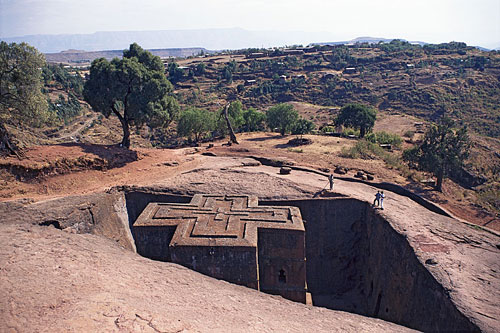
Just this past December 2012, an article by Matthias Schulz titled, “Buried Christian Empire Casts New Light on Early Islam”was released in Spiegel International that had reported on the revelations of a once ancient buried Christian empire in Yemen that has now come to the light again. I have found that this very location may be very well be the main uniting and then dividing point in religious history for the three main Abrahamic religions we know of today as Judaism, Christianity, and Islam.
My research into the legends of this ancient site, may prove that this location could be the place where the various Abrahamic religions in the Fourth Century had all united under the banner of one religion. This is the time when it is said that a famous JudaicEthiopian King had converted to Christianity along with many other prominent Ethiopians, making this once divided empire now united with Rome. However, this unification of religions and cultures would only last for a couple of centuries. (more…)
Moe is the founder of GnosticWarrior.com. He is a father, husband, author, martial arts black belt, and an expert in Gnosticism, the occult, and esotericism.
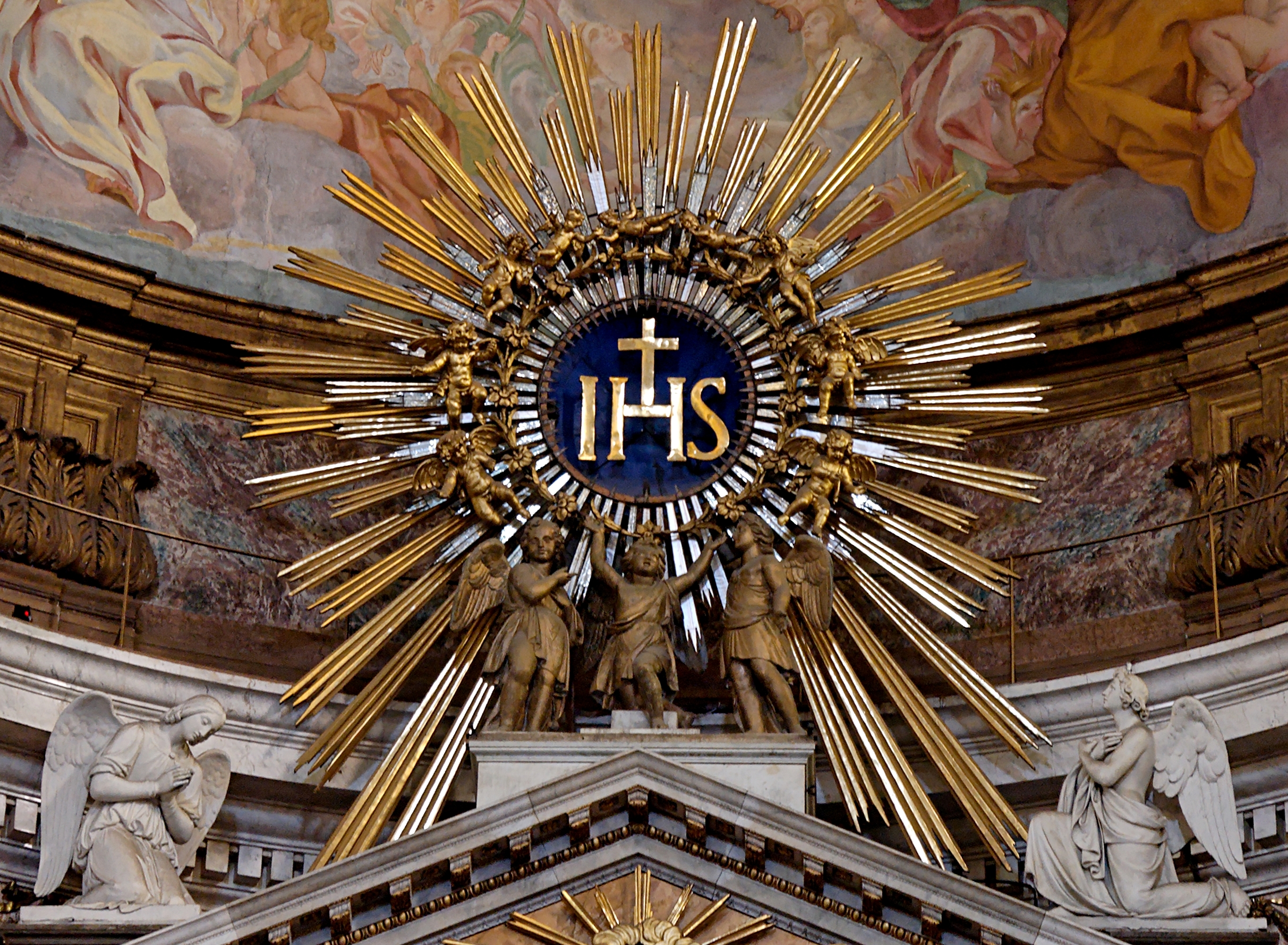
This is a Decree of the Parliament of Paris, 5th of March, 1762 in regards to the Jesuits. The below excerpt is from the book, The Doctrine of the Jesuits, written by Paul Bert, Jean Pierre Gury, J. G. Settler, and Pierre Rousselot in 1880.
The members of the Society are dispersed in every corner of the world, and divided into as many nations and kingdoms as the earth has limits: division, however, marked only by the distance of places, not of sentiments; by the difference of languages, not of affection; by the dissemblance of faces, not of manners. In that family the Latin thinks as the Greek, the Portuguese as the Brazilian, the Hibernian as the Sumatran, the Spaniard as the French, the English as the Flemish; and amongst so many different geniuses, no controversy, no contention; nothing which gives you a hint to perceive that they are more than One. . . . (more…)
Moe is the founder of GnosticWarrior.com. He is a father, husband, author, martial arts black belt, and an expert in Gnosticism, the occult, and esotericism.
During his trip to Israel, Obama had arranged for two of America’s most important allies, Israel and Turkey to talk with one another. Israel’s prime minister Benjamin Netanyahu had telephoned Turkish prime minister, Recep Tayyip Erdogan, where it is said that Netanyahu had apologized for Israel’s 2010 killing of nine Turkish activists aboard a ship headed for the Gaza Strip. This one gracious phone call had essentially ended the three-year dispute between the two nations and two of America’s greatest allies.
President Obama had said that the timing on his trip to Israel was right for both Turkey and Israel to start restoring normal diplomatic relations. (more…)
Moe is the founder of GnosticWarrior.com. He is a father, husband, author, martial arts black belt, and an expert in Gnosticism, the occult, and esotericism.

 invisible government.