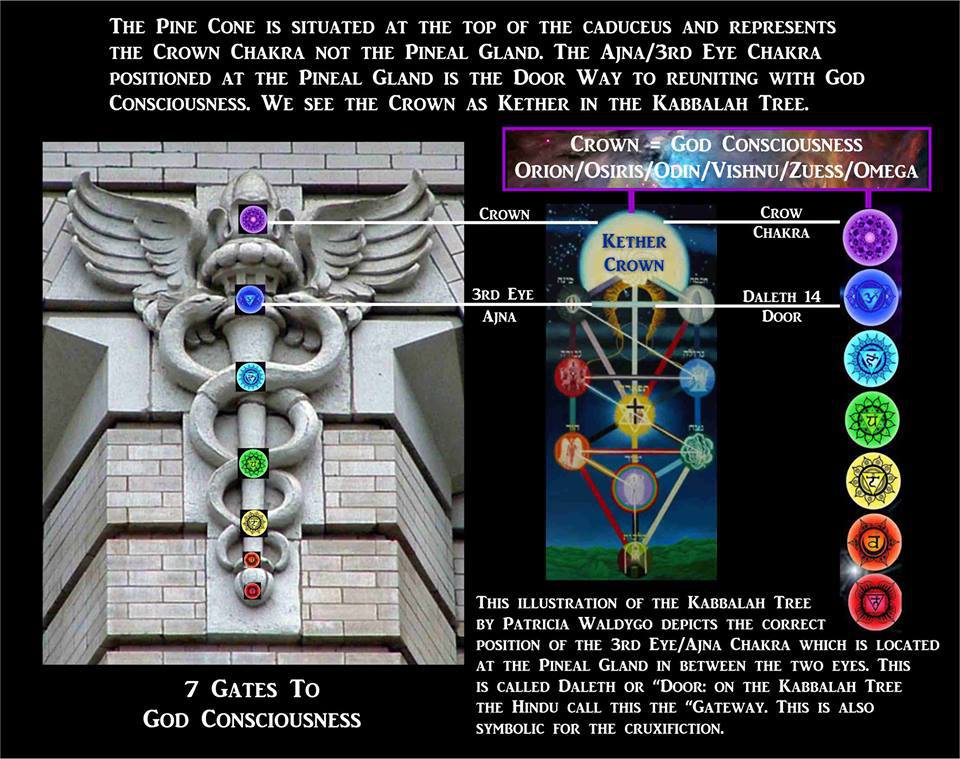
by Moe
Here are some images of an ultra cool modern invention of an energy and healing pyramid that reminds me of the Egyptian Pyramids. It was invented by some genius named Beciu Niculina. I assume he modeled it after the Egyptian Pyramids. The inventor says it can be used for body relaxation, meant to be used as therapeutical means in the field of complementary and alternative therapies. (more…)
Moe is the founder of GnosticWarrior.com. He is a father, husband, author, martial arts black belt, and an expert in Gnosticism, the occult, and esotericism.
by Moe
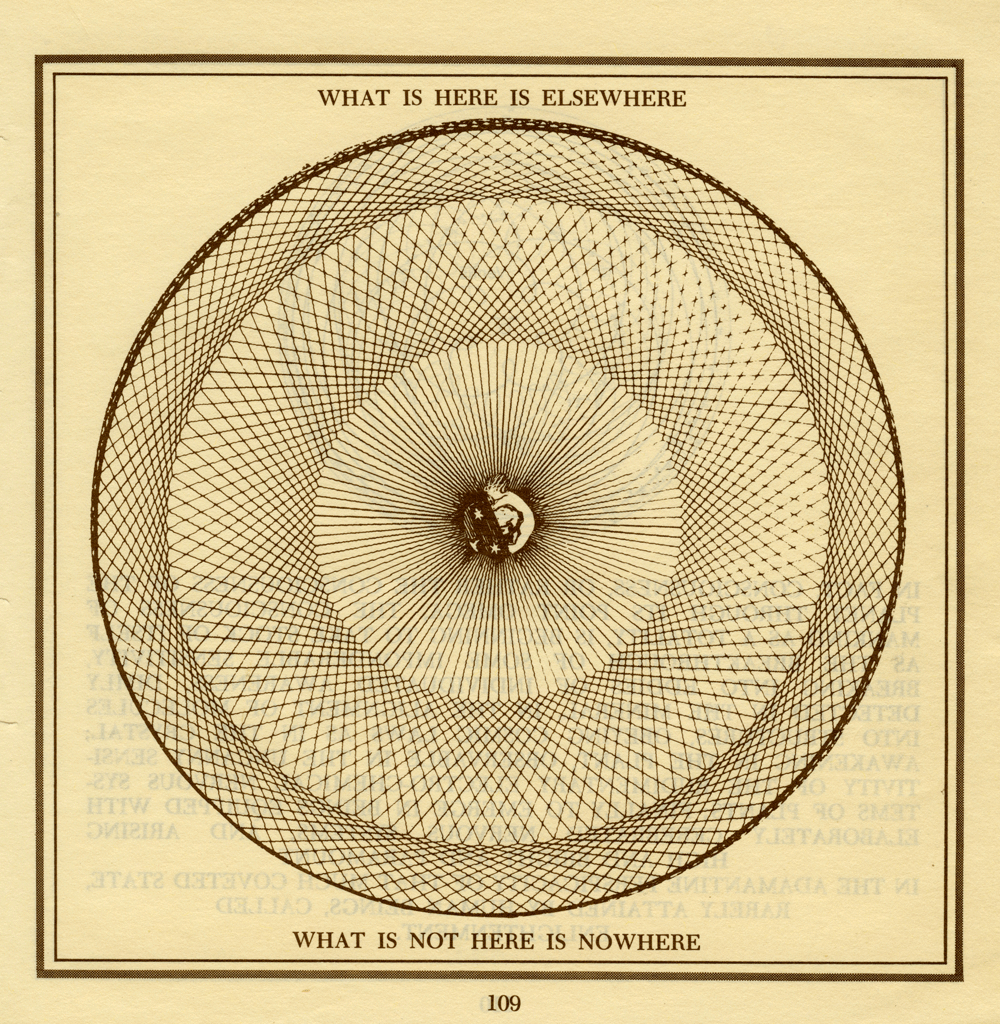
What is here is elsewhere, what is not here is nowhere. There is nowhere to get to, it is all here now. These famous quotes are from the Mahabharata which is the great epic of India, comprised of 100,000 verses.
“Some quotations include “Any brahman knowing the four Vedas, including the sciences based upon them and the Upanishads, but does not know ‘this tale’ (the Mahabharata) would not be considered a truly wise man; the Mahabharata is for all practical purposes considered the fifth Veda.
No story is found on earth which does not depend on this tale… What is here is elsewhere, what is not here is nowhere.”
The work recounts the events before, during and after the great battle for kingship waged at Kuruksetta between the Pandavas and Kauravas branches of the Kuru lineage of descendants of Bharata (whence is derived the Sanskrit meaning of the Mahabharata, “the great [tale of] Bharata’s descendants”). Also the epic contains didactic material of encyclopedic proportion (particularly in books 12 and 13, the Santi- and Anusasana- puranas), along with elaborate genealogies and much myth and legend (especially in books 1 and 3).
The sage, or seer, Vyasa (Krishna Dvanpayana), is thought to have composed the epic and taught it to his student Vaisampayana who in turn performed the first recitation of the work at a snake sacrifice” conducted by King Janamejaya; the purpose was to inform the king of the deeds of his ancestors. Then the epic was carried by the bard Ugrasravas to the forest sacrifice of the brahman Saunaka.
Actually, the Mahabharata in its present form was composed over a long period of time, c. 400 BC to 400 AD. Over this time period various groups influence its development, which is still reflected. They were warriors and their bards, brahmans, and devotees. The action of the Mahabharata simultaneously proceeds on several levels. First is the typically Indo-European heroic tale of the battle of good against evil, modeled after the specifically Indo-Aryan version of the theme, the devas (gods, here incarnate in the Pandavas) against the asuras (demons, reflected in the Kauravas, who incarnate raksasses). From this point of view, the Kuruksetta war is visualized as a gigantic sacrifice conducted by semi-divine epic heroes. Mixed with this semi-mythical material is consideration of the human-centered issue of the decline of dharma at the onset of Kali-yuga, the present degenerate age of history, which the Mahabharata conceives as having begun at the time of the Kuruksetta war. Dharma suffered a huge setback at the Pandava-Kaurava dice game played early in the epic. From then on, the lines of right and wrong were drawn less clearly than the Indo-European substructure of the epic might cause one to expect, for example the “good” Pandavas defeat the “evil” Kauravas, but only by trickery and deceit. One high point of human uncertainty in the work is the episode of the Bhagavad-Grita, in which the Pandava hero Arjuna casts down his weapon before the war begins, dismayed at the prospect of having to fight against his relatives and elders on the other side. In the Bhagavad-Grita and throughout the Mahabharata, it is a “Hindu” element, revolving particularly around the character of the god Vishnu, incarnate as Krishna, and his alliance with the Pandavas, which resolves the tension. “Where Krishna is there is dharma…there is victory.” Orchestrated by Krishna, the Kuruksetta war is a cosmic event. Through its emphasis on Krishna, theMahabharata becomes the locus of a bhakti (devotional) synthesis, which characterizes Hinduism from this time onward. The stage production of Peter Brook (1985) was filmed in 1989. A.G.H.
Source:
Bowker, John, The Oxford Dictionary of World Religions, New York, Oxford University Press, 1997, pp. 598-599
http://www.themystica.org/mystica/articles/m/mahabharata.html
Moe is the founder of GnosticWarrior.com. He is a father, husband, author, martial arts black belt, and an expert in Gnosticism, the occult, and esotericism.
by Moe
This rare Gnostic image below shows the name of God in seventy-two languages from Athanasius Kircher’s OEdipus AEgyptiacus which is his Great Work Egyptology. After his studies and many years of research he concluded “that I am fully persuaded that either the Egyptians were Hebraicizing or the Hebrews were Egypticizing.”
Inscribed upon the petals of a symbolic sunflower are the 72 names of God that in Hebrew is called “Shemhamphorasch (alternatively Shem ha-Mephorash or Schemhamphoras, originally Shem HaMephorash (שם המפורש)).” The “72-fold name” is highly important to Sefer Raziel, and a key (but often missing) component to the magical practices in The Lesser Key of Solomon.
(more…)
Moe is the founder of GnosticWarrior.com. He is a father, husband, author, martial arts black belt, and an expert in Gnosticism, the occult, and esotericism.
by Moe
Leonardo da Vinci briefly studied geometry with Franciscan friar, Luca Pacioli (ca. 1445-1509) who is best known for his compendium of fifteenth century mathematics, Summa de arithmetica, geometrica, proportioni et proportionalita (1494).
Being an artist, Da Vinci had chosen to focus mainly on the shape, size, and descriptive features of objects specifically, those illustrating the sphere, cone, cylinder, pyramid, and the five Platonic solids rather than their theoretical foundations. He created sixty plates geometric sketches for the work of Leonardo da Vinci’s Geometric Sketches (Divina proportione).
The following images are facsimiles of several of these plates. (more…)
Moe is the founder of GnosticWarrior.com. He is a father, husband, author, martial arts black belt, and an expert in Gnosticism, the occult, and esotericism.
by Moe
Detail of the ‘Labyrinth of Avarice – an engraved illustration from Bartolomeo Del Bene’s (1515-1595), “Civitas Veri sive Morum (‘The City of Truth; or, Ethics’).” In the middle of the image you see the aristocrats and clergy relaxing while the masses of people are trapped in the labyrinth, who most of them do not even know they are caught in the maze.
A labyrinth is a maze of a network of passages or paths in which it is difficult to find one’s way, and avarice is extreme greed for wealth or material gain. (more…)
Moe is the founder of GnosticWarrior.com. He is a father, husband, author, martial arts black belt, and an expert in Gnosticism, the occult, and esotericism.