by Moe
33rd Degree Freemason, Manly P. Hall had said, “The beehive is found in Masonry as a reminder that in diligence and labor for a 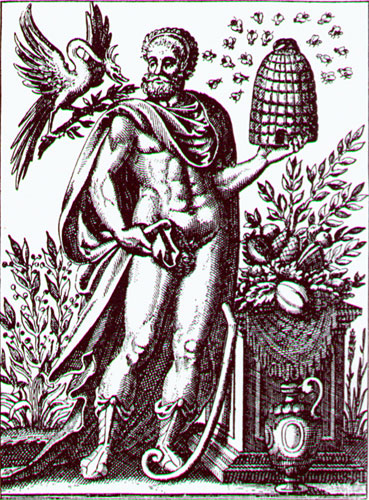 common good true happiness and prosperity are found.
The bee is a symbol of wisdom, for as this tiny insect collects pollen from the flowers, so men may extract wisdom from the experiences of daily life. …
The fact that bees are ruled by queens is one reason why this insect is considered a sacred feminine symbol. In India the god Prana–the personification of the universal life force–is sometimes shown surrounded by a circle of bees.
Because of its importance in pollenizing flowers, the bee is the accepted symbol of the generative power.”
Moe is the founder of GnosticWarrior.com. He is a father, husband, author, martial arts black belt, and an expert in Gnosticism, the occult, and esotericism.
by Moe
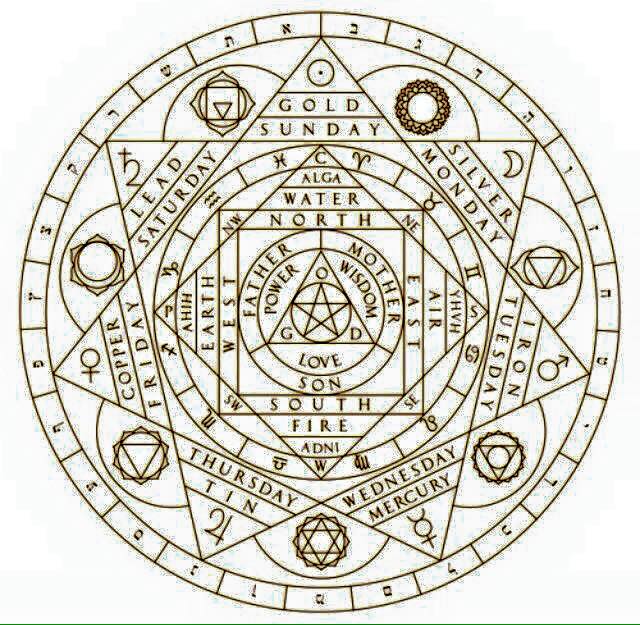
“It is The Law of Three Forces,’ or the Three Pure Ones. The 3 Forces of universal law are: active, passive and mutual or neutral. The Christian doctrine of the Trinity (from Latin trinitas “triad”, from trinus “threefold”) which defines God as three consubstantial persons, expressions, or hypostases: the Father, the Son (Jesus Christ), and the Holy Spirit. The Trinity depicted in Hinduism with Brahma as the creator, Shiva is the destroyer, and Vishnu is the preserver. To the Taoist, it is Yin, Yang, and Tao.
The pentagram or five-pointed star that is a symbol of man with his five limbs and five sensory organs as the upright spiritual human who places spirit above his or her animal body. The seal of Solomon uniting the alchemical heavens and earth in the As Above, So Below holy human matrimony. The circumpunct of the soul in which man must climb the ladder of chaos back to true self or order.” By Moe the Gnostic Warrior
Moe is the founder of GnosticWarrior.com. He is a father, husband, author, martial arts black belt, and an expert in Gnosticism, the occult, and esotericism.
by Moe
The Pentagram or Blazing Star is one of the most important symbols of Gnosticism and Masonry. You will often find it emblazoned 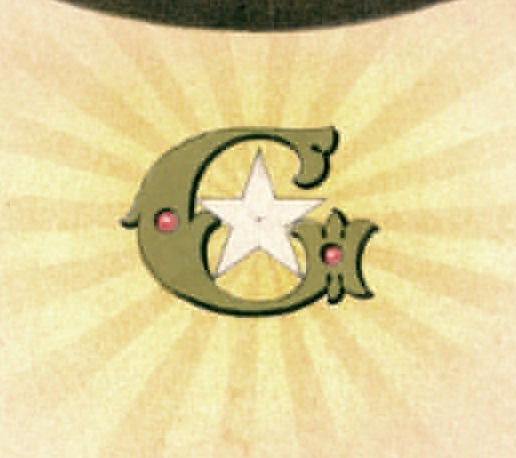 in Freemasonry lodges and associated with the letter G which signifies Gnosis.
Éliphas Lévi had said, “The Pentagram, which in Gnostic schools is called the Blazing Star, is the sign of intellectual omnipotence and autocracy. It’s the Star of the Magi; it’s the sign of the Word made flesh; it’s the figure of the human body; and the Saviour’s advent was proclaimed to them by a star. This star was the magical Pentagram.”
(more…)
Moe is the founder of GnosticWarrior.com. He is a father, husband, author, martial arts black belt, and an expert in Gnosticism, the occult, and esotericism.
by Moe
In my last article on the mythology of the hidden meaning of the Jack-o-lantern, I explained how this was really an ancient gnostic story that was developed by the Phoenician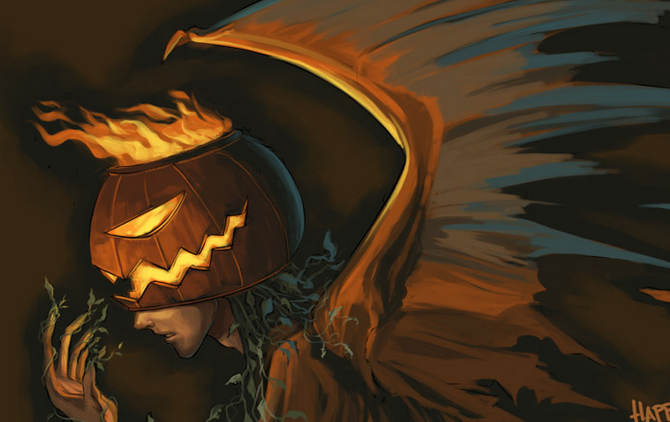 -Hebrew Druids who were known biblically as the children of Jacob (Jack). It is a tale of the as within as without gnosis, in which Jack roams the dark countryside with a lantern in search of his soul with the light of his spirit.
It was in Ireland, Scotland, England, Wales and other countries where the Druids had observed during the dark autumn nights a mysterious phenomenon of lights shooting from the swamps and marshes. These lights burned blue and gave the appearance of spirits rising from the swamps into the air where they would roam and disappear.
There is also a mysterious science behind these gnostic myths that may indicate to us today exactly why the Druids had developed this story of the Jack-o’-lantern. After all, the Druids were the sacred science keepers and priests of Europe who had valued knowledge and truth above all other worldly attributes. (more…)
Moe is the founder of GnosticWarrior.com. He is a father, husband, author, martial arts black belt, and an expert in Gnosticism, the occult, and esotericism.
by Moe
Enveloped in darkness, we find the spirit of man is the candle of the Lord, which is our soul in the darkness and represented in the symbolism and  myths of the Jack-o-lantern. This Gnostic story of a lost spirit is represented in Jack who roams about the dark countryside of Hades on All Hallow’s Eve (October 31) with his illuminated candle, in search is his soul that is located somewhere between heaven and hell. His pumpkin represents the as without darkness of his body, that inside holds the light of his spirit as within.
This time of year is known as Samhain, and it was said to be a time when evil spirits were said to have roamed about the countryside. The stories and actual use of carved pumpkins known as the Jack-o-Lantern, originate from the ancient Druids celebration of the festival of Samhain where they would light their sacred fires to the god of the forest on the advent of November. This was the great autumn festival that the Druids celebrated in thanksgiving for their harvest. Hence, this was their Thanksgiving. (more…)
Moe is the founder of GnosticWarrior.com. He is a father, husband, author, martial arts black belt, and an expert in Gnosticism, the occult, and esotericism.
by Moe
“Offer not your right hand easily to everyone” – Pythagoras
33rd Degree Freemason and Sovereign Pontiff of the Scottish Rite, Albert Pike had written tha the clasped hands was another symbol which was used by Pythagoras.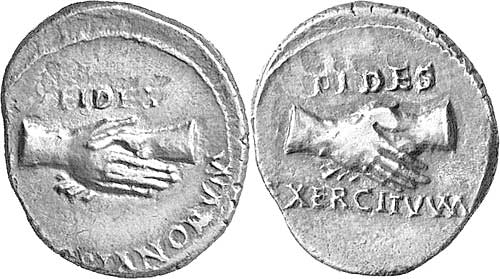
Over time, the handshake of the Gnostic Pythagoreans became the secret Masonic handshake of the Freemasons to announce to fellow Brothers they were followers of the Gnosis. Robert Freke Gold explains this fact in “The History of Freemasonry, Its Antiquities, Symbols …, Volume 1
By Robert Freke Gould
It has been maintained, that the intermediaries in passing ou the “Masonic Grip” from the Ancients to the Moderns, were the followers of the Gnosis, amongst whom symbols and tokens for mutual recognition were well known. At least, so we are informed by Epiphanius, whose early experiences as a Manichean (before his elevation to the episcopate), specially qualify him to enlighten us on this point.
Iamblicus: “The meaning of this symbol is, do not draw up, nor endeavor to raise, by extending your right hand, the unadopted and uninitiated. It also signifies that the right hand is not to be given easily even to those who have for a long time proved themselves worthy of it, through disciplines, and doctrines, and the participation of continence, the quinquennial silence/ and other probationary trials.”‘ It has been maintained, that the intermediaries in passing ou the “Masonic Grip” from the Ancients to the Moderns, were the followers of the Gnosis, amongst whom symbols and tokens for mutual recognition were well known. At least, so we are informed by Epiphanius, whose early experiences as a Manichean (before his elevation to the episcopate), specially qualify him to enlighten us on this point. On the arrival of any stranger, he says, belonging to the same belief, they have a sign given by the man to the woman, and vice versd. In holding out the hand, under pretence of saluting each other, they feel it and tickle it in a particular manner underneath the palm, and so discover if the new comer belongs to the same sect.’
At least, so we are informed by Epiphanius, whose early experiences as a Manichean (before his elevation to the episcopate), specially qualify him to enlighten us on this point. On the arrival of any stranger, he says, belonging to the same belief, they have a sign given by the man to the woman, and vice versd. In holding out the hand, under pretence of saluting each other, they feel it and tickle it in a particular manner underneath the palm, and so discover if the new comer belongs to the same sect.’ The preferable opinion, however, would seem to be that recognition or salutation by means of a “grip” or “band-shaking” is a common feature of many religious and social systems, and is especially prevalent amongst the Eastern people. To this day the Parsees of Western India, after prayers on Pappati or New Year’s Day, visit their friends and relations, when the Hamma-i-jour or “joining of hands” is performed.’ A symbolic language appears to have existed in the old monasteries, the signs not being optional, but transmitted from antiquity, and taught like the alphabet.”
Pike had written, “It represented the number 10, the sacred number in which all the preceding numbers were contained; the number expressed by the mysterious Tetractys, a figure borrowed by him and the Hebrew priests alike from the Egyptian sacred science, and which ought to be replaced among the symbols of the Masters degree, where it of right belongs. (more…)
Moe is the founder of GnosticWarrior.com. He is a father, husband, author, martial arts black belt, and an expert in Gnosticism, the occult, and esotericism.