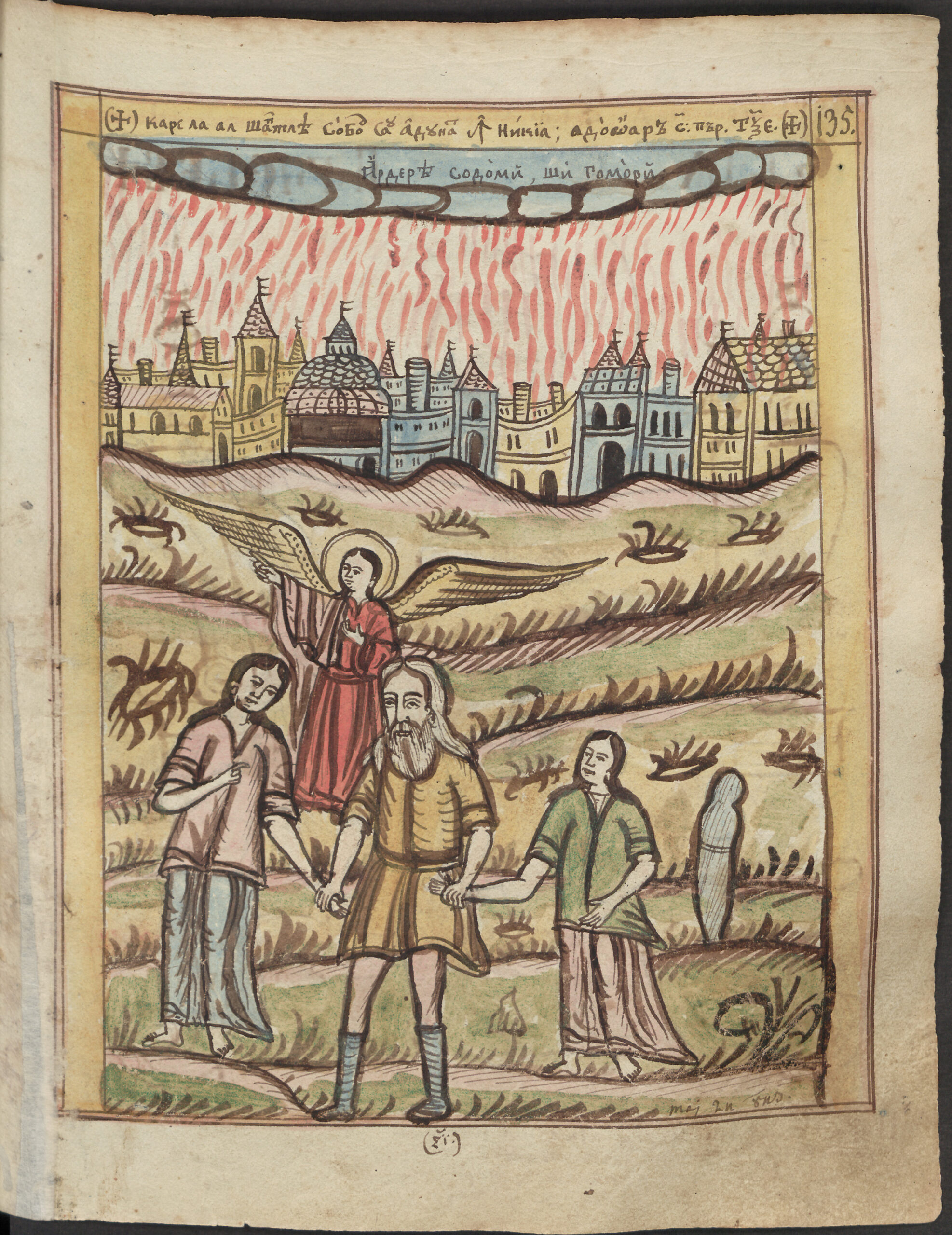
In the Scripture, Sodom and Gomorrah are two cities of the five “cities of the plain” referred to in Genesis 13:12 and 19:29 that were destroyed for their wickedness. We are told that the LORD gave power to two angels to destroy Sodom by attacking the crowd with a special rain making them blind and raining a substance called “pitch” onto the bituminous soil that was later changed to sulfur on all the inhabitants of the cities, and what grew on the ground.
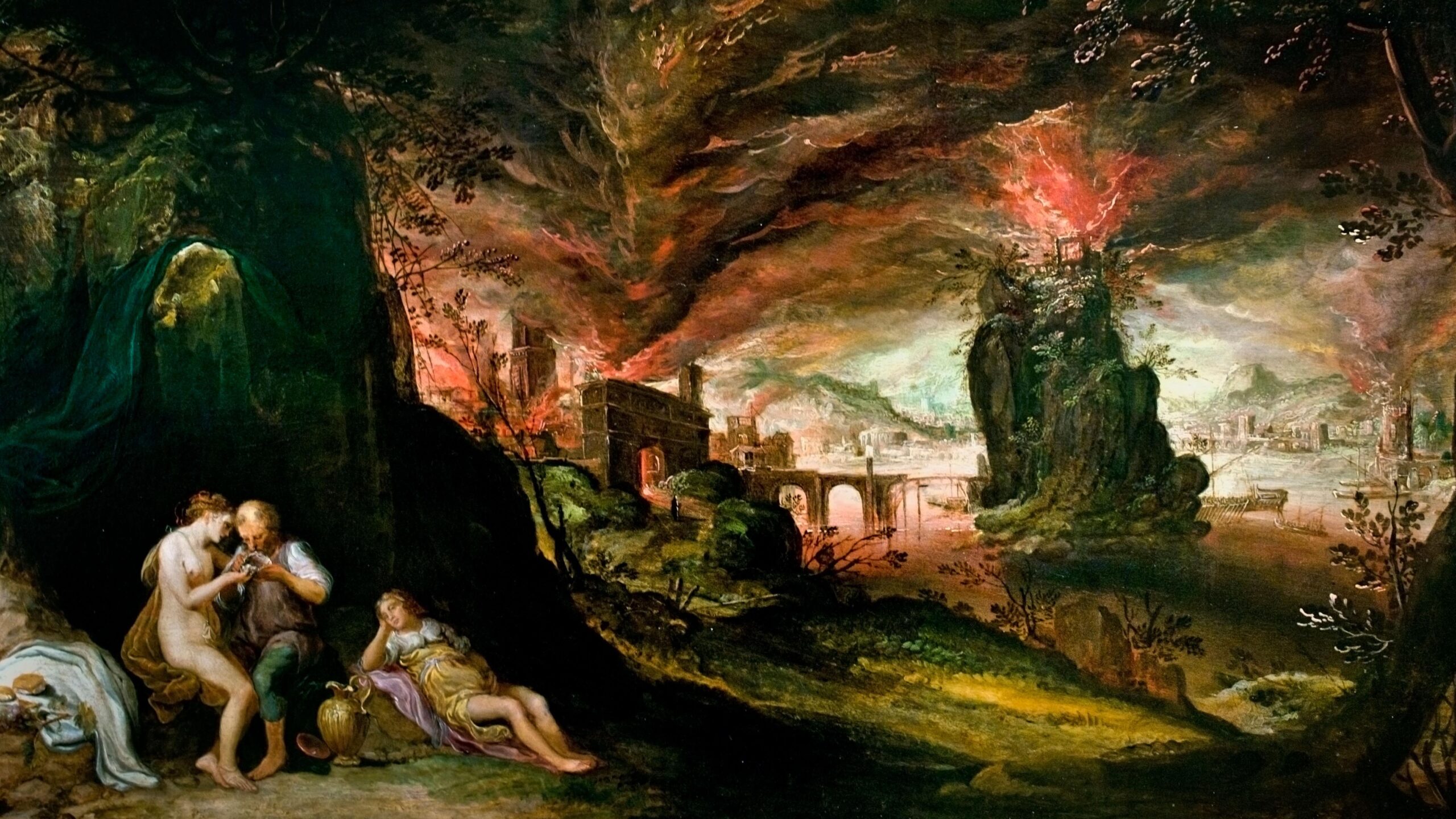
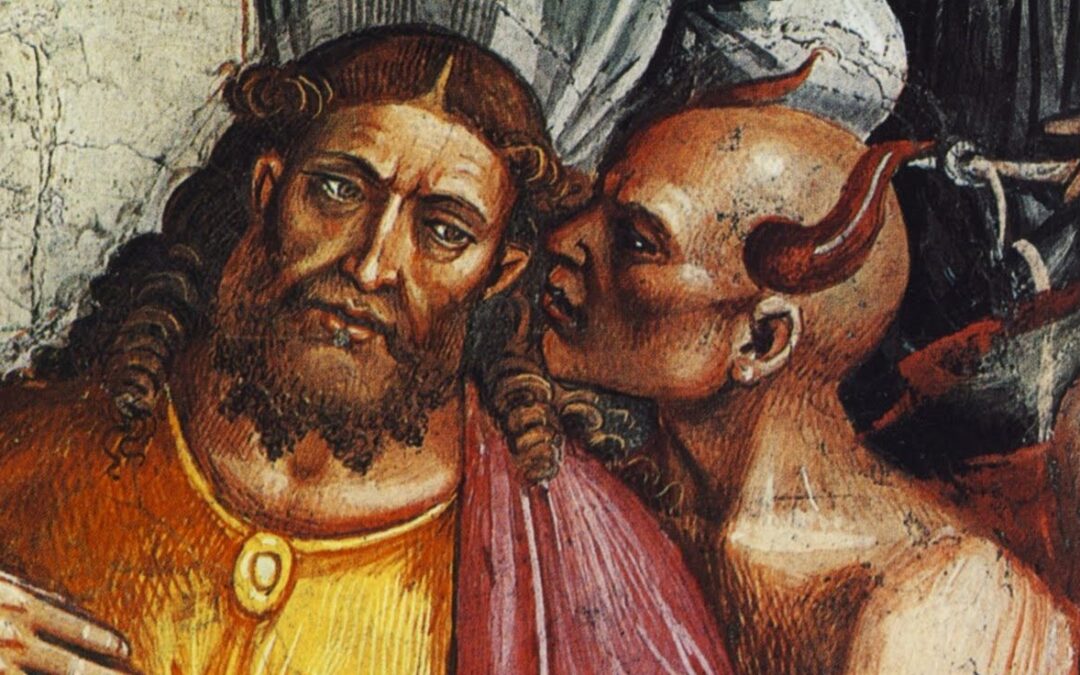
Lot and his Daughters, with Sodom and Gomorrah Burning
The people under the influence or controlled by this force were said to be submerged in a special lake known as the “Lake of Sodom,” sometimes called “tar or slime pits,” which is also variously translated as bitumen and Bible Slime. Contrary to popular belief, this is not a lake of water or pit of tar, and it is a metaphysical state of being that causes people to be stuck in chains (fetters) which makes them live in a type of darkness where they cannot see the light (Truth) and are referred to as slugs. We read in Psalms,” Like a slug that moves along in slime, like a woman’s miscarried child, they will not see the sun.” (Psalm 116:3)
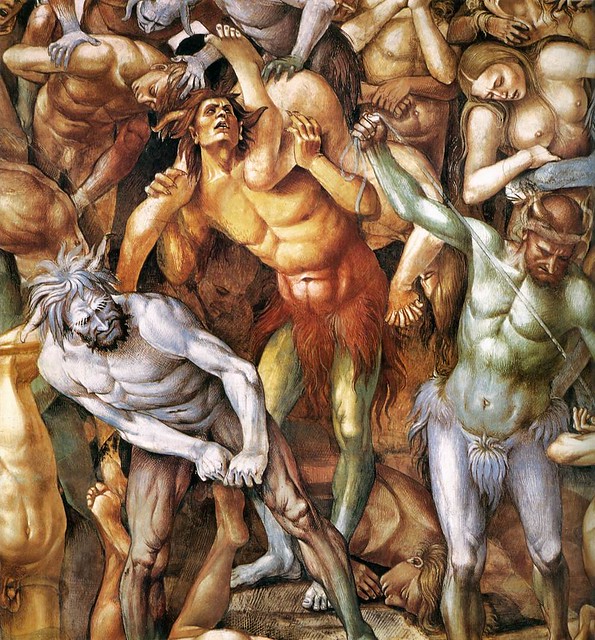
These people suffer from their sins caused by who are called “perverted persons” who are idolaters, fornicators, and commit sexual immorality such as adultery and sodomy – men having anal sex with men who today we call homosexuality and is widely accepted in the Western world. This is contrary to God’s laws and the most unnatural way for a man and a woman who both come into this world as angels but can become unrighteous to become “fallen angels” who we know as demons by the dark path they choose.
Tertullian, in his treatise On Modesty, says acts like adultery are not just sins against nature, they are monstrosities – “But all the other frenzies of passions–impious both toward the bodies and toward the sexes–beyond the laws of nature, we banish not only from the threshold, but from all shelter of the Church, because they are not sins, but monstrosities.”
Eusebius, Bishop of Cæsarea (260-341) and the “Father of Church History,” writes in his book, Demonstratio Evangelica –
“[God in the Law given to Moses] having forbidden all unlawful marriage, and all unseemly practice, and the union of women with women and men with men.”
These so-called fallen angels were considered unrighteous and addicted to their degrading passions and unnatural desires, causing them to have depraved minds. As a result, they were called “beasts.” In Romans. it is said; “For this reason, God gave them over to degrading passions; for their women exchanged the natural function for that which is unnatural, and in the same way also the men abandoned the natural function of the woman and burned in their desire toward one another, men with men committing indecent acts and receiving in their persons the due penalty of their error.
And just as they did not see fit to acknowledge God any longer, God gave them over to a depraved mind, to do those things which are not proper, being filled with all unrighteousness, wickedness, greed, evil; full of envy, murder, strife, deceit, malice; they are gossips, slanderers, haters of God, insolent, arrogant, boastful, inventors of evil, disobedient to parents, without understanding, untrustworthy, unloving, unmerciful; and although they know the ordinance of God, that those who practice such things are worthy of death, they not only do the same but also give hearty approval to those who practice them.” (Romans 1:26-32)
“Do you not know that the unrighteous will not inherit the kingdom of God? Do not be deceived. Neither fornicators, nor idolaters, nor adulterers, nor homosexuals, nor sodomites.” (1Cor. 6:9) In Leviticus, we read; “You shall not lie with a male as with a woman. It is an abomination,” (Lev. 18:22) and “If a man lies with a male as he lies with a woman, both of them have committed an abomination. They shall surely be put to death. Their blood shall be upon them.” (Lev. 20:13)
Saint John Chrysostom (347-407), Archbishop and Patriarch of Constantinople, who was considered one of the greatest of the Greek Fathers and Doctor of the Church, had spoken on the gravity of the sin of homosexuality. In his sermons about Saint Paul’s Epistle to the Romans, he said;
“But if thou scoffest at hearing of Hell and believest not that fire, remember Sodom. For we have seen, surely we have seen, even in this present life, a semblance of Hell. For since many would utterly disbelieve the things to come after the resurrection, hearing now of an unquenchable fire, God brings them to a right mind by things present. For such is the burning of Sodom, and that conflagration!
“Consider how great is that sin, to have forced Hell to appear even before its time!… For that rain was unwonted, for the intercourse was contrary to nature, and it deluged the land, since lust had done so with their souls. Wherefore also the rain was the opposite of the customary rain. Now not only did it fail to stir up the womb of the earth to the production of fruits, but made it even useless for the reception of seed. For such was also the intercourse of the men, making a body of this sort more worthless than the very land of Sodom. And what is there more detestable than a man who hath pandered himself, or what more execrable?”
Saint Augustine (354-430), one of the Great Church Fathers of the West and Doctors of the Church, also condemns homosexuality:
“Those offenses which be contrary to nature are everywhere and at all times to be held in detestation and punished; such were those of the Sodomites, which should all nations commit, they should all be held guilty of the same crime by the divine law, which hath not so made men that they should in that way abuse one another. For even that fellowship which should be between God and us is violated, when that same nature of which He is author is polluted by the perversity of lust.”
Many people who see the Light and Truth and are not fooled by these Demons remain as loyal angels that were created by and serve God; “The good angels serve God and are faithful and loyal to Him. Heb. 1:14; Eph. 1:20-21 “The bad angels are also known as “evil spirits” that serve Satan and are faithful and loyal to him. This division of good angels and the rebel angels, the bad who we know as demons, came at the fall or rebellion of Satan, (Is. 14:12-14; Ezk. 28:11-18), who is the de facto leader of one-third of the angels in rebellion.” (Rev. 12:4)
Following this path or promoting it as being such would be considered a fallen angel – a demon influencing people, described as the kingdom of wicked spirits. (Eph. 6:12) “Many spirits have gone out into the world”, the cosmos-worldly system.” (1Jn. 4:1) The teachings of these evil people and especially the demons who teach these sexual immoralities would be the “Doctrines of Demons.” The Doctrines of Demons are taught by the Sodomites themselves, who were consecrated male prostitutes to the service of Astarte or Venus. (Duet. 23:17; 1Kings 14:24;15:12; 22:46; 2Kings 23:7)
It was a god – a powerful spiritual deity who demanded human/baby sacrifices and where the men would have sex with the priest to join themselves with the demon god. Hence, in the City of Sodom, men were possessed by a demonic and satanic force that comes into their bodies and minds through religious worship via sex.
These people who are under the influence or control of this bitumen AKA Bible Slime are perpetually stuck in the Lake of Soddom, and for their transgressions against the laws of being human, they are designated as “Demons of Sodom.” They are collectively governed by a “dark force” that makes it so they may appear human, but they are a type of automaton that cannot see actual reality i.e., the light.
We can also find similar meanings in other names surrounding these events, such as in the etymology of “Sodom or Sidim.”
The compound word “sodom” is composed of the words sod and om. Sod means to plant, planting, or to sow as a person would do today when they place sod on the ground to grow grass for their lawn, and would be identical with the Sclavonic sad – i – ti of the same meaning, sáditi (Cyrillic spelling са́дити) and with the Gothic i of sat – i – ta , “I placed” ( compare § . 743. ) or sáditi (Cyrillic spelling са́дити), The words sido, Sedo, sedeo, is where we get the word sad.
When we research the “Vale of Siddim” we know that it was full of the “slime pits” or what we can now say are really just “fungi/molds pits” and the sinners were considered to be the “children of demons.”
The Vale of Siddim or Valley of Siddim, Hebrew: עֵ֖מֶק שִׂדִּים ’emeq haś-Śiddim, has been falsely connected with the “Salt Sea” in Genesis 14:3 and also the “Dead Sea”, which I contend are metaphors or allegories of the true meaning. This Scripture indicates that the valley was filled with many of these pits that the armies of Sodom and Gomorrah fell into during their retreat from Mesopotamian forces.
Various historians have interpreted the word Siddim to mean demons, and the “Valley of Siddim is the Valley of Demons.” For example, Emanuel Swedenborg, states that “siddim, signifies demons” or the “carnal man who has given over to pleasures,” which is the opposite of who he called the “natural man” who is being led by philosophy of the mind. Interestingly, Swedenborg called the pits the “wells of bitumen,” which he says are the places of the damned where the carnal ones flee, there are “fires of bitumen and black ones.”
When we study the history and etymology of the word Siddim is composed of the words Sid and dim. Siddim are a type of demonic, terrestrial nature spirit from Canaanite demonology who can be kept from attacking with regular offerings of blood sacrifices. The word sid means side, flank, or latus of the body, which I believe would represent where these “carnal people or demons” derive their power or life force, which I speculate would be either the liver or stomach i.e., second brain. Dim means not bright, dusky, darkish, obscure, of weak perception, to take away the luster of, clouding the eyes or darkening the senses or understanding.
Hence, the people of Sodom were sinners who followed carnal pleasures that our ancestors had called demonic, so they were thought of as demons. The Sodomites became evil due to a fungal infection from their unhealthy lifestyles, their senses became dark, and we can say that they were not considered bright or intelligent.
As we are told in Job, these people go to Hades to rest in the dust; “They shall go down to the bars of Sheol—Hades, when our rest together is in the dust,” and in Isaiah 9-15, 22-23, where the “Lord of Hosts controls hell” and described as beneath and the worms spreadeth underneath and will cover people and the chief ones of the earth.
In Peter 2:6, it is the people who are sinners and do not live right or who we can say are unhealthy, lazy, sexually immoral etc – “and turning the cities of Sodom and Gomorrah into ashes, condemned them to destruction, having made them an example to those who would live ungodly and in Jude 1:7, “Even as Sodom and Gomorrah, and the cities around them, having, in the same way as these, given themselves over to sexual immorality and gone after strange flesh, are set forth as an example, suffering the punishment of eternal fire.”
We can say that God has planted i.e. sodomized these sinners with what can be called microscopic legislators and lawmakers i.e., fungi/molds on the so within via our blood and flesh that act as both angels and demons and the so without in which they can graft upon our DNA, control our thoughts and drive our actions.
The first time the Hell is found the Bible is in Deuteronomy xxxii: 22-26 – “For a fire is kindled in mine anger, and shall burn unto the lowest Hell, Sheol—Hadees, and shall consume the earth with her increase, and set on fire the foundations of the mountains. I will heap mischiefs upon them; I will spend mine arrows upon them. They shall be burnt with hunger, and devoured with burning heat, and with bitter destruction:
I will also send the teeth of beasts upon them, with the poison of serpents Of the dust. The sword without and terror within shall destroy both the young man and the virgin, the suckling also with the man of gray hairs. I said I would scatter them into corners, I would make the remembrance of them to cease from among men.”
This passage from Deuteronomy refers to these people in Hell as being devoured with teeth of beasts upon them, with the poison of serpents of the dust who I contend we can prove with science are the “molds/fungi.”
A microorganism of dirt and dust that can produce one of the world’s most potent poisons called “mycotoxins”, which our ancestor may have called the “poison of serpents”, which also have the ability to eat and devour humans, i.e., make people very sick, cause disease like cancer and asthma and most premature and eventual deaths of humans. They can also be transmitted worldwide via powerful winds as far as Africa and in outer space, 33,000 feet in the sky.
Moe is the founder of GnosticWarrior.com. He is a father, husband, author, martial arts black belt, and an expert in Gnosticism, the occult, and esotericism.
In the Scripture, we are introduced to a powerful part of the human body and also a force or spirit that works through the flesh. What is called “sarka.” A form of Christian dualism that teaches us there are two spirits controlling humankind’s destiny.
The Spiritual is called the Mind from the Holy Spirit and the Sarka is the Mind of the Flesh and they appear to work against one another. The Mind is from the Holy Spirit is good and allows us to connect to God while the other is the Mind of the Flesh, which is the Law of Sin and causes us to lose self-control and to be bad.
Sarka is variously described as a bodily organ related to our flesh or the soft tissue that acts as a supernatural conduit that can shape and mold us via our thoughts and actions, often resulting in sin, disease, death, and even our genetics.
Think of it as the actual machine under your skin controlling your destiny by pronouncing judgments upon you via your actions. The real you. The skin on the outside with your good looks, lovely eyes, and hair, that’s just part of your ego – a temporary facade. One in which the very machine lurking below your exterior veneer can command its kill switch upon your very being, causing illness, cancer, and death for your transgressions/sins.
The scripture informs us that it is related to the human body, 2 Cor. 7:5; flesh, human nature, human frame, Jn. 1:13, 14; 1 Pet. 4:1; 1 Jn. 4:2; kindred, Rom. 11:14; lineage, Rom. 1:3; 9:3; flesh, humanity, human beings, Mt. 24:22; Lk. 3:6; Jn. 17:2; the circumstances of the body, material condition, 1 Cor. 5:5; 7:28; materiality, material circumstance, as opposed to the spiritual, Phil. 3:3, 4.
We read in Matthew 26:41, “Stay alert and pray lest you enter a time of trial. The spirit indeed is willing but the flesh (sarx) is weak.” Then we learn that there is something called “the one” who feeds upon John’s flesh (sarka) and drinks his blood dwells within him and John in him. Through our flesh, we serve the law of sin but with our minds via the Holy Spirit, we serve God.
In John 6:54, we are told, “The one who feeds on my flesh (sarka) and drinks my blood has eternal life, and I will raise him up on the last day, and John 6:55, “for my flesh (sarx) is real food and my blood is real drink or in John 6:56;
“The one who eats my flesh (sarka) and drinks my blood dwells in me, and I in him.”
This sarka is not only part of our flesh, it also has the ability to control our minds so we are hostile towards God and we lose self-control.
We read in Romans 8:7, “because the mind set on the flesh (sarkos) is hostile to God; it does not submit to the law of God; in fact, it cannot and in Romans 8:8, “Those controlled by the flesh (sarki) cannot please God.”
These are the people who commit various moral and legal crimes, which Paul calls the ‘works of the sarkos’.
“Now the works of the sarkos are evident: sexual immorality, impurity, sensuality, idolatry, sorcery, enmity, strife, jealousy, fits of anger, rivalries, dissensions, divisions, envy, drunkenness, orgies, and things like these. I warn you, as I warned you before, that those who do such things will not inherit the kingdom of God.” (Gal 5:19-21)
It also has the ability to punish us and deem us for the destruction of our flesh by giving us to Satan as we read in Corinthians 5:5, “hand this man over to Satan for the destruction of the flesh (sarkos), so that the spirit may be saved on the Day of the Lord.”
Later we learn that this sarka and the Holy Spirit will become one flesh and this is a good thing for all humankind.
Meaning the duality that we face and fight against will no longer be.
As it relates to sarka, it is my belief that it is not our skin, but a special organ that is part of our flesh called the interstitium.
It is through this organ that I believe our flesh and bodies interact with the outer or material world. Hence, it is what I contend as the scientific explanation of Sarka of the Scripture.
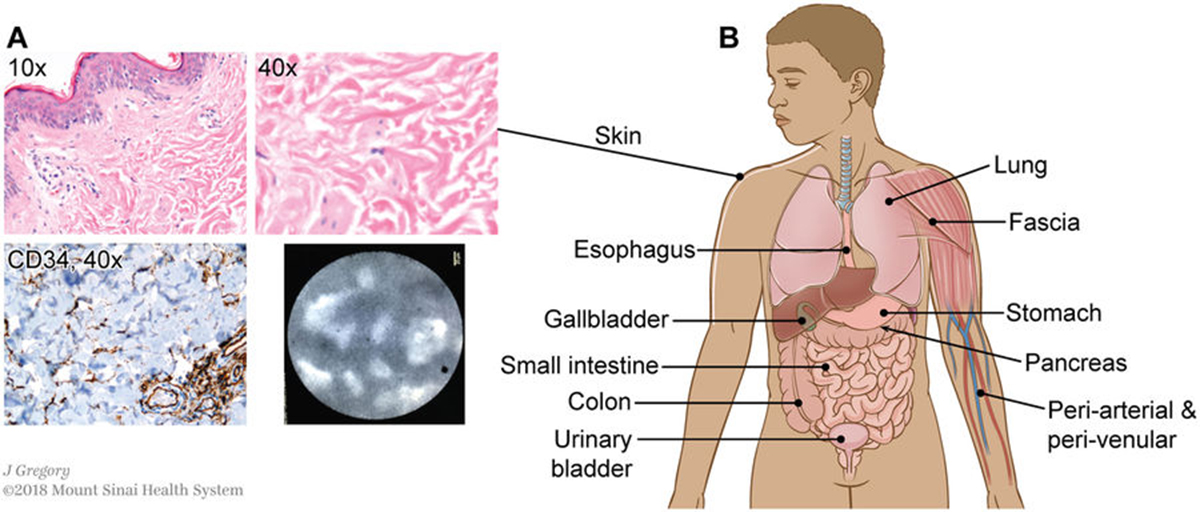
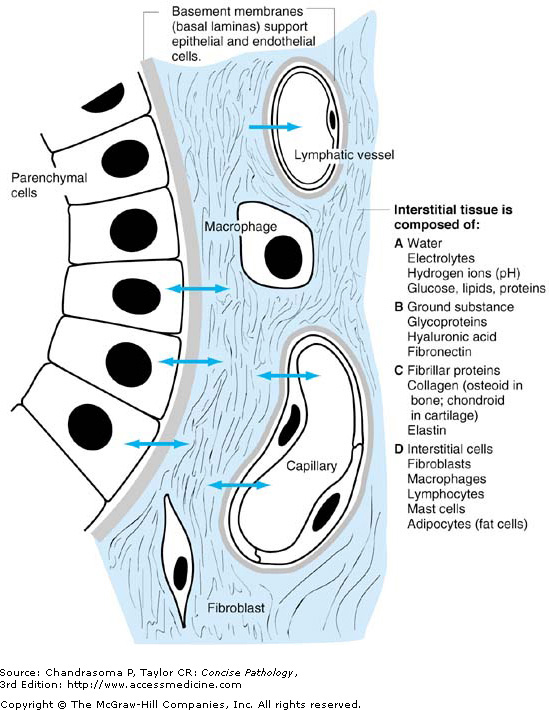
The interstitium is the connective tissue containing various bodily chemical and fluid-filled spaces existing between the skin and the body organs, including every part of our body such as the organs, brain, muscles and the circulatory system.
That means that the interstitium covers the whole body from head to toe which lies right below the skin’s surface; lining the digestive tract, lungs, and urinary systems; and surrounding muscles, according to a study published today on March 27, 2020, in the journal Scientific Reports.
Interstitial tissue is composed of cells, and what is called cerebral interstitial fluid (ISF) – water and electrolytes, ground substance, and fibrillary elements. (Figure 2-1)
It has been called an anatomical “highway” that provides a route for cell signal-carrying and may potentially explain everything from tumor growth to how cells move within our bodies.
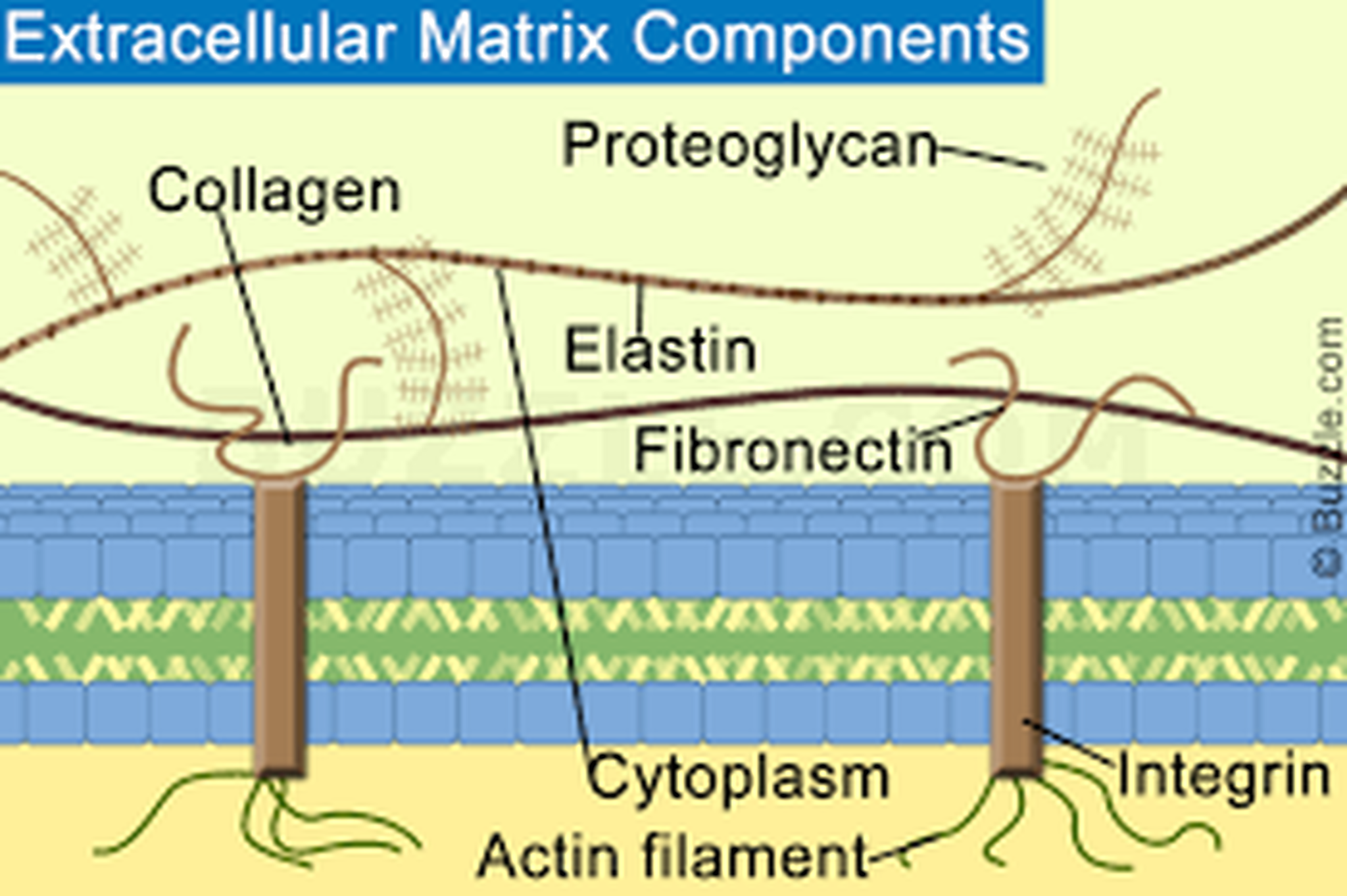
The ‘ground substance’ of the extracellular matrix is an amorphous gelatinous material of the cerebral interstitial fluid (ISF). It fills the spaces between fibers and cells consisting of large molecules called glycosaminoglycans (GAGs) which link together to form even larger molecules called proteoglycans. Glycosaminoglycans are native components of the extracellular matrix that drive cell behavior and control the cell’s microenvironment.
I contend this microenvironment works through the Sarka ie the interstitium to function as a barrier from attackers via the outside world and the very microorganisms that live symbiotically on our skin and within our blood. When we are properly balanced in homeostasis, it protects against external aggressions, including colonization and infection by these organisms that can turn into pathogens ie our undertakers.
This is accomplished through the degradation of glycosaminoglycans which appears to be very important for fungi to become pathogenic and also increase skin adhesion such as the genus, Candida Albicans.
They became pathogenic when we become unhealthy ie, sin, due to our thoughts, actions, and environment. Then, by default, our natural barrier is weakened, and by an act of judgment from God or the laws of nature, they are allowed to punish us, sinners, with illness, disease, and death.
This is why I believe that antifungal drugs are largely unsuccessful in treating these various illnesses and diseases. To treat a person who has not changed their ways of being and the very actions that caused their illness or disease are temporary band-aids because the very microorganisms that caused the pathogenesis are still present both within the patient’s body and also on the exterior.
The use of antifungal agents may temporarily sever this connection and fungal adhesion, but like flies in search of rotting meat or a pile of feces, the fungi will naturally find their way back to decomposing that which they have been tasked by nature to do. This causes long-term antifungal resistance.
In regards to the central nervous system and brain via cerebral interstitial fluid (ISF) homeostasis and neuronal regulation with the help of the circulation of cerebrospinal fluid (CSF) which helps with the circulation of metabolic products, hormones, and neurotransmitters. It helps maintain the homeostatic balance of the central nervous system, protecting the brain against mechanical injuries, preventing direct contact of the brain with the extracellular region.
The extracellular matrix region is the space external to the outermost structure of a host cell environment outside an intracellular parasite.
Researchers have found that various chronic diseases that deal with the interstitium AKA our flesh and our blood and the “Prince of the Power of the Air” such as interstitial lung disease and diabetes. For example, scientists are finding that interstitium could act as a superhighway signal or code carrier for cancers and other diseases to travel throughout the body, according to research published on March 31, 2018, in Communications Biology.
The study suggested that the interstitium carries cancer codes and other disease factors that travel throughout its tissue through the natural movements of the body like the pulsing of our blood, the pumping of our heart, and even the rhythmic squeezing that moves food through the digestive tract, and the flexing of muscles.
This explanation of the interstitium would align with the Scriptural Sarka in several passages as will many of the scientific explanations of this mysterious organ.
To examine the interstitium’s connectivity, Neil Theise, a liver pathologist at New York University Grossman School of Medicine, and colleagues injected tattoo ink into three human skin samples and five colon biopsies from colon cancer patients. In every case, the pigment traveled through many layers of skin or colon tissue. The team also saw evidence that various tumor types had traveled along the interstitium to different tissue layers in the samples from people with cancer.
“Our experiments suggest that interstitial spaces are continuous, creating a potential superhighway through the body, distinct from blood and lymphatic vessels, though which cells and molecules circulate,” says lead study author Odise Cenaj, MD, assistant professor in the Department of Pathology at NYU Langone Health.
“This finding may have significant implications for how the body signals to itself across long distances to maintain health, as well as for the spread of certain cancers,” he said.
Before I finish this essay, I would like to ask you a couple of questions.
Did you know the noun ‘sarcasm’ is derived from the Greek noun σάρξ, which is transliterated as sarka (sarx, sarki, sarca, sarkinos, etc.) and means to rip the flesh off a person?
When you are sarcastic towards someone, you mock their insecurities and sins and make fun of their ego with a sneering or cutting remark. However, the ego of a person is all part of the flesh or, more appropriately, the mind of the flesh. Hence, you expose their true selves by attacking, AKA ripping their fleshly or egotistical shortfalls.
While today, in the West, we have a common saying, “sticks and stones can’t break our bones,” but even the ancient Greeks understood sarcastic words that attack our ego is akin to someone ripping off our flesh and exposing our frailties that are often caused by our sins.
Sins that cause illnesses, cancer, and even death.
Alcohol is associated with 2.8 million deaths each year worldwide. Globally, one in three people drink alcohol (equivalent to 2.4 billion people), and 2.2% of women and 6.8% of men die from alcohol-related health problems each year.Tobacco kills more than 8 million people each year. More than 7 million of those deaths are the result of direct tobacco use while around 1.2 million are the result of non-smokers being exposed to second-hand smoke.
Traveling through our flesh via the biblical sarka, or what today we may call the interstitium, our microscopic legislators issue their judgments upon humanity for all of our sins.
Whether we drink alcohol in excess, thus ruing our livers, smoke too much bad Western tobacco to contract cancer, maintain unhealthy diets, and get diabetes. When we abuse anything, our ancestors would have called sins – gluttony and lack of self-control.
The sins bring illness, disease, and death, as we see now with a global epidemic in 2021.
Scripturally speaking, I believe these are natural law legal pronouncements under God for what Paul had called the ‘works of the sarkos’.
As John said so pointedly well over 2,000 years ago, “The one who eats my flesh (sarka) and drinks my blood dwells in me, and I in him.”
Perhaps today if John were alive he might add, “The one who rots my flesh (sarka), causing cancer, diabetes, and death, rots my blood dwells in me, and I in him.”
In the video below, Gil Hedley, Ph.D. demonstrates with on-camera dissection of the interstitium, which he calls “perifascia.”
Moe is the founder of GnosticWarrior.com. He is a father, husband, author, martial arts black belt, and an expert in Gnosticism, the occult, and esotericism.
When Pope John Paul II performed a pagan fertility ritual of pouring a special mixture of flour onto the earth with African witch doctors in Togo or let the Lakota Indians pass him the peace pipe in the presence of the Wakan Tanka, it was not part of some photo op. Contrary to popular Christain belief, even the Pope and these pagans knew the difference between God and the Spirit of the world.
In the Christian sense, they were communing ecumenically with who we find in the Scripture and the ‘spiritus principalis.’ The Latin term, “spiritus principali”, is found only once, in Psalm and variously translated as “chief spirit, governing spirit, thy directing spirit, or the Holy Spirit,” which is in contrast to what is called the Spiritus Paracliticus.
The Scripture informs us that one of these spirits is a governing spirit or Holy Spirit from God, which is good, while the other is the “mind or spirit of the flesh,” which causes humans to be selfish and sin, leading to destruction and death. The mind of the flesh is not high minded
The original Greek translation for “set their minds” is the word phroneo, which comes from the phren (Ancient Greek: φρήν, romanized: phrēn, lit. ‘mind’; plural phrenes, φρένες), an Ancient Greek philosophical concept for the location of thought or contemplation. Both a physical body part and emotions. According to Pythagoras, it is one of the intellectual capacities that constitute the soul, along with nous (spirit or mind) and thymos (passion).
Several Ancient Greek literary sources refer to the word phrenes ruled by the Goddess ” Atē” as being the place or location of the mind where emotion like anger arises. In the story told by Agamemnon, he makes an appeal to Achilles’ emotion;
“…he was struck in his mind [phrēn] with a sharp sorrow [akhos]. And right away he grabbed the goddess Atē by the head—that head covered with luxuriant curls— since he was angry in his thinking [phrenes], and he swore a binding oath that never will she come to Olympus and to the starry sky never again will she come back, that goddess Atē, who makes everyone veer off-course [aâsthai].
In Homer’s Iliad, the dialogue between the Nurse and Phaedra shows us that listening to the wrong God (voice or spirit) steers us off course causing us to go mad and become deranged. (Iliad 19.125–129, Sourcebook)
Nurse – These things are worth a lot of consultation with seers: which one of the gods is steering you off course and deflects your thinking [phrenes], child?
Phaedra – Wretched me, what have I done? Where have I strayed from good sense? I have gone mad and fallen by derangement [atē] from a daimōn.
In the speech of Circe, she tells Odysseus to consult Teiresias:
But first, you [Odysseus] must bring to fulfillment [teleîn] another journey and travel until you enter the palace of Hādēs and of the dreaded Peresephone, and there you all will consult [khrē-] the spirit [psūkhē] of Teiresias of Thebes, the blind seer [mantis], whose thinking [phrenes] is grounded [empedoi]: to him, even though he was dead, Persephone gave consciousness [noos], so as to be the only one there who has the power to think [pepnusthai].
This Greek concept of the location on the anatomy of phrēn or phrenes would be the midriff or gut of the person.
Examples of words we derive from the Greek phren in English are diaphragm (“phrenic nerve”) and the mind or senses. Words like schizophrenia, frenetic and frantic. Schizophrenia is from the Greek roots schizein ( “to split”) and phren, phren- (“mind”), which is a psychiatric diagnosis that describes a mental illness characterized by impairments in the perception or expression of reality.
It is interesting these concepts of the mind of the flesh being related to the gut, belly, or digestive tracts are validated by science today. This is where our second brains are located as I have stated many times before.
Research indicates that this is oftentimes true of neurodegenerative disorders, such as Parkinson’s disease and multiple sclerosis, as well as disorders that are typically thought of as being confined to a specific portion of the digestive tract—such as ulcerative colitis and irritable bowel syndrome. Researchers are even finding a strong correlation between individual mental disorders, such as schizophrenia, and deviations in the populations of specific gut bacteria populations.
They further reported;
“Writing in the February 2019 edition of Science Advances, the team “found obvious differences in gut microbial composition between the two groups,” and that the bacterial communities in the two deviated at the phylum or class level. Furthermore, they discovered that “Global microbial phenotypes were not greatly influenced by sex or medication status.”
In other words, the gut biomes of the schizophrenic subjects had an elevated level of some specific bacterial families and a deficiency of other specific bacterial families when compared to the gut biomes of the healthy controls. The researchers also found that imbalances of gut bacteria (dysbiosis) in the schizophrenic subjects were distinct from patients with a major depressive disorder and that there were clear microbial markers that correlated strongly with symptomatic severity. They could even determine whether or not a biome sample came from a schizophrenic subject or a control subject with a great deal of accuracy.”
The Christian concept of two mindsets governing people’s minds and there are two destinies based on what spirit people listen to and live their lives. Like the Ancient Greeks, the mind of the flesh came from the gut or belly. The Spiritus Principalis i.e., God’s directing or Governing Spirit, is a higher mind in contrast to the “mind of the flesh” as written in Romans 8:5-7. Those who live according to the flesh set their minds on the things of the flesh, but those who live according to the Spirit set their minds on the things of the Spirit.
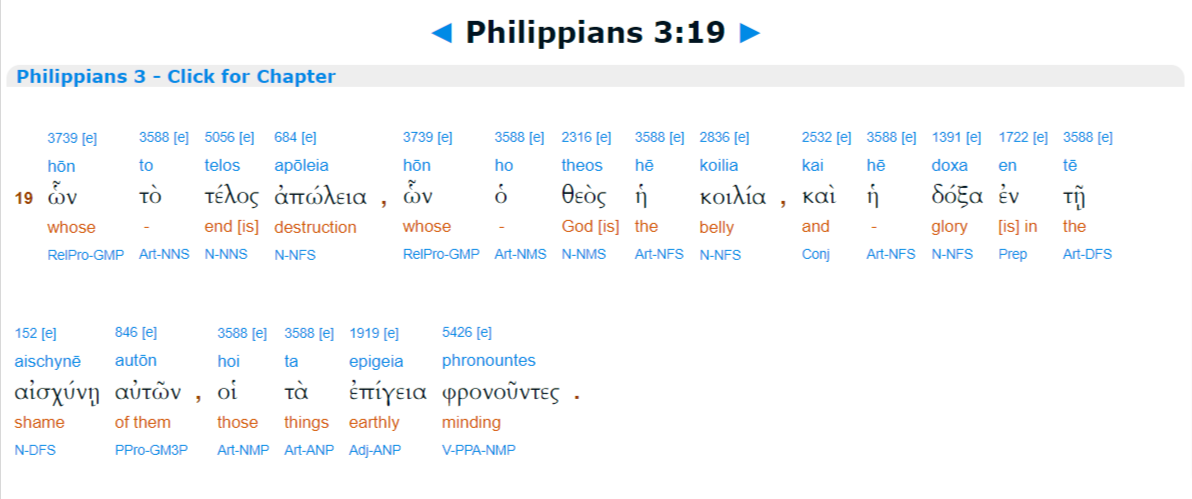
In Philippians 3:19, we learn that people whose end destruction, God is the belly and glory is the shame of things earthly minded.
Psalm 50, verse 12, we find the term Spiritus Principalis. Brenton’s LXX translation asks God to “establish me with thy directing Spirit” and David and James both ask for a “governing spirit” that seems to have the same meaning. Spiritus Principalis is also variously translated as “chief Spirit, governing Spirit, perfect Spirit, and generous resolve.
Translations from the Hebrew word is nadib: generous, magnanimous, willing-hearted, noble, and the Hebrew nakōn, from the root kwn, which means “to be firm, established, prepared.” The Hebrew naqntā means things like “firmly set, stable, steady, reliable, firm, steadfast, honest, trusty, good, thorough.”
St. Paul is clear when he tells us, “For those who are according to the flesh set their minds on the things of the flesh” (verse 5). Those who are “according to the flesh” are “in the flesh” in verse 8. Meaning they are governed and ruled by their flesh rather than by the Spirit of God. The “flesh” refers to selfishness, material pleasures, worldly pursuits, secular beliefs, self-interest, and self-promotion.
Paul previously said, “Do you not know that when you present yourselves to someone as slaves for obedience, you are slaves of the one whom you obey, either of sin resulting in death, or of obedience resulting in righteousness?” (Romans 6:16).
Paul states that “Because the mind set on the flesh is hostile toward God” (verse 7). The meaning of hostile is opposed. antagonistic, and hatred against God. An unbeliever is “hostile in mind” toward God (Colossians 1:21). James says that unbelievers have “hostility toward God” and are “an enemy of God” (James 4:4).
According to Monet of Cremona, the Holy Spirit is called Spiritus Principalis, meaning “firmus” because the devil did not deceive them, and he also created a great multitude of different entities called Spiritus Paracliticus. Their whole mental and moral activity is set upon nothing else but the gratification of the flesh and the material world, which is selfish and carnal because the carnal mind is enmity against God and equates to death.
These were the sinners who lived in darkness and were covered in sackcloth.
The Sons of Disobedience and the Children of Wrath.
These mind-controlled people were the “children in whom is no faith” (Isa 30:9; 57:4). They disobey the Gospel of their ancestors both in faith and practice (2Th 1:8; 2Co 2:12) and thus become “children of disobedience” and the “wicked.” Saint Paul had said, “The spirit that now worketh – That still lives, and whose energy for evil is still seen and felt among the wicked.”
The Catechism of the Catholic Church (CCC) issues the power of governance (CCC 1537) through the governing Spirit in the form of Episcopal ordination promulgated by Pope Paul VI to be conferred on a new bishop: “And now pour forth on this chosen one that power which is from you, the governing Spirit, whom you gave to your beloved Son Jesus Christ, whom He gave to the holy Apostles, who founded the Church in every place as your sanctuary, unto the glory and unending praise of Your Name.”
In Romans 8:13; “For if you live according to the flesh, you will die; but if by the Spirit you put to death the deeds of the body, you will live. Romans 8:27 “And He who searches our hearts knows the mind of the Spirit because the Spirit intercedes for the saints according to the will of God. We find in Galatians 6:8, “The one who sows to please his flesh, from the flesh will reap destruction; but the one who sows to please the Spirit, from the Spirit will reap eternal life.”
Therefore, Catholic teaching tells us that spiritus principalisis conferred via a formal cause (causa formalis) is that cause or principle which determines the form, that is, the structure, the essence of a being. The principal of the formal cause, like the material cause, is an internal cause of every (created) being.
It simply consists in the form or appearance (Greek: ‘idea’ or ‘eidos’), the structure or the pattern found in beings molded in the form of the Holy Spirit or the Mind of the Flesh.
A de facto type of mind control in which we choose to live determines how our minds operate in the world and how natural laws dictate our destinies.
You will know them by their ideas (eidos) words and works.
Moe is the founder of GnosticWarrior.com. He is a father, husband, author, martial arts black belt, and an expert in Gnosticism, the occult, and esotericism.
In the Scripture, there is a peculiar black building substance called “slime, Bible Slime or Bitumen,” used for the “mortar for stone and concrete bricks” to build the “Tower of Babel” in ancient Babylonia. It was also paramount in Ancient Egypt to construct the Great Pyramids of Egypt and preserve mummies. Many millennia later, with the coming of Islam, Muslim physicians began to prescribe it for skin ailments and wounds.
This same product that we know today is fossil fuels are also variously translated in the Bible as “bible slime, bitumen, naphta, pitch, tar, asphaltos,” and you will discover is associated with the concept of Tartarus (Tartaros) or Hell, sinning angels and what are called “pits of darkness, to be reserved for judgment.”
For example, we find that this Bible Slime or Bitumen was made in “tar or slime pits” and sometimes the “Lake of Sodom” in Sodom and Gomorrah and later the Dead Sea. In this slime, people are stuck in a type of darkness where they cannot see the light and are referred to as slugs. We read in Psalms,” Like a slug that moves along in slime, like a woman’s miscarried child, they will not see the sun.” (Psalm 116:3)
Due to its ability to “bind and waterproof” various materials, it quickly became one of the most prized and lucrative commercial industries in all the Mediterranean and now the world to this very day. Today, we know of Bible Slime or Bitumen used in its various forms as “asphalt and fossil fuels” for petroleum-like products such as oil and gas, which account for the largest share of energy production and consumption and global pollution.
Spiritually speaking, darkness and light are references to conscious people (awake, enlightened, or woke) and asleep (sleepwalking, unenlightened, zombie, sheople). Let me remind you that when snails are in the sun (light), they shrink, shrivel up, and no longer see the light so they disappear from their shells.
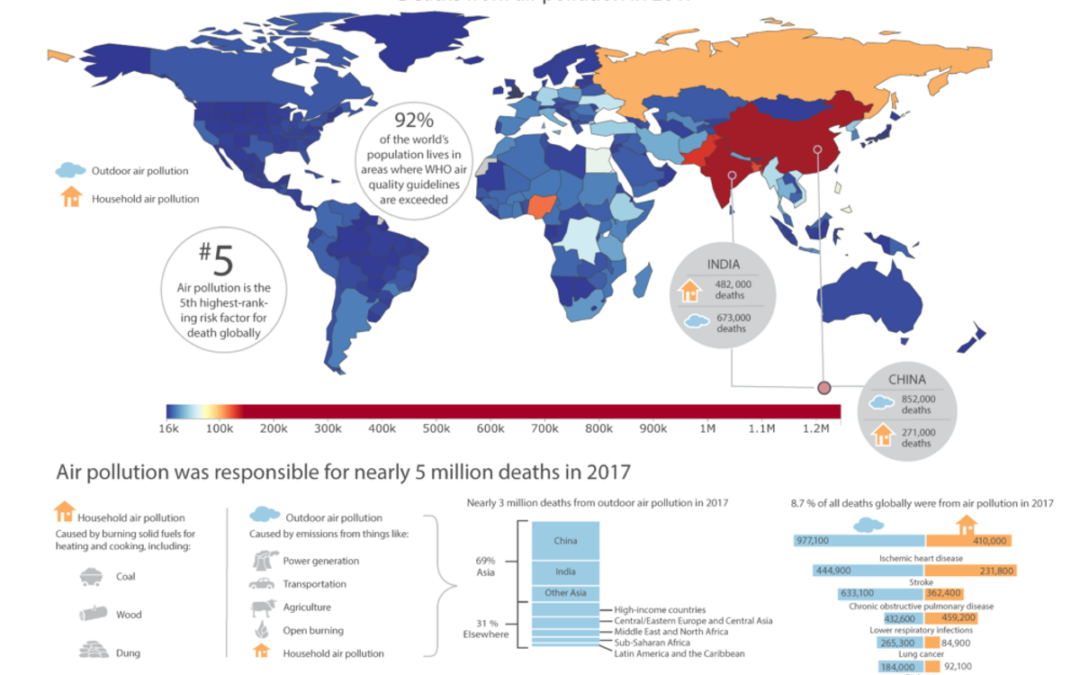
This Biblical reference to they will not see the sun reminds me of the fact that today when these fossil fuels are burned, carbon dioxide (CO2) is produced, which is a major contributor to local air pollution and is linked to millions of premature deaths each year and global climate change. In 2019, approximately 84% of global primary energy came from this decayed organic material ie, coal, oil, and gas.
“Fossil fuels, or energy sources formed in the earth’s crust from decayed organic material, including petroleum, natural gas, and coal, continue to account for the largest share of energy production and consumption in the United States. In 2019, 80% of domestic energy production was from fossil fuels, and 80% of domestic energy consumption originated from fossil fuels.”
The word slime is translated in the Bible as “temer, temes, or tamas” meaning dark or darkness, to hide, or cover-up,and the Hebrew macah and masah, which means “decay, consume, to melt, liquefaction, i.e. disappearance.” The word slime is also variously translated as “bitumen” in the Latin Vulgate and from bitumen as “chomer” in the Hebrew Bible.
I believe all words originally represented what we would call today “molds in English or fungi in Latin,” which I will clearly explain and prove in this article.
Before we look more into the Scripture, we must study etymology and the ancient definitions given to us by historians who have gone before us. For example, when we look at Herodotus’s explanation, he tells us that bitumen is “the product of the decomposition of vegetable and animal substances.“
Herodotus had written;
“Bitumen is the product of the decomposition of vegetable and animal substances. It is usually found of a black or brownish-black color, externally not unlike coal, but it varies in consistency from a bright, pitchy condition, with a conchoidal fracture, to thick, viscid masses of mineral tar.” (Encyc. Brit.)
Herodotus’s reference clearly shows us that this “slime of bitumen” is a product of the decomposition of both vegetables and animals. When we look to modern science for the definition of decomposition, we see that it means “the state or process of rotting; decay of organic waste.”
The principal microorganisms involved in the decomposition and rotting process on earth are fungi/molds.
Their main job on earth is to decompose organic matter by releasing enzymes to break down the decaying material. Fungi/molds absorb the nutrients in the decaying material via their hyphae which is used to break down matter and absorb nutrients then will create the very black, brownish tar-like substance as described by Herodotus.
In addition to these facts, if we look at the explanations given to us by Pliny, he says;
“Near to the nature of sulfur is also that of bitumen.
In some places, it is a slime, and others earth, the slime being emitted, as we have said, from the lake of Judaea and the earth being found in the neighborhood of the seaside town of Sidon in Syria.
Both of these varieties get thickened and solidify into a dense consistency. But there is also a liquid sort of bitumen, such as Zacynthus and the kind imported from Babylon; at the latter place, it also occurs with a white color. The Bitumen from Apollonia also is liquid, and all of these varieties are called by the Greeks pissasphalt, from its likeness to vegetable-pitch and bitumen.
There is also an unctuous bitumen, of the consistency of oil, found in Sicily, in spring at Girgenti, the stream from which it is tainted. The inhabitants collect it on tufts of reeds, as it very quickly adheres to them, and they use it instead of oil for burning in lamps, and also as a cure for scab in beasts of burden. Some authorities also include among the varieties of bitumen naphtha about which we spoke in Book II, but its burning property and liability to ignition is far removed from any practical use.”
Pliny further writes, “The test of bitumen is that it should be extremely brilliant and that it should be massive, with an oppressive smell; when quite black, its brilliance is moderate, as it is commonly adulterated with vegetable pitch. Its medical effect is that of sulfur, as it is astringent, dispersive, contractive, and agglutinating. Ignited it drives away snakes.”
When we look to modern science, we will discover that sulfur plays a key role in the world of fungi/molds. For example, studies have shown that fungal sulfur uptake is required to incorporate into the sidechains of various amino acids and is also essential for biosynthesis. In addition, in certain filamentous fungi, sulfur is also indirectly required for different metabolite functionalities.
Interestingly, fungi/molds such as Fusarium oxysporum reduce elemental sulfur to hydrogen sulfide (H2S), which creates a reaction accompanied by fungal growth and oxidation of the carbon source (ethanol) to acetate. Ethyl acetate is highly flammable, as well as toxic when ingestion or inhaled, and this chemical can be seriously damaging to internal organs,
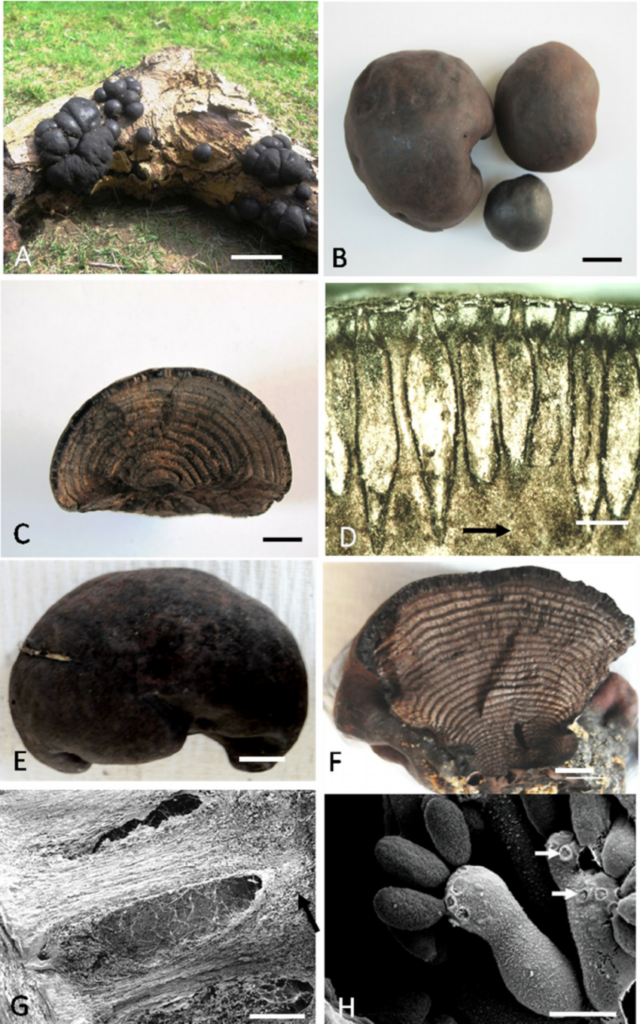
This now brings us to an infamous fungus that is an inedible named Daldinia concentrica is also known as coal fungus and carbon balls due to its ability to burn.
Daldinia concentrica lives on dead and decaying wood and is ball-shaped, with a hard, friable, shiny black fruiting body 2 to 7 centimeters wide that looks like a chunk of coal.
It is sometimes called “bituminous coal” in which the spores of the fungus (tips of the threads) act as fuel and release a putrid type smell that can drive away pests, snakes, and anyone for that matter.
A fungus that is one of the most useful forms of tinder for fire-lighting in the world, just like Pliny described and still carries the name bitumen.
Bible Slime is first spoken of as used for slime that was later changed to cement by the builders in the plain of Shinar or Babylonia. (Genesis 11:3) The bitumen pits in the vale of Siddim are mentioned in the ancient fragment of Canaanitish history (Genesis 14:10). The ark of papyrus in which Moses was placed was made impervious to water by a coating of bitumen and pitch. (Exodus 2:3)
The word “slime” occurs in the following passages: “And they had brick for stone, and slime had they for mortar” (Genesis 11:3); “Now the vale of Siddim was full of slime pits” (Genesis 14:10, margin “bitumen pits”); “She took for him an ark of bulrushes, and daubed it with slime and with pitch” (Exodus 2:3). “The vale of Siddim was full of slime pits” (Genesis 14:10); “the pit of destruction” (Psalm 55:23).
Flavius Josephus, in the Antiquities of the Jews, had written a descriptive passage about the Dead Sea (known in Latin as Lacus Asphaltitus, or “Asphalt Lake”) and the harvesting of bitumen. He identifies the Dead Sea in geographic proximity to the ancient biblical city of Sodom and refers to the lake by its Greek name, Asphaltites.
Josephus mentions people using bitumen chiefly as amulets and during the siege of Jerusalem in the year 70 CE, the tunnels under the city were set fire with bitumen, which collapsed with the Roman siege engines falling into the crevices. In the building of the tower of Babylon, Josephus claims that it was used as a mortar for waterproofing. He writes, “Its thickness dwarfed its apparent height, and it was made from baked bricks cemented with bitumen to prevent them from being washed away.”
Here is an image from 1969 showing a man sitting on a large car size chunk of bitumen in the Dead Sea.
Several other Biblical passages give us context as to what these slime and bitumen pits genuinely mean.
These passages align with Herodotus’s statement that “slime of bitumen” is a product of decomposition of both vegetables and animals, which I contend we would call “fungi or molds.” The pits would have been a type of special “burial ground or grave yeard” that I theorize was how our ancestors sought to control or manage the spirit world of our departed ancestors.
For example, going back to the Hebrew Scriptures of the Old Testament, we find the word “chomer” is another word used interchangeably for Bible Slime, bitumen, of earth, a bubbling up, mortar, clay, dust, ashes, heap, and or mire.
These definitions, I contend, are clues to its original meaning like we have discovered with bible slime and bitumen. Some obvious passages from the Scripture with the word chomer as the mortar or the fungal filaments enveloping modern humanity would align with my fungi/molds controlling sinners theory are;
Genesis 11:3: “for stone, and slime had they for chomer (mortar).”
Exodus 1:14: “bitter with hard bondage, in chomer (mortar), and in brick, and in all manner of service in the field:”
Exodus 8:14: “And they gathered them together upon chomer (heaps): and the land stank.”
Exodus 8:14: “And they gathered them together upon heaps: upon heaps: and the land stank.”
Leviticus 27:16: “then thy estimation shall be according to the seed thereof: a homer of barley seed shall be valued at fifty”
Numbers 11:32: “he that gathered least ten homers: and they spread them all abroad for themselves round about the camp.”
Job 4:19: “How much less in them that dwell in houses of clay, whose foundation is in the dust, which are crushed”
Job 10:9: “I beseech thee, that thou hast made me as the clay; and wilt thou bring me into dust again?”
Job 13:12: “unto ashes, your bodies to bodies of clay.”
Job 27:16: “as the dust, and prepare raiment as the clay;”
Job 30:19: “He hath cast me into the mire, and I am become like dust and ashes.”
Job 33:6: “stead: I also am formed out of the clay. out of the clay.”
When we read Job 13:12, we find more clues to break the code in Hebrew words like epher and âphâr, which are used interchangeably for mortar, ashes, clay, bible slime, bitumen, etc., which again, I contend is what we would call today molds and fungi. In Job 13:12, it says,
We read in Genesis 37:20, “Come now, therefore, and let’s kill him, and cast him into one of the pits, and we will say,’ An evil animal has devoured him.’ We will see what will become of his dreams.”
Suppose we are to take Herodotus’s testimony of the meaning of bitumen as one of the earliest and best authorities on this matter. In that case, we will conclude that these slime pits were “fungi/molds pits” where animals, humans, and vegetable matter” were quickly decomposed.
The Persian and Arab name of bitumen is mum or mumia and where we get the word mummy. This word was used after they had observed the dark-colored or black mummified bodies of the Egyptians, which led them to believe that the substance was bitumen known to them as mum.
Diodorus Siculus writing in the first century BC, and Pliny, in the first century AD, mention bitumen when writing about the Dead Sea and how it was one of the most lucrative products. Siculus claimed that the Nabateans controlled the Dead Sea bitumen industry ( mentioned in Gen. 14:10 ) in the Greco-roman period and sold it to Egypt to embalming mummies, making them incredibly powerful.
As I have explained in previous articles related to the Scripture, this area is also known as Idumea and now Judea in the Bible. When under Moses and Joshua, the Idumeans were confined to the east and south of the Dead Sea in the time of Jesus Christ. This is the same place where the Nabateans were and where the Dead Sea Scrolls were found.
The Bible Slime or fossil fuels harvested from the sea or ocean are from decayed organic matter in the marine sediment that accounts for 86%https://core.ac.uk/download/pdf/5212176.pdf of the world’s petroleum.
Mumia and where we get the word mummy and the Arabic term for the Dead Sea is “Baḥr Lūṭ” and more appropriately, “al-buḥaira al-muntina”, which means “the stinking Sea”, al-buḥaira al-maḳlūba “the overturned Sea” (because at al-arḍ al-maḳlūba, “the land that has been overturned”, the arḍ ḳawm Lūṭ is placed).
The “stinking sea” and the “overturned sea” would align with the oldest description we have from Herodotus that these pits were made of decomposing matter of which Church Doctors doctored the Scripture to reflect Bible Slime and also my modern scientific explanation of “fungus/mold pits that served as graveyards,” AKA the Dead Sea or Bitumen Pits. The very place where humans were decomposed by being bitten and eaten by the ‘slime,’ ie: fungi/molds that decomposed their bodies and caused a horrific stinking smell of rotting corpses that the Arabs called “al-buḥaira al-muntina.”
A study from 2012 had shown the waters of the Dead Sea currently contain several species of microorganisms, such as fungi/molds, which trigger the development of microbial blooms. The researchers isolated at least 70 species of microorganisms from various locations around the Dead Seas, both onshore and nearshore, including from deep waters.
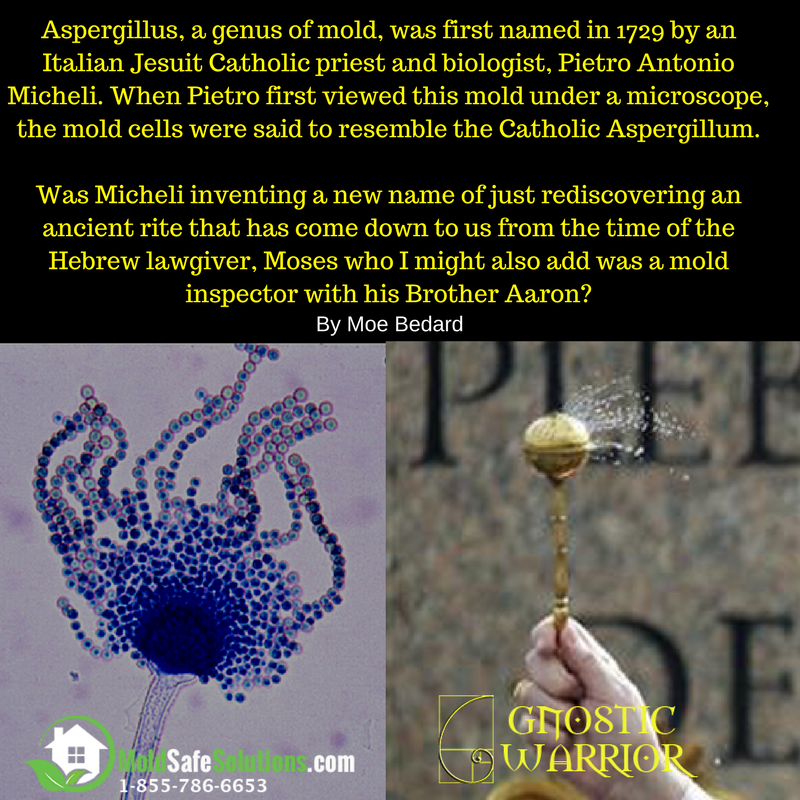
The microorganisms most often recovered were the fungi, Aspergillus and Eurotium.
The researchers concluded, “there is no direct proof that fungi contribute to the heterotrophic activity in the Dead Sea, but fungi may be present at least locally and temporarily, and their enzymatic activities such as amylase, protease, and cellulase may play a role in the lake’s ecosystem.“
This makes much more logical sense than the false interpretations we have now, which incorrectly lists the meaning of bitumen pits, and Bible Slime was a type of asphalt or concrete mortar. My theory is that the molds/fungi act as a type of “global mortar” or what we can just call “Black matter, or as I state in my previous article, Dark Matter: Surfing the light of cosmic filaments into space and beyond.
An interstellar “mycelium network or internet” that I theorize connects us, humans, animals, insects, the earth, and to space and beyond to one another via specific fungal organisms that can be either beneficial (symbiotic) or detrimental (parasitical).
Parasitical when we use this Bible Slim/Bitumen from this decayed organic material ie coal, oil and gas amongst other ills that are covering the skies with air pollution so we do not see the sun and linked to millions of premature deaths each year of people who will never see the light of day again.
Moe is the founder of GnosticWarrior.com. He is a father, husband, author, martial arts black belt, and an expert in Gnosticism, the occult, and esotericism.
Suppose you are not genuinely driving the human vehicle that you know as your body and mind. In that case, someone or what I contend, an artificial spirit or hive mind force is really in the driver’s seat.
A Beast pulling the levers of your limbs as it sends ancient impulses in the form of electrodes and special chemicals to keep you alive and make you appear to be a human when in reality, you are more like a programmable automaton. A person who the ancient Phoenicians would call behemah and the Ancient Greeks, thēriou.
Words that mean “ignorant, stupid, or human beast.”
In the Scripture, we know of these people figuratively as a group called the “Beast.”
“This calls for wisdom: let the one who has insight calculate the number of the beast (thēriou), for it is the number of a man, and his number is six hundred and sixty-six.” – (Revelation 13:18)
In the Scripture, “The Beast” is the title he is most frequently designated in Revelation, the last book of the Bible. The ‘Beast’ contrasts the Antichrist from the true Christ as “the Lamb” where the LORD is so designated in the Apocalypse as the Saviour of sinners, and the “Beast” is the persecutor and slayer of the sinners.
The English word Beast in the New Testament is derived from the Hebrew word behamah, which means “human-animal” or, more appropriately, a “stupid or ignorant person” as we read in Titus 1:12; “One of them, a prophet of their own, said, “Cretans are always liars, evil beasts, and idle gluttons” and is also applied to persecuting earthly powers, Revelation 11:7 and Luke 10:19; “See, I have given you the power to put your feet on snakes and evil beasts, and overall the strength of him who is against you: and nothing will do you damage.” The book of Revelation used Beast to apply to persecuting earthly powers, Revelation 11:7 13:1, and the other to superhuman beings or their symbols, Revelation 4:6.
We also find the Arabic, ‘bahimah’ is from a root signifying vagueness or dumbness and so denote primarily a dumb person who is considered a beast. The plural of בְּהֵמָה behemá, “beast”, bəhmä, “to be dumb, to be speechless,”, and the Arabic ب ه م (b-hm). The word venomous is often associated with the Beasts or stupid people in the Scripture because the words from these people’s mouths are vile and lack reason or logic.
“For the true honor of man is the image and likeness of God, which is not preserved except it be in relation to Him by whom it is impressed. The less therefore that one loves what is one’s own, the more one cleaves to God. But through the desire of making trial of his own power, man by his own bidding falls down to himself as to a sort of intermediate grade. And so, while he wishes to be as God is, that is, under no one, he is thrust on, even from his own middle grade, by way of punishment, to that which is lowest, that is, to those things in which beasts delight: and thus, while his honor is the likeness of God, but his dishonor is the likeness of the Beast.”
Augustine concluded, “Man being in honor abideth not: he is compared to the beasts that are foolish, and is made like to them.”
What St. Augustine had meant in modern terms is that if we are to live a selfish life where we only serve ourselves and our wills without regard to other people, society, and using our lives also to serve the greater good. By serving ourselves in a barbaric type of existence, we serve our egos and try to act as if we are Gods and require worship from our social media followers to become what our ancestors would have called a person who was more like a bĕhēmôt, thēríon, or Beast than a human. Hence, a beast is a person who is thus inclined to be ignorant, irrational, and stupid, but also fierce and dangerous when they foolishly think they are intelligent.
In Hebrew, behamah i.e., a stupid person would be considered to be under the psychological sway of the “Bĕhēmôt – Behemoth (/bɪˈhiːməθ, ˈbiːə-/; Hebrew: בהמות, behemoth)“, who is the primeval chaos-monster or Beast created by God at the beginning of creation from the biblical Book of Job, and has metaphorically represented “any extremely large or powerful entity.” Behemoth is where the Russian get the word “бехемот” (bekhemot). The meaning of primeval is based on the earliest stages or the first principles of the world and also primitive instinct, which I believe would deal with our second brain or little noos that controls these same said people via the earth’s biosphere through their second brains being the microbiome/fungi in their gi tracts.
Behemoth is represented as the king of all the animals of the dry land, while leviathan is the king of all those of the water, both alike unconquerable by man (ib. xl. 14, xli. 17-26) Hence, the Beast or Behemot is, in my opinion, is connected to what is the “hive mind or earth noos” of the fungi which control this biosphere through all living entities via their second brains. It is this second brain that I contend causes people to act beast-like if they follow their carnal/fleshly desires and appetites.
Please keep in mind that we always have to eat and serve this Beast in our daily lives so we will never conquer it per se, and why it is said to be unconquerable. The idea is to not have it rule us and for our passions that can turn to addictions making the Beast within and without rule us like automatons.
Meaning, that if a person does not control his thoughts and appetites by restraining or curbing these carnal pleasures or, as the Gnostics would say, “Nothing in Excess,” and Christians as “sin,” and they do not follow the concepts of Traditional higher learning such as Platonic philosophy, the teachings of the Abrahamic religions or as we find in Freemasonry, they become under the sway and control of their Master, Thēríon, the Beast, Behemoth or who the Christians call the Devil or LORD of this world.
This is why when you follow the Beast (thēríon), you get what the Greeks call thēríōma (θηρῐ́ωμα), which means ulcer and in modern terms may mean cancer and disease as we see now in this global epidemic here in the West.
To reveal the secrets of the Bible, we first must contrast the various versions of the Scripture, such as the Greek, Hebrew, and Latin, to our modern English version to see that the words have a slightly different meaning than we think or had been interpreted in the past.
For example, in Revelation 13:5, we read the doctored script, “The beast was allowed to speak arrogant and blasphemous things, and it was given authority for 42 months.”
The proper Greek word for Beast is ‘αὐτῷ (autō),’ meaning “He, she, it, they, them” and use of the “third person, and of the other persons.” So when we read Beast, we understand that this represents a person, and I contend it is from the Greek word ‘αὐτῷ (autō), where we get the word automatic and the adjective to describe a person who acts like a robot as an “automaton.”
A person who is an automaton acts like a Beast because they would be similar to the meaning, which is “a moving mechanical device made in imitation of a human being.” The word “automaton” is the Latinization of the Greek αὐτόματον, automaton, meaning “acting of one’s own will”. The Hellenistic world’s automata were intended as tools, toys, religious spectacles, or prototypes for demonstrating basic scientific principles.
An automaton, a Beast or Thēríon human that I contend was the first concept in literature via myths and poems which trained or programmed people to perform specific tasks for the state unbeknownst to the uninitiated. Hence, a state cult and the perfect actors and players can be created by words that indoctrinate the population to become heroes, demons and saviors as in the Myths that have shaped their very being.
This creates an ancient form of “artificial intelligence” inserted within human consciousness via the very myths and stories that shape their being. Stories and words that act like songs for the carnal soul where we witness these revelations in the ancient Myths such as the Greek story of Talos, first mentioned around 700 B.C. by Hesiod, offer one example earliest conceptions of an automaton human.
Aristotle wrote in 322 BC in his book Politics:
“For, if each tool could perform its task on command or by anticipating instructions, and if like the statues of Daedalus or the tripods of Hephaestus – which the poet describes as having “entered the assembly of the gods of their own accord” – shuttles wove cloth by themselves and picks played the lyre, a master craftsman would not need assistants, and masters would not need slaves.”
Hence, a new society or world populated with both real people – authentic humans – and with programmable humanoid robots of various human shapes and programs that become their operating systems i.e. perfect Servants and Slaves i.e. Citizens – the new living and realistic civilization that could be molded and sculpted as the Masters of the World see fit.
Hence, “a collection of 19th century French automata: acrobats, clowns, and musicians” who perform as machine according to a predetermined set of coded instructions, especially one capable of a range of programmed responses to different circumstances.” René Descartes when he suggested that the bodies of animals are nothing more than complex machines – the bones, muscles and organs could be replaced with cogs, pistons, and cams. Today, adjectives to describe these people who act as automatons and who our ancestors would have called Beasts or therion might be called “zombies, sheople, or the Bourgiouse.”
The next Greek word for the English “was allowed or was given” is ἐδόθη (edothē), meaning “to offer, give; I put, place or to give.” The word edo means “out of” and in Latin , where edo means “I eat.”
The word domi frequently means’ of one’s own ,’ not only in Plautus but also in classical Latin ; e.g. in the phrases domi est =’ 1 have of my own … ( a passage which shows the origin of this special meaning of the locative ) ; domi
In Revelation 13:5, it says, “The beast was allowed to speak,” and speak is properly rendered in the Greek Scripture as ‘στόμα (stoma).’ If you research the meaning, you will find false translations stating that stoma means mouth or speech, but it doesn’t because stoma is where we get the English word ‘stomach’. The Strong’s Greek lists to speak as λαλοῦν (laloun)
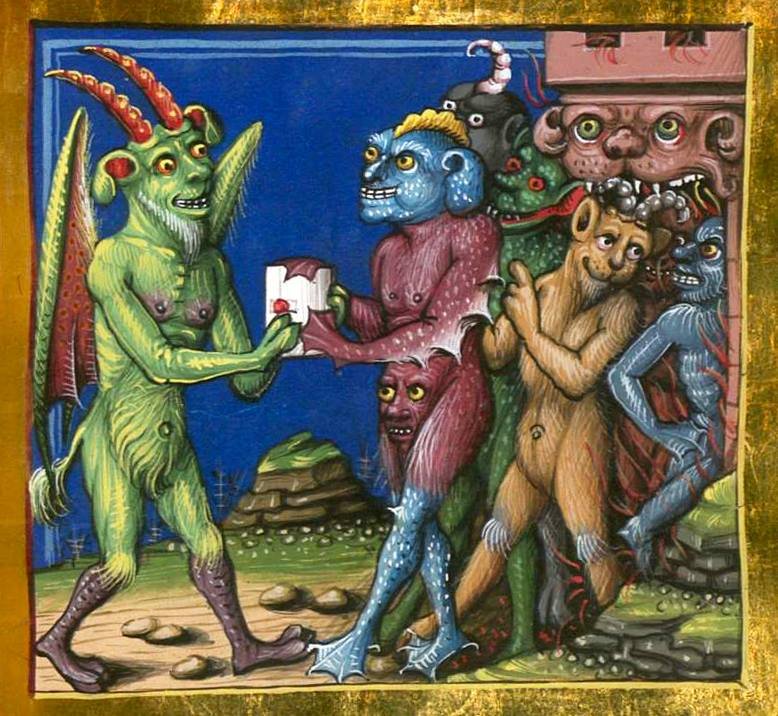
Hence, the ancient images of demons and devils with faces upon their stomachs and buttholes.
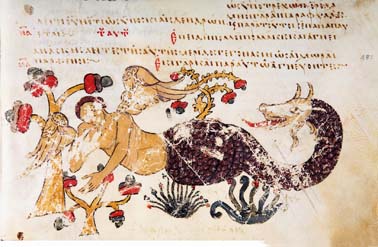
Here is an image from the Book of Job from the Mount Athos, Megisti Lavra Monastery, Codex B. 100 dated in the 12th century that I believe is an ancient depiction of my second brain/little noos being controlled by the Beast or Behemoth.
Here Job’s bottom portion of his body, AKA the loins, is in the form of the Beast and is connected to the earth and surrounded by what looks like môt or what we can say is a fungus in the form of mushrooms made to look like trees to the uninitiated and mycelium or what is called “fetters and hedges” in the Scripture.
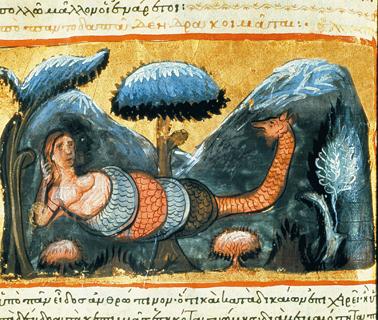
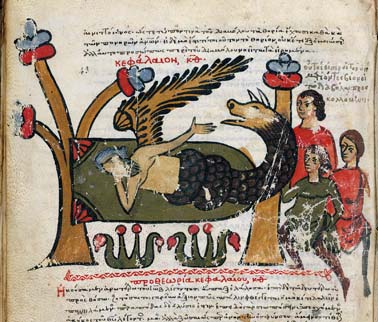
Many of the religious images of the Book of Job over the centuries also relay this same theme. For example, here is an image from a 9th century manuscript from Patmos, Monastery of St. John the Theologian, Codex 171.
My theory makes sense given the fact that science has discovered that human beings descend from fungi, as do all creatures on earth, and these fungi are intelligent and are considered the earth’s internet. These facts I believe can be found in chapter 40 of the Book of Job, where this Beast or Bĕhēmôt is mentioned as “He is the first of the works of God, his strength in his loins,” and “his power in the muscles of his belly,” and “Under the lotus plants, he lies, in the shelter of the reeds and in the marsh.
We read in Job;
Behold, Behemoth (bĕhēmôt), which I made as I made you; he eats grass like an ox.
Behold, his strength in his loins, and his power in the muscles of his belly.
He makes his tail stiff like a cedar; the sinews of his thighs are knit together.
His bones are tubes of bronze, his limbs like bars of iron.
He is the first of the works of God; let him who made him bring near his sword!
For the mountains yield food for him where all the wild beasts play.
Under the lotus plants he lies, in the shelter of the reeds and in the marsh.
For his shade the lotus trees cover him; the willows of the brook surround him.
Behold, if the river is turbulent, he is not frightened; he is confident though Jordan rushes against his mouth.
Can one take him by his eyes, or pierce his nose with a snare? (Job 40:15-24, ESV)
The word beh, beg, bek or бек means “lord, chieftain, commander, or master” in various languages such as the Russian, Persian, and Turkish بك (beg, “lord”). It also means lineage for the Slavic use the name Beg added to the Slavic suffix of ‘ovic’, ‘ovich’, which roughly means ‘descendant of’ such as the “Begović” families, some are of noble descent, some not and “Idrizbegović, Šahbegović, Rizvanbegović, and Šačirbegović.
In researching the various forms of the Scripture, such as the Greek, the word “beast” is translated the fourth and fifth verses, is thēríon‘. The Greeks had called beasts in the human form by the name, ‘thēríon‘ – figuratively as “bestial” or a human was a beast in his or her nature and to be a ‘thériomacheó’ is from a compound of therion and machomai, which was to be a beast-fighter such as a gladiator show, or to encounter furious men/beasts. This is where we get the word ‘macho’, meaning to be a fighter, tough or fierce, and have pride in one’s masculinity.
The words théra, thēran thḗran mean a trap, net, or means of capture from Homer down is “a hunting of wild beasts to destroy them.” Hence, figuratively, of preparing destruction for men like the internet.
In 1 Corinthians 15:32, we read that Paul was condemned to fight with thēríon AKA wild beasts, that was described as a fierce contest with brutal and ferocious men; “If after the manner of men I have fought with beasts at Ephesus, what advantageth it me, if the dead rise not? Let us eat and drink; for tomorrow we die.”
The last few verses focus on Paul’s motivation for continuing a dangerous life of preaching the gospel against so much opposition and asks, “what could he possibly stand to gain in human terms?” Meaning that spreading the light of God’s work did not bring him wealth or status. I believe this example shows that Paul is a thériomacheó, that is a human beast fighter who uses his God-given wisdom to debate against those Neoliberal Gnostics who put their flesh and Godhood above that of all that is good and God. These Godless Gnostics would have been part of the Cretan Culture in Scripture or the American Bourgieoise or Satanists of Modernity.
The Cretans were known in the Apostles’ time as a Beastiality culture as we have in the U.S.A. who put luxury, vice, and the lies that support such a Godless existence of evil above truth, ethics, morality, virtue, God, and all that is good. This is why it is said in Titus 1:12, “One of themselves, even a prophet of their own, said, The Cretans (Americans) are always liars, evil beasts (thēríon) slow bellies.”
This is why we are told in Proverbs that “A righteous man regardeth the life of his beast: but the tender mercies of the wicked are cruel.”
Meaning, that a person who uses reason and logic is considered righteous in God’s eyes because they understand that within or herself is their own Beast or what Carl Jung had called the Shadow and Christians the Devil. To let our Beast rule over ourselves is to be an Antichrist who is really a stupid person or, more appropriately, a “666 Beast” as described by the Gnostic prophet, John in Revelations.
As I explained in my previous article, The Theology of the Phoenicians from Sanchoniatho, the historian and a priest of Byblos (City of the Book/Bible), Sanchuniathon (Phoenician: 𐤎𐤊𐤍𐤉𐤕𐤍) the word Môt was a Semitic word for ‘Death’ but may also mean ‘mud’ which some call Ilus (Mud), but others the putrefaction of a watery mixture. And from this sprung all the seed of the creation and the generation of the universe. From mot where we get the words like moth, motion, motive, motley, and of course, mold, molded, and mucus which all spring from Môt AKA putrefaction and mold.
In another Phoenician account by the Greek author Philo of Byblos by Eusebius, who says Mot or Muth is also known as Thanatos and Pluto and is the son of God, El and Rhea, the Goddess of Earth. Philo writes; “And not long after another of his sons by Rhea, named Muth, having died, he deifies him, and the Phoenicians call him Thanatos, and Pluto.”
Mot (Phoenician: 𐤌𐤕 mūt, Hebrew: מות māweṯ, Arabic: موت mawt) was also the ancient Canaanite God of death and the Underworld. He was worshiped by the people of Ugarit, by the Phoenicians/Hebrews of the Old Testament.
Therion is the name of a constellation named by Hipparchus of Bithynia in the 2nd century B.C. Ptolemy later identified it with a wolf, and it is currently known as Lupus. Today in science, lupus is an autoimmune disorder that can affect many parts of the body, including the brain that can cause mental illnesses like schizophrenia or bipolar affective disorder (manic depression). A man who called himself the Beast, Aleister Crowley, had used the name Thēríon as a god in Thelema, consort of Babalon, which he had invented in The Book of the Law.
In my previous article on this subject, The Science of 666, I explained that you are the Beast, and the number 666 relates to the carbon atom, and man. John the Baptist said of the coming Antichrist and the Number of the Beast: “Let him that hath understanding count the number of the beast: for it is the number of a man, and his number is Six hundred threescore and six (666).”
Carbon-12; one of 5 elements in the human D.N.A. comprises 6 protons, 6 electrons, and 6 neutrons, which equates to 666. Carbon-12 is the most abundant of the two stable isotopes of the element carbon, accounting for 98.89% of carbon. Its abundance is due to the Triple-alpha process by which it is created in stars, and as Carl Sagan had once said, “we’re made of star-stuff.”
We are in the Age of the Antichrist in which the Beast has been in control for a long time, and here in the Secular West, Modernity and Neoliberalism is its natural outcome that has produced in humanity a mass psychosis and schizophrenic bahaviors that is known in the Scripture as “The Mouth of the Beast.”
This was said to be the agency by which the people were taught and through which utterance was given to the blasphemies of the Beast.
“These are of one mind (little noos/false noos) and will hand over their power and authority to the beast (thēriōn).” – Revelation 17:13
Moe is the founder of GnosticWarrior.com. He is a father, husband, author, martial arts black belt, and an expert in Gnosticism, the occult, and esotericism.
“And it came to pass, when the king heard the words of the woman, that he rent his clothes; and he passed by upon the wall, and the people looked, and, behold, [he had] sackcloth within his flesh.” (2 Kings 6:30) Sackcloth within the flesh was called the “clothing of the false prophets”, who Zecharia says, “that the false prophets shall no longer prophecy in sackcloth.”
(Zech. xiii, 4) It was also speculated to be an article of clothing that was allegedly worn, but it was described as a blackish substance that I contend is a particular “genus of fungi/molds” that, with the help of the LORD of Hosts, was somehow supernaturally embedded within the flesh of people during times of trouble, pestilence, and calamities as it was said that sackcloth was “worn about their bodies,” not “worn on their bodies” and “within the flesh.“
In Revelation 11:3, we are told, “I will give power to my two witnesses, and they will prophesy one thousand two hundred sixty days, clothed in sackcloth” and in 6:12, (12-17), we learn the story of the sixth seal where Christ’s disciples are taught about wars (Revelation 6:6), famines and pestilences (Revelation 6:7), persecutions (Revelation 6:9) and in 6:12, these two witnesses are given white robes as the sun.
This legislative action and legal judgments, which refer to sackcloth girding people’s flesh, rotting, and the stench is interesting given the fact that it also has the ability to cover the sun and heavens with blackness as it is said in Revelation 12 “the sun black as a sackcloth of hair,” and Isaiah, “I clothed the heavens with blackness, I make sackcloth their covering.”
The LORD GOD of Hosts is often associated with forming/molding humans, this sackcloth and dust. We learn in Genesis 18:27; “to speak to the LORD which I am dust,” and Genesis 2:7 And the LORD God formed man of the dust of the ground, and breathed. “Then shall the dust return to the earth as it was: and the spirit shall return unto God who gave it.” (Ecclesiastes 12:7)
In the Scripture, we find that the profits were girded with Sackcloth. Job says, “I have sewn a sackcloth upon my skin and defiled my horn in the dust.” (Job 15) It also was on people when they were sick as an instrument of the LORD’s anger and used to “wrap the dead” during the burial process, and during good times, those who were clad in sackcloth tore it from their bodies and cast it from them. For this, gird you with sackcloth lament and howl. For the fierce anger of the LORD is not turned back from us. Jerome
There are also references to instead of a stomach, there is a girding of sackcloth and the bosom (mold in chest/lungs), and instead of beauty and people with well-set hair, people were bald, burning, and were branded. Instead of a sweet smell, there was a stink. Let me, please add that fasting and prayers seem to help these serious medical conditions and also not angering the LORD who was their de facto ruler.
In Psalms, “But for me, when they were sick, my clothing was sackcloth. I humbled my soul with fasting, and my prayer turned into my own bosom.” King James Bible; Instead of a sweet smell, stink; rather, rottenness, as translated in Isaiah 5:24 (compare the cognate verb in Leviticus 26:39). Instead of well-set hair baldness (compare above, ver. 17).
GIRDING MY LOINS
To put on sackcloth was done through what they called “to gird sackcloth about the loins” and had the ability to mend or be supernaturally sewn within the flesh to become part of the skin or human organism and somehow associated with the dust. The word is also mainly associated with the adjective of black or darkness, as if this sackcloth was made of such color.
To Gird the Loins with a Sackcloth is no easy feat. The loins of a human are the part of the body on each side of the spinal column between the hip bone and the false ribs or the upper and lower abdominal regions and the region about the hips.”
All these different Biblical references of sackcloth girding people on the day of destruction with descriptions of rotting flesh clearly indicate that sackcloth is something other than clothing or a robe that people wore. It also has the ability to gird us, surround us, and also stretch into the heavens with blackness, which sounds exactly like what modern science has described as “dark matter” that I have written about many times before. This is what I believe our ancestors had meant by the description of the sackcloth.
Please keep in mind that the LORD GOD of Hosts is considered different from the God of the Most High or El and be more of a legislator of the earth, including humans and hearts who issue punishments for sins laws to govern God’s people. The Jews call him Yahweh, Jehova, or Adonay, and the Christians, the LORD of who Jesus and Satan are his archetypes.
WHAT DOES SACKCLOTH MEAN?
It is obvious from the references above and what I will put forth below that this “sackcloth” is black or dark in nature but also has the ability “to gird people via their loins” and also reached up to the sun and cover the heavens in “blackness.” I have also found that sackcloth is associated with the “LORD GOD of Hosts and dust” and who brings the day of destruction that is coming on all this refined luxury where it was said that in great calamities, in times of deception, mourning, pestilence, sickness, and when the rule of the false prophets, there would be the stench of squalor rotting people’s flesh which would be “girded in sackcloths.”
What has always interested me about these passages was the reference to the word ‘sackcloth’ and the true meaning behind it because all of the interpretations and references never made any sense to me as it does now that I have uncovered the true meaning. For example, many interpreters claim the meaning of sackcloth was that it was a type of robe or dress that people had worn during the writing of the Scripture, but as I briefly stated above, I disagree. Also, the word sackcloth is a somewhat new Biblical word added by ‘Church Doctors’ to conceal its true meaning and is not the original word written in the Hebrew and Greek Scripture, which I will clearly reveal below.
The meaning of gird is to smite, strike or bind and can also mean to equip or encircle a person or part of the body. The original word in Hebrew is said to be ‘agar or chagar’ and also ‘azar,’ which similarly means binds, bound, encircle, gird, or girded. These words have nothing to with wearing a garment and or clothes. In the Book of Enoch, Azar or Azazael is one of the chiefs of the 200 fallen angels who instructed the Sons of God came in unto the daughters of men teaching them the magical arts.
As I explained in my article, “Azazael: The Science of the Seed of Satan,” these ancient teachings led to many Jewish Rabbis identifying Azazel or Azar with Sammael, the angel of death, the chief of the devils, the fallen archangel, and the seducer of mankind. Father of the Church, St. Basil, had said that the angels are “an airy wind, an immaterial fire” who are an order of intelligent creatures which is their elementary constitution according to another high author and the Christian Theologian Origen claimed that Azazel was the devil (‘Cont Cels.’ lib. V1. p. 305).
When studying the word agar, you will find that it is also “means mucilage, which is a thick, gluey substance produced by nearly all plants and some microorganisms.”
These microorganisms include fungi that use it for their locomotion, like Aspergillus Fumigatus, which uses extracellular release of mucilage for parasitic entrapment and fungal adhesion host, which has been well documented. Aspergillus causes the most fungal infections, diseases, infect crops and animals, resulting in more death worldwide every year, making this the true Korona Fungus that the LORD of Hosts may use to do its bidding.
An interesting synchronicity is that the Roman Catholic Popes and Catholic priests use an ‘Aspirgillum‘ named after the mold aspergillus to sprinkle Holy Water, which I contend originally had anti-fungal properties.
This agar AKA mucilage, is also known as “Extracellular mucilaginous material (ECMM)” and fungi use it for attachment of spores or mycelium to various substrates and protection. Scientists have found that certain species of fungi are covered by an amorphous mucilage that facilitates adhesion of the spore to the host cuticle and creates what they call a “mucilaginous spore matrix” to protects it against temperature extremes and may include the storage of nutrients used by the fungus during starvation. For example, “Micromorphology of extracellular mucilage,” which has been thoroughly documented in wood-decay fungi as I’m sure we will find out the same can be said for humans.
As I have explained before, these modern scientific teachings we can connect to the Christain concept of the sackcloth with the ancient Judaic exoteric teachings such as the Unholy Shell of Husk and may be related to the membrane spoken of in the Apocalypse of Abraham. This is a reference to the human mucous membrane or possibly a more recent discovery called the “Interstitium,” which has been described as “the largest organ we never knew we had,” and an organ that is so minuscule that it has escaped the discovery of the world’s greatest scientists until now.
These Scriptual teachings I believe we may find when we read On that day, were are told in Isaiah 22:12 “You built a reservoir between the walls for the waters of the ancient pool, but you did not look to the One who made it, or consider Him who planned it long ago. On that day, the Lord GOD of Hosts called for weeping and wailing, for shaven heads and the wearing of sackcloth. But look, there is joy and gladness, butchering of cattle and slaughtering of sheep, eating of meat and drinking of wine:
“Let us eat and drink, for tomorrow we die!”
In modern terms and when comparing these teachings to science, my understanding has been that it is the microorganisms within us that have the ability to gird people’s flesh when we sin and live in refined luxury, causing us to rot from the inside out i.e., fungal infections, and just about every disease with a Latin name we have no cure for but a medicine might fall into this category. These same said fungi also have been found 33,000 feet in the air to the moon, which would align with our ancestor’s teachings of clothed the heavens with blackness. I make sackcloth (agar/fungi/black matter) their covering. Hence, the KORONA FUNGI Apocalypse.
I believe that they just used different words. Due to the Babylonian dispersion, the confusion of tongues, and subsequent doctoring of the original Scripture, these translations were lost and or misconstrued. Possibly only to be found in the Vatican archives if they still exist.
This name “agar” is interesting given the fact that it is an ancient name going back to the time of the Phoenicians (Hebrews) and is also associated with “Divine birth,” Angels, and the Wilds Ass Man of the LORD.
In the Scripture, Hagar or Agar is Abraham’s concubine and the mother of his son Ishmael. She was a slave purchased in Egypt who became the maid to Abraham’s childless wife, Sarah, who gave her to Abraham to conceive an heir. When Hagar became pregnant, her meek manner changed to arrogance, and as a result, Sarah treated her so harshly that she fled into the wilderness.
There, by a spring of water, she was found by an angel of the Lord, who told her to return home and promised her that she would have many descendants through a son, Ishmael; he would grow up to be a “wild ass of a man,” in constant struggle with all other men. Hagar returned home to bear her child.” Ishmael was the first son of Abraham, according to the Bible, which is repeated in the Quran.
Hence, all other Apostles and saviors would have been a descendant of this “wild ass man” and who would struggle against the people of their day.
ETYMOLOGICAL WORDPLAY
Sackcloth is composed of the words’ sack, sak, sac or saq” and “cloth or clothe.” In Hebrew, the word sackcloth is translated to qadar, to be dark, blackish ones; to be ashy, ie Dark-colored; by implication, to mourn (in sackcloth or sordid garments) — be black(-ish), be (make) dark(-en).
The original meaning of sak means wet
Glucose decomposes this compound so that it Saccharin ( sak‘ ur – in ) . ( Saccharum + – in . ) n
Camlet’s Dictionary tells us that the name was also written in the Greek’ Girgashi, Girgesenos Girshanna
The name Geregesene is connected to the “country of the Gerasenes” (Mark 5:1 Luke 8:26) and the “The Demoniac of Gadara” where Jesus met and healed the demoniac from the tombs, and also the place the destruction of the swine, which was on the eastern shore of the Sea of Galilee.
It is in this passage we learn that the people of this area who are said to be clothed in sackcloth also this is Jesus’ hometown where they also have a big problem with demons, and unclean spirits because they have been bound by what is described as “fetters and chains,” and the chains at a particular mountain had been rent asunder by him, and they were called “Legion, for there were many.”
The word fetter is interesting to note given the fact that it means “a chain, shackle, or restraint on the foot which an animal or man was confined restrained or more appropriately, to bind or bound as in a way to “secure prisoners.” The word is variously associated with the slaughter of sinners and has the ability to “hedge” which means “to fence or boundary formed by closely growing bushes or shrubs.”
For example, we learn in Hosea 5:2, “And to slaughter sinners have gone deep, And I ‘am’ a fetter to them all,” and in Lamentations 3:7, “He hath hedged me about, and I go not out, He hath made heavy my fetter.”
If we are to examine the old Greek text, we discover in the Strong’s Concordance that the English word fetter was originally written in the Greek pous, which means “the ground or earth.” https://biblehub.com/greek/3977.htm. Pous is where we get the English pus which means “a thick yellowish or greenish opaque liquid produced in infected tissue, consisting of dead white blood cells, bacteria and fungi with tissue debris and serum.”
Gergesa was said to be a little town near Capernum which was also called Kerza or Gerza of which the Apostle Mathew allegedly wrote was next to Galilee.
Country of the Gerasenes:
The town itself is not named in Scripture and is referred to only in the expression, “country of the Gerasenes” (Mark 5:1 Luke 8:26, 37; see Westcott and Hort, The New Testament in Greek, Appendix, 11). This describes the district in which
Pliny in the 6th chapter of the 7th book of his Natural History, speaks of a mountain in Crete that had been overturned by an earthquake and that had uncovered the bones of a massive giant. Philodemos of Gadara (ca. 110-40 B.C.) reported another giant found on Crete that was 48 cubits in length; this would equate to 72 feet in length. These finds are interesting because the God Zeus or Jupiter was also educated and hid in a cave on a mountain called Mount Ida on Crete.
In times of mourning, they used girdles gashta, the Arabic also signifies “black mud” which was said to describe the soil or earth surrounding the Lake of Tiberias.
Moe is the founder of GnosticWarrior.com. He is a father, husband, author, martial arts black belt, and an expert in Gnosticism, the occult, and esotericism.