by Moe
p. 780
“O how great and glorious is the presence of the Almighty God which gloriously shines from between the Cherubim!
“How adorable and astonishing are the rays of that glorious Light, that sends forth its bright and brilliant beams from the Holy Ark of Alliance and Covenant!
“Let us with the deepest veneration and devotion adore the great Source of Life, that Glorious Spirit who is the Most Merciful and Beneficent Ruler of the Universe and of all the creatures it contains!
“The secret knowledge of the Grand Scottish Master relates to the combination and transmutation of different substances; where-of that you may obtain a clear idea and proper understanding, you are to know that all matter and all material substances are composed of combinations of three several substances, extracted from the four elements, which three substances in combination are,  , Salt,
 , Sulphur, and
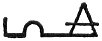 , Spirit. The first of these produces Solidity, the second Softness, and the third the Spiritual, vaporous particles. These three compound substances work potently together; and therein consists the true process for the transmutation of metals.
“To these three substances allude the three golden basins, in the first of which was engraved the letter M∴, in the second, the letter G∴, and in the third nothing. The first, M∴, is the initial letter of the Hebrew word Malakh, which signifies Salt; and the second, G∴, of the Hebrew word Geparaith, which signifies Sulphur; and as there is no word in Hebrew to express the vaporous and intangible Spirit, there is no letter in the third basin.
“With these three principal substances you may effect the transmutation of metals, which must be done by means of the five points or rules of the Scottish Mastership.
“The first Master’s point shows us the Brazen Sea, wherein must always be rain-water; and out of this rain-water the Scottish Masters extract the first substance, which is Salt; which salt must afterward undergo a seven-fold manipulation and purification, before it will be properly prepared. This seven-fold purification is symbolized by the Seven Steps of Solomon’s Temple, which symbol is furnished us by the first point or rule of the Scottish Masters.
“After preparing the first substance, you are to extract the
p. 781
second, Sulphur, out of the purest gold, to which must then be added the purified or celestial Salt. They are to be mixed as the Art directs, and then placed in a vessel in the form of a SHIP, in which it is to remain, as the Ark of Noah was afloat, one hundred and fifty days, being brought to the first damp, warm degree of fire, that it may putrefy and produce the mineral fermentation. This is the second point or rule of the Scottish Masters.”
If you reflect, my Brother, that it was impossible for any one to imagine that either common salt or nitre could be extracted from rain-water, or sulphur from pure gold, you will no doubt suspect that some secret meaning was concealed in these words.
The Kabalah considers the immaterial part of man as threefold, consisting of NEPHESCH, RUACH, and NESCHAMAH, Psyche, Spiritus, and Mens, or Soul, Spirit, and Intellect. There are Seven Holy Palaces, Seven Heavens and Seven Thrones; and Souls are purified by ascending through Seven Spheres. A Ship, in Hebrew, is Ani; and the same word means I, Me, or Myself.
The RITUAL continues:
“Multiplying the substance thus obtained, is the third operation, which is done by adding to them the animate, volatile Spirit; which is done by means of the water of the Celestial Salt, as well as by the Salt, which must daily be added to it very carefully, and strictly observing to put neither too much nor too little; inasmuch as, if you add too much, you will destroy that growing and multiplying substance; and if too little, it will be self-consumed and destroyed, and shrink away, not having sufficient substantiality for its preservation. This third point or rule of the Scottish Masters gives us the emblem of the building of the Tower of Babel, used by our Scottish Masters, because by irregularity and want of due proportion and harmony that work was stopped; and the workmen could proceed no further.
Moe is the founder of GnosticWarrior.com. He is a father, husband, author, martial arts black belt, and an expert in Gnosticism, the occult, and esotericism.
by Moe
p. 757
Three points first emanated, one under the other; Kether, Hakemah, and Binah; and, so far, there was no copulation. But afterward the positions of Hakemah and Binah changed, so that they were side by side, Kether remaining above them; and then conjunction of the Male and Female, ABA and IMMA, Father and Mother, as points.
He, from Whom all emanated, created Adam Kadmon, consisting of all the worlds, so that in him should be somewhat from those above, and somewhat from those below. Hence in Him was NEPHESCH [PSYCHE, anima infima, the lowest spiritual part of man, Soul], from the world ASIAH, which is one letter He of the Tetragrammaton; RUACH [ SPIRITUS, anima media, the next higher spiritual part, or Spirit], from the world YEZIRAH, which is the Vav of the Tetragrammaton; NESCHAMAH [the highest spiritual part, mens or anima superior], from the world BRIAH, which is the other letter He; and NESCHAMAH LENESCHAMAH, from the world ATSILUTH, which is the YO_D of the Tetragrammaton.
And these letters [the Sephiroth] were changed from the spherical form into the form of a person, the symbol of which person is the BALANCE, it being Male and Female . . . Hakemah on one side, Binah on the other, and Kether over them: and so Gedulah on one side, Geburah on the other, and Tephareth under them.
The Book Omschim says: Some hold that the ten Sephiroth succeeded one another in ten degrees, one above the other, in regular gradation, one connected with the other in a direct line, from the highest to the lowest. Others hold that they issued forth in three lines, parallel with each other, one on the right hand, one on the left, and one in the middle; so that, beginning with the highest and going down to the lowest, Hakemah, Khased [or Gedulah], and Netsach are one over the other, in a perpendicular line, on the right hand; Binah, Geburah, and Ho_d on the left; and Kether, Tephareth, Yesod, and Malakoth in the middle: and many hold that all the ten subsist in circles, one within the other, and all homocentric.
It is also to be noted, that the Sephirothic tables contain still another numeration, sometimes called also a Sephirah, which is called Daath, cognition. It is in the middle, below Hakemah and Binah, and is the result of the conjunction of these two.
To Adam Kadmon, the Idea of the Universe, the Kabalah assigns a human form. In this, Kether is the cranium, Hakemah and
p. 758
[paragraph continues] Binah the two lobes of the brain, Gedulah and Geburah the two arms, Tephareth the trunk, Netsach and Ho_d the thighs, Yesod the male organ, and Malkuth the female organ, of generation.
Yo_d is Hakemah, and He Dinah; Vav is Tephareth, and the last He, Malkuth.
The whole, say the Books Mysterii or of Occultation, is thus summed up: The intention of God The Blessed was to form Impersonations, in order to diminish the Light. Wherefore HE constituted, in Macroprosopos, Adam Kadmon, or Arik Anpin, three Heads. The first is called, “The Head whereof is no cognition”; the second, “The Head of that which is non-existent”; and the third, “The Very Head of Macroprosopos”; and these three are Corona, Sapientia, and Informatio, Kether, Hakemah, and Binah, existent in the Corona of the World of Emanation, or in Macroprosopos; and these three are called in the Sohar ATIKA KADISCHA, Senex Sanctissimus, The Most Holy Ancient. But the Seven inferior Royalties of the first Adam are called “The Ancient of Days”; and this Ancient of Days is the internal part, or Soul, of Macroprosopos.
The human mind has never struggled harder to understand and explain to itself the process of creation, and of Divine manifestation, and at the same time to conceal its thoughts from all but the initiated, than in the Kabalah. Hence, much of it seems at first like jargon. Macroprosopos or Adam Kadmon is, we have said, the idea or intellectual aggregate of the whole Universe, included and contained unevolved in the manifested Deity, Himself yet contained unmanifested in the Absolute. The Head, Kether, “whereof is no cognition,” is the Will of the Deity, or the Deity as Will. Hakemah, the head “of that which is non-existent,” is the Generative Power of begetting or producing Thought; yet in the Deity, not in action, and therefore non-existent. Binah, “the very or actual head” of Macroprosopos, is the productive intellectual capacity, which, impregnated by Hakemah, is to produce the Thought. This Thought is Daath; or rather, the result is Intellection, Thinking; the Unity, of which Thoughts are the manifold outflowings.
Moe is the founder of GnosticWarrior.com. He is a father, husband, author, martial arts black belt, and an expert in Gnosticism, the occult, and esotericism.
by Moe
p. 735
If two children live together, and still more if they sleep together, and one is feeble and the other strong, the strong will absorb the feeble, and the latter will perish.
In schools, some pupils absorb the intellect of the others, and in every circle of men some one individual is soon found, who possesses himself of the wills of the others.
Enthralments by currents is very common; and one is carried away by the crowd, in morals as in physics. The human will has an almost absolute power in determining one’s acts; and every external demonstration of a will has an influence on external things.
Tissot ascribed most maladies to disorders of the will, or the perverse influences of the wills of others. We become subject to the wills of others by the analogies of our inclinations, and still more by those of our defects. To caress the weaknesses of an individual, is to possess ourself of him, and make of him an instrument in the order of the same errors or depravations. But when two natures, analogical in defects, are subordinated one to the other, there is effected a kind of substitution of the stronger instead of the weaker, and a genuine imprisonment of one mind by the other. Often the weaker struggles, and would fain revolt; and then falls lower than ever in servitude.
We each have some dominant defect, by which the enemy can grasp us. In some it is vanity, in others indolence, in most egotism. Let a cunning and evil spirit possess himself of this, and you are lost. Then you become, not foolish, nor an idiot, but positively a lunatic, the slave of an impulse from without. You have an instinctive horror for everything that could restore you to reason, and will not even listen to representations that contravene your insanity.
Miracles are the natural effects of exceptional causes.
The immediate action of the human will on bodies, or at least this action exercised without visible means, constitutes a miracle in the physical order.
The influence exercised on wills or intellects, suddenly or within a given time, and capable of taking captive the thoughts, changing the firmest resolutions, paralyzing the most violent passions, constitutes a miracle in the moral order.
The common error in relation to miracles is, to regard them as effects without causes; as contradictions of nature; as sudden fictions of the Divine imagination; and men do not reflect that a
p. 736
single miracle of this sort would break the universal harmony and re-plunge the Universe into Chaos.
There are miracles impossible to God Himself: absurd miracles are so. If God could be absurd for a single instant, neither He nor the Universe would exist an instant afterward. To expect of the Divine Free-Will an effect whose cause is unacknowledged or does not exist, is what is termed tempting God. It is to precipitate one’s self into the void.
God acts by His works: in Heaven, by angels; on earth, by men.
In the heaven of human conceptions, it is humanity that creates God; and men think that God has made them in His image, because they make Him in theirs.
The domain of man is all corporeal nature, visible on earth; and if he does not rule the planets or the stars, he can at least calculate their movement, measure their distances, and identify his will with their influence: he can modify the atmosphere, act to a certain point on the seasons, cure and afflict with sickness other men, preserve life and cause death.
The absolute in reason and will is the greatest power which it is given to men to attain; and it is by means of this power that what the multitude admires under the name of miracles, are effected.
POWER is the wise use of the will, which makes Fatality itself serve to accomplish the purposes of Sages.
Omnipotence is the most absolute Liberty; and absolute Liberty cannot exist without a perfect equilibrium; and the columns JACHIN and BOAZ are also the unlimited POWER and SPLENDOR OF PERFECTION of the Deity, the seventh and eighth SEPHIROTH of the Kabalah, from whose equilibrium result the eternal permanence and Stability of His plans and works, and of that perfect Success and undivided, unlimited Dominion, which are the ninth and tenth SEPHIROTH, and of which the Temple of Solomon, in its stately symmetry, erected without the sound of any tool of metal being heard, is to us a symbol. “For Thine,” says the Most Perfect of Prayers, “is the DOMINION, the POWER, and the GLORY, during all the ages! Amen!”
Moe is the founder of GnosticWarrior.com. He is a father, husband, author, martial arts black belt, and an expert in Gnosticism, the occult, and esotericism.
by Moe
p. 713
and opens out the unfathomable mystery of the One Supreme into more explicit and manageable Forms, which express not indeed His Essence, which is wholly beyond our reach and higher than our faculties can climb, but His Will, and so feeds an endless enthusiasm by accumulating forever new objects of pursuit. We have long experienced that knowledge is profitable, we are beginning to find out that it is moral, and we shall at last discover it to be religious.
God and truth are inseparable; a knowledge of God is possession of the saving oracles of truth. In proportion as the thought and purpose of the individual are trained to conformity with the rule of right prescribed by Supreme Intelligence, so far is his happiness promoted, and the purpose of his existence fulfilled. In this way a new life arises in him; he is no longer isolated, but is a part of the eternal harmonies around him. His erring will is directed by the influence of a higher will, informing and moulding it in the path of his true happiness.
Man’s power of apprehending outward truth is a qualified privilege; the mental like the physical inspiration passing through a diluted medium; and yet, even when truth, imparted, as it were, by intuition, has been specious, or at least imperfect, the intoxication of sudden discovery has ever claimed it as full, infallible, and divine. And while human weakness needed ever to recur to the pure and perfect source, the revelations once popularly accepted and valued assumed an independent substantiality, perpetuating not themselves only, but the whole mass of derivative forms accidentally connected with them, and legalized in their names. The mists of error thickened under the shadows of prescription, until the free light again broke in upon the night of ages, redeeming the genuine treasure from the superstition which obstinately doted on its accessories.
Even to the Barbarian, Nature reveals a mighty power and a wondrous wisdom, and continually points to God. It is no wonder that men worshipped the several things of the world. The world of matter is a revelation of fear to the savage in Northern climes; he trembles at his deity throned in ice and snow. The lightning, the storm, the earthquake startle the rude man, and he sees the divine in the extraordinary.
The grand objects of Nature perpetually constrain men to think of their Author. The Alps are the great altar of Europe; the nocturnal
p. 714
sky has been to mankind the dome of a temple, starred all over with admonitions to reverence, trust, and love. The Scriptures for the human race are writ in earth and Heaven. No organ or miserere touches the heart like the sonorous swell of the sea or the ocean-wave’s immeasurable laugh. Every year the old world puts on new bridal beauty, and celebrates its Whit-Sunday, when in the sweet Spring each bush and tree dons reverently its new glories. Autumn is a long All-Saints’ day; and the harvest is Hallowmass to Mankind. Before the human race marched down from the slopes of the Himalayas to take possession of Asia, Chaldea, and Egypt, men marked each annual crisis, the solstices and the equinoxes, and celebrated religious festivals therein; and even then, and ever since, the material was and has been the element of communion between man and God.
Nature is full of religious lessons to a thoughtful man. He dissolves the matter of the Universe, leaving only its forces; he dissolves away the phenomena of human history, leaving only immortal spirit; he studies the law, the mode of action of these forces and this spirit, which make up the material and the human world, and cannot fail to be filled with reverence, with trust, with boundless love of the Infinite God, who devised these laws of matter and of mind, and thereby bears up this marvellous Universe of things and men. Science has its New Testament; and the beatitudes of Philosophy are profoundly touching. An undevout astronomer is mad. Familiarity with the grass and the trees teaches us deeper lessons of love and trust than we can glean from the writings of Fénélon and Augustine. The great Bible of God is ever open before mankind. The eternal flowers of Heaven seem to shed sweet influence on the perishable blossoms of the earth. The great sermon of Jesus was preached on a mountain, which preached to Him as He did to the people, and His figures of speech were first natural figures of fact.
Moe is the founder of GnosticWarrior.com. He is a father, husband, author, martial arts black belt, and an expert in Gnosticism, the occult, and esotericism.
by Moe
p. 691
And at last reaching the highest truth, Pindar, Hesiod, Æschylus, Æsop, and Horace said, “All virtue is a struggle; life is not a scene of repose, but of energetic action. Suffering is but another name for the teaching of experience, appointed by Zeus himself, the giver of all understanding, to be the parent of instruction, the schoolmaster of life. He indeed put an end to the golden age; he gave venom to serpents and predacity to wolves; he shook the honey from the leaf, and stopped the flow of wine in the rivulets; he concealed the element of fire, and made the means of life scanty and precarious. But in all this his object was beneficent; it was not to destroy life, but to improve it. It was a blessing to man, not a curse, to be sentenced to earn his bread by the sweat of his brow; for nothing great or excellent is attainable without exertion; safe and easy virtues are prized neither by gods nor men; and the parsimoniousness of nature is justified by its powerful effect in rousing the dormant faculties, and forcing on mankind the invention of useful arts by means of meditation and thought.”
Ancient religious reformers pronounced the worship of “idols” to be the root of all evil; and there have been many iconoclasts in different ages of the world. The maxim still holds good; for the worship of idols, that is, of fanciful conceits, if not the source of all evil, is still the cause of much; and it prevails as extensively now as it ever did. Men are ever engaged in worshipping the picturesque fancies of their own imaginations.
Human wisdom must always be limited and incorrect; and even right opinion is only a something intermediate between ignorance and knowledge. The normal condition of man is that of progress. Philosophy is a kind of journey, ever learning, yet never arriving at the ideal perfection of truth. A Mason should, like the wise Socrates, assume the modest title of a “lover of wisdom”; for he must ever long after something more excellent than he possesses, something still beyond his reach, which he desires to make eternally his own.
Thus the philosophic sentiment came to be associated with the poetical and the religious, under the comprehensive name of Love. Before the birth of Philosophy, Love had received but scanty and inadequate homage. This mightiest and most ancient of gods, coeval with the existence of religion and of the world, had been
p. 692
indeed unconsciously felt, but had neither been worthily honored nor directly celebrated in hymn or pæn. In the old days of ignorance it could scarcely have been recognized. In order that it might exercise its proper influence over religion and philosophy, it was necessary that the God of Nature should cease to be a God of terrors, a personification of mere Power or arbitrary Will, a pure and stern Intelligence, an inflictor of evil, and an unrelenting Judge. The philosophy of Plato, in which this charge became forever established, was emphatically a mediation of Love. With him, the inspiration of Love first kindled the light of arts and imparted them to mankind; and not only the arts of mere existence, but the heavenly art of wisdom, which supports the Universe. It inspires high and generous deeds and noble self-devotion. Without it, neither State nor individual could do anything beautiful or great. Love is our best pilot, confederate, supporter, and saviour; the ornament and governor of all things human and divine; and he with divine harmony forever soothes the minds of men and gods.
Man is capable of a higher Love, which, marrying mind with mind and with the Universe, brings forth all that is noblest in his faculties, and lifts him beyond himself. This higher love is neither mortal nor immortal, but a power intermediate between the human and the Divine, filling up the mighty interval, and binding the Universe together. He is chief of those celestial emissaries who carry to the gods the prayers of men, and bring down to men the gifts of the gods. “He is forever poor, and far from being beautiful as mankind imagine, for he is squalid and withered; he flies low along the ground, is homeless and unsandalled; sleeping without covering before the doors and in the unsheltered streets, and possessing so far his mother’s nature as being ever the companion of want. Yet, sharing also that of his father, he is forever scheming to obtain things good and beautiful; he is fearless, vehement, and strong; always devising some new contrivance; strictly cautious and full of inventive. resource; a philosopher through his whole existence, a powerful enchanter, and a subtle sophist.”
Moe is the founder of GnosticWarrior.com. He is a father, husband, author, martial arts black belt, and an expert in Gnosticism, the occult, and esotericism.
by Moe
p. 669
“The soul of the world,” says Macrobius, “is nature itself” [as the soul of man is man himself], “always acting through the celestial spheres which .it moves, and which but follow the irresistible impulse it impresses on them. The heavens, the sun, great seat of generative power, the signs, the stars, and the planets act only with the activity of the soul of the Universe. From that soul, through them, come all the variations and changes of sublunary nature, of which the heavens and celestial bodies are but the secondary causes. The zodiac, with its signs, is an existence, immortal and divine, organized by the universal soul, and producing, or gathering in itself, all the varied emanations of the different powers that make up the nature of the Divinity.”
This doctrine, that gave to the heavens and the spheres living souls, each a portion of the universal soul, was of extreme antiquity. It was held by the old Sabæans. It was taught by Timæus, Plato, Speusippus, Iamblichus, Macrobius, Marcus Aurelius, and Pythagoras. When once men had assigned a soul to the Universe, containing in itself the plenitude of the animal life of particular beings, and even of the stars, they soon supposed that soul to be essentially intelligent, and the source of intelligence of all intelligent beings. Then the Universe became to them not only animated but intelligent, and of that intelligence the different parts of nature partook. Each soul was the vehicle, and, as it were, the envelope of the intelligence that attached itself to it, and could repose nowhere else. Without a soul there could be no intelligence; and as there was a universal soul, source of all souls, the universal soul was gifted with a universal intelligence, source of all particular intelligences. So the soul of the world contained in itself the intelligence of the world. All the agents of nature into which the universal soul entered, received also a portion of its intelligence, and the Universe, in its totality and in its parts, was filled with intelligences, that might be regarded as so many emanations from the sovereign and universal intelligence. Wherever the divine soul acted as a cause, there also was intelligence; and thus Heaven, the stars, the elements, and all parts of the Universe, became the seats of so many divine intelligences. Every minutest portion of the great soul became a partial intelligence, and the more it was disengaged from gross matter, the more active and intelligent it was. And all the old adorers of nature, the theologians, astrologers, and poets, and the most distinguished philosophers, supposed that the stars were so many animated and intelligent beings, or
p. 670
eternal bodies, active causes of effects here below, whom a principle of life animated, and whom an intelligence directed, which was but an emanation from, and a portion of, the universal life and intelligence of the world.
The Universe itself was regarded as a supremely intelligent being. Such was the doctrine of Timæus of Locria. The soul of man was part of the intelligent soul of the Universe, and therefore itself intelligent. His opinion was that of many other philosophers. Cleanthes, a disciple of ZENO, regarded the Universe as God, Or as the unproduced and universal cause of all effects produced. He ascribed a soul and intelligence to universal nature, and to this intelligent soul, in his view, divinity belonged. From it the intelligence of man was an emanation, and shared its divinity. Chrysippus, the most subtle of the Stoics, placed in the universal reason that forms the soul and intelligence of nature, that divine force or essence of the Divinity which he assigned to the world moved by the universal soul that pervades its every part.
An interlocutor in Cicero’s work, De Natura Deorum, formally argues that the Universe is necessarily intelligent and wise, because man, an infinitely small portion of it, is so. Cicero makes the same argument in his oration for Milo. The physicists came to the same conclusion as the philosophers. They supposed that movement essentially belonged to the soul, and the direction of regular and ordered movements to the intelligence. And, as both movement and order exist in the Universe, therefore, they held, there must be in it a soul and an intelligence that role it, and are not to be distinguished from itself; because the idea of the Universe is but the aggregate of all the particular ideas of all things that exist.
Moe is the founder of GnosticWarrior.com. He is a father, husband, author, martial arts black belt, and an expert in Gnosticism, the occult, and esotericism.