by Moe | Nov 18, 2013 | DNA, History of the Brotherhood, Uncategorized
The Kohen (Cohen, Kohain; Hebrew: כֹּהֵן, plural כֹּהֲנִים Kohanim or the English Koan) come from the YDNA Haplogroup 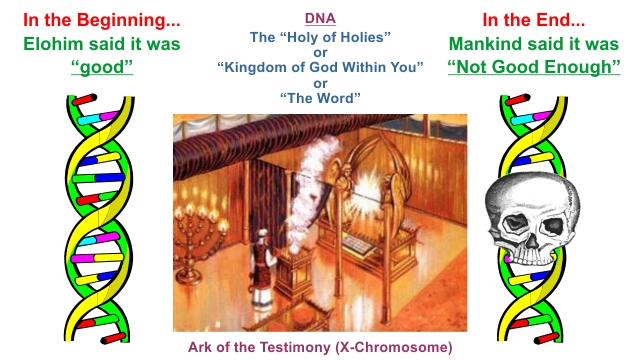 E-M215 (formerly E3b1a) and also haplogroups J1 and J2. For the purpose of this article, I will focus on the E-M123 haplogroup, that I believe is the Kohanim Levite branch of the original priesthood from the island of Kos (Now Dia) who had separated from the other Tribes of Israel at the time of the destruction of the Temple.
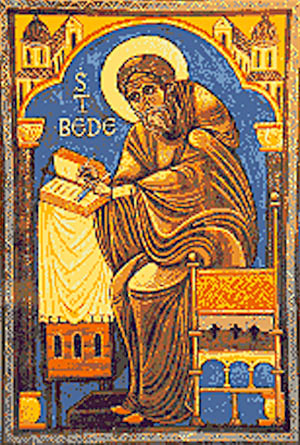 This is when the Kohanim Levites were absorbed or taken over by the Roman Empire under the leadership of Augustus Caesar in the 1st century. These events can now be tracked by historical accounts, artifacts and DNA. One of these accounts comes from one of the most famous Doctors of the Catholic Church and also the Father to English History, the Venerable Saint Bede (Beda). Bede had written on the Levites being connected to the Catholic Church in his book, “On Ezra and Nehemiah;” “Allegorically, the Levites represent those attached to the Catholic Church.” Hence, Bede is clearly stating that the Levites had become attached to the Catholic Church; I believe this happened when the Tribes of Israel were separated during the Exodus from their original homelands. This is why you can find the DNA of the Kohen Levite, which spread around the world in all the same cities where the Romans had conquered and rebuilt their empires.
This is also explained in several places in the bible, such as in the Book of Genesis, where the third son of Jacob is the founder of the Israelite Tribe of Levi. Hence, this would make Joseph the lawful founder of the Levites; for whom King David said, “None ought to carry the ark of God, but the Levites; for them hath the Lord chosen to carry the ark of God, and to minister unto him for ever.” Also, when Joshua led the Israelites into the land of Canaan, the Levites were the only Israelite tribe that received cities, but were not allowed to be landowners “because the Lord, the God of Israel Himself is their inheritance” (Deuteronomy 18:2). (Wikipedia) In the Book of Malachi, God explains why he chose the Levites to be his priests. This would make sense, since the high priests for judgment of the New Testament are the Levites. The root in Hebrew means “to join,” to “‘ bind ” (see Lui-than “snaky-monster “).
When the land of Israel was apportioned among the tribes in the days of Joshua, the Tribe of Levi, being chosen as priests, did not receive land (Joshua 13:33, (14:3). However, the tribe of Levi were given cities. Six cities were given to the tribe as refuge cities for all men of Israel, which were to be controlled by the Levites. Three of these cities were located on each side of the Jordan River. In addition, 42 other cities (and their respective open spaces), totaling 48 cities were given to the Tribe of Levi. (Numbers 35).
This is very important in understanding, that out of all the Tribes of Israel, it was only the Levites that received cities. Some of these cities I believe are Sicily and Venice. It is also important to understand, who were Levites in the bible, and who were not. For example, some of the most important biblical people were Moses and his brother Aaron, who were both Levites. The descendants of Levi, the son of Jacob. (LEW (1).] He had three sons: Gershon or Gershom, Kohath, and Merari (Gen. xlvi. 11 ; Exod. vi. 16: Numb. iii. 17; 1 Chron. vi. 10, 43). Moses and Aaron were the grandsons of Kohath, and the great grandsons of Levi (Exod. vi. 16, 18, •JO, 2G). Gershon, Kohath, and Merari all founded families, but a certain prominence attached to the Kohathites, from whom the leaders of Israel at the critical period of the departure from Egypt had sprung (Numb. iv. 1-40);
The descendants of Aaron, who was the first kohen gadol; high priest of Israel, who were designated as the priestly class, the kohanim. In Egypt, the Levites were the only tribe that remained committed to God. During the Exodus, the Levite tribes were particularly zealous in protecting the Mosaic law in the face of those worshipping the Golden Calf, which may have been a reason for their priestly status. As such, kohanim comprise a family dynasty (although people claiming to be kohanim have many haplogroups) within the tribe of Levi, and thus all kohanim are traditionally considered to be Levites, but not all Levites are kohanim. (Wikipedia)
The Levites had helped form the original Catholic Church and many of the first Levites had also assisted in the writing of the New Testament.
KOHANIM LEVITE DNA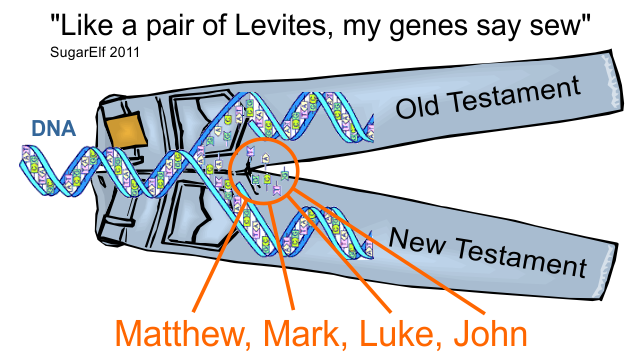
I’m a Kohen of Levite decent and I’m from the United States of America. My DNA was tested in 2011, which told me that I come from the Haplogroup of E1b1b1c; E-M123, which is found scattered widely in Europe, America, Greece, North Africa and the Middle East. You can see proof of my DNA test by clicking here if you like.
This haplogroup is quite common in many Semitic language communities, including among both Ashkenazi and Sephardic Jews, accounting for over 10% of all male lines (Semino 2004). Shen et al. (2004) found 10 out of 169 Israelis and Palestinians of various ancestry to be M123+ and M34+, with the highest level group being 4 out of 20 Israeli Jews of Libyan ancestry.
Semino et al. (2004) reports relatively high levels of 13% in the Albanian community of Cosenza, in Calabria. The ancient town is the seat of the Cosentian Academy, the second academy of philosophical and literary studies to be founded in the old Kingdom of Sicily (1511), and one of the oldest in Europe. There is a Kohanim Levite connection in Sicily, where E-M123 was found by Di Gaetano et al. (2008) to have 4.66% overall in their 236 person study of Sicily, and with higher levels in the east of the island. They found none in Trapani (33 people), Alcamo (24 people), and Cacamo (16 people), along the west of the north coast; 3.23% in San Ninfa (31 people), inland in the west; 3.57% in Sciacca (28 people) and Ragusa (28 people), along the south coast. Also, high levels in the east in Troina (10% of 30 people), Piazza Armerina (10.71% of 28 people), as well as near the Southwestern extreme facing Africa at Mazaro de Vallo (11.11% of 18 people). (Wikipedia)
After the fall of the Western Roman Empire, Troin was a Byzantine stronghold, and during the Islamic period, the religious and moral capital of the Greek and Christian orthodox part of Sicily; Roger I of Sicily had in its castle (which he captured in 1061) also a start base of his conquest of the island. (Wikipedia)
A notably high regional frequency for E-M123 was also found in Oman, where it is apparently the dominant clade of E-M35. The reason a high percentage of Kohanim DNA is found here, is because the Parthian Empire was friendly with the Greeks, and especially under the Arsacid dynasties. An inscription from this time period shows Heracles and the inscription, ΒΑΣΙΛΕΩΣ ΜΕΓΑΛΟΥ ΑΡΣΑΚΟΥ ΦΙΛΕΛΛΗΝΟΣ; “Great King Arsaces, friend of Greeks“. (Wikipedia) They always had a large Jewish community here in the Parthian Empire, and I assume many Kohanim Levites as well. Later the Parthians would also develop a friendly relationship with Rome in the time of Augustus, that had thrived here for centuries before the Persians had conquered the empire in the 7th century A.D. under the banner of Islam that had taken control of these lands.
Here is what FamilyTreeDNA has to say about these haplogroups:
The E haplogroup has been observed in all Jewish groups world-wide. One of its major subclades, E1b1b (formerly E3b) is considered to be the 2nd most prevalent haplogroup among the Jewish population.
According to one major paper, Contrasting patterns of Y chromosome variation in Ashkenazi Jewish and host non-Jewish European populations E-M35, which defines the E1b1b1 (formerly E3b1) haplogroup, is considered to be the second highest, next to J, for “Founding Jewish Lineages” in Europe. It is found in moderate amounts in all Jewish populations, from Ashkenazi, Sephardic, Kurdish, Yemen, Samaritan and even among Djerba Jewish groups.
The Samaritan Kohanim belong to haplogroup E1b1b1a (formerly known as E3b1a).
Samaritans:
Their findings reported on four family lineages among the Samaritans: the Tsdaka family (tradition: tribe of Menasseh), the Joshua-Marhiv and Danfi families (tradition: tribe of Ephraim), and the Cohen family (tradition: tribe of Levi). All Samaritan families were found in haplogroups J1 and J2, except the Cohen family which was found in haplogroup E3b1a-M78.[7] This article predated the E3b1a subclades based on the research of Cruciani, et al.[8] The Samaritan Cohen family were Levites until the previous Cohen family died out around 1700, so the fact that they don’t share CMH is expected. These findings may offer more proof that E1b1 was one of the founding lineages of the Levites.
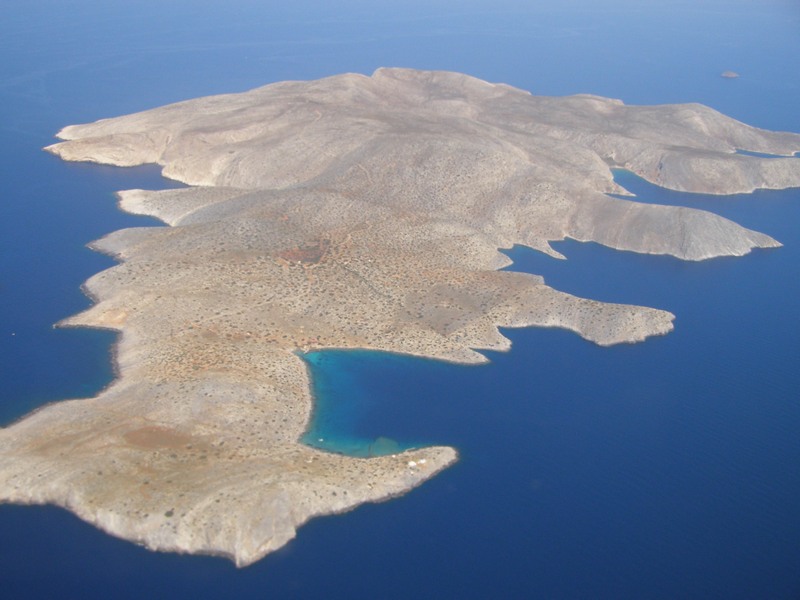 THE ANCIENT ISLAND OF THE KOHEN
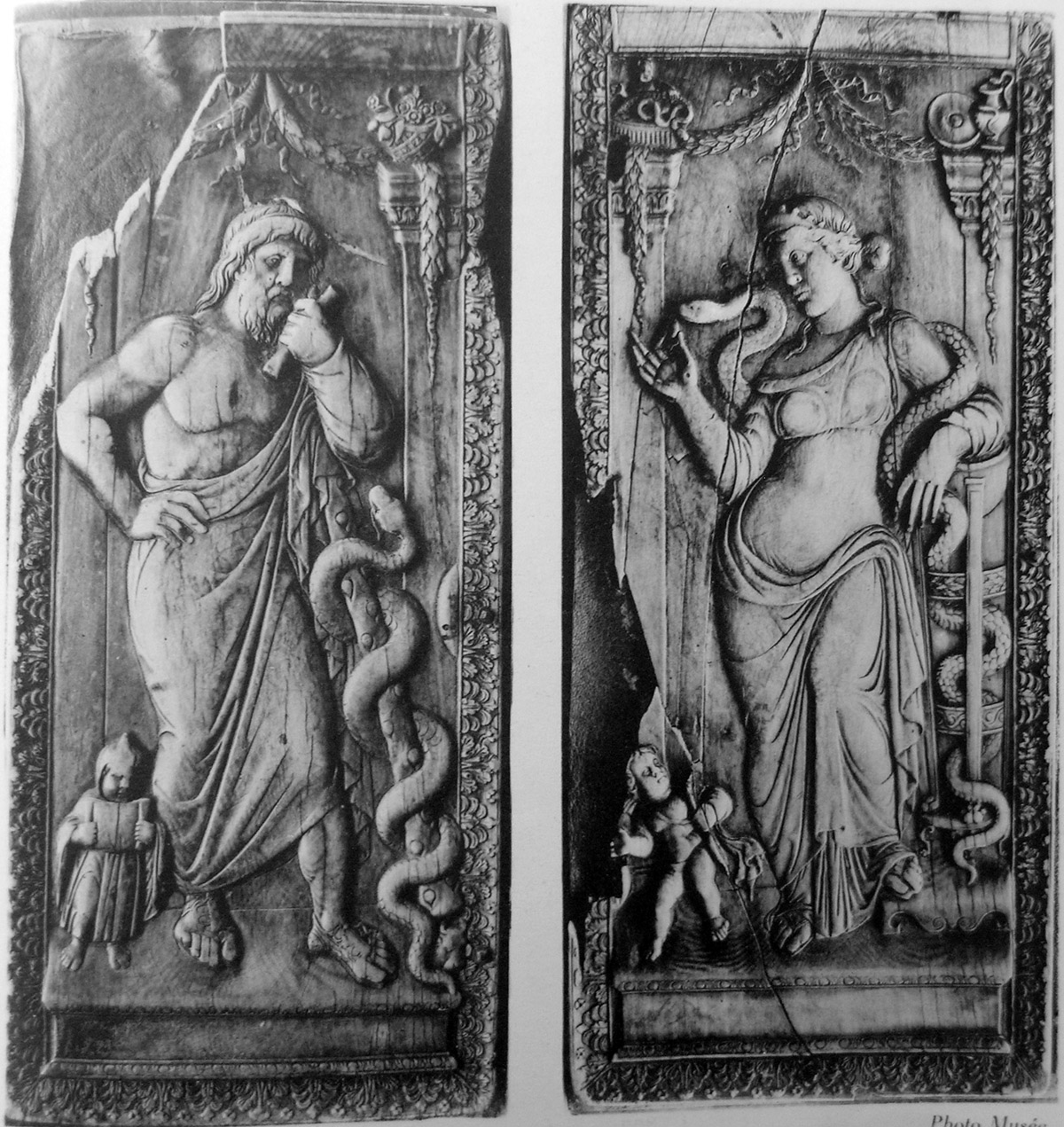
The name Kohen is the Hebrew spelling of the original Greek word, which is also the current English spelling of “Koan or Coan.” The name simply means ‘priest’, and Kohanim is plural. Hence, before they were called the Kohanim, they were simply known for centuries as the “Koans of Kos.” Some of the most famous people in ancient history, such as the Father of Medicine, Hippocrates, and the Greco-Egyptian Pharaoh, Ptolemy II, come from the family of the Kohanim.
The key to understanding the story of the Kohanim Levites, is to study where they had originally come from. To get up to speed on who the Kohanim were, and where they had lived for many centuries, I suggest you read my previous articles, The Origins of the Kohen Priesthood, Dragon Isle: The Kohen of the Lost Island of Dia, The Royal Purple Silk Prostitute, and The Lost Priesthood of the Kohen. To give you a quick brief summary, they are an ancient family who originally hail from a small island located in the Mediterranean Sea just 7 miles across from Crete, and that today is called Dia. Now the island is completely uninhabited, but at one time, it was one of the most famous and busy islands in all the world. Back then it was known as “Kos (Cos, Coos, Ceus, Letos, Zia etc.)”, and the name was changed several times over history, with the most recent to Dia well after the Romans had conquered or had absorbed their kingdom of the Kohanim Levites into the Republic prior to the 1st century. It was simply known as Kos for approximately 1,000 years from around 550 B.C. through 500 A.D. or later.
KOHEN DNA CAME TO CRETE AND DIA (KOS) FROM THE EAST, IN ETHIOPIA AND EGYPT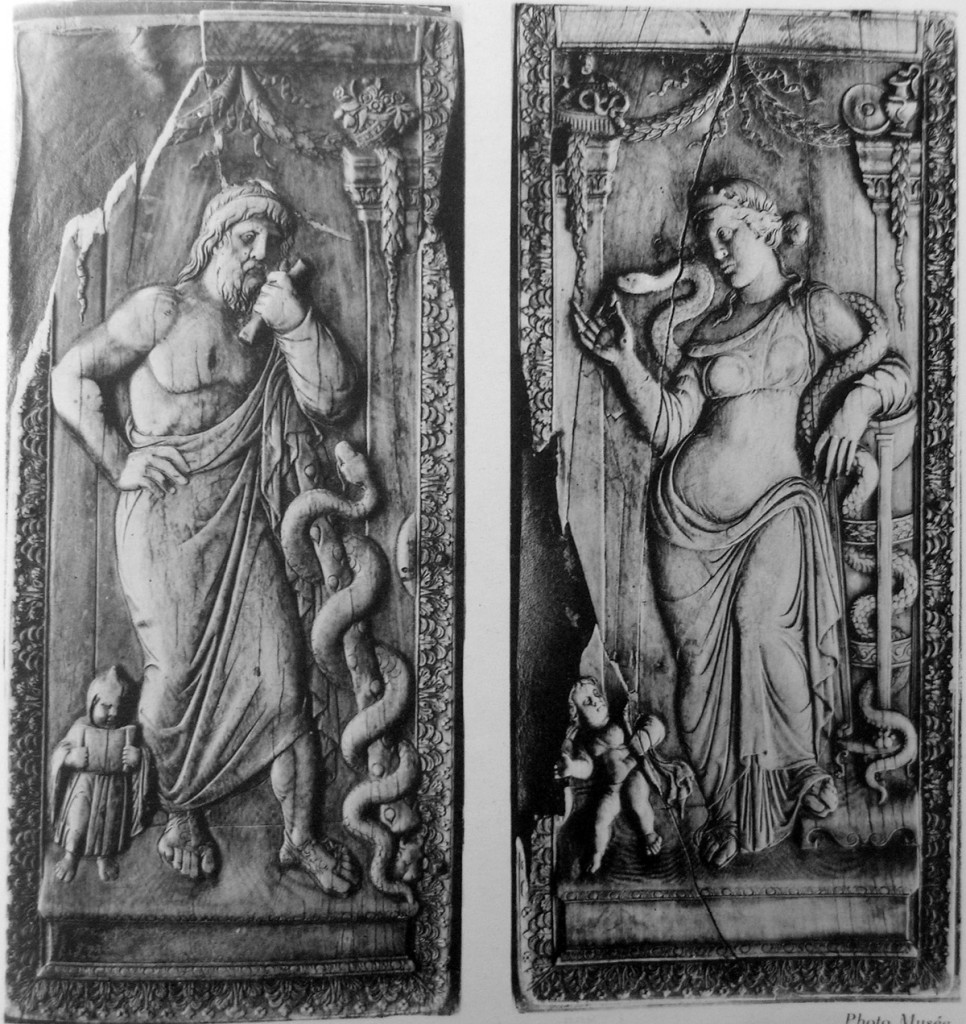
It is likely that this DNA haplogroup had migrated to the island of Dia (Kos) via Egypt, and previously Ethiopia where this DNA can still be found. There are many stories told of the Priests known as the Curetes. According to Diodorus Siculus, the Curetes lived in the time of Rhea; Herodotus and Strabo both had said that the Curetes were originally Phoenicians who accompanied Cadmus (Kadmos or Kadmos) out of Phoenicia. Strabo had written, that these are the names of the various groups known as the Curetes (Kuretes), Corybantes, Dactyls, Cabiri, and Telchines, which are names that are often used interchangeably with one another. I had written about the Telchines and the island of Crete in my article, Crete: The Lost Island of Atlantis;
Herodotus had said that the Curetes had come to Crete with the Phoenician, Prince Cadmus. In Latin, Crete is called “Cappadocia or Cappadocian”; who were known as a large tribe of the Magi, and are also called fire-kindlers. Herodotus tells us that the name of the Cappadocians was applied to them by the Persians, while the Greeks had simply called them “Syrians” or “White Syrians.” The Latin name of the Cappadocians were known as “the men of Caphtor”, and who we can call today, “the men of Crete.”
This DNA haplogroup is also been said to be Phoenician, and even on my DNA certificate, it says that is one of my tribes. The word Cadmus, in Hebrew signifies “One who came from the East.” He was a Phoenician Prince who was the founder of the Ancient City of Thebes, and the first to introduce letters to the Greeks. Hence, the Curetes would be the descendants of the Ancient Priesthood of Thebes who were of a distinct race called the Phoenicians who had come from the East into the West, to the island of Crete and Dia (Kos)where they would continue their religious rites and ceremonies under new Gods and Goddesses imported with them from Egypt.
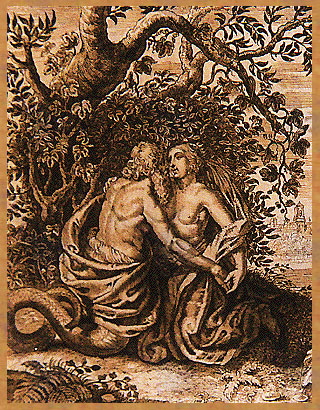 In other history, these people were also known as the Boetians, Cadmeans, Dorians and Spartans. In the Talmud, the Samaritans are called Cutheans (Hebrew: כותים, Kutim). The Cutheans were from ‘Cuthah’, which was one of several cities from which people were brought to Samaria. A colony of Cutheans (Samaritans) had settled in Crete, whose priests were the ancient Curetes, and in the bible, the Kohanim Levites. As I stated above, the island we know of as Crete today, was called Keftiu and Kaftor in the Ancient Egyptian texts, or Caphtor in the Old Testament.
As you can see, the many stories and various names can make this research very confusing and unintelligible for some people. But if you are a fellow Kohen who is actually from the same DNA haplogroup, it should not be that difficult because it is built within your blood via Gnosis. However, for the sake of everyone and for this article, I will mainly focus on the Kohanim Levites from the island of Dia (Kos).
THE KOHEN OF DIA (KOS) ARE TAKEN OVER BY ROME 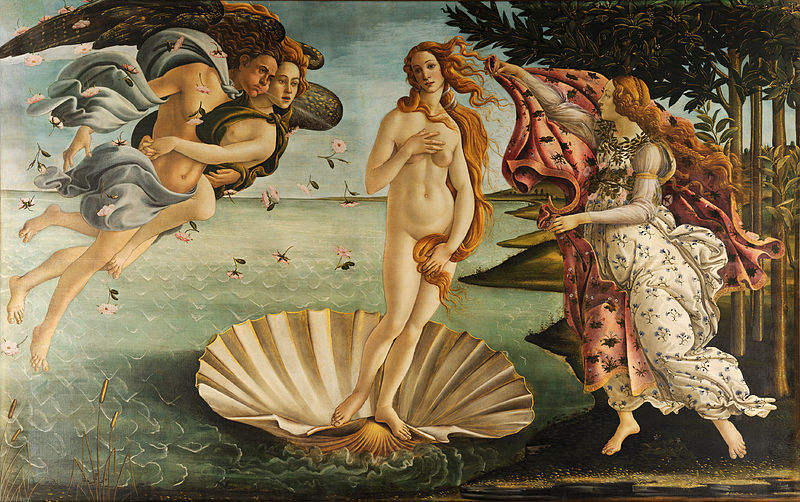 AND GIVEN SPECIAL CITIZEN STATUS IN THE REPUBLIC
This new name of the island of Dia is derived from the Roman Goddess, Diana which is modeled after the Goddess named Aphrodite. They are all deviations of the Goddess Venus who embodies love, sex, seduction, beauty, and the goddess of prostitutes. The name Venus is derived from venus, meaning “sexual love” and “sexual desire.” The key in understanding the significance of the name change, is because at the time when Rome had conquered the Kohen of Kos, Augustus Caesar had taken their chief ornament of Venus rising from the sea from the island, to Rome. In doing so, he had given the Kohanim Levites special citizen status in the Roman Empire. This is also mentioned in the time of Emperor Claudius, who in 53 A.D. granted the Tribe of the Kohanim Levites immunity from taxes.
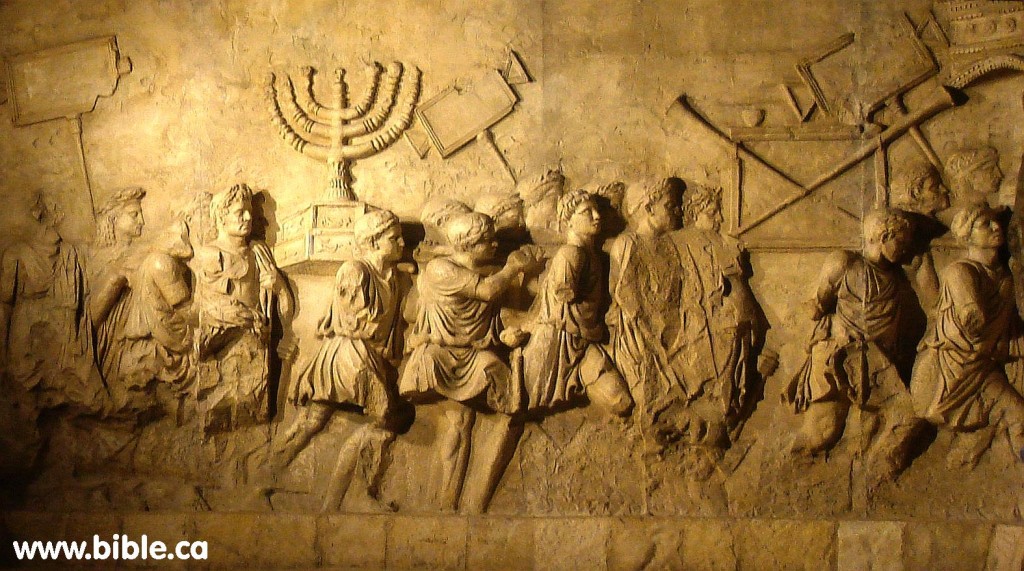
These events with Rome are paramount in tracking this family and their DNA after they had abandoned the Island of Dia (Kos). This is the exact reason why their DNA can be found widely around the world, and often near Roman settlements. What happened, is after they were conquered by the Romans around the 1st century, thereafter they were absorbed into various sections of the Roman Republic because of their talents and extreme wealth. Not only were they the 1st people in history given special tax-free service in Rome, but their priesthood was chosen as the only priesthood that would be accepted into Rome; the Kohanim would play a large role in forming the Roman Priesthood and government. These facts can be proved by both historical accounts that I have listed in many of my previous articles, and now also by DNA science.
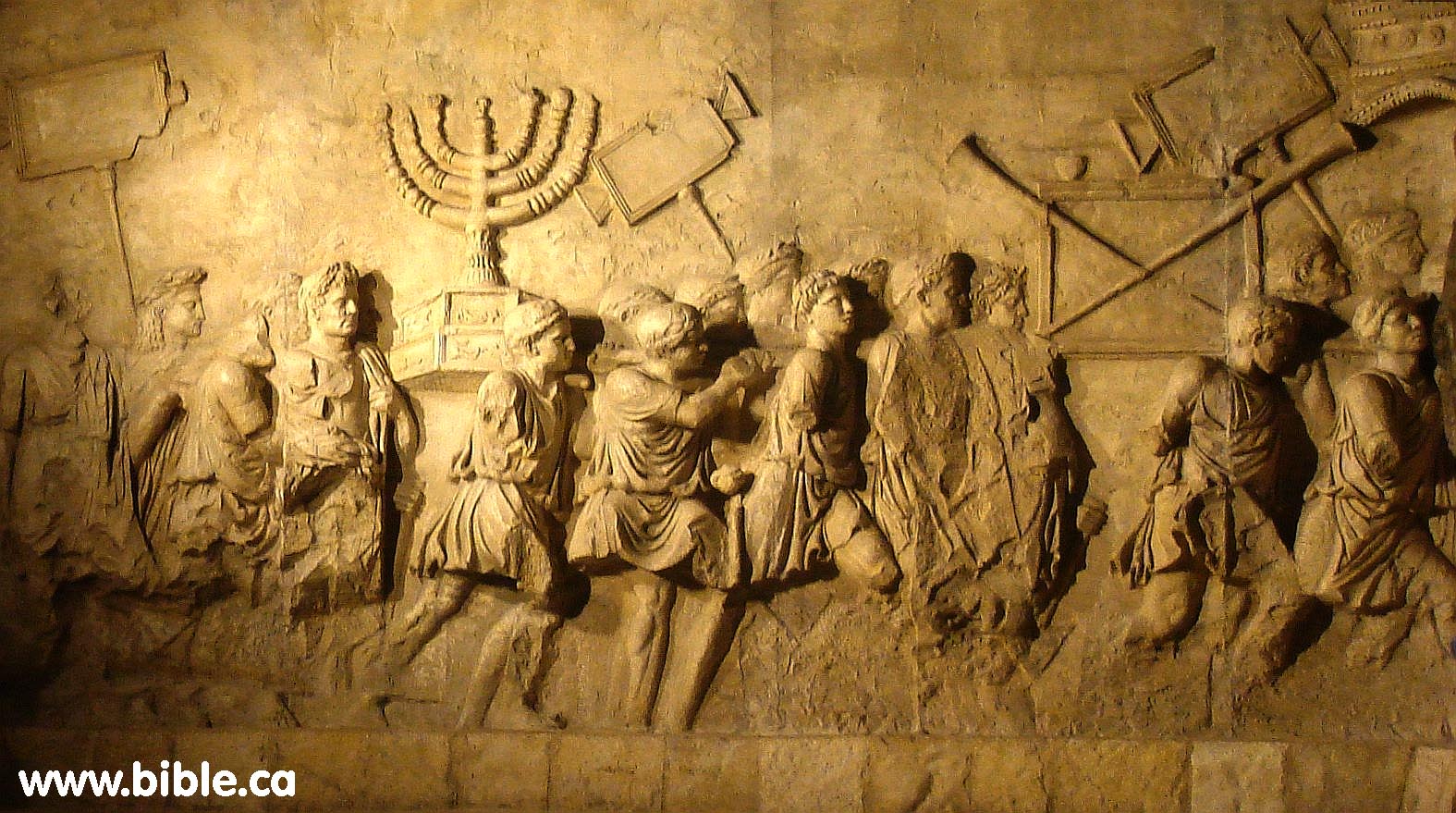
 THE EXODUS OF THE KOHEN FROM DIA AND THE DNA THEY LEFT BEHIND
Before the Kohanim were taken over or absorbed into Rome, they were well-known as an educated people who were in high demand around the world. Their arts and inventions were needed by various government officials, such as in Athens and Rhodes, so they would often travel and be hired to handle various tasks set forth by their employers. Examples of these Kohen would be Prodicus (Greek: Πρόδικος, Pródikos; c. 465 BC – c. 395 BC), a Greek philosopher, who was part of the first generation of Sophists who went to Athens as an ambassador from Dia 9Kos); he became well-known as a speaker and a teacher. There is Philitas (340 – 285 BC), who was a scholar and poet during the early Hellenistic period of ancient Greece, and in the second half of the 4th century BC was appointed tutor to the heir to the throne, Ptolemy I of Ptolemaic Egypt. In addition, another Kohen of Kos who left the island and made his influence in another country is Erasistratus of Kos, who was a Greek anatomist and royal physician under Seleucus I Nicator of Syria.
So, a whole 300 years before they were absorbed by Rome, they were already in high demand and traveling around the world to places such as Athens, and the royal courts of Egypt and Syria. This is why it is rather difficult to properly track the DNA of the original Samaritan Kohen, and why it is imperative, that in order to track this tribe, we need to research their original homelands before, and also right after the Exodus from their tiny island of Dia (Kos). This island of Dia (Kos) is now completely uninhabited, so there is no one to test there for DNA. Hence, they had moved from Dia (Kos) a long time ago, and most likely away from Crete as well, because their DNA there is the lowest in all of Greece.
Many of these facts are found in historical accounts, that can also be compared to their specific DNA Haplogroups that were found in the places they had went during their golden purple years and also after leaving their homeland of Dia (Kos). Places we can study, such as Rhodes and Dia (Kos) which were the great Dorian islands, and also Thessaly. In Italy, they can be found in cities such as Rome, Sicily and Venice, and also throughout Europe in places such as Ireland, Britain, England, Scotland, and many other countries. Their DNA footprints in these locations is small, but their influence has always been huge.
In Greece, the most dominant DNA haplogroup is E1b1 and is found all around the Mediterranean Sea. I had written about this fact in my article, Greek YDNA haplogroups. This is the reason that in recent DNA tests, 1038 samples confirms that the Greeks tested were;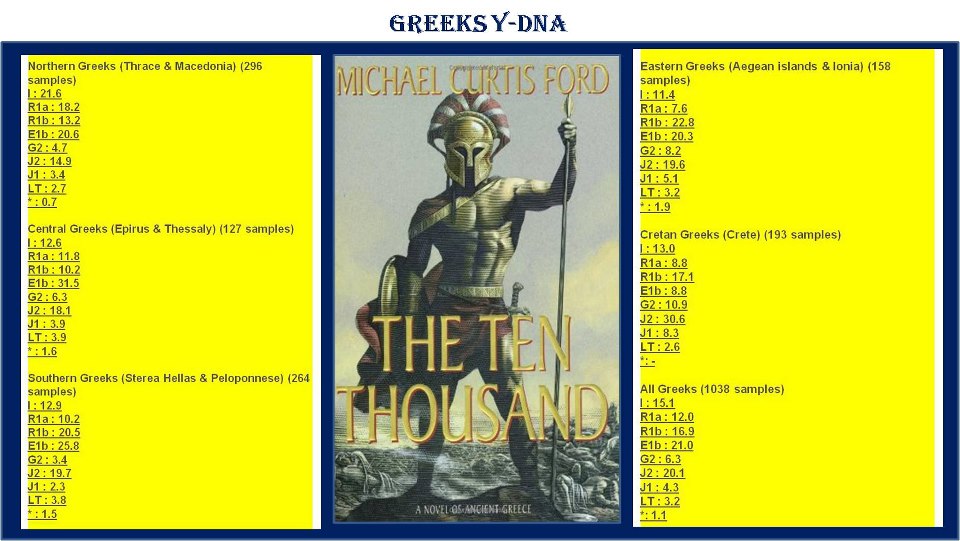
The overall DNA results for all of Greece were as follows:
I : 15.1
R1a : 12.0
R1b : 16.9
E1b : 21.0
G2 : 6.3
J2 : 20.1
J1 : 4.3
LT : 3.2
*: 1.1
The highest DNA Haplogroup was E1b1b, and it was found in high concentrations in cities such as Thessaly @ 31.5%, and also at Hellas and Ionia. It is at these same locations, where science is confirming this haplogroup, along with history, which also confirms that the Kohanim were a huge influence in these exact same places. For example, there have been text found of several decrees of the Kohen from Thessaly, where the national heroes of Dia (Kos), the Temple Asklepiadae, represent Thessaly.
Greek mythology in regards to the Dorians also connects these two places with the Kohen priesthood. There are connections to Ionia and the Kohen, because as I mentioned above, the Kohen were also known as a tribe of the Dorians, and there was a well-known Dorian and Boetian migration and colonization of all these same areas. These events are explained by Herodotus;
Herodotos tells us that Kos and the adjacent islands were colonized from Epidauros, and in this way the old Dorian element was strengthened. The sterner features of the Dorian character were, however, mollified in Kos. The discipline (dyaryi;) of Sparta and Crete is not found there, though the population of the island was purely Dorian, and was divided into the three Dorian tribes, the Dymanes, Hylleis, and Pamphyli. Six of the cities in this region formed a religious league, the Doric Hexapolis. They were, besides Kos, Lindos, Ialysos, Kamiros, Knidos, and Halikarnassos. These states met at the temple of Apollo on the Triopian promontory, to take part in the worship of the god and also in games. Later on Halikarnassos it was expelled, and the Hexapolis became a Pentapolis.
Now with the help of science, we can find DNA haplogroups that place the Dorians and Samaritan Kohen in all these cities in Greece that I had mentioned above, and also in locations that connect them with Rome. We can also verify that they were given special tax and citizen status in Rome, and also possibly cities such as Venice and Sicily where we can also find their DNA at about 6.6%. These two places have seen a strong cultural influence of these people all throughout their governments and arts that can be witnessed to this day. The Venetians would have a strong influence in the area of the Mediterranean Sea, such as when the Venetians had first occupied the island of Crete in 1205 A.D. and took over complete rule of the island in 1212. They had exposed the Greek population there to a new Renaissance and learning like they haven’t seen in centuries. They would rule Crete for approximately 500 years, until 1715 when the Ottomans would invade and take the island jewel from the Venetians.
 THE KOHANIM LEVITES AND THE CATHOLIC CHURCH
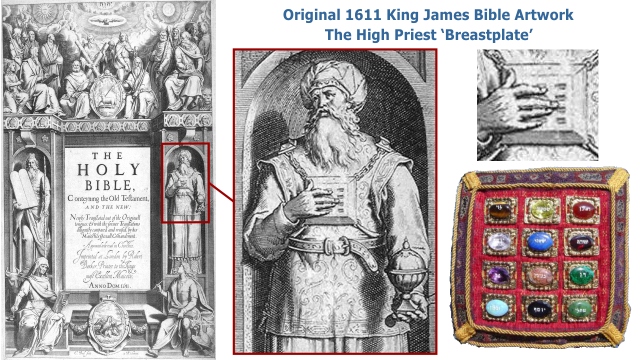
As I mentioned above, the Father of English History and Doctor of the Church, Saint Bede (Beda) had written on Ezra and Nehemiah; “Allegorically, the Levites represent those attached to the Catholic Church.” This fact is imperative in understanding who the Kohanim Levites were, and where they had went. Crucial information, that helps substantiate the history at approximately the same time the Romans had either taken over or absorbed the Kohen kingdom in Dia (Kos) just 7 miles across the sea from Crete. Their special tax status and the historical accounts about the many Kohen Priests from Dia (Kos), helps verify that these are the true Kohanim Levites. We also now have DNA to help match the many places they had migrated to. A science we can now use to match the DNA haplogroup of the many descendants that can be found in these same exact received cities as described in Deuteronomy 18:2, where they had received cities “because the Lord the God of Israel Himself is their inheritance”
My family had originally come to America from Canada, and before they migrated to New France, they had lived in Old France in a city called Paris. Many of them were Saints, Fathers and theologians. One of my ancestors, Noel Beda (Bede) was principal of the College of Montaign there at Paris in 1502, and syndic of the faculty of theology about 1520. He had fiercely opposed the divorce of the Norman king Henry VIII of England, and he had often let his voice be heard in Paris about his disapproval of the divorce. In fact, he upset the king so much, that he was arrested in the year 1530 and then banished to Mont Saint Michel, where he died the following year. Soon thereafter, the Beda name was corrupted and later became Bedard, whose family in the mid 1600’s was part of the first migrants to New France, now known as Canada. This is how some of the Kohen DNA would migrate to North America, and eventually my immediate family to the United States where I now live in the state of California. Today, there are estimated to be 300,000 Levites living now in the United States and another 25,000 in Canada.
This Noel Beda from Paris, I believe to be a direct descendant of Saint Beda who had actually lived and taught in Paris as well. In fact, I believe he had helped found the school there. Saint Bede had written many books that would indicate he was a Levite. Books such as Bede: On the Tabernacle, and Bede: On the Temple, where he was the first Kohen Christian and Catholic to put in writing the relationship of the Old Testament with the Tabernacle, and Solomon’s Temple with the New Testament, in which Solomon’s Temple would be built by living stones composed of both Jews and Gentiles. In the Book of Numbers, the Levites were charged with ministering to the Kohanim (priests) and keeping watch over the Tabernacle.(Wikipedia) These traditions have always been passed from father to son, and this is why Bede was such an authority to be chosen by the priesthood to be the voice of their Brotherhood.
This is why I believe based on Kohanim Levites, that they were the priests of both the Old Testament and the chosen Hebrew priesthood of Rome under Augustus Caesar of the New Testament and the New Covenant. The first Pontifex Maximus or Pope of this 6th Age was Augustus Caesar, who was also considered their anointed messiah because he had saved them and absorbed their priesthood into the Roman religion and government, where their influences can still be seen to this very day. A new law under Rome, in which both Jews and Gentiles would be accepted into the Universal Brotherhood, based on merit and work they had put in for this same said Brotherhood who would help establish the institution we know of today as the “Catholic Church.”
SOURCES:
All Open Source Linked to in Yellow
IMAGES:
Courtesy of Uncle Mikey
Moe is the founder of GnosticWarrior.com. He is a father, husband, author, martial arts black belt, and an expert in Gnosticism, the occult, and esotericism.
by Moe | Oct 13, 2013 | Gods & Goddesses, History of the Brotherhood, Uncategorized
The city of Knossos on the island of Crete, Greece has a deep history in helping create modern civilization, that many people are unaware of. The history I speak of goes back to approximately 1600 B.C. and had flourished until approximately 70 A.D. This is the time when I believe, that their old culture and religion was destroyed in the great Judean rebellion and siege of Jerusalem by the new comers on the world scene and who happened to be their Italian cousins, the Romans.
The destruction of the ancient Palace Temple (the Second Temple), the royal archives, and the entire city of Knossos had come at the orders of Roman Emperor, Nero who had sent Vespasian and his son Titus to Judea in order to subdue the Jewish nation in a massive invasion of the Holy Island of Crete in the year 67 A.D. Titus had served under his father on the island of Crete in the kingdom of Judaea (Greco-Egypt) during the First Jewish-Roman War. For winning this historic holy battle for the Romans, Titus would later become known as Saint Titus, Bishop of Crete and companion to the Apostle Paul.
The greatest of ancient Greek epic poets, Homer had written in his most famous works, the Iliad and the Odyssey, that the city of Knossos is mentioned along with Phaestos as having magnificent temples. But it is the city of Knossos that he clearly identifies as the most dominant city of a rich and populous land. Homer had called it, “Broad Knossos,” in which he tells us of the maze. In later times, archeologist, Sir Arthur Evans in the late 19th century would excavate the Temple at Knossos and change the name to the Minoans; he called the maze, the Labyrinth of the Minotaur Bull. Homer in the Odyssey sang: “One of the great islands of the world In midsea, in the wine-dark sea, is Crete, spacious and rich and populous.”(Hom. Od. XIX, 172ff). He also mentions, that rituals were held for the goddess Ilythyia in the cave of Amnisos.
Homer describes this period in history as an age that is called the “prehistoric period of Europe.” The Ages of the Old Law under the Old Testament before those of the Roman Catholic Church and the New Testament, in which the new law and religious customs of the 6th Age were born under the leadership of the first Roman Pope, Augustus Caesar. Hence, the law of Caesar. King Lucius, 2nd-century King of the Britons traditionally credited with introducing Christianity into Britain has said, “superior papal authority and dominion is derived from the law of the Caesars.”
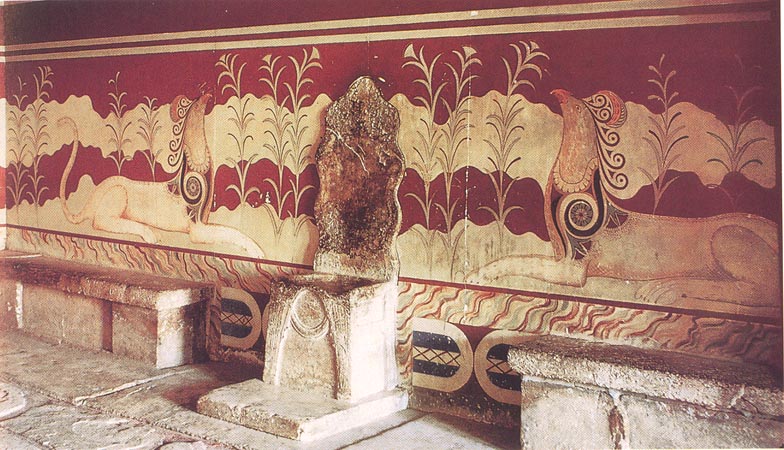 Both the Iliad and the Odyssey were highly venerated ancient books by the Greeks that became, what I believe are the historical blue prints that would help shape the writings of the bible. If you study this history that runs parallel to biblical history, you will discover that the city and palaces of Knossos on Crete appear to be the main administration centers for the Jews in the bible. This same location of the great palace of Knossos may actually be allegorically known in the bible as the “Second Temple of Solomon”; the city of Knossos would be known as the “City of David,”AKA the “City of Jerusalem” that was eventually destroyed by the Romans who were led by the Emperor Titus. This makes perfect reasonable sense, since both historical evidence and archeological science verifies the city of Knossos was the birthplace, to not only modern civilization, but it was also the home of many Cretan Kings, royal Jewish families and the first Fathers and Saints of the Catholic Church.
I have found connections that also tie ancient Crete to ancient Judea and the Judaeans. The Cretans were called back then, the ‘Idaeans’ and according to Homer, one of their rulers was known as ‘Idomensus,’ the grandson of the ruler of Knossos. Idomensus was said to have fought side by side with the Achaeans against the Trojans in the Trojan War. The children of Idomensus were, whom Homer had called the royal and warlike ‘Idomen,‘ and who we would know of today as the Judeans (Idaeans, Tribe of Judah).
They were named after the mountain on Crete called Mount Ida where their God Zeus was hidden in a cave by his mother, 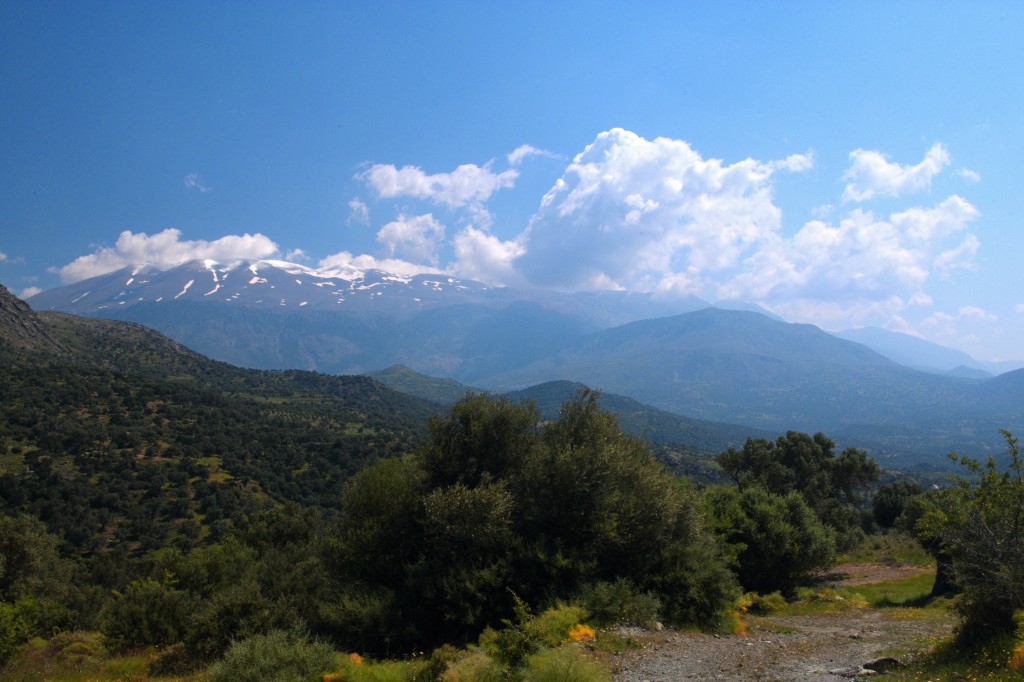 the Greek Titaness Rhea who then placed the infant Zeus in the care of the priesthood of the Curetes (Kuretes). These priests Strabo had written, were also known as the Corybantes, Dactyls, Cabiri, and Telchines which are names that are often used interchangeably with one another. This cave of Zeus sits just above the Plain of Nida on Mount Ida, to the southwest of Knossos. The mother of Zeus was also known in Latin as “Mater Idaea (Idaean Mother).” The name Mount Ida is where the Tribe of Judah had received their name, “the ‘Idaeans,” which is just an earlier spelling of the Judaeans. The reason for this spelling, is because at the time the letter ‘j’ was simply not used.
The Tribe of Judah is where we get the word Jew which is a derivative of the word Judah, referring to a descendant of the Kingdom of Judah, and a Jew was a word that the Romans had used in propaganda to apply to the followers of the old religions and pagan rites of their ancestors that had conflicted with the state approved Roman religion. The Biblical Judah (in Hebrew: Yehuda) is the original name of the Tribe of Judah, which is traditionally symbolized by a lion. (Wikipedia) In a previous article I had written, The First Jews of Crete, I had detailed some of my research into the Crete, Judaea and Jerusalem connections and where many of the world’s greatest historians call these people from Crete, the Idaeans.
Roman Senator and historian, Cornelius Tacitus (110 A.D.) had written that the Jews often traveled to Crete to celebrate the festival of Pentecost in Jerusalem and that they eventually were exiled from the island when Saturn was driven from his throne by the violence of Jupiter. The Cretans are called Idaeans, and then Judieans who eventually became fugitives from the island and who then settled on the nearest coast of Africa in the remotest corner of Libya. In, The Works of Tacitus, he explains the relationship with Crete, the Jewish people and the exodus from the island of Crete to the coast of Africa in Libya.
The Jews, we are told, escaping from the island of Crete, at the time when Saturn was driven from his throne by the violence of Jupiter, settled in the extreme parts of Libya. Their name is adduced as – a proof. Ida, it is alleged, is a well-known mountain in Crete: the neighboring Idaeans, by an addition to the name to adapt it to the language of barbarians, are ordinarily called Judieans. Some say that the population, overflowing throughout Egypt, in the reign of Isis, was relieved by emigration into the neighboring countries, under the conduct of Hierosolymus and Juda. Many state that they are the progeny of the Ethiopians) who were impelled by fear and detestation to change their abode in the reign of King Cepheus.
The Umbrian connection of Royal Republic of Rome to the Royal Jewish Families of Crete
The reason that I stated in the first paragraph that the Romans were cousins to the Greek Jews from Crete, is because for hundreds of years before the beginning of the Roman Republic Italy was populated by a group of these people. One of these tribes was known as the Umbrians (AKA – Ombrii, Gomerians, Cimmerians, Cymry, Kymry, Cumri, Cumbri, Cimbri, Humbri, and the Celtic people) who had settled in the Tuscany area of Italy, approximately 1,500-500 years before the building of Rome. The Umbrians who historians, Dionysius, Pliny, Florus, and others have written that they were the most ancient people of Italy. Pliny had said “the Greeks had called them the people of the thunderstorm because they “survived the deluge.” This would be the same tribe that had descended from the royal Jewish families of Crete.
Based on various key marriages of the Umbrians in Rome, some of these chosen Jewish families had sons who had risen to the highest honors in the Roman state. Some of whom would become Rome’s first emperors and who we can easily trace their ancestors to the island of Crete. One of these Italian Umbrians was named Nerva (Latin: Marcus Cocceius Nerva Caesar Augustus; 8 November, 30 AD – 27 January, 98 AD), who became the thirteenth Roman Emperor from 96 to 98. Emperor Nerva was born at Narnia, in Umbria, A.D. 27 according to Eutropius (8, 1), or A.D. 32 according to Dio Cassius (68, 4) and he had family who had come from Crete. Another highly venerated Roman Emperor with connection to the Umbrians and family ties to Crete, would happen to be the same man who would lead the destruction of Jerusalem and the Second Temple on Crete. His name I mentioned above, Roman Emperor Titus who would later become a Saint in the Church.
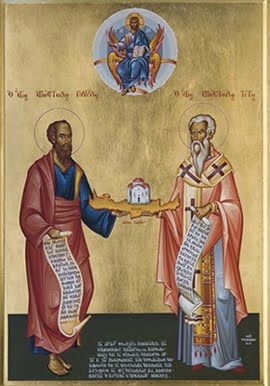
Here is an old image below of the church companions, Saint Paul and Saint Titus holding the Holy See of Crete in their hands, symbolizing their dual governorship of this region via the Holy Roman and Byzantine Empires.
The grandmother of Titus was Vespasia Polla (also known as Vespasia Pollia, born c. 15 BC, fl 1st century AD) who was a descendant of the Cretans through the Umbrians of Italy. Like Emperor Nerva, she was also from the town of Narnia. Polla’s husband was named Titus Flavius Sabinus and he was a customs official and banker in the province of Asia, where he was honored with statues dedicated “To an Honest Tax-gatherer.” They were the mother and father of the Roman emperor Vespasian, and grandparents to the emperor Domitian. (Wikipedia)
These facts are just the beginning of the strong connections between early Rome and ancient Crete.
Polla’s eldest son was named, Titus Flavius T. f. T. n. Sabinus (AD 8–20 December 69 AD). He served as a legate under Aulus Plautius in Britain, along with his brother, Vespasian. He afterwards governed Moesia for seven years. Her youngest son, Vespasian had served as tribunus militum in Thrace, and was quaestor in Crete and Cyrene. A quaestor was a type of public official in the “cursus honorum” system who supervised the financial affairs of the state and conducted audits. In other words, he collected tribute in the form of taxes from his cousins for the Roman Empire. (Wikipedia)
In addition to these Jewish ties, the grandson of Vespasia Polla, Saint Titus had also had a controversial relationship with the Jewish queen Berenice. Berenice was a member of the Herodian Dynasty that ruled the Roman province of Judaea from the island of Crete between 39 BC and 92 AD. As I mentioned above, Crete was part of Judaea, and based on archaeological evidence and many historians, it was also home to the main city or cities that had governed this entire region with their Navy. Berenice was the daughter of King Herod Agrippa I and a sister of King Herod Agrippa II.
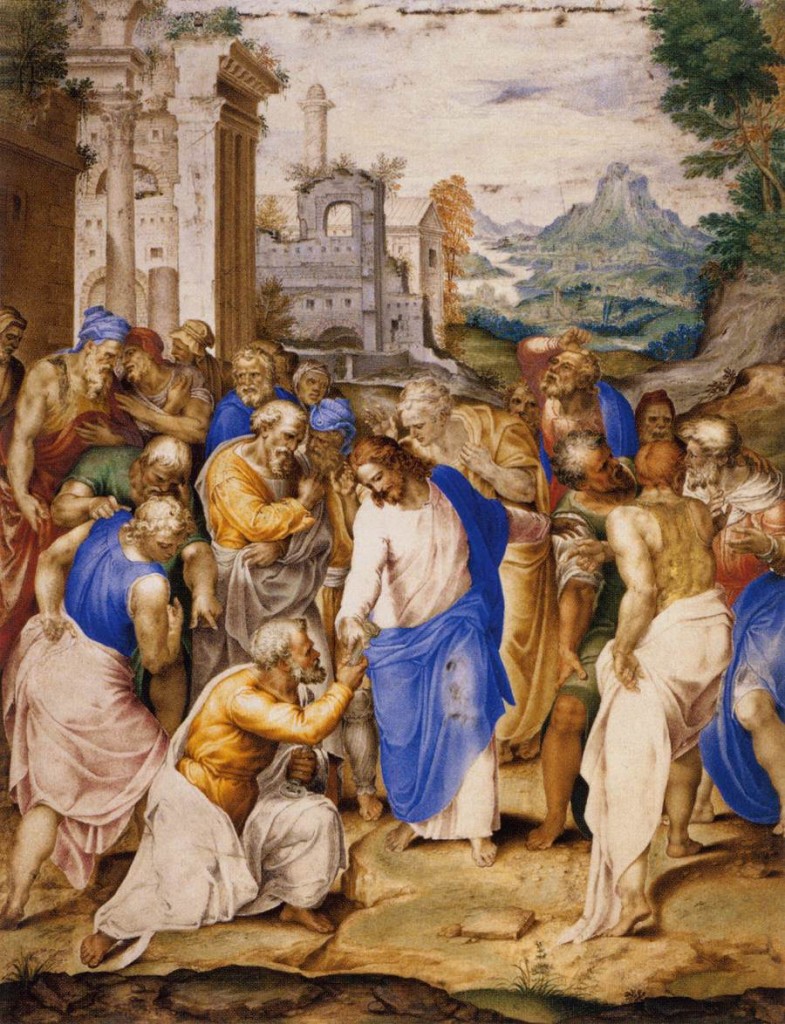 Berenice was also a client ruler of the parts of the Roman Empire, which is said to be modern-day Syria. The family court of Berenice was at Caesarea in Cappadocia and the city was named in honor of Augustus Caesar. Cappadocia is Latin for Crete, and most history surrounding the city of Augustus, Caesarea will often state that this city is in the province of Cappadocia. Caesarea is the precise location or near where it is written Saint Longinus, the Roman soldier pierced Jesus Christ in his side with a lance, the “Holy Lance.” Saint Longinus was said to have been baptized by the apostles of Crete, where he then became a monk who had converted many people to Christianity on the island, and he was eventually martyred under Octavius Augustus Caesar.
According to the Acts of the Apostles, Caesarea was first introduced to Christianity when Peter the apostle baptized Cornelius the Centurion, his household, and his soldiers. (Wikipedia) It is also the birthplace of Saint Basil the Elder and the grandmother of Saint Basil the Great, Saint Macrina the Elder and St. Basil the Great, Bishop of Caesarea and Doctor of the Church was born and served the church in Crete.
Caesarea from this point forward was the seat of the Roman prefect and “administrative capital” of the region beginning in 6 A.D. In the Acts of the Apostles, records that during this time, in 60, Paul of Tarsus appeared before this family court at Caesarea. (Wikipedia) Paul or Saul of Tarsus in no other than Paul the Apostle or Saint Paul who had lived on the beautiful island of Crete for two years. Paul is considered one of the most important apostles of our age and he had also founded several churches in Asia Minor and Europe.
My research shows that the main battle in this war was fought on and/or surrounding this very island. It was after the destruction of the Second Temple and Palaces in 70 A.D., that some of the Jewish Cretan kings and families of ancient Greece would become tributaries to Rome where they would still maintain part of their royal status, but more along the lines of Dukes and Templars from this point forward. With this new structure of government, this city and their plan had rose again into a much greater power than before and that still lasts to this very day.
After all, at the time, there was not one place in the world that had so many Greek Jews and royal Jewish families, as there was on this island of Crete. The 1st century Jewish-Roman Historian, Flavius Josephus had married a woman from a royal family on Crete who became his 4th wife and bore him two sons. Roman Emperor Titus would Siege Jerusalem and then destroy the Second Temple in Crete in the First Jewish-Roman War. For winning this war, from this point forward, he would become St. Titus the Apostle, an early Christian leader, and a companion of Saint Paul.
Therefor, it only makes perfect sense to reason that this island of Crete which is named after the Greek word for creation, Kri-ti is the birthplace to the first Gnostic Cities that gave the world many new inventions. This island would also be the stronghold of the ancient Jews who would at one time be formidable foes to Rome and then later would join them as allies under the banner of Christianity via the Universal Church, that we know today as the Catholic Church of the both the Roman and Byzantine Empires (Greece and Russia) with the Orthodox Church under the symbol of the Double Headed Eagle.
“The Lion of the Tribe of Judah has conquered.”
SOURCES:
All information is linked to in yellow and or is open source information from non-copyrighted material that can be easily verified via the internet search engines with some work and a lot of Gnosis.
Moe is the founder of GnosticWarrior.com. He is a father, husband, author, martial arts black belt, and an expert in Gnosticism, the occult, and esotericism.
by Moe | Jul 29, 2013 | Meaning of Words, Uncategorized
Propaganda uses words, statements or images that may be partly false and partly true to artificially influence people, a community or a whole nation. The purpose of propaganda is “an appeal to emotion, not intellect”, and the facts are most people today operate from the seat of emotion, rather than intellect.
This is key in understanding how to identify and analyze information that may be misleading. If it makes you emotional or is making other people emotional, ask yourself why? If a particular organization is disseminating this information, more often than not, there almost always is an agenda behind the information that is for the organizations own benefit. This is only common sense, but unfortunately, many people lack this when they are fooled by this type of stuff daily.
We should not react to news, media or information, but question it. Below are various examples of of propaganda that you have or will come across many times in your lifetime. You will find that each method is
Name calling
Or what in Latin is called “ad hominem attacks” to influence others. Bill Oreiley and Fox News are masters of name calling propaganda. If they do not agree with you, they simply call you names as their brainless audience repeats these very same ad hominem attacks on their Facebook pages.

Demonizing
Making someone or something to appear in bad light by making false or true public statements. An example of this is the recent trial and demonization of George Zimmerman who the media had made out to be a white guy, but who was actually half Latino. Hence, he wasn’t a cracker, but more like a brown Wheat Thin. However to many African-Americans across the country who are unaware that they are being played, they took the media propaganda bait hook line and no common sense sinker….

Half Truths
Half truths are based on partial truths, but embellished with lies to make them seem 100% truthful when in fact they are not. An example of this is President Obama who said Trayvon Martin could have been his son when in fact he couldn’t have been because Obama’s grandmother was white and Trayvon Martin’s was not. Hence, it is a scientifically impossible that Trayvon could have been his Obama’s son.

Disinformation
Appeal to fear
Also called argumentum ad metum or argumentum in terrorem) is a fallacy in which a person attempts to create support for an idea by using deception and propaganda in attempts to increase fear and prejudice toward a competitor. Hence, use what people fear to work against them.
An example of this would be Alex Jones of InfoWars.com fame who constantly pumps fear of the bankers, government and corporate criminal elite (whatever that means) into his audience 24/7 from his websites, youtube channel and radio shows.

Tireless repetition of an idea
Or what in Latin is called Ad Nauseam. Repeating an idea or words over and over again with the intent of influencing others to accept this idea or words that may be for consumer or political reasons.
An example of this tactic was used by President Obama in his 2008 presidential campaign that saw the tireless repetition of the word ‘change.’ After 8 years of President Bush, Obama said he represented the ‘change’ that the American people needed. But in reality, since Obama was elected, there has been little or no change and he actually continued the same policies as Bush did.

You’re either with us or against us
Or what is called a black and white fallacy by presenting two choices to an audience where the implied consequence of not joining the team effort is to be deemed an enemy. President George Bush used this tactic after 9-11 to rally the American people to go to war against Iraq and terrorists world-wide.
Bush said, “You are either with us or with the enemy, there is no in between”.
Moe is the founder of GnosticWarrior.com. He is a father, husband, author, martial arts black belt, and an expert in Gnosticism, the occult, and esotericism.
by Moe | May 2, 2013 | History of the Brotherhood, Uncategorized
Once upon a time, the planet Jupiter, or Jove, was the supreme god of the Roman pantheon. After the Roman conquest of 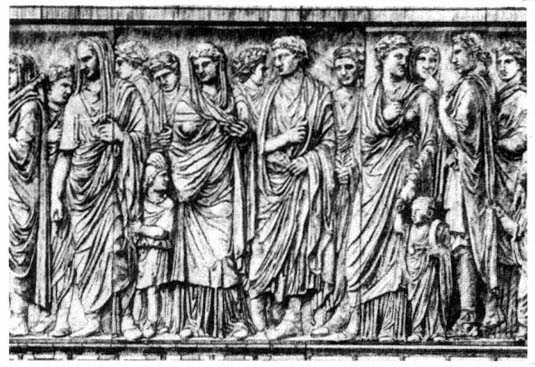 Greco-Egypt by Augustus Caesar, and in their attempt to unify both empires, Jupiter was combined with the Greco-Egyptian deity Amon to create Jupiter Amon of the new Republic. In the legendary history of Rome and Greco-Egypt, the Priesthood of Jupiter Amon was often connected to kings and kingship. Priest kings and military leaders who were some of the most powerful well known men in history such as Alexander the Great, Julius Caesar and Augustus Caesar, to name a few.
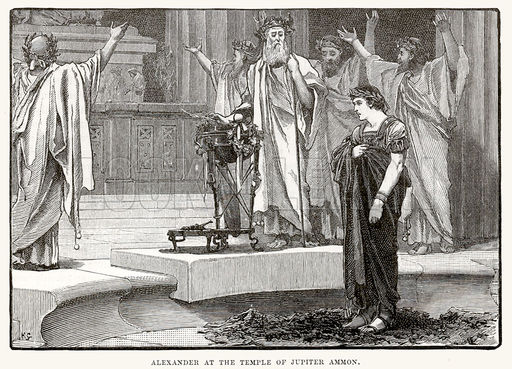
In the year 331 BC, in the hot Egyptian desert of the Siwa Oasis, at the Temple of Jupiter Amon; Alexander the Great was ordained the Son of Amon by the High Priests of Jupiter Amon. The Siwa Oasis is located between the Qattara Depression and on the edge of the Great Sand Sea, only 50kms from the Libyan border and Alexander’s tomb that was recently discovered at this same location in January 1995. The image below depicts Alexander the Great being Christened as the messiah by this same priesthood.
This coin below shows the horns of Jupiter-Amon on Alexander around the period when the ancient city of Damascus was captured by Alexander the Great in 333 B.C. Could Alexander be “A Ram on the Rampage (8:3-4)?”
Then I lifted my gaze and looked, and behold, a ram which had two horns was standing in front of the canal. Now the two horns were long, but one was longer than the other, with the longer one coming up last. I saw the ram butting westward, northward, and southward, and no other beasts could stand before him, nor was there anyone to rescue from his power; but he did as he pleased and magnified himself.
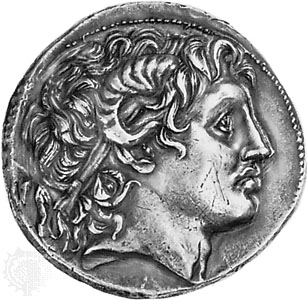 The rams horn is the hieroglyphic of authority, power, and dignity, and is the most common symbol of the Brotherhood that represents Jupiter or the blood line of King David. In the bible, the Ram (Hebrew: רם) is a figure in the Hebrew Bible. He is the son of Hezron and ancestor of King David. His genealogical lineage and descendants are recorded in 1 Chr 2:9 and at Ruth 4:19. In the New Testament, his name is given as “Aram” and “Arni”. Today, the only natural vocal instrument that the priests were permitted to use, as recorded in the scripture, is ‘The Ram’s Horn’ known as the ‘Shofar’.
The original capital for the Priests of Jupiter was located in Thebes. According to Diodorus;
the temple of Jupiter Ammon was originally built on the eastern side of the Nile (the site of the ruins of Carnac) by his son Osiris, the first coloniser of Egypt. But Ammon himself reigned at Thebes, according to the same writer, and was supposed to be identical with Osiris; and Plato acquaints us that “Thamus (a well-known name of Osiris), king of all Egypt, who reigned in a great city in the upper country, which the Greeks called the Egyptian Thebes, was named Jupiter Ammon.”
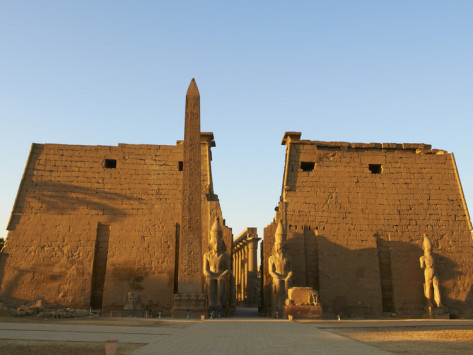
Thebes was founded in 1500 BC by a Phoenician Prince named Cadmus. The meaning of Thebes is from the word Theba that signifies ‘Ark.’ The capital for their religion was located in the City of Light, or what we know of as Luxor. The God they had worshipped was god Amon-Ra (Jupiter-Amon). At the temple at Luxor there are many Ram Sphinxs that symbolize God Amon Ra.
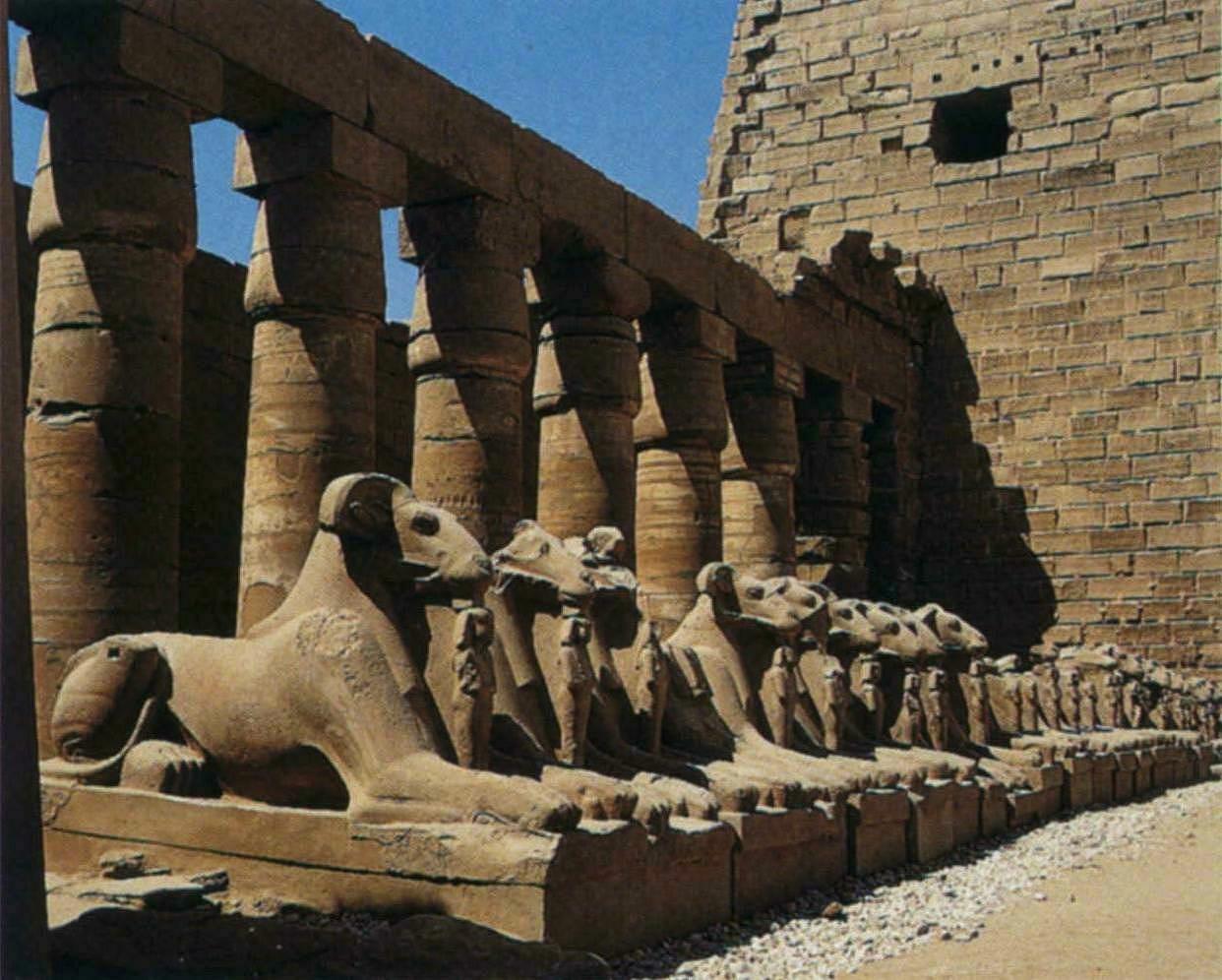
The cult of Amon-Ra was introduced by the Egyptians under the XVIIIth Dynasty and Amon, who according to Plutarch is the first being and all things, Ra, the sun-god. A fact which is proved by the testimony of the Tell el-‘Amarna tablets. A temple was built near here by Ramses III, who had set up two obelisks in front of it, one of which is now in Paris, and it is said in the legends chiselled on the face of one of these obelisks; ” made these works (the propyla of the palace of the Luxor) for his father, Amun-Ra, and that he had erected these two great obelisks in hard stone before the Ramsesseion of the city of Amun.”
Other names that this Prieisthood of Jupiter have been known by, are the Avral Brothers (Brethren) and later the Flamen Dialis. Marc Antony was said to be the first Flamen voted by Julius Caesar. Below is an image of Marc Antony on a Denarius 31 B.C. Cyrene. L. Pinarius Scarpus, moneyer with the horns of Jupiter Amon.
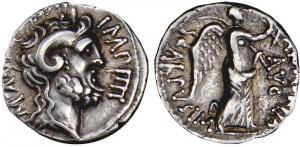
The word ‘Flamen’ meaning high priest. During the time of the Caesars in Rome, Jupiter was served by the patrician Flamen Dialis, the highest-ranking member of the flamines, a college of fifteen priests ‘who were part of the Pontifical College that had administered the Roman Religion. The high priest became known as Pontifex Maximus, and the Oxford Dictionary of the Christian Church says that it was in the 15th century that “Pontifex Maximus” became a regular title of honor for Popes.
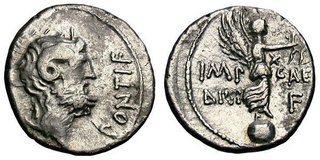
The first Pontifex Maximus of this 6th Age was Octavian Augustus Caesar. Below is Octavian on a Denarius with the Head of Jupiter Ammon issued by L. Pinarius Scarpus. Scarpus was a survivor of the Imperatorial period. He served at the battle of Philippi as a commander under Mark Antony, and Antony made him governor of Cyrenaica. After Octavian had defeated Antony, Scarpus defected to Octavian’s Roman Army and as governor of Cyrenaica, he issued these rare coins for Octavian. The reverse of the present coin seems to copy Octavian’s denarius with reverse CAESAR – DIVI F, Victory standing left (rather than right) on globe, suggesting that this type of Octavian’s must have been struck before 31 BC.
In ancient Greco-Roman Egypt, the surviving histories reveal that the priests of Jupiter Ammon (Flamen Dialis) were also known as the Djedi (Jeudi, Jedi or Jupiter). The name Jedi can be found today in modern culture as a reference to knights in outer space with super human power. Such as in the world-wide hit movies Star Wars and the Empire Strikes Back where the Gnostic Warrior, Luke Skywalker attempts to master the force within, so he can master the forces without. Luke eventually completes his Jedi (Jupiter) training in order to become a true Jedi (Jupiter) Knight who is referred to as a member of the Jedi Order.

Moe is the founder of GnosticWarrior.com. He is a father, husband, author, martial arts black belt, and an expert in Gnosticism, the occult, and esotericism.

 THE EXODUS OF THE KOHEN FROM DIA AND THE DNA THEY LEFT BEHIND