beating hearts and loud voices (with or without a trumpet) are human spirits. The voices — if such sound can be termed a voice at all — of a spiritual apparition once heard can hardly be forgotten. That of a pure spirit is like the tremulous murmur of an AEolian harp echoed from a distance; the voice of a suffering, hence impure, if not utterly bad spirit, may be assimilated to a human voice issuing from an empty barrel.
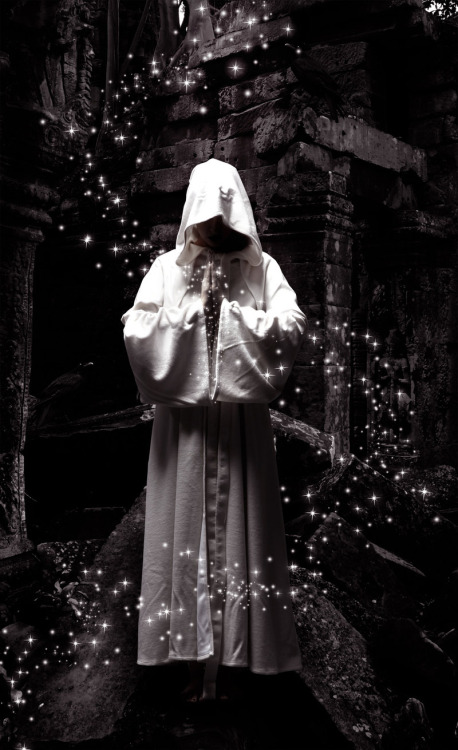
This is not our philosophy, but that of the numberless generations of theurgists and magicians, and based upon their practical experience. The testimony of antiquity is positive on this subject: [[Daimonioin phonai anarthroi eisi]]. . . . The voices of spirits are not articulated. The spirit-voice consists of a series of sounds which conveys the impression of a column of compressed air ascending from beneath upward, and spreading around the living interlocutor. The many eye-witnesses who testified in the case of Elizabeth Eslinger, namely: the deputy-governor of the prison of Weinsberg, Mayer, Eckhart, Theurer, and Knorr (sworn evidence), Duttenhofer, and Kapff, the mathematician, testified that they saw the apparition like a pillar of clouds. For the space of eleven weeks, Doctor Kerner and his sons, several Lutheran ministers, the advocate Fraas, the engraver Duttenhofer, two physicians, Siefer and Sicherer, the judge Heyd, and the Baron von Hugel, with many others, followed this manifestation daily. During the time it lasted, the prisoner Elizabeth prayed with a loud voice uninterruptedly; therefore, as the “spirit” was talking at the same time, it could be no ventriloquism; and that voice, they say, “had nothing human in it; no one could imitate its sounds.”
Further on we will give abundant proofs from ancient authors concerning this neglected truism. We will now only again assert that no spirit claimed by the spiritualists to be human was ever proved to be such on sufficient testimony. The influence of the disembodied ones can be felt, and communicated subjectively by them to sensitives. They can produce objective manifestations, but they cannot produce themselves otherwise than as described above. They can control the body of a medium, and express their desires and ideas in various modes well known to spiritualists; but not materialize what is matterless and purely spiritual — their divine essence. Thus every so-called “materialization” — when genuine — is either produced (perhaps) by the will of that spirit whom the “appearance” is claimed to be but can only personate at best, or by the elementary goblins themselves, which are generally too stupid to deserve the honor of being called devils. Upon rare occasions the spirits are able to subdue and control these soulless beings, which are ever ready to
Page 69
assume pompous names if left to themselves, in such a way that the mischievous spirit “of the air,” shaped in the real image of the human spirit, will be moved by the latter like a marionette, and unable to either act or utter other words than those imposed on him by the “immortal soul.” But this requires many conditions generally unknown to the circles of even spiritualists most in the habit of regularly attending seances. Not every one can attract human spirits who likes. One of the most powerful attractions of our departed ones is their strong affection for those whom they have left on earth. It draws them irresistibly, by degrees, into the current of the Astral Light vibrating between the person sympathetic to them and the Universal Soul. Another very important condition is harmony, and the magnetic purity of the persons present.
If this philosophy is wrong, if all the “materialized” forms emerging in darkened rooms from still darker cabinets, are spirits of men who once lived upon this earth, why such a difference between them and the ghosts that appear unexpectedly — ex abrupto — without either cabinet or medium? Who ever heard of the apparitions, unrestful “souls,” hovering about the spots where they were murdered, or coming back for some other mysterious reasons of their own, with “warm hands” feeling like living flesh, and but that they are known to be dead and buried, not distinguishable from living mortals? We have well-attested facts of such apparitions making themselves suddenly visible, but never, until the beginning of the era of the “materializations,” did we see anything like them. In the Medium and Day Break, of September 8, 1876, we read a letter from “a lady travelling on the continent,” narrating a circumstance that happened in a haunted house. She says: “. . . A strange sound proceeded from a darkened corner of the library . . . on looking up she perceived a cloud or column of luminous vapor; . . . . the earth-bound spirit was hovering about the spot rendered accursed by his evil deed. . . .” As this spirit was doubtless a genuine elementary apparition, which made itself visible of its own free will — in short, an umbra — it was, as every respectable shadow should be, visible but impalpable, or if palpable at all, communicating to the feeling of touch the sensation of a mass of water suddenly clasped in the hand, or of condensed but cold steam. It was luminous and vapory; for aught we can tell it might have been the real personal umbra of the “spirit,” persecuted, and earth-bound, either by its own remorse and crimes or those of another person or spirit. The mysteries of after-death are many, and modern “materializations” only make them cheap and ridiculous in the eyes of the indifferent.
Moe is the founder of GnosticWarrior.com. He is a father, husband, author, martial arts black belt, and an expert in Gnosticism, the occult, and esotericism.