by Moe | Apr 13, 2015 | Modern Gnosis
The people from the ancient island that was once known as Kos, (Cos, Coos, Ceus, Zia etc) are 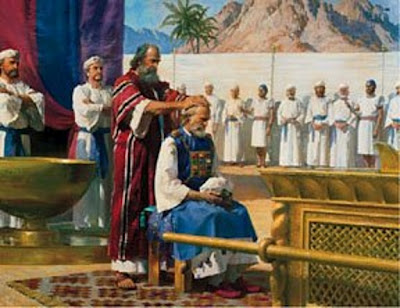 mentioned in the time of Alexander the Great as some of the most powerful people in the Mediterranean Sea. In fact, Alexander the Great’s personal physician named Critodemus was from this same island. They have been known over the course of history under various spellings such as the Koan, Coan, Cohen, Kohen or plural Kohanim (Hebrew: כֹּהֵן), which is a Hebrew word that simply means priest. In the bible they are referred to mainly as the Hivites and Levites. (more…)
by Moe | Apr 13, 2015 | Modern Gnosis
The tattooed skin of Epimenides was preserved at the courts of the ephores in Sparta, allegedly as a good-luck charm. 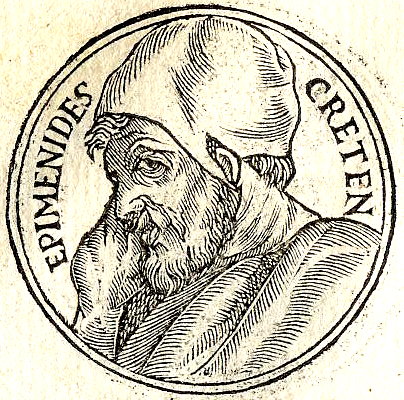
One of the founders of the ancient Gnostic mysteries of Orphism, was said to be a Cretan man named Epimenides (Greek: Ἐπιμενίδης), whose tattooed body and skin were held venerable by the ancient Spartans because it was said to reveal “secret things.” Epimenides had lived in the 7th century B.C. and was born in the city of Gnosis, which today is called the city of Knossos (Latin) on the modern-day island of Crete in the Mediterranean Sea.
Epimenides was considered a law giver, prophet, sage, and even a savior to his people on the Holy Island of Crete, and also to his brothers, the Spartans in Athens. Epimenides was a religious man who spent much of his life in his devotions connected with religion. He was a poet who composed several works in verse such as on the origin of the priesthood of Crete known as the Curetes and the Corybantes. He also composed in prose, a treatise on sacrifices. According to some authors, Epimenides died at 157 years of age, and according to others, 299. (more…)
by Moe | Mar 19, 2015 | Uncategorized
Many biblical scholars agree that the author of the Book of Revelation was a man named John of Patmos who was said to have written this Revelation while he was imprisoned or exile on the island of Patmos. In the bible, Patmos (Greek, Πάτμος; Italian: Patmo) is a small Greek island in the Aegean Sea.
The biblical descriptive name of Patmos is simply an allegory, and it is not the true original name of the place where Saint John was imprisoned. Current maps and geography place Patmos just off the coast Turkey, but I have found that in ancient times, this island was actually located just off the coast of the Holy Island of Crete in the Mediterranean Sea. Also, its ancient name was simply not Patmos, it had been called by many different names in history such as, Letois, Ophis, Delos, and who the Greek Hellenes had called Kos and the Latins, Coos.
A person from this island of Kos is called a “Koan” in English or in Hebrew a Cohen (Hebrew: כֹּהֵן, kōhēn, “priest”). Hence, the beginning formations of the Judaic priestly family known as the Jewish Cohens which is specific blood line and the Cohen name simply does not designate a person to be DNA related to the original Koans of Kos. Famous sons of Kos would be people such as the father of modern medicine, Hipocrates who founded the Koan school of medicine, which was said to very famous and had continued after his death for a considerable period. It was the birthplace of Apelles, the greatest of Greek painters,
In the year 309BC, Ptolemy I brought Queen Berenike to Kos to give birth to the next king of Ptolemaic Egypt from 283 BCE to 246 BC, Ptolemy II Philadelphus. Ptolemy II was a Koan who had fiercely protected the island of his birth, Kos during his reign which was after the dissolution of the empire of Alexander the Great.
This island of Kos was located just off the coast of modern-day Crete in the Mediterranean Sea that today is called ‘Dia.’
The ancient legend tells Zeus had been hidden from his father Cronus in a cave on Mount Ida by his mother, Rhea. In an attempt to further conceal Zeus, his mother Rhea had placed the infant in the care of the ancient Cretan priesthood there who were called by many names such as the Curetes, Telchines and Corbynites etc.
They were the masters of magic and would use this magic to deceive anyone who attempted to search for Zeus. Part of this magic involved the creation of the Tower of Babble, the confusion of tongues via the creation of various new languages and the manipulation of geographical coordinates such as the true holy land by placing a veil over the entire world until the time of the Apocalypse.
WHAT HAPPENED TO THE ISLAND OF PATMOS (AKA LETOIS, KOS, DELOS OR DIA)?
The reason being is that it was where Jewish Cretans would be banished and imprisoned by Roman emperors who would confine offenders or rebels such as St. John the divine, who in this place of the public prison of the Cretans would write the “Book of Revelation” to the churches of Asia.
Patmos is now simply called Dia and is an uninhabited island with 5 km maximum length and 3 km maximum width. The island had no productive capacity for food, fiber, or timber, with such being imported. Limited water was exploited with an extensive cistern and aqueduct system, wells, and sanitary drains. Various regions operated agoras (markets).
In 1976, Jacques Cousteau carried out underwater exploration around Dia and found the remains of an ancient port in the waters between Heraklion and Dia. This same island I believe to be also once called, Patmos where Saint John was imprisoned and the will be the subject of a future article in itself, but for now, here is a clue via
RESEARCH:
According to the legend the island of Dia, that is known as Patmos in the bible was created by Zeus:
Zeus, while he was dominating the world from his throne in Olympus, he looked to his birthplace, Crete. He was surprised to see his Cretans hunting with bows and spears, wiping out his beloved wild goats (kri kri). The goats were children of Amaltheia the goat that nurtured Zeus with milk while he was hiding from his father Cronus in Diktaion Antron Cave. He got that angry, that he decided to kill all Cretans. Immediately, he blew a lightning into the sea and a huge monster emerged to destroy the Cretans. However, the other gods tried to make him change his mind, but in vain.
Then, Poseidon, the god of Sea, said to Zeus: “My Father and King, how can you devastate Kourites? Is that the way to repay the good that they have made to you?”. Kourites were Cretans that were banging loudly on their shields when Zeus was crying, so as not to be heard by his father Cronus, who would eat Zeus. Zeus immediately changed his mind. Then he took two pieces of rusk and threw them towards Crete. So, when the monster tried to eat them, Zeus with a thunderbolt petrified the dragon with the rusks. This is how Dia and the two islets of Paximadi and Petalidi were born.
by Moe | Feb 16, 2015 | Gods & Goddesses, History of the Brotherhood
Persius says,”Pinge duos anguea; pueri, sacer est locos.” “Paint two snakes, and the place is sacred.”
The ancient theme of mother nature in the form of the serpent goddesses ruling supreme over the earth and its inhabitants has been taught for thousands of years.
Plutarch had said that this idea of Nature as a female and mother superior to all the other divinities came to us from the ancient holy island Crete. The meaning of the name Crete is to create, and it was the official birthplace of all Western manufactured civilization.
This is why 33rd Degree Masonic Philosopher, Manly Hall had written in The Secret Teachings of All Ages, “The serpent is the symbol and prototype of the Universal Savior, who redeems the worlds by giving creation the knowledge of itself and the realization of good and evil.” (more…)
by Moe | Jan 9, 2015 | History of the Brotherhood
There have been many lawgivers who have brought their laws to mankind. Some of the most  famous are the Israelite Prince Moses with his 10 commandments, King Minos of Crete, and Solon of Athens.
There is another influential lawgiver that I would like to bring to your attention to, and that is less known than those mentioned above. He was one of the Seven Wise Men of Greece, and his name is Epimenides (Greek: Ἐπιμενίδης). In many ancient written accounts, he is said to be one of the most famous legislators of his era, and let me point out that he had lived at the same time as that of Solon. (more…)