by Moe | Dec 3, 2013 | History of the Brotherhood
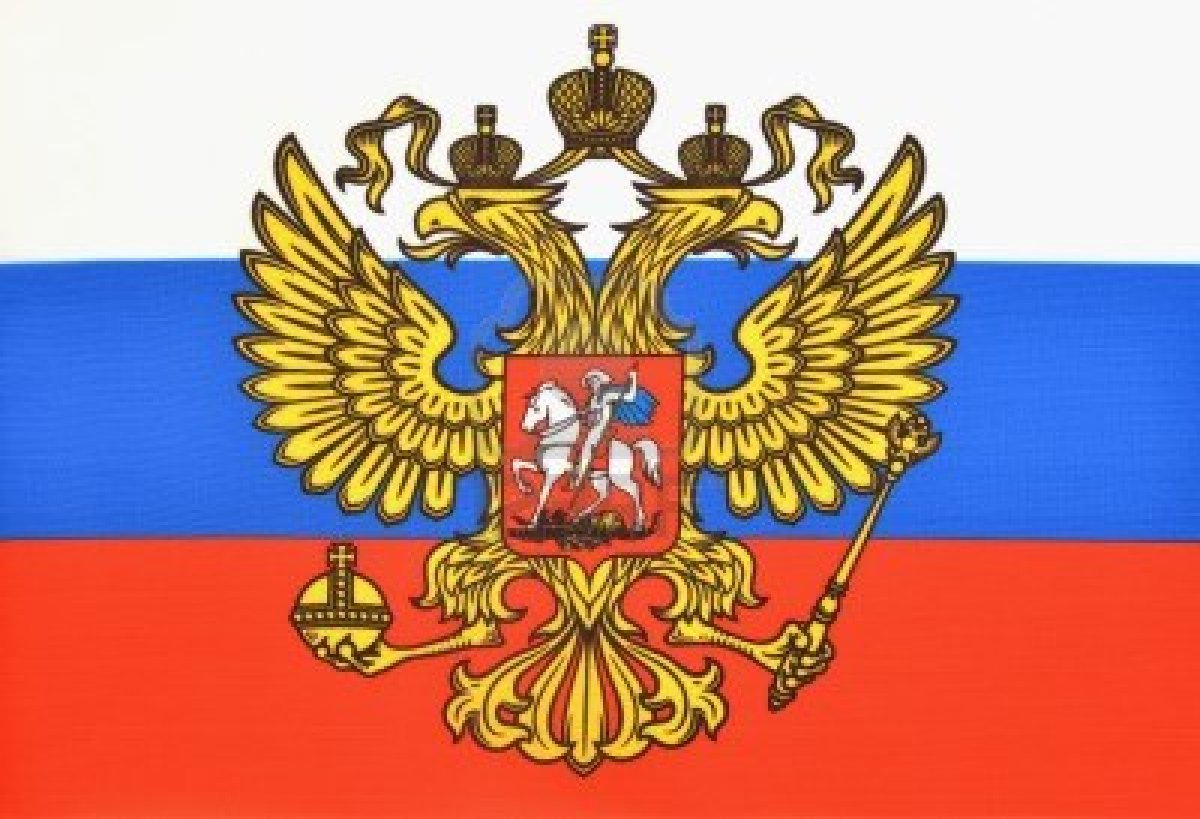
Not many people here in the West are aware of the world-wide royal and religious titles that the Russian Empire is known by. For 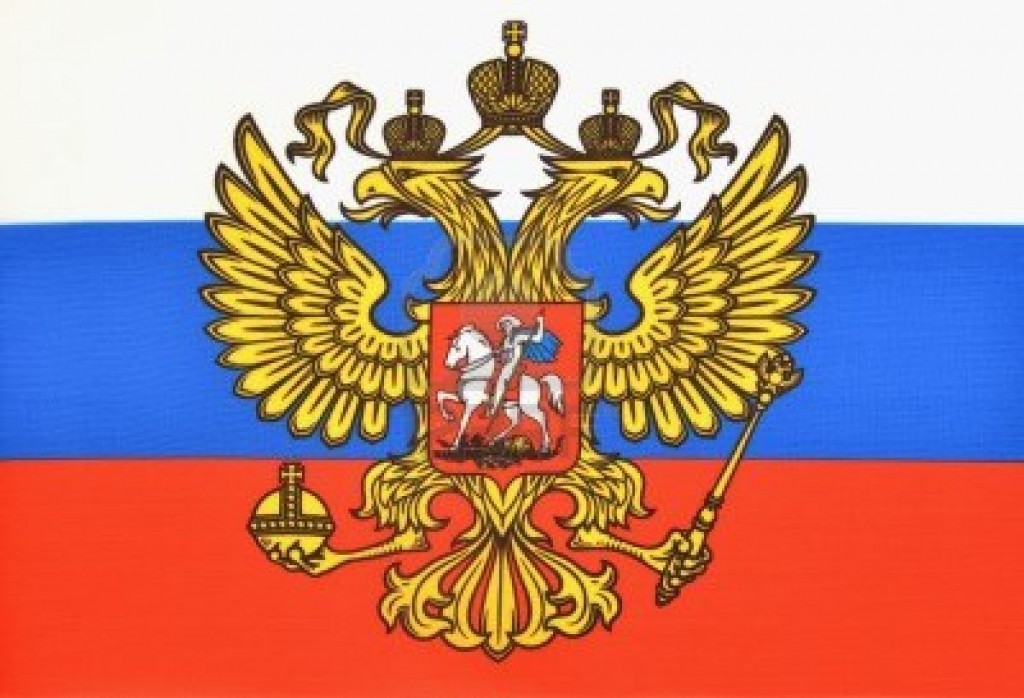 example, did you know that Russia is called the “Third Rome,” or the “New Rome?” This had occurred when the Grand Duchy of Moscow (Russian: Великое Княжество Московское, Velikoye Knyazhestvo Moskovskoye), or Grand Principality of Moscow had successfully succeeded both the first Roman and the second Byzantium Greco-Roman empires approximately 500 years ago. In doing so, the founders of Russia, known as the Rus, along with the original ancient Muscovites of Moscow had also become the defacto “Masters of the Second Jerusalem.”
QUICK RUSSIAN FACTS
Russia is the largest country on earth. They rank 5th in the world in regards to the size of their Armed Forces, and the religion of Russia is mainly Christian. They have one of the, if not the world’s largest Christian populations per capita, with an incredible 75% of Russians being members of the Russian Orthodox Church. Their Christian membership is centralized all in one country, and is second only to the Catholic Church whose membership is spread all across the globe. Russia also holds the global chair to the Presidency of the world’s most powerful government organization “the G-20” on December 1, 2012, which was the first time ever.
THE FOUNDERS OF RUSSIA
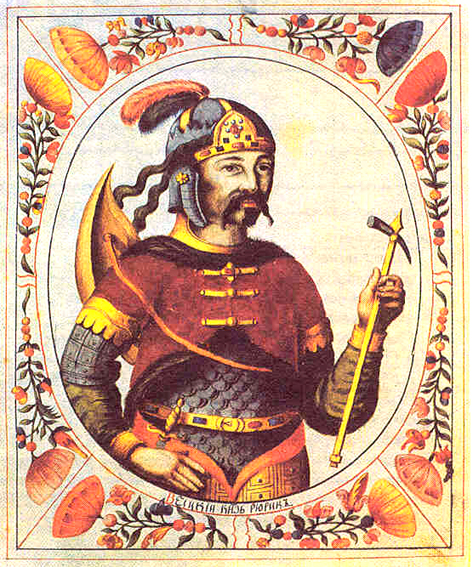 Russia was founded by the Varangian prince Rurik, who established himself in Novgorod approximately in the year 862 AD. It has been written that they were Vikings who had predominantly come from the Scandinavian country of Sweden,in which the Prince had brought the name from his original homeland in the Swedish province of Ross Lagen. This is confirmed by an author in the 839 A.D. in the Annals of St Bertin who had written, “the Rhos came from Sweden.” The Greeks in the East were said to call them Russians, and in the West they were known as the Normans. In Finland, they are called the “Swedes Ruotz.”
The name Rus’ is an Old Norse or Swedish word meaning, “rowers or men who row,” which may give indication to the Viking origins of prince Rurik and the ruling dynasty of Kievan Rus’ who would become the founders of Russia. In Greek, Rus is spelled, Rho; Rosh or Ros in Hebrew, and Ru in Arabic. The meaning of the Hebrew name prince of Rosh is “the chief prince,” or “king of the Russian Empire.” The name Sia is an Old Norse or Swedish name derived from the word sigr, meaning “victory,” and in Hebrew it means “helper.” These words and various meanings would possibly signify the new order of the Brotherhood under the Second Jerusalem of the Temple of Solomon, where the original Muscovites become ‘sias,’ or helpers to the prince.
The Rurikids of the ruling dynasty of Kievan Rus’ had ruled all the lands of modern-day Russia (and later Grand Duchy of Moscow and Tsardom of Russia) until the 17th century. They are one of Europe’s oldest royal houses who trace their legendary genealogy to the first Roman emperor Augustus Caesar. Hence, why they are considered the Third Rome.
This event is explained in the book, Russia and its crisis By Pavel Nikolaevich Mili︠u︡kov;
The theory that Moscow was the third Rome originated in these days, in order to formulate the new idea of the universal mission of the Russian national church. A learned monk, Philotheus, wrote to John III., the Muscovite prince:
The church of ancient Rome was destroyed in consequence of the heresy of Apollinarius, and the Constantinopolitan church of the second Rome was cut to pieces by the axes of Hagar’s posterity. But this Holy Apostolic church of the third Rome —to wit, of thy autocratic power—shines more brightly than the sun in the whole universe. Look here now and listen, Oh thou pious Tsar: Christian realms have all converged into thine, the only one; two Romes have fallen; the third stands upright, and there is no fourth to come; thou art the only Tsar of the Christians in the entire world; thy Christian sway shall never yield to anybody.
The meaning of Prince of Rosh found in biblical texts may represent the Prince of Russia, who are mentioned by Byzantine writers of the 10th century, under the name “Ol Pu.”
THE PAGAN RUS BECOME CHRISTIANS
The Rus (Russians) came onto the world scene as a major power, mainly after they had organized an attack on the Christian Greeks in Constantinople with two hundred ships in the year 860 AD. The Greek version of the Rurik Dynasty and battle for Constantinople is described by author George Finlay in his book, “History of the Byzantine Empire from DCCXVI to MLVII;”
In the year 862, Rurik, a Scandinavian or Varangian chief, arrived at Novgorod, and laid the first foundation of the state which has grown into the Russian empire. The Russian people, under Varangian domination, rapidly increased in power, and reduced many of their neighbors to submission. Oskold and Dir, the princes of Kiof, rendered themselves masters of the whole course of the Dnieper, and it would seem that either commercial jealousy or the rapacity of ambition produced some collision with the Byzantine settlements on the northern shores of the Black Sea; but from what particular circumstances the Russians were led to make their daring attack on Constantinople is not known.
The Emperor Michael had taken the command of an army to act against the Saracens, and Oryphas, admiral of the fleet, acted as governor of the capital during his absence. Before the Emperor had commenced his military operations, a fleet of two hundred Russian vessels of small size, taking advantage of a favourable wind, suddenly passed through the Bosphorus, and anchored at the mouth of the Black River in the Propontis, about eighteen miles from Constantinople.
This Russian expedition had already plundered the shores of the Black Sea, and from its station within the Bosphorus it ravaged the country about Constantinople, and plundered the Prince’s Islands, pillaging the monasteries, and slaying the monks as well as the other Book i. inhabitants. The emperor, informed by Oryphas of the c”-‘”-8a attack on his capital, hastened to its defence. Though a daring and cruel enemy, the Russians were by no means formidable to the strength and discipline of the Byzantine forces. It required no great exertions on the part of the imperial officers to equip a force sufficient to attack and put to flight these invaders ; but the horrid cruelty of the barbarians, and the wild daring of their Varangian leaders, made a profound impression on the people of Constantinople, suddenly rendered spectators of the miseries of war, in their most hideous form, during a moment of perfect security.
We need not, therefore, be surprised to find that the sudden destruction of these dreaded enemies by the drunken emperor, of whom the citizens of the capital may have entertained even more contempt than he merited as a soldier, was ascribed to the miraculous interposition of the Virgin of the Blachern, rather than to the superior military tactics and overwhelming numbers of the imperial forces. How far this expedition of the Russians must be connected with the enterprising spirit of that vigorous band of warriors and pirates from Scandinavia, who, under the name of Danes, Normans, and Varangians, became the sovereigns of Normandy, Naples, Sicily, England, and Russia, is still a subject of learned discussion.
The Rus or Russians, who were not Christian and still considered pagan at the time, would attack Constantinople yet again on June 11, 941. These battles would result in two treaties being signed between both the Rus and the Byzantine Empires, dating in the years 907 and 911. The treaties most likely now allowed the Rus to resume regular trade relations with the Byzantium Empire in order for them to conduct and profit freely from the commerce in the regions they had ruled or would soon conquer.
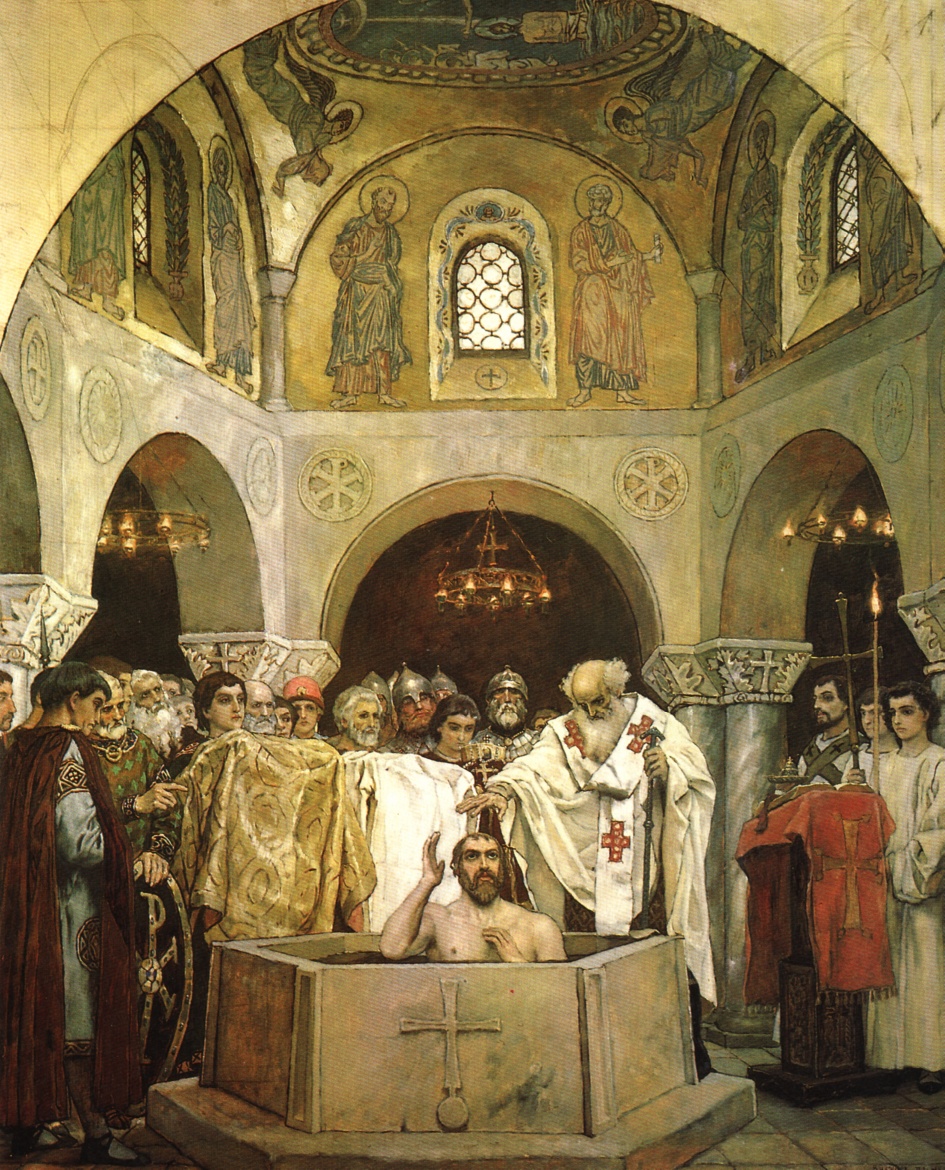
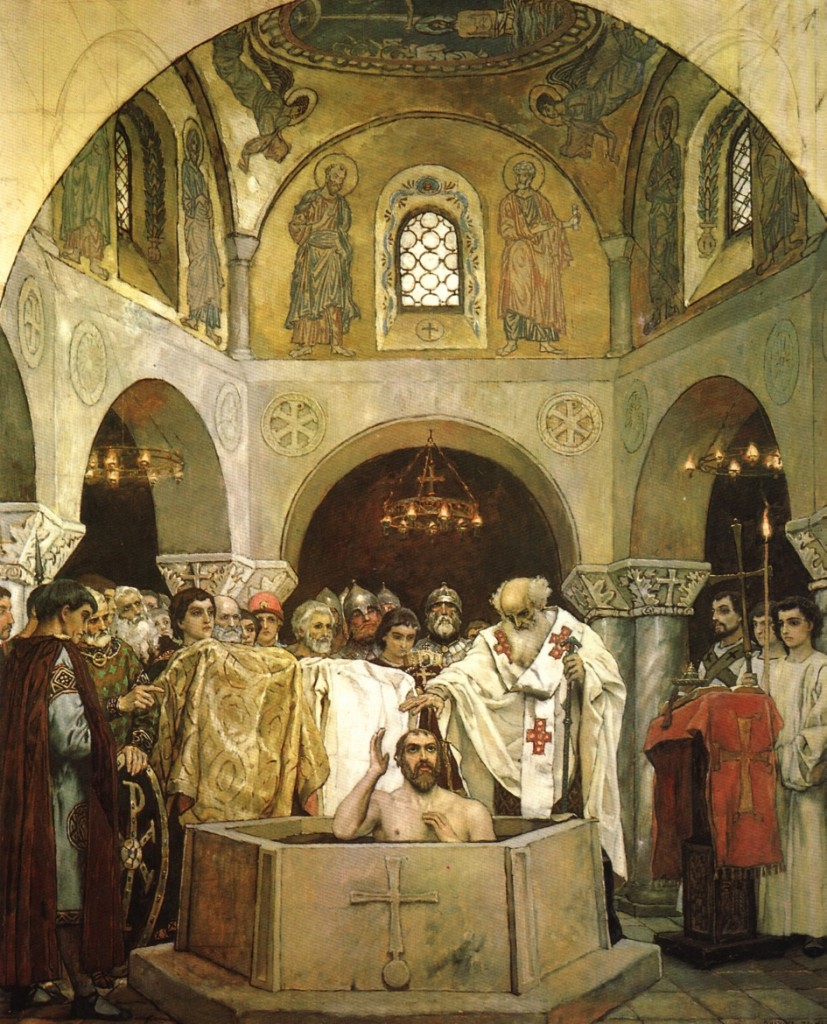 In addition to these treaties with the Byzantines, in the year 954 A.D., Princess Ol’ha (Olga) of Kiev would be baptized, and later in 988, both the baptisms of Vladimir of Kiev and the Baptism of Rus’ would occur, signifying one of the most important events in the history of Russia. They would officially join the Byzantine Empire as Christians and Brothers. Olga’s grandson Vladimir (reigned 980-1015) was converted to Christianity in 988 A.D., and Christianized the Kievan Rus’. He would go on to marry Anna, the sister of the Byzantine Emperor. (Wikipedia) Over the course of the next few hundred years, the Rurikids would eventually go on to be the sovereigns of not only the massive country we know of today as Russia, but also Normandy, Naples, Sicily, and England etc. Hence, the “Masters of the Second Jerusalem.”
The Kievan church was originally a Metropolitanate of the Patriarchate of Constantinople, and the Byzantine patriarch appointed the metropolitan who governed the Church of Rus. The Metropolitan’s residence was originally located in Kiev. As Kiev was losing its political, cultural, and economical significance due to the Mongol invasion, Metropolitan Maximus moved to Vladimir in 1299; his successor, Metropolitan Peter moved the residence to Moscow in 1325.(Wikipedia)
In the beginning days of Greek Orthodox Christianity in Russia, a Greek was made the first metropolitan, or patriarch of Russia. But later this would change in the year 1588, from which time the Russian church became as independent as its empire and would appoint Russian Bishops to lead the Russian Church. The Russian Church and Bishops, from this time forward would be independent from Jerusalem, Constantinople, Antioch, and Alexandria. Therefor becoming a free and powerful independent patriarch.
This religious arrangement is explained in, “The Works of M. de Voltaire: History of the Russian Empire under Peter the Great,” by Voltaire, Tobias George Smollett, Thomas Francklin;
A Greek was made the first metropolitan, or patriarch of Russia ; and from this time the Russians adopted an alphabet, taken partly from the Greek. This would have been of advantage to them, had they not still retained the principles of their own language, which is the Slavonian in every thing, but a few terms relating to their liturgy and church government. One of the Greek patriarchs, named Jeremiah, having a suit depending before the divan, came to Moscow to solicit it; where, after some time, he resigned his authority over the Russian churches, and consecrated patriarch, the archbishop of Novgorod, named Job. This was in the year 1588, from which time the Russian church became as independent as its empire. The patriarch of Russia has ever since been consecrated by the Russian bishops, and not by the patriarch of Constantinople. He ranked in the Greek church next to the patriarch of Jerusalem, but he was in fact the only free and powerful patriarch : and, consequently, the only real one. Those of Jerusalem, Constantinople, Antioch, Alexandria, are mercenary chiefs of a church, enslaved by the Turks ; and even the patriarchs of Jerusalem and Antioch are no longer considered as such, having no more credit or influence in Turkey, than the rabbis of the Jewish synagogues settled there.
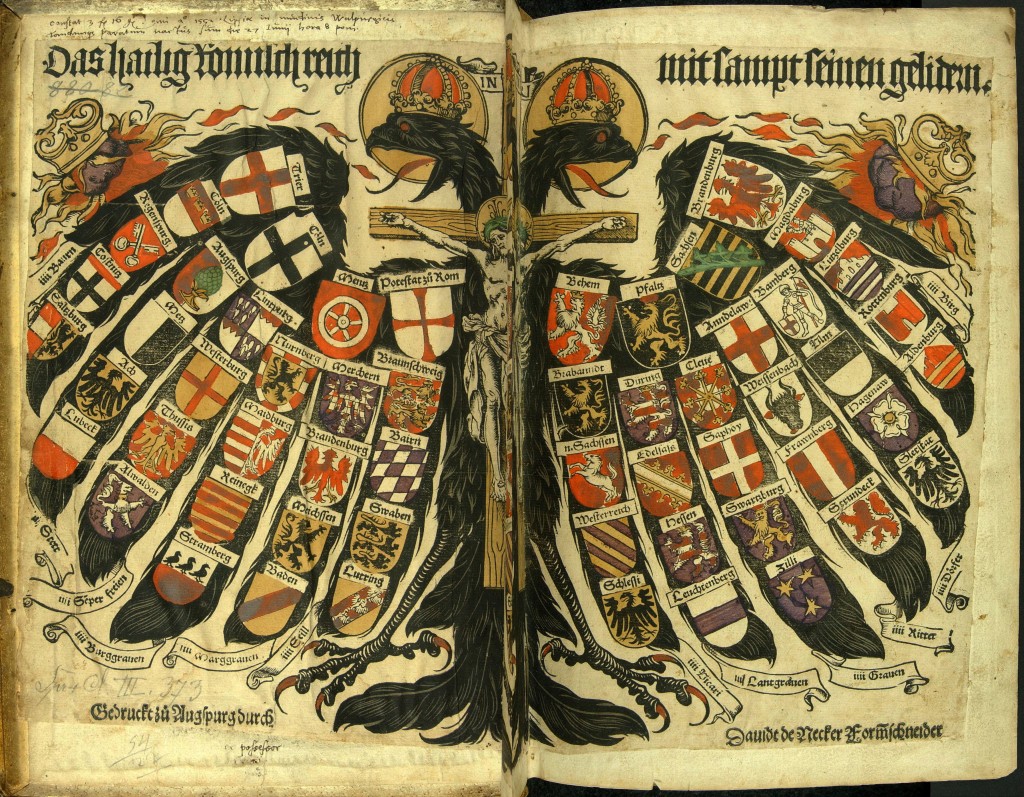 THE RUS BECOME MASTERS OF THE SECOND JERUSALEM AND RUSSIA THE THIRD ROME
Eventually the original Mosocheni (Cappadocians, Men of Crete, Philistines or Tribe of Benjamin etc) of modern-day Moscow would be succeeded in approximately the year 862 AD by the Scandinavian dynasty of Rus; founded by the Viking prince, Rurik who would later align with the Byzantine Empire under the banner of Christianity.
This new role had made the Rosh or Rus the “Masters and Princes of the Second Jerusalem.” Thus making the Mosocheni, ‘sia or sias’, which the meaning in Hebrew is ‘helpers.’ This land under the dominion of the Rus, with the help of the Sia over the last 1,200 years would not only be known as the Third Rome, but also become the largest county in all the world by almost double the land mass of its closest competing country.
The Rurikids were the ruling dynasty of Kievan Rus’, who after the year 1199, would also officially become the rulers of the Grand Duchy of Moscow and the founders of the Tsardom of Russia, which today they govern all the lands of modern-day Russia and then some. Ivan III by 1503, had tripled the territory of Moscow as “Ruler of all Russia”, and with his marriage to the niece of the last Byzantine emperor, he established Moscow as the successor state of the Roman Empire, the “Third Rome.”
The Orthodox Church during the Kievan period was subject to Constantinople, and until 1237, the “Metropolitans of Rus” were usually Greek. The Rus’ Church continues to sing in Greek the solemn greeting to a bishop, eis polla eti, despota (“Many years to you, Master”), in memory of the days when the metropolitan came from Constantinople. Orthodoxy became the State religion of Rus’, and eventually Russia until 1917. (Rus’ was not completely converted to Christianity at this time, and the Church was at first restricted mainly to the cities, while much of the countryside remained pagan until the fourteenth and fifteenth centuries.) Today, the predominant religion in Russia is mostly Christian under the rule of the Russian Orthodox Church, and it currently ranks fifth after the Churches of Constantinople, Alexandria, Antioch, and Jerusalem. (Wikipedia)
THE PROPHECY OF THE JEWS AND CHRISTIANS IN THE END TIME
In Acts 2:5, we find that the Cappadocians appear to be “God-fearing Jews.” Cappadocia is mentioned twice in the New Testament as well, as the “Cappadocian Jews” listened to Peter’s sermon (Acts 29), and his first epistle is addressed to Christian residents in the province (i Pet.li). This makes sense, because recently, the Russian President Vladimir Putin said that at least 80 percent of the members of the first Soviet government were Jewish. On June 13th, 2013, President Putin made a special visit to Moscow’s Jewish Museum and Tolerance Center ;
According to the official transcription of Putin’s speech at the museum, he went on to say that the politicians on the predominantly Jewish Soviet government “were guided by false ideological considerations and supported the arrest and repression of Jews, Russian Orthodox Christians, Muslims and members of other faiths. They grouped everyone into the same category.
“Thankfully, those ideological goggles and faulty ideological perceptions collapsed. And today, we are essentially returning these books to the Jewish community with a happy smile.”
This year in March at the Papal installation of Pope Francis, for the first time, the gospel was read in the Greek language rather than in the traditional Latin. The Pope had also prayed with Eastern rite Catholic patriarchs and archbishops before the tomb of St. Peter whose bones went on display this past month on Sunday November 24th. These prophetic signs indicate a mutual concordance between both the East and West, which symbolize the union of the Roman Latin Church with the Greek Orthodox Church. In addition to these most recent historic events, there is this past week’s historic summit between Pope Francis and Russian President Vladimir Putin. An event that is marked as the most important meeting between Rome and Russia in a quarter of a century.
The dynasty of Kievan Rus’ is one of Europe’s oldest royal houses, with numerous existing cadet branches throughout the world. The current President of the largest country in the world, Russia and also the Third Rome, is Vladimir Putin. President Putin is also currently the President of the most powerful organization in the world, the G20.
This story may be reflected in the bible as the Philistines, who were also known as the Cappodicans that were subjugated by Israel and then became the Tribe of Benjamin. The English name Benjamin is derived from the Hebrew name, “Banu- Yamina,” meaning “the Son of the right hand.” This symbology is described in the Old Testament when Moses had delivered Israel from the Pharaoh, he then became the “Right hand of God.” This phrase is also mentioned again when Christ had ascended to heaven and sat down in the place of authority on the right hand of God as written in Peter 3:22 – “Who is gone into heaven, and is on the right hand of God; angels and authorities and powers being made subject unto him.”
ADDITIONAL RESEARCH:
Within decades after the capture of Constantinople by Mehmed II of the Ottoman Empire on 29 May 1453, some Eastern Orthodox people were nominating Moscow as the “Third Rome”, or the “New Rome”.[1] Stirrings of this sentiment began during the reign of Ivan III of Russia who had married Sophia Paleologue. Sophia was a niece of Constantine XI, the last Byzantine emperor. By the rules and laws of inheritance followed by most European monarchies of the time, Ivan could claim that he and his offspring were heirs of the fallen Empire, but the Roman traditions of the empire had never recognized automatic inheritance of the Imperial office.[2] A stronger claim was based on religion. The Orthodox faith was central to Byzantine notions of their identity and what distinguished them from ‘barbarians.” Vladimir the Great had converted Kievan Rus’ to Orthodoxy in 989, in return for which he became the first barbarian to ever get an Imperial princess as a wife.
The story of “Third Rome” (“the second Constantinople”) started in 14th century Bulgaria, under the reign of Tsar Ivan Alexander. He aimed to raise the prestige of his land and capital, introducing the name Tsarevgrad Tǎrnov for it (in comparison to the Slavic name of Constantinople – Tsarigrad), which was later supported by the words of Patriarch Callistus I of Constantinople that “Tǎrnovo is the capital of the Bulgarians and second both in words and deeds after Constantinople”. After the fall of Tǎrnovo to the Ottoman Turks in 1393, a number of Bulgarian clergymen sought shelter in the Russian lands and transferred the idea of the Third Rome there, which eventually resurfaced in Tver, during the reign of Boris of Tver, when the monk Foma (Thomas) of Tver had written The Eulogy of the Pious Grand Prince Boris Alexandrovich in 1453.[3][4] The idea crystallized with a panegyric letter composed by the Russian monk Philotheus (Filofey) of Pskov in 1510 to their son Grand Duke Vasili III, which proclaimed, “Two Romes have fallen. The third stands. And there will be no fourth. No one shall replace your Christian Tsardom!”. Contrary to the common misconception, Filofey [5] explicitly identifies Third Rome with Muscovy (the country) rather than with Moscow (the city). In addition, Moscow is placed on seven hills, as is Rome and Constantinople. The terms Muscovy (The City) and the boundaries of the Russian Empire were considered both in Russia and abroad to be synonymous at the time.(Wikipedia)
Inner Jerusalem By Ada Goodrich-Freer
It is alleged that the Russian pilgrims are a considerable source of ecclesiastical revenue, as it is calculated that each spends, on an average, some £10 in the country, of which a considerable proportion is paid for candles, masses, and fees to priests on various occasions. Moreover it is said that, after their return home, additional and supplementary offerings are forwarded, amounting in the aggregate to many thousands of pounds, sums which naturally, though intended for the Greek priests at the Holy Places, have to pass through the Russian Consulate, a fact which, all else apart, might well and naturally suggest the importance of obtaining a national share in the ceremonies of Bethlehem, the Holy Sepulchre and elsewhere.
Constantinople and Jerusalem, Russia has succeeded in placing a native upon the Patriarchal chair of Antioch, and in obtaining his official recognition by the Sultan. The patriarch of Antioch has his residence at Damascus, which has long been a centre of Syrian “orthodoxy,” and has had several native bishops, and it is even alleged that it was in view of this candidature that Damascus was raised from a vice-consulate to a consulate. It is at least difficult to assign any other reason in a city where there are few resident Russians and where Russia has little commercial interest.
SOURCES:
1. Links are made to source books which are all Open Source and also Wikipedia
2. This article is open source and not for commercial purposes.
by Moe | Nov 27, 2013 | History of the Brotherhood, Meaning of Words
“Concerning these things will I speak, and these things will I explain unto you, my children: I am Enoch. In consequence of 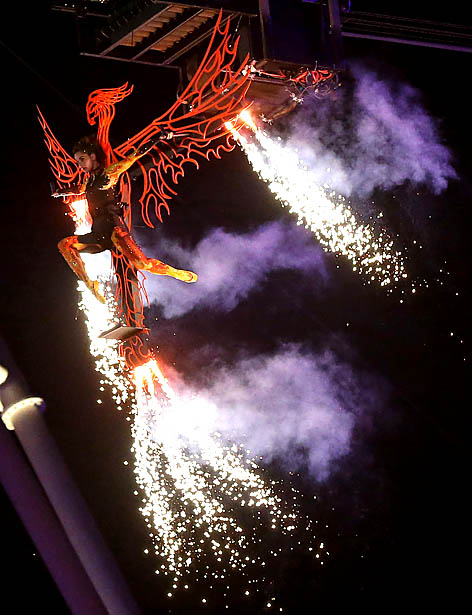 that which has been shown to me, from my heavenly vision and from the voice of the holy angels, I have acquired knowledge, and from the tablet of heaven have I acquired understanding.”- Book of Enoch, Verse III
(Part II of Who were the Nephilim? By Moe) – After the Exodus, Cain had built a city calling it by the name of his son Enoch, or the City of Discipline and Training. His father Cain is known for killing his brother Abel and was cursed seven times over by the Lord. The LORD set a mark upon Cain, lest any finding him should kill him. 1 6 11 And Cain went out from the presence of the LORD. This was the time when Cain had left his homeland and went into the “Land of Nod” on the east of Eden, where he built a city, and called it after the name of his son Enoch.
Enoch (Hebrew: חֲנוֹךְ, Modern H̱anokh Tiberian Ḥănōḵ; Arabic: إدريس ʼIdrīs) was said to be the first-born son of Cain through Seth, and great-grandson of Noah. He is the seventh progenitor of the race in the “book of the generations of Adam.” Enoch was a warrior and a builder of cities. In Mohammedan Literature, he is known to the Mohammedans as “Idris” (the Instructor), a man of truth and a prophet, raised by Allah to a lofty place, and as a model of patience. Baidawi, in identifying him with Enoch, explains “Idris” as indicating his knowledge of divine mysteries.
MEANING OF THE LAND OF NOD
The meaning of the name ‘Nod’ varies depending on the language. For example, in Greek the noun ‘nod’ is spelled “χώρα του ύπνου ουσ.θηλ,” meaning the “land of sleep,” and the verb Nod is spelled “μεταφορικά κουτουλάω (από τη νύστα) ρ.αμ,” which means to fall asleep. Hence, to the Ancient Greeks, “The Land of Nod” refers to the mythical land of sleep, which today in English would be akin to when someone suddenly goes to sleep and “Nods off”. These were the children of Cain who had turned their faces away from the LORD, love and light in the garden of Eden of the East (Right brain Spirit, Reason and Love), and were cursed to be wanderers in the West (Left Hemisphere Brain of Intellect and Materialism ) and to spiritually go to “asleep in the land of Nod.” A magickal curse was cast upon the race of Cain which placed them in spiritual darkness for seven generations.
Josephus describes the Sons of Cain in the Antiquities of the Jews, A.D. 93;
Nay, even while Adam was alive, it came to pass that the posterity of Cain became exceedingly wicked, every one successively dying one after the other, more wicked than the former. They were intolerable in war, and vehement in robberies; and if any one were slow to murder people, yet was he bold in his profligate behaviour, in acting unjustly, and doing injury for gain.
These stories about Cain and his children indicate a change in how the world and human race was governed, in which it went from a spiritually religious government based on the Mosaic Laws, to a more material government based on selfishness, materialism and Roman Law or the Rule of Law. Hence, it was after this time that the Cainanites became merchants and murderer scapegoats of Israel who had spiritually went to sleep because of the curse of the LORD. A curse that still lasts to this day.
Cain had two children, Lamech and Zillah who then gave birth to “Tubal Cain” who is described in Genesis 4:22 as the “forger of all instruments of bronze and iron” (ESV), or an “instructer of every artificer in brass and iron” (KJV). Tubal Cain is the widow’s son who originally was “a sharpener”—one who whets or sharpens instruments. The name Tubal comes from the Hebrew verb  (yabal), meaning to bring, carry, lead, conduct, and is also explained as meaning, “to cause to transport an object from one place to another.” The the name Cain may be derived from the Egyptian “ka or ba” meaning ‘soul.’
In Hebrew, the meaning of the word Nod is related to the participle דנ in 4:12 which the LXX translated as τρέμων (trembling). “Nod” (נוד) is the Hebrew root of the verb “to wander” (לנדוד). Therefore, to dwell in the land of Nod is usually taken to mean that one takes up a wandering life. Hence, the Land of Nod is known as an allegorical code for the “Land of Shaking”, which must mean Nod was known for its earthquakes. A big clue to where Cain had brought his people after he went out from the presence of the Lord. This land I believe was actually the fifth largest island in the Mediterranean Sea, known today as Crete in the country of Greece. An island that is one of the most earthquake active in all the lands of the Mediterranean, with a deep history of many earthquakes and natural catastrophes that have left the land in trembling state. A land that may very well be the Land of Nod.
MEANING OF THE NAME ENOCH
The name ‘Enoch (e’nok)’ is derived from the Hebrew (Phoenician) word ‘Henoch (or Onech),” and means “one trained up” or ‘initiated.’ The closely related Semitic word, ‘Enos’ means pro-eminently, “The Man : that is, the Messenger; the Man of men.” Hence, Enoch is a “title or given name,” and not an actual birth name of a singular person. 33rd Degree Freemason, Many P Hall said this about Enoch in his book, Secret Teachings of All Ages;
According to Freemasonic symbolism, Enoch, fearing that all knowledge of the sacred Mysteries would be lost at the time of the Deluge, erected the two columns mentioned in the quotation. Upon the metal column in appropriate allegorical symbols he engraved the secret reaching and upon the marble column placed an inscription stating that a short distance away a priceless treasure would be discovered in a subterranean vault. After having thus faithfully completed his labors, Enoch was translated from the brow Of Mount Moriah. In time the location of the secret vaults was lost, but after the lapse of ages there came another builder–an initiate after the order of Enoch–and he, while laying the foundations for another temple to the Great Architect of the Universe, discovered the long-lost vaults and the secrets contained within.
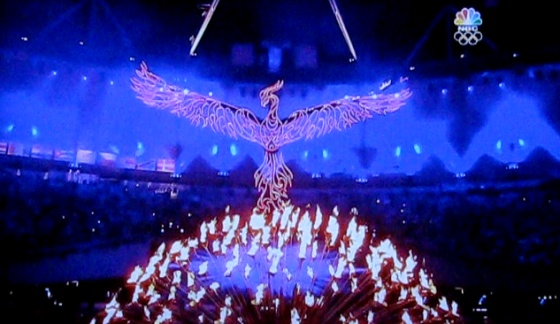
The symbol of Enoch is the Phenoch (or Phenoch, Phinoach, and Phanak), or the magnificent immortal bird known to us today as the ‘Phoenix.’ The phoenix is an allegorical fire bird of time, signifying re-birth and resurrection out of its own ashes. It is the symbol of the messenger, and especially more of the Sixth race, the offspring of Phen. The phoenix also symbolizes a secret cycle and initiation used by various cultures around the world to delineate a historical age. This is interesting, because in the 2012 closing Olympic Ceremonies, there was a massive phoenix on display that was lit up with thousands of lights. Could this symbolize the end of the sixth age and the beginning of a new era?
In the Ethiopic Books of Enoch, in Gen. v. 24 we find that “Enoch walked with God” and “God took him.” Jewish legends of Enoch describe him as a man, credited with superhuman knowledge, and the “Visions of Enoch” describe the secret Mysteries of Initiation, one of which is the Burning Valley of the “Fallen Angels.” In the Book of Enoch, Mount Hermon is the place where the “Watchers, Sons of God or the Nephilim,” a class of fallen angels descended to Earth. The Anak or the Anakim were the descendants of the Nephilim that were seen by Jacob when he described giants in the land of Canaan. Enoch’s Angels, the Sons of God (Nephilim) who saw that the daughters of men were fair (Gen., vi.), and who married them and taught the daughters of Earth the secrets of Heaven. Mount Hermon is located at 33 degrees latitude and longitude, and this region has long been associated with the Nephilim. Mount Hermon is where the Phoenician Prince Cadmus and the Cadmonites had inhabited, which was in the Land of Canaan. Cadmus whose name means ‘son’, was also known by the name Hermes, and just like Enoch, Hermes is the initiator, an intermediate agent between mankind. Herodotus had called Hermes, Mercury. He was usually depicted carrying a caduceus, and in Greek, Caduceus means magic wand, and why we always see him carrying his magic double DNA serpent wand, which is the symbol of immortality. Helena Petrovna Blavatsky gives us the meaning as well, in her book, The Secret Doctrine: Anthropogenesis;
Enoch is the type of the dual nature of man—spiritual and physical. Hence he occupies the centre of the Astronomical Cross, as given by Eliphas Levi from a secret work, which is a Six-pointed Star, the “Adonai.” In the upper angle of the upper Triangle is the Eagle; in the left, lower angle stands the Lion; in the right, the Bull; while between the Bull and the Lion, over them and under the Eagle, is the face of Enoch or Man.’ Now the figures on the upper Triangle represent the Four Races, omitting the First, the Chhayas or Shadows, and the “Son of Man,” Enos or Enoch, is in the centre, where he stands between the Fourth and the Fifth Races, for he represents the Secret Wisdom of both. These are the four Animals of Ezekiel and of the Revelation. The Double Triangle…