Jewish consciousness is shaped by spiral forms, from Torah scroll to DNA

Moe is the founder of GnosticWarrior.com. He is a father, husband, author, martial arts black belt, and an expert in Gnosticism, the occult, and esotericism.

Moe is the founder of GnosticWarrior.com. He is a father, husband, author, martial arts black belt, and an expert in Gnosticism, the occult, and esotericism.
The meaning of the Greek word ‘Gnosis’ (in the nominative case γνῶσις f.) is “knowledge of spiritual mysteries”, which is  derived from the Ancient Greek ‘упчгли’ – “to know or understand.” The adjective of this word is “Gnostikos”, and is “cognitive or intellectual.”
The Old Latin word, ‘GNOsoo’ is where we get the modern Latin word ‘novi,’ which is a noun that means “actual knowledge that is the result of past learning”, and ‘noscos’ which is the present use of the verb ‘novi’; it denotes “to learn.”(1)
The Hebrew word “knowledge” (דעת da`ath) in the Septuagint, thus:
Proverbs 2.6 — The Lord gives wisdom (sophia), from his face come knowledge (gnosis) and understanding (sunesis)”
Ovid, the Roman-Greco poet who lived at the time of Augustus, had explained approximatelyt 2,000 years ago; “Gnosus or Gnossus was the chief city of ancient Crete, and from this word are formed the adjectives ‘ Gnosius’ and ‘Gnosiacus,’ (which are used as equivalent to the more general epithets ‘Cressius,’ ‘Cretaeus,’ ‘Creticus,’ ‘ Cretensis,’)
And likewise the feminine Graeco-poetic forms ‘ Gnosis’ and ‘ Gnosias,’ which are frequently placed absolutely, like ‘ Cressa,’ for Ariadne, ‘ puella’ being understood as in the line before us, and below
The towns next in importance to Gnosus were ‘ Gortys’ or ‘ Gortyna,’ and ‘ Cydonia,’ and hence the adjectives ‘Gortynius’ and ‘ Cydonius’ are equivalent to Cretan, as when Virgil names ‘stabula Gortynia’ and ‘Cydonia spicula.’ ‘Cressa’ is used absolutely by Propertius to indicate Pasiphaethe wife of Minos, and by Ovid in one passage for Ariadne3, and in another for Aerope. (Ovid: Selections for the Use of Schools, with Introductions and Notes )
This etymology is also where we get the Old Latin word when a person is lacking Gnosis, which is ‘ignotis’ meaning ‘unknown.” From the word ignotus, we get the modern meaning in English, ‘ignorant’ which in Latin is, ‘ignarus.'(2)
In Old Norse, the root word of Gnosis is “knā (to know how); the Scots spell it, “knaw (to know, recognize), and the Icelandic kná (to know, know how to, be able). In Persian, it is ‘kun-da’ which means learned. In German, Gnosis is spelled “kun-de, for knowledge and kenn-t-niet, for science”. It is from these Old Norse, Persian and German words where we get the modern spelling of ‘kundalini.’ In Old Irish, it is “conn for reason, sense, intellect, prudence.” (1) From this word, we get the English word ‘can’ (to know how) and then ‘cunning,’ meaning, “clever, artful, crafty etc.”
All these various spellings from around the world basically have the same meaning as the Greek word that we know of as ‘Gnosis’, and from these old Greek, Latin, Persian, Norse and Scot words, we get the modern English spellings of the words “know, knowledge, knowledgeable, knowingly etc.”(3)
Plato The Statesman — Stranger
In this way, then, divide all science into two arts, calling the one practical (praktikos), and the other purely intellectual (gnostikos). Younger Socrates: Let us assume that all science is one and that these are its two forms.
SOURCES:
1. Outlines of Etymology By Samuel Stehman Haldemam
2. First steps in Latin By R.F. Leighton
3. A dictionary of etymology of the English language: and of English synonyms … By John Oswald
RESEARCH:
The initial NO- is strictly the English kNO-w, so that normal has something to do with knowledge. But it has lost initial g- (gay in get,) present in the Greek GNOrizdo’ (I make known,) to search into, to acquire the knowledge of; GI-GNO’sko, to know, to learn; early Latin GNOsoo, afterwards NOsco to know, get knowledge of; Greek GNOmon a rule, square, Ac., also (German kenn-ung) the tooth by which a horse’s age is made kno-wn; Persian kun-da learned, wiso; German kun-de knowledge; kenn-t-niet science; kun-st art, Ac Irish conn reason, sense, intellect, prudence; Welsh cein-ad circumspection. English kno-w, ken, can, eouthe (affable, kind), cunning (formerly in a good sense), cann-y (cautious, Ac), and by dropping the initial—no-ble, no-table; but as this no- was originally gno-, and as n of the prefix in(not) was lost, the negative form of no-ble became i-gno-ble. – Outlines of Etymology By Samuel Stehman Haldeman
Know—Nosco, Scio, Gnorus for Gnarus, Logos, Historia, Sophia, Gnomon, Sagax, Sapio, Lego. See Understand, Wise. From L. notus, nosco, to know.
Knowledgeable—learning, erudition, letters, science ; wisdom, skill ; acquaintance, notice ; information ; of all things, omniscience. See Learning, Foresight. – A dictionary of etymology of the English language: and of English synonyms … By John Oswald
Moe is the founder of GnosticWarrior.com. He is a father, husband, author, martial arts black belt, and an expert in Gnosticism, the occult, and esotericism.
In this first video, Cherokee Elders Patricia Pritchett and Blue Hothouse talk about a spirit still wandering a cemetery keeping an eye on misbehaving kids. In the second video below, Cherokee Elders Eli Sequiche and Nancy Adair tell a story about a headless boogeyman with a black shadow that you don’t want to come face to face with.
SOURCE: http://indiancountrytodaymedianetwork.com/2014/10/30/videos-cherokee-elders-tell-halloween-tales-part-2-157578
Moe is the founder of GnosticWarrior.com. He is a father, husband, author, martial arts black belt, and an expert in Gnosticism, the occult, and esotericism.
“Offer not your right hand easily to everyone” – Pythagoras
33rd Degree Freemason and Sovereign Pontiff of the Scottish Rite, Albert Pike had written tha the clasped hands was another symbol which was used by Pythagoras.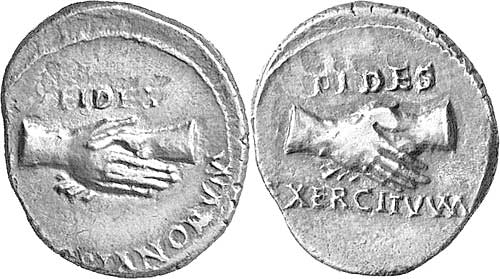
Over time, the handshake of the Gnostic Pythagoreans became the secret Masonic handshake of the Freemasons to announce to fellow Brothers they were followers of the Gnosis. Robert Freke Gold explains this fact in “The History of Freemasonry, Its Antiquities, Symbols …, Volume 1
By Robert Freke Gould
It has been maintained, that the intermediaries in passing ou the “Masonic Grip” from the Ancients to the Moderns, were the followers of the Gnosis, amongst whom symbols and tokens for mutual recognition were well known. At least, so we are informed by Epiphanius, whose early experiences as a Manichean (before his elevation to the episcopate), specially qualify him to enlighten us on this point.
Iamblicus: “The meaning of this symbol is, do not draw up, nor endeavor to raise, by extending your right hand, the unadopted and uninitiated. It also signifies that the right hand is not to be given easily even to those who have for a long time proved themselves worthy of it, through disciplines, and doctrines, and the participation of continence, the quinquennial silence/ and other probationary trials.”‘ It has been maintained, that the intermediaries in passing ou the “Masonic Grip” from the Ancients to the Moderns, were the followers of the Gnosis, amongst whom symbols and tokens for mutual recognition were well known. At least, so we are informed by Epiphanius, whose early experiences as a Manichean (before his elevation to the episcopate), specially qualify him to enlighten us on this point. On the arrival of any stranger, he says, belonging to the same belief, they have a sign given by the man to the woman, and vice versd. In holding out the hand, under pretence of saluting each other, they feel it and tickle it in a particular manner underneath the palm, and so discover if the new comer belongs to the same sect.’
At least, so we are informed by Epiphanius, whose early experiences as a Manichean (before his elevation to the episcopate), specially qualify him to enlighten us on this point. On the arrival of any stranger, he says, belonging to the same belief, they have a sign given by the man to the woman, and vice versd. In holding out the hand, under pretence of saluting each other, they feel it and tickle it in a particular manner underneath the palm, and so discover if the new comer belongs to the same sect.’ The preferable opinion, however, would seem to be that recognition or salutation by means of a “grip” or “band-shaking” is a common feature of many religious and social systems, and is especially prevalent amongst the Eastern people. To this day the Parsees of Western India, after prayers on Pappati or New Year’s Day, visit their friends and relations, when the Hamma-i-jour or “joining of hands” is performed.’ A symbolic language appears to have existed in the old monasteries, the signs not being optional, but transmitted from antiquity, and taught like the alphabet.”
Pike had written, “It represented the number 10, the sacred number in which all the preceding numbers were contained; the number expressed by the mysterious Tetractys, a figure borrowed by him and the Hebrew priests alike from the Egyptian sacred science, and which ought to be replaced among the symbols of the Masters degree, where it of right belongs. (more…)
Moe is the founder of GnosticWarrior.com. He is a father, husband, author, martial arts black belt, and an expert in Gnosticism, the occult, and esotericism.
By Bro.’ Albert Pike – After the destruction of the city and temple, some of the Hebrew initiates were carried away as captives into 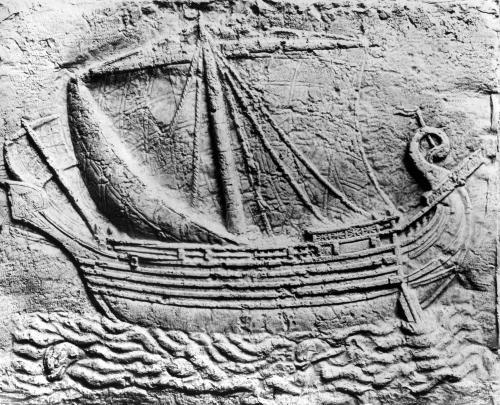 Assyria ; others escaped into Egypt, Persia, Phoenica, Syria, the desert of the Thebald, and even into Greece, Etruria and India.
At a later day, in Phoenician vessels, they penetrated into England, Scotland, and Ireland and other European regions. (more…)
Moe is the founder of GnosticWarrior.com. He is a father, husband, author, martial arts black belt, and an expert in Gnosticism, the occult, and esotericism.