In the Scripture, there is a peculiar black building substance called “slime, Bible Slime or Bitumen,” used for the “mortar for stone and concrete bricks” to build the “Tower of Babel” in ancient Babylonia. It was also paramount in Ancient Egypt to construct the Great Pyramids of Egypt and preserve mummies. Many millennia later, with the coming of Islam, Muslim physicians began to prescribe it for skin ailments and wounds.
This same product that we know today is fossil fuels are also variously translated in the Bible as “bible slime, bitumen, naphta, pitch, tar, asphaltos,” and you will discover is associated with the concept of Tartarus (Tartaros) or Hell, sinning angels and what are called “pits of darkness, to be reserved for judgment.”
For example, we find that this Bible Slime or Bitumen was made in “tar or slime pits” and sometimes the “Lake of Sodom” in Sodom and Gomorrah and later the Dead Sea. In this slime, people are stuck in a type of darkness where they cannot see the light and are referred to as slugs. We read in Psalms,” Like a slug that moves along in slime, like a woman’s miscarried child, they will not see the sun.” (Psalm 116:3)
Due to its ability to “bind and waterproof” various materials, it quickly became one of the most prized and lucrative commercial industries in all the Mediterranean and now the world to this very day. Today, we know of Bible Slime or Bitumen used in its various forms as “asphalt and fossil fuels” for petroleum-like products such as oil and gas, which account for the largest share of energy production and consumption and global pollution.
Spiritually speaking, darkness and light are references to conscious people (awake, enlightened, or woke) and asleep (sleepwalking, unenlightened, zombie, sheople). Let me remind you that when snails are in the sun (light), they shrink, shrivel up, and no longer see the light so they disappear from their shells.
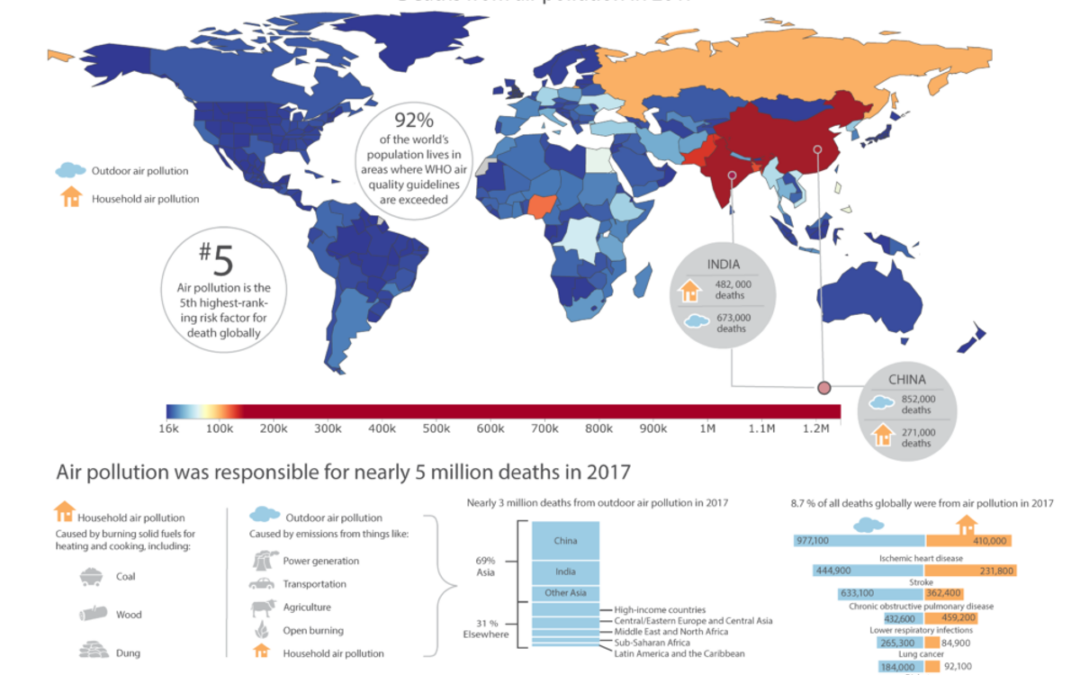
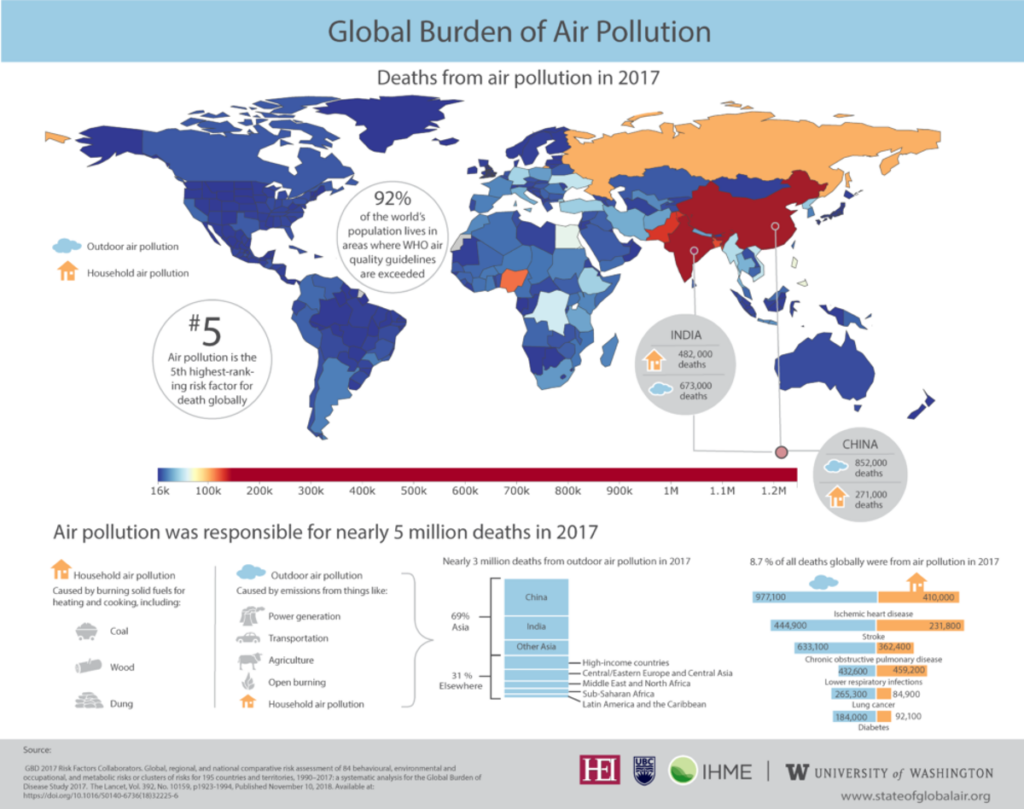
This Biblical reference to they will not see the sun reminds me of the fact that today when these fossil fuels are burned, carbon dioxide (CO2) is produced, which is a major contributor to local air pollution and is linked to millions of premature deaths each year and global climate change. In 2019, approximately 84% of global primary energy came from this decayed organic material ie, coal, oil, and gas.
“Fossil fuels, or energy sources formed in the earth’s crust from decayed organic material, including petroleum, natural gas, and coal, continue to account for the largest share of energy production and consumption in the United States. In 2019, 80% of domestic energy production was from fossil fuels, and 80% of domestic energy consumption originated from fossil fuels.”
The word slime is translated in the Bible as “temer, temes, or tamas” meaning dark or darkness, to hide, or cover-up,and the Hebrew macah and masah, which means “decay, consume, to melt, liquefaction, i.e. disappearance.” The word slime is also variously translated as “bitumen” in the Latin Vulgate and from bitumen as “chomer” in the Hebrew Bible.
I believe all words originally represented what we would call today “molds in English or fungi in Latin,” which I will clearly explain and prove in this article.
Before we look more into the Scripture, we must study etymology and the ancient definitions given to us by historians who have gone before us. For example, when we look at Herodotus’s explanation, he tells us that bitumen is “the product of the decomposition of vegetable and animal substances.“
Herodotus had written;
“Bitumen is the product of the decomposition of vegetable and animal substances. It is usually found of a black or brownish-black color, externally not unlike coal, but it varies in consistency from a bright, pitchy condition, with a conchoidal fracture, to thick, viscid masses of mineral tar.” (Encyc. Brit.)
Herodotus’s reference clearly shows us that this “slime of bitumen” is a product of the decomposition of both vegetables and animals. When we look to modern science for the definition of decomposition, we see that it means “the state or process of rotting; decay of organic waste.”
The principal microorganisms involved in the decomposition and rotting process on earth are fungi/molds.
Their main job on earth is to decompose organic matter by releasing enzymes to break down the decaying material. Fungi/molds absorb the nutrients in the decaying material via their hyphae which is used to break down matter and absorb nutrients then will create the very black, brownish tar-like substance as described by Herodotus.
In addition to these facts, if we look at the explanations given to us by Pliny, he says;
“Near to the nature of sulfur is also that of bitumen.
In some places, it is a slime, and others earth, the slime being emitted, as we have said, from the lake of Judaea and the earth being found in the neighborhood of the seaside town of Sidon in Syria.
Both of these varieties get thickened and solidify into a dense consistency. But there is also a liquid sort of bitumen, such as Zacynthus and the kind imported from Babylon; at the latter place, it also occurs with a white color. The Bitumen from Apollonia also is liquid, and all of these varieties are called by the Greeks pissasphalt, from its likeness to vegetable-pitch and bitumen.
There is also an unctuous bitumen, of the consistency of oil, found in Sicily, in spring at Girgenti, the stream from which it is tainted. The inhabitants collect it on tufts of reeds, as it very quickly adheres to them, and they use it instead of oil for burning in lamps, and also as a cure for scab in beasts of burden. Some authorities also include among the varieties of bitumen naphtha about which we spoke in Book II, but its burning property and liability to ignition is far removed from any practical use.”
Pliny further writes, “The test of bitumen is that it should be extremely brilliant and that it should be massive, with an oppressive smell; when quite black, its brilliance is moderate, as it is commonly adulterated with vegetable pitch. Its medical effect is that of sulfur, as it is astringent, dispersive, contractive, and agglutinating. Ignited it drives away snakes.”
When we look to modern science, we will discover that sulfur plays a key role in the world of fungi/molds. For example, studies have shown that fungal sulfur uptake is required to incorporate into the sidechains of various amino acids and is also essential for biosynthesis. In addition, in certain filamentous fungi, sulfur is also indirectly required for different metabolite functionalities.
Interestingly, fungi/molds such as Fusarium oxysporum reduce elemental sulfur to hydrogen sulfide (H2S), which creates a reaction accompanied by fungal growth and oxidation of the carbon source (ethanol) to acetate. Ethyl acetate is highly flammable, as well as toxic when ingestion or inhaled, and this chemical can be seriously damaging to internal organs,
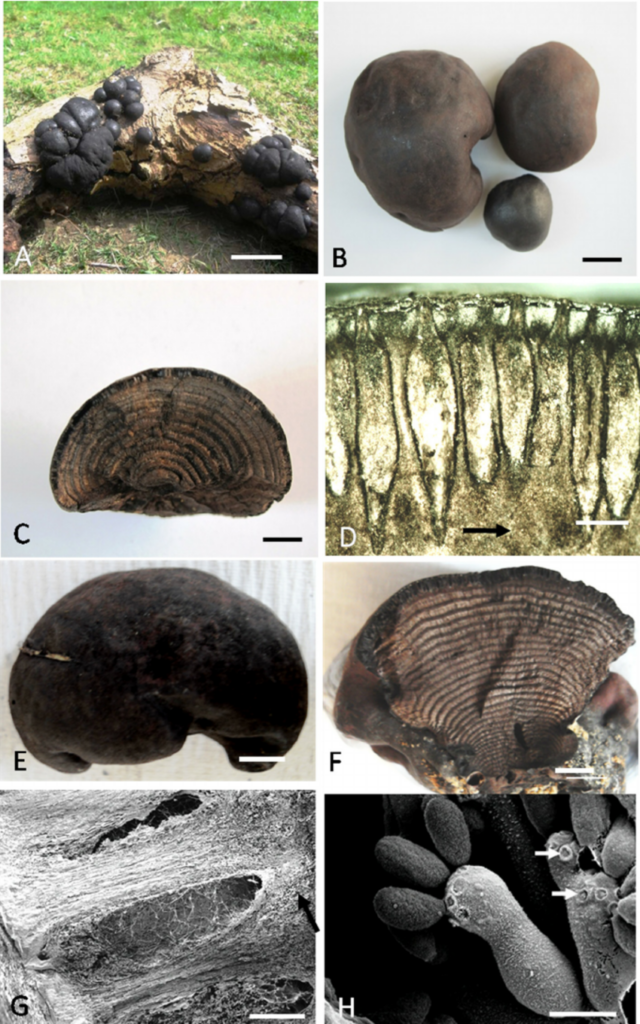
This now brings us to an infamous fungus that is an inedible named Daldinia concentrica is also known as coal fungus and carbon balls due to its ability to burn.
Daldinia concentrica lives on dead and decaying wood and is ball-shaped, with a hard, friable, shiny black fruiting body 2 to 7 centimeters wide that looks like a chunk of coal.
It is sometimes called “bituminous coal” in which the spores of the fungus (tips of the threads) act as fuel and release a putrid type smell that can drive away pests, snakes, and anyone for that matter.
A fungus that is one of the most useful forms of tinder for fire-lighting in the world, just like Pliny described and still carries the name bitumen.
Bible Slime is first spoken of as used for slime that was later changed to cement by the builders in the plain of Shinar or Babylonia. (Genesis 11:3) The bitumen pits in the vale of Siddim are mentioned in the ancient fragment of Canaanitish history (Genesis 14:10). The ark of papyrus in which Moses was placed was made impervious to water by a coating of bitumen and pitch. (Exodus 2:3)
The word “slime” occurs in the following passages: “And they had brick for stone, and slime had they for mortar” (Genesis 11:3); “Now the vale of Siddim was full of slime pits” (Genesis 14:10, margin “bitumen pits”); “She took for him an ark of bulrushes, and daubed it with slime and with pitch” (Exodus 2:3). “The vale of Siddim was full of slime pits” (Genesis 14:10); “the pit of destruction” (Psalm 55:23).
Flavius Josephus, in the Antiquities of the Jews, had written a descriptive passage about the Dead Sea (known in Latin as Lacus Asphaltitus, or “Asphalt Lake”) and the harvesting of bitumen. He identifies the Dead Sea in geographic proximity to the ancient biblical city of Sodom and refers to the lake by its Greek name, Asphaltites.
Josephus mentions people using bitumen chiefly as amulets and during the siege of Jerusalem in the year 70 CE, the tunnels under the city were set fire with bitumen, which collapsed with the Roman siege engines falling into the crevices. In the building of the tower of Babylon, Josephus claims that it was used as a mortar for waterproofing. He writes, “Its thickness dwarfed its apparent height, and it was made from baked bricks cemented with bitumen to prevent them from being washed away.”
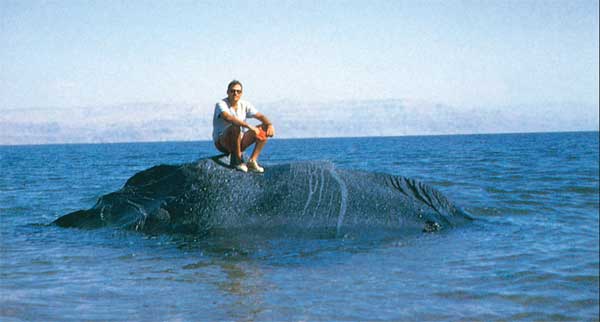
Here is an image from 1969 showing a man sitting on a large car size chunk of bitumen in the Dead Sea.
Several other Biblical passages give us context as to what these slime and bitumen pits genuinely mean.
These passages align with Herodotus’s statement that “slime of bitumen” is a product of decomposition of both vegetables and animals, which I contend we would call “fungi or molds.” The pits would have been a type of special “burial ground or grave yeard” that I theorize was how our ancestors sought to control or manage the spirit world of our departed ancestors.
For example, going back to the Hebrew Scriptures of the Old Testament, we find the word “chomer” is another word used interchangeably for Bible Slime, bitumen, of earth, a bubbling up, mortar, clay, dust, ashes, heap, and or mire.
These definitions, I contend, are clues to its original meaning like we have discovered with bible slime and bitumen. Some obvious passages from the Scripture with the word chomer as the mortar or the fungal filaments enveloping modern humanity would align with my fungi/molds controlling sinners theory are;
Genesis 11:3: “for stone, and slime had they for chomer (mortar).”
Exodus 1:14: “bitter with hard bondage, in chomer (mortar), and in brick, and in all manner of service in the field:”
Exodus 8:14: “And they gathered them together upon chomer (heaps): and the land stank.”
Exodus 8:14: “And they gathered them together upon heaps: upon heaps: and the land stank.”
Leviticus 27:16: “then thy estimation shall be according to the seed thereof: a homer of barley seed shall be valued at fifty”
Numbers 11:32: “he that gathered least ten homers: and they spread them all abroad for themselves round about the camp.”
Job 4:19: “How much less in them that dwell in houses of clay, whose foundation is in the dust, which are crushed”
Job 10:9: “I beseech thee, that thou hast made me as the clay; and wilt thou bring me into dust again?”
Job 13:12: “unto ashes, your bodies to bodies of clay.”
Job 27:16: “as the dust, and prepare raiment as the clay;”
Job 30:19: “He hath cast me into the mire, and I am become like dust and ashes.”
Job 33:6: “stead: I also am formed out of the clay. out of the clay.”
When we read Job 13:12, we find more clues to break the code in Hebrew words like epher and âphâr, which are used interchangeably for mortar, ashes, clay, bible slime, bitumen, etc., which again, I contend is what we would call today molds and fungi. In Job 13:12, it says,
We read in Genesis 37:20, “Come now, therefore, and let’s kill him, and cast him into one of the pits, and we will say,’ An evil animal has devoured him.’ We will see what will become of his dreams.”
Suppose we are to take Herodotus’s testimony of the meaning of bitumen as one of the earliest and best authorities on this matter. In that case, we will conclude that these slime pits were “fungi/molds pits” where animals, humans, and vegetable matter” were quickly decomposed.
The Persian and Arab name of bitumen is mum or mumia and where we get the word mummy. This word was used after they had observed the dark-colored or black mummified bodies of the Egyptians, which led them to believe that the substance was bitumen known to them as mum.
Diodorus Siculus writing in the first century BC, and Pliny, in the first century AD, mention bitumen when writing about the Dead Sea and how it was one of the most lucrative products. Siculus claimed that the Nabateans controlled the Dead Sea bitumen industry ( mentioned in Gen. 14:10 ) in the Greco-roman period and sold it to Egypt to embalming mummies, making them incredibly powerful.
As I have explained in previous articles related to the Scripture, this area is also known as Idumea and now Judea in the Bible. When under Moses and Joshua, the Idumeans were confined to the east and south of the Dead Sea in the time of Jesus Christ. This is the same place where the Nabateans were and where the Dead Sea Scrolls were found.
The Bible Slime or fossil fuels harvested from the sea or ocean are from decayed organic matter in the marine sediment that accounts for 86%https://core.ac.uk/download/pdf/5212176.pdf of the world’s petroleum.
Mumia and where we get the word mummy and the Arabic term for the Dead Sea is “Baḥr Lūṭ” and more appropriately, “al-buḥaira al-muntina”, which means “the stinking Sea”, al-buḥaira al-maḳlūba “the overturned Sea” (because at al-arḍ al-maḳlūba, “the land that has been overturned”, the arḍ ḳawm Lūṭ is placed).
The “stinking sea” and the “overturned sea” would align with the oldest description we have from Herodotus that these pits were made of decomposing matter of which Church Doctors doctored the Scripture to reflect Bible Slime and also my modern scientific explanation of “fungus/mold pits that served as graveyards,” AKA the Dead Sea or Bitumen Pits. The very place where humans were decomposed by being bitten and eaten by the ‘slime,’ ie: fungi/molds that decomposed their bodies and caused a horrific stinking smell of rotting corpses that the Arabs called “al-buḥaira al-muntina.”
A study from 2012 had shown the waters of the Dead Sea currently contain several species of microorganisms, such as fungi/molds, which trigger the development of microbial blooms. The researchers isolated at least 70 species of microorganisms from various locations around the Dead Seas, both onshore and nearshore, including from deep waters.
The microorganisms most often recovered were the fungi, Aspergillus and Eurotium.
The researchers concluded, “there is no direct proof that fungi contribute to the heterotrophic activity in the Dead Sea, but fungi may be present at least locally and temporarily, and their enzymatic activities such as amylase, protease, and cellulase may play a role in the lake’s ecosystem.“
This makes much more logical sense than the false interpretations we have now, which incorrectly lists the meaning of bitumen pits, and Bible Slime was a type of asphalt or concrete mortar. My theory is that the molds/fungi act as a type of “global mortar” or what we can just call “Black matter, or as I state in my previous article, Dark Matter: Surfing the light of cosmic filaments into space and beyond.
An interstellar “mycelium network or internet” that I theorize connects us, humans, animals, insects, the earth, and to space and beyond to one another via specific fungal organisms that can be either beneficial (symbiotic) or detrimental (parasitical).
Parasitical when we use this Bible Slim/Bitumen from this decayed organic material ie coal, oil and gas amongst other ills that are covering the skies with air pollution so we do not see the sun and linked to millions of premature deaths each year of people who will never see the light of day again.
Moe is the founder of GnosticWarrior.com. He is a father, husband, author, martial arts black belt, and an expert in Gnosticism, the occult, and esotericism.
Francis Bacon was a student of nature and philosophy whose teachings have made him one of the Fathers of Modern Science. He had written about what he called two imperfect plants being, “moss and next to it, Mushrooms.”
Today we would know of moss as molds or fungi and its fruiting body is still called a ‘Mushroom.’
Next unto moss, I will speak of mushrooms; which are likewise an imperfect plant.
The mushrooms have two strange properties; the one, that they yield so delicious a meat; the other, that they come up so hastily, as in a night; and yet they are unsown.
And therefore such as are upstarts in state, they call in reproach mushrooms.
It must needs be, therefore, that they be made of much moisture; and that moisture fat, gross, and yet somewhat concocted.
And, indeed, we find that mushrooms cause the accident which we call incubus, or the mare in the stomach.
And therefore the surfeit of them may suffocate and poison.
And this sheweth that they are windy; and that windiness is gross and swelling, not sharp or griping. And upon the same reason mushrooms are a venereous meat.
According to Bacon, older plants grow more moss because their vigor is diminished:
“Old trees are more mossy far than young; for that the sap is not so frank as to rise all to the boughs, but tireth by the way and put out moss.”
The signs of moss are linked to stagnation, the diminished vitality of the tree results in the exteriorization of sap from the interior portion of tree.
Like Bacon, St. Hildegard similarly writes in her Physica: “When trees grow old, they begin to lose their inner greenness (viriditas), and if they are not young, they send the greenness and health, which they ought to have inside, to the exterior bark.”
As I explained in my article, Demons Who Feed On Human Energy, according to Paracelsus, the incubus and succubus (which are male and female respectively) are parasitical creatures subsisting upon the evil thoughts and emotions of the astral body.
These terms are also applied to the superphysical organisms of sorcerers and black magicians.
While these larvæ are in no sense imaginary beings, they are, nevertheless, the offspring of the imagination.
By the ancient sages, they were recognized as the invisible cause of vice because they hover in the ethers surrounding the morally weak, and continually incite them to excesses of a degrading nature.
Frantz Hartman had said, “Incubus and Succubus – Male and female parasites growing out of the astral elements of man or woman in consequence of a lewd imagination.”
Manly P. Hall had said they are sometimes referred to as in Latin, Incubus and Succubus, and in English, it is named the “Mare.”
Moe is the founder of GnosticWarrior.com. He is a father, husband, author, martial arts black belt, and an expert in Gnosticism, the occult, and esotericism.
A new study on LSD (lysergic acid diethylamide) by the University of Cambridge and Imperial College in London has shown that the drug allows users to free brain activity to “trespass anatomical rules,” because it triggers an altered state of consciousness.
Anatomical means relating to the bodily structure or relating to human anatomy so by taking LSD, users are not confined to the so-called normal rules of being human.
This induces what is called “psychosis.” The land where people walk the line between human reality and the spirit world.
Consciousness is believed to involve the integration of multiple segregated brain networks and their subnetworks, and the researchers’ goal is to study patterns of brain connectivity and consciousness under the influence of LSD.
Our main finding is that the effects of LSD on brain function and subjective experience are non-uniform in time: LSD makes globally segregated sub-states of dynamic functional connectivity more complex, and weakens the relationship between functional and anatomical connectivity.
On a regional level, LSD reduces functional connectivity of the anterior medial prefrontal cortex, specifically during states of high segregation. Time-specific effects were correlated with different aspects of subjective experiences; in particular, ego dissolution was predicted by increased small-world organization during a state of high global integration.
These results reveal a more nuanced, temporally-specific picture of altered brain connectivity and complexity under psychedelics than has previously been reported.”
“My main interest — and the focus of my research — is on understanding the neuroscience of human consciousness,” said study author Andrea I. Luppi (@loopyluppi), a Gates Scholar at the University of Cambridge in the Cognition and Consciousness Imaging Group.
“Studying psychoactive substances offers a unique opportunity for neuroscience: we can study their effects in terms of brain chemistry, but also at the level of brain function and subjective experience,” he added. “In particular, the mind is never static, and neither is the brain: we are increasingly discovering that when it comes to brain function and its evolution over time, the journey matters just as much as the destination.”
In 2016, researchers found LSD has a huge impact on intrinsic functional connectivity such as the thalamus, and also increased global integration by inflating the level of communication between normally distinct brain networks reported as “ego dissolution.”
They concluded that “LSD selectively expands global connectivity in the brain and the perceptual boundaries between the self and the environment.”
For example, a study from 2018 had shown that LSD administration significantly decreased functional connectivity within visual, sensorimotor, and auditory networks and the default mode network. Meaning users’ eyes, ears, nose, and other sensory organs did not work the same as before and they were no longer connected in the same fashion.
It is as if the act of taking LSD creates a temporary hybrid human whose bodily functions and chemicals are no longer human, but merged with the very ancient fungal pathogens to become one. As if the drug mutates, morphs, and integrates a person into itself in which the user experiences their world in the 4th dimension.
In other words, LSD alters the brain and body so that it is able to break the normal ruled of being human, while also changing how the brain is able to integrate and process consciousness.
“When you look at the network of fungi, it starts to look back at you!” – Dr. Merlin Sheldrake (Fungal Biologist and author)
Moe is the founder of GnosticWarrior.com. He is a father, husband, author, martial arts black belt, and an expert in Gnosticism, the occult, and esotericism.
This new global threats are molds/fungi like Aspergillus and Candida auris which the CDC says resembles the Black Plague.
Fungal microbes that are coinfecting COVID patients and are much more deadly than the virus.
“We have an enormous blind spot,” says Arturo Casadevall, a physician and molecular microbiologist at the Johns Hopkins Bloomberg School of Public Health.
“Walk into the street and ask people what are they afraid of, and they’ll tell you they’re afraid of bacteria, they’re afraid of viruses, but they don’t fear dying of fungi.”
Attempting to find solutions to this new threat, Chiller consulted with his peers in other countries where the fungus invaded their healthcare systems, causing fast-spreading outbreaks that killed up to two-thirds of the people who contracted it. The problem was that no drug and cleaning agents seemed to work at killing the fungus, and once it contaminated the hospitals and equipment, they had to rip it out and take it to the dump.
Some experts compare these fungal infections to the “creature from the black lagoon and the new Black Plague.
An epidemiologist from Imperial College, London – Johanna Rhodes, said that the fungus could survive on surfaces for long periods. “One of the things that make Candida Auris so scary is the fact it can linger on inanimate surfaces for long periods and withstand whatever you throw at it,” Rhodes said.
Rhodes was one of the scientists involved in containing a fungus outbreak in the UK in 2016. The fungus was compared to the Black Plague only after a CDC doctor found that the fungal makeup resembled substances that are found in lagoons, and other areas brimming with bacteria.
“It is a creature from the black lagoon. It bubbled up and now it is everywhere,” Dr. Tom Chiller said.
Accounts of infections trickled back from India, Italy, Colombia, Germany, Austria, Belgium, Ireland, the Netherlands, and France. Now the same deadly fungi were surfacing in American patients as well: the first signs of a second epidemic layered on top of the viral pandemic.
And it wasn’t just C. auris.
Another deadly fungus called Aspergillus was starting to take a toll as well.
“This is going to be widespread everywhere,” Chiller says. “We don’t think we’re going to be able to contain this.”
Warning networks that link infectious disease doctors and mycologists around the globe lit up with accounts of aspergillosis taking down patients afflicted with COVID: in China, France, Belgium, Germany, the Netherlands, Austria, Ireland, Italy, and Iran. As challenging a complication as C. auris was, Aspergillus was worse. C. auris lurks in hospitals.
The place where patients were exposed to Aspergillus was, well, everywhere. There was no way to eliminate the spores from the environment or keep people from breathing them in.
In Baltimore, physician Kieren Marr was acutely aware of the danger. Marr is a professor of medicine and oncology at Johns Hopkins Medical Center and directs its unit on transplant and oncology infectious diseases. The infections that take hold in people who have received a new organ or gotten a bone marrow transplant are familiar territory for her.
When COVID arrived, she was concerned that Aspergillus would surge—and that US hospitals, not alert to the threat, would miss it. Johns Hopkins began testing COVID patients in its ICU with the kind of molecular diagnostic tests used in Europe, trying to catch up to the infection in time to try to treat it. Across the five hospitals the Johns Hopkins system operates, it was found that one out of 10 people with severe COVID was developing aspergillosis.
Several patients died, including one whose aspergillosis went to the brain. Marr feared there were many others like that patient across the country, whose illness was not being detected in time.
“This is bad,” Marr said this spring.
“Aspergillus is more important in COVID right now than C. auris. Without a doubt.”
The CDC estimates that 300 million people are infected globally with fungal diseases and 1.6 million deaths every year—more than malaria, as many as tuberculosis. Estimates in the US are approximately 75,000 people are hospitalized annually for a fungal infection, and another 8.9 million people seek an outpatient visit, costing about $7.2 billion a year.
“The past five years really felt like we were waking up to a whole new phenomenon, a fungal world that we just weren’t used to,” Chiller says. “How do we stay on top of that? How do we question ourselves to look for what might come next?
We study these emergences not as an academic exercise but because they show us what might be coming. We need to be prepared for more surprises.”
Moe is the founder of GnosticWarrior.com. He is a father, husband, author, martial arts black belt, and an expert in Gnosticism, the occult, and esotericism.
“For if God did not spare angels when they sinned, but cast them into Tartarus (hell) and committed them to chains of gloomy darkness to be kept until the judgment.” (2 Peter 2:4)
The teachings of Hell as a place of torment for sinners and the damned in Christianity come down to us originally from the Ancient Egyptians, Phoenicians, Greeks, and Romans. In Ancient Greece with some of the Greatest Philosophers of all time, from the era of Homer to Hesiod to Plato, this Tradition and what I contend is a theological science about a spiritual prison for humans called Tartarus (Tartaros) was fully developed.
In the Scripture, Tartarus (Tartaros) is said to be the place where 200 fallen Watchers (angels) are imprisoned in an underground abyss reserved for demons, sinners, and the dead. In Enoch, we learn that God placed the archangel Uriel “in charge of the world and of Tartarus” (20:2).
Uriel is the angel “over the world and Tartarus” (ho epi tou kosmou kai tou tartarou), and as such, the conductor to Enoch in the world below secrets of which he explains. In the lost “Prayer of Joseph,” Uriel is the angel who wrestles and converses with Jacob and knows the secrets of heaven, and he is entrusted with the judgment of the Titans.
The meaning of the name Uriel (Ouriel) is “fire or flame of God” or “my light is God”)
Tartarus in Greek mythology is the deep abyss and a type of underground dungeon of torment and suffering for the wicked and as the prison for the Titans and in later myths, for mortals who committed unforgivable sins. According to the Greek poets, Homer and Hesiod, Tartarus is a type of spherical force that reaches the great cosmic pit beneath the earth.
It is located “as far beneath the house of Hades as from earth the sky lies, and he is both a deity (god or force) and a place in the underworld.”
The Greeks imagined the cosmos to have been egg-shaped or spherical, and Tartarus was said to have been an inverted dome with the upper half of this sphere forming the dome of heaven, whilst the bottom half formed the pit of Tartarus.
In Homer’s Iliad (c. 8th century BC), Zeus asserts that Tartarus is “as far beneath Hades as heaven is above the earth.” According to the Homeric Hymn to Hermes, The God of Light, Apollon threatens to cast the infant god Hermes into Tartaros for stealing his cattle;
“For I will take and cast you into dusky Tartaros and awful hopeless darkness (zophon), and neither your mother nor your father shall free you or bring you up again to the light, but you will wander under the earth and be the leader amongst little folk (shades/ghosts of children in Hades).”
Hesiod (c. 700 BCE) depicts it as Misty Tartarus’, stating that it was “as far below the earth as heaven is from the earth” (722-25). He describes Tartarus “as a vast chasm, both dismal and dank and a place of decay,” and states, “Tartarus is one of the first beings to have emerged at the creation of the universe and was the opposite of Gaia (Earth).”
Hesiod describes it further as the unfruitful sea (pontos) where there are shining gates and an immoveable threshold of bronze having unending roots, and it is grown of itself. And beyond, away from all the gods, live the Titans, beyond gloomy Khaos.” He says that the edge of the cosmos is where the flat disc of the earth meets the descending dome of the sky and the ascending walls of the pit of Tartaros.
“The sky-dome and Tartarean pit surround the cosmos in an egg-shaped shell with Tartaros descending as far beneath the earth as the sky rises up above it.”
According to Plato’s Gorgias (428/7-348/7 BCE), the souls who were deemed impious and unjust by the judges of the dead (Rhadamanthus, Aeacus, and Minos), would be sent to Tartarus and eternally damned. In his Phaedo, Plato states that all of the rivers run through the chasm of Tartarus, and then they flow back out of it through the earth.
Roman mythology describes a pit inside extending down into the earth twice as far as the distance from the lands of the living to Olympus. The twin sons of the Titan Aloeus were said to be imprisoned at the bottom of this pit.
Tartarus is also considered a primordial force or God and the unbounded first-existing entity from which the Light and the cosmos are born. He is described as a deity or the God of Abyss and ruled with his sister, Gaia, the Goddess or first Mother of the earth. He was the son of Aether and Hemera, who descended from chaos – the first God.
Meaning, he was considered as existing at or from the beginning of time who came from the stormy pit of Tartaros that lies beneath the foundations of the earth.
In ancient Orphic sources and the mystery schools, Tartarus is also the unbounded first-existing entity from which the Light and the cosmos are born. According to Plato, Tartarus is the place where souls are judged after death and where the wicked received divine punishment. (Plato’s Gorgias)
Virgil describes Tartarus as expansive, surrounded by three perimeter walls, beyond which flows a flaming river named “the Phlegethon. To further prevent escape, a hydra with fifty black, gaping jaws, sits atop a gate that screeches when opened. They are flanked by adamantine columns, a substance that, like a diamond, is so hard, nothing can cut through it.
Virgil had written, “[The ghost of Anchises appears to his son Aeneas in a dream :] ‘Approach the nether halls of Dis [Haides], and through the depths of Avernus seek, my son, a meeting with me. For impious Tartarus, with its gloomy shades, holds me not, but I dwell in Elysium amid the sweet assemblies of the blest.” (Virgil, Aeneid 5. 731)
Carl Jung had written in The Red Book about his experience of descending into Tartarus where the color black/nigredo plays a predominant role in Jung’s initial plunge into Hell where this black water or dirt covers the cave, and he witnesses a subterranean Sun or fire which he has been tasked with to capture.
Jung describes his visions in Tartarus as a hellish landscape with a blackness/nigredo substance up to his ankles with pools of red blood, terrible noises, screams, and dead bodies floating within it as black scarab floats by on the dark stream.
There seems to be an exit or a way out of this Hell via a red stone that he first symbolized as a subterranean Sun or fire covering an opening, which Jung removes and holds it in his hands. Jung had written;
“I see a gray rock face along which I sink into great depths. I stand in black dirt up to my ankles in a dark cave. Shadows sweep over me. I am seized by fear, but I know I must go in. I crawl through a narrow crack in the rock and reach an inner cave whose bottom is covered with black water. But beyond this, I catch a glimpse of a luminous red stone which I must reach. I wade through the muddy water. The cave is full of the frightful noise of shrieking voices.
I take the stone, it covers a dark opening in the rock.
I hold the stone in my hand, peering around inquiringly. I do not want to listen to the voices, they keep me away, but I want to know. Here something wants to be uttered. I place my ear to the opening. I hear the flow of underground waters. I see the bloody head of a man on the dark stream. Someone wounded, someone slain floats there. I take in this image for a long time, shuddering. I see a large black scarab floating past on the dark stream.”
In the Secret Teachings of All Ages, Manly P. Hall connects Tartarus with the concepts of the monad – as the origin or the first thought and all thoughts as the beginning and end of all. It is the receptacle of matter which produces chaos and also the planet Jupiter which he states, “the great power which abides in the center of the universe and controls the circular motion of the planers about itself.”
Hall had written;
Monad–1–is so-called because it always remains in the same condition–that is, separate from the multitude. Its attributes are as follows: It is called mind, because the mind is stable and has preeminence; hermaphrodism, because it is both male and female; odd and even, for being added to the even it makes odd, and to the odd, even; God, because it is the beginning and end of all, but itself has neither beginning nor end; good, for such is the nature of God; the receptacle of matter, because it produces the duad, which is essentially material.
By the Pythagoreans, the monad was called chaos, obscurity, chasm, Tartarus, Styx, abyss, Lethe, Atlas, Axis, Morpho (a name for Venus), and Tower or Throne of Jupiter, because of the great power which abides in the center of the universe and controls the circular motion of the planers about itself.
Monad is also called germinal reason because it is the origin of all the thoughts in the universe. Other names given to it were: Apollo, because of its relation to the sun; Prometheus, because he brought man light; Pyralios, one who exists in fire; geniture, because without it no number can exist; substance, because substance is primary; cause of truth; and constitution of symphony: all these because it is the primordial one.”
In the Greek Comedy, Aristophanes, Frogsdated from the 5th to 4th B.C. had stated:
“[Aiakos (Aeacus), the gatesman of Haides, threatens the god Dionysos with imprisonment in the dungeons of Hell :] ‘The black hearted Stygian rock and the crag of Akheron (Acheron) dripping with gore can hold you; and the circling hounds of Kokytos (Cocytus) and the hundred-headed serpent (ekhidna) [probably Typhoeus] shall tear your entrails; your lungs will be attacked by the the Tartesian Eel (Myraina Tartesia) [probably Ekhidna], your kidneys bleeding with your very entrails the Teithrasian Gorgones will rip apart.'”
Here is some more text from the Homeric Hymn to Pythian Apollo;
“Hera prayed, striking the ground flatwise with her hand, and speaking thus : ‘Hear now, I pray, Gaia (Gaea) and wide Ouranos (Uranus) above, and you Titan gods (Titanes theoi) who dwell beneath the earth about great Tartaros, and from whom are sprung both gods and men! Harken you now to me, one and all.'”
THE MEANING & ETYMOLOGY OF THE WORD TARTARUS
The word Tartarus is composed of the words “tar, tar, and “us or os”
According to Webster’s Dictionary, Tar is found in the Bible to mean “a thick, black, viscous liquid obtained by the distillation of wood, coal, etc., and having a varied composition according to the temperature and material employed in obtaining it.”
It is related to the word ‘atar,’ which means [אָטַר] verb shut up, close, bind or enclose (Arabic bend, curve, what surrounds, encloses. It is related to the word tardemeh תַּרְדֵּמָה noun feminine deep sleep; — absolute ׳ת Genesis 2:21 +; construct תַּרְדֵּמַת 1 Samuel 26:12; — deep sleep, usually with נָפַל + עַל person, and usually by supernatural agency: עַל ׳ת ׳א ׳וַיַמֵּל י Genesis 2:21 (J; ᵐ5 ἔκστασις), נָָֽפְלָח עַל ׳ת Genesis 15:12 (J; ᵐ5 id.), Job 4:13 = Job 33:15 (ᵐ5 [δεινὸς], φόβος), so ׳תַּרְדֵּמַת י 1 Samuel 26:12 (ᵐ5 θάμβος, the result of slothfulness (על and person omitted) Proverbs 19:15; figurative for insensibility of spirit, ׳רוּחַ ת ׳נָסַךְ עֲלֵיכֶם י Isaiah 29:10.
The Hebrew word is radam, which means “to fall or fall into, heavy sleep” related to [רָדַם] verb Niph’al of sleep of death Psalm 76:7; stunning effect of awe and dread Daniel 8:18; Daniel 10:9 (both + אָ֑רְצָה [ וּפָנַי ] עַלמָּֿנַי.
Matar means to kill.
The meaning of the word tar (πίσσα) tar is also pitch and spelled in Greek as pissa, which is another word for pitch and bitumen. These words are all synonyms with “coal or creosote.”
In the Scripture, this Tar is related to a particular substance called “slime, Bible Slime or Bitumen.” It is sometimes used to mix in with the brick and mortar to build the “Tower of Babel,” and is made in what was called “tar pits” and sometimes the “lake of Sodom” in ancient Babylonia.
The word slime is also variously translated as meaning “bitumen” in the Latin Vulgate and as “chomer or chemar” in the Hebrew Bible, and Strong’s Hebrew lists the word for Tar as chemar.
Herodotus, the Father of History, tells us that bitumen is the “product of the decomposition of vegetable and animal substances.”
“Bitumen is “the product of the decomposition of vegetable and animal substances. It is usually found of a black or brownish-black color, externally not unlike coal, but it varies in consistency from a bright, pitchy condition, with a conchoidal fracture, to thick, viscid masses of mineral Tar.” (Encyc. Brit.)
This reference by Herodotus clearly shows us that this “slime of bitumen” is a product of decomposition of both vegetables and animals. When we look to modern science for the definition of decomposition, we see that it means;
“the state or process of rotting; decay of organic waste.”
Now that we understand that the meaning of the word “Tar” is decay and decomposition of vegetables and animals, including we, humans, let’s examine the next word in Tartarus or Tartaros – “us or os.”
The word us means both we, and in a historical sense, it is a group of people with a like mind and similar or the same ideas. Traditional Greek authors would call this “nous,” which is equated with the “human mind ie, intellect, or intelligence – necessary for understanding what is true or real.”
Concerning Tartarus, I contend that this “nous or mind” is connected to what classical Greek writers had called a primordial force, which in reality is the earth’s biosphere or “little nous.” Also, my theory is that our second brain may be our first developed lizard or fungi brain that can be taken over by this same force if we transgress against the laws of being human. I believe these laws have been passed down to us by the lawgivers and prophets who have gone before given us the spiritual Gnosis, world religions, and ancient mysteries that teach us about this hidden reality of our human existance.
A type of ancient hive mind and legislator that operates through the very microorganisms ie, Tar Tar, Slime, Bitumen, and the earth’s internet, which controls its functions and legislates the human parasites/demons much better than any government or military could ever imagine.
TAR TAR US – FUNGAL LEGISLATORS OF THE FINAL JUDGEMENT
Moe is the founder of GnosticWarrior.com. He is a father, husband, author, martial arts black belt, and an expert in Gnosticism, the occult, and esotericism.