Gnosis (Greek for knowledge) in its simplest form is the intuitive spiritual knowledge that comes with knowing thyself. A type of computer code encoded within each of our own DNA that contains unique “genetic knowledge” or “intuitive insight” that each of us are born with. A computer hard drive in our blood that we can use to help us think, reason, intuit and form knowledge with the help of our very own DNA.
If we are to become genuine Gnostics or people who truly know THYSELF, then we must look to science that is proving our very own DNA plays a large role in who we are. The social engineering that we have endured since birth in this current world plays a major part in “where we are at in life,” and our “roles as citizens,” but this artificial propaganda and engineering does not define who we truly are inside.
It has already been scientifically proven that we are chemical energy beings inside of material bodies made of skin, bone and blood that is comprised of the very DNA of all our ancestors. These chemical energies and history books that are encoded in our DNA are what we humans tap for Gnosis and intuition. Once you realize this scientific fact, the socially engineered chains of the illusion we live in and the webs of man made vice start to break free from your soul.
The research below details that our health, DNA, thinking, knowledge and Gnosis all work together in determining who we are, how we live and how we die.
We think big. We think out loud. We think outside the box. We think on our feet. But what we don’t do is think entirely inside our heads. Thoughts aren’t confined to our brains — they course through a network that expands to our bodies, perhaps eliminating, at times, the need for complex thought.
The notion that we think with the body — the startling conclusion of a field called embodied cognition — flies in the face of long-standing views. Early cognitive psychologists defined thought as an activity that resides in the brain: Sensory data come in from eyes and ears, fingers and funny bone, and the mind turns these signals into disembodied representations that it manipulates in what we call thinking.
Sure, the body may collect sensory information, like a computer collects information via mouse and keyboard, but according to the traditional view of cognition, it’s the brain that does the thinking.
But dozens of studies over the past decade challenge that view, suggesting instead that our thoughts are inextricably linked to physical experience. As University of Toronto psychologist Spike Lee puts it, bodily states “aren’t some extraneous thing — they’re part of the thinking process.
According to the study by Suberbielle et al. published in this issue of Nature Neuroscience, DSBs are also produced when the brain is at work (during exploration tasks), or when neurons are aberrantly activated during an epileptic seizure or by artificial stimulation by optogenetic techniques. The authors further showed that the DSBs are not produced as a response to stress hormones, but are rather produced by the normal neuronal activation of the NMDA glutamate receptor; a key receptor involved in neuroplasticity
I was thinking that if thinking is bad for your DNA, then would it not make sense that not thinking would be good for your DNA or that thinking loving thoughts would be good for your DNA? Heck, all this thinking is really starting to make my DNA hurt….
My further research into this ‘matter’ quickly led me to Herbert Benson of Harvard Medical School, who in the 1960s had coined the term relaxation response. What Dr. Benson had invented in the 60’s is really not a new invention at all, but the simple act of meditating, clearing the mind and relaxing. This would of course be the opposite of bad thinking and the stress response that floods our bodies with poisons, stress hormones, raises our blood pressure and elevates our heart rate. By meditating, we are using the relaxation response method that places us in a state of deep rest, which decreases metabolism, relaxes muscles, slows heart rate, lowers blood pressure, and in term will improve not only our health, but also our DNA.
Cell biologist Glen Rein … and IHM Research Director Rollin McCraty conducted a series of experiments in the early 1990s involving DNA and intentionally generated emotions. A decade later interest in these experiments persisted. After numerous requests, McCraty summarized their data and published the results of the research in 2003 in a brief report titled Modulation of DNA Conformation by Heart-Focused Intention.
“The results provide experimental evidence to support the hypothesis that aspects of the DNA molecule can be altered through intentionality,” Rein and McCraty wrote. “To our knowledge, this study was the first to correlate specific electrophysiological modes with the ability to cause changes in a biological target (DNA) external from the body. The data indicate that when individuals are in a heart-focused, loving state and in a more coherent mode of physiological functioning, they have a greater ability to alter the conformation (shape or structure) of DNA.”
Moe is the founder of GnosticWarrior.com. He is a father, husband, author, martial arts black belt, and an expert in Gnosticism, the occult, and esotericism.
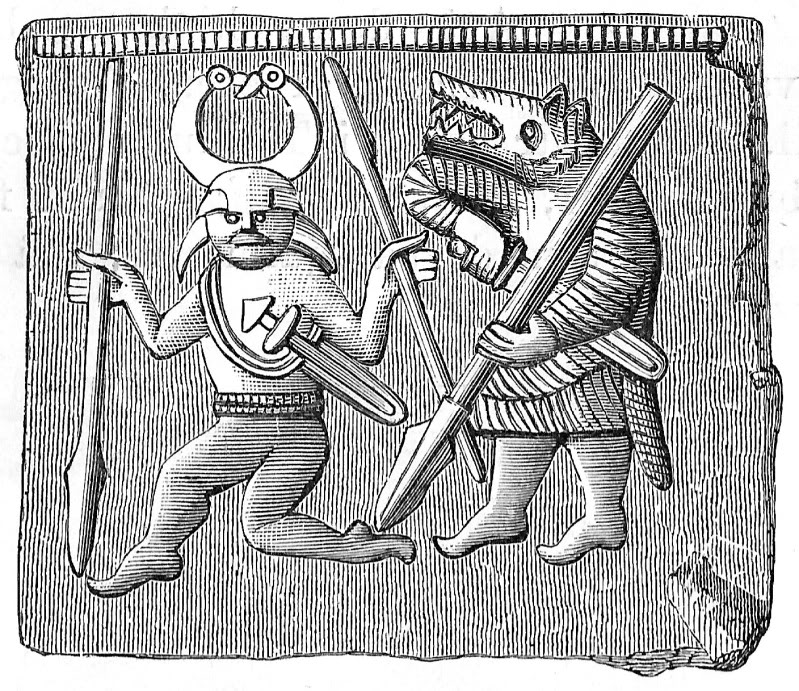
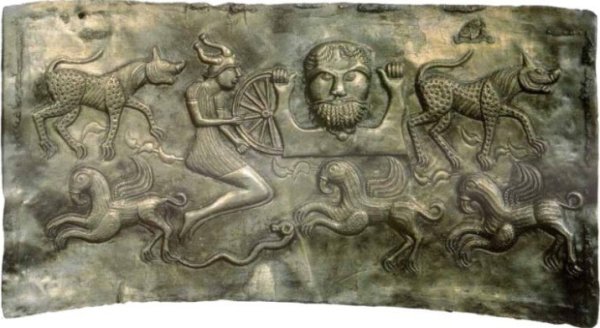
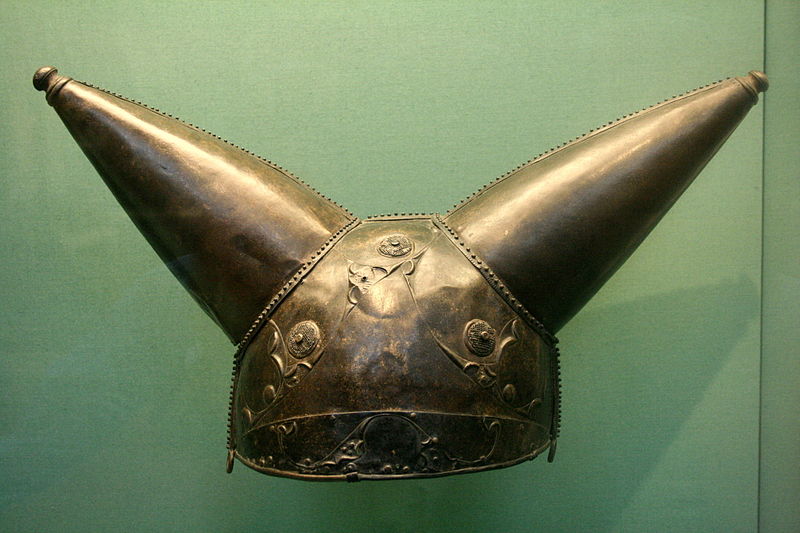
The Vikings were known for their notorious horned helmets. Here is an image of the Viking Norse God, Odin with his horned helmet and his upturned toed shoes.
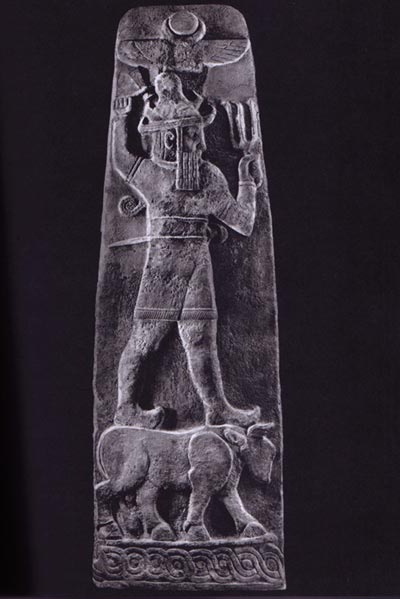
However, the Vikings were not the only people who were said to have worn or have been depicted in art with these horned helmets or Gods. The first people that I have found with this type of head gear were a people known as the Kheta, or the Hittites who were the sons of Heth (Ham, Amon or Jupiter). Here is an image of a Hittite God that I believe represents Jupiter, and is very similar to that of Odin above with the horned helmet and upturned shoes as well. Notice the Trident in his hands and the horned winged disk above his head.
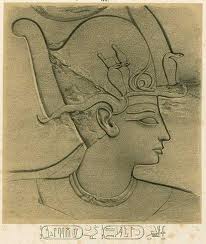
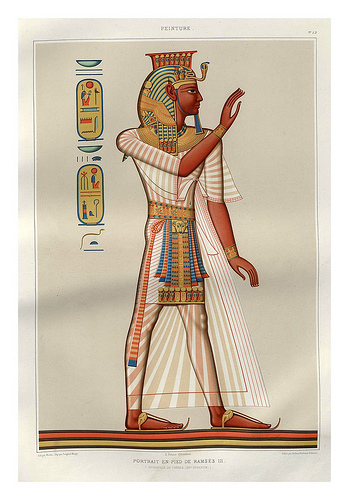
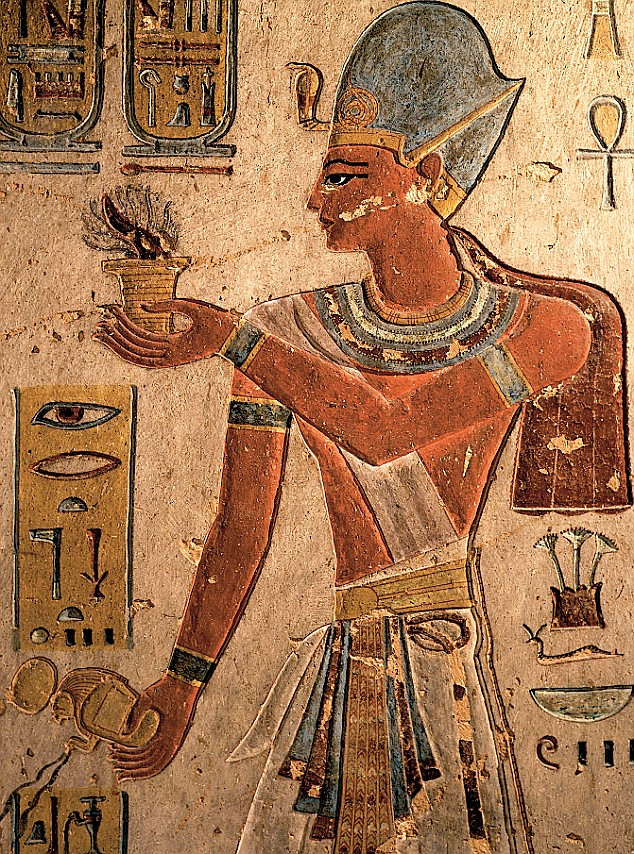
The next people who I have seen in my research with these horns and even the upturned shoes are from the Twentieth Dynasty of the New Kingdom of Ancient Egypt, that I believe to be Israel. Horns and upturned shoes are worn by Ramesses III.
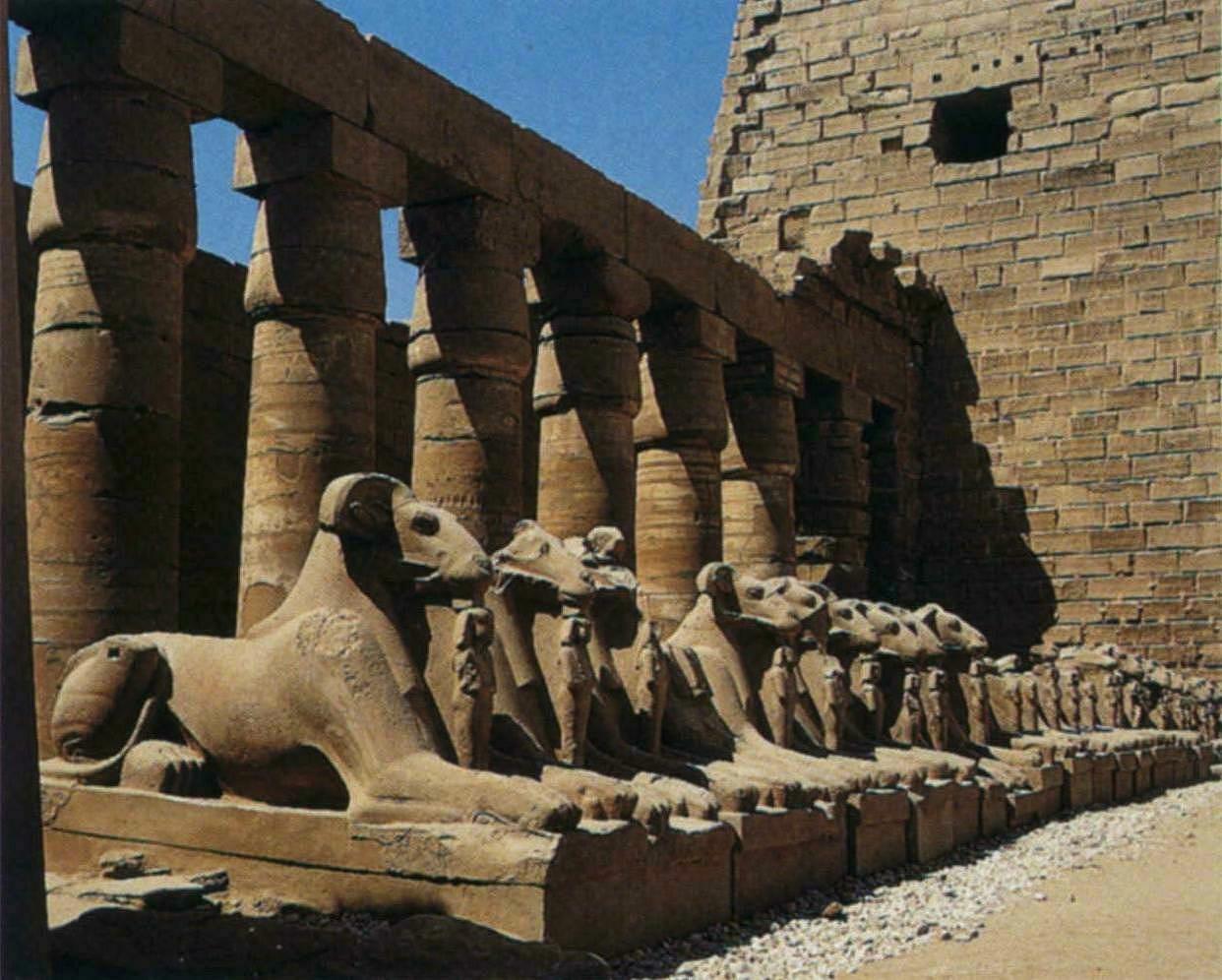
This tradition was carried on by the Priesthood of Jupiter Amon (Amun). The capital for their religion was located in the City of Light, or what we know of as Luxor. The God they had worshipped was god Amon-Ra (Jupiter-Amon). At the temple at Luxor there are many Ram Sphinxs that symbolize God Amon Ra.
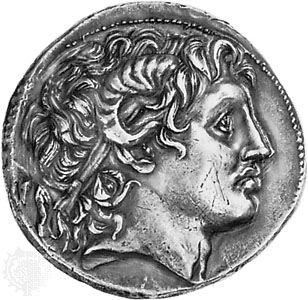
This coin below shows the horns of Jupiter-Amon on Alexander The Great around the period when the ancient city of Damascus was captured in 333 B.C.
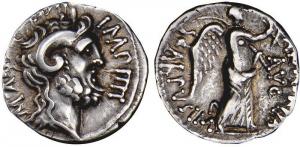
The image below is of Marc Antony on a Denarius 31 B.C. Cyrene. L. Pinarius Scarpus, moneyer with the horns of Jupiter Amon.
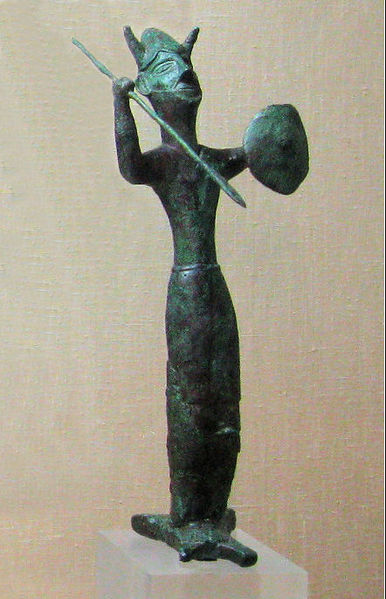
Here is one of the first images of the bronze “Ingot God” from Enkomi, 12th century BC, Cyprus
The question that we must ask is, “Who were the original people that had started this tradition?” All the evidence appears to point towards the Ancient Hittites who the later kingdoms of the Egyptians, Greeks and Vikings, who are seen with these very same exact horns, may very well be the descendants of the people known in the bible as the Hittites, the Sons of Heth (Ham) and the Kheta.
Moe is the founder of GnosticWarrior.com. He is a father, husband, author, martial arts black belt, and an expert in Gnosticism, the occult, and esotericism.
In the course of my search for my long-lost ancestors, that also involves science using DNA research, I have come across one of my great ancestors who happens to be the Pharaoh Ramesses III of the Twentieth Dynasty of the New Kingdom of Ancient Egypt. Ramesses III, also called the Great (0r Sesostris), was the son of the founder of the dynasty, liberator of Egypt, and a great conqueror.
This article is not about me, but what I have found in my research that I would like to share with you, that show Ramesses III having quite a few similarities to that of King Solomon of the bible.
I had detailed the recent DNA findings of this Pharaoh and the fact that his blood line is of a New Dynasty that was a result of an Egyptian–Hittite peace treaty concluded between Egyptian Pharaoh Ramesses II and Hittite King Hattusili III. In these articles you can see the connections I make between these two empires, along with the fact that while Ramesses III had ruled as Pharaoh, he did not dress entirely like the previous Egyptian Pharaohs, but had incorporated Hittite attire such as the infamous upturned shoes/sandals- that were ONLY worn by the Hittites at that time. This connection to Solomon and the Israelites through these upturned shoes/ sandals can be verified in- Matt. 7:26, where JEHU and the Israelites having shoes with upturned toes, while the Assyrians to whom they were paying tribute were wearing sandals with heel caps.
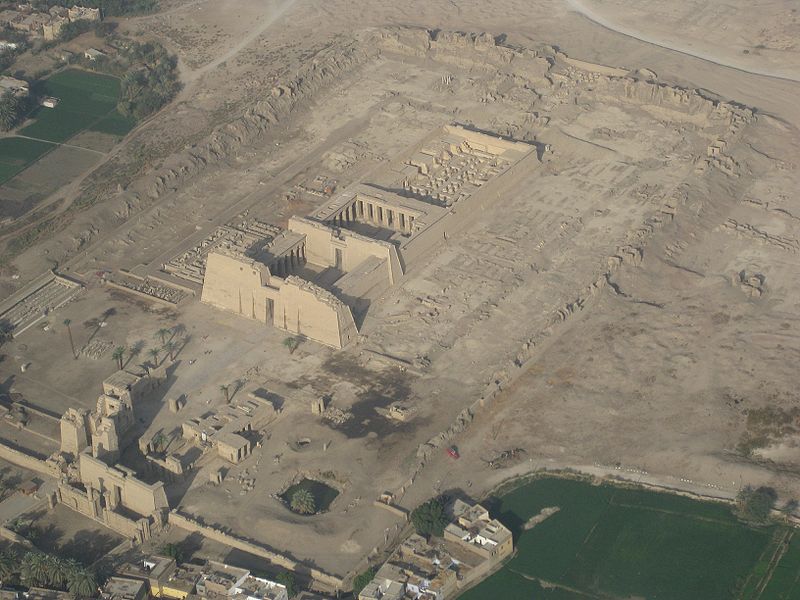
The next connection that I would like to make between the Israelites, King Solomon and Ramesses III is the ancient craft of Temple building, since King Solomon would be best known for the construction of Solomon’s Temple. Please let it be known that Ramesses III was also a great builder who had built several temples during his reign, with one of the most famous being the “Temple of Ramesses III,” also known as Medinet Habu. The “Temple of Ramesses III sounds very familiar to the Temple of Solomon, but the similarities between the allegorical character known as Solomon and the real king Pharaoh known as Ramesses III do not stop here.
The Temple of Ramesses III Looks Almost Exactly Like the Temple of SolomonRamses III made his temple of Medinet Habu at the eastern gateway of Thebes as the administrative head of Amon. It was the last monumental temple to have been built-in the New Kingdom (20th Dynasty 1 198-1 167 B.C.).
Here is an actual areal photograph of the Temple of Ramesses III, or Medinet Habu.
Now below is a depiction of Solomon’s Temple. If you compare the image below with the picture above, they look like they are both built very similar to each other. Of course, The Temple of Ramesses III is real, and it may indeed be the Temple of Solomon that was also known as the temple of Amon in the house of Amon “; that of Re’, “the temple of Ramses III. in the house of Re’ “; that of Ptah, “the temple of Ramses III. in the house of Ptah,” and so on.
Solomon was renowned for his other building projects, and like Solomon, Ramesses III was also known for the same thing. King Solomon had received wood from King Hiram of Tyre and imposed a compulsory labor service on both the Israelites and the foreign nations that were under his control. Ramesses III received assistance from his blood and royal alliance with the Hittites.
Solomon was the son of King David and Bathsheba. Ramesses III was the said to be son of Setnakhte (or Setnakht) who was the first Pharaoh (1189 BC–1186 BC) of the Twentieth Dynasty of the New Kingdom of Ancient Egypt and his mother was Tiy-merenese, Teye-Merenaset,Tiye-Mereniset (Tiy, Beloved of Isis). The name “Mer en Set” is both an Egyptian Coptic Phrase and Initiatory Title from the Budge version of the Egyptian Book of the Dead – it means Beloved of Set. She may also be named Meryetamun, daughter of Ramses II. Mer sounds very familiar to “Mary or the Virgin Mary.” Ramses III had also undertaken several naval expeditions that appear to harmonise with those of Solomon. Both the Egyptain Empire and the Hittite Empires were forces to be reckoned with at this time. Hittite King Hattusili III’s daughter was a Babylonian Princess named Puduhepa who Ramesses II would then marry, and give her an Egyptian name, Maathorneferure.
It is said that Maathorneferure’s original name is unknown, but her Egyptian name translates as “One who sees Horus, the invisible splendor of Ra.” Just as the Queen of Sheba travelled to Jerusalem in search of King Solomon with a very great retinue, with camels that bore spices, very much gold, and precious stones; we also find that this Hittite princess left Hattusa, the Hittite capital in late 1246 BCE to meet her future husband, Pharaoh Ramesses II. She was accompanied by her mother and a huge contingent laden with gold, silver, bronze, cattle and sheep, and slaves.
Is this all a coincidence, or do all these connections prove that the formation of the Israelites was a result of the legal Peace Treaty of Brotherhood for all time made in Stone between the Egyptians and the Hittites (Kheta)? Does this help prove that there was a real King David in Ramesses II with his real life son known in the bible as King Solomon and in stone as Ramesses III? I will let you be the judge.
Moe is the founder of GnosticWarrior.com. He is a father, husband, author, martial arts black belt, and an expert in Gnosticism, the occult, and esotericism.
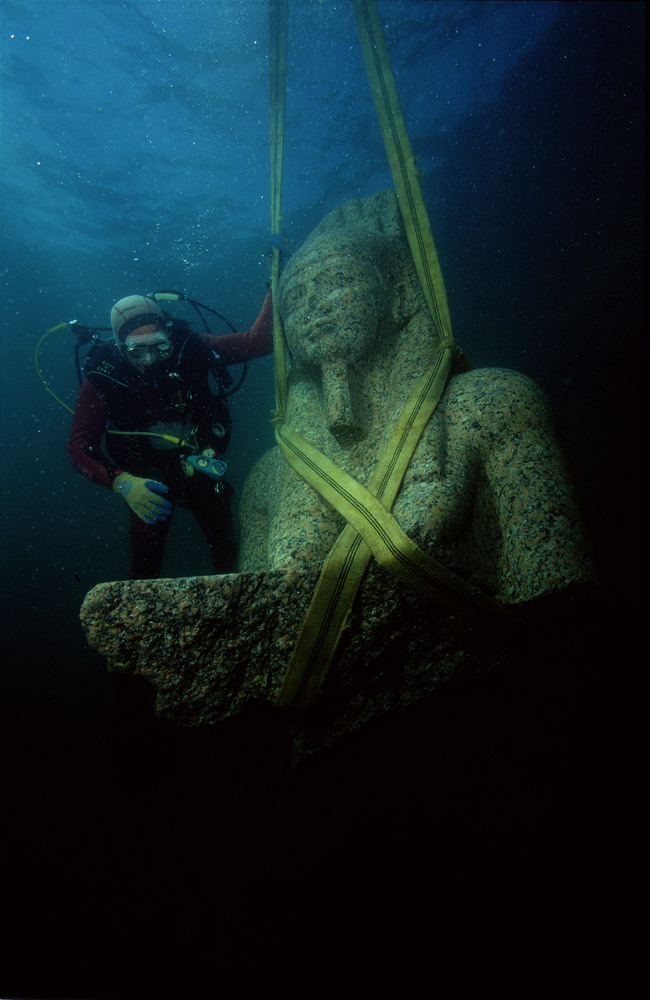
(Source: Franck Goddio) – Thonis-Heracleion (the Egyptian and Greek names of the city) is a city lost between legend and reality. Before the foundation of Alexandria in 331 BC, the city knew glorious times as the obligatory port of entry to Egypt for all ships coming from the Greek world. It had also a religious importance because of the temple of Amun, which played an important role in rites associated with dynasty continuity. The city was founded probably around the 8th century BC, underwent diverse natural catastrophes, and finally sunk entirely into the depths of the Mediterranean in the 8th century AD.
Prior to its discovery in 2000 by the IEASM, no trace of Thonis-Heracleion had been found. Its name was almost razed from the memory of mankind, only preserved in ancient classic texts and rare inscriptions found on land by archaeologists. The Greek historian Herodotus (5th century BC) tells us of a great temple that was built where the famous hero Herakles first set foot on to Egypt. He also reports of Helen’s visit to Heracleion with her lover Paris before the Trojan War. More than four centuries after Herodotus’ visit to Egypt, the geographer Strabo observed that the city of Heracleion, which possessed the temple of Herakles, is located straight to the east of Canopus at the mouth of the Canopic branch of the River Nile.
With his unique survey-based approach that utilises the most sophisticated technical equipment, Franck Goddio and his team from the IEASM, in cooperation with the Egyptian Supreme Council of Antiquities, were able to locate, map and excavate parts of the city of Thonis-Heracleion, which lies 6.5 kilometres off today’s coastline. The city is located within an overall research area of 11 by 15 kilometres in the western part of Aboukir Bay. Franck Goddio has found important information on the ancient landmarks of Thonis-Heracleion, such as the grand temple of Amun and his son Khonsou (Herakles for the Greeks), the harbours that once controlled all trade into Egypt, and the daily life of its inhabitants. He has also solved a historic enigma that has puzzled Egyptologists over the years: the archaeological material has revealed that Heracleion and Thonis were in fact one and the same city with two names; Heracleion being the name of the city for the Greeks and Thonis for the Egyptians.
So far, 64 ancient shipwrecks and more than 700 anchors have been unearthed from the mud of the bay, the news outlet notes. Other findings include gold coins, weights from Athens (which have never before been found at an Egyptian site) and giant tablets inscribed in ancient Greek and ancient Egyptian. Researchers think that these artifacts point to the city’s prominence as a bustling trade hub.
Researchers have also uncovered a variety of religious artifacts in the sunken city, including 16-foot stone sculptures thought to have adorned the city’s central temple and limestone sarcophagi that are believed to have contained mummified animals.
Experts have marveled at the variety of artifacts found and have been equally impressed by how well preserved they are.
“The archaeological evidence is simply overwhelming,” Professor Sir Barry Cunliffe, a University of Oxford archeologist taking part in the excavation, said in a press release obtained by The Huffington Post. “By lying untouched and protected by sand on the sea floor for centuries they are brilliantly preserved.”
Read more from Franck Goddio. Frank is a pioneer of modern maritime archaeology. As the grandson of Eric de Bischop (navigator, writer, inventor of the modern catamaran, and specialist of ancient navigational routes in the South Pacific), a passion for the sea and wanderlust runs in Franck Goddio’s veins.
Moe is the founder of GnosticWarrior.com. He is a father, husband, author, martial arts black belt, and an expert in Gnosticism, the occult, and esotericism.
Those who are skilled in combat do not become angered, those who are skilled at winning do not become afraid. Thus the wise win before they fight, while the ignorant fight to win. -Zhuge Liang
Moe is the founder of GnosticWarrior.com. He is a father, husband, author, martial arts black belt, and an expert in Gnosticism, the occult, and esotericism.
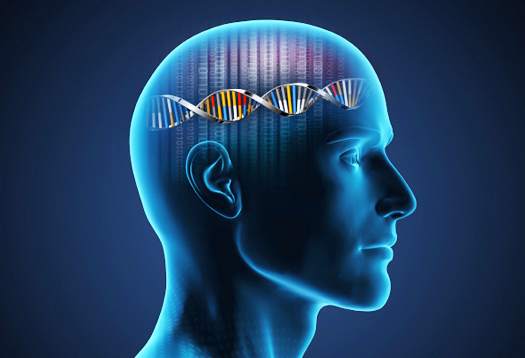 of computer code encoded within each of our own DNA that contains unique “genetic knowledge” or “intuitive insight” that each of us are born with. A computer hard drive in our blood that we can use to help us think, reason, intuit and form knowledge with the help of our very own DNA.