by
“The Christ within you, the hope of glory.” – St Paul
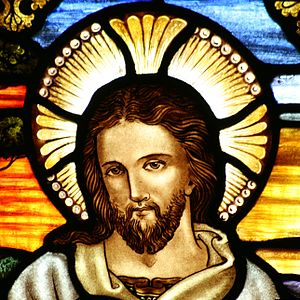
Stained glass at St John the Baptist’s Anglican Church http://www.stjohnsashfield.org.au, Ashfield, New South Wales. Illustrates Jesus’ description of himself “I am the Good Shepherd” (from the Gospel of John, chapter 10, verse 11). This version of the image shows the detail of his face. The memorial window is also captioned: “To the Glory of God and in Loving Memory of William Wright. Died 6th November, 1932. Aged 70 Yrs.” (Photo credit: Wikipedia)
Gnostic Christianity may seem like a radically different form of Gnosticism, one that surrounds the figure of Jesus Christ and his teachings. But underneath this theological dressing are not only specific keynotes to other Gnostic movements, but the reality that Jesus Christ is much more (and really) less than a spiritual icon: he is an intimate and lost part of each one of us.
In their texts, Christian Gnostics were varied in speculating the nature of Jesus Christ, from presenting him as a shape-shifting god (the Secret Book of John), to describing him as very human and very in the flesh (the Apocalypse of James). But the one commonality is that Jesus is always seen as a hierophant of mysteries to those seeking spiritual awakening; he is the one who stimulates Gnosis within the heart, sparks the slumbering Divine Spark. But Jesus is always presented very subjectively, almost as if the author is writing allegorical fiction or satisfying a specific worldview with modifications.
This style of showcasing a luminary in an almost mythical manner, as well as a teacher who imparts sacred information, is found virtually in all other Gnostic movements beyond Gnostic Christianity. Take for example Hermes Trismegistus, who takes the place of Jesus Christ in the Hermetic tradition. Like Jesus, his history is almost an afterthought, and he becomes more of an archetypal figure of the speculative imagination of the different Hermetic authors. (more…)
by
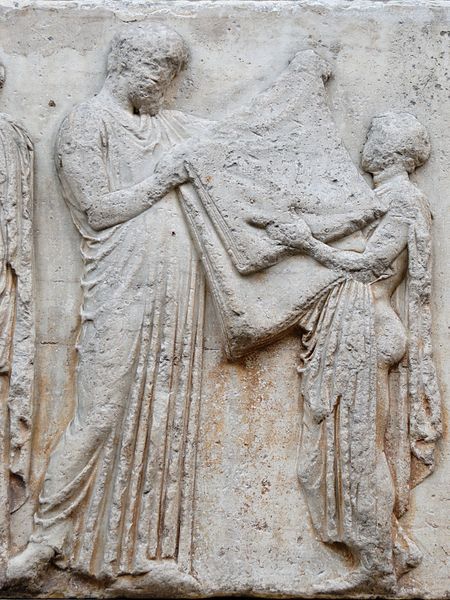 By Miguel Conner – Most religions offer a grand cosmic drama, a metaphysical narrative of conflict that filters down to the worldly realms—with the human soul often as the ultimate battleground. The Gnostics had their own spiritual epic, and presented perhaps the most intriguing yet menacing villains in all religious annals: The Archons.
The word “archon” sounds poetic, echoing some sci-fi antagonist perhaps, but the word simply comes from the Greek for “ruler” or “prince,” with a mostly secular connotation. Yet the Apostle Paul in his epistles uses “archon” in a transcendental context (Ephesians 2:2 and Colossians 2:15 are two examples). Through a more esoteric reading, Paul indicates that it was demonic agents, not the Jews or Romans, who were actually responsible for the death of Jesus Christ; and that these very same forces control the universe.
The Gnostics, always the radical innovators and deconstructionists, expanded Paul’s concepts into notion of the Archon (as found in such texts as the Secret Book of John, the Hypostasis of the Archons, and the Gospel of Judas). In fact, they took the notion to terrifying new vistas, proposing that the god of the Old Testament and his angels were nothing but Archons—mighty but flawed deities that managed the cosmos and suppressed the forces of good by drowning existence under waves of ignorance and bureaucracy of all sorts. (more…)
by Moe
Christianity is a secret Gnostic religion that often hides its teachings in allegories from the profane (uninitiated). However, in the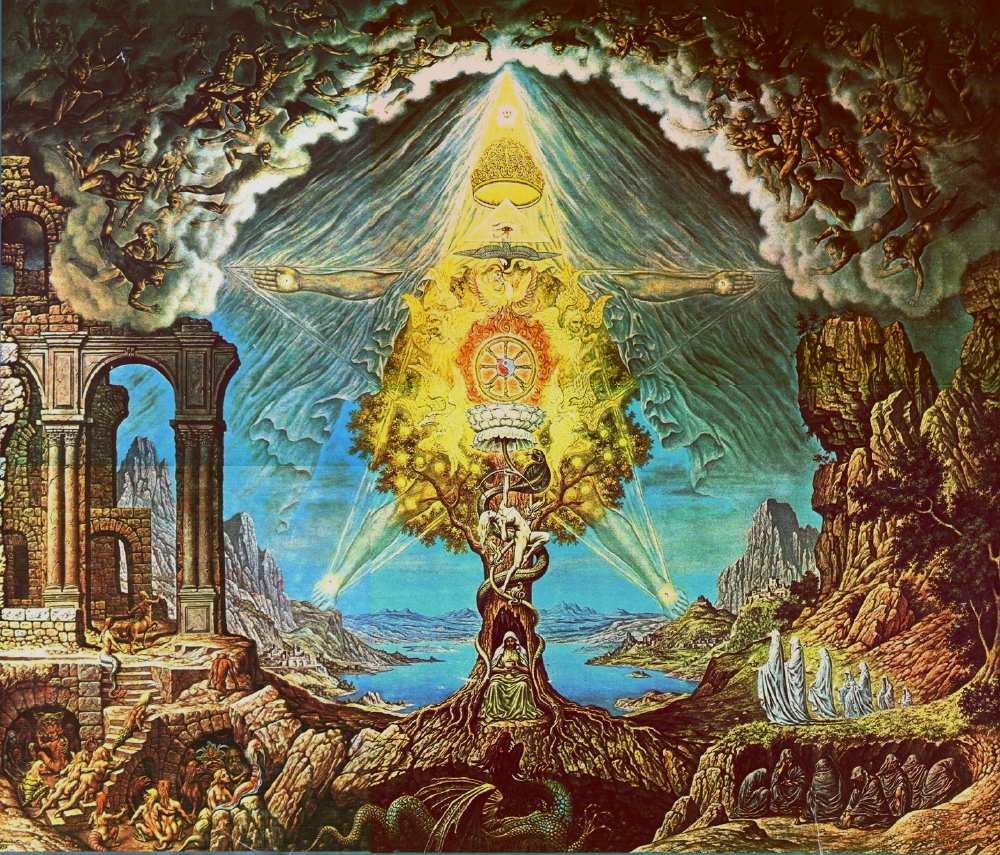 bible you will also find many references about Gnosis or knowledge that are not really hidden at all and are has plain as day.
Below are just some examples of these Gnostic verses that you can find all throughout the bible.
Hosea 4:6 – My people are destroyed for lack of knowledge; because you have rejected knowledge, I reject you from being a priest to me. And since you have forgotten the law of your God, I also will forget your children.
Proverbs 24:5 – A wise man is full of strength, and a man of knowledge enhances his might,
Proverbs 15:14 – The heart of him who has understanding seeks knowledge, but the mouths of fools feed on folly. (more…)
Moe is the founder of GnosticWarrior.com. He is a father, husband, author, martial arts black belt, and an expert in Gnosticism, the occult, and esotericism.
by Moe
This will be part 1 in a series of articles that I AM creating on “What is Hell?”
The Sunday preacher on a hot summer day from the sweaty pulpit had said to his congregation, “Your soul is going to burn in Lake of Fire and Brimstone for all your dirty low down sins.” Shortly thereafter he had made this devilish statement, he then asked the perspiring congregation for tithes.
Hell is said to smell like burning sulfur and is often referred to in the Bible as “brimstone”, and is a symbol of perpetual torment and destruction. However, Brimstone is just an alternative name for sulfur and the Old French word Sulfur is derived from the Latin sulphur, meaning “to burn”. Brimstone, is derived from the Old English (Saxon) Brenne-stone and is also called, quia igne accenditur; a stone that burns or a burning stone.
God made it an instrument of his vengeance on the heathen and other delinquents. See Ps. xi. 6; Deut. xxix. 23; and Jude ver. 7 and Isaiah, speaking of the enemies of the church, under the designation of Edom, and their destiny, ch. xxxiv. 9, says,
“And her torrents shall be turned into pitch,
And her dust into sulphur:
And her whole land shall become burning pitch.” (more…)
Moe is the founder of GnosticWarrior.com. He is a father, husband, author, martial arts black belt, and an expert in Gnosticism, the occult, and esotericism.
by Moe
In studying the history of reincarnation, I have found a strong correlation between people who have birthmarks and reincarnation. I AM finding out in my research that there are many people such as myself who believe they are reincarnated, and who also have peculiar birthmarks and or moles on their bodies. In addition to these connections, I have also found medical research, religions, and entire cultures who believe that the birthmark is some sort of divine sign and or mark from the Gods indicating a past life.
I wrote an article a while back that had somewhat gone into the subject of birthmarks, called “The BirthMark of Cain.” In that article I had made some birthmark connections to the bible and also ancient history where I had explained how birthmarks were held in very high esteem amongst various Tribes and secret societies throughout ancient history.
What I have also found in the course of my studies is that there are very few people who are experts or specialize in this subject. In fact, I have only found one major  study that was put out in the year 1997 by a man named Dr. Ian Stevenson who is a psychiatrist and has written a book on reincarnation and birthmarks. In his study he found that an incredible 35% of the subjects who claimed they were reincarnated, had also either birthmarks or birth defects on their skin. (more…)
Moe is the founder of GnosticWarrior.com. He is a father, husband, author, martial arts black belt, and an expert in Gnosticism, the occult, and esotericism.
by
The Gnostic Gospels are one of the main influences in the benign expansion of modern religious views in Western culture. These ancient, mystical writings not only grant a deeper and richer view of  nascent Christianity and other religions, they also offer radical notions that are controversial even today. The problem is that, for various reasons, what constitutes a “Gnostic Gospel” has become widely distorted and watered-down, by both supporters and opponents, to the point their original message often gets lost.
This, in essence, makes the Gnostic Gospels as hidden and censored as they once were in a bygone era of brutal theocracies.
So what exactly is a Gnostic Gospel?
First and foremost, the definition of “Gnostic” should be established; that has certainly been debated for generations by both supporters and opponents! The ideal, typological box on what constitutes “Gnostic” will never be fully agreed upon (not uncommon for any religion or even secular movement). However, an almost-universal agreement is that Gnostics throughout history pioneered and championed the concept of Gnosis: salvific knowledge that ignites a cosmic awakening of an individual’s indwelling divinity, as well as stimulates the realization of surrounding false realities crafted and ruled by oppressive forms of consciousness (gods, the ego, earthly establishments, etc.). (more…)