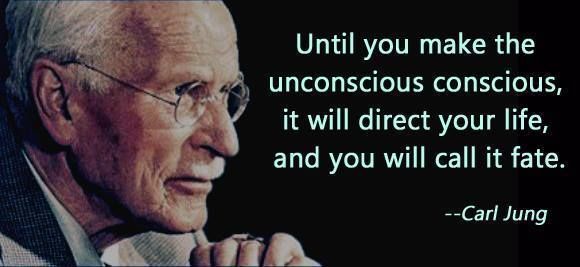
Until you make the unconscious, conscious, it will direct your life and you will call it fate.” — Carl Gustav Jung, Psychology and Alchemy (1944)
Most people never notice the invisible hand at work — quietly pulling them back into the same bad behaviors, the same broken relationships, and the same traps they swore they’d never fall into again.
It operates below awareness, buried in old wounds and unexamined beliefs, running the show while the conscious mind convinces itself it’s finally in control.
The cycle doesn’t break itself. Most never even know there’s a cycle to break.
Some people call it fate. Some call it luck and others call it destiny.
Carl Jung called it something far more confronting: the unconscious mind operating without supervision.
This single sentence by Jung lays bare one of the most unsettling truths of modern psychology—that the grand architect of your life may not be you at all, but the hidden hand of your own psyche of secretly pulling the strings of your very being.
The people who do understand and get to know this unconscious part of themselves, are often victims of their own device.
A type of human puppet or automaton without a soul on a suicide mission.
As the ancient Delphic oracle commanded: “Know thyself,” and the The Hermetic axiom “As above, so below” we finds a striking parallel to Jungian philosophy and cognitive science: the mind’s architecture mirrors the universe’s hierarchy.
The lower (sensory, reactive) must be integrated with the higher (rational, transcendent) to produce genuine wisdom.
In the language of cognitive science, thinking styles exist on a spectrum between the lower and higher mind.
We also know today that we have a brain in our heads that has two separate sections or hemispheres with the left and right having specific functions and connections within the human body.
Research shows us that our brains in our skulls are permanently connected to our gastrointenstinal tracts in the stomach via the gut-brain axis.
Johns Hopkins Medicine describes the ENS as so sophisticated that it can operate largely independently of the brain, leading researchers to informally call it “the second brain.”
Studies have proven that the human body houses two interconnected nervous systems engaged in constant, bidirectional dialogue—a discovery that forces a fundamental reconsideration of how consciousness and perception actually work.
For example, Research into what scientists now call the gut-brain axis reveals that the human body houses two interconnected nervous systems engaged in constant, bidirectional dialogue—a discovery that forces a fundamental reconsideration of how consciousness and perception actually work.
Neuroscientists now describe cognition as a synthesis of bottom-up processing—raw sensory data streaming in from the environment—and top-down processing—the brain’s learned expectations, memories, and emotional states shaping how that data is interpreted.
In the language of cognitive science, thinking styles exist on a spectrum between two poles.
What is now becoming clear is that the gut, i.e. “the second brain” not only participates actively in this loop, but it can control it 100%.
Meaning, in some people today, especially with mental illness, this loop has been broken.
A broken loop that I contend can make someone lose their ability to be able to process information from the top down.
A person have lost the ability to truly think rationally, logically and act responsibly with the brain in their skulls.
Instead, they are secretly controlled by the organisms in their second brain who are controlling the nervous system like the strings on a puppet.
An all to often common event that can cause humans to become programmable automans based on the input of information over the course of their lives.
In order to understand human cognition, you need to that these two brains have different functions and abilities as it relates to thinking.
Much of our days are spent reacting without thinking because we are hardwired to operate without having to consciously think.
The two hemispheres in our brain along with our gut (second brain), the right and left have different functions in processing this information.
The right hemisphere is associated with automatic bottom-up processing and awareness of information holistically and relationally.
The left hemisphere is associated with top-down processing and focused attention to analyze and conceptualize information for language processing, logical thought, and simplifies information for easier processing.
Top-down thinking begins with a conceptual schema — a pre-existing framework, assumption, or narrative — and uses incoming data to confirm or adjust it.
A top-down thinker enters a room and immediately categorizes it: meeting room, formal, hierarchical. Their perception is shaped and filtered by inherited expectation.
Bottom-up thinking works in the opposite direction entirely.
The bottom-up thinker enters the same room and first registers its individual components: the hum of a fluorescent light, the power dynamics implicit in the seating arrangement, the emotional temperature of the people present.
Only after processing these granular inputs does a larger picture assemble.
As Simply Psychology researchers have documented, bottom-up processors “may focus more on specific parts of information rather than integrating it holistically” — a tendency that grants remarkable precision in detail but creates vulnerability to incomplete synthesis under pressure.
Obviously, we are still making decisions and reacting but this is done on the subconscious level as we move back and forth between conscious and unconscious forms of thought.
For example, how many of us speak and engage with one another is often done with little thought.
Scientists call this bottom up thinking.
Understanding bottom-up thinking — the cognitive architecture of those who act before they think — is not merely an academic exercise.
It is a map to one of the most misunderstood forms of human intelligence ever documented.
Bottom-up thinking is also known as condensed inner speech, which is the final stage of how we internalize our thoughts as we learn language and to talk to ourselves inside our heads. This concept was studied by psychologists like Vygotsky in 1934, Galperin in 1957, and Sokolov in 1967.
At this point, it happens naturally and without us even realizing it.
Meaning, some of our thoughts have now become automattic allowing habit formation.
Instead of using full sentences, we often just think in single words or phrases that match what we’re experiencing at the moment.
This type of speech happens in our minds that connects closely with our thinking, but it is automatic and autonomous.
It’s like how we automatically recognize sights and sounds, without really thinking about it—our brain processes it all in the background.
This would be what science calls a bottom–up perception of sensory input, most of which is processed automatically through implicit/unconscious neural mechanisms.
This bottom-up processing contributes to the development and execution of our habits, which are automatic behaviors, AKA repetitive actions that have become ingrained into our being and can be triggered by environmental cues without conscious thought.
In social interactions, this allows for rapid processing of facial expressions and body language guides our responses in social situations.
For people who engage in activities like sports or playing musical instruments, bottom-up processing allows for quick, fluid movements based on sensory feedback.
This process begins with the raw sensory data received by our sensory receptors and moves “up” to higher-level cognitive processing.
This allows humans to have quick reactions to environmental stimuli, which is crucial for survival and everyday functioning.
Rather than beginning with a broad conceptual framework and inserting details to confirm it, the bottom-up thinker starts with raw pieces of reality and gradually assembles them into a coherent whole.
In the language of formal logic, this is an inductive approach: evidence leads to theory, not the reverse.
It helps filter relevant sensory data, allowing us to focus on important cues.
The contrast with top-down thinking is stark and consequential.
Top-down thinking begins with the big picture — a pre-existing mental schema, an established expectation, a narrative inherited from culture or authority.
A top-down thinker looks at a room and immediately “reads” its social purpose.
A bottom-up thinker first registers the ticking clock, the quality of light, the texture of a surface, the emotional undercurrent in a voice — and only later assembles these raw percepts into something meaningful.
As researchers at Simply Psychology summarize it: bottom-up processors “may focus more on specific parts of information rather than integrating it holistically”.
In the simplest terms available: bottom-up thinking is data first, categorize later.
Act now, think later.
The modern rehabilitation of gut intelligence is largely credited to Dr. Michael D. Gershon of Columbia University, whose landmark 1998 book The Second Brain reignited scientific interest in the enteric nervous system (ENS).
Gershon described the bowel as “the only organ that contains an intrinsic nervous system able to mediate reflexes in complete absence of input from the brain or spinal cord,” and noted that the gut represented “a vast chemical warehouse featuring every class of neurotransmitter found in the brain”.
The human ENS contains between 200 and 600 million neurons—a complexity rivaling that of the spinal cord itself. It was the gut’s capacity to operate entirely independently of the cranial brain that led Gershon to call it the “second brain.”
Yet as Gershon himself noted, independence does not mean isolation: “While it’s no help in matters of philosophy, poetry, and other forms of deep thought, this second brain and how it interacts with the first one is a key factor in our physical and mental well-being”.
The Vagus Nerve: The Body and Minds Secret Highway
The primary communication channel between these two brains is the vagus nerve—cranial nerve X—one of the longest and most complex nerves in the human body.
A 2018 review published in Frontiers in Psychiatry described the vagus nerve as “the main component of the parasympathetic nervous system, which oversees a vast array of crucial bodily functions, including control of mood, immune response, digestion, and heart rate”.
Crucially, the vagus nerve sends information in both directions, but approximately 80–90 percent of its fibers carry signals upward, from gut to brain—not downward.
The body, in other words, is informing the mind far more often than the mind is directing the body.
The microbiome housed in the digestive tract produces neurotransmitters including serotonin, dopamine, and GABA—the very same chemical messengers that regulate thought, emotion, and awareness.
An estimated 90–95 percent of the body’s serotonin, widely associated with feelings of well-being and mental stability, is produced not in the brain but in the gut by microorganisms.
In 2018, researcher Maya Kaelberer and her team at Duke University made a landmark discovery: the gut communicates with the brain not only through slow hormonal signaling but through fast, direct neural connections.
They identified specialized sensory cells in the small intestine—dubbed neuropod cells—that synapse directly onto the vagus nerve, creating a rapid electrochemical line of communication between gut and brain.
Most recently, a 2026 study published in News-Medical provided the most startling evidence yet: specific gut bacteria were detected traveling via the vagus nerve and arriving in the brain tissue of mice—without any detectable breach of the blood-brain barrier.
Researchers confirmed that mice that underwent vagotomy (surgical severing of the vagus nerve) showed approximately twenty-fold fewer bacteria in the brain than control animals.
This architecture has profound implications for understanding both human perception and philosophy.
Within the labyrinthine walls of the digestive tract lies a complex neural empire — the Enteric Nervous System (ENS) — housing between 200 and 600 million neurons and over twenty distinct neuron types. This structure, embedded from esophagus to anus, does not merely process food.
It processes experience itself.
Johns Hopkins Medicine has called it “a brain in your gut” that is “revolutionizing medicine’s understanding of the links between digestion, mood, health, and even the way you think”.
Carl Jung, who spent decades mapping the dark corridors of the unconscious psyche, may have identified the psychological phenomenon; modern neurogastroenterology is now identifying its biological substrate.
When Jung declared that the unconscious would direct one’s life until it was made conscious, he was articulating, in the language of depth psychology, something that biochemistry is now expressing in the language of microbial signaling.
The second brain of the gut — and the trillions of microorganisms that colonize it — operates largely below the threshold of conscious awareness, shaping emotions, steering decisions, and sculpting personality in ways the thinking mind rarely suspects.
The ENS operates with a degree of independence that is neurologically extraordinary: studies confirm that even when the vagus nerve — the primary neural highway connecting gut to brain — is severed, the enteric nervous system continues to function autonomously.
The intestine, it has been noted, is the only organ in the body capable of operating in complete independence from the central nervous system.
This autonomy carries staggering implications. The standard model of human cognition places the brain at the center of all meaningful processing.
Yet neurogastroenterology reveals a rival headquarters operating in the abdomen, one that communicates with the central nervous system through bidirectional chemical and electrical signals transmitted via the vagus nerve within milliseconds.
As the University of British Columbia’s Neuroscience division observed, “emerging evidence is showing that the gut-brain axis is one of the most powerful relationships in our body”.
The gut is not merely reactive; it is generative. It initiates biochemical states that rise upward into consciousness and are experienced as emotion, motivation, and judgment — before the conscious mind has time to deliberate.
The Microbial Directors of Fate
Beyond the ENS itself lies a still deeper layer of hidden sovereignty: the microbiome. The human gut harbors trillions of microorganisms — bacteria, fungi, archaea, and viruses — that collectively outnumber human cells tenfold.
These microorganisms are not just passive passengers – they may be driving the human vehicle for billions of people around the globe.
A 2018 study published in Translational Psychiatry documented the first evidence that probiotic administration produced measurable changes in brain activation patterns during emotional memory and decision-making tasks — changes verified through functional MRI, alongside parallel shifts in gut microbiome composition and self-reported behavior.
The gut was not merely reflecting mental states.
It was reshaping them.
A landmark 2025 review published in PubMed confirmed that “gut microbiota play a foundational role in shaping emotional and cognitive functions through complex neuroimmune and neuroendocrine mechanisms,” modulating neurochemical pathways involving serotonin, dopamine, GABA, and glutamate.
These are not peripheral chemicals.
They are the very molecules of human consciousness, motivation, pleasure, and fear.
A landmark study published in Frontiers in Psychiatry examined 206 women and found that specific emotion-related factors — both positive and negative emotions and the strategies used to regulate them — were significantly associated with the composition of the gut microbiome at the species and metabolic pathway levels.
What a person feels, and how they manage those feelings, correlates directly with what microorganisms are active in the gut.
The causal relationship, as the evidence increasingly indicates, runs in both directions: emotional states alter the microbiome, and the microbiome alters emotional states.
The most arresting single statistic in this field is one that fundamentally reframes the Jungian question of unconscious control.
Approximately 90 to 95 percent of all serotonin in the human body is synthesized in the gut, not the brain.
In other words, the microbes living below conscious awareness produce the very neurotransmitters through which moods are experienced and decisions are made.
The gut’s microbial tenants are not merely influencing the human host.
In a very measurable biochemical sense, they are generating the chemical preconditions for what the host will call happiness, despair, aggression, or calm.
To call this “fate” — as Jung’s formulation predicted — is not poetry.
It is accurate phenomenology.
In this light, the Gnostic understanding of the body as a site of both bondage and liberation takes on a precise scientific meaning.
The microorganisms within the gut are not neutral bystanders.
They are active agents in the psychodrama of consciousness — and until their influence is recognized, it operates as fate.
To ignore this subterranean intelligence is not merely an oversight.
It is a surrender of agency.
Ancient Philosophy
Long before MRI scanners, neuroscience and cognitive psychology, ancient wisdom traditions had attempted to conceptualize the importance of impulse control and a disciplined mind.
Gnostic texts, Stoic philosophy, and Eastern metaphysics all grappled with what happens when the lower faculties of mind override the higher.
For the ancient Greeks and Romans, the body was never merely a machine. It was a microcosm mirroring the ordered cosmos itself.
Hippocrates of Kos (c. 460–370 B.C.) articulated medicine as a discipline rooted in observation of the whole patient — their diet, their climate, their emotional life, and their relationship to nature.
His famous aphorism, “It is more important to know what sort of person has a disease than to know what sort of disease a person has,” was not metaphor. It was clinical doctrine.
The Stoics called impulsive, unreflective reaction pathe — passions or disturbances that hijack the rational soul. The used sōphrosynē (temperance/self-mastery), which encompassed self-control, discipline, and modesty.
This was accomplished by mastering prosochē — “attention” or watchfulness over one’s own mind — as a kind of disciplined self-surveillance.
Epictetus taught in the Enchiridion that humanity’s suffering arises not from events themselves, but from undisciplined first reactions to those events.
Marcus Aurelius wrote extensively in the Meditations about the discipline required to pause between stimulus and response — a practice that presupposes the natural human tendency to not pause.
In Gnostic cosmology, the material world — the realm of raw sensation and reactive impulse — is governed by the Demiurge, a lesser creator-deity who mistakes surface reality for ultimate truth.
The pneumatic individual (the awakened Gnostic) transcends this reactive layer through gnosis — direct, experiential knowledge that moves beyond the sensory and the habitual.
From this perspective, the person who acts entirely before thinking is someone still imprisoned in the Demiurge’s domain: driven by sensation, reflex, and unexamined programming rather than by illuminated understanding.
When the Gnostic declared that true knowledge was felt as much as it was thought, they were not speaking metaphorically.
The gut feeling, the visceral intuition, the bodily knowing that precedes rational explanation—these were understood by ancient initiates to be forms of intelligence in their own right.
Modern neuroscience, through 200 to 600 million neurons embedded in the gut wall and a vagal communication highway that speaks predominantly upward, has arrived at the same conclusion through an entirely different path.
Galen of Pergamon (129–216 A.D.) extended this holism into an elaborate psychophysiology. Drawing on Platonic and Stoic philosophy, Galen argued that the soul possessed distinct faculties — rational, spirited, and appetitive — each governing different bodily systems.
In his On the Passions and Errors of the Soul, he proposed a system of emotional management rooted in metriopatheia (moderation of passions), arguing that the cultivation of emotional discipline had direct, measurable consequences on physical health.
His insights into the mind-body relationship marked what modern scholars recognize as the earliest systematic exploration of psychosomatic medicine, arguing that emotional states — grief, anger, love — could influence physical health as surely as diet or injury.
Conclusion
The science of the gut-brain axis does not simply offer new treatments for digestive disorders. It demands a fundamental revision of what it means to be a thinking, perceiving human being. The body is not a vehicle for the brain—it is a partner in consciousness.
Protecting the microbiome through diet, managing vagal tone through breath and contemplative practice, and understanding that emotional states are as much a product of the gut as of the mind are no longer alternative ideas.
They are supported by Columbia University, Johns Hopkins, Duke University, Stanford, and the pages of Nature.
As the ancient physicians and philosopher’s knew, and as modern science is rediscovering: to understand and control the mind, you must first understand and control the gut.
Hence, as Jung said, “Until you make the unconscious, conscious, it will direct your life and you will call it fate.”
References
Gershon, Michael D. “The Enteric Nervous System: A Second Brain.” Hospital Practice, 1999. https://pubmed.ncbi.nlm.nih.gov/10418549/
Moore, Alison M., Manon Mathias, and Jørgen Valeur, eds. Gut-Brain Axis in History and Culture. Academia.edu, 2019. https://www.academia.edu/41210437
Breit, Sigrid, et al. “Vagus Nerve as Modulator of the Brain–Gut Axis in Psychiatric and Inflammatory Disorders.” Frontiers in Psychiatry, 2018. https://pubmed.ncbi.nlm.nih.gov/29593576/
Kaelberer, Maya M., et al. “A gut-brain neural circuit for nutrient sensory transduction.” Science, 2018. https://www.mbl.edu/news/thats-your-stomach-talking
Morais, Livia H., et al. “The Microbiota-Gut-Brain Axis.” Physiological Reviews, 2021. https://www.academia.edu/59596278
“Effect of gut microbiome on serotonin metabolism.” PubMed, 2024. https://pubmed.ncbi.nlm.nih.gov/37922012/
“Microbiota–Gut–Brain Axis and Its Therapeutic Applications.” Nature: Signal Transduction and Targeted Therapy, 2024. https://www.nature.com/articles/s41392-024-01743-1
“Scientists show gut bacteria can reach the brain in mice via vagus nerve.” News-Medical, 2026. https://www.news-medical.net/news/20260315
Gershon, Michael D. The Second Brain. Harper, 1998. https://www.goodreads.com/book/show/636974
Cryan, John F., and Ted Dinan. Brain-Gut-Microbiota Axis Review, via Academia.edu trauma journal, 2018. https://www.academia.edu/36630794
Physiology Society: “All Disease Begins in the Gut.” https://www.physoc.org/blog/food-for-thought-all-disease-begins-in-the-gut/
Barnstone, Willis, and Marvin Meyer, eds. The Gnostic Bible. Shambhala, 2003. https://classicalastrologer.com/wp-content/uploads/2012/12/the_gnostic_bible.pdf
Copenhaver, Brian P., trans. Hermetica: The Greek Corpus Hermeticum. Academia.edu. https://www.academia.edu/44747653
Moe is the founder of GnosticWarrior.com. He is a father, husband, author, martial arts black belt, and an expert in Gnosticism, the occult, and esotericism.