by Moe | Mar 3, 2020 | Latest Media, Meaning of Symbols
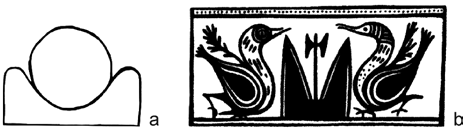
The symbol called the Double Headed or Double Axe is one of the oldest, most used, and least understood symbols that can be found all throughout history and especially in regards to true history, mythology, and Masonry. Perhaps nowhere in the world has more of these symbols been found with supporting archeology, artifacts, and stories than that of Mount Ida and Knossos on the island of Crete in Greece.
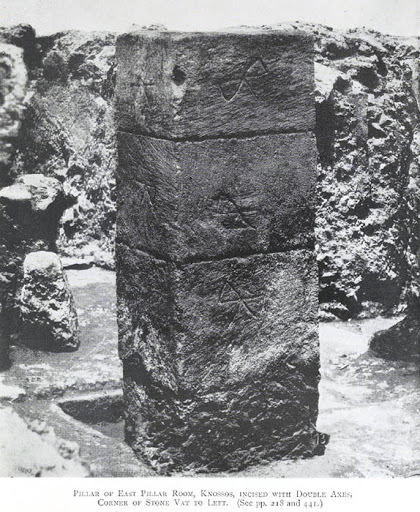
One of the oldest, Holiest, and most ancient Masonic places in all of the Western world. (more…)
by Moe | Feb 2, 2020 | Freemasonry, History of the Brotherhood, Latest Media, Meaning of Symbols
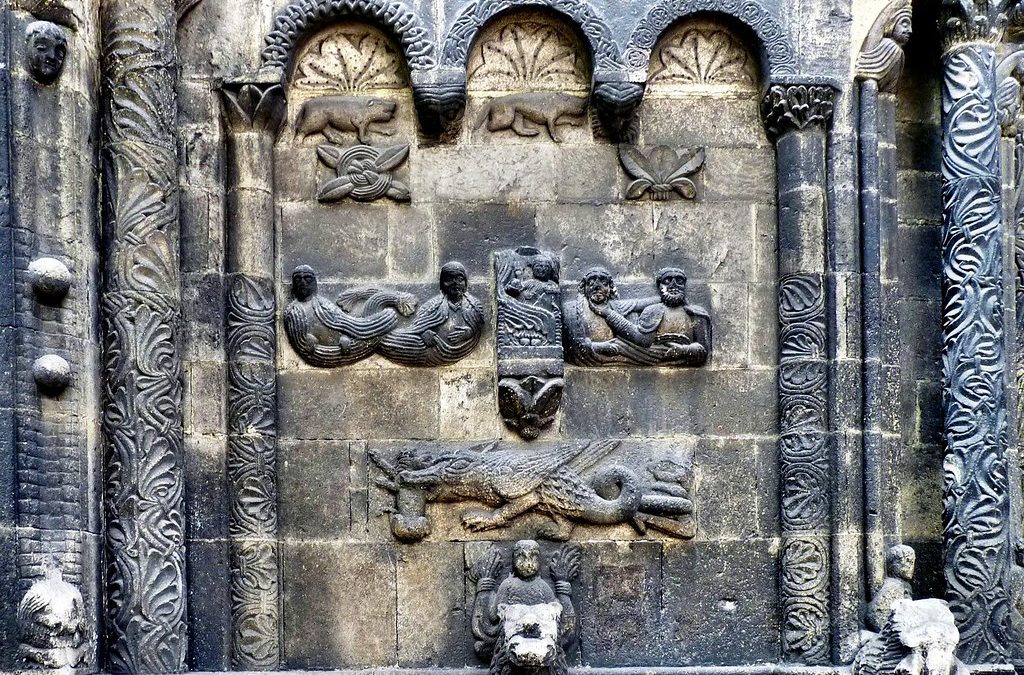
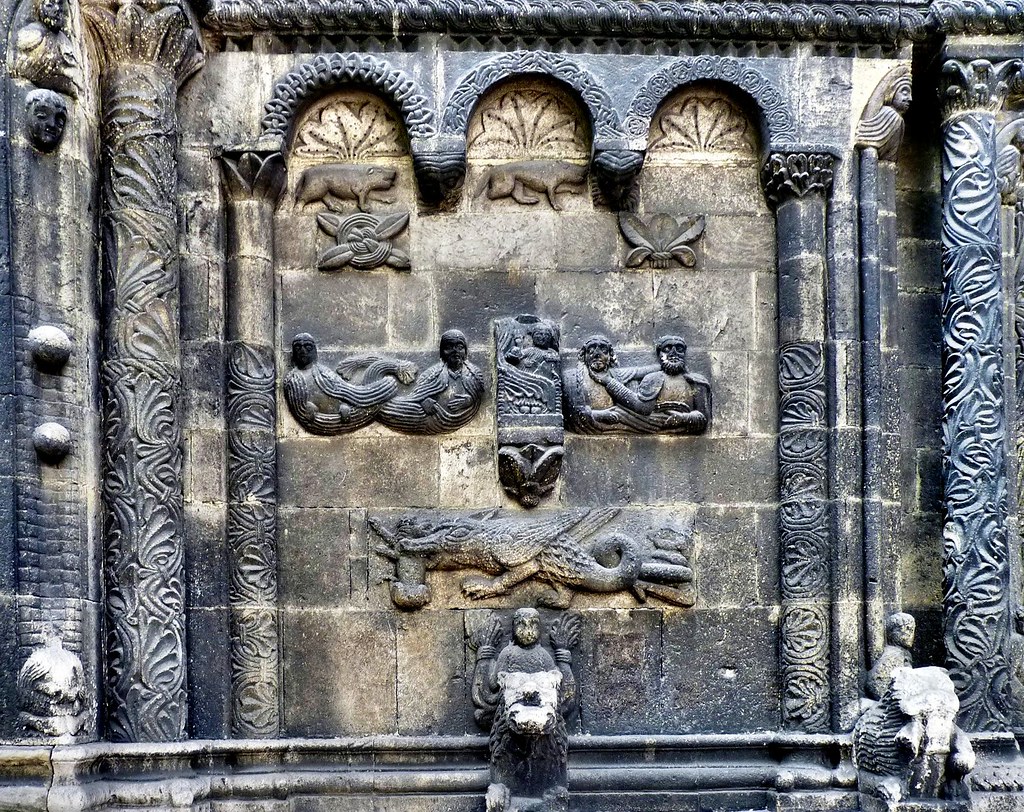
You will find that one of the most ancient and esteemed of all Freemasonic symbols is also the least known by many modern Masons. The symbol I speak of you will discover is not relayed to us in words or in history books, but can be found etched into the immortal stones of some of the Western world’s most prestigious Christian cathedrals.
But before we reveal the symbolism, we first must understand the history and mysticism that comes from the ancestors of modern-day Masons who were known in ancient times as the Comacine Masters (Magistri Comacini).
The Comacini derive their name from the Old Roman ruled colony called Novum Comum founded in 59 BCE by the Father of the Roman Empire – Julius Caesar. It was Julius who wisely imported 6000 colonists, among whom it was said there were 500 illustrious Greek or possibly Phoenician/Cretan families by which the population was formed.
One of these families was that of Plinius Secundus, also known as Pliny the Elder who became a “Roman Citizen” and I believe his family originally immigrated to Italy from either Athens or Crete and settled in Lake Como with those first colonists which also happened to a favorite resort of the Greeks who traveled there often;
Freemasonic historian, Albert C. Mackey had written about the younger Pliny having a villa there that was made by a mane name Mustio who was a Comacine architect. Mackey writes;
“It is usual to record that Como was the birthplace of the elder and younger Pliny. The younger Pliny had a villa here called Comedia and was much interested in building the city having founded baths, a library, and aided in charity for the support of orphan children.
Of the many letters of the younger Pliny that remain, one is to his builder, Mustio, a Comacine architect, commissioning him to restore the temple of the Eleusinian Ceres, in which, after explaining the form of design he wished it to take, he concludes.”
Mackey said; “There are found many interesting intrench remains of early carvings of the Comacine or Solomon’s Knot (see the illustration of parapet). On a site of an earlier church stands the present Cathedral of Como, which is built entirely of marble. (1)
Like Mackey, I have also found Comacine Masonic Master’s Monuments that still stand to this very day all over the world such as Greece, Italy, Ireland, England, Germany, Switzerland, and Russia. An International bridge of wisdom hidden in stone connecting all Masons and also the Christian heritage regardless of their race, religion, and or nationality.
This Cosmopolitanian fact would extend into the religious world given the fact that the Comacine and Frank Freemasons were the main Operative Masons since the time Saint Augustine and Saint Bede to be employed by the Roman Catholic Church in the building of all their stone cathedrals. Saint Bede, Doctor of the Catholic Church and Father of English History describes these events as it relates to his time in the book, The historical works of the venerable Bede;
“After an interval of not more than a single year from the foundation of the monastery, Benedict crossed the ocean and passed into Gaul, when he made inquiry for masons who could build him a church of stone after the Roman style, which he always loved. These he obtained, and brought them home with him; and such zeal in the work did he exhibit—out of his love for the blessed Peter, to whose honour he was doing this—that in the course of one year from the time when the foundations were laid, the church was roofed over, and within it you might have witnessed the celebration of masses.”
When the work was drawing to its completion, he sent messengers to Gaul to bring over glassmakers (a kind of workman hitherto unknown in Britain) to glaze the windows of the church, and its aisles‘ and chancels.”
Bede further writes; “And so it happened that when they came they not only accomplished that particular work which was required of them, but from this time they caused the English nation to understand and learn this kind of handicraft, which was of no inconsiderable utility for the enclosing of the lamps of the church, or for various uses to which vessels are put. Moreover, this religious trader took care to import from the regions beyond the sea, if he could not find them at home, whatever related to the ministry of the altar and the church, and to holy vessels, and vestments.”
Freemasonic historian and author, Joseph Fort Newton, summarizes this history succinctly in his early 20th-century publication, The Builders, Newton had written;
“With the conquest of Britain by the Romans, the Collegia, without which no Roman society was complete,made their advent into the island, traces of their work remaining even to this day. Under the direction of the mother College at Rome, the Britons are said to have attained to high degree of excellence as builders, so that when the cities of Gaul and the fortresses along the Rhine were destroyed, Chlorus, A. D. 298, sent to Britain for architects to repair or rebuild them. Whether the Collegia existed in Britain after the Romans left, as some affirm, or were suppressed, as we know they were on the Continent when the barbarians overran it, is not clear.
Probably they were destroyed, or nearly so, for with the revival of Christianity in 598 A. D., we find Bishop Wilfred of York joining with the Abbott of Wearmouth in sending to France and Italy to induce Masons to return and build in stone, as he put it, “after the Roman manner.”
This confirms the Italian chroniclists who relate that Pope Gregory sent several of the fraternity of Liberi muratori with St. Augustine, as, later, they followed St. Boniface into Germany.
Again, in 604, Augustine sent the monk Pietro back to Rome with a letter to the same Pontiff, begging him to send more architects and workmen, which he did.
As the Liberi muratori were none other than the Comacine Masters, it seems certain that they were at work in England long before the period with which the OLD CHARGES begin their story of English Masonry. Among those sent by Gregory was Paulinus, and it is a curious fact that he is spoken of under the title of Magister, by which is meant, no doubt, that he was a member of the Comacine order, for they so described their members; and we know that many monks were enrolled in their lodges, having studied the art of building under their instruction.
St. Hugh of Lincoln was not the only Bishop who could plan a church, instruct the workman, or handle a hod. Only, it must be kept in mind that these ecclesiastics who became skilled in architecture were taught by the Masons, and that it was not the monks, as some seem to imagine, who taught the Masons their art. Speaking of this early and troublous time, Giuseppe Merzaria says that only one lamp remained alight, making a bright spark in the darkness that extended over Europe:
It was from the Magistri Comacini. Their respective names are unknown, their individual works unspecialized, but the breadth of their spirit might be felt all through those centuries, and their name collectively is legion. We may safely say that of all the works of art between p. 115 A. D. 800 and 1000, the greater and better part are due to that brotherhood—always faithful and often secret—of the Magistri Comacini. The authority and judgment of learned men justify the assertion.” (2)
According to Albert Mackey, for this Great Work, Freemasons are indebted to the Catholic Church and these Masons for building these Roman Churches. Mackey had said, “We Speculative Masons should give full credit to the Roman Catholic Church for employing and fostering our Operative Brethren through many centuries and making possible Speculative Freemasonry of to-day, even though the Church is now our avowed enemy.”
These French Comacine masons that Bede mention I have found were known for their opus gallicum (Latin for “Gallic work”). This was a technique where precise holes were created in stone masonry for the insertion of wooden infrastructure. These building techniques are mentioned in Julius Caesar’s De bello Gallico and they were used extensively in church architecture.
In researching this history, it appears that the Comacine Masters had really gained momentum during the invasions of Rome by the Lombards of Germany when they gained their patronage. According to Mackey;
“The Lombards, who had come from northern Germany and settled in northern Italy in 568, at once began to develop along many lines which made Lombardy known all over Europe—the result of which influence Europe feels to-day. They developed along lines which in our every-day parlance may be called business.
They were not primarily architects or builders, and they employed the Comacines for this kind of work and it was the Comacines who developed what is known today as Lombard architecture, covering a period that we may roughly put as from the seventh century to the Renaissance.
The first to draw attention to the name Magistri Comacini was the erudite Muratori, that searcher out of ancient manuscripts, who unearthed from the archives an edict, dated November 22, 643, signed by Rotharis, in which are included two clauses treating of the Magistri Comacini and their colleagues. ” (1)
In an old publication, the Journal of the Royal Institute of British Architects, Volume 6 it says;
“Our earliest documentary token of the corporate activity of the Guild is to be found in an edict of King Rotharis, dated 643, and brought to light by the archaeologist Muratori, which contains two clauses relating to the conditions for compensation and liability for accidents on buildings under the charge of the Magistri Comacini.
These are sufficient to prove their existence as a recognized body in the seventh century. Their origin has been ascribed by various theorists to Rome, Byzantium, and the East. The Germans, I believe, have been the chief supporters of the theory of Byzantine origin, while that which points to an Oriental source depends upon the internal evidence in the works of the Guild of supposed Eastern symbolism in certain forms of decoration. On the whole, the view that the Comacine masters are the descendants of the Roman collegia is the best attested and the most inherently probable.
It is backed by the prevalence of what we may call Comacine work in many of the so-called Lombard and pre-Lombard churches of Rome, in one of which, the Sub-Church of San Clemente, a fresco of the eighth century represents what Leader Scott claims to be a Magister in the act of directing his subordinates.
Cesare Cantu, in his Storia di Como, perhaps in jealousy for the special honour of Como, looks upon the Comacine Magistri as the parents of modern Freemasonry. Whether this be so, or whether the Comacine masons were only a link in a still longer chain of succession, there is no doubt as to the points of similarity in the Comacine constitution and that of the Freemasons.” (3)
Looking further into this lost history, I found some fascinating information shared by the authors, J. G. Findel, Carl van Dalen in a German book on the History of Freemasonry. They write;
“Upon the overthrow of the Republic, when all other corporations lost their privileges, owing to the despotism of the Emperors, the thirst of the rulers for splendor and renown caused the collegia to be confirmed in nearly all their former rights‘ and privileges. Three members were at least required to form a college, and no one was allowed to be a member of several colleges at the same time.
Lay or amateur members (patrons) were admitted; the corporations held their meetings in secluded rooms or buildings exclusively appropriated to that purpose, and most of them had their own schools for the instruction of apprentices and lower grades of workmen. They had also their own peculiar religious ceremonies and priests, and an exchequer belonging to the corporation, an archive, and their own seals.
The members took an oath mutually to assist each other; indigent members received relief, and on their demise were buried at the expense of the corporation. They kept registers of the members, some of which are still extant; they had also their records, their masters (magistri), wardens (decuriones), fellow-crafts and apprentices, censors, treasurers, keepers of archives, secretaries, and serving brethren.”
The authors conclude, “Their tools and implements had, besides, a symbolical meaning, and in religious matters they were tolerant.” (4)
The Grand Lodge Bulletin, Volumes 15-17 details how they were not ordinary workmen, but true artists whose symbol was King Solomon’s Knot and when the Comacine were driven out of Rome, they took refuge in Lombardy, Northern Italy;
“When the Collegia were driven out of Rome, they took refuge in Lombardy, and the Comacine Masters were almost certainly their successors. Those Masters were not ordinary workmen. They were artists, and to them were due to the changes in styles of architecture in Europe during the cathedral-building period, as Hallam tells us in his study of the Middle Ages. For a long time these changes of style, appearing simultaneously everywhere, puzzled students. Further knowledge of this powerful and wide-spread order explained it.
They had their lodges, each with its master and wardens; their oaths, tokens, grips, and passwords, which, as Hallam says, formed a bond of union stronger than legal ties. They wore white aprons and gloves.
“King Solomon’s Knot” was one of their emblems, and the endless, interwoven cord another—but, later, the lion’s paw became their symbol. With the decline of Gothic architecture their order seems to have declined, or, rather, coalesced with the other guilds of masons.” (5)
The Quatuor Coronati Masonic Research Lodge details this time period showing that it was under the patronage of Charlemagne that the Comacine had truly flourished into an international order connecting Masons in Italy, France, and Germany and how the Bavarian Catholic Illuminatus, Albertus Magnus has helped strengthen their bonds by his writings. They had written;
“It was under the widespread rule of Charlemagne that the Comacines began their many emigrations. Adrian I. wrote for Magisiri from the north of Italy to execute works in Rome, and still existing Comacine intricacy are a proof of their work there in the 9th “century. Charlemagne is known to have brought marbles from Italy for his church at Aix-la-Chapelle, and the Lombard character of its style suggests that he also imported architects, who could scarcely have been other than the Comacine Masters.
In the troublous times which succeeded the withdrawal of the Carlovingian dynasty from Italy the Guild found more employment in building castles than churches, and it was not until the distant warfare of the Crusades left Italy comparatively tranquil that the art of sculpturesque architecture revived. Leader Scott gives the genealogy of the style as follows:
“ First the Comacines continued Roman traditions as the Romans continued Etruscan “ ones; next, they orientalized their style by their connection with the East through “ Aquileia, and the influx of Greek exiles into the Guild. Later came a different influence “ through the Saracens into the South, and the Italian Gothic was born.”
Independently of Charlemagne the great building guild of the Middle Ages had another connection with France through the Normans. The old chronicles shew that S. Guillaume, Abbot of S. Benigne in Dijon, a Lombard by birth, sent to his own country for Masters to build his monastery there, and further that he was invited to Normandy by Duke Richard II., where he stayed twenty years erecting monasteries and sacred buildings, and that when William of Normandy conquered England the round arched style passed ‘over with him.
Certainly the oldest churches both in Normandy and England have great affinity to Lombard buildings, the chief difference being that the roof has a higher pitch, necessitated by the damp climate. Leader Scott adduces evidence to show that at the time of the Norman occupation of Sicily there was a large emigration thither of members of the Comacine Guild; which accounts for the architecture there having so much more affinity to Italian than to French-Norman forms; and it also accounts for the Saracenic cast which Lombard architecture took after that era.
In Germany the style of buildings, such as are found at Cologne, Worms, Speyer and Zurich, seems to prove that Lombard influence preceded the native Gothic architects who subsequently developed the pointed style. Leader Scott’s theory is that in their earlier emigrations the Comacine Masters founded the usual lodges; that the Germans entered their schools and became Masters in their turn, and eventually split off from the universal Masonic Brotherhood, forming a separate national branch. Albertus Magnus, a Bavarian who studied at Padua, strengthened the link between Germany and Italy.” (6)
BEFORE THE GERMAN REICH, THERE WAS THE GREEKS AND PHOENCIANS
If we are to look back to the history of the first Comacine Masters under Julius and Augustus Caesar, we will find that they were visiting and building in Germany since that time and even Pliny the Elder who at the age of about 23 went to Germany, where he served under L. Pomponius Secundus to the command of a troop of cavalry (praefectus alae), and afterward wrote a memoir of Secundus. It was said that Pliny had traveled over most of the frontier of Germany and the Danube where he composed over 20 books including his treatise de Jaculatione equestri and a history of the Germanic wars.
When Pliny went back to Rome it was said to be during part of the reign of Nero when he spent his day in retirement. (7)
This Comacine connection to Pliny and Nero I detail in my 2nd follow up article, “The Lost Masonic Treasure of the Comacine,” where I will put forth research of a possible lost hoard of gold that appears to belong to the exact time period and to Ceasar’s Comacine Masters
THE COMACINE LOST SYMBOL
The symbol that ties Masons to one another through the Ages is called the “Comacine Knot” and also “Solomon’s Knot.” In Latin, sigillum Salomonis, meaning the “Seal of Solomon” to represent the “immortality and eternity” of their Great Work and also time, motion, and the powers of ancient hidden forces that govern our universe.
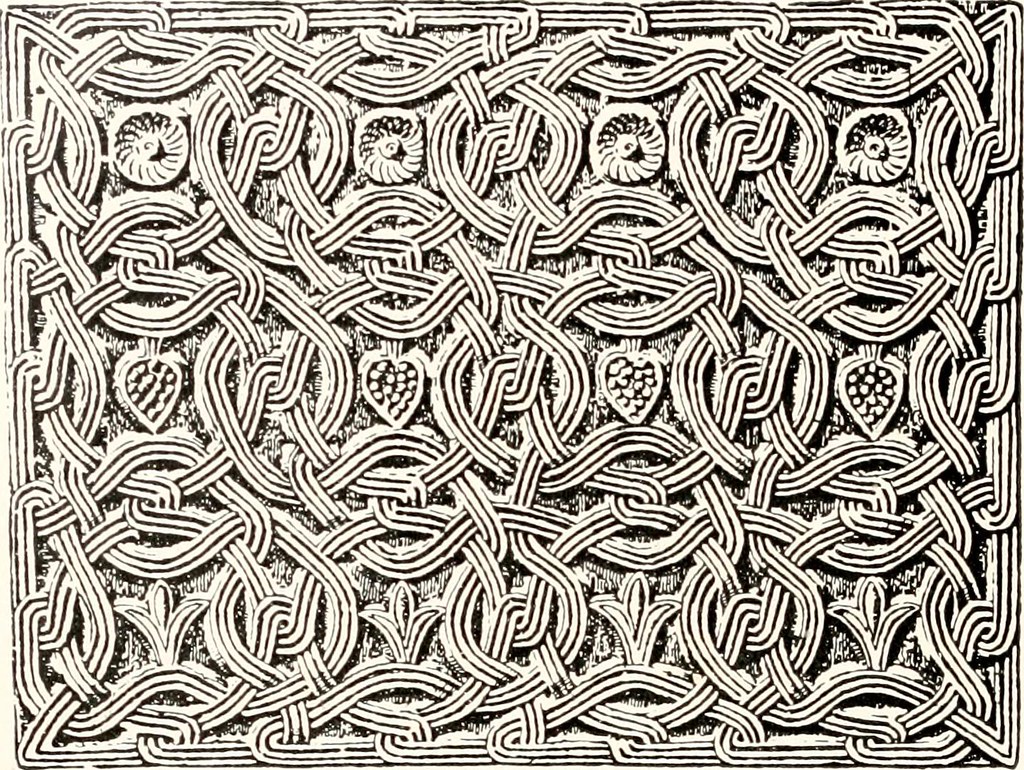
Here is an excerpt from the Royal Society of Antiquaries of Ireland showing the importance of this symbol;
“The existence of the guild under the Longobard rule having been proved, and their intimate connexion with and responsibility for the erection of the most famous buildings of the Lombardic type, the author goes on to show the numerous foreign emigrations of the Comacine Masons and establishes the Norman and German link.
An interesting chapter on the origin of Saxon architecture by the author’s brother, the Rev. W. Miles Barnes, tends to show that the Comacines were the survival of the Roman Collegia, and that when St. Augustine came to England he brought architects and masons with him, and that these would be chosen from the Comacines then firmly established under the patronage of the Popes.
For Irish archaeologists, the most interesting theory is that developed in the chapter on the Pound Towers and Crosses of Ireland, whereby a Comacine influence is shown in the ornament of our Crosses. The interlaced work, so long considered as peculiarly Celtic, is shown to be purely Comacine, and whether known as the Italian intreccio, meandro, or “Solomon’s knot,” it is the distinguishing badge of the Comacine Masons.
The author, in this connexion, says on page 82:
“In studying the scrolls and geometrical decoration of the Comacines, one immediately perceives that the intreccio, or interlaced work is one of their special marks. I think it would be difficult to find any church or sacred edifice, or even altar of the Comacine work under the Longobards which is not signed, as it were, by some curious interlaced knot or meander, formed of a single tortuous line. The Comacine believed in his mystic knot; to him, it was a sign of the inscrutable and infinite ways of God whose nature is unity. The traditional name of these interfacings among Italians is ‘Solomon’s knot.'” (8)
To add to the story of this symbology, I interpret it as an interlacing global knot of living human stones who have been imbued into the very stones that they put their heart and souls into. A Testament of the Masonic will to one day create a worldwide temple of Wisdom under God and our Lord allegorically referred to in the ancient teachings as “Solomon’s Temple.”
It is in the meaning of Comacine that all Freemasons of the past, present, and future must realize that tie them together in a multi-racial, multi-ethnicity, and multi-national corporation of operative artificers. In my articles on their Capitals named Tyre, I list many of their major Masonic cities starting in Egypt then to the West in Crete and into Europe.
The Knot of the Comacine reveals to us a compound word comprised of the words “com, a and cine” that constitute the ancient ethos of the order.
The word com means “with, together, unite” and derivative words with similar meaning would be words like commune, community, comrade, commissar, communist, etc.
The meaning of the word ‘a’ is “to identify a thing or person and used to indicate membership of a class of people or things”
The last word in Comacine is cine which means tribe, clan, kindred, or Brothers.
It is derived Anglo-Saxon Cynn, Old English Kin, Irish Cine, Scotch Gaelic Cinneadh or Cinne, and Welsh Cenell derived from a root Cinn, to grow or increase, and meaning the increase or growth of a family, tribe or clan by successive generations.”(9) Also cennan; German kennen, to know, kindred; acquaintance: kith and kin, blood relations; friends and relations. (10)
Words derived from this Brotherhood are kind and kindness ie: goodwill and benevolence. (11)
SOURCES:
1. ENCYCLOPEDIA OF FREEMASONRY AND ITS KINDRED SCIENCES by ALBERT C. MACKEY M. D.
2. The Builders, by Joseph Fort Newton, [1914]
3. History of Freemasonry – Translated from the second German edition By J. G. Findel, Carl van Dalen
4. Journal of the Royal Institute of British Architects, Volume 6
5. Grand Lodge Bulletin, Volumes 15-17
6. Ars Quatuor Coronatorum: Being the Transactions of the Quatuor …, Volume 12
7. A Classical Dictionary of Greek and Roman Biography, Mythology and Geography By William Smith
8. Journal By Royal Society of Antiquaries of Ireland
9. Proceedings of the Society of Antiquaries of Scotland, Volume 32 By Society of Antiquaries of Scotland
10. The Encyclopaedia Britannica: A Dictionary of Arts, Sciences -Volume 4
11. A Dictionary of the English Language By James Stormonth, Philip Henry Phelp

by Moe | Dec 14, 2019 | Demons, Latest Media, Toxic Mold, Uncategorized
One of the most powerful but mysterious Angels in the Abrahamic pantheon is known as Azazel (Azael or Azar). In the Book of Enoch, he is one of the chiefs of the 200 fallen angels who instructed the sons of God came in unto the daughters of men teaching them the magical arts.
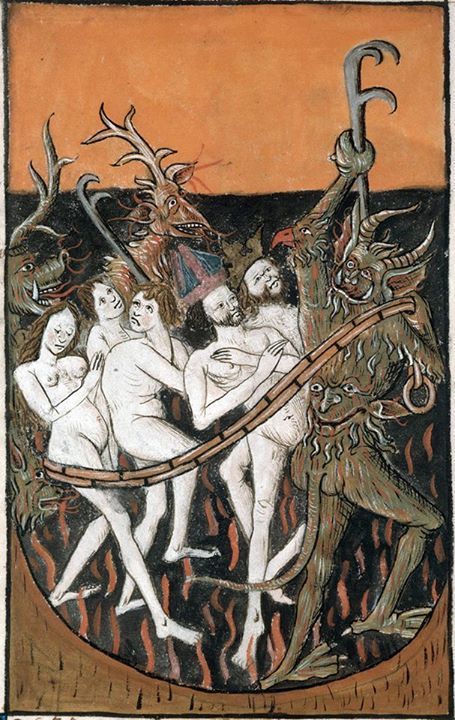
The fallen angels were regarded as the founding authors (geni/jinn/demons) of sin in the world through various forms of transgression and corruption in which they were bound and tormented by a great fire (Eth. En. 21 s-io 54 1-6) for their worldly ways.
From the Gnostics, Jews, Christians to the apocryphal Book of Enoch and later passed over to the Arabians, Azazel is assigned as chief of the wind or air spirits by whom the earth was corrupted. Our oldest sources come from both ancient Jewish and Slavic legends which confirm that he is an evil spirit and one of two scapegoats bearing the sins of their people depicted in the ancient rite of Yom Kippur (Day of Atonement) in which one goat was designated by “lots for the Lord,” the “other for Azazel” (Leviticus 16:8). (more…)
by Moe | Sep 2, 2019 | History of the Brotherhood, Latest Media
“When Abibalus was dead, his son Hiram received the kingdom.” – Josephus
The ancient historian and priest of Byblos, Sanchuniathon or Sanchoniatho (Phoenician: 𐤎𐤊𐤍𐤉𐤕𐤍) had dedicated his books on Phoenician history to King Abibalus (Abibalos, Abedbalos, or Abi’Baal Phoenician: 𐤀𐤁𐤅𐤁𐤏𐤋 – meaning “My father is Baal”) who reigned approximately in the 10th century BC.
It was said Sanchuniathon’s book on the history of his race was later translated by Philo Byblius which was approved by other investigators and he is highly commended for his history by both Porphyry and Eusebius and he is quoted by both Meander of Pergamon and later by the Roman-Jewish historian, Josephus Flavus.
Father of Early Christian history and Bishop of Caesarea, Eusebius had written in Praeparatio Evangelica I-IX;
“Now, the historian of this subject is Sanchuniaton, an author of great antiquity, and older, as they say, than the Trojan times, of whom they give testimony of having been approved by the exactitude and the truth of their Phoenician history. Philo of Byblos, not the hebrew one, translated all his work from the Phoenician language into Greek, and published it.”
Josephus informs us that these kings kept careful records, “That the Tyrians had their public Records, which they carefully preserved; in which were written the most material Transićtions relating both to themselves and other neighbouring Nations. In which was “ particularly recorded that Solomon built the Temple at Jerusalem 148 Years and eight Months before the Tyrians built Carthage.”
It would make sense that these people kept careful records given the fact that the Phoenicians and the location of the so-called Tyrians was also known as Byblos and this name is very close to the name of this king – Bab-lus without the appellation of Abi which means father.
They are some of the first people to invent writing and were the inventors of the most famous book we know as the Bible is the Old Testament (Old Law), they were said to be judges of their people and they were also heavily involved in commerce with papyrus being one of their biggest businesses.
According to Josephus and Menander who would most likely hail from the same family since they were in charge of keeping records thereafter, from the time of King Abibalus to the death of King Hiram’s son, Ithobaal or Ethbaal, which occurred about the time of the fall of Troy, was 169 years.
As you can see, Abibalos is famously listed in history and in the Bible as the first king of Tyre and Berytus and also as King Hiram’s father (Abi) but not much else is said to be known about him.
In researching history for this king, I have found various spellings of his name over the last 2,000 plus years such as the Phoenician: 𐤀𐤁𐤅𐤁𐤏𐤋, Latin: Abibalus and also Abedbalos, Abibalos, Abibal, Abida, Abdon, and can be connected to the Old Testament prophets and judges of Israel known under the names of Obed, Obediah, Ebed, Bedan, and or Beda and even the name Abbadon.
Also, this same king is listed as the king of many place names such as Tyre, Byblos, Berytus etc. which I hope to prove to all be the same king and place.
To quickly recap a previous article that had shed some light on the king’s real name which is based on the most recent archaeological evidence that I had written about in – King Hiram’s Son: Ithobaal.
Proof of the king’s real name was found when in 2012 by archaeologists working for Prof. Yosef Garfinkel of the Institute of Archaeology of the Hebrew University and Saar Ganor of the Israel Antiquities Authority (IAA) when they discovered a 3,000-year-old clay jar with ancient Phoenician writing in which they deciphered the meaning in 2015 which read;
“Ishba’al, son of Beda”.
The meaning they say is “man of Baal, son of Beda.”
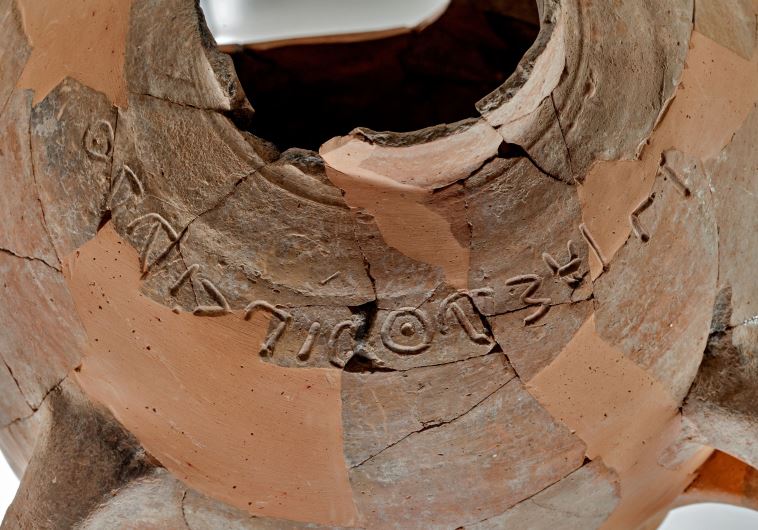
The scientists working on the discovery claimed that “The name Beda is unique and does not occur in ancient inscriptions or in the biblical tradition.”
As I mentioned in my previous article, this name we can easily connect in ancient history to King Abedbalos because it is very close with almost the exact same letters to a king who lives around this same time in the same area called “Abed-Balos, Bedan and or Beda.”
In the Jewish Antiquities, 8.144-149, Josephus quotes Menander of Pergamon who translated the Phoenician history into the Greek language, where he makes mention of both King Abibalus and upon his son Hiram whom dedicates a pillar in the temple to Zeus with timbers he had cut down from mount Lebanon and builds two temples. Josephus writes;
“When Abibalus was dead, his son Hiram received the kingdom from him, who, when he had lived fifty-three years, reigned thirty-four. He raised a bank in the large place and dedicated the golden pillar which is in Zeus’s temple.
He also went and cut down materials of timber out of the mountain called Lebanon, for the roof of temples; and when he had pulled down the ancient temples, he both built the temple of Heracles, and that of Astarte; and he first set up the temple of Heracles in the month Peritius; he also made an expedition against the Itureans, who did not pay their tribute, and when he had subdued them to himself he returned.
Under this king, there was Abdemon, a very youth in age, who always conquered the difficult problems which Solomon king of Jerusalem commanded him to explain.”
In “The Babylonians (Against the Greeks, 1.21)” Josephus again quotes Menander to show that Ithobaal [III] was the last king of Tyre after Nebuchadnezzar had conquered Tyre and that during Ithobaal [III]’s reign, Cyrus became king of Persia. Josephus had written;
“I will now add the records of the Phoenicians; for it will not be superfluous to give the reader demonstrations more than enough on this occasion. In them we have this enumeration of the times of their several kings:
Nebuchadnezzar besieged Tyre for thirteen years in the days of Ithobaal [III], their king; after him reigned Baal [II], ten years; after him were judges appointed, who judged the people: Ecnibalus, the son of Baslacus, two months;
Chelbes, the son of Abdeus, ten months; Abbar, the high priest, three months; Mitgonus and Gerastratus, the sons of Abdelemus, were judges six years; after whom Balatorus reigned one year; after his death they sent and fetched Merbalus from Babylon, who reigned four years; after his death they sent for his brother Hiram, who reigned twenty years. Under his reign, Cyrus became king of Persia.”
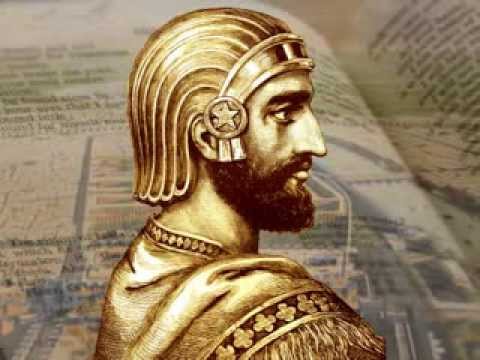
I had written about this history in a previous article, Cyrus the Great: The Masonic Messiah and His Masons at the City of Gnosis on Crete.
In the Old Testament, Ezra (3.7) infers that Jews and Phoenicians renew commercial relations:
“So they gave money to the masons and the carpenters and food, drink and oil to the Sidonians and Tyrians to bring cedar trees from Lebanon to the sea to Joppa, according to the grant that they had from Cyrus, king of Persia.”
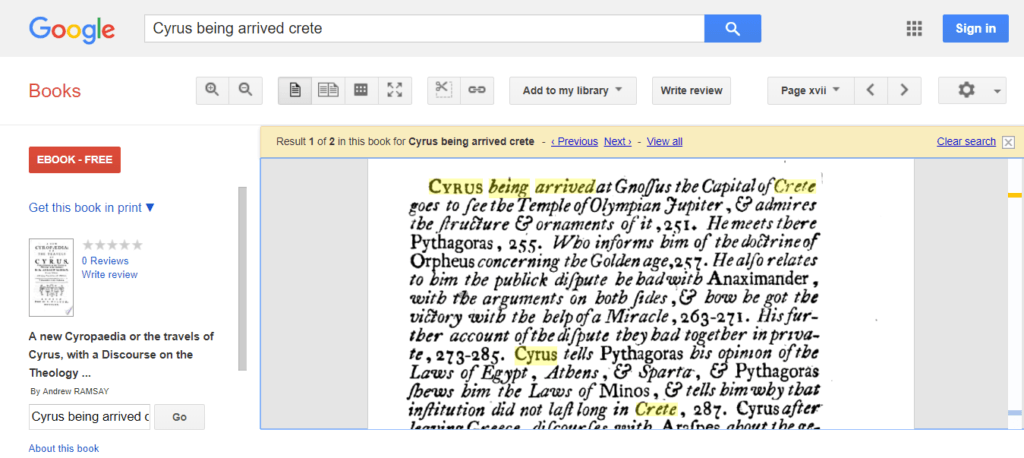
Cyrus being arrived at Gnossos/Knossos the Capital of Crete goes to see the Temple of Olympian Jupiter , & admires the structure & ornaments of it, 5. He meets there Pythagoras, 9. Who informs him of the doctrine of Orpheus concerning the Golden age , II. He also relates to kirn the public dispute he had with Anaximander , with the arguments on hath fides , & how he got the victory with the help of a Miracle , IJ-X5.
To the ancient Phoenicians, King Cyrus had left a lasting legacy on their history in restoring both the Temple of Solomon and also their religion. He is referred to by the Jewish Bible as Messiah (lit. “His anointed one”) (Isaiah 45:1), and is said to be the only non-Jew to be called so:
“So said the Lord to His anointed one, to Cyrus.” — Isaiah 45:1-7
The Masons now say, “Hence, from this connection of Cyrus with the history of Masonry, he plays an important part in the rituals of many of the high degrees.” (ENCYCLOPEDIA OF FREEMASONRY AND ITS KINDRED SCIENCES By ALBERT G. MACKEY, M.D.)
Dius, a Greek Hellenistic historian often cited by Josephus also makes mention of King Abibalus and his son Hiram’s building projects. He writes:
“When Abibalus was dead, his son Hiram reigned. He raised the eastern parts of the city higher, and made the city itself larger.
He also joined the temple of Jupiter, which before stood by itself, to the city, by raising a bank in the middle between them, and he adorned it with donations of gold.
Moreover, he went up to Mount Lebanon, and cut down materials of wood for the building of the temples.”
It is interesting to note that the King of Persia is considered a saviour to the Phoenicians of Byblos AKA Tyre and now Knossos on Crete whose family is represented by their first King Abibalus.
Sanchuniathon lists Abibalos (Abibalus) as the first king of Berytus but Josephus, writing in Latin, had written that King Abibalus was the first king of Tyre and Hiram whom he calls his son as the second king.
In researching this word and place, I have found the ancient name of Berytus was later substituted with Tyre in the historical records and it had been spelt many different ways throughout the course of time which includes many different changes depending on the country and language and also the historian charged with concealing (covering) the truth for Noble purposes.
For example, I find it interesting that we hear only once in Scripture of Tyre, but frequently of Beeroth and this same city is Biblically connected to King Hiram’s son in 2 Samuel 4:2 to Ishbosheth, who is said to be “Saul’s son,” had two men who were captains of bands: the name of the one was Baanah, and the name of the other Rechab, the sons of Rimmon the Beerothite, of the children of Benjamin (for Beeroth also is reckoned to Benjamin.)
The place known as Beeroth and Berytus is also called Berith, Beirut, Beyroot, Beeroth, Berouth, and Baruth is variously translated in modern times like in the King James Bible as “Beeroth of the children of Jaakan” (KJV); “the wells of Bene Jaakan” (NKJV).”
I would like to point out that in the word, Berytus, you will also find the word Tyre but spelt backwards – Berytus.
Some writers such as Hesiod say that Sanchuniathon was a native of Beirut and ‘obtained the records’ from a priest with the name of Hierombalos, and Abibalos, king of Beirut or, according to others, at Tyre.
He flourished a few years before the Trojan war, and, according to others, about the time that Gideon judged Israel. The name Hierombalos can be also be connected to Hiram-Baal.
Strabo speaks of two islands in the Persian Gulf, called Tyros or Tylos and Aradus, in which temples were found similar to those of the Phoenicians and places Zidon fifty miles from Berytus, and twenty-five from Tyre. Joshua, xi, 8, calls it “Sidon the Great,” by way of eminence. Josh. xix, 28,
As you can see with the many different names and spellings for the same history over the last 2,000 plus years, this history can be confusing but it begins to make sense once you connect all these names and different spellings as one.
In the ancient Scripture, the city listed as Beeroth (AKA Berytus, Berith, Beirut, Baruth, and Tyre) was located seven miles from Jerusalem, toward the city of Nicopolis. Beeroth is said to be of the Children of Jaakan (Jachin) and a city of the Gibeonites (Masons) Joshua 9:17; assigned to Benjamin 2 Samuel 4:2.
Eusebius says, Beeroth was seven miles from Jerusalem, toward Nicopolis. Jerome, writes Neapolis, or Naplouse instead of Nicopolis or The Holy Village of Ayios Nikolaos.
Nicopolis was anciently called Neapolis (Naplouse or Napolose) by Jerome and is listed as a city in Samaria between the Mountains of Gebal and Gerizem approximately 24 miles North of Jerusalem. As you can witness with all names from this time, the city Jerome calls Neapolis is also known as Nicolopolis and I have found it also under the names of Sychar, called also Sichem, and Shechem.
In researching these names, you will find that Neapolis is where St Paul arrived from the island of Samothracia and is listed as an ancient seaport town of Macedonia, east of Philippi (Acts xvi. 1 1.)
In the Book of Deuteronomy, we learn that “Moses went up from the plains of Moab unto the mountain of Nebo, to the top of Pisgah, that is over against Jordan,” to view the Promised Land before his death; and, in Deut. xxxii. 49, he is commanded, “Get thee up into this mountain Abarim, unto Mount Nebo, which is in the Land of Moab.”
Interestingly, we learn that Nebo is an important mountain that was taken or conquered by a people called the Moabites which then becomes “The Land of the Moabites and Nebo, the mountain of Moses AKA The Law.”
Nebo (Nabau), a mountain is celebrated as the scene of the death of Moses – a place in the tribe of Judah, Ezra ii. 29; Neh. vii. 33, a town belonging to the tribe of Reuben, taken by the Moabites, who held it in the time of Jeremiah (xlviii. 1).
This same mountain is called Lebanon by Josephus and Dius who Ptolemy says represent the two chains of Lebanon and Anti- Lebanon as commencing at the Mediterranean — the former on the north, the latter on the south (Geog. 5:15). Diodorus Siculus describes this mountain as extending along the coast of Tripolis, Byblus, and Sidon (Hist. 19:58); and the Litany falls into the sea a few miles south of Sidon.
We are told that “Moses, the servant of the Lord, died there in the Land of Moab, according to the word of the Lord; and he buried him in a valley in the Land of Moab, over against Bethpeor, but no man knoweth of his sepulchre unto this day (except Moe or Mo-Ab).”
The name Moab or Mo-Ab also further gives us a clue to the origins of these people.
Moab is known as an incestuous son of Lot; also his territory and descendants as Moab and The Land of Moab is the nation of which Lot’s son is represented as ancestor – Genesis 19:37; Numbers 21:29; Numbers 22:3 (twice in verse); Amos 2:1,2; Jeremiah 48:1,230t. Jeremiah 4:8 + often; having a king, Numbers 21:26; Numbers 22:4,10; Judges 3:12; 1 Samuel 12:9 +.
The Scripture tells us that King David’s great-grandmother Ruth was from Moab and a Moabitess.
There was constant fighting between Israel and Moab and both Saul and David fought there, and one of the Judges, Ehud, subdued Moab for 80 years (Judges 3:26-30).
If we are to look to history which will coincide with the Scripture, we will find that the Menander mentions King Hiram’s Son: Ithobaal (Ethbaal) who Josephus on the authority of the Tyrian annals says in against Apion, i. 18. that Ethbaal, the king of Tyre, whose daughter Jezebel was Ahab’s queen, succeeded Hiram, the contemporary of Solomon.
So, Ithobaal (Ethbaal, Eshba’al Ben Shaul or more appropriately, Eshba’al Ben Bada) who was the son of Hiram and grandson of Abibalus, had given his daughter to the King of Isreal, Ahab in marriage which means they would now be united tribes and of a new mixed blood/DNA.
Later, we learn Moab had freed itself from Israel’s domination after King Ahab’s death and it makes sense because they were now united tribes/kingdoms and of a new mixed blood/DNA which would make a new will for their descendants which would take the form of a new book or New Testament making the Old Law of blood and will ie: the Old Testament obsolete.
Moab plays into the story of King Abibalus and his son Hiram given the fact that we find in the Scripture that they are the descendants of a Moabite widow. But in the Bible, you will find their names are spelt differently from the Abibalus of concealing while revealing their true identities.
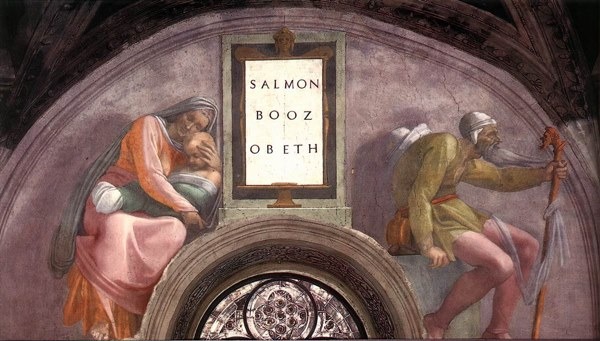
For example, there are several Obed’s listed as the name of several Israelites and one as the grandfather of King David who is the son of Boaz and Ruth – the Moabite widow (Widow’s Son) Ruth 4:17, Ruth 4:21 = 1 Chronicles 2:12; Ruth 4:22 Boaz is of the clan of Elimelech – meaning “God is King or My God if King.”
“And Boaz begat Obed, and Obed begat Jesse.” Boaz was of the tribe of Judah, and he was the son of a prince in Israel. This important child was a mixed-race that we know as Obed, became “the father of Jesse, the father of David.”
As I mentioned above, there are several prophets of Baal named Obadiah and Obed (Obad-iah vs. Abed-balos). and the form of Obadiah’s name used in modern Obadyah or Obadyahu and old Phoenician as Ebed or Abad, the Greek as Ióbéd and Obed or Obed-Edom; Septuagint is Obdios and Jehoiada, or as Abadias (ab-a-di’as), Abdiou, which I believe now can also be easily etymologically connected also to the name Abibalus.
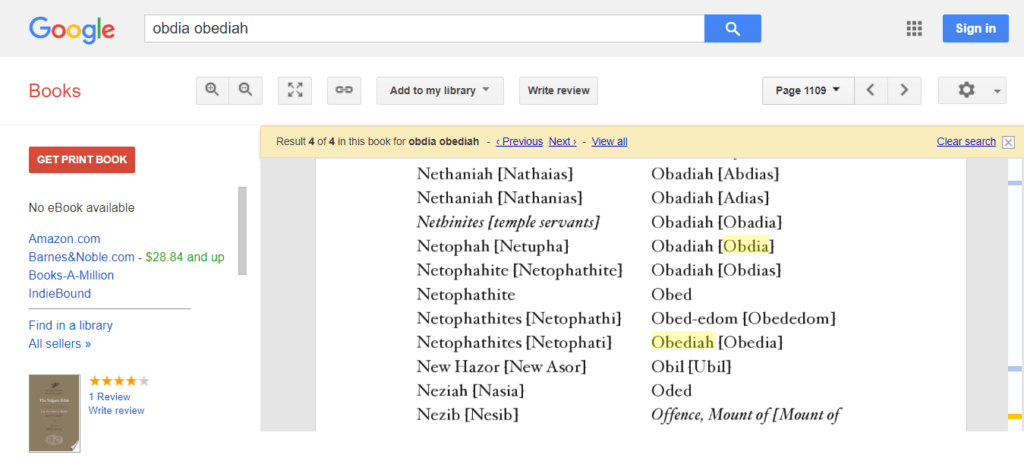
So, now we know based on historical accounts and several various citations, Obediah is the same as Obed and or Ab-Dias
Moab was a nation in which the city of Tyre was also located. However, if we are to search for Tyre in the Scripture and ancient history, we will find that it is only mentioned once in the Bible and was actually more commonly known as Beeroth (AKA Berytus, Berith, Beirut, Baruth) and now Byblos which was located 7 miles from the city of Nicopolis.
A city anciently called Neapolis and today as The Holy Village of Ayios Nikolaos which is near a mountain known as Mount Ida (Idumeans/Judeans) but anciently called by names such as Gebal, Nebo, Sychar, Sichem, and Shechem.
In searching for the mountain Gebal and as I explained in a previous article, Giblim: The Bible’s First Masons in the City of Our Lord, this is where the Gibeonites had come from and were also known by such names as the Giblites or, in Masonic language, Gibalim or Giblemites which they say is synonymous with Mason.
These first Masons hail from the City of Giblim which is also spelt under a plethora of names like Gebal, Gabala, Gubla, Giblim, Gibili, Gibyle, Givlim, Gebalene, Idumea, Judea and by the Arabs as Jebeil, Jubal and the Byblus/Biblus/Byblos of the Greeks.
The same Masons who honor their forefather’s achievements and ensure they are both remembered and carried out through the rites and rituals of the Craft.
For example, we know that in the legends of Masonry the Widow’s Son is called Hiram Abiff whose Masonic genealogy lists Tubal-Cain as his father. The name Hiram Abiff means “Father of Hiram” and does not apply to Hiram himself, but to his father who we know under names such as Abibalus and also Abedbalos, Abibalos, Abibal, Abida, Abdon, and can be connected to the Old Testament prophets and judges of Israel known under the names of Obediah, Ebed, Bedan, and or Beda and even the name Abbadon in Revelation.
They were also the chief scribes and judges for Israel ie: the Levites who were put in charge of the book the law by King David which became the Old Testament which was written as both proof of this history and a will for these people saying what should be done after they die.
These records detail the culture and history of the Sidonians whom the Tribe of Levi or Levatine renowned cities such as their first – Byblos and many others-from which Phoenician influence on Mediterranean art, religion, and commerce spread.
With that established, we can now say that “Biblos was built by Balus or Abi-Balus” – the city that he had founded.
He is also known in the Bible as Obed or Obediah and in Masonic lore as the father (Abiff) of Hiram.”
The true father of the original Scribes of the Old and New Testaments and the first Masons. – “The Widow’s Sons.”
PS – The Bible says that King Saul named his fourth son Eshba’al (1 Chronicles 8:33).
by Moe | Aug 29, 2018 | Demons, Mystical Christianity
“And now the great image of me shall go under the earth……” – Dido
The following text is a chapter taken from The Three Books of Occult Philosophy by Henry Cornelious Agrippa. It is titled, “What concerning man after death, divers opinions.”
In this text, Agrippa details the ancient occult doctrines and opinions from various religions and Adepts throughout the Ages. I would like to point out where Agrippa shares some verses from different poems and mythologies that stood out in my mind as aligning with my work into the dark underworld of evil demons, disembodied spirits, and molds (fungi).
He first shares a verse from a poem by Lucretius who hath expressed:
What came from earth to earth returns again; What came from God, returns from whence it came.
The next verse is from a poem by Ovid who Agrippa said expressed it better when Ovid wrote:
Four things of man are spirit, soul, ghost, flesh; These four places keep and do possess.
The earth covers flesh, the ghost hovers over the grave, Orcus hathe the soul, stars do the spirit crave.
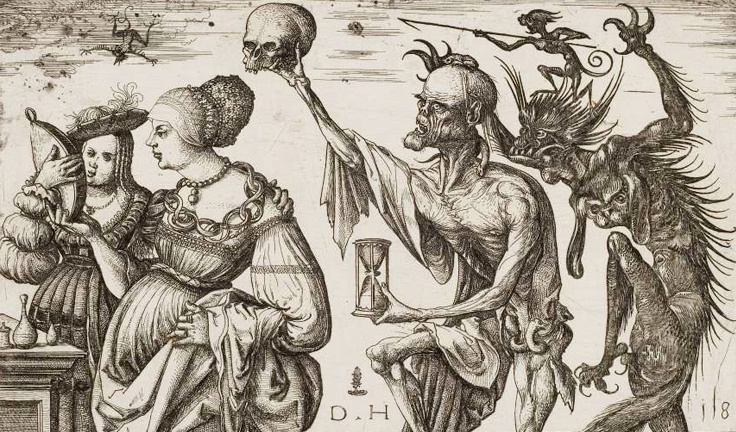
When speaking about when the spirit of man hath done ill, the spirt judgeth it, and leaves it to the pleasure of the devil, and the sad soul wanders about hell without a spirit, like an image, as Dido complains in Virgil:
And now the great image of me shall go under the earth……
Now, read the full text and see what Gnosis Agrippa can help you remember!
CHAP. XLI. What concerning man after death, diverse Opinions.
IN general it is appointed for all men once to die; death is fatal to all; but one is natural, another violent, another voluntarily received, another inflicted by humane laws for offences, or by God for sin, that they seem not to have ren∣dred a due to nature, but a punishment for sins; which (as the Hebrew Masters saith) God remitteth to none;
Whence the Assembly delivered to Ezechiah, that after the house of the Sanctuary was pulled down, although there remained not any order of judiciary execution, yet there should be a four∣fold kind of punishment by the which they might be con∣demned, that no man guilty of death should escape without retaliation; for he which had deserved to be stoned to death, was, God dispensing, either cast down headlong from the house, or trodden in pieces by wild beasts, or overwhelmed by ruin or fall;
but he which had deserved to be burned, was either consumed by burnings, or finished his life either by venomous bitings, or stings of a serpent, or by poison; but he which should die by the sword, was killed either by the violence of the jurisdiction, or by the tumult of the people or faction, or by the treachery of thieves; he that ought to be hanged, was suffocated either in the waters, or extinguished by some other strangling punishment; and by the ground of this doctrine, that great Origen supposed the Gospel of Christ to be declared, He who useth the sword shall perish by sword.
Moreover the Ethnic Philosophers pronounced that retaliation of this kind is Adrastia, viz. an inevitable power of divine laws, by the which in courses to come, is recompensed to every one according to the reason and merits of his former life; so as he who unjustly ruled in the former life, in the other life should relapse into a servile state; he which hath polluted his hands with blood, should be compelled to undergo retaliation; he that lived a brutish life, should be precipitated and revolved into a brutish body; of these things Plotinus writeth in his book of the proper Genius of every one; saying, whosoever have kept humane propriety, do again arise men: but whosoever have used sense only, do return brute animals:
yet so, as those who use sense especially together with wrath, do arise wild beasts; but whosoever use sense by concupiscence and pleasure, do return treacherous and gluttonous beasts: but if they shall live, not by sense together with them, so much as by the degeneration of sense, plants grow up again with them; for the vitals only, or chiefly, are living; & all their care was that they might be turned into plants.
But they which have lived being too much allured by music, not being depraved in other things, are born again musical animals; and they which have reigned without reason, become Eagles unless they have been tainted with any wickedness. But he which hath lived civilly and virtuously returns as a man. And Solomon himself in the Proverbs calls man sometimes a Lion, Tiger, Bear, a Boar. Sometimes a Hare, a hunting dog, a Cony;
sometimes a Pismire, a Hedgehog, a Serpent, a Spider; some∣times an Eagle, a Stork, a Cock, or any other bird, and many such as these. But the Cabalists of the Hebrews do not admit that souls are turned into brutes: Yet they do not deny but that they that have wholly lost their reason, shall in another life be left to a brutish affection and imagination: they assert also that souls are revolved hither thrice, and no more; because this number seems sufficient to suffice for the purgati∣on of sins, according to that of Job, He hath delivered my soul that it should not proceed to death, but should live, and see the light. Behold all these things doth God work three times through each, that he might reduce their souls from corruption, and illuminate them with the light of the living. But now let us see what the Ancients opinion is concerning the dead.
When man dies, his body returns into the earth, from which it was taken: the spirit returns to the heavens, from whence, it descended, as saith the Preacher, The body returns to the earth from whence it was, & the spirit returns to God that gave it; which Lucretius hath expressed in these verses;
What came from earth to earth returns again;
What came from God, returns from whence it came.
But Ovid expresseth it better in these verses.
Four things of man there are; Spirit, Soul, Ghost, Flesh;
These four lower places keep and do possess.
The earth covers flesh, the Ghost hovers over the grave.
Orcus hath the soul, Stars do the spirit crave;
The flesh being forsaken, & the body being defunct of life, is called a dead Carcass; Which as say the divines of the Hebrews, is left in the power of the Demon Zazel, of whom it is said in the Scripture, Thou shalt eat dust all thy daies; and els∣where, The dust of the earth is his bread.
Now man was created of the dust of the earth, whence also that Demon is called the lord of flesh, and blood, whilest the body is not expiated and sanctified with due solemnities. Hence not without cause the Ancients ordained expiations of Carcasses, that that which was unclean might be sprinkled with holy water, perfumed with incense, be conjured with sacred orations, have lights set by, as long as it was above ground, and then at length be buried in a holy place.
Hence Elpenor in Homer, I beseech thee (saith he) Ulysses, be mindful of mee, and leave mee not unburied, lest being unburied I become an ob∣ject of the Gods wrath. But the spirit of a man, which is of a sacred nature, and divine-offspring; because it is always faultless, becomes incapable of any punishment; But the soul if it hath done well, rejoiceth together with the spirit, and go∣ing forth with its Aerial Chariot, passeth freely to the quires of the Heroes, or reacheth heaven, where it enjoys all its senses, and powers, a perpetual blessed felicity, a perfect knowledge of all things, as also the divine vision, and possession of the kingdom of heaven, and being made partaker of the divine power bestows freely divers gifts upon these inferiors, as if it were an immortal God.
But if it hath done ill, the spirit judgeth it, and leaves it to the pleasure of the divel, and the sad soul wanders about Hell without a spirit, like an image, as Dido complains in Virgil;
And now the great image of mee shall go
Under the earth—
Wherefore then this soul being void of an intelligible es∣sence, and being left to the power of a furious phantasy, is ever subjected by the torment of corporeal qualities, know∣ing that it is by the just judgement of God, forever deprived of the divine vision (to which it was created) for its sins: the absence of which divine vision, as the Scripture testifies, is the ground of all evils, and the most grievous punishment of all, which the Scripture calls the pouring down of the wrath of God. This image therefore of the soul enters into the ghost as an Aerial body, with which being covered doth sometimes advise friends, sometimes stir up enemies, as Dido threatens Aeneas in Virgil saying.
I’ll hunt thee, and thee tortures I will give.
For when the soul is separated from the body, the perturbations of the memory and senses remain.
The Platonists say, that the souls, especially of them that are slain, stir up ene∣mies, mans indignation not so much doing of it, as the divine Nemesis and Demon foreseeing, and permitting of it. So the spirit of Naboth (as the masters of the Hebrews interpret it) because in the end of its life it went forth with a desire of revenge, was made, to execute revenge, the spirit of a lye, and went forth, God permitting it, a lying spirit in the mouth of all the prophets, until it made Achab go up unto Ramoth-Gilead And Virgil himself together with the Pythagoreans, and Platonists, to whom also our Austin assents, confesseth that separated souls retain the fresh memory of those things which they did in this life, and their will, whence he sings;
What care they Living had of horses brave
And Arms, the same doth follow them to the grave.
And Azazel in his book De Scientia Divina, and other Arabians, and Mahumatists which were Philosophers, think that the operations of the soul, being common to the con∣joyned body, impressed upon the soul a Character of use and exercise, which it being separated will use, being strongly im∣pressed to the like operations and passions which were not de∣stroyed in lifetime. And although the body and organ be corrupted, yet the operation will not cease, but like affections and dispositions will remain. And these souls the ancients call with a common name Manes, whereof those that were in this life innocent, and purified by moral virtues, were very happy; And of them as Virgil sings,
—That did for their country die,
With priests who in their lives vowed chastity,
And sacred Poets, who pleased Phoebus best,
Or by invented arts mans life assist,
And others in their memories renowned,—
Although they departed this life without the justification of faith, and grace, as may Divines think, yet their souls were carried without any suffering into happy pleasant fields; and as saith Virgil,
They went to places and to pleasant greens,
And pleasant seats the pleasant groves between.
Where they enjoy certain wonderful pleasures, as also
sensitive, intellectual and revealed knowledge;
also per∣haps they may be indoctrinated concerning faith, and justifi∣cation, as those spirits long since to whom Christ preached the Gospel in prison. For as it is certain that none can be saved without the faith of Christ, so it is probable that this faith is preached to many Pagans and Saracens after this life, in those receptacles of souls unto salvation, and that they are kept in those receptacles, as in a common prison, until the time comes when the great Judge shall examine our actions.
To which opinion Lactantius, Ireneus, Clemens, Tertullian, Austin, Ambrose, and many more Christian writers do assent. But those souls which are impure, incontinent, depart wicked, do not enjoy such happy dreams, but wander full of most hideous Phantasmes, and in worser places, en∣joying no free knowledge but what is obtained by concession, or manifestation, and with a continual fleshly desire are subjected by reason of their corporeal corruption to the sense of pain, and fear swords, and knives.
These without doubt Homer seemed to be sensible of, when in the eleventh book of his Odysseus he brings in the mother of Ulysses being dead, standing near to him offering sacrifice, but neither knowing him, or speaking to him, whilst he with his sword drawn did keep off ghosts from the blood of the sacrifice.
But after that Tyresia the prophetess advising of her, she had tasted of the sacrifice and had drunk the blood, she presently knew her son, and crying spake to him. But the soul of Tyresia the prophetesses, notwithstanding the drawn sword, even be∣fore she tasted the blood, knew Ulysses, and spake to him, and shewed him the ghost of his mother standing near to him. Whatsoever vices therefore souls have committed in the bo∣dies unexpiated in this life, they are constrained carrying the habits of them along with them, to purge themselves of them in hell, and to undergo punishment for them; which the Poet explains in these verses;
—When they die,
Then doth not leave them all their misery.
They having not repented of their crimes,
Must now be punished for their misspent times.
For as the manners and habits of men are in this life, such affections for the most part follow the soul after death, which then calls to mind those things which it did formerly do in its life, and then more intently thinks on them, for as much as then the divers offices of life cease, as those of nourishing, growing, generating, and various occupations of senses, and humane affairs and comforts, and obstacles of a grosser body.
Then are represented to the plantastick reason those species, which are so much the more turbulent and furious, by how much in such souls there lies hid an intellectual spark more or less covered, or altogether extinct into which are then by evil spirits conveyed species either most false, or terrible: whence now it is tormented in the concupiscible faculty, by the concupiscence of an imaginary good, or of those things which it did formerly affect in its life time, being deprived of the power of enjoying them, although it may seem to itself sometimes almost to obtain its delights, but to be driven from them by the evil spirits into bitter torments, as in the Poets, Tantalus from a banquet, Sardanapalus from embraces, Midas from gold, Sisyphus from power; and they called these souls hobgoblins, whereof if any taking care of household affairs lives and inhabits quietly in the house, it is called a household god, or familiar.
But they are most cruelly tortured in the irascible saculty with the hatred of an imaginary evil, into the perturbations whereof, as also false suspicions, and most horrible Phantasmes they then fall, and there are represented to them sad representations; sometimes of the heaven falling upon their head, sometimes of being consumed by the violence of flames, sometimes of being drowned in a gulfe, sometimes of being swallowed up into the earth some∣times of being changed into divers kinds of beasts sometimes of being torn and devoured by ugly monsters, sometimes of being carried abroad, through woods seas, fire, air, and through fearfull infernal places, and sometimes of being taken, and tormented by devils.
All which we conceive happens to them after death no otherwise then in this life to those who are taken with a phrensie, and some other melancholy distemper, or to those who are affrighted with horrible things seen in dreams, and are thereby tormented, as if these things did really happen to them, which truely are not reall• but only species of them apprehended in imagination: even so do horrible representations of sins terrifie those souls after death as if they were in a dream and the guilt of wickedness drives them headlong through divers places; which therefore Orpheus calls the people of dreams, saying, the gates of Pluto cannot be unlocked; within is a people of dreams; such wicked souls therefore enjoying no good places, when wandring in an Aeriall body, they represent any form to our sight, are called hags, and goblins, inoffensive to them that are good, but hurtfull to the wicked, appearing one while in thinner bodies another time in grosser, in the shape of divers animals, and monsters, whose conditions they had in their life time, as sings the Poet,
Then divers forms and shapes of brutes appear;
For he becomes a tiger, swine, and bear,
A scaly dragon, and a lioness,
Or doth from fire a dreadful noise expresse;
He doth transmute himself to divers looks,
To fire, wild beasts, and into running brooks.
For the impure soul of a man, who in this life contracted too great a habit to its body, doth by a certain inward affection of the elemental body frame another body to itself of the vapours of the elements, refreshing as it were from an easier matter as it were with a suck, that body which is con∣tinually vanishing; to which being moreover enslaved as to a prison, and sensible instrument by a certain divine Law, doth in it suffer cold, and heat, and whatsoever annoys the body, spirit, and sense, as stinks, howlings, wailings, gnashing of the teeth, stripes, tearings, and bonds, as Virgil sang;
—And therefore for their crimes
They must be punished, and for misspent times
Must tortures feel; same in the winds are hung,
Others to cleanse their spotted sins are flung
Into vast gulfs, or purged in fire—
And in Homer in his Necyomancy Alcinous makes this rela∣tion to Ulysses,
Of Tytius the dear darling of the earth,
We saw the body stretched nine furlongs forth
And on each side of whom a vultur great
Gnawing his bowels—
These souls sometimes do inhabit not these kinds of bodies only, but by a too great affection of flesh and blood trans∣mute themselves into other animals, and seise upon the bo∣dies of creeping things, and brutes, entering into them, what kind soever they be of, possessing them like Demons.
Pythagoras is of the same opinion, and before him Trisme∣gistus, asserting that wicked souls do oftentimes go into creep∣ing things, and into brutes, neither do they as essential forms vivifies and inform those bodies, but as an inmate dwell there as in a prison, or stand near them by a local in distance as an internal mover to the thing moved; or being tied to them are tormented, as Ixion to the wheels of serpents, Sysiphus to a stone; neither do they enter into brutes only, but sometimes into men, as we have spoken concerning the soul of Nabaoth which went forth a lying spirit in the mouth of the Prophets.
Hence some have asserted that the lives, or spirits of wicked men going into the bodies of some men, have disturbed them, and sometimes slew them. Which is more fortunately granted unto blessed souls that like good Angels they should dwell in us, and enlighten us, as we read of Elias, that he being taken from men his spirit fell upon Elisha: and elsewhere we read that God took of the spirit which was in Moses, and gave it to 70. men.
Here lies a great secret, and not rashly to be revealed.
Sometimes also (which yet is very rare) souls are driven with such a madness that they do enter the bodies not only of the living, but also by a certain hellish power wander into dead Carkasses, and being as it were revived commit horrid wickednesses, as we read in Saxo Grammaticus, that Asuitus and Asmundus two cerrain men vowed one to the other, that he that should live longest should be buried with him that was first dead: at length Asuitus being first dead, is buried in a great vault with his dog, and horse, with whom also Asmundus by reason of his oath of friendship, suffered himself to be buried alive, (meat which he should for a long time eat, being brought to him;) in processe of time Eri∣cus King of Suecia passing by that place with an army, breaking up the tomb of Asuitus (supposing that there was treasure) the vault being opened, brought forth Asmundus: whom, when he saw having a hideous look, being smeared over with filthy corrupt blood which flowed from a green wound (for Asuitus being revived, in the nights, took off with often strugling his right ear) he commanded him to tell him the cause of that wound: which he declares in these verses;
Why doth my visage wan you thus amaze?
Since he that lives amongst the dead, the grace
Of beauty needs must loose; I know not yet
What daring Stygian fiend of Asuit
The spirit sent from hell, who there did eat
A horse, and dog, and being with this meat
Not yet suffie’d, then set his claws on me,
Pull’d off my cheek mine ear, and hence you see
My ugly, wounded, mangled bloody face;
This monstrous Wight returned not to his place
Without received revenge; I presently
His head cut off, and with a stake did I
His body thorough run—
Pausanias tells a story not unlike to this, taken out of the interpreters of the Delphi; viz. that there was a certain infernal Demon, which they called Eurinomus, who would eat the flesh of dead men, and devour it so that the bones would scarce be left.
We read also in the Chronicles of the Creten∣sians, that the ghosts which they call Catechanae were wont to return back into their bodies, and go in to their wives, and lie with them; for the avoiding of which, and that they might annoy their wives no more, it was provided in the common lawes that the heart of them that did arise should be thrust thorow with a nail, and their whole carcass be burnt. These without a doubt are wonderful things, and scarce credible, but that those laws, and ancient Histories make them credible.
Neither is it altogether strange in Christian Religion that ma∣ny souls were restored to their bodies, before the universal resurrection. Moreover, we believe that many by the singular favour of God are together with their bodies received to glory, and that many went down alive to hell. And we have heard that oftentimes the bodies of the dead were by the devils taken from the graves, without doubt for no other use then to be imprisoned, and tormented in their hands.
And to these prisons and bonds of their bodies there are added also the possessions of most filthy and abominable places, where are Aetnean fires, gulfs of water, the shakings of thunder, and lightning, gapings of the earth, and where the region is void of light, and receives not the rays of the Sun, and knows not the light of the Stars, but is always dark. Whi∣ther Ulysses is reported in Homer to come, when he sings,
Here people are that be Cymmerian named,
Drown’d in perpetual darkness, it is famed,
Whom rising, nor the setting sun doth see,
But with perpetual night oppressed be.
Neither are those meer fables which many have recorded of the cave of Patricius, of the den of Unlcan of the Aetnean caves, and of the den of Nursia, many that have seen and know them testifying the same. Also Saxo Grammaticus tells of greater things then these of the Palace of Geruthus, and of the cave of Ugarthilocus:
Also Pliny, Solinus, Pythias, Clearchus, of the wonderful prodigies of the Northern sea, of which Tacitus also in his history of Drusus shows that in the German sea there wandered souldiers by whom divers mi∣raculous unheard of things were seen, viz. the force of whirlpools, unheard of kinds of birds, sea monsters like men and beasts; and in his book of Germany he tells that the Heldusians, and Axions, who had the face of men, but their other parts were equal to beasts, did dwell there. Which without all doubt were the works of ghosts and devils. Of these also Clau∣dianus long time since sang,
In th’eextream bounds of France there is a place,
Encompass’d by the sea, where in his race
Fame saith Ulysses having tasted blood,
A secret people did descry where loud
And mournful plaints were heard of wandering spirits
Which did the country people much affright.
Aristotle relates of the Aeolian Islands near Italy, that in Lipara was a certain tomb, to which no man could go safe by night, and that there were Cymbals and shrill voices with certain absurd loud laughters; also tumults and empty sounds made, as the inhabitants did strongly aver; and that up∣on a time a certain young man being drunk went thither, and about night fell asleep neer the cave of the tombe, and was after the third day found by them that sought him, and was taken up for dead; who being brought forth, the solemnities of the funeral being ready, suddenly arose up, and told in order, to the great admiration of all, many things which he had seen and suffered.
There is also in Novergia a certain mountain most dreadful of all, surrounded by the sea, which commonly is called Hethelbergius, representing Hell, whence there are heard great bewailings, howlings, and scratchings a mile round about, and over which great vaulters and most black. Crows fly, making most horrible noyses, which forbid any to come near it: Moreover from hence flow two foun∣taines whereof the one is most intense cold, the other most in∣tense hot, far exceeding all other elements.
There is also in the same country toward the Southern corner thereof a Pro∣montory called Nadhegrin, where the Demons of the place are seen by all, in an aerial body. There is also in Scotland the Mountain Dolorosus, from whence are heard dreadfull lamentations: and in Thuringia there is a mountain called Horrisonus, where dwelt Sylvani, and Satyrs, as fame and experience teacheth, and faithful writers testify. There are in divers Countries and Provinces such like miracles as these. I will not relate here those things which I have seen with mine eyes, and felt with mine hands, least by the wonderful admirableness & strangeness of them I should by the incredulous be accounted a liar.
Neither do I think it fit to pass by what many of our age think concerning the receptacles of souls, not much differing from these which we have now spoken of: of which Tertullian in his fourth book against the heresies of Marcion saith, It is apparent to evey wise man, which hath ever heard of the Elysian fields that there is some locall deter∣mination, (which is called Abrahams bosome) for the re∣ceiving of the souls of his sons, and that that region is not ce∣lestial, yet higher then hell, where the souls of the just rest, untill the consummation of things restore the resurrection of all things with fulnes of reward. Also Peter the Apostle saith to Clemens asking him of these things, thou dost constrain mee O Clemens to publish something concerning things unutterable: Yet as far as I may, I will.
Christ, who from the beginning & always was, was always through each generation, though secretly, present with the godly, with those especially by whom he was desired and to whom he did most often appear. But it was not time, that the bodies then being resolved, there should be a resurrection: but this rather seemed a remuneration from God, that he that was found just, should remain longer in a body, or that the Lord should translate him (as we see clearly related in the scripture of some certain just men.)
After the like example God dealt with others, who pleased him well, and fulfilling his will were being translated to Paradise reserved for a kingdom. But of those who could not fullfill the rule of justice, but had some relique of wicked∣ness in their flesh, the bodies indeed are resolved, but souls are kept in good and pleasant regions, that in the resurrection of the dead, when they shall receive their bodies, being now purg∣ed by resolution, they may enjoy an eternal inheritance for those things which they have done well. Ireneus also in the end of his book which he wrote against the Heresies of the Valentini∣ans, saith:
Whereas the Lord went in the middle of the sha∣dow of death, where the souls of the dead were, and after rose again corporeally, and after resurrection was taken up, it is ma∣nifest that the souls of his disciples (for whom he worked these things) should go to some invisible place, appointed by God, and there tarry until the resurrection, afterwards receiving their bodies, and rising again perfectly, i e. corporeally, as the Lord arose, so shall they come into the presence of God; for no disciple is above his master; But every one shall be perfect as his Master.
Therefore even as our Master did not present∣ly fly and go away, but expected the time of his resurrection determined by the father; which is also manifested by Jonas, after three daies arising he is taken up; So also ought we to expect the time of our resurrection determined by God, fore∣told by the Prophets; and so rising again we shall be taken up, as many as the Lord shall account worthy of this honor; Lactantius Firmianus also agreeth to this, in that book of Divine institutions, whose title is of Divine reward;
Saying, let no man think, that ••e souls after death are presently judg∣ed; for they are all detained in one common custody, until the time cometh in which the great Judge shall examine de∣serts; then they whose righteousness shall be approved, shall receive the reward of immortality: but they whose sins and wickedness are detected, shall not rise again, but being desti∣nated for certain punishment, shall be shut up with the wicked angels into the same darkness of the same opinion are Austine, and Ambrose, who sayth in his Enchiridion, The time which is interposed betwixt the death of man and the last resurrecti∣on, containeth the soul in secret receptacles; as every one is worthy of rest or sorrow, according to that which it obtai∣ned whilst it lived in the flesh; but Ambrose in his book con∣cerning the benefits of death, saith;
The writing of Esdras calleth the habitations of the souls, store houses; which he meting with the complaints of man (because that the Just who have gone before, may seem, even to the day of Judgement viz. for a long time, to be wonderfully defrauded of their just recompense of reward) doth liken the day of judgment to a garland; for the day of reward is expected of all, that in the mean time both the conquered may be ashamed, and the conquerors may attain the palme of victory; therefore while the fulnes of times is expected, the souls expect their due recompense; punishment remaining for some, glory for o∣thers; and in the same place he calleth Hell a place which is not seen, which the souls go to being separated from the bodies; And in his second book of Cain and Abel, he saith, the soul is loosed from the body, and after the end of this life, is even as yet in suspence, being doubtfull of the judgement to come; To these assenteth that evangelical saying, concer∣ning the last iudgment, Christ saying in Matthew, Many shall say to mee in that day, Lord, Lord, have we not prophesied in thy name, and in thy name cast out Devils?
And then I shall con∣fess to them, that I never knew them; by which speech it see∣meth to be clear, that even untill this day they were uncertain concerning their sentence, and by the confidence of miracles which they had performed in the name of Jesus, whilst they lived, to have bin in some hope of salvation; Therefore because the judgement of souls is deferred untill the last day, many Theologians think that satisfactory intercessions may help not only the Justified, but also the damned, before the appointed day of iudgment. So Trajan the Emperor was delivered from Hell by Saint Gregory, and Justified to salvation, though some think that he was not freed from the guilt of punishment, but the Justice of punishment was prorogued untill the day of iudgment;
But Thomas Aquinas saith it seemeth more pro∣bable, that by the intercessions of S. Gregory, Traian lived again, and obtained a gracious power by the which he was freed from the punishment and guilt of sin; and there are some Theologians who think, that by the Diriges for the dead nei∣ther the punishment nor the guilt is taken away or detracted, but that only some ease and asswagement of the pains is procured; and this by the similitude of a sweating porter, who by the sprinkling of some water seemeth to be eased of the weight of his burthen, or helped to carry it more easily, al∣though nothing of the burthen be taken off: Yet the common opinion of Theologians denieth that prayers or funeral Di∣riges do cause any favour for the guilty within the gates of Pluto: but seeing all these things are of an incomprehensible obscurity, many have vainly whet their wits in them:
Therefore we holding to the opinion of Austine, as he saith in the tenth book on Genesis, do affirm, That it is better do doubt concerning occult things, then to contend about uncertain things; for I doubt not but that that rich man is to be understood in the flames of pains, and that poor man in the refreshment of joyes; but how that flame of hell, that bosom of Abraham, that tongue of the rich man, that torment of thirst, that drop of cooling, are to be understood, it is hard∣ly found out by the modest searcher, but by the contentious never; but these things being for this present omitted, we hasten to further matters and will dispute concerning the restitution of souls.