It is important that you understand that Pythagoras held our souls come from the number One (1) which is derived from the first principles and assigns God and the soul to the number One.
This is our soul’s connection to the One Monad, which is God and the good, which is the origin of the One, and is itself intelligence, reason, and its end result, immortality (ie: True Gnosis – One With Christ in the Head).
These they call Divine spirits [δαιμονες] who are psychical beings (i.e. real people with purified souls).
However, Pythagoras taught that when the One becomes two, it becomes the “undefined dyad (ie: Duality or something consists of two elements or parts)” which is a divinity and the bad, surrounding which is the mass of matter.
We can say that this is a man divided against himself, imbalanced, and is ignorant (i.e. No Gnosis) of these Sacred Laws.
Pythagoras regarded the “soul of man between spirits” who always contemplated the Divine Essence (i.e.: their soul, true selves).
We are born into the world in a fallen state (ie: ruled by the passions and desires of the material world) which makes us forget our spiritual natures and divine selves.
Pythagoras had taught that it was from our separation from the Deity that we lost the wings which raised us towards celestial beings, and were thus precipitated into the region of death where all evils dwell.
By putting away earthly passions and devoting ourselves to virtue, our wings will be renewed, and we shall rise to that existence where we shall find the true good without any admixture of evil.
Through the process of life, death and rebirth our wings will be renewed, and we shall rise to that existence where we shall find the true good without any admixture of evil.
In Christian Scripture, this is what is called the “fall of man,” which is a term used in Christianity to describe the transition of the first man and woman from a state of innocent obedience to God to a state of guilty disobedience (ie: a life of sin).
It was said that when a man is in this state, he moves in its aerial clothing, and is thus subject to Fate ie; evil and temptation, because his whole life is attached to its earthly interests and material pursuits (money, fame, pleasure etc.).
Therefore, man is not pure, and it is only when he casts off this earthly garb of the first spheres and becomes ethereal, i.e.: Spiritual, that he becomes sure of his immortality.
The entire doctrine of the Pythagoreans would culminate in assisting initiates to connect with the One – The Monad AKA Their Soul, and through knowledge AKA Gnosis, to become masters of the self, the world and the spirits who inhabit “both.”
The Russian occultist, philosopher, and author Madame Helena Petrovna Blavatsky (HP Blavatsky) had said about Pythagoras, “Pythagoras, the pure philosopher deeply versed in the profounder phenomena of nature, the noble inheritor of the ancient lore, whose great aim was to free the soul from the fetters of sense and force it to realize its powers, must live eternally in human memory.”
In other words, by learning how to die, we accomplish the most fantastic goal of all humans which is saving our own souls – The One via “The Great Work.”
Moe is the founder of GnosticWarrior.com. He is a father, husband, author, martial arts black belt, and an expert in Gnosticism, the occult, and esotericism.
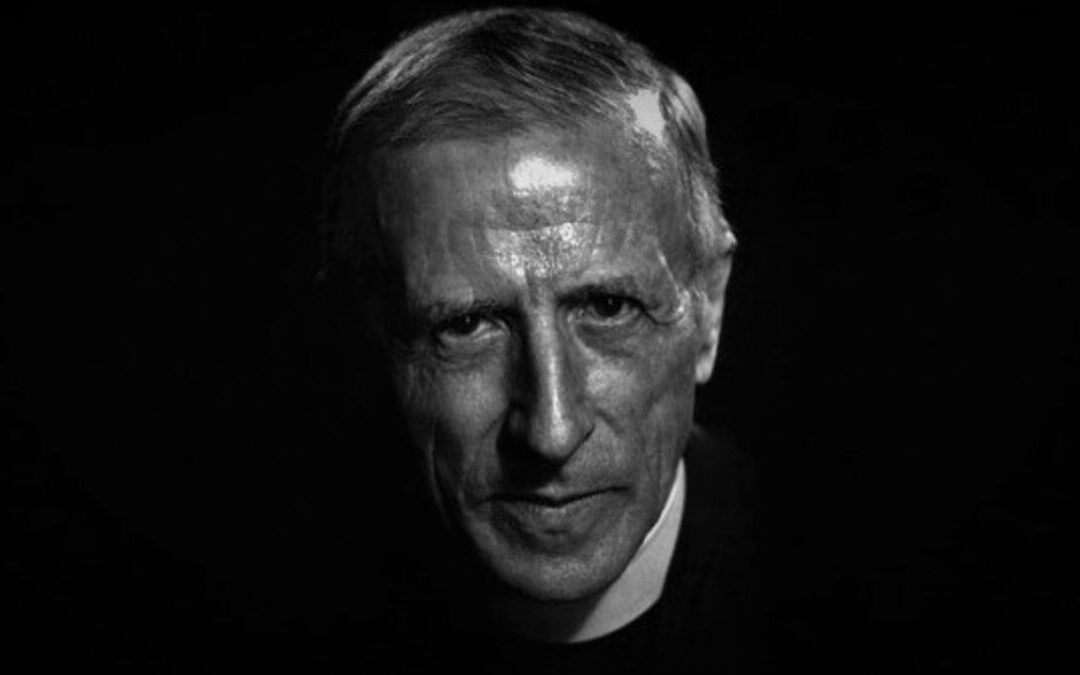
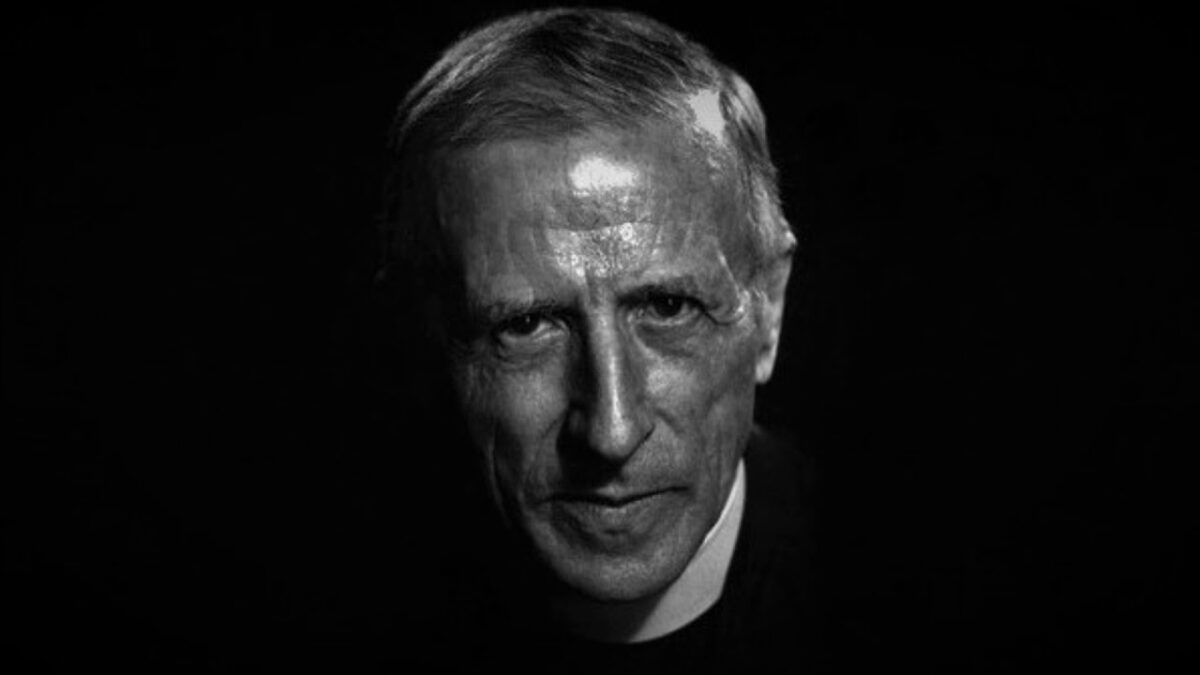
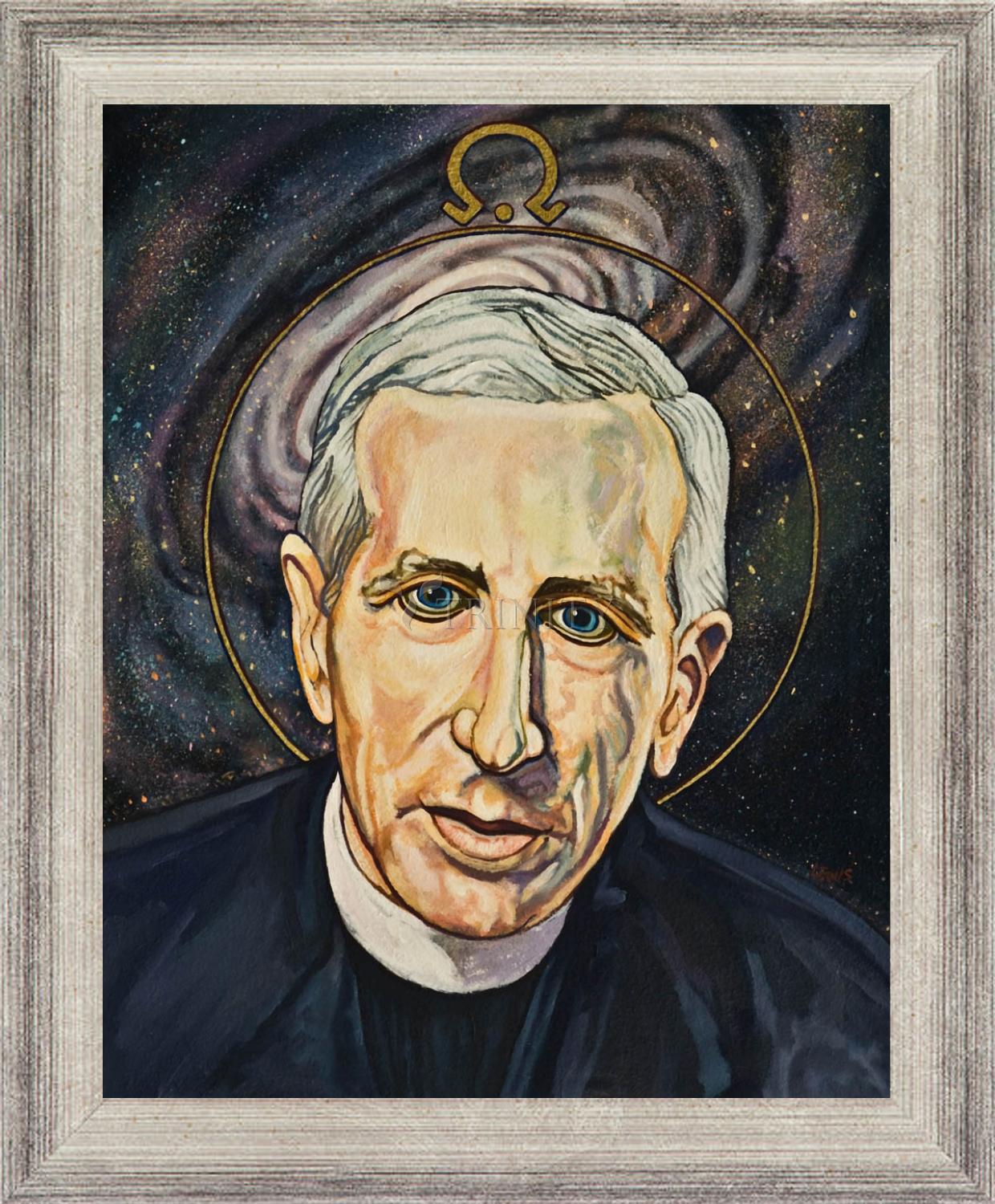
Pierre Teilhard de Chardin, a Jesuit (Society of Jesus), was the most written-about and silenced Jesuit of the twentieth century, and certainly one of the most famous.
He was a geologist, a paleontologist, a philosopher, an evolutionary theorist, and a diehard mystic. Teilhard was also a gifted poet and writer who explored the cosmic intersection between science and religion.
The forbidden zone of gnosis for so-called pius Catholics.
Teilhard’s writings were banned by the Roman Catholic Church, but his books have sold more than a million copies. His ideas are part of mainstream popular culture, and his name is easily recognizable to most educated people. He has been called “one of the few truly great thinkers of our century,” and he has also been called a “deeply corrupting and corrupt philosopher.”
He has also been called “the man who discovered the soul of the world,” “the man who saw into tomorrow,” “the prophet of human potential,” and “the scientist with a heart.”
Teilhard was born in the Auvergne region of France to a family of minor nobility. He joined the Jesuit order in 1899 at age 18, citing his attraction to their strong emphasis on science education. Ordained as a Catholic Priest in 1911, he took up postgraduate studies in paleontology at the National Museum of Natural History in Paris, and he also studied physics and chemistry at the Sorbonne University and geology under Professor Marcellin Boule at the Institute for Human Palaeontology.
In 1912 he received a degree in paleontology from the National Museum of Natural History in Paris, where he began his lifelong work studying fossils and human origins.
His Jesuit training took him to various locations around France, Belgium, England, Egypt, and South America. During World War I he served as an army chaplain and was among those who first uncovered evidence of the Piltdown Man fossil hoax. He then returned to Europe where he continued his work on paleontological studies. He was also a mystic who had visions and wrote about what he saw in language that was poetic and beautiful but difficult for many to understand.
Although Pope Pius XII praised him for his work, the Vatican condemned his work on several occasions. There are thousands of articles on his life and work, some praising him as an up-to-date thinker who brings together science and religion; others condemning him as a heretic who defies Church teachings on a number of subjects.
On 6 December 1957 the Holy Office published a decree stating that ‘the books of Father Teilhard de Chardin SJ must be withdrawn from the libraries of seminaries and religious institutes; they may not be sold in Catholic bookshops; and they may not be translated into other languages. The decree had little or no effect on the continued publication or the translation of Teilhard’s works.
The Society of Jesus has often been criticized for ‘silencing’ Teilhard. But, as Thomas Corbishley says, ‘If his superiors were to show a regrettable timidity in refusing to allow him to publish certain books which seemed, at the time, dangerously novel, it was these same superiors who encouraged his scientific bent and gave him every opportunity to pursue his interests in geology, paleontology, the study of human origins, which were to provide the basis for his larger speculations.’
Teilhard’s magnum opus, The Phenomenon of Man, was published posthumously in 1955 and remains controversial to this day. The book explores how evolution is moving toward greater complexity and consciousness — toward what Teilhard calls an Omega Point. In Teilhard’s view, the Omega Point is God; it is also the earth’s final destiny.
For Teilhard, evolution was continuous: matter evolved into life and life evolved into consciousness. Human beings are the highest stage in this process but not its final goal: evolution continues towards what he called Omega Point – the point of convergence towards which all the universe is evolving. This is the point at which all humanity will unite in a single perfect consciousness of Christ – “the ultimate fulfilment of all things” (Teilhard de Chardin 1964).
These teachings later developed into what is known as the nousphere or noosphere, named after the Greek word for mind – nous (νοῦς). The concept was developed by Pierre Teilhard de Chardin (1881-1955) and Vladimir Vernadsky (1863-1945). The coining of the term is attributed to Édouard Le Roy (1870–1954).
The concept of a noosphere was first developed by Vladimir Vernadsky as he was working on his theory of the biosphere and geosphere. Vernadsky suggested that as life emerged on earth it created a new layer around the planet—the biosphere—that was distinct from geochemical processes and that changed over time with its own momentum.
In 1936, when Pierre Teilhard de Chardin read Vernadsky’s work, he saw how ideas about a nousphere might be worked into his own notion of both cosmic and biological evolution moving towards greater complexity and consciousness.
Teilhard’s concept of a global noosphere, or collective consciousness, is similar to Vernadsky’s idea of the “biosphere” (the planetary thinking layer). In The Phenomenon of Man (1955), he wrote that the noosphere is “a thinking envelope gradually spreading over the surface of the globe.”
The noosphere can be seen as an emergent property of our species-wide nervous system and communications networks. It develops in interaction with our genetic and cultural inheritance.
Teilhard says that there is a “greater complexity” than matter and energy. He calls this greater complexity “mind.” Matter makes up our physical world; mind makes up our mental world. But both matter and mind exist within one universe, which Teilhard calls the cosmic universe or cosmos.
Mankind’s mental activity, he suggested, might be a single field that could be measured and mapped, similar to an electromagnetic field. Eventually, we will create a conscious planetary superorganism encompassing all humanity and all its products.
The convergence of all our minds into one world-wide consciousness would constitute the noosphere.
Pope Paul VI had a great love for Teilhard’s writings and wanted to read them all. For this reason, he gave permission for his books to circulate secretly among bishops and cardinals only. The same thing happened under Pope John Paul II, who had two sets of Teilhard’s works in his library in Krakow: one set that was open and another that was kept under lock and key.
In 1962, Pope John XXIII approved several of his works for publication after being advised that they did not contain errors in faith or morals. In 1963 and again in 1966, the Holy Office (now called the Congregation for the Doctrine of the Faith) declined to approve more of his writings for publication because they contained “several ambiguities and grave errors.”
Despite orders from the Holy Office for Teilhard not to publish or speak about his controversial theories, he continued to do so until his death. After that, it was 50 years before the church lifted its ban on the publication of his works. But even then, some of those works were only released in censored form.
Teilhard had seen a need for a ‘new Nicæa’ to combat the threat of what he called a new arianism, a new diminution of Christ, not in relation to the Trinity, but in relation to the universe.
Writing to Bruno de Solages, rector of the Catholic Institute of Toulouse (1932-1964), he said, “I am more and more convinced the Church will only be able to resume its conquering march when it starts to rethink the relations, no longer between Christ and the Trinity, but between Christ and a universe.
Teilhard says that Christianity can only survive by subdistinguishing in the “human nature” of the Word Incarnate between a “terrestrial nature” and a “cosmic nature.”‘ ‘I am more than ever convinced,’ he adds, ‘that we shall need, sooner or later, a new Nicæa that will define the cosmic face of the incarnation.’
After his death, the religious writings of Teilhard de Chardin, banned by the Jesuit authorities who oversaw his order, became phenomenally popular, selling in their millions and being translated into every major language.
The New York Times called him “the forgotten man of human evolution.” Bruno de Solages sees him as ‘the greatest Christian apologist since Pascal.’
In 1981, Teilhard was beatified by Pope John Paul II, a step toward his ultimate canonization as a saint. His impact on the Second Vatican Council was undeniable; he was named as the person who had exercised more influence on those looking forward to the future than any other person.
But some Catholics, including many Jesuits, consider him to be dangerously controversial because of his ideas about evolution and creation, which were (and still are) at odds with church doctrine.
Moe is the founder of GnosticWarrior.com. He is a father, husband, author, martial arts black belt, and an expert in Gnosticism, the occult, and esotericism.
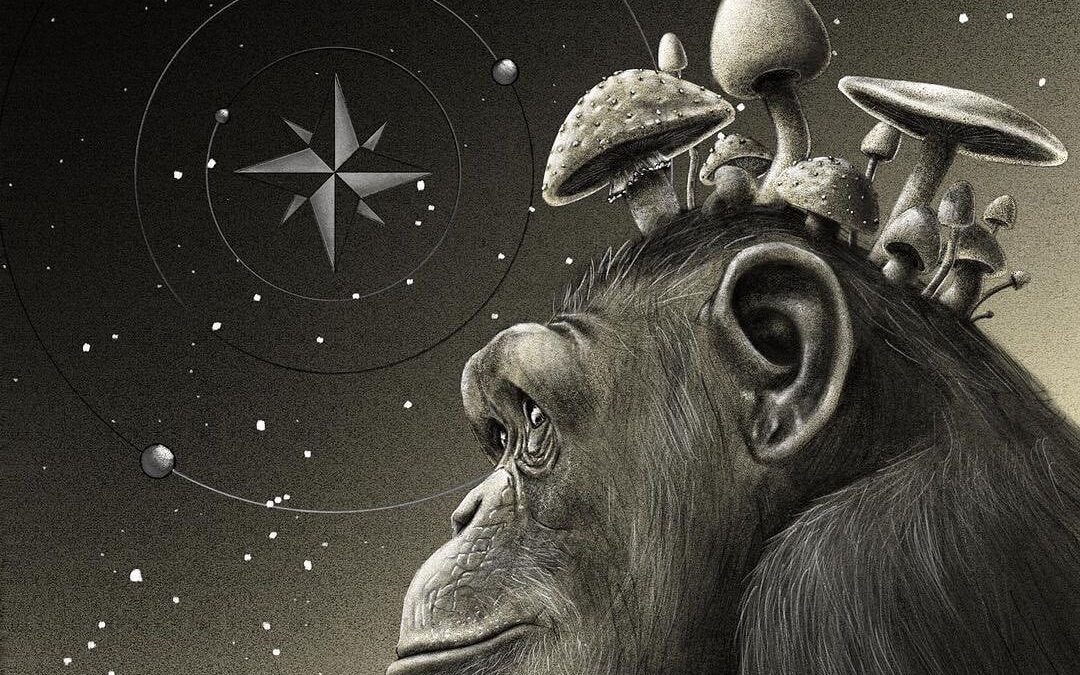
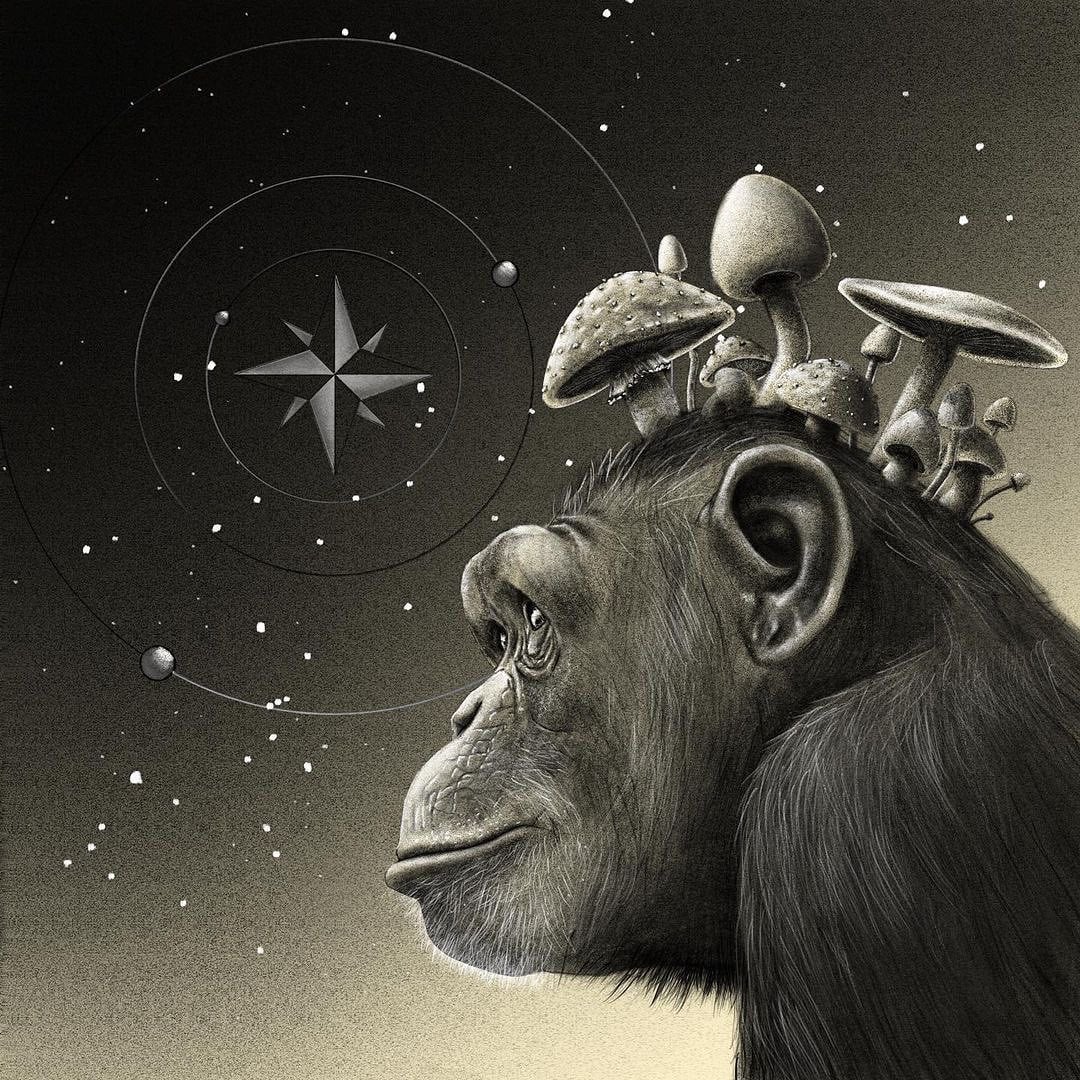
According to the “Stoned Ape Theory” developed by Terrence McKenna and his brother Dennis McKenna, a community of proto-humans might have consumed the magic mushrooms they found in the wild and eaten them.
After ingesting the psilocybin mushrooms, their brains kicked into overdrive, acquiring new information-processing capabilities, imagination, and a mind-blowing expansion of consciousness. In short, psychedelic mushrooms gave Homo sapiens the mental edge over other hominids and helped them evolve into modern humans.
McKenna was an ethnobotanist, philosopher, psychonaut, researcher and author who devoted his life to studying psychedelics and proposing new ways to view society, spirituality and the human experience. He theorized how psychedelics could have been used by early humans to expand their minds and become more intelligent.
In 1992, Terence McKenna argued in the book, Food of the Gods that what Homo erectus to evolve into Homo sapiens was its encounter with magic mushrooms and psilocybin, the psychedelic compound within them, on that evolutionary journey. He called this the Stoned Ape Hypothesis.
The psychedelic drug opened up an entirely new way of perceiving reality for the early human species. They began to see the world in a way they had never seen it before – and just like that, man became self-conscious.
McKenna said, “Homo sapiens ate our way to a higher consciousness,” and, “It was at this time that religious ritual, calendar making, and natural magic came into their own.”
As humans evolved, the domestication of wild cattle led to time spent around cattle droppings, and because psilocybin mushrooms commonly grow in cow dung, “the human-mushroom interspecies codependency was enhanced and deepened,” McKenna explained.
“I propose that the key to Homo sapiens’ leap from primitive protohumanity to full humanity was a mutation in the control of psilocybin biosynthesis. It is now clear from molecular phylogenetic studies that psilocybin mushrooms are widely distributed in nature.
They appear to be common among the tropical and subtropical fungi growing on dung. It is impossible not to suspect that their presence so close to the lives of cattle and other grazing herbivores is not accidental.” McKenna had written.
No one can say for certain whether or not this theory is true. However, some researchers believe that psychedelics played an important role in human evolution because they allowed our ancestors to think outside the box.
Fungi pioneer, Paul Stamets had substantiated McKenna’s theory at Psychedelic Science 2017 in his presentation, “Psilocybin Mushrooms and the Mycology of Consciousness.” Stamets also claims that consciousness, language, creativity, and imagination all were spurred by exposure to psychedelic mushrooms.
In his talk, Stamets said;
“What is really important for you to understand,” he said, “is that there was a sudden doubling of the human brain 200,000 years ago. From an evolutionary point of view, that’s an extraordinary expansion. And there is no explanation for this sudden increase in the human brain.”
Paul Stamets is a mycologist, author and advocate of bioremediation and medicinal fungi. He is a major proponent of the idea that mushrooms are ‘the earth’s natural internet’, and was awarded the National Geographic Adventurer of the Year award in 2008 for his discoveries of new species of psilocybin mushrooms.
The Stoned Ape Theory has never been tested or proven, but it has inspired several researchers to study the effects of psychedelics on cognitive abilities. In recent years, studies using MDMA, LSD and psilocybin have found evidence to suggest that these drugs can be effective treatments for depression, anxiety, and post-traumatic stress disorder (PTSD).
While I don’t see myself as a mushroom guru or evangelist, I am passionate about educating others about the healing powers of mushrooms. As someone who has suffered from anxiety and depression for many years, I understand the importance of finding alternative ways to manage mental health symptoms.
My experiences with psilocybin mushrooms have inspired me to further research their benefits.
We know that brain development in primates is influenced by environmental factors like diet. We know that psilocybin is one of the most well-studied drugs for its potential therapeutic benefits, having shown promise in the treatment of depression, anxiety, cluster headaches, migraines, addiction disorders, anorexia nervosa, obsessive compulsive disorder (OCD), post-traumatic stress disorder (PTSD), and more.
We know that psilocybin — the psychoactive chemical in magic mushrooms — causes brain activity to shift from the default mode network (associated with ego and self-centered thought) to the salience network (associated with sensory perception). This allows for a mind-expanding experience where you are more attuned to your senses, lose your sense of time, and find new connections between seemingly unrelated topics.
In a 2003 study at Johns Hopkins, students were given psilocybin and observed while they entered into a trance. The results were astonishing; the students reported having a transcendental experience with mystical/spiritual overtones.
In the study, “psilocybin dose-dependently caused a shift from normal waking consciousness to a broad range of subjective effects including visions, mood elevation, psychological insight, and mystical experience.”
The study also noted that “the volunteers’ ratings of their experiences the day after the session included descriptions of deeply felt positive moods, psychospiritual experiences of emotional significance and reported benefits to well-being or life satisfaction.”
In October 2018, Johns Hopkins University opened The Center for Psychedelic and Consciousness Research — the first research center of its kind in the United States since 1970s when psychedelic research was criminalized by the Controlled Substances Act. The center’s director Roland Griffiths, has noted “the potential for benefit that psychedelics have for addressing some of the most important public health issues we face.”
A team led by Robin Carhart-Harris at Imperial College London has published new data on how psilocybin affects the brain. The results of their study suggest that psilocybin may just be the trigger that initiated human evolution and consciousness.
The team scanned the brains of 20 healthy volunteers while they were under the influence of psilocybin in an fMRI machine. They found that the drug reduced blood flow in areas associated with higher cognitive functions, such as self-consciousness and identity, as well as ego-orientation.
They also found that the drug reduced connectivity between two key areas of the brain: the default mode network (DMN) and the hippocampus.
The DMN is thought to be responsible for processing information about self-consciousness, while the hippocampus is involved with memory and learning.
The stoned ape theory is just an idea brought to light by Terrence McKennna, who had researched extensively on the topic, and had some statistics and theories to back his statements up. After decades of research since his death by some of the world’s foremost experts, it appears that the scientific studies are validating his claims.
Perhaps in the near future, Terrence Mckenna will be proven right.
Moe is the founder of GnosticWarrior.com. He is a father, husband, author, martial arts black belt, and an expert in Gnosticism, the occult, and esotericism.
That thou shalt set apart unto the LORD all that openeth the matrix, and every firstling that cometh of a beast which thou hast; the males shall be the LORD’s. – Exodus 13:12
The Scripture tells us about a specific substance in the invisible realm that also creates the visible called the matrix. It is connected to the abyss and governed by the LORD.
Webster’s Dictionary describes it as a type of womb or cavity in which anything is formed, and which gives it shape; a die; a mold, as for the face of a type. The lifeless portion of tissue, either animal or vegetable, that is situated between the cells; the intercellular substance.
The Greek translation relates it to the word, koilia, which means belly or womb. From the word koilos, meaning hollow, a cavity, or the abdomen. The Phoenician Hebrew word used is rechem, which also means womb.
These ancient teachings were conceptualized in our modern world with the advent of the popular movie called “The Matrix.”
In the movie, one of the lead characters named Morpheus explains that everything about ‘normal’ life is replicated within the simulation called The Matrix. The ‘Birthing’ within the Matrix is a global program that mimics the conditions of childbirth.
For example, when a man and woman are having sex, the machine simply captures the sperm seed and uses it to impregnate another woman who gives birth to a baby she falsely thinks is her own. Once the baby is born, the machine takes tit away to be grown in a pod and is plugged into the Matrix and its consciousness is transferred into the simulation.
From Morpheus, Neo learns that he was “the mental projection of your digital self.” The “real” sensory world “is simply electrical signals interpreted by your brain.”
In ancient Greek mythology, Morpheus was the Greek god of dreams, whose name literally means “he who forms, fashioner or molder.” Morpheus has the ability to change his own shape and manipulate reality, as well as the power to bewitch other people’s minds with dreams and fantasies.
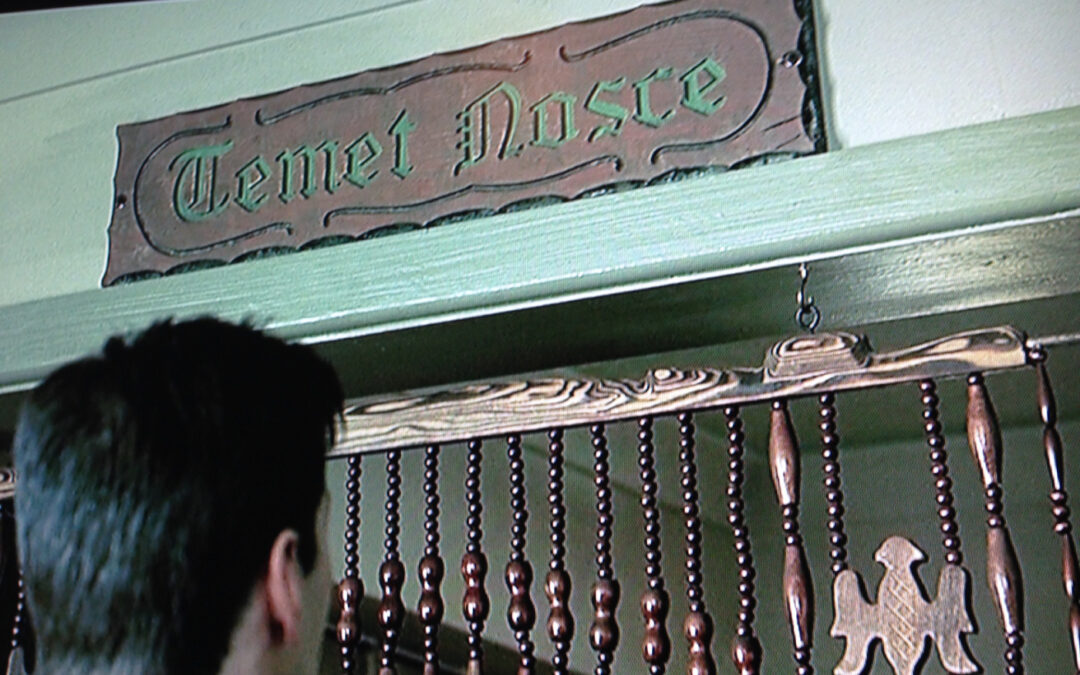
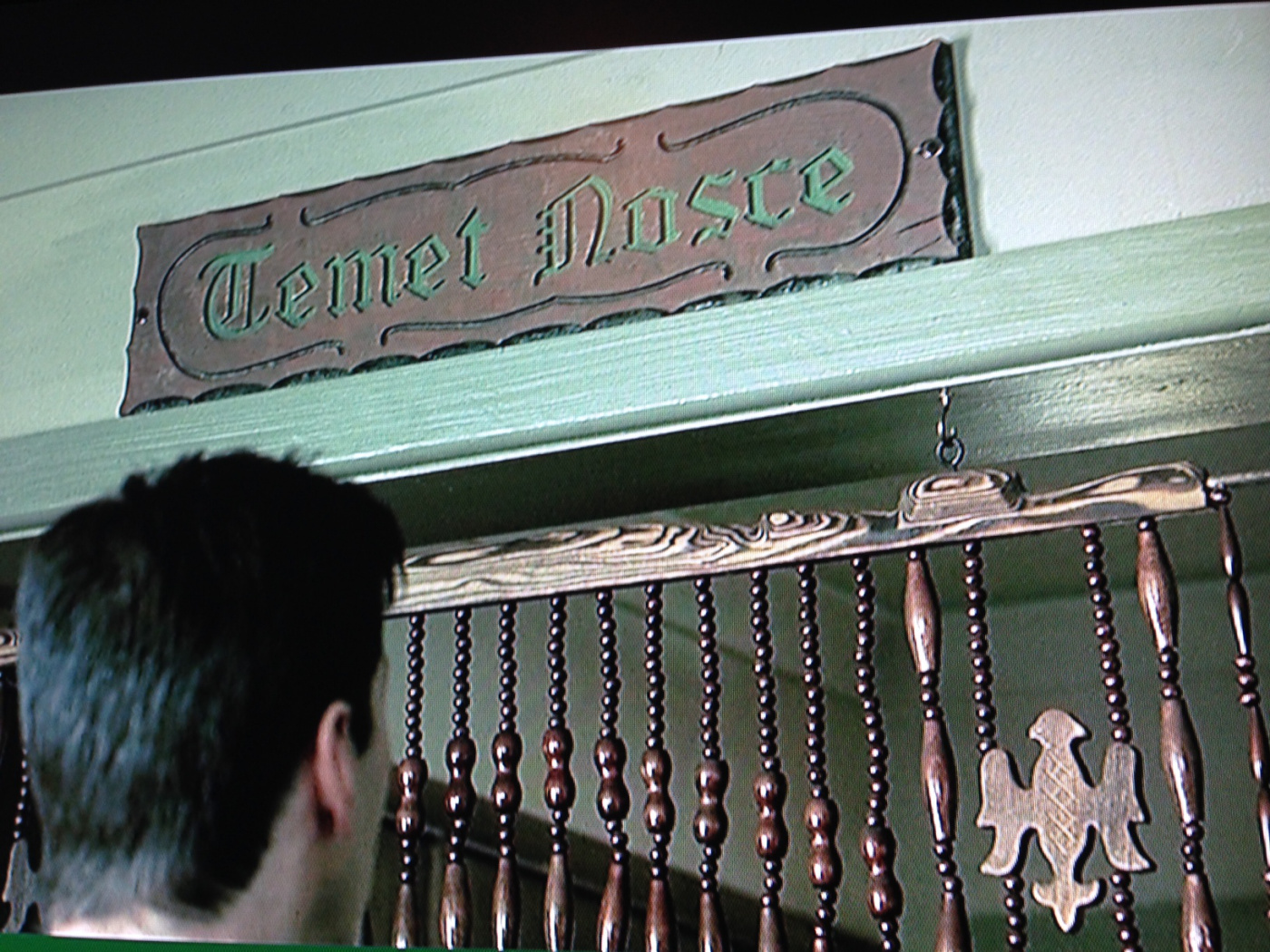
In the Matrix movie, we are introduced to The Oracle, who is an intermediary between God and man. Over the Oracles kitchen door, she asks Neo if he knows what the Latin phrase means, “Temet Nosce.” He says he doesn’t know and she explains to him that it means in English, “Know Thyself.”
People could ask the Oracle questions and they would often get an answer in a riddle format that would be interpreted by the priests of Delphi.
The Latin version of Know Thyself is taken from the more Ancient Greek saying “gnothi seauton” which was one of the Delphic maxims inscribed upon the Temple of Apollo at Delphi and came from Luxor Egypt, according to the Greek writer Pausanias.
The Gnostic concept of the Matrix can also be found in the teachings of the demiurge. Plato, writing in approximately 360 BC, is the first philosopher to bring forth the concept of the Demiurge (Matrix) which was derived from the “Platonic theory of creation out of primordial matter.”
In Timaeus, Plato continues the dialog as the character Timaeus with Socrates, in which he refers to the Demiurge as a benevolent entity who “fashioned and shaped” the material world which remains imperfect.
Plato’s cosmology of the “world-forming God” (Srjiuovpyos, demiurge) is the agent who takes the preexisting materials of chaos, arranges them intelligently according to the models of eternal forms, and produces all the physical things of the world, including human bodies formed or shaped out that which is not being, ie; space, “with regard to the Ideas.”
According to Timaeus, humans live on earth at the center of the cosmos, which he compares to one unique perfect cosmic organism, in whose image we have been created, and whose nature and destiny have been ordained by unseen forces from eternity.
Plato’s Demiurge became the foundation of the natural philosophical concept called Organicism, which views the universe and its parts as an organic living organism based on the Ancient Greek view that the world is orderly and alive.
The concept of Plato’s demiurge and the Matrix is also found in Scripture via the teachings of The LORD. The LORD is the Almighty One, governing all creatures, guiding all events, commanding all powers both heavenly and earthly, and ruling the whole history of humanity.
The LORD was also a supernatural force that worked through matter, animals, and even human bodies to become instruments or tools for God issuing punishments and rewards to people for their good or bad behaviors, often called sins. The “LORD of Hosts” can also make the earth melt, control people’s minds, make war, and bring devastation.
In Freemasonry, the Matrix, AKA the Demiurge is known as the “Great Architect of the Universe or G.A.O.T.U.” and the Masonic motto “ORDO AB CHAO,” meaning Order Out of Chaos.
Writing in the 16th century, the eminent German philosopher, Jacob Boehme explains that here is still a deeper source of things than this inward spiritual World, which is after all a manifested and organized World. Boehme states that which is before beginnings — the unoriginated Mother of all Worlds and of All that is, visible and invisible.
This infinite Mother of all births, this eternal Matrix, he calls the Ungrund, “Abyss,” or the “Great Mystery,” or the “Eternal Stillness.”
A place that is beyond beginnings, beyond time, beyond “nature,” and we can say nothing in the language of reason that is true or adequate. The eternal divine Abyss has its own origin and explanation; it presupposes nothing but itself; there is nothing beyond it, nothing outside it — there is, in fact, no “beyond” and “outside” — it is “neither near nor far off.”
Boehme states that “The good or evil that men do, by acts of will, enters into and forms the soul and so molds its permanent habitation.” He says:
“We should take heed and beget that which is good out of ourselves.
If we make an angel of ourselves we are that; if we make a devil of ourselves, we are that.”
Moe is the founder of GnosticWarrior.com. He is a father, husband, author, martial arts black belt, and an expert in Gnosticism, the occult, and esotericism.
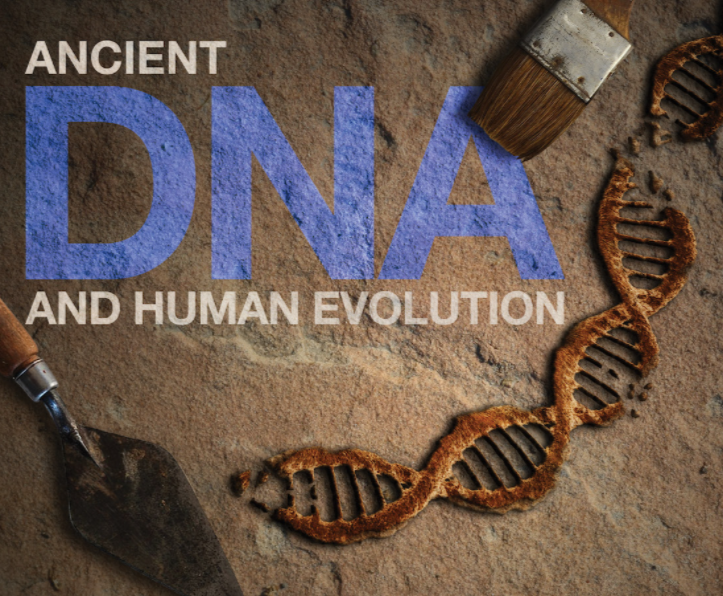
We humans have been shaped through our DNA, life, and death that came from the dust and where we will all return. Unbroken chains of ancient DNA that the records of our lost history that can be found in the dust into eternal life.
This secret science of humans created from dust, mud, clay has been written about and encoded into the history of many nations by many of the world’s greatest philosophers, historians, and scientists. From Ancient Egypt to the Phoenicians, Greece, China, and to the Abrahamic Scriptures of the Christians and Arabs, all claim from their earliest of histories that man was made or molded from the earth (dust, dirt, clay, or mud).
To many people who read these creation stories, they appear to be fiction told in the form of a myth. Impossible claims of our human origins that could never be true. But with the advent of modern science and some of the discoveries made in the last five decades, we are learning that these stories told for thousands of years are most likely true.
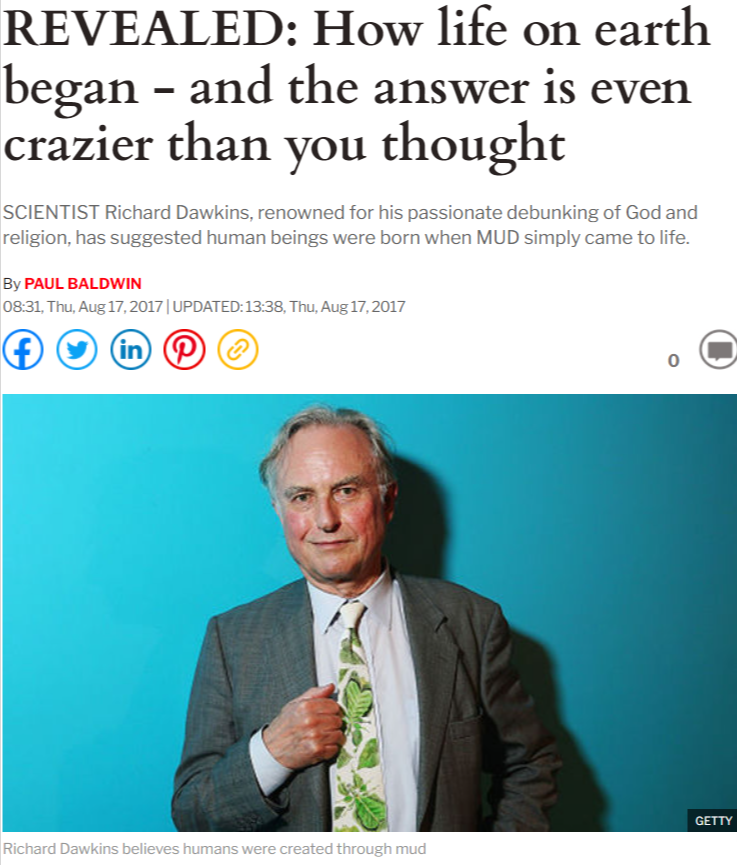
Even today, hardcore atheists and scientists like Richard Dawkins have suggested human beings were born when mud led to the creation of the famous DNA double helix and life itself. He had written that mud n the form of clay, may have learned to replicate, and eventually the process led to the creation of the famous DNA double helix and life itself.
This statement is coming from a man who built much of his career by criticizing God, religion, and believers who to him, qualify as a delusion, which he defined in his 2006 book, The God Delusion. In fact, he considers faith or belief that is not based on evidence—as “one of the world’s great evils”.
But regardless of Dawkins’ criticisms and his disbelief of religion are the facts that some of the great stories found in the Abrahamic religions are starting to be inadvertently verified by modern science as true. So much so they may cause the worlds’ most outspoken and famous atheist to be forced to do an about-face and recognize the truths found in the Scriptures to become not just a believer, but a knower.
As I explained in my previous article, The History of Humans Created From Mud and Clay, one of the earliest writers to detail this science of what is called Môt was the Phoenician historian and a priest of Byblos (City of the Book/Bible), Sanchuniathon (Phoenician: 𐤎𐤊𐤍𐤉𐤕𐤍), whose works were later translated by Philo of Byblos into Greek. Sanchuniathon refers to a great wind which merged with its parents, and that connection was called ‘Desire’ (πόθος). From its connection, Môt or Mud was produced from the fermentation (putrefaction) of a watery mixture, and out of this came every germ of creation and the generation of the universe including animals and humans.
From the teachings of Môt or Mud by Sanchuniathon, and the various histories from almost all cultures of the world telling a very similar story, we have various philosophers, scientists, and authors who have speculated and commented on this subject. The original belief was that various insects and animals could be spontaneously generated from putrified (fungal colonized/rotting/decayed) matter.
“[May one] doubt whether, in cheese and timber, worms are generated, or, if beetles and wasps, in cow’s dung, or if butterflies, locusts, shellfish, snails, eels, and suchlike be procreated of putrefied matter, which is apt to receive the form of that creature to which it is by the formative power disposed. To question this is to question reason, sense, and experience. If he doubts of this, let him go to Egypt, and there he will find the fields swarming with mice begot of the mud of the Nylus [Nile], to the great calamity of the inhabitants.” (Alexander Ross, Arcana Microcosmi, 1652.)
Charles Darwin stated in The Origin of Species that “all the organic beings which have ever lived on this Earth may be descended from some primordial form”. In 1837, Darwin was convinced that “the intimate relation of Life with laws of chemical combination, and the universality of latter render spontaneous generation not improbable” but he rejected the idea that putrefaction of preexisting organic compounds could lead to the appearance of organisms. As he wrote in 1839 in his Fourth Notebook, “My theory leaves quite untouched the question of spontaneous generation.”
The German geologist Heinrich George Bronn, who translated Darwin’s The Origin of Species, in 1860, added another chapter of his own to the book discussing spontaneous generation in the context of Darwin’s theory. Shortly thereafter, Bronn published an essay arguing that Darwin’s theory was incomplete until it could account for the origin of life, in which he provided the research of Priestley, Pouchet, and others who have provided evidence of spontaneous generation.
The famous British biologist, Thomas Henry Huxley, also known as “Darwin’s Bulldog” for his advocacy of Charles Darwin’s theory of evolution asserted that life could be generated from inorganic chemicals in his book Protoplasm: The Physical Basis of Life (1869). The British physicist John Tyndall in his “Belfast Address” of 1874 also stated that life could be generated from inorganic chemicals.
What is fascinating as it relates to our modern era is that science has already validated Sanchuniathon’s theory that all life came from the fermentation (putrefaction) of a watery mixture or what we simply call “molds or fungi.” For example, in 2003, researchers at the Howard Hughes Medical Institute and Massachusetts General Hospital showed that clay helps RNA form. Harvard Medical School Professor of Genetics Jack Szostak said, “It’s exciting because we know that a particular clay mineral helps with the assembly of RNA.”
Today, all living organisms store and transmit hereditary information using both DNA and RNA composed of four kinds of subunits known as nucleotides that determine the sequence of amino acids in proteins, which is the central mechanism in all of biology. (The Origin of the Universe, Earth, and Life)
Experiments conducted under conditions intended to resemble those present on primitive Earth have resulted in the production of some of the chemical components of proteins, DNA, and RNA. Some of these molecules also have been detected in meteorites from outer space and in interstellar space by astronomers using radio-telescopes. Scientists have concluded that the “building blocks of life” could have been available early in Earth’s history.
A 2013 study found that clay (dried mud) might have been the birthplace of life on Earth. Researchers from the Kavli Institute at Cornell for Nanoscale Science discovered that clay forms a hydrogel — a mass of microscopic spaces capable of soaking up liquids like a sponge. Over billions of years, chemicals confined in those spaces could have carried out the complex reactions that formed proteins, DNA, and eventually all the machinery that makes a living cell work, which protected those chemical processes until the membrane that surrounds living cells developed.
The researchers told the journal Scientific Reports that clay acts as a breeding laboratory for tiny molecules and chemicals which it ‘absorbs like a sponge’ and over billions of years the chemicals react with each other to form proteins, DNA and, eventually, living cells.
It is important to understand that it is not the actual particles of dirt or dust that mix with water to become clay that forms all life, but it is most likely the microbes that make up the earth’s soils that create life forms. Dust doesn’t absorb nutrients and or DNA. It is the microrganisms within and that make the dust that are able to absorb all matter aropund them.
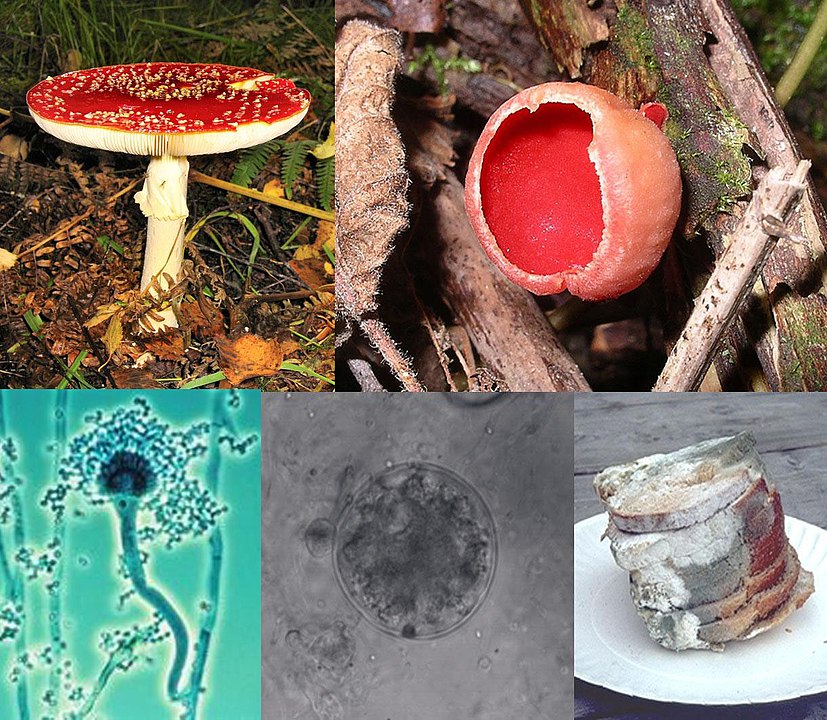
This why researchers have discovered that it was most likely fungi that first colonized the surface of the earth leading to the beginnings of a soil system that still functions today. Fungi were some of the first complex life forms on land, mining rocks for mineral nourishment, slowly turning them into what would become soil. Fungi probably colonized the land during the Cambrian, over 500 million years ago, (Taylor & Osborn, 1996).
“Fungi are absolutely remarkable chemists,” says McMaster University biochemistry professor Gerry Wright. Fungi produce molecules that humans still can’t reproduce in a lab, and we’re only beginning to scrape the surface of what we can learn from them.
“[Fungi] are the garbage disposal agents of the natural world,” according to Cardiff University biosciences professor Lynne Boddy. “They break down dead, organic matter and by doing that they release nutrients and those nutrients are then made available for plants to carry on growing.”
“It’s how everything is reborn,” says Dunn. “So that this entire web of life is connected and it’s connected through the fungi.”
In short, fungi eat death, and in doing so, create new life.
Fungi hyphae form mycelium that connects trees and plants in an underground fungal highway — called the wood-wide web — transporting nutrients and sending danger signals.”
A 2006 paper published online by the journal Science said, “The evolutionary innovation and expansion of land biota could permanently increase [chemical] weathering intensity and [clay] formation, establishing a new level of organic carbon burial and oxygen accumulation.”
In 2009, a study published by The New Scientist suggested that the building blocks of DNA can form spontaneously from chemicals thought to be present on the primordial Earth and that DNA could have predated the birth of life. The researchers at by the University College London generated RNA using chemicals that probably existed on the early Earth showing that RNA may have formed spontaneously – powerful support for the idea that life began in an “RNA world”.
The New Scientist had stated; “Conventional wisdom is that RNA-based life eventually switched to DNA because DNA is better at storing information. In other words, RNA organisms made the first DNA.
If that is true, how did life make the switch? Modern organisms can convert RNA nucleotides into DNA nucleotides, but only using special enzymes that are costly to produce in terms of energy and materials. “You have to know that DNA does something good for you before you invent something like that,” Switzer says.
He says the story makes more sense if DNA nucleotides were naturally present in the environment. Organisms could have taken up and used them, later developing the tools to make their own DNA once it became clear how advantageous the molecule was – and once natural supplies began to run low.
“Organisms could have used naturally occurring DNA, then developed the tools to make their own”
Early organisms must have scavenged for materials in this way, says Matthew Levy of the Albert Einstein College of Medicine in New York City. “The early Earth was probably a bloody mess,” he says, with all manner of rich pickings on offer.
More recently, researchers analyzing samples from muddy sites in the western United States discovered that novel DNA structures appear to scavenge and ‘assimilate’ genes from microorganisms in their environment. These extra-long DNA strands, which the scientists named in honor of the fictional Star Trek ‘Borg’ aliens who assimilate the knowledge and technology of other species.
Jill Banfield, a geomicrobiologist at the University of California, Berkeley, had said, “We started off with a piece of mud and 10 trillion pieces of DNA”.
According to Cal State Berkley, “One sample, taken from the mud on her property, contained a gene-filled stretch of DNA almost 1 million bases long—and more than half the genes were novel. This linear stretch of DNA also had a particular pattern of bases at its beginning and end, distinct stretches of repetitive DNA between its genes, and two places along the sequence where DNA duplication could begin—which indicated the Borg could make copies of itself. Together, this suggested it was not just a random concoction of genes.”
Borgs are DNA structures “not like any that’s been seen before”, says Brett Baker, a microbiologist at the University of Texas at Austin. Other scientists agree that the find is exciting, but have questioned whether Borgs really are unique, noting similarities between them and other large ECEs.
I recently reported on a new study that found bits of genetic code (DNA) in tiny particles of dust that are the building blocks for all vertebrates, including humans. The researchers found that these bits of genetic code have been scrambled and placed on larger chromosomes discovering that these tiny ‘specks of dust’ are actually important building blocks for all vertebrates.
Last but not least, within the dust found in our modern homes is human skin and DNA. In fact, it is one of the main components of all household dust.
A 2008 study found that environmental samples from indoor surfaces of dust are composed largely of human skin cells and have been documented to contain roughly tens of micrograms of total DNA per gram of dust. The researchers found that human DNA was detected in 97% of 36 dust samples.
Humans shed dead skin cells in the millions every day. These decaying flakes of skin land all around you where you live in your home or work that are then fed upon by the various microscopic organisms such as fungi and dust mites whose job is to eat decaying matter.
A newly discarded skin scale is ‘the perfect food for fungi and dust mites who thrive on decomposing organic matter.
Scientists believe that fungi may either constitute a food supplement for mites or may have an indirect effect by decomposing human dander, thus making it more accessible for dust mites. There is a mutual relationship between fungi and HDMs.
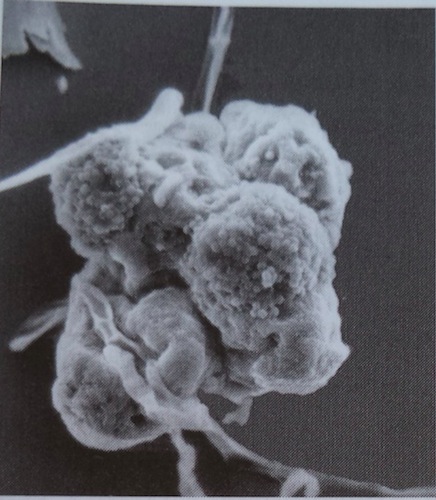
Here is an image of fungal hyphae Fungal emerging from house dust mite poop/droppings.
With the above scientific evidence and the history told by almost all cultures around the world of humans being created and molded by the dust, it is difficult to maintain that we are the product of some chemical reaction. Our DNA and the science of all life on earth tell us otherwise.
We are part of the dust.
To put it more accurately, we are the offspring of the organisms within the dust.
Both creators and destroyers who are internally, externally, and eternally connected to the earth’s biosphere molding ourselves and the world around us.
The words are taken from Genesis 3:19, where God told “the man” that he is going to toil, struggle, and sweat trying to get food from the ground. Then he’ll return to the ground, for that’s where he was taken from to begin with—you are dust, and to dust you will return. It seems this message was understood to apply to all of us. As the great Psalmist says,
“As a father has compassion for his children, so the Lord has compassion for those who fear him. For he knows how we were made; he remembers that we are dust. As for mortals, their days are like grass; they flourish like a flower of the field; For the wind passes over it, and it is gone, and its place knows it no more.” (Psalm 103:13-16)
Moe is the founder of GnosticWarrior.com. He is a father, husband, author, martial arts black belt, and an expert in Gnosticism, the occult, and esotericism.