by Moe | Nov 11, 2013 | History of the Brotherhood, Meaning of Symbols
“Red star, that from his flaming hair. Shakes down diseases, pestilence and war.”- Homer 
In ancient history, the sign of a comet was an evil omen, and a sign of death. It often meant the death of a king or Pope, such as in 858 A.D. when there was a comet seen before the death of Pope Benedict III; or in 859 a comet announced the death of Lotharius the Younger; and in 875, another for Louis II. There was “Charlemagne’s Comet “; in which a torch-shaped comet was seen above Germany in 814 A.D., foretelling the king of the Franks death.
Also, the infamous Halley’s Comet that would blaze in the European heavens once a century; foretelling the death of a king like that of Richard I, “the Lion Heart,” and another with that of James II, King of Scotland, in 1460.(1) Also, in 1910 it was widely anticipated and coincided with the death of King Edward VII of England (Burnham, 2000).
Let us not forget “Caesar’s Comet” of 44 B.C., during the reign of Augustus, that instead of being a sign of death, it was a sign of Caesar’s soul ascending to heaven after his death. The Comet was part of the political propaganda that changed the mythology of the comet being an omen that had meant death of a king, to meaning the assencison of the soul of the king. As part of this tool, his son Augustus in the year 42 B.C. had built “The Temple of Divus Iulius (Temple of the Deified Julius or Temple of the Comet Star) and was dedicated in 29 B.C. by Augustus for the “cult of the comet”. In the temple there was a large image of Julius Caesar, who according to Ovid, had a flaming comet affixed to its forehead:
To make that soul a star that burns forever
Above the Forum and the gates of Rome.(Wikipedia)
A comet was visible for 40 days and 40 nights at the time of the Emperor Constantine’s birth in 904 A.D., and another upon his death in 959. In 1208 A.D., the Jews thought the comet seen that year was a sign of the coming of their long-expected Messiah. (1)
Homer had written almost 3,000 years ago about comets and death in the Iliad; Warm’ din the brain the smoking weapon lift- The purple death comet floating over his eye.
Ironically, just like Homer had described the purple death comet floating over his eye, today, the purple comet known as Ison is currently located just inside the orbit of Jupiter. A planet that has as a massive eye, and a planet known as the King of the Gods…
Link to Space.com
WARS AND COMETS
Homer had further written in the Iliad; “As when high Jove (Jupiter) denouncing future woe, Over the dark clouds extend his purple bow; And as the purple bow Jove (Jupiter) bends at mortals, when of war he will the signal show – (In sign of tempests from the troubled air, Or from the rage of man, destructive war)
According to the Roman Stoic philosopher Seneca, shortly before the war of Achaia, B.C. 146, there was a comet as large as the sun, and dissipated the darkness of the nights: its disk was red and fiery. In 83 B.C., a comet signaled the war between Caesar and Pompey. Three Comets appeared before the War between Ludo- 841 and his Sons, that arose about the division of the Kingdom. In 1043, the War in Hungary succeeded a Comet. In 1472, two Comets appeared, which were succeeded by several Wars and violent Plague; at this time Charles Duke of Burgundy made War upon his Neighbours, which War lasted many years, and was ended by his death. Two Comets were seen, the one in the East, the other in the West, after which the Turks invaded Armenia. The appearance of Donati’s comet, in 1858, was quickly followed by the Italian war of 1859.(2)
The 17th century English poet, Milton said this in regards to comets, Satan, and war in his day; “Satan stood and like a comet burned, That fires the length of Ophiuchus huge In the arctic sky, and from his horrid hair Shakes pestilence and war.”(3)
Does this have any relation to Wormwood?
Revelation 8:11- the name of the star is Wormwood. A third of the waters turned bitter, and many people died from the waters that had become bitter.
DISCLAIMER:
This content relates to ancient mythology and the events of today. It is a form of Conspiritainment, that may or may not apply to prophecy, the Apocalypse, or life in general. User discretion is advised.
SOURCES:
1. Knowledge…: A Monthly Record of Science, Volume 5; Volume 31
2. The petitioning-comet: or, A brief chronology of all the famous comets By Democritus (pseud.)
3. Presbyterian Banner, Volume 96
4. Wikipedia and other open source material
Moe is the founder of GnosticWarrior.com. He is a father, husband, author, martial arts black belt, and an expert in Gnosticism, the occult, and esotericism.
by Moe | Nov 6, 2013 | Meaning of Symbols
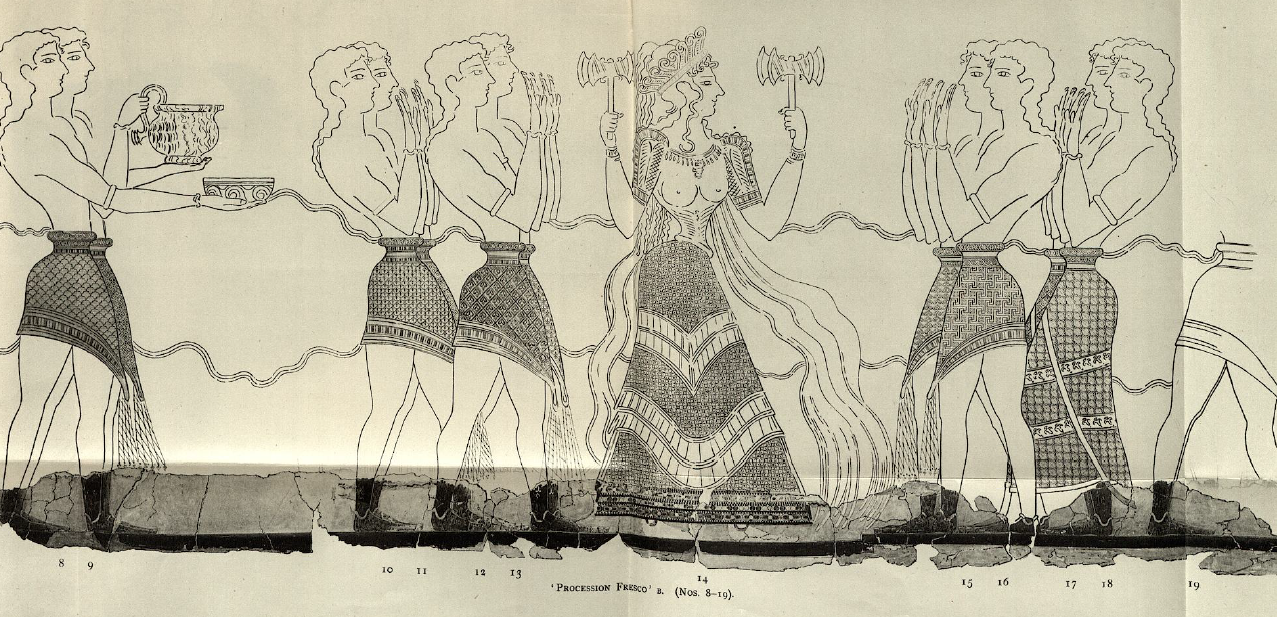
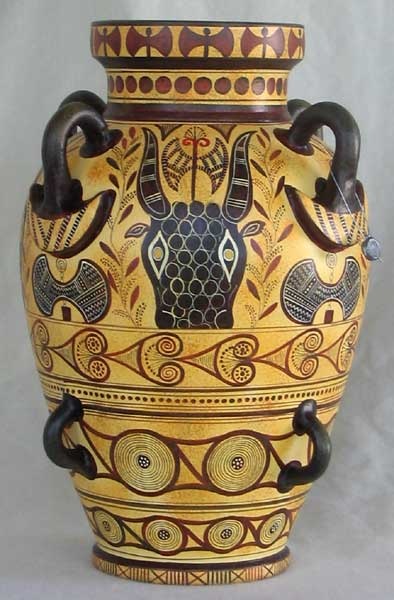
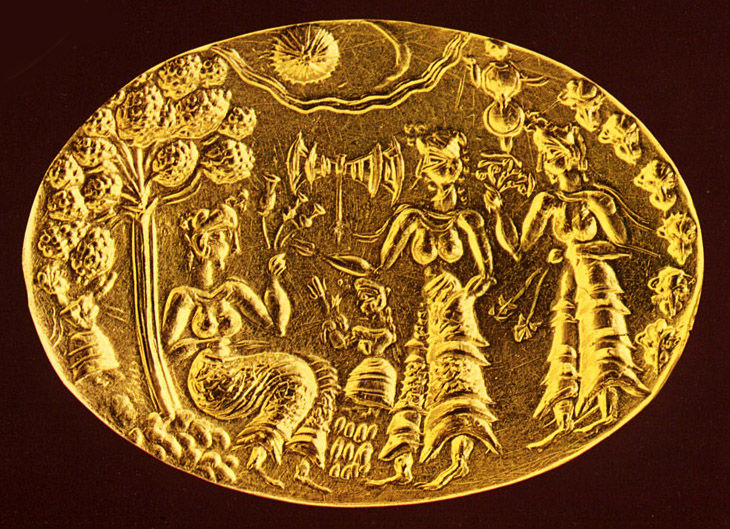
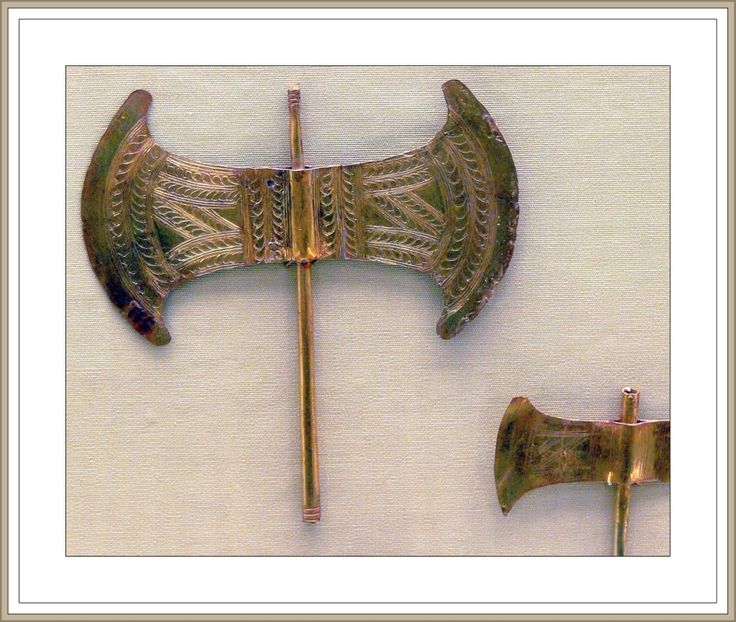
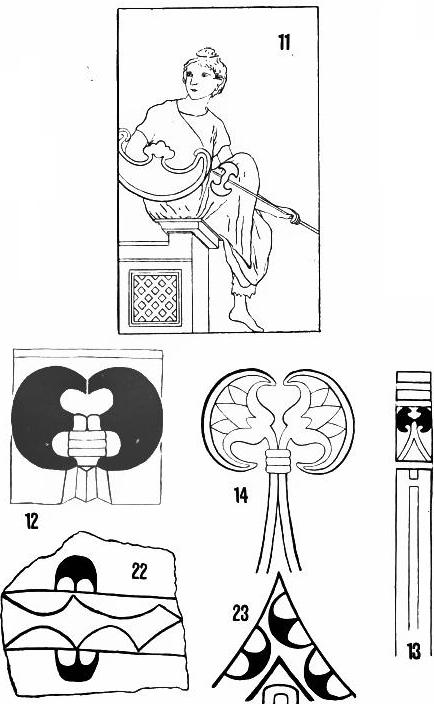
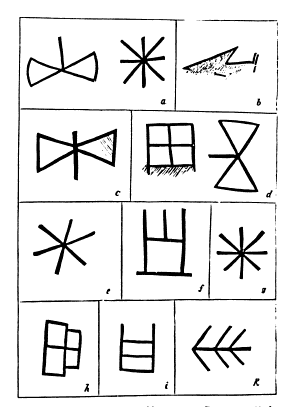
The ancient cross of Crete is based on the symbolism of the theta in the form of a doubled headed battle axe. Theta is the 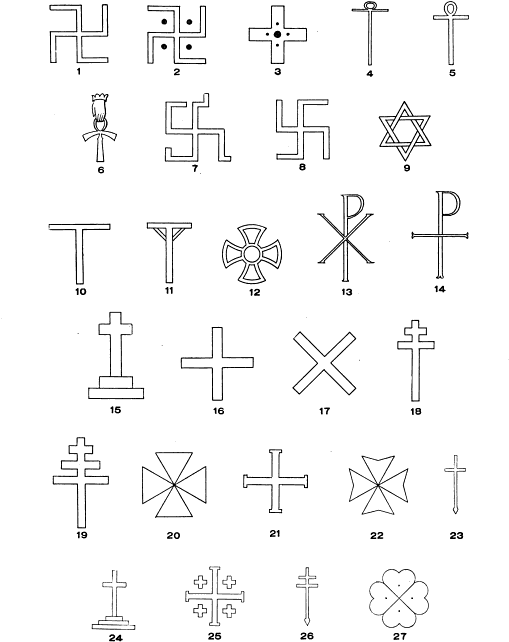 eighth letter of the Greek alphabet which is depicted with a lower case t and is considered the symbol of death. In Athens, those prisoners sentenced to death had the lower case t tattooed on their foreheads and if the prisoner was fortunate to be found innocent, he would have an upper case T in the form of the Tau, which is the symbol of life tattooed on their forehead.
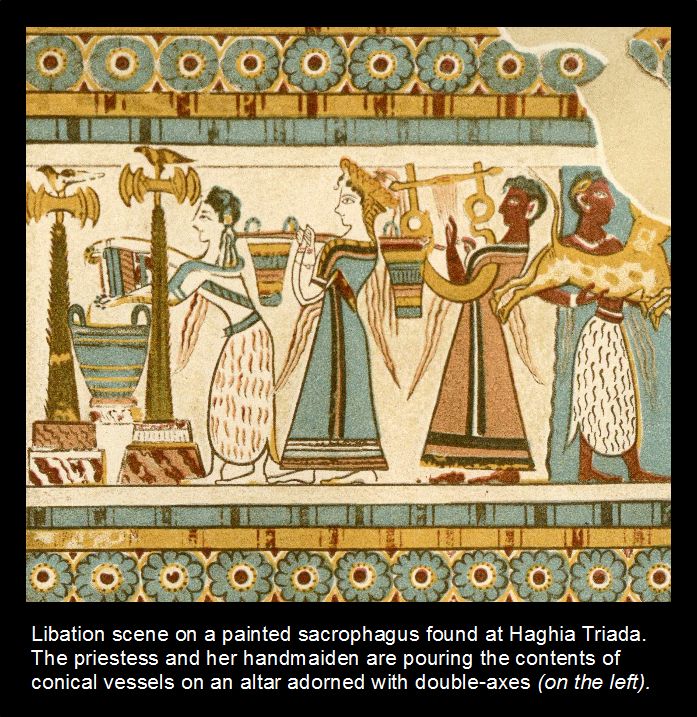
Hence, the reason the Cretans had used a double headed axe in many of the religious ceremonies and artwork that has been left behind. They were a warrior and a pirate culture, who are often referred to in ancient literature by various names such as the Sea Peoples, Phoenicians, Minoans, and the Philistines, just to name a few. If you were unfortunate to meet with these people in their boats or with this double headed battle axe, it most always meant certain death to their foes. A story that still rings true today.
Moe is the founder of GnosticWarrior.com. He is a father, husband, author, martial arts black belt, and an expert in Gnosticism, the occult, and esotericism.
by Moe | Nov 5, 2013 | Featured
World famous radio show host, Art Bell had just posted this statement hours ago on his Facebook page, “Sometimes when you are ‘all in’ you win,  sometimes lose. By mutual agreement, Dark Matter will no longer air as of tonight.”
I’m sorry to say to all of you Art Bell fans out there, but it looks like the infamous paranormal and conspiracy radio show host will no longer being doing his current Sirius XM Radio show that he had just started this September. The long awaited live, nightly call-in show called “Art Bell’s Dark Matter,” had only aired for six week since September 16th.
Here is more of what Art Bell had to say on Facebook;
“I started the show with the expectation that my listeners would be able to stream the show since most were coming from AM,” Bell tells us. “They started the thirty-day trial and found that it was dropping out on them every few minutes. After the 30-day trial most did not renew; why would they? Faced with paying about 180 bucks a year for something that was not working right, what would you do? So I lost my base.
My show is based on call in; if all I am left with is truck drivers (love them but the cell connections are not good) with cell phones going down the road at 70 MPH… well you get the idea. So I asked Sirius to allow free streaming for a year until they could fix their problems, and they said no. The show was simply not viable under these conditions. – Art”
Before there was George Noory, there was Art Bell who originally created and hosted the first radio show on “Coast to Coast AM”, which lasted for 15 years until he had retired from radio in 2003. Bell got into radio at only 13 years of age as a amateur radio operator, and later had hosted radio shows while serving in the Air Force in Vietnam. Later when he returned to United States after the war, he started a new late night show on a Las Vegas radio station that eventually became his nationally syndicated show, “Coast to Coast AM.”
The 68 year old radio show host was the first true pioneer of both the paranormal and conspiracy themed radio shows, who had paved the way for many of the radio show hosts and podcasters that you see today. However on many conspiracy theories he didn’t agree with, such as 9/11 which he had dismissed stating on his website; “God Bless George W. Bush and the U.S.A.,” right after the attacks on the Twin Towers on September 11, 2001.
If there are any more updates on the status of Art Bell or his show, I will be sure to report it here on GnosticWarrior.com.
Moe is the founder of GnosticWarrior.com. He is a father, husband, author, martial arts black belt, and an expert in Gnosticism, the occult, and esotericism.
by Moe | Nov 4, 2013 | Uncategorized
In my previous article, Knossos: The City of Gnosis, I had detailed that this city gave birth to the first European civilization and also many other inventions that we still use today in the modern Western World. Creations such as the first true European language, the first paved roads, and the world’s first indoor plumbing with ‘flush’ toilets. Also, from the city of Knossos, the first true organized shipping and commerce business was created that was operated by the local Cretan royal family or families. Let’s just say, these people were talking, writing and shipping circles around their competition at the time and their ability to create many new inventions had established these people firmly in a royal class that could not be matched or beaten for hundreds of years.
On top of all the new inventions and creations, Knossos is also home to one of the first original libraries and royal archives in Europe. In was in this city where the 19th century archaeologist, Sir Arthur Evans had found discovered the royal palaces of King Minos and a people whom he had coined, “The Minoans.” When Sir Evans had begun escalating on Crete, he found some clay tablets with an early Greek writing inscribed on them that had peeked his interest and in the spring of 1900, he started to discover hundreds of clay tablets. At the time, these tablets had garnished a tremendous amount of interest by both Evans and the Crown because they would most likely tell us who exactly these people were, how they operated and their international relations with other kingdoms such as Egypt. But it appears that there is some type of cover up of the content of these tablets. To this day there has been nothing released to the public about what is said on these tablets and the claims made in various books etc state that
these tablets were still undeciphered. I personally feel is propaganda and these tablets hold the keys
had brought the art of
in the Western World
The Greeks were the first to add literary works to their collections adopting the writing of the Phoenician. As early as 1 000 b.c. Knossos maintained records of some two thousand clay tablets that have now come to light consisting of mostly business inventories and military contracts. The discoveries at Knossos and other sites in Crete include thousand of tablets.
Moe is the founder of GnosticWarrior.com. He is a father, husband, author, martial arts black belt, and an expert in Gnosticism, the occult, and esotericism.
by Moe | Nov 4, 2013 | Gnosis, History of the Brotherhood
The word Kohen, or Cohen (Kohain; Hebrew: כֹּהֵן, “priest”, pl. כֹּהֲנִים Kohanim or the English Koan) is the name of a priesthood that is one of the oldest still alive today. They are the ancient priests who had worshiped the God Asclepius; the God of wisdom, medicine, healing, rejuvenation and physicians, with his serpent-entwined Tau staff. The Kohens (Koans) of the House of Asklepios (iEsculapius) come from the Island of Kos just 7 miles off the coast of Crete, where the secret mysteries of their religion is not only passed from father to son, it is also contained in their blood.
A person who comes from the island Kos (Coos) is called a Koan in English, and a Cohen or Kohen (or Kohain; Hebrew: כֹּהֵן, “priest”, pl. כֹּהֲנִים Kohanim) which is simply the Hebrew word for priest. Hence, your last name does not have to be “Kohen or Cohen” to be a member of this biblical family. This is a common misconception that many modern Jews have today. The people and families of the original Kohens (Koans) were simply from the island of Kos located just 7 miles offshore Crete, and that were specifically trained in medicine, healing and arts. Hence, this is why the family of the Kohen were consecrated to serve in the Sanctuary of the Temple as the High Priests of Ancient Israel up to the destruction of the Second Temple in 70 CE. We also find that the Apostle Paul had visited this island of Kos (Coos) as described in Acts 21: “And it came to pass, that after we were gotten from them, and had launched, we came with a straight course unto Coos, and the day following unto Rhodes, and from thence unto Patara.”
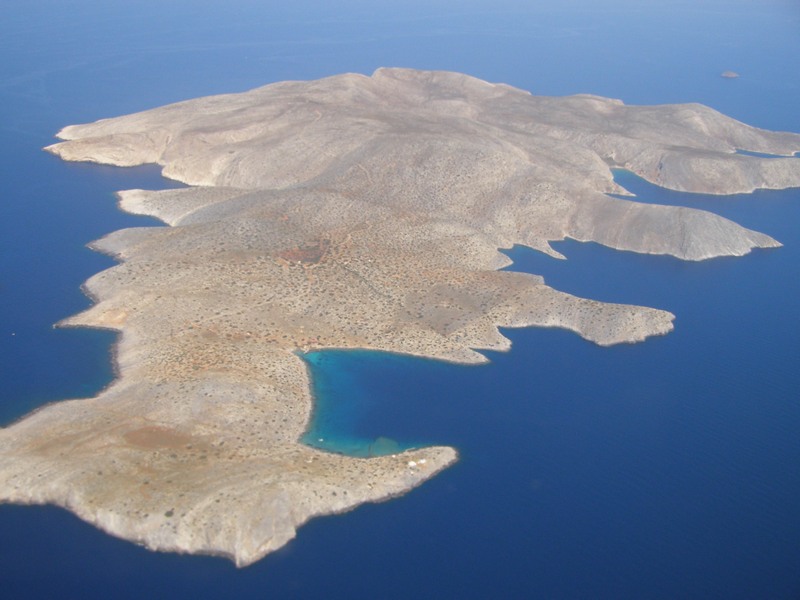 This small island of Kos has a deep history, that many people are simply unaware of. The people of Kos are mentioned in the time of Alexander the Great where they are also referred to as some of the most powerful Jewish bankers of their time, with strong connections to Egypt, the Ptolemies, Cleopatra and Herod; as described in early 20th century in The Jewish Encyclopedia:
Jews are mentioned among the population of Kos; and under Alexander the Great and the Egyptian Ptolemies (from 836 13.6.) the town developed into one of the great Jewish centers in the A’Jgean. Josephus (“ Ant.” xiv. 7, § 2) quotes Strabo to the effect that Mithridates were sent to Kos to fetch the gold deposited there by Queen Cleopatra and “800 talents belonging to the Jews.”
Jews of Kos are mentioned at the time of Antiochus VII., Sidetes, Kos being one of the islands to which the rescript of the Roman consul Lucius was sent (139 12.0.; I Mace. xv. 23). It appears probable that in course of time the Jews became the chief bankers in the island, and that they took charge, at a certain rate of interest, of the large sums of money owned by the temples. In the sacrificial tablet of the Temple of Adrasteia and N emesis, they are mentioned (lines 17, 18) as mivrrg‘ ierb ‘r[uv rpa]1rsCur£w 6 67.2.1»; (Herzog, “Critische Forschungen,” p. 35). This inscription is of the first century 11c. Rayet (“ Mémoire sur l’Ile de Kos,” p. 80) thinks that the 800 talents ($960,000) deposited by Cleopatra were held by these Jewish rpamfirat; but of this there is no evidence (Paton and Hicks, “Inscriptions of Cos,” p. xxxviii.). In 49 3.0. the Koans are reminded by the consul Cains Fannius to obey the decree of the Roman Senate and to allow safe passage to Jewish pilgrims traveling to Jerusalem (Josephus, Le. xiv. 10, § 15). Herod is said to have provided an annual stipend for the benefit of prizewinners in the athletic games (Josephus, “B. J.” i. 21, § 11); a statue was erected there to his son Herod the ‘l‘etrarch (“ C. I. G.” 2502). The epigrammatist Melenger, who was living at Kos about 95 13.0., complains of having been abandoned by his mistress for a Jew (Epigram No. 83, in “Anthologia Graeea,” v. 160).
The island of Kos (Dia) is where the Father of Medicine, Hippocrates (Greek: Ἱπποκράτης; Hippokrátēs; c. 460 BC – c. 370 BC) was born, and also where he had operated his world-famous school of medicine. Soranus said that Hippocrates learned medicine from his father and grandfather, and studied other subjects with Democritus and Gorgias. (Wikipedia) This learning from grandfather to father, and father to son would follow in the ancient Kohen family tradition. Pliny had written; Hippocrates learned medicine by writing down the successful cures that had been recorded by patients on the walls of Asklepios’s Kohen (Koan) temple.
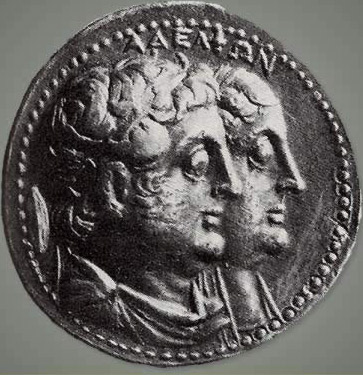 The Ptolemies of the Greco Egyptian period had continued the ancient tradition of the high priests of Ptah from Egypt and were connected to the islands of Kos and Crete, which was part of the Ptolemaic Kingdom that had stretched from Egypt and spread along the Eastern Mediterranean from Cyprus, Crete, to almost all islands of the Aegean and even Thrace. Some members of the Ptolemy family were born on Kos, such as Ptolemy II in 308 B.c.e. In the time of Ptolemy Philadelphos, who was the son of Cleoptatra; Kos enjoyed great relations with the Alexandrian court, and is where some of the greatest literary men of the time from Alexandria would often want to escape the busy atmosphere of the city and travel to Kos for a spiritual and health retreat. Some of them would also attend the Hippocrates’ School of Medicine, which would have been the finest in all the world from the 5th century, down to the time of the destruction of the temple.
Herodas (Greek: Ἡρώδας) was a Greek poet who was also a Kohen (Koan) from the island of Kos. An account of Kos, down to, and during the time of Herodas is given in the book, The Mimes of Herodas by Herodas;
Next to Rhodes, Kos is the largest of the Dorian Sporades. Its Geocircumference is given by Strabo as 550 stades, by Pliny the elder as 100 Roman miles. The island falls into three divisions (i)the eastern district, bounded on the south by a high range of mountains; upon these mountains are the healing springs, which are still famous; (2) a plateau furrowed by watercourses, and for the most part desolate and barren; (3) the mountainous western district, with a distinct range of its own.
Most of the island is remarkably fertile, and noted for its wines. Kos is badly supplied with harbours. Its people were of a sober, steadfast character, as befitted their Doric origin. The youths of Kos were famous for their beauty1. They adhered faithfully to ancient ritual, especially in regard to the worship of Asklepios, which came to them from the mainland of Greece*. In the fifth century the Koan school of medicine, which continued famous for a considerable period, was founded by Hippokrates; he based his observations on the votive models in the temple of Asklepios, which constituted a kind of anatomical and pathological museum.
The history of the settlements on the island is as follows. In the Early Homeric catalogue we find Kos, with its dependent islands (Nisyros, J^yj? Krapathos, Kasos, and the Kalydnian group), sending a contingent island, of thirty ships to help the Greek cause. The contingent is led by Pheidippos and Antiphos, the sons of Thessalos, a Herakleid. In the Iliad we also hear twice6 of Herakles having been carried to Kos by contrary winds through the anger of Hera, on his way from the sack of Troy. He is attacked by the natives of Kos, according to the fuller form of the legend, and slays the king of the island, Eurypylos, marries his daughter Chalkiope, and begets a son, Thessalos. This legend is now seen to be referred to by Herodas *.
Thus, even before the Dorian migration and the colonization of Ionia there was a Dorian settlement in Kos. It is thought probable that these Dorians came from Argolis. Herodotos1 tells us that Kos and the adjacent islands were colonized from Epidauros, and in this way the old Dorian element was strengthened. The sterner features of the Dorian character were, however, mollified in Kos. The discipline (dyaryi;) of Sparta and Crete is not found there, though the population of the island was purely Dorian, and was divided into the three Dorian tribes, the Dymanes, Hylleis, and Pamphyli. Six of the cities in this region formed a religious league, the Doric Hexapolis. They were, besides Kos, Lindos, Ialysos, Kamiros, Knidos, and Halikarnassos. These states met at the temple of Apollo on the Triopian promontory, to take part in the worship of the god and also in games. Later on Halikarnassos was expelled, and the Hexapolis became a Pentapolis.
The dwellings of the earliest inhabitants of Kos were on the northeast coast, near the present town of Kos. The fountain Burinna*, which is alluded to by Theokritos *, and still remains, is situated in this region. The Dorian settlers saw the advantage of this side of the island, which brought them closer to the mainland; they did not, however, confine themselves to the east coast, but spread over the island Koto. In the sixth century the Lydo-Persian wars forced them to change the capital of the island to the opposite side, where they built ‘Acmm-dXaia, which served as the capital until the fourth century.
It was on Crete and Kos where the royal family of the Ptolemies had intermarried with various princesses of the ancient priesthood blood of the island, that which played a prominent role in the building of the Ptolemaic court that was a powerful religious and banking dynasty. Author, Theodore Arthur Buenger explains more of this connection between Crete and Egypt in his book, “Crete in Greek Tradition.” He relates the story of the Egyptian God Ammon fleeing to Crete that was originally told by the 1st Century B.C. Greek historian, Diodorus Siculus who was also from the same Holy Island of Crete, or quite possibly a Kohen from Kos;
An odd story is told by Diodorus about Rhea and Ammon. Rhea quarreled with the other Titans, went away from them, and married Ammon in Egypt. After a time she deserted him and married Cronus, who then waged war against the Egyptian god. Ammon, fleeing from Cronus, went to Crete and married Crete, the daughter of one of the Curetes. If this story really represents an old tradition, it must be rated rather high, for it is practically the only one which links Crete and Egypt.
Hippocrates and Ptolemy II would have been of the priesthood of the original Kohen who trace their patrilineal descent from the Biblical Aaron. This is one of the methods, in which we can verify that there is a relationship in history between Crete, the Isle of Kos and Egypt, and that also ties in with the Kohen Priesthood.
This history above connects the Island of Kos to the ancient priesthood of the Kohens (Koans) and also home to one of the most powerful cities and people of their time. A people, priesthood, medicine men, bankers and kings who were also once aligned with the most powerful governments of Egypt and Athens. It was during the Peloponnesian War, when they were considered an ally of Athens, and later part of the Delian League. The island Kos or Cos is named after Ceus, the son of Titan, and has been known by various names such as Zia, Cia, Cea, Ceos, Coo, Coos, Cous, Delos, Merope, Lemnos, Letos, Staunchio and Patmos.
Today the island of Kos is simply known as Dia. A barren wasteland, that was once the fertile home to the Kohens (Koans) and one of the world’s best schools of medicine. A history and true origins of a people, that someone or some entity had wished to erase from the memories of their ancestors, their original home, and from the face of the earth.
SOURCES:
1. Creation Records Discovered in Egypt: (studies in The Book of the Dead) By George St. Clair page 72
2. All other sources are linked to in yellow or can be easily researched via Google and Open Source material
Moe is the founder of GnosticWarrior.com. He is a father, husband, author, martial arts black belt, and an expert in Gnosticism, the occult, and esotericism.