by Moe
In Homers Odyssey, it is written; “Bring hither fire, and hither sulphur bring To purge the palace.”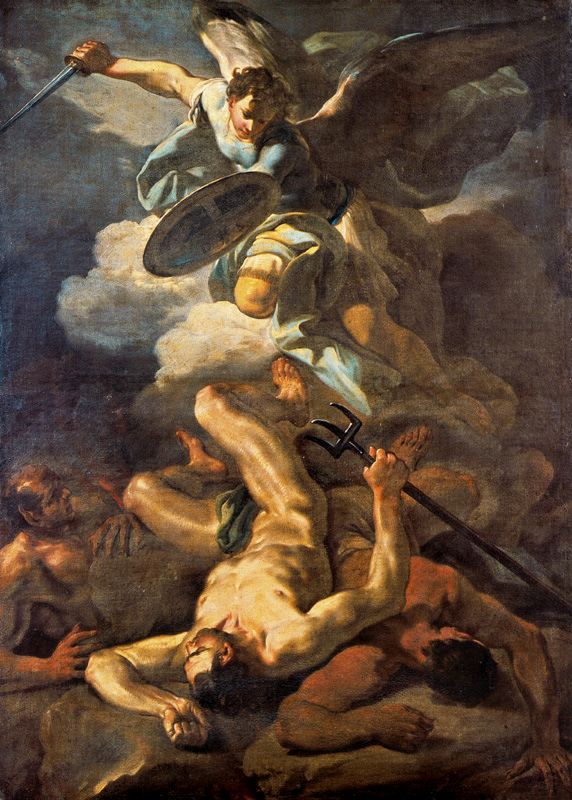
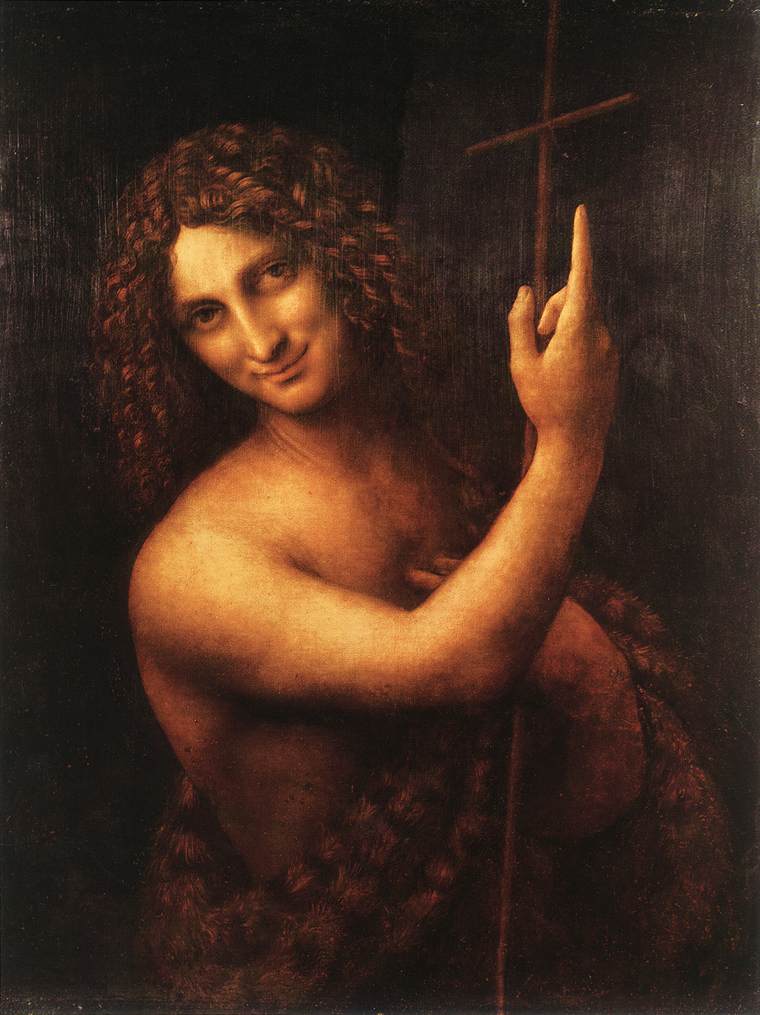
Lucifer is the King of Earth and King of Hell. He was cast out of the Heavens by the archangel Michael. Before his Fall, the angel Lucifer was the fairest and noblest of created things. The cause of his fall was pride, who falls like lightning from heaven. He is now as foul as he was fair before. Lucifer’s place is in the pits of Hell, in the center of the Earth. His domain is the Universe.
Lucifer’s red garments derive their color from the blood. The meaning of the Latin word Lucifer, in Greek is phosphorus. Red is also the color for the chemical called “phosphorus” that is within our own blood. Phosphorus is a chemical that is white and becomes red when it is heated. It is the light bringer, and one may say the Lord of our blood that can bring us heaven or hell.
33rd Degree Freemason and Grand Pontiff of the Scottish Rite, Albert Pike had written this about Lucifer in his book, “Morals and Dogma of the Ancient and Accepted Scottish Rite of Freemasonry;”
Lucifer, the Light-bearer! Strange and mysterious name to give to the Spirit of Darkness! Lucifer, the Son of the Morning! Is it he who bears the Light, and with its splendors intolerable, blinds feeble, sensual, or selfish souls? Doubt it not!
The red glow of our aura, burning eternally at the base of the spine, has given rise to the many stories of hellfire and damnation throughout the Age. The angel Lucifer who fell from the Lord because of his pride. Red is also the color of blood and the key to the liver. The word live spelled backwards is evil and the word lived spelled backwards is devil.(3) Hence, this would be the fall of Lucifer, and we too can easily fall from the pride of Lucifer if we do not control our temperaments or live right.
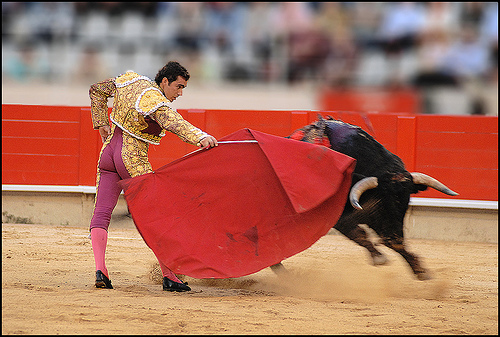 You will find the color red hidden everywhere in occult symbolism. It is often associated with the color of fire, blood, evil and immorality. Red is considered the color of the body or animal man. It irritates, excites and in some cases, causes animals such as humans to go mad. It is the red cape of the Matador that makes the mad bull charge, or the Roman Centurions who wore red on their uniforms in battle as they lived and died by the sword.
33rd Degree Freemason, Manly P Hall had written in, “Magic: A Treatise on Esoteric Ethics;”
Lucifer, on the other hand, is the spirit of excess, the flaming son of rashness and the ruler of sense-gratification, over which he wields dominion with a scepter of serpents. Lucifer is the light-bringer; he is transmuted by man into the fiery demon of war and hate. His power is used by man as the inspiration of lust and passion. He always is opposed to Satan, seeking to snatch the soul of man from the cold embrace of Saturn. He is the heat that incubates the soul, but man uses him as a flame to burn up reason.
This is the same process that occurs with the phosphorus within our bodies to give blood that red color, and which can becomes much darker over time when we simply become hot under the collar, get angry, passionate, fearful or overly passionate, to the point that if we are not careful, our red blood turns black under the cold embrace of Saturn (Satan).
When we are passionate, angry, and/or fearful during fits of hate, our astral auras become streaked with red flames that somewhat resemble lightning and thunderbolts. Red lights are often used by black magicians in rituals, and evil magicians use them to materialize sceptres.
Do you have the keys of wisdom to control the Red Blood of Lucifer within; or does the black magician?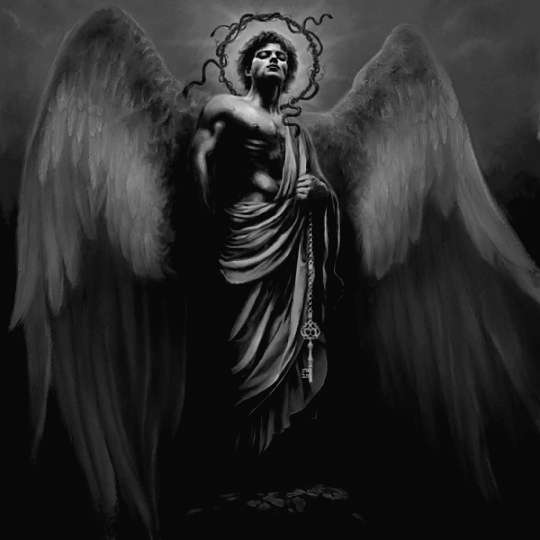
Manly P. Hall explains the process of mastering the spirit of Lucifer within our blood, in “The Lost Keys of Freemasonry;”
The day has come when Fellow Craftsman must know and apply their knowledge. The lost key to their grade is the mastery of emotion , which places the energy of the universe at their disposal. Man can only expect to be entrusted with great power by proving his ability to use it constructively and selflessly. When the Mason learns that the key to the warrior on the block is the proper application of the dynamo of living power, he has learned the mystery of his Craft. The seething energies of Lucifer are in his hands, and before he may step onward and upward, he must prove his ability to properly apply energy. He must follow in the footsteps of his forefather, Tubal-Cain, who with the mighty strength of the war god hammered his sword into a plowshare.
The brain may devise laws for the blood, but a hot temper leaps over a cold decree – Shakespeare
SOURCES:
1. A Dictionary of Proper Names and Notable Matters in the Works of Dante
2. Morals and Dogma of the Ancient and Accepted Scottish Rite of Freemasonry By Albert Pike
3. Occult Anatomy of Man, Magic: A Treatise on Esoteric Ethics; and The Lost Keys of Freemasonry by Manly P. Hal
Moe is the founder of GnosticWarrior.com. He is a father, husband, author, martial arts black belt, and an expert in Gnosticism, the occult, and esotericism.
by Moe
In the literature of Shakespeare, you will often see the word blood included in some very important passages. Below are many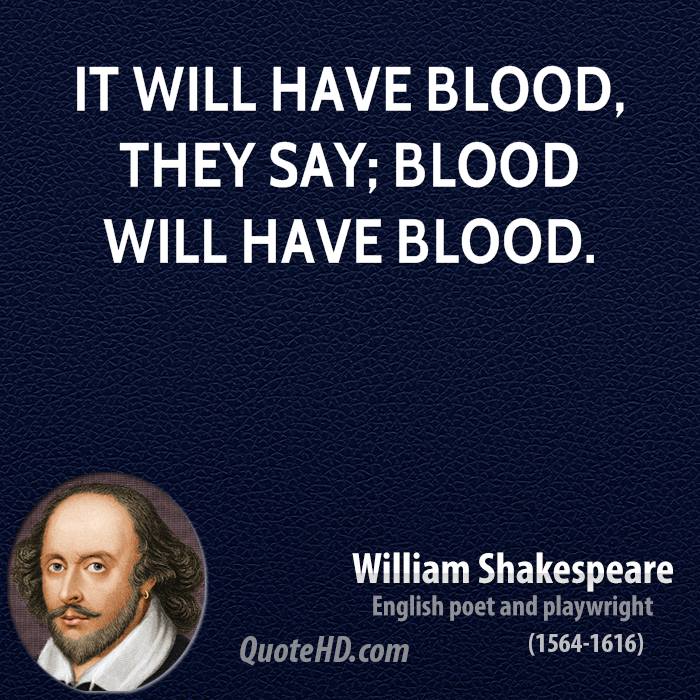 of these quotes that you will find relate to the alchemy of blood.
For in my youth I never did apply Hot and rebellious liquors in my blood ii. 3.
Beauty is a witch against whose charms faith melted into blood ii. 1.
When the blood burns, how prodigal the soul Lends the tongue vows i. 3.
With the lightest word Would harrow up thy soul, freeze thy young blood i. 5.
Blood. — The strongest oats are straw To the fire in the blood Tempest, iv. 1.
As today as to heaven I do confess the vices of my blood i. 3.
It is merely a lust of the blood and a permission of the will i. 3.
When the blood is made doll with the act of sport it. 1.
Fie, foh, and fom, I smell the blood of a British man iii. 4.
How giddily a- turns about all the hot bloods between fourteen and five-and-thirty? . . . iii. 3.
Comes not that blood as modest evidence To witness simple virtue? iv. 1.
Sow, as thou art a gentleman of blood, Advise me Two Gen. of Verona, iii. 1.
Stands at a guard with envy; scarce confesses That his blood flows …. Meas.for Meas. i. 3.
A man whose blood Is very snow-broth – i. 4.
The resolute acting of your blood Could have attained the effect of your own purpose … ii. 1.
I ‘D to my brother: Though he hath fallen thy prompter of the blood ii. 4.
In the heat of blood, And lack of tempered judgement afterward v, 1.
And all the conduits of my blood froze up Com. of Errors, v. 1.
I thank God and my cold blood, I am of your humour for that Much Ado, i. 1.
It better fits my blood to be disdained of all i . 3.
We have ten proofs to one that blood hath the victory ii. 3,
There is no true drop of blood in him, to be truly touched with love iii. 2.
Could she here deny The story that is printed in her blood? iv. 1.
Time hath not yet so dried this blood of mine, Nor age so eat up my invention iv. 1.
Rom oot this speech like iron tbrough your blood? v. 1.
I would forget her: but a fever she Reigus in my blood, and will remembered be Love’s L. Lust, iv. 3.
0, let us embrace! As true we are As flesh and blood can be iv. 3.
Yeeng blood doth not obey an old decree iv. 3.
Her favour turns the fashion of the days, For native blood is counted painting now …. iv. 3. Blood of youth bums not with such excess As gravity’s revolt to wantonness . . Love’sL. Lest, v. a.
When blood is nipped and ways be foul, Then nightly sings the staring owl v. 2.
Question your desires; Know of your youth, examine well your blood . . Mid. N. Dream, i. 1.
Being o’er shoes in blood, plunge in the deep, And kill me too iii. 2.
All fancy-sick she is and pale of cheer, With sighs of love, that costs the fresh blood dear. . iii. 2. Why should a man, whose blood is warm within, Sit like his grandsire? . . Mer. of Venice, i. 1.
The brain may devise laws for the blood, but a hot temper leaps o’er a cold decree i. 2.
Let us make incision for your love, To prove whose blood is reddest ii. 1.
If thou be Launcelot, thou art mine own flesh and blood li. at.
Though I am a daughter to his blood, I am not to his manners it j.
My own flesh and blood to rebel! — Out upon it, old carrion! rebels it at these years? . . . iii. x.
You have bereft me of all words, Only my blood speaks to you in my veins iii. 2.
This bond doth give thee here no jot of blood: The words expressly are * a pound of flesh’ . iv. 1.
In the gentle condition of blood, you should so know me As You Like It, i. 1.
I rather will subject me to the malice Of a diverted blood ii. 3
Many will swoon when they do look on blood iv. 3.
Seeing too much sadness hath congealed your blood Tarn, of the Shrew, Indue. 2.
Thy blood and virtue Contend for empire in thee AWs Well, i. 1.
Whose great decision hath much blood let forth, And more thirsts after iii. 1.
So much blood in his liver as will clog the foot of a flea Twelfth Night, iii. 2.
This does make some obstruction in the blood, this cross-gartering iii. 4.
To mingle friendship far is mingling bloods Winter’s Tale, i. 2.
His varying childless cures in me Thoughts that would thick my blood L a,
O, then my best blood turn To an infected jelly i. a,
I ’11 pawn the little blood which I have left To save the innocent ii. 3.
He tells her something That makes her blood look out iv. 4.
I would fain say, bleed tears, for I am sure my heart wept blood v. a.
Here have we war for war and blood for blood, Controlment for controlment . . King John, \. 1.
Blood hath bought blood and blows have answered blows ii. x.
She in beauty, education, blood, Holds hand with any princess of the world ii. 1.
Or if that surly spirit, melancholy, Had baked thy blood and made it heavy-thick …. iii. 3.. For he that steeps his safety in true blood Shall find but bloody safety and untrue …. iii. 4.
Your mind is all as youthful as your blood iii. 4.
That blood which owed the breadth of all this isle, Three foot of it doth hold iv. 2.
There is no sure foundation set on blood, No certain life achieved by others’ death …. iv. a.
Where is that blood That I have seen inhabit in those cheeks? iv. 2.
These two Christian armies might combine The blood of malice in a vein of league …. v. 2.
Full of warm blood, of rebirth, of gossiping v. 2.
It is too late: the life of all his blood Is touched corruptly v. 7.
The blood is hot that must be cooled for this Richard II. i. 1.
Like a traitor coward, Sluiced out his innocent soul through streams of blood i. 1.
Which blood, like sacrificing Abel’s, cries Even from the toneless caverns of the earth . . . i. x. Let’s purge this choler without letting blood: This we prescribe, though no physician . . . i. 1. Finds brotherhood in thee no sharper spur? Hath love in thy old blood no living fire? . . . i. 2.
0 thou, the earthly author of my blood, Whose youthful spirit, in me regenerate i. 3.
Rouse up thy youthful blood, be valiant and live . i. 3.
From our quiet confines fright fair peace, And make us wade even in our kindred’s blood . . i. 3. Lest, being over-proud in sap and blood, With too much riches it confound itself …. iii. 4. My blood hath been too cold and temperate, Unapt to stir at these indignities . . 1 Henry IV. i. 3.
O, the blood more stirs To rouse a lion than to start a hare! L 3,
Why hast thou lost the fresh blood in thy cheeks? ii. 3.
It hath the excuse of youth and heat of blood And an adopted name of privilege v. 2.
Than I, that have not well the gift of tongue. Can lift your blood up with persuasion … v. 2.
1 had thought weariness durst not have attached one of so high blood …. a Henry IV. ii. 2.
It perfumes the blood ere one can say, ‘ What’s this?’ ii. a.
Turning your books to graves, your ink to blood Your pens
Btood.—Vor thin drink doth so over-cool their blood 2 Henry IV. iv. 3.
The second property of your excellent Sherris is, the warming of the blood iv. 3.
That hath so cowardly and chased your blood Out of appearance Henry V. ii. 2.
Constant in spirit, not swerving with the blood ii. 2.
Stained with the guiltless blood of innocents 1 Henry VI. v. 4.
Is whose cold blood no spark of honour hides 3 Henry VI. i. 1.
What, will the aspiring blood of Lancaster Sink in the ground? v. 6.
As roc hope to have redemption By Christ’s dear blood shed for our grievous sius Richard III. i. 4.
I am in So far in blood that sin will pluck on sin iv. 2.
I Ml prove this truth with my three drops of blood Trot, and Cress, i. 3.
With too moch blood and too little brain v. 1.
The blood I drop is rather physical Than dangerous to me Coriolanus, i. 5.
The reins unfilled, our blood is cold, and then We pout upon the morning m . v. 1.
Blood and revenge are hammering in my head Titus Andron. ii. 3.
Had she infectious and warm youthful blood, She would be as swift in motion as a ball Row.&- Jul.u.$.
Their blood is caked, it is cold, it seldom flows Timon of Atheus, ii. 2.
Age, thou art shamed! Rome, thou hast lust the breed of noble bloods . . Julius Caesar, i. 2.
These lowly courtesies Might fire the blood of ordinary men iii. 1.
Made rich With the must noble blood of all this world iii. 1.
Not utterance, nor the power of speech, To stir men’s blood in. 2.
I know young bloods look for a time of rest iv. 3.
Make thick my blood; Stop up the access and passage to remorse Macbeth, i. 5.
Will all great Neptune’s ocean wash this blood Clean from my hand? ii. 2.
The fountain of your blood Is stopped ; the very source of it is stopped ii. 3.
There’s daggers in men’s smiles: the near in blood, The nearer bloody ii. 3.
Blood hath been shed ere now, i the olden time iii. 4.
Let the earth hide thee! Thy hones are marrowless, thy blood is cold iii. 4.
It will have blood ; they say, blood will have blood iii. 4.
I am in blood Stepped in so far that, should I wade no more, Returning were as tedious . . iii. 4.
Who would have thought the old man to have had so much blood in him? v. 1.
Thus clamorous harbingers of blood and death v. 6.
Hold it a fashion and a toy in blood, A violet in the youth of primy nature …. Hamlet, i. 3.
Bat :his eternal blazon most not be To ears of flesh and blood 1. 5.
And curd, like eager droppings into milk, The thin and wholesome blood i. 5.
A savageness in unreclaimed blood, Of general assault ii. 1.
At your age The hey-day in the blood is tame, it’s humble iii. 4
I am a gentleman of blood and breeding King Lear, ii1. 1.
With some mixtures powerful o’er the blood, Or with some dram conjured to this effect Othello, i. 3.
Now, thy heaven, My blood begins my safer guides to rule it. 3.
Oar bloods No more obey the heavens than our courtiers Still seem as does the king Cymbeline, i. 1.
Do not Consume your blood with sorrowing: you have A nurse of me Pericles, iv. 1.
Pray, walk softly, do not heat your blood: What! I most have a care of you iv. 1.
A knot row are damned blood-suckers Richard III iii. 3.
SOURCE: The Shakespeare Phrase Book By John Bartlett Page 60
Moe is the founder of GnosticWarrior.com. He is a father, husband, author, martial arts black belt, and an expert in Gnosticism, the occult, and esotericism.
by Moe
The reason I write about DNA often, is because understanding our DNA is a very important aspect of being a Gnostic. A DNA test helps us find the long-lost history of our ancestors pasts, which then assists us in comprehending who we are and why we do the things we do.
My YDNA Haplogroup is E1b1b1c1 M123+. My DNA certificate states that on my paternal side, my YDNA is Phoenician, Celtic and Hellenes, which is Greek.
My parents were French Canadian who thought they were just French. My father said that the original Bedards may have come to France by way of Germany. Never did I hear anyone in my family mention our Greek, Phoenician or Jewish ancestors. They all just assumed that our Catholic family had come to North America by way of France, then to Canada, and finally arriving here in the United States. However, now with the advent of DNA science and the Genome Project, this Bedard (me) can change hundreds of years of family ignorance into ancestral wisdom with just a little blog.
The facts are that our ancestors live on in our own blood. The rewriting of history and centuries of propaganda cannot change this DNA reality.
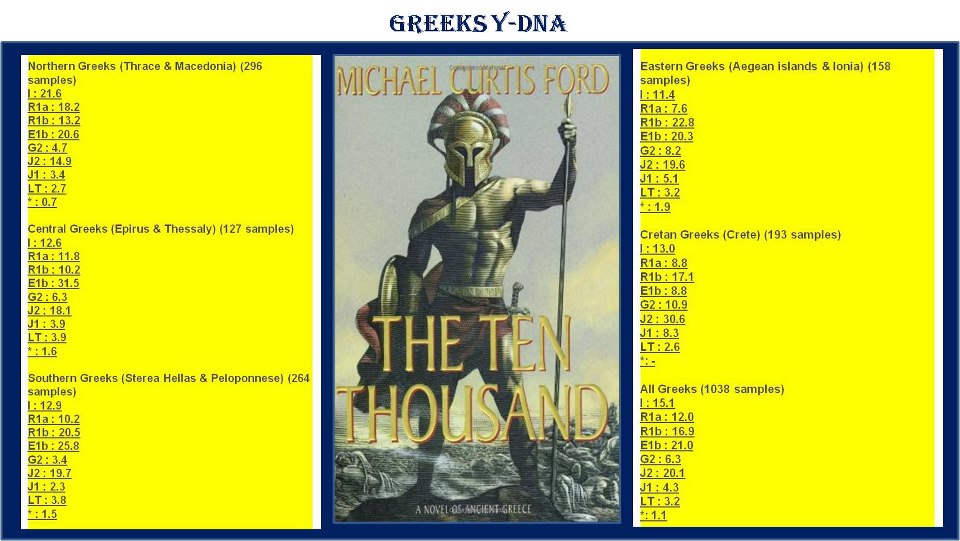
Northern Greeks (Thrace & Macedonia) (296 samples)
I : 21.6
R1a : 18.2
R1b : 13.2
E1b : 20.6
G2 : 4.7
J2 : 14.9
J1 : 3.4
LT : 2.7
* : 0.7
Central Greeks (Epirus & Thessaly) (127 samples)
I : 12.6
R1a : 11.8
R1b : 10.2
E1b : 31.5
G2 : 6.3
J2 : 18.1
J1 : 3.9
LT : 3.9
* : 1.6
Southern Greeks (Sterea Hellas & Peloponnese) (264 samples)
I : 12.9
R1a : 10.2
R1b : 20.5
E1b : 25.8
G2 : 3.4
J2 : 19.7
J1 : 2.3
LT : 3.8
* : 1.5
Eastern Greeks (Aegean islands & Ionia) (158 samples)
I : 11.4
R1a : 7.6
R1b : 22.8
E1b : 20.3
G2 : 8.2
J2 : 19.6
J1 : 5.1
LT : 3.2
* : 1.9
Cretan Greeks (Crete) (193 samples)
I : 13.0
R1a : 8.8
R1b : 17.1
E1b : 8.8
G2 : 10.9
J2 : 30.6
J1 : 8.3
LT : 2.6
*: –
All Greeks (1038 samples)
I : 15.1
R1a : 12.0
R1b : 16.9
E1b : 21.0
G2 : 6.3
J2 : 20.1
J1 : 4.3
LT : 3.2
*: 1.1
Highest contrast: E1b1b samples the highest at 31.5% in C. Greece & the lowest in Crete E1b1b 8.8%; this alone moves E1b1b at least 5%, because it effected the frequencies of other regions that are much higher than 8.8%, especially that none of the sample had 45% peak samples to reduce the 8.8% in Crete!
E1b1b (+5) ————26%
Moderate contrast: R1b is the lowest in Central Greece at 10.2% & slightly above average in Crete at 17.1%; this sampling disparity should be represented by a 1.5% point adjustment
R1b (-1.5) ———— 14%
J2, J1 & G2 also peak in Greece, but those have moderate effect
J2 (-2) ————— 21%
J1 composite was 5% goes down to 3% (which is already there)
G2 (-0.5)———— 6.5%
LT is 4.5% on the table, but all studies samples are under 4%, so it should be
LT (-1)—————-3.5%
SOURCES:
Sure
1.The Genetic Legacy of Paleolithic Homo sapiens sapiens in Extant Europeans: A
Y Chromosome Perspective (Semino et.al) 2000
2.Paternal and maternal lineages in the Balkans show a homogeneous landscape over linguistic barriers, except for the isolated Aromuns (Bosch et.al) 2005
3.Y-chromosomal evidence of the cultural diffusion of agriculture in southeast Europe (Battaglia et.al) 2008
4.Y-chromosomal evidence for a limited Greek contribution to the Pathan population of Pakistan (Firasat et.al) 2007
5.Clinal patterns of human Y chromosomal diversity in continental Italy and Greece are dominated by drift and founder effects (Di Giaccomo et.al) 2003
6.The coming of the Greeks to Provence and Corsica: Y-chromosome models of archaic Greek colonization of the western Mediterranean (King et.al) 2011
7. Differential Y-chromosome Anatolian Influences on the Greek and Cretan Neolithic (King et.al) 2008
8. Eupedia
Moe is the founder of GnosticWarrior.com. He is a father, husband, author, martial arts black belt, and an expert in Gnosticism, the occult, and esotericism.