In the 1970s and 1980s, a phenomenon known as the “Satanic Panic” swept through America.
This was a time when many people believed that Satanists were trying to take over the world.
There were rumors of cults sacrificing children and drinking their blood. Many people became convinced that satanism was a real threat, and they were terrified of what might happen next and others thought it was lunacy fueled by religious zealots.
One thing is for sure, it’s a period of history that is often misunderstood.
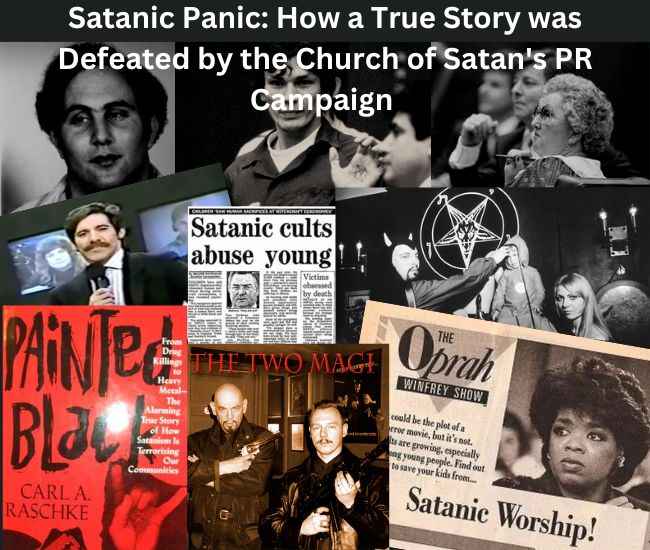
It was a time when people believed that Satanists were conducting rituals and sacrificing children all across the country. This religious fear was stoked by serial killers such as the Son of Sam and Richard Ramirez who openly professed they were Satanists who sacrificed their victims to Satan.
This is where the true Satanic Panic originated and it spread from here like hell fire.
It was events like that of Ramirez flashing an upside down pentagram on his hand at his murder trials that helped fuel the fear of the American nation.
This is why when the words Satan and serial killer are used together, it strikes fear deep into the hearts of most good people and especially devout Christians who are taught to fear and fight Satan.
Parents and religious leaders were convinced that a satanic cult was targeting children, and they did everything they could to protect their kids. There were even allegations of Satanic cults infiltrating daycares and schools such as the McMartin preschool, which led to a number of high-profile criminal cases across the country.
Parents became terrified of what their children might be exposed to, and many began to homeschool their kids or take them out of public schools altogether.
This was also the time when Satanism, the devil and the occult became deeply embedded into the minds of Americans and pop culture. Movies like the Exorcist, role-playing game Dungeons and Dragons debuted in 1974, scandalizing pastors and giving parents nightmares of their children falling under demonic spells.
A 1988 documentary about Satanism and ritual abuse by Geraldo Rivera called Devil Worship: Exposing Satan’s Underground became the highest-rated televised documentary to air up to that point. The documentary further fueled the worries of concerned parents and Christians across the nation.
This hysteria led to some pretty bizarre incidents, and a fierce cultural debate in the media and even congressional legislation was put forth to make Satanism illegal.
All the while, Satanists like The Church of Satan capitalized upon “some of these allegations,” by focusing ONLY on criminal cases where the defendants were found not guilty.
By doing this, they could divert the attention of an uneducated media and concerened American citizens to the Satanic crimes that were proven to be false, while completely ignoring the true stories.
It didn’t help that some ridiculous conspiracy theories helped bolster the Satanic Panic cause.
For example, in 1978, a conspiracy theory claiming that McDonald’s was secretly funding satanic enterprises gained so much popularity that the company had to release an official statement denying it. The founder, Ray Kroc had to reassure frightened customers by telling them that he was “a God-fearing, God-loving man.”
In the memoir, Michelle Smith, Michelle Remembers, introduced readers everywhere to satanic ritual abuse in a story about being caged, tortured, and sexually molested by members of a satanic cult. The story and the author were eventually debunked.
It is cases like there that became the focus by Satanists on the “false allegations” and “uneducated religious zealots” became the perfect calling card for the “Satanic Panic” and their main defense strategy that they still employ to this very day.
By doing so, they could claim that these were ALL false allegations made by crazy Christians causing social hysteria fueled by fearful media depictions of godless teenagers listening to deviant music and wearing heavy metal t-shirts.
Over thousands of years, magicians have developed the ability to control attention, to distort perception, and to influence choice. This is done in advertising and marketing by corporations who use false images and deception to influence our decisions.
The fear of a Satanic Panic eventually faded from the American collective consciousness, thanks in part to a public relations campaign conducted by the Church of Satan.
I contend that one of the main reasons the hysteria died out was because the founder of the Church of Satan, Anton Lavey, and his High Priest, Peter Gilmore, stepped into action to combat the negative publicity with their own PR campaign.
According to Peter Gilmore, he spent many hours combatting their foes and educating the public about Satanic philosophy. Gilmore said:
“The Satanic Panic” (80s-90s) there was proposed congressional legislation to make Satanism illegal. During that time Anton Szandor LaVey, the founder of the Church of Satan, had encouraged me as a spokesperson for the organization and the means for combatting this proposal was to educate people about what Satanism really was, rather than the, then current, fantasy of Devil worship, child abuse and sacrifice promulgated by evangelical Christians and gullible journalists.
Lavey did not have the Church of Satan issue statements rallying its members to sally forth. Instead, he felt that fulfilling the purpose of the Church of Satan—educating others as to what it represents—would serve to dissolve the false definition of Satanism fueling that proposed law. And so it did and I spent many hours accurately representing the reality of our philosophy in all forms of the media to that end.”
But several prominent authors and scholars who are not part of some Satanic sect or get paid to be a Satanist like Peter Gilmore would disagree with the Church of Satans and other people who claim that the Satanic Panic was the purely result of false allegations, religious fantasy, and irrational beliefs.
Sure, there was definitely a lot of that going on but there were also a lot of true stories that were being swept to the side or ignored all together.
In the midst of the Satanic Panic, author and Professor of Philosophy of Religion at the University of Denver, Carl Raschke was asked by his publisher to research and write a book about Satanism. What Raschke discovered was that there was in fact credible evidence and a plethora of stories to support the narrative that Satanists were committing murders and other criminal acts.
Raschke’s book is really more about mind control and how during the 1960’s, various occultists like Anton Lavey tried to overturn mainstream religious and political beliefs. America’s youth and young adults were being manipulated by Satanists who were putting their message out through the media with art, books, music, movies, and drugs and free sex.
As Raschke eloquently points out, the 60’s was a time in our country when it was encouraged for both the father and the mother to work outside the home leaving a whole generation of kids at home alone.
This phenomenon created a new psychological term to describe their abandonment called latchkey kids – school age children of working parents who must spend part or most of the day unsupervised (as at home),
The kids of this generation had a vacuum to be filled that was once their parents, and Satanism would happily take their place.
Out of these abandoned kids, there were children who had been physically and sexually abused, rejected by parents and were never taught any moral values.
These kids would be on the fringes of society. They were angry and needed an outlet for their hate for the world and the violence they wanted to unleash upon it.
This is why Satanism and the neoliberal lifestyle of extreme freedoms, drugs, sex, music and media that came with it would be the perfect home for these wayward youth.
The kids thought that Satanism was going to lead to power, wealth, fame, and anything else that their little hearts desired. But once they got addicted to the lifestyle and vices of drugs and sex, they became under the mind control of their very Satanic doctrines they foolishly thought would be the answer to all their problems.
This can be seen time and time again by many people who take this path. A Satanic road that is littered with lost souls and ruined lives everywhere you look.
From drug addicted gurus like Aleister Crowley who died penniless and addicted to heroin to Ozzy Ozzborne’s open display of decades of hedonism, family turmoil and constant drug use and Church of Satan members like Marilyn Manson who in recent years has been accused of a long list of crimes.
As Raschke notes, there is no dabbling in the occult because depravity and bondage quickly develop.
Satan may promise much, but never delivers.
In 2021, I interviewed Carl Raschke and asked him about the Satanic Panic and his book. He believes to this day that there was a massive PR campaign to sanitize the bad press and he actually became a target of Satanic propagandists.
Raschke said:
“There was a whole PR campaign to try to sanitize what was happening and I was the target. A lot of these groups had the kind of intellectual authority. Satanism was not my thing. I knew a lot about it. I’d heard a lot about it on the ground.
The narrative, let’s call it, the PR campaign, was actually pushed by less than reputable academics who were just kind of in it to protect themselves and to protect their research clients.
I’m not saying there was necessarily a thing corrupt about it though. There have been rumors that it’s kind of like the tobacco industry.
How they tried to tell you in the early days that tobacco is not as harmful as they got their authorities together and they created this narrative,” Raschke emphasized.
He said, “That Satanism was a panic, based on the idea of a moral panic, that term was posed by a guy. I can’t remember his name, but it was called satanic panic.
It came out in the nineties and it was a sociological term that basically tried to look at the whole phenomenon as if it were just a bunch of spooked out people who didn’t really understand what was going on, who were panicking.
That’s totally false because the thing emerged kind of organically and slowly.
There must be this pure thing, purity you call Satanism, which is being slandered and abused and blah, blah, blah. And you know, so the whole thing was literally a shit show.
I got caught up in the middle of that and the book I didn’t expect that I was just trying to honestly write from the notes and the interviews and the stuff I read,” Raschke noted.
Similar to what Carl Rashke found, I also discovered the facts that people have been murdering people all across the U.S. for several decades that claimed to be either Satanists, demon possessed or did so under the orders of Satan or the Devil.
To a person outside the occult world of black magic and Satanism, they might ignorantly think that these stories are just crazy journalism and part of some type of Satanic Panic propaganda. But they could not be more wrong.
It is important to note that the people who commit serious crimes they claim their allegiance to Satanism are just a tiny fraction of the Satanic movement as a whole. But due to the serious nature of the crimes that some of these people commit, to say it is not a problem or factor is simply a lie.
I have found that both the Church of Satan and the Satanic Temple have made these public statements about the ordeal,
The Church of Satan has stated;
As Satanism is a recognized “New Religious Movement,” it’s important for an understanding of what is and what is not Satanism to be maintained. “The Satanic Panic” in the 1980s-90s is evidence of a willful distortion of this religion as the concept of a conspiracy of murderous “satanists” was promoted primarily by evangelical Christians and taken-up by the media worldwide.
Law enforcement debunked the claims of the evangelists but not before many people had become victims of false accusations of ritual child abuse, sacrifice, and kidnapping.
Some Christians—despite the five decades of a clearly defined belief system called Satanism expounded by a worldwide organization—still use this term to reference any acts or beliefs they consider to be “evil” or simply contrary to their own beliefs.
Ill-informed members of law enforcement agencies and journalists, often believers in some form of Christianity, also continue to misrepresent the religion of Satanism.
If the definition of Satanism is not kept clear, any unstable or insane person working from a Christian context could claim their actions were due to self-termed “satanic beliefs,” thus criminally implicating actual open adherents of Satanism to the public at large, people who are not generally familiar with the beliefs and tenets of religious Satanism.
The recent case of murderer Amanda Barbour, who along with her boyfriend murdered one person but claimed to have murdered many others as part of an interstate “satanic cult,” is another example.
The Church of Satan works publicly to maintain a clear understanding of the atheist, individualistic, and law-abiding nature of Satanism and regularly consults with law enforcement as well as journalistic researchers and academicians to this end.”
It appears that the Church of Satan is making a valid claim that these killers are just lunatics and even though they may be “affiliatd with some form of Satanism,” in no way is this some vast conspiracy of an organized Satanic cult. The reason I say that is valid is because I agree with them on this point.
What I do not agree with is the entire claim that these killers are in their words “any unstable or insane person working from a Christian context could claim their actions were due to self-termed satanic beliefs.”
While I agree with the truth that these people are unstable and or insane, the reason I don’t entirely agree is because there are many different sects of Satanism and also personal Satanic beliefs. People will kill innocent people and abuse babies in the name of Satan and or no God regardless of what anyone says or what press release is issued.
The Satanic Temple claims that the Satanic Panic was mainly about Satanic Ritual Child Abuse such as the McMartin Preschool Trials, which occurred a few years later during the late 1980s.
Here is their general statement on Satanic Panic;
“We then see an unconvincing attempt to justify this petty and undignified public temper tantrum with the claim that “it’s important for an understanding of what is and what is not Satanism to be maintained.
“The Satanic Panic” in the 1980s-90s is evidence of a willful distortion of this religion as the concept of a conspiracy of murderous ‘satanists’ was promoted primarily by evangelical Christians and taken-up by the media worldwide. Law enforcement debunked the claims of the evangelists but not before many people had become victims of false accusations of ritual child abuse, sacrifice, and kidnapping.”
Apparently, this “understanding” can only be gained by dogged insistence that only the website of the CoS defines Satanism. This is particularly infuriating as TST, unlike the CoS, has been actively fighting against the Satanic Panic which still exists, nor is it “promoted primarily by evangelical Christians.”
One need only look at our Grey Faction campaign to recognize that actively fighting back against anti-Satanist propagandists is one of the primary functions of TST.”
On the Satanic Temple’s website via their Grey Faction initiative, they state one of its main purposes is to “document, expose, and aggressively seek to bring to an end pseudoscientific mental health care practices that contribute to harmful conspiracist Satanic Panic delusions.”
I agree that pseudoscientific mental health care practices should be exposed and put an end to, but the facts are that this is just the small tip of the Satanic Panic iceberg. While there is definitely some validity to these claims by the Satanic Temple, it is only one of the reasons for the Satanic Panic.
In our present culture, religious Satanism exists primarily as a decentralized subculture. It does not appear to be an organized front on the surface but I contend that Satanists are united by their ideologies and thus united by an inherently “selfish and evil state of mind” that often (not always) leads to the practitioners unhappiness, destruction, and sometimes death.
What I’m simply claiming is what they are failing to address are the various crimes and murders that have been committed over the last five decades by people who claim to be aligned and or influenced by Satanism in some fashion.
With that said, let me state again that not all Satanists are evil, child abusers, and or criminals.
The facts are that 99% of the Satanists in the modern world are people just like you and me but who have chosen the Satanic lifestyle i.e.: individualistic, carnal, selfish, and materialistic life over the spiritual as their chief aim. You will find a hell of a lot of good people in this movement and the vast majority are certainly not all evil child abusers and or killers of innocent people for Satanic sport.
In fact, many of the people who I might call “good Satanists” would enjoy nothing more than killing the evil Satanists like child abusers and killers for sport. I have seen it happen in prison and it happens all the time behind bars.
The reality is that to the average person and even the hardened criminal, it is unthinkable how any one person could become so diabolical and evil that a good night for them is to go hunt for little children or women to abuse, rape, torture, and kill for sport.
Many people would say they are not human. Religionists may call them Demons. Like the Christian Scripture says, “My name is Legion, for we are many.”
Please keep in mind that when I use the words demons, Satan, and the devil when speaking about some of these brutal killers, these names are not something I dreamt of for a script or religious sensationalism.
No, these are the actual words used by many of the Satanists and murderers themselves after they are caught.
In no particular order, I would like to give you some real-world examples of cold-blooded killers who have said they worship Satan and or were Satanists.
It is important that you understand that the stories I present are just a small example of the number of cases that I could have reported on. This could be a book spanning several volumes.
But my goal is not to list every crime or murder committed by a Satanist. It is to prove a point that it does happen and that a Satanic State of Mind may not only lead someone to self destruction, it can also result in murder.
You will find that each killer who was involved in Satanism were in every single case young men and women who had terrible childhoods and were abused
They found that Satanism was the perfect ideology to not only accept their damaged and rebellious souls, it was the ideal philosophy to unleash their internalized rage against a society who had abandoned them.
Moe is the founder of GnosticWarrior.com. He is a father, husband, author, martial arts black belt, and an expert in Gnosticism, the occult, and esotericism.
Today, we live in a world where online platforms like Twitter and Facebook virtually allow anyone to say whatever the hell they want with impunity. But it was not always like this in the United States of America.
There is a popular American myth that our right to free speech means that anyone can say anything. Meaning, that if you want to verbally assault anyone or anything like the government, President, or police and yell obscenities at God-fearing religious people, you are protected by the First Amendment of the U.S. Constitution.
He has stated that for much of American history, the First Amendment did not prevent laws providing criminal punishment against people who engaged in antigovernment or obscene speech.
For example, in the past, people could not use their speech to attack our religious institutions like we see today where some atheists have become famous by making it a sport and their careers to blaspheme religion and mock its followers. The courts ruled that blasphemy was outlawed, and not just swearing against religion, but the public denial of the truth of Christianity could get you thrown in jail.
Some of the Founding Fathers of America, like President John Adams, were members of the Federalist Party who believed that maintaining a republican government required punishing those who falsely and maliciously criticized the government.
Adams had written, “Every individual is at liberty to expose, in the strongest terms, consistent with decency and truth all the errors of any department of the government.”
This also implied that there was no constitutional protection for politicians who deliberately misleading the public. “Because the Constitution guaranties the right of expressing our opinions, and the freedom of the press,” Federalist congressman John Allen asked rhetorically, “am I at liberty to falsely call you a thief, a murderer, an atheist?”
Stopping the spread of lies, Federalists insisted, was essential to maintaining a well-informed electorate and, thus, a republican government.
Up until the mid-1900s, our obscenity laws not only routinely convicted pornographers and so-called sex fiends but also book authors on educational literature such as sex education. The U.S. courts routinely ruled well into the 1960s that some antigovernment speech was constitutionally unprotected even when the speech did not result in violence.
Categories of speech that are given lesser or no protection by the First Amendment (and therefore may be restricted) include obscenity, fraud, child pornography, speech integral to illegal conduct, speech that incites imminent lawless action, speech that violates intellectual property law, true threats, and commercial.
However, today, virtually all corporate and alternative news networks make their living criticizing the government and making fun of the U.S. President. Anytime you turn on the TV or research news online, you can witness these news anchors, who most are highly paid to mock our government and President as they sow dissention among the people with their political rhetoric.
A lot of the news we see today is based upon half truths and half lies further confusing the populace. American philosopher and social critic, Noam Chomsky calls these people “Commisars” whose job is to maintain a system of doctrines and beliefs which will undermine independent thought and prevent a proper understanding and analysis of national and global issues. In Russia, commissars were in charge of communist political propaganda and indoctrinating the public with communist ideology.
Chomsky wrote:
“You don’t have any other society where the educated classes are so effectively indoctrinated and controlled by a subtle propaganda system – a private system including media, intellectual opinion forming magazines and the participation of the most highly educated sections of the population.
Such people ought to be referred to as “Commissars – for that is what their essential function is – to set up and maintain a system of doctrines and beliefs which will undermine independent thought and prevent a proper understanding and analysis of national and global institutions, issues, and policies”.
Over the last few years (2019 – 2022), there has been big shift and dividing line between “conservative media” and “liberal media”
For most of America’s history, we were much more conservative and traditional in our values, making free speech much less constitutionally protected than it is today. In fact, there was never a time like that in Modernity when almost all speech was protected.
But the facts are that free speech never meant that anyone could say whatever they wanted without impunity.
However, times have changed.
Pornography of all kinds, anti-religion rhetoric, and even Satanic organizations can be found everywhere in U.S. culture. Groups like Antifa and Black Lives Matter appear to act with legal impunity with their speeches calling for death and war in the streets as they stage violent protests against the police, government, and conservative groups. All the while the liberal media and government support these illegal activities and often praise these groups as they commit crimes across the nation.
How did this happen and who changed our laws?
There is a select group of liberals in our country who have been steadily undermining the U.S. Constitution. They have sat in some of the most powerful positions in politics, our courts, and educational institutions.
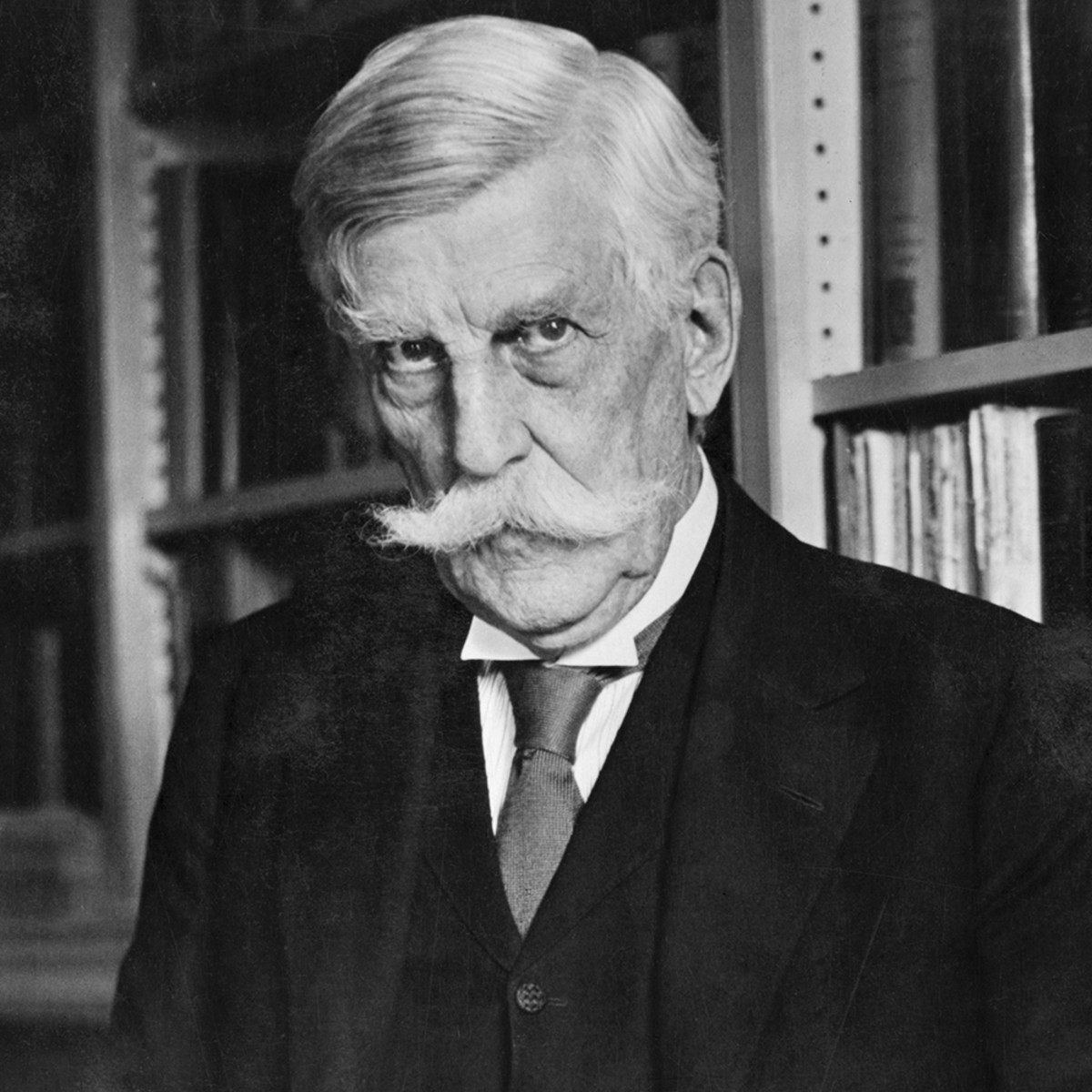
Two of the most famous liberals to sit in the highest positions of power in the Supreme Court were Justices Oliver Wendell Holmes Jr. (1841–1935) and Louis D. Brandeis (1856-1941). They were appointed to the Court by President Franklin D. Roosevelt and were generally associated with the liberal wing of the Court on most issues.
Their influence has not only changed the laws of this great country, they have changed the moral, ethical, and religious landscape of our country.
Today, a famous term for left leaning liberals who support various fringe social movements is “social justic warrior.” But men like Brandeis were Progressives who took it to the next level to the point he was called a “militant crusader for social justice.”
For example, when he was nominated for the supreme court, he faced all kinds of opposition like Justice William O. Douglas who wrote;
“Brandeis was a militant crusader for social justice whoever his opponent might be. He was dangerous not only because of his brilliance, his arithmetic, his courage. He was dangerous because he was incorruptible … [and] the fears of the Establishment were greater because Brandeis was the first Jew to be named to the Court.”
Brandeis became a leader of the Progressive movement where he used the law on multiple reform crusades as the instrument for social change from 1897 to 1916 playing a key role in shaping the jurisprudence of free political speech. Two of the infamous cases, Gilbert v. Minnesota (1920) and Whitney v. California (1927) dealt with the use of free speech by a military draft dissentor and a communist party’s member’s rights.
But no one changed American law and politics like Oliver Holmes had done.
He would be the de facto king of modern liberalism via the U.S. court system that has literally followed and maintained many of his decisions, marking a significant shift in American jurisprudence.
Benjamin N. Cardozo, the famed Associate Justice of the Supreme Court who would succeed Holmes, called his predecessor “the great overlord of the law and its philosophy.”
The Common Law, published in 1881, was Holmes’s giant contribution to neoliberal legal ideologies infiltrating the U.S. courts. Holmes writes;
“The life of the law has not been logic: it has been experience. The felt necessities of the time, the prevalent moral and political theories, intuitions of public policy, avowed or unconscious, even the prejudices which judges share with their fellow-men, have had a good deal more to do than the syllogism in determining the rules by which men should be governed.”
For his views and work in changing our laws, he had become known as the Great Dissenter.
Holmes had opposed the doctrine of natural law and advocated broad freedom of speech under the First Amendment. He wrote some of the most significant free speech decisions ever handed down by the Court. His neoliberal legal philosophy was in contrast to the prevailing jurisprudence of the time: legal formalism, which held that law was an orderly system of rules based on previous legal decisions.
“The most valuable aspect is the interpretation of Holmes’s role in the development of American jurisprudence. The book depicts him as a destroyer not so much of formalism but of the natural law tradition. He says that, “Holmes was at the forefront of a revolution whose achievements were mainly negative.
This revolution was not a ‘revolt against formalism’ but a revolt against objective truth.
Where the law became what Holmes calls a “markeptplace of ideas” where “the best test of truth is the power of the thought to get itself accepted in the competition of the market, and that truth is the only ground upon which their wishes safely can be carried out.”
This one dissenting opinion in Abrams v. United States (250 U.S. 616 – 1919) by Holmes clearly defines his negation of legal tradition based upon truth and facts to the modern era of progressivism and neoliberalism. Holmes wrote:
“Persecution for the expression of opinions seems to me perfectly logical. If you have no doubt of your premises or your power and want a certain result with all your heart you naturally express your wishes in law and sweep away all opposition.
To allow opposition by speech seems to indicate that you think the speech impotent, as when a man says that he has squared the circle, or that you do not care whole-heartedly for the result, or that you doubt either your power or your premises.
But when men have realized that time has upset many fighting faiths, they may come to believe even more than they believe the very foundations of their own conduct that the ultimate good desired is better reached by free trade in ideas — that the best test of truth is the power of the thought to get itself accepted in the competition of the market, and that truth is the only ground upon which their wishes safely can be carried out. That at any rate is the theory of our Constitution.
It is an experiment, as all life is an experiment. Every year if not every day we have to wager our salvation upon some prophecy based upon imperfect knowledge.
While that experiment is part of our system I think that we should be eternally vigilant against attempts to check the expression of opinions that we loathe and believe to be fraught with death, unless they so imminently threaten immediate interference with the lawful and pressing purposes of the law that an immediate check is required to save the country.”
Holmes literally reinvented U.S. common law and the First Ammerndment in order to what I contend was to modernize it as a tool for neoliberals to control the U.S. legal system.
Professor Ronald K.L. Collins CLAIMS Holmes’s the titan of free speech jurisprudence:
“Holmes’s footprint on the American life of free speech is gigantic. Like Atlas, he is a titan in that world. No one else quite casts a shadow for so long. Although James Madison is the grand pater of the historical First Amendment, its modem father figure is surely Justice Oliver Wendell Holmes Jr….
His thought can be found in bold relief in many Supreme Court opinions on freedom of expression, in every contemporary history of the subject, in every casebook and textbook used in law schools and in colleges, and in every serious scholarly treatment of the matter.”
Holmes said that the law serves “social end[s] which the governing power of the community has made up its mind that it wants.”
In “The Common Law,” Holmes wrote, “The first requirement of a sound body of law is, that it should correspond with the actual feelings and demands of the community, whether right or wrong.”
Holmes was also said to be a mean man who was not only selfish, and cynical, he was a eugenist who believed in the survival of the fitest.
Some scholars such as Jan Vetter and Robert Gordon believe that Holmes spoke this way because he was an advocate of
Social Darwinism. They quote a passage from a 1873 essay Holmes had written on “The Gas-Stoker’s Strike.” Holmes wrote:
“The struggle for life … does not stop in the ascending scale with the monkeys, but is equally the law of human
existence…. The more powerful interests must be more or less reflected in legislation; which, like every other device
of man or beast, must tend in the long run to aid the survival of the fittest.
When one examines a contemporary society like was found even in the time of Holmes, one would have to define the so-called fittest has not being the most physically strong and most intelligent. No, they are the people who can simply follow and adhere to the ideological propaganda issued by the ruling elite and then repeat and kill for the same said ideologies.
“Many scholars have contended that Holmes was a cynic—icy and aloof, mean-spirited and dark, and supremely self-centered. To Budiansky, the Civil War made Holmes a skeptic—doubting and fatalistic—but not a cynic: it made him question “the morally superior certainty that often went hand in hand with belief: he grew to distrust, and to detest, zealotry and causes of all kinds.”
It also helped make him charming, exuberant, and very ambitious, searching, open-minded, and unquenchable. As he put it in a letter to a friend: “My old formula is that a man should be an enthusiast in the front of his head and a sceptic in the back. Do his damndest without believing that the cosmos would collapse if he failed.”
As the author, Paul O. Carrese describes in his book, “The Cloaking of Power: Montesquieu, Blackstone, and the Rise of Judicial Activism,” Oliver Wendell Holmes Jr. and the extraordinary influence he achieved in twentieth-century legal discourse to moderate law by splitting judicial procedure from jurisprudential essence.
Carrese wrote, “A clear concept of judicial legislating yielded by Holmes’s uncertainty about any fixed legal principle was intended to achieve a new social and legal order, one more adjusted to either current majority will or to be an evolutionary progress of the species.
Holmes avoided Montesquieu’s constitutionalism while appreciating other ends or aims of his philosophy, generally viewing it as a cosmopolitan, historicist humanism that survived its outdated efforts as a science of politics.
The Holmesean realism is criticized as being provided by both Montesquieuan jurisprudence and the classic common-law spirit because it poses severe obstacles that perpetuate the rule of law in a sound constitutional order.”
Budiansky describes as “the gamut of the law”—governing contracts, torts, property, wills, crime, and more—he reached conclusions that were “strikingly original, as well as a radical assault on legal tradition.”
Budiansky calls The Common Law “the single most important book in the history of American legal scholarship,” as others have similarly praised it. The book inspired the movement known as Legal Realism, which focused on law’s concrete effects rather than its formalistic axioms, and it remade American law.
Author, Steven J. Heyman argues in his essay “The Dark Side of the Force: The Legacy of Justice Holmes for First Amendment Jurisprudence” that many of Holmes’s views and decisions were contradictory to the First Amendment and actually undermined the nation’s values.
Heyman wrote
“Modern First Amendment jurisprudence is deeply paradoxical. On one hand, freedom of speech is said to promote fundamental values such as individual self-fulfillment, democratic deliberation, and the search for truth.
At the same time, however, many leading decisions protect speech that appears to undermine these values by attacking the dignity and personality of others or their status as full and equal members of the community. In this article, I explore where this Jekyll-and-Hyde quality of First Amendment jurisprudence comes from.
I argue that the American free speech tradition consists of two very different strands: a liberal humanist view that emphasizes the positive values promoted by free speech, and a darker vision that is rooted in the jurisprudence of Justice Oliver Wendell Holmes.
Holmes understands free speech as part of a struggle for power between different social groups—a struggle that ultimately can be resolved only by force.
After sketching the liberal humanist view, I trace the development of Holmes’s position, which is grounded in his Darwinian understanding of human life and in his deeper view that all phenomena in the universe are governed by force. Next, I evaluate the Holmesian approach and discuss its implications for a wide range of contemporary issues, from hate speech and pornography to the Citizens United decision on electoral advertising by corporations.
I conclude that Holmes’s view does not provide an adequate rationale for free speech, and that it undermines the liberal humanist principles that should be regarded as central to the First Amendment.”
According to, Albert Alschuler, Holmes did not only change the laws and morals of our country, he alleges it has led it to its destruction and I agree.
Alschuler said that Holmes legal decisions have led to the “disintegration of American society as a whole, which is in a horrible condition.
It’s evils, Alschurler claims are the “vices of atomism, alienation, ambivalence, self-centeredness, and vacuity of commitment” and its citizens are “indolent, cynical, and bitter – envious of those above, reproachful of those below, and mistrustful of those around them.”
Its sins are selfish-consumerism and electronic junk to crime, child-abuse, guns in school, and overweight teenagers.”
Alschuler single handedly eviscerates the hero of the liberal courts and neoliberalism.
He brings us to reality without sugar coating the damage that Justic Holmes as done to the American legal system and our culture as a whole. Alschuler also succinctly brings us back by reminding us of our American traditional values, morals, and personal responsibilities as they intersect with, and ultimately determine, the law.
But the facts are that Holmes’s neoliberal influence had already spread far and wide across the pond because he had often visited Great Britain and London during the years of his work as a lawyer and judge in Boston. He became one of the founders of the “sociological” school of jurisprudence in Great Britain, and then the “legal realist” school in America.
One could say that this was the true origins of “social justice” and “woke philosophy” that are the foundation of the dogmas of neoliberal ideologies.
Holmes would also control issuing propaganda of the neoliberal legal narrative in the U.S. by serving as an editor of the new American Law Review, reporting decisions of state supreme courts. In addition, he worked on a new edition of Kent’s Commentaries that published difficult to find case law for his fellow law colleagues.
Apparently, Holmes was very successful in his liberal efforts to change the laws of our country by infiltrating the courts, because many of his liberal views and legal decisions are still followed to this day. However, I would say that he only wounded the King Plato with his weak philosophical arguments, lies, and unjust laws that have almost ruined the landscape of our once-great nation.
The answer is for our legal system to analyze, debate and change the laws that continue to undermine the ideas, morals, and ethics that this one great nation had stood for.
To do so, as Phillip Johnson, Professor of law at the University of California at Berkeley says that we have to not only use logic, we must also understand that there is real evil and real good in the world in which the Rule of Law is supposed to protect the rights of the good from those who wish to do evil.
“We live in a world where evil exists in plenty, and often prospers. Moral skeptics have the best superficial arguments. But the life of the mind is a combination of logic and also experience, rightly interpreted. A mind in good condition knows that a philosophy that does not provide a foundation for moral knowledge is inadequate.
If you want to know about the law, and everything else, you must think as a good person (because we know that there really is such a thing), and affirm what every good person knows, and what every bad person also knows but suppresses.
There is a real good and a real evil, and the rule of law is a mechanism for maximizing the former and minimizing the latter.”
Our modern-day challenges such as what is bad and what is good to the issues affecting our culture and First Amendment law seem to always coincide at a time of national crisis like we have now.
As Bollinger claims;
“Our most memorable and consequential decisions under the First Amendment have emerged in times of national crises, when passions are at their peak and when human behavior is on full display at its worst and at its best, in times of war and when momentous social movements are on the rise,” he writes.
“Freedom of speech and the press taps into the most essential elements of life—how we think, speak, communicate, and live within the polity.
It is no wonder that we are drawn again and again into its world.”
SOURCES:
First Amendment and Related Statutes: Problems, Cases and Policy Arguments (University Casebook) 3rd Edition by Eugene Volokh
Noam Chomsky interviewed by various interviewers – Manufacturing Consent: Noam Chomsky and the Media, 1992See Vetter, supra note 105, at 362-67; Gordon, supra note 8, at 740; J.W. Burrow,
Holmes in His Intellectual Milieu, in THE LEGACY OF OLIVER WENDELL HOLMES, JR. 17,28-29 (Robert W. Gordon ed., 1992).
Quoting Oliver W. Holmes, Jr., Summary of Events: The Gas-Stoker’s Strike, 7 AM. L. REV. 582, 583 (1873)
Law Without Values: The Life, Work, and Legacy of Justice Holmes By Albert Alschuler
Harvard Magazine – America’s Great Modern Justice
The Cloaking of Power: Montesquieu, Blackstone, and the Rise of Judicial Activism – By Paul O. Carrese
Dumbing Down the Courts: How Politics Keeps the Smartest Judges Off the Bench By John R. Lott, Jr.
Steven J. Heyman, The Dark Side of the Force: The Legacy of Justice Holmes for First Amendment Jurisprudence, 19 Wm. & Mary Bill Rts. J. 661 (2011), https://scholarship.law.wm.edu/wmborj/vol19/iss3/4
Ronal L. Coleman: Prologue: Justice Holmes – Father of the Modern First Amendment
University of Chicago – What is the role of free speech in a democratic society?
Johnson, Phillip E. “LAW WITHOUT VALUES: THE LIFE, WORK, AND LEGACY OF JUSTICE HOLMES.” First Things: A Monthly Journal of Religion and Public Life, June 2001, p. 46.
Moe is the founder of GnosticWarrior.com. He is a father, husband, author, martial arts black belt, and an expert in Gnosticism, the occult, and esotericism.
“Invisible threads are the strongest ties.” – Friedrich Nietzsche
Many great philosophers and theologians have said that we are all connected with each other and with the world around us. A type of metaphysical network that connects humans with each other, the earth, and even time.
Like the German philosopher and mystic, Novalis wrote; “We are more closely connected to the invisible than to the visible.”
And the occultist and magician, John Dee once said; “The message is that all things are connected. We have animal aspects, anthropological aspects, plant-animal aspects.”
In my own search for these invisible connections, I asked;
“What are these invisible connections that makes us connected to one another and the earth?” And “Is our connectedness part of just being human, or is there some type of physical or biological cause outside of us that we can identify as the source?”
Today, I believe that these invisible connections of Neitzche can be measured and quantified like never before in history.
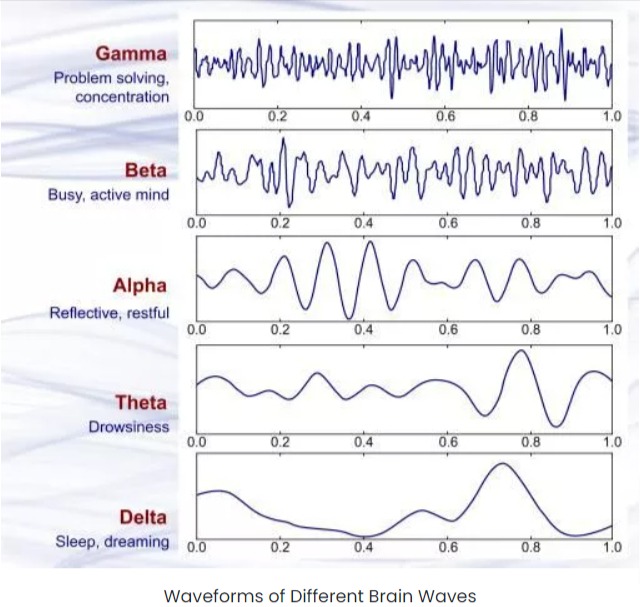
For example, we know that humans have the ability to produce various invisible frequencies (vibrations/waves) that create a type of electrical force or energy signature that science has been able to identify. In science, they are called brain waves with five frequencies belonging to beta, alpha, theta, delta, and gamma waves.
“There are four brainwave states that range from the high amplitude, low frequency delta to the low amplitude, high frequency beta. These brainwave states range from deep dreamless sleep to high arousal.
The same four brainwave states are common to the human species. Men, women and children of all ages experience the same characteristic brainwaves.
They are consistent across cultures and country boundaries.”
When you understand the science of how the brain and thinking operate and couple that with earth biology, you then understand how our world and civilization were created. They are created by humans in beta brain states who are all engaged in constructive interference with their energy and ideas.
These are the leading philosophers, theoligians, and scientists who fill the pages of our history and text books and have become immortal by default as a result of the quality of their thinking and ideas.
Their brains are firing electrons and creating beta energy wave patters that permeate the space around them that can now be seen using special instruments like EEG (Electroencephalography) machines that capture brain waves and record the electrogram of the electrical activity on the scalp. They are also measured with a method called Electrocorticography (Intracranial EEG).
These machines capture the spontaneous electrical activity and neural oscillations or the brain waves by placing numerous electrodes on the scalp of a person.
The neural oscillations or pattern of the brain waves changes based on if the person is thinking or not thinking and the emotion a person experiences at that point.
Humans who truly think are in beta and high frequency gamma brain states.
This is seen on an EKG as if their brains are on fire.
This phenomenon in the esoteric is known as a person who is truly enlightened or illuminated and the light that emanates from their being is called an “aura.”
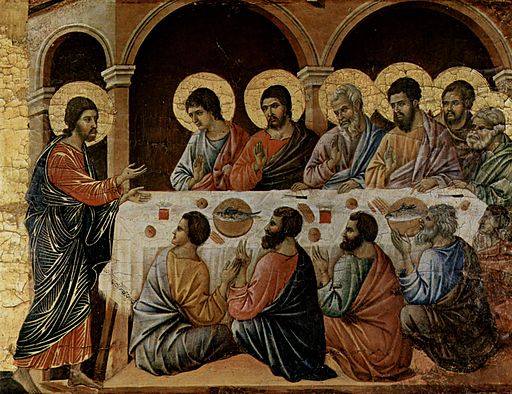
In the Christian religion, these beta brain waves are known by the symbol of the “halo.”
“There are four categories of these brainwaves, ranging from the most activity to the least activity. When the brain is aroused and actively engaged in mental activities, it generates beta waves.
These beta waves are of relatively low amplitude, and are the fastest of the four different brainwaves. The frequency of beta waves ranges from 15 to 40 cycles a second. Beta waves are characteristics of a strongly engaged mind.
A person in active conversation would be in beta. A debater would be in high beta. A person making a speech, or a teacher, or a talk show host would all be in beta when they are engaged in their work.”
Ideas that I theorize become larger (waves) and realized into civilization (i.e. the World Soul/Noosphere) as more people participate with their own ideas.
I believe that within the Noosphere, there are smaller spheres i.e. Metaverses of knowledge and ideas that are correlated to their categories of thinking whether it be for example – philosophy, science, theology or even sports.
My theory is supported by science. As I discussed in my previous essay, Science Proves We Are Human Batteries Powering the Matrix, according to Science Daily, researchers at Radboud University the Netherlands reported that brain circuits can tune into the frequency of other brain parts relevant at the time like a radio with different stations. They reported that animals (and humans alike) have a mental map of the surrounding environment, consisting of place cells.
These cells correspond with places in the physical space and fire when the animal reaches the place or remembers it. The brain area representing the mental map synchronizes with these frequencies like a radio receiver: it is only tuning into the information that is important at a given time..”
We can say that the leading thinkers and ideas are riding the proverbial wave of constructive ideas that span the test of time.
As they should since this energy is immortal.
According to Scientific American;
“Electrical activity emanating from the brain is displayed in the form of brainwaves. There are four categories of these brainwaves, ranging from the most activity to the least activity. When the brain is aroused and actively engaged in mental activities, it generates beta waves.
These beta waves are of relatively low amplitude, and are the fastest of the four different brainwaves.
The frequency of beta waves ranges from 15 to 40 cycles a second. Beta waves are characteristics of a strongly engaged mind. A person in active conversation would be in beta. A debater would be in high beta. A person making a speech, or a teacher, or a talk show host would all be in beta when they are engaged in their work.”
This is interesting because when you study human history and more importantly, the history of good ideas and philosophies, you begin to see a pattern with how good philosophies, ideas, and science stand the test of time to become immortal.
All the while, bad philosophies, bad ideas, and junk science, which easily out number the good are eventually rejected as if they are mortal and often DOA (dead on arrival).
These bad ideas I contend become destructive interference when they do not align with the good ideas of constructive interference. As a result, the the good ideas, our energy waves of constructive interference become larger and cancel out the bad ideas using destructive interference.
This concept works very similar to the technology found in noise canceling headphones. Noise canceling headphones use destructive interference to minimize noise. These headphones have a microphone and detect external sounds and produce sound waves that are out of phase with the incoming sound to decrease its intensity.
I contend that like noise canceling headphones, humans are able to discard, cancel, or reject bad ideas to decrease their intensity and influence. These bad ideas eventually are forgotten because the waves that created them become smaller and smaller.
All humans produce invisible waves and forces of different frequencies depending on our health, mindset, and thinking, or lack thereof. Science can now use various instruments and technologies to measure them as mind or brain waves, like the waves of our coronary heart muscle contracting on an EKG.
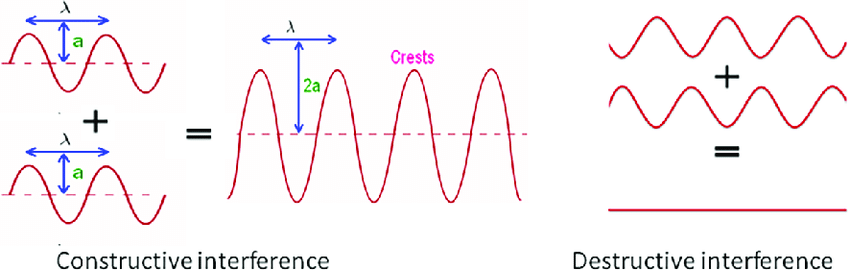
The definition of interference is when two wavessuperpose to form a resultant wave of greater, lower, or the same amplitude. Interference effects can be observed with all types of waves, such as light, radio, acoustic, surface water waves, gravity waves, or matter waves.
So when two waves combine and form a wave bigger than they were before, we call it constructive interference.
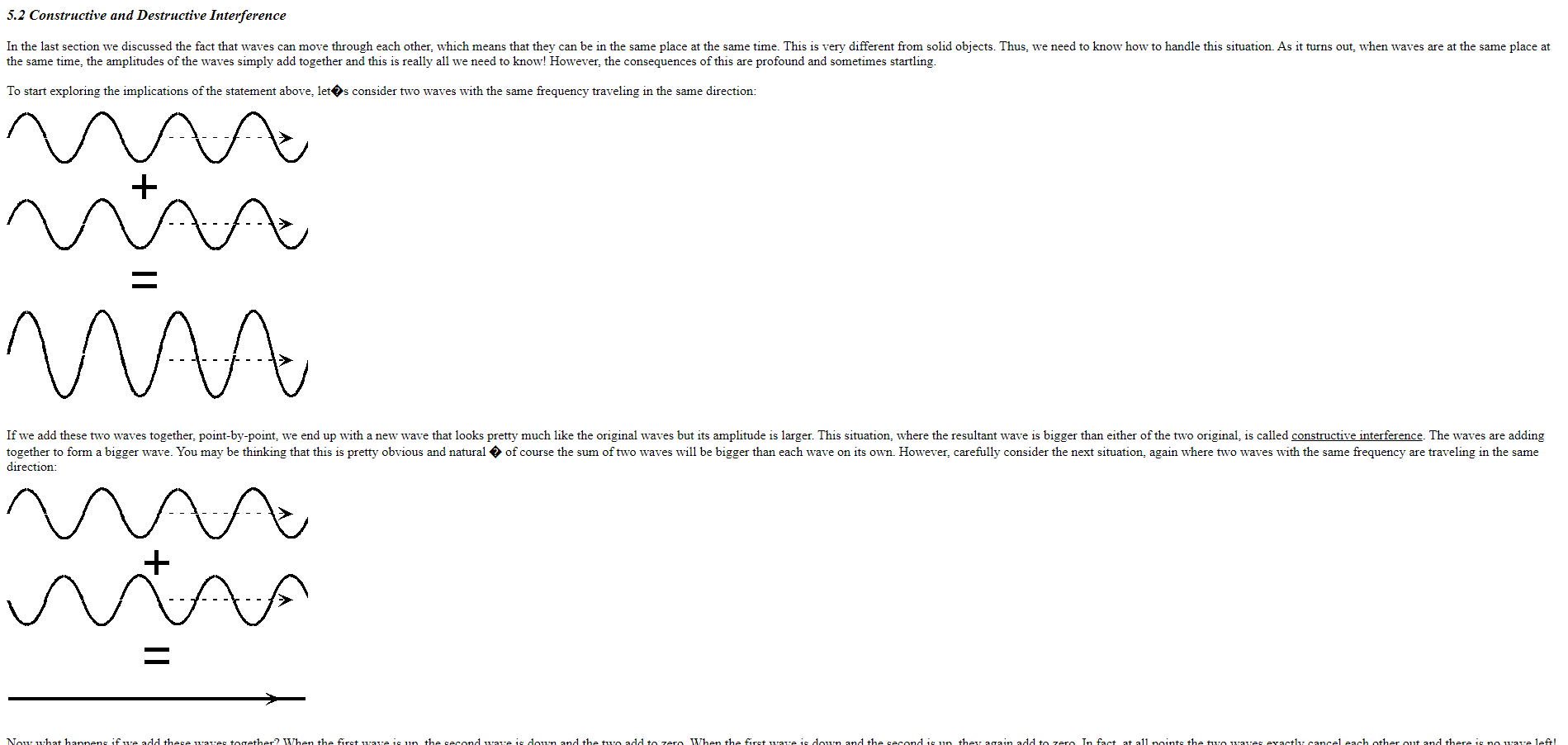
When two waves with the same frequency traveling in the same direction: are at the same place at the same time, the amplitudes of the waves simply add together. The resulting interaction of waves becomes correlated or coherent with each other, which means they are constructive.
When the waves are of different wavelengths, as one being up and the other down at the same time, it results in destructive interference. This occurs when identical waves meet that are completely out of sync because it cancels the signal frequency and the amplitude to zero.
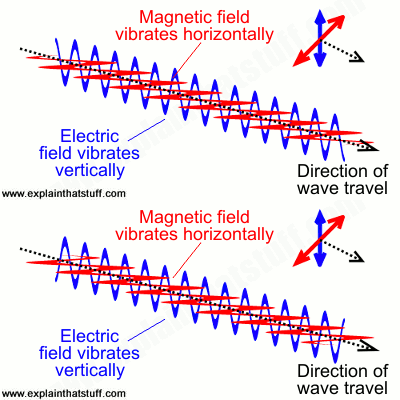
Here are two diagrams showing this science.
Almost everyone has experienced constructive interference via our experiences in public situations and in our relationships where we have felt a connection.
In math, the equation of constructive interference is observed in two positives equaling a positive, while adding a positive sign to a negative always equates to a negative or destructive interference.
We sense that we are completely unconnected to a certain place or with particular people that we come in contact with. This normally results in an inner feeling of not belonging, being an outsider, and not being able to get along with some people whose wavelengths are the opposite to our own.
This can also be compared to when you are enjoying yourself or in a good mood where “your energy is right”, which means you are acting in a constructive way. Then, all of a sudden, there is a fight between people.
It is as if almost immediately, you feel the destructive interference of the negative energy (waves) and your stomach gets that bad feeling where it signals that something is wrong and your heart will start to race placing you in fight or flight mode.
You see, your positive energy, i.e., constructive energy had come into contact with their negative energy, which automatically placed you within their destructive interference field. The resulting equation is now that you are now part of the destructive interference energy waves by default.
This can even happen when you are watching a video of people fighting because the mannerisms and words are conveying the destructive interference through the medium of the internet or TV. That is why it is best to change the channel or look at other videos that display constructive interference.
It is akin to being stuck in a rip current in the ocean. There is no way to avoid being sucked into the rip current, you just need to know how to identify them, how to avoid them and learn how to swim away from the rip current to get to calmer waters.
Hence, understand what bad energy, bad vibes and people are and do everything you can to avoid them and if you get stuck within their destructive energy fields, remove yourself from their company as soon as possible and do not let them affect or influence you.
What you are doing is making your way back to constructive interference through removing yourself from this situation. Then consciously think positive about the experience, and continue as you were without letting the incident alter your positivity permanently.
I believe these may be the invisible threads in the form of energy waves that Neitzsche and other philosophers were speaking of. These waves create connections with other people depending on whether they are positive or negative, which then creates communities and metaverses in each sphere.
You will know them by their fruits (constructive/positive/creators) or their lack thereof (destructive/negative/uncreative).
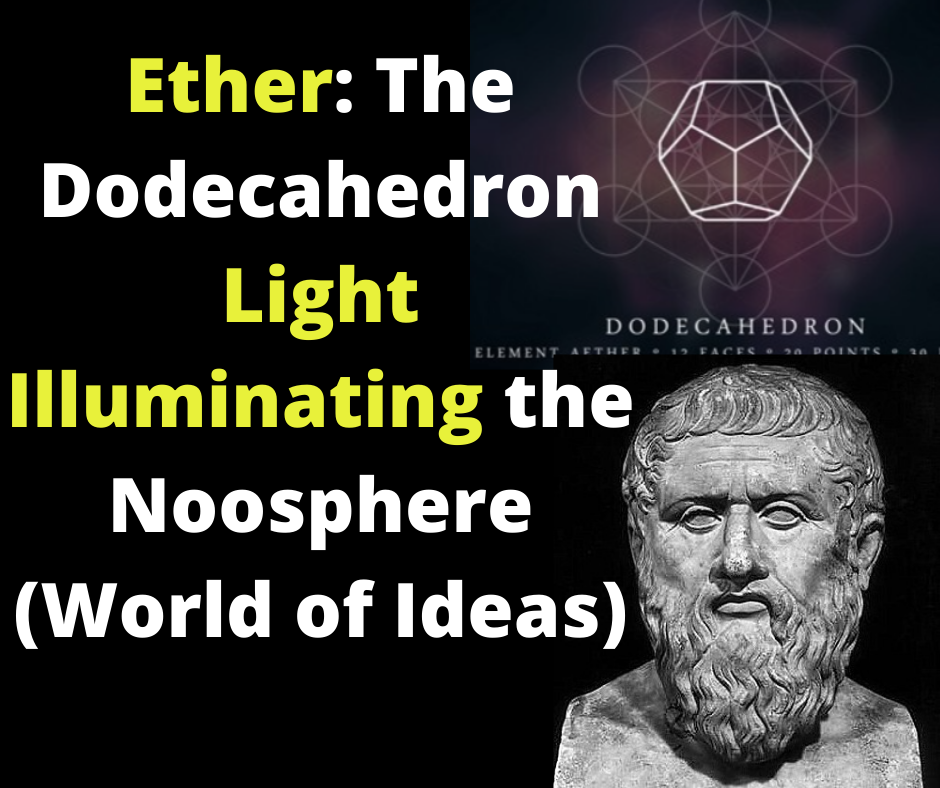
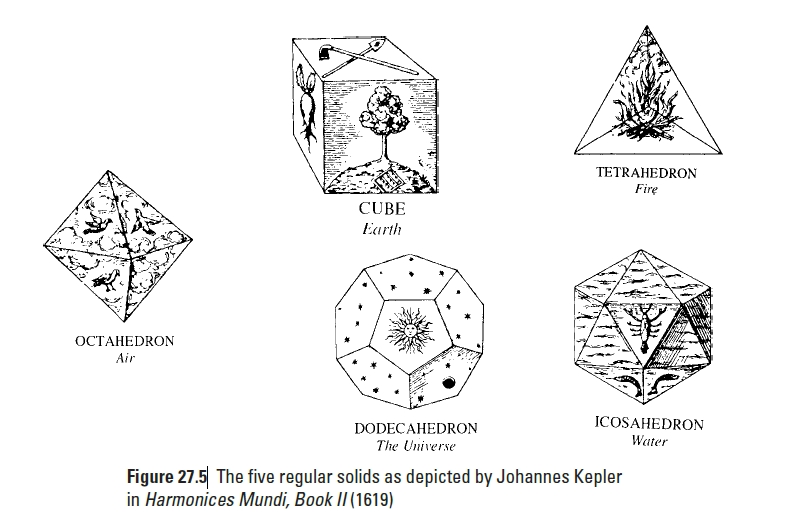
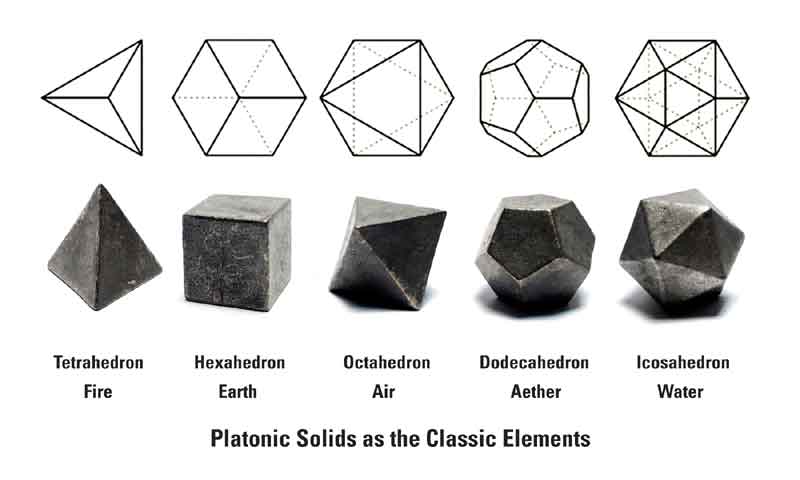
Constructive interference is what creates most of the world around us and also what I believe helps create what has been called the World Soul by Plato and more recently, the Noosphere of Vladimir Vernadsky and Pierre Teilhard de Chardin. . I theorize that human constructive interference creates waves (human energy that is electric) that vibrate horizontally creating invisible crystalized phosphoric dodecahedrons, which contain ideas and information.
When we use our minds in a positive and truly creative fashion, we are using constructive interference which creates the Noosphere.
Energy patterns that exist in time and space outside of humans, history, and above the earth plane. Although they are created by humans via our thoughts, words and actions due to constructive interference, they become eternal.
This is why I believe Plato said all learning is remembering and I contend that all human energy sources i.e. good ideas and creations are renewable. Meaning they can be tested, used and brought back to life no matter the time in history and can be applied to each race and culture on earth.
The earth is powered by two sources of energy: an internal source (the decay of radioactive elements in the geosphere, which generates geothermal heat) and an external source (the solar radiation received from the Sun).
I believe destructive interference is connected to the earth’s biosphere and is magnetic. It governs “destructive energy” which is temporary by default through our gastrointestinal tracts, i.e. our second brains. This relates to our basic human gut instincts and animal like behaviors.
This is the abyss. The place of decay and rot.
A natural process of the earth to weed out the unfit whether it be their very being or their bad ideas.
Nature’s trash can.
Where do these waves, energy and frequencies come from?
Whether it is human energy, sunlight, radio transmitters, X-rays or the internet, electromagnetic radiation is always produced in the same way. It all comes from electrons that gain and lose energy which create various wave patterns depending on the source and the facts are that every bit of matter in the universe emits electromagnetic radiation, including you.
For example, the heat within our body is mainly produced by various chemicals such as phosphorus, which is a form of light and heat source that creates energy that is called infrared radiation. When you are more active, mentally and physically, you create more waves and energy that emit constantly as ambient heat, also known as body heat.
We can use what is called a thermal reader or camera to observe this phenomenon. Even when a person steps on a cold surface such as tile or carpet, they leave a footprint of energy behind that remains for several minutes.
So you’re actually emitting higher energy radiation right now than your remote control or microwave oven.
In 2018, the Scientific American published an article, “The Hippies Were Right: It’s All About Vibrations, Man!” , where they spoke about the frequencies that underlie matter that appear to cause life to spontaneous self-organize.
“All things in our universe are constantly in motion, vibrating,” Hunt writes. “Even objects that appear to be stationary are in fact vibrating, oscillating, resonating, at various frequencies. Resonance is a type of motion, characterized by oscillation between two states. And ultimately all matter is just vibrations of various underlying fields.”
When different oscillating things are close together for a time, they begin to vibrate in sync. That applies to neurons in brains, fireflies gathering, the Moon and Earth, and much more. This phenomenon is called “spontaneous self-organization.”
“Literally every life form and every speck of dust down to the smallest subatomic particle is influenced by the world through the various forces that act upon it. An electron is influenced by charged particles close enough to have an impact, and from objects that exert a gravitational pull—and the electron behaves accordingly.
To exist, to be in the universe, means that every particle in the universe feels some pull and push from the various forces around it—otherwise it simply doesn’t exist. Thus, the electron perceives, as I have defined this term, and the electron is a subject.
What humans have is a “macro-consciousness.” But that more complex awareness that gives us our rich sense of self, the experience of existence, Hunt argues, is based on “a shared resonance among many micro-conscious constituents.” Basically, all of the relatively simple vibrations and oscillations that occur individually in various physical aspects of the brain, working together, become extremely complex and provide our self-awareness.
“The speed of the resonant waves that are present is the limiting factor that determines the size of each conscious entity,” Hunt writes. “As a shared resonance expands to more and more constituents, the particular conscious entity grows larger and more complex.”
This resonance theory of consciousness tries to provide a unified framework for understanding mind and matter that includes neuroscience, the study of human consciousness or subjective experience, neurobiology, and biophysics. It offers an explanation for the differing degrees of consciousness in various physical systems.
“It is all about vibrations, but it’s also about the type of vibrations and, most importantly, about shared vibrations,” Hunt argues.
Gnostic Warrior Conclusion
Synchronization is a kind of physical communication between humans that leads to spontaneous self-organization.
This explains how educated people whether they are philosophers, theologians, or scientists tend to congregate with like minded people in their respective crafts. While, those members of the human family who do not participate in this highly evolved world of ideas are the beneficiaries who carry out the administrative functions to create and build civilization.
As if they are of one collective mind, but each brain brings different or new ideas to the table that become accepted. becoming immortal, while the rejected ideas seem to die and decay.
These accepted ideas and knowledge create what I believe are Metaverses within the Noosphere.
Little worlds of separate consciousnesses within the “collective world mind.”
That is why we each experience the world differently from each other and separately from other people, animals, and insects. As if our creator had intended for each being to be somewhat different by using their minds and bodies in their own unique ways so one’s evolution is not stopped by anothers devolutionary ways.
These ideas that die and decay would be a type of destructive interference of the mind and human civilization via bad ideas that are rejected by our fellow peers – past, present and future.
These ideas do not make it into the light of other minds and our text and history books, which means they are not part of the Noosphere.
They may start out as big waves at first, but over time they become smaller and smaller.
The path of rejected ideas that are on the waves of destructive interference.
Instead of being constructive surfers on the ocean of immortal life by finding and riding the Traditional Beta and Gamma Waves of those enlightened beings who have surfed the light before, they choose the wrong surf spot with killer waves and sharks.
A miscalculation of the importance of Tradition and the truth that has already been established. A critical and mortal error in thinking.
This leads to the Metasphere of the dark abyss where bad ideas synchronize for eternity decaying into a oceanic hell.
As for me, I choose the immortal wave honoring the Traditions and ideas of those great philosophers and esotericists who have gone before.
In a sense, I’m joining the greatest surfing philosophers of all time who are riding the brainwaves of Gnosis that never end.
Moe is the founder of GnosticWarrior.com. He is a father, husband, author, martial arts black belt, and an expert in Gnosticism, the occult, and esotericism.
“Traditionalism is the only way to preserve the world.” – Julius Evola
Traditionalism is a reactionary and counter-revolutionary movement that arose in the early 20th century. Traditionalists believe that there is a spiritual decay in Western civilization owing to modernity and rationalism, which they see as being based on Judeo-Christian values and defines itself as “a philosophy which favors traditionalism, hierarchy, and authority”.
The word “Traditionalism” derives from the Latin word tradere, which means “to hand down”. The term “traditionalist” derives from “traditional”, which refers to the commonalities between all traditions, or customarily accepted beliefs and practices.
It is a school of thought that believes in the primacy of the wisdom and knowledge of traditional societies, especially those that existed prior to the modern period or what is often called Modernity by Tradionialists. They affirm that there is a transcendent order, which constitutes the objective reality of human experience.
The transcendent order as the “Traditional” or “Perennial” Way, and and advocates the return to “the Old Ways” which they believe has been manifested in all cultures at all times.
Over the last 200 years, Traditionalist thinkers have criticized modernity and liberalism, while advocating a return to our original values and ways of life. It is not a unified movement, but rather various different traditions that have existed throughout history under this name.
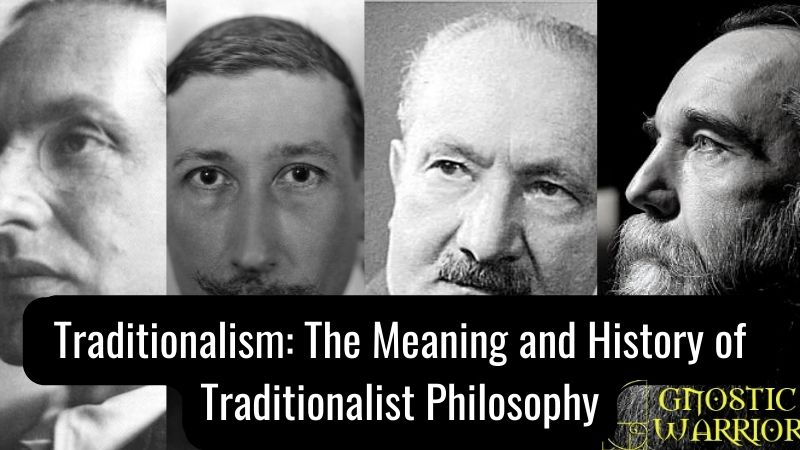
The term “traditionalism” was first used as a self-descriptor by French writer François-René de Chateaubriand in 1821, although tradition had been used prior to this by Joseph de Maistre and other counterrevolutionaries. These ideas have been popularized by a number of writers and thinkers in Europe, Russia, and America. They include Julius Evola, René Guénon, Martin Heidegger, Carl Schmitt, and Aleksandr Dugin.
Traditionalism can be seen as an attempt to preserve the traditionalist ethos against modernizing trends in Western culture. This includes preserving the identity and customs of one’s people from the erosion of globalism and multiculturalism, which are seen as diluting traditional values and religion with foreign influences; for example: Christianity replacing paganism in Europe or Hinduism replacing Buddhism in India.
The traditionalist worldview sees humanity as being on a spiritual journey through time; it sees all religions as having an essential truth about this journey; it sees modernity as bringing us further away from this truth; and it sees modernity as being associated with increasing inequality, injustice and environmental destruction.
Traditionalists reject universalizing ideologies such as rationalism (the idea that reason is supreme), liberalism (the idea that individual rights are paramount) and socialism (the idea that government should be controlled by the community).
They have traditionally been opposed to both communism and capitalism, which they regard as modern manifestations of an anti-traditional system of society. They are also often opposed to progressivism and industrialization for similar reasons.
Traditionalists believe these ideologies are contrary to human nature and lead to moral decay because they undermine natural hierarchies.
Many Traditionalists believe that our present condition is due not just to bad politics but also to bad ideas (because politics are always based on ideas). Bad ideas that simply need to be destroyed. They believe that there has been a decadence of thought since modern times began, which has resulted in all kinds of irrational beliefs such as materialism, atheism, and liberalism.
Traditionalists believe that various aspects of society and social life are organic wholes that exist whether or not humans recognize or acknowledge their existence. They further believe that these wholes have an inborn “spirit” or “soul” that one can only understand intuitively, rather than rationally.
Traditionalists thus reject abstract rationalist notions like natural rights and social contract theory as a basis for legitimacy and authority. Instead, they espouse an organicist conception of society as a living organism with a spiritual soul through which “legitimate” authority must be exercised.
It is opposed by both liberal individualism and modernist historicism in all its forms. It rejects what it sees as the rootless cosmopolitanism inherent to modernity—including capitalism, individualism, egalitarianism and multiculturalism—as well as the secularization of religion into a mere human institution devoid of its transcendent purpose.
They argue that society has been thrown into confusion by waves of materialistic thinking and has forgotten its spiritual foundation. They wish to restore religious practices and beliefs that are not bound by time or space.
Some traditionalists support monarchy or other forms of non-democratic government; others support various types of autocracy or oligarchy; some support democracy if it can be shown that it is consistent with traditional values; others oppose all forms of government intervention in political affairs.
They believe that the way forward is not to be found in any political ideology — liberal or conservative — but rather in a return to what they see as ancient wisdom traditions which developed over thousands of years before Christianity arrived in Europe (and which existed even before Judaism and Islam).
Traditionalism has been accused of being related to several other movements within the 20th century, including far-right politics, fascism, and Nazism. However, most traditionalists adamantly reject these associations.
Meet the Traditionalists
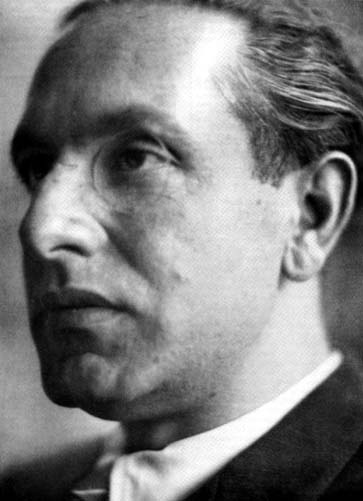
The Traditionalist School (la scuola tradizionalista) was founded by Julius Evola (1898–1974), an Italian philosopher who rejected modernity in favor of an idealized past. He argued that there was a perennial spiritual conflict between Tradition and Modernity, and sought to restore what he saw as the virtues of ancient Greece and Rome: hierarchy, excellence, spirituality and heroism.
In his book Revolt Against The Modern World, Evola presents an extremely critical view of modernity and industrial civilization. He believed that Western civilization has been in decline since the 19th century because it had abandoned its traditional roots in favor of democracy, socialism and materialism. Evola argued that this decline could only be reversed by the development of an elite which would lead society towards an organic hierarchical order based on spiritual principles rather than liberal individualism.
Evola claimed that those people who are connected to their ancient traditions are those who are truly awake. He wrote in Revolt Against the Modern World;
“Beside the great “currents” of the world there are still individuals who are rooted in terra firma. Generally speaking, they are unknown people who shun the spotlight of modern popularity and culture.
They live on spiritual heights; they do not belong to this world. Though they are scattered over the earth and often ignorant of each other’s existence, they are united by an invisible bond and form an unbreakable chain in the traditional spirit… by virtue of these people, Tradition is present despite all; the flame burns invisibly, and something still connects the world to the superworld.
“They are those who are awake.” Evola wrote;
Evolian Traditionalism is thus a form of counter-Enlightenment philosophy, and stands in opposition to modernity, democracy and egalitarianism. It holds that the world changes in cycles: civilizations rise while others fall; humanity moves from one state of being to another. To Evola, these cycles corresponded with a natural law: what he called “metaphysics”.
According to the scholar Franco Ferraresi, he “is considered one of the most innovative and influential theorists of ‘traditionalism’—a current of thought within fascist ideology which emphasizes the need for a hierarchical social order based on natural differences.”
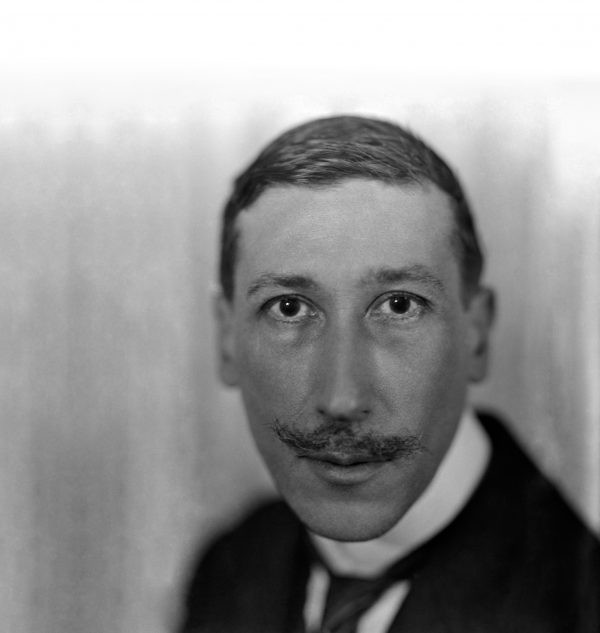
Next to Evola, René Guénon (1886–1951) was the most prominent figure of the traditionalist movement in twentieth-century France. He was a prolific writer whose works were influential all over the world and he also had an impact on Hinduism, Buddhism and Islam, as well as Christian theology.
Guénon developed the “Primordial Tradition”, in which he presented his works as elaborative of “traditional metaphysical principles” through his publication, “Études tradition nelles.” He wrote another important book on Traditionalism called Crisis of the Modern World (1927) where he explains how modern society is facing a crisis and how this crisis can be solved by returning to our spiritual roots. Evola wrote the introduction to the book.
In 1931 he wrote his most famous work, “The Reign of Quantity and The Signs of The Times“. This book has been translated into several languages and continues to be studied by seekers all over the world.
Guénon’s work is characterized by its uncompromising defense of traditionalism and its rigorous criticism of modernity. His writings have been described as “an unsystematic exposition of traditional doctrines”, but Guénon himself maintained that his work could be understood only within the context of the whole tradition; consequently, many of his works are often referred to as “classics”.
Guénon wrote;
“Where is the notion of a real hierarchy still to be found in the modern world?
Nothing and nobody is any longer in the right place; men no longer recognize any effective authority in the spiritual order or any legitimate power in the temporal; the ‘profane’ presume to discuss what is sacred, and to contest its character and even its existence; the inferior judges the superior, ignorance sets bounds to wisdom, error prevails over truth, the human is substituted for the Divine, earth has priority over Heaven, the individual sets the measure for all things and claims to dictate to the universe laws drawn entirely from his own relative and fallible reason.
‘Woe unto you, ye blind guides,’ the Gospel says; and indeed everywhere today one sees nothing but blind leaders of the blind, who, unless restrained by some timely check, will inevitably lead them into the abyss, there to perish with them.”
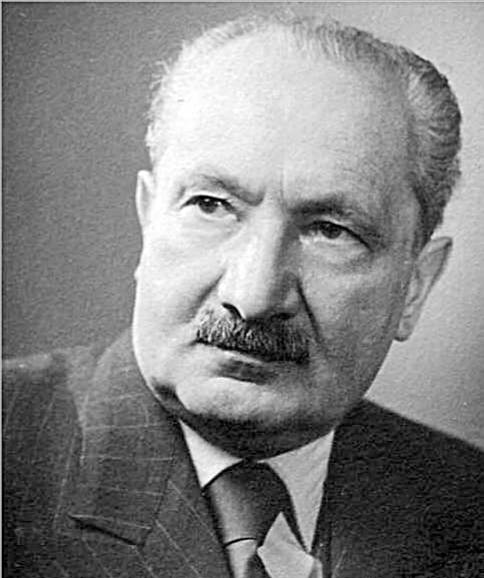
After Guénon, the next most important person was German philosopher and a founding member of the Frankfurt School, Martin Heidegger (1889-1976). His ideas have had an enormous impact on western philosophy, yet he remains one of the most difficult and controversial philosophers to read.
Although Heidegger did not claim to be or belong to any of the Traditionalist groups that Evola and Guénon had developed and was sometimes critical of Traditionalism. Although he is often described as a Traditionalist and a favorite philosopher for people such as Alexandr Dugin, because he believed that modern society had lost touch with its past and we needed to preserve it.
Heidegger said this about Traditionalism:
“There are many different kinds of traditionalism. Some people think that tradition means simply living in the past, but this is not true. Tradition only means maintaining something that has been handed down from generation to generation.”
“Tradition is not just re-enacting things from the past; it means preserving them so they can be handed down to future generations.”
One of his most important contributions to philosophy was his analysis of the concept of being and is often referred to as his “Being and Time” period. In this early period, Heidegger attempted to develop a philosophical hermeneutics that would be able to interpret all forms of human existence in view of their being in the world.
In particular, Heidegger made a distinction between two types of being: ready-to-hand (Zuhandenes), and present-at-hand (Vorhandenes). The former is an understanding of being that is based in everyday life, where things are useful to us and part of our lives; the latter is an understanding of being as something detached from our lives, which we can examine through reason alone.
This distinction has become known as Dasein-analytic or existentialism. In this kind of thinking we come to understand ourselves as human beings – in other words, we are not simply objects but subjects (what Heidegger calls Dasein). We are not simply products or objects, but subjects who have their own agency (being able to make choices).
His analysis focused on understanding being-in-the-world as being-with others (Mitsein). This approach was indebted to Martin Luther’s doctrine of justification by faith alone and Immanuel Kant’s conception of practical reason.
Heidegger also stated that human existence cannot be understood apart from its relationship with other people in the world. This relationship is always already there before us, as we find it in our everyday dealings with others. But it is not something that can be analyzed by science or philosophy, because it is always changing according to circumstances and traditions particular to each historical era.
He argued that science and technology were destroying our sense of tradition and replacing it with calculative thinking. This led to humans becoming soulless “dwellers” in technology-dominated cities who are unable to think deeply about their lives or to have meaningful experiences with other people.
Heidegger wrote;
“It is not enough to think of a tradition as a kind of intellectual property, in which we have invested our money and labor. We must also recognize that our tradition is directly responsible for our present condition, and that we are therefore obliged to it.
This obligation is what makes it possible for us to overcome the danger of becoming “strangers and sojourners” in the world.”
He famously said that “only a god can save us” from technology and industrial society (“Der Spiegel” interview 1966). His critique of modernity has been compared to that of Friedrich Nietzsche — another philosopher who was accused by some critics of being anti-Semitic — but it is also true that Nietzsche thought highly of Heidegger’s work.
Heidegger’s work remains controversial because of its association with National Socialism — he was a member of the Nazi party from 1933 until 1945 — and because of his political views after World War II.
If we are to examine this time period with the German NAZI regime, we can see that they had attempted to preserve the Traditions of their race and their so-called Arayan ancestors who were seen as biologically superior to other racial groups. Adolf Hitler promoted his ideaologies about Germany’s ancestors in his 1925 book, Mein Kampf. The think tank called The Ahnenerbe (German: [ˈʔaːnənˌʔɛʁbə], ancestral heritage) operated between 1935 and 1945 to promote their doctrines with a group of Germany’s leading scholars and scientists.
Traditionalist conservatism takes its name from the Traditionalists, a group of French intellectuals known as Les Veilleurs or “The Watchers,” who first met in 1928 at the Institut Catholique de Paris, a Jesuit-run graduate university dedicated to training priests for the Catholic priesthood.
The original members were: Charles Champetier (1890–1946), Marcel Haedrich (1892–1952), Étienne Gilson (1884–1978), Louis Massignon (1883–1955), Jean Ousset (1905–1974) and Louis Lecerf (1906–1972). They were joined later by such men as Henri de Lubac, Yves Congar and Jean Daniélou. The movement was part of a wider effort to defend the Roman Catholic Church against modernists who questioned some of its teachings.
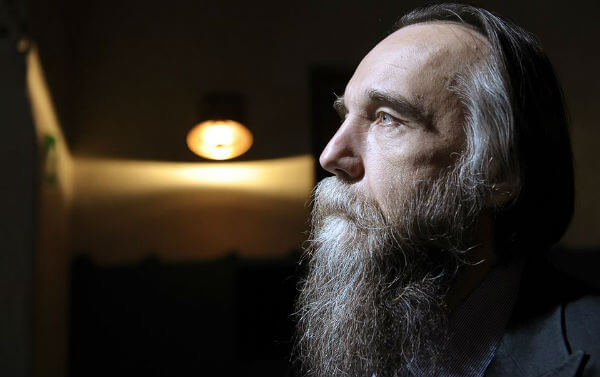
Today, Alexander Dugin (Russian: Алекса́ндр Ге́льевич Ду́гин; born January 7, 1962) is one of the most influential and controversial Traditionalist thinkers on the world stage today. He is a Russian political scientist known for promoting a “traditionalist” worldview through his leadership of the International Eurasian Movement (Russian: Международное евразийское движение), a political party called “The Conservative Party of Russia”, and several books about geopolitics.
Dugin has been described as “Russia’s chief ideologist” by The New York Times. His work has been translated into many languages, including English, Spanish and Portuguese. He has influenced political movements from Ukraine to Brazil and Venezuela to Africa by providing them with a philosophical basis for their actions.
Dugin has expressed admiration for Julius Evola, who became an early influence on his thought and introduced him to Traditionalism; as well as for Martin Heidegar and Carl Schmitt, whose ideas on geopolitics influenced Dugin’s later works on geopolitics; and René Guénon (who Dugin calls “the master”) who introduced him to Gnosticism and Manichaeism.
He defines Traditionalism as a philosophy that “questions modernity” and advocates for a return to traditional values as “the recognition of the perennial character of human nature”. What is true, good and beautiful.
Dugin recently said;
“Traditionalism is a philosophy of life and a system of values based on the veneration of the past, particularly with regard to the preservation of what is perceived to be true, good, and beautiful.”
Dugin’s philosophy called Neo-Eurasianism or Fourth Political Theory (4PT). The 4PT is a syncretic ideology combining traditionalist ideas from Eurasian religions and European New Right with Russian nationalism and anti-liberalism. In 2006 he wrote The Fourth Political Theory, which proposed a new ideology for Russia based on traditionalism, conservatism and nationalism.
Dugin believes that Russia should be an empire like it used to be before Peter the Great. In his book The Fourth Political Theory, he argues for a postmodernist approach to politics:
“The Fourth Political Theory is thus openly opposed not only to liberalism but also to Marxism and fascism; it rejects them both as modernist ideologies that deny the uniqueness and specificity of each historical epoch.”
In 2007 he founded the Eurasia Party and in 2011 he left the party to create his own political party called Eurasian Youth Union (ESYU). The Eurasia Movement was established to promote Russian foreign policy in opposition to American hegemony. He has been described as a “key intellectual proponent” of the idea that Russia is destined to lead a new empire in place of the Soviet Union, which Dugin considers to have been usurped by Atlanticism (meaning liberalism) and globalism (meaning capitalism).
In a recent interview, Dugin speaks about the meaning of tradition and its relation to the West. He also talks about his role in Russia as a “philosopher” and what he hopes to accomplish with his work.
Question: What is your understanding of tradition?
Alexander Dugin said;
“Tradition is a complex concept. It is not just something that has existed for a long time, or that has been preserved from generation to generation. Tradition does not mean conservation of something that already exists; it means renewal and expansion of something that already exists.
Tradition is not the past but the future being born in the present,” Dugin said.
“Tradition is not a dead past but an alive future: when we look at tradition we see history being born again in us as we live our lives today. This concept is difficult for people today because they are used to living in front of their TVs or on Facebook where everything becomes “old news” within hours or minutes–or even seconds!
There’s no sense of continuity here; it’s all just fragments of information from various sources that have nothing in common except their ephemerality. We don’t live in one place anymore either; we’re constantly moving around from one place to another so there’s no sense,” he said.
While Dugin’s views are often described as fascist or neo-fascist, he rejects these labels as inaccurate and misused. In an interview with liberal Russian talk show host Ksenia Sobchak, Dugin claimed that any comparison between his views and those of Adolf Hitler was “ridiculous”.
He instead prefers to describe himself as a Traditionalist who advocates for “conservative revolution” against modernity.
Dugin recently said in an interview;
“The Traditionalists are not only a school of theology, but also a school of politics, and they have much to say about the laws of history. In particular, they believe that there is a law of cycles in history, according to which societies rise and fall according to their adherence or lack thereof to Tradition.
“The most important aspect of this Tradition is what I call the “vertical axis,” meaning the transcendent dimension of human existence. This does not mean that Traditionalists reject science or rationality — far from it! But it does mean that they think that there are levels of understanding in reality beyond our materialist vision; that is why we need both science and religion.”
In a recent interview I conducted with Alexandr Dugin on the Gnostic Warrior Podcast, he told me that this battle is not only against what he calls a Liberal Dictatorship that seeks to destroy our ancestral traditions and philosophical ideas, but for our very souls and for eternity.
He is not fighting just for the Russian Traditions, but the whole world’s Traditions.
We spoke about his 4th Political Theory and how it is the only political system right now that honors people’s traditions across cultures while bringing these issues to the political arena.
MOE: So you’re, you’re fighting for everybody’s traditions.
DUGIN: Exactly. I don’t fight only for the Russian tradition, my tradition, my church. I’m Christian. But I defend the principles that religion and tradition are not something that belongs to the past.
I argue that it belongs to eternity, but eternity is now, the past is now, and it will be tomorrow.
So that is the fight on the side of eternity, against the dictatorship or the temporality of the time of becoming. And we consider all these three models, ideology, communism, liberalism, and the French.
They are all based on a secular understanding of history. They are founded in a materialistic understanding of the world.
They don’t believe in eternity. Eternity doesn’t exist. There is only time. There is only this world. There is nothing outside of it.”
Here is my interview with Dugin.
In another article for The National Interest, Dugin is rallying the global troops of Traditionalists to join the fight against this dictatorship:
“All of us who consider ourselves traditionalists — whether religious or not — should join our efforts against the dictatorship of relativism and consumerism, against globalisation and its political instrumentality.”
I have found that a lot of what Dugin advocates for in the name of Tradition makes perfect sense. While his views at times can be considered extreme, we can also make a great case that the current Liberal Dictatoship are even more extreme to the point they seek to destroy all our Traditions – what is good, true and beautiful.
Instead, they want to indoctrinate the people and our children into their Godless Lberal religion that pisses on the past and makes up their own absurd ideologies, from changing the meaning of biology to what it means to be a man or woman and have a family by changing their genders and their identities.
So, how does a modern day Traditionalist fight against what seems to be a massive army of Liberal clones hell-bent on destroying your Traditions and indoctrinating your children into their Global Death Cult?
I will leave you with a quote by Julius Evola that accurately describes how Traditionalists battle the dregs of Modernity. Evola wrote;
“It is necessary to have “watchers” at hand who will bear witness to the values of Tradition in ever more uncompromising and firm ways, as the anti-traditional forces grow in strength. Even though these values cannot be achieved, it does not mean that they amount to mere “ideas.” These are measure.
Let people of our time talk about these things with condescension as if they were anachronistic and anti-historical; we know that this is an alibi for their defeat. Let us leave modern men to their “truths” and let us only be concerned about one thing: to keep standing amid a world of ruins,” Evola wrote. (Revolt Against the Modern World)
In other words, let the crazy Liberals keep spewing their irrational beliefs and acting like chimps. The more they do so, the easier it will be to defeat their ignorance and lies.
It is Traditionalist Watchers today, like Dugin, who believe that this is the Great Awakening and that we are in a war against Modernity. What he calls the “Serpents of Wisdom versus Serpents of Capitalism.”
It is philosophers like Dugin who are ready to defend these Traditions and, if needed, destroy Modernity into an eternal heap of ruins with Traditional ideas, and, if needed, one rocket launcher at a time.
One last final thought.
As an American, I’m on the side of Traditionalists and wish to fight for the original American ethos that honored their ancestors Traditions while also granting the people Liberty and the pursuit of happiness.
This is being stolen from us all as we watch the liberals indoctrinate our children with their bad ideas and they piss on our country’s values as it all burns right before our eyes.
Dugin is right. This is a battle for eternity.
One that I believe that this will culminate into not only a world war of ideas, but the final battle for the World Soul.
Moe is the founder of GnosticWarrior.com. He is a father, husband, author, martial arts black belt, and an expert in Gnosticism, the occult, and esotericism.
The simulation hypothesis claims that we are living in a simulated reality.
A number of prominent figures, including Phillip K. Dick, Elon Musk, Neil deGrasse Tyson, Freeman Dyson, and Stephen Hawking, have expressed their belief that we may be living in a computer simulation.
The word to simulate means to give or assume the appearance or effect of often with the intent to deceive: to imitate, pretend, or counterfeit.
The computer simulation theory centers around humans being able to create computers that are so powerful they can simulate entire universes — maybe even entire universes full of sentient beings (us).
One way to do this would be by creating a computer program that runs on an extremely powerful machine and simulates an entire universe inside it.
In other words: if we can create such a program, then perhaps someone else has already done it.
It’s an idea that has been explored in science fiction for years — with writers such as Philip K. Dick and the hit movie, The Matrix being perhaps the most famous example.
The first person to claim we were living in a simulated reality was the American writer Philip K. Dick.
Dick was also famous for describing that we live in a Black Iron Prison.
An oppressive society where people are controlled by machines. He believed that technological advances had created huge corporations which were run for profit rather than for people’s benefit. This made it difficult for ordinary people to make their voices heard when things went wrong.
In The Matrix: Reloaded (2003) and The Matrix Revolutions (2003), the main character of the film, Neo (Keanu Reeves), discovers that he is actually living in a virtual reality simulation when he meets Morpheus (Laurence Fishburne), who introduces him to an alternative reality called “the real world.”
He learns that humanity is enslaved by sentient machines that used their control of human minds through computer technology to take over the world and keep humans docile in a virtual reality world called “the Matrix”.
Neo is a hacker who has been chosen to be a part of a resistance movement against intelligent machines that have enslaved humanity.
In this world, humans are connected to bio-electrical energy sources called “batteries” that keep them alive while their minds are trapped in virtual reality worlds created by machines.
Simulated realities are no longer a subject just for movies and has become a serious topic of discussion among philosophers and scientists.
A number of prominent figures, including Elon Musk, Neil deGrasse Tyson, Freeman Dyson and Stephen Hawking, have expressed their belief that we may be living in a computer simulation.
Stephen Hawking recently told the BBC:
“We are increasingly doing everything through computers. So it seems to me that’s very likely.”
Neil deGrasse Tyson said the odds of our universe being a simulated reality were 50/50. He used the large intelligence gap between chimpanzees and humans despite the fact we share 98 percent DNA, stating that a being many times our intelligence could both exist and potentially run simulations.
During a recent podcast interview with Joe Rogan, Elon Musk was asked if he thought we were living in a computer simulation. “Given the current acceleration of technology and innovation, I think it’s very likely,” Musk responded.
Musk said “If you assume any rate of improvement at all, games will eventually be indistinguishable from reality” before concluding “that it’s most likely we’re in a simulation.”[
Musk then went on to say that there could be millions — or even billions — of levels of reality above us, each with its own simulations. In other words, we could be living in one of the many simulations at this very moment.
“The strongest argument for us being in a simulation probably is the following,” Musk explained. “40 years ago we had Pong – two rectangles and a dot.” He continued:
“Now, 40 years later, we have photorealistic 3D simulations with millions of people playing simultaneously, and it’s getting better every year. And soon will be indistinguishable from reality,” he said.
In 2016, Oxford University philosopher and director of the Future of Humanity Institute, Nick Bostrom published a paper titled “Are You Living In a Computer Simulation?” arguing that we are more likely to be living in a simulation than not — and that we’ll know if this is the case by 2045.
Bostrom suggests that humans may be living in an artificial universe that was created by our descendants as a simulation.
He argues that simulations are an inevitable byproduct of technological advancement and could be used to study things like climate change or nuclear war without the risk to real people or property.
Bostrom also believes that human civilization will eventually reach a point where these simulations are indistinguishable from reality — an event he calls the “simulation singularity.”
He explains that there are four reasons to believe we live in a simulation:
1. “The fraction of human-level civilizations that reach a posthuman stage is very close to zero;”
2.”It is not impossible to run a great many such simulations;”
3.”We’re unlikely to be near the bottom of the curve; for example, when it comes to our current understanding of physics and cosmology, we have already reached quite high levels;”
4.”If we do live in a simulation, it will be far from unique. In fact, there will almost certainly be many simulated ‘trains’ running around in parallel universes right now.”
The reason for this increased interest is that many scientists believe we’re approaching an era when computers will be able to simulate reality so well that they will run simulations indistinguishable from the real world (something called “the technological singularity”).
If this happens, it would make sense that our reality could be just one of many simulated realities — and maybe not even the best one available.
These ideas come from a branch of physics called quantum mechanics, which deals with how subatomic particles behave at very small scales (for example, electrons can spin both clockwise and counterclockwise at once).
Quantum mechanics shows that our world is much stranger than we thought possible — there are many things happening at once that we cannot directly observe.
The Simulation Hypothesis by Rizwan Virk, a renowned MIT computer scientist and Silicon Valley video game designer, is the first serious book to explain one of the most daring and consequential theories of our time.
Virk argues that we are living in a simulated universe — a digital realm created by advanced posthumans. If true, this means we are living in a giant computer simulation, where our entire lives are just algorithms running on some advanced alien supercomputer.
He shows how the simulation hypothesis can be investigated using science, from quantum physics to neuroscience to artificial intelligence.
Virk explains how our universe could be a simulation running on a supercomputer in another universe or even another dimension; how we might detect such a simulation; and how humans could break out of it if it exists.
Gnostic Warrior Conclusion
What if we’re all living in a simulation?
It’s an interesting thought experiment to ask whether or not we live in a simulation.
If it’s possible to simulate a world that’s indistinguishable from reality, then, well, it’s likely we’re already inside one.
The idea is that right now or at some point in the future, our world and the events happening within it are controlled and manipulated by some type of secret cabal, aliens or computers.
As I said above, the word to simulate means to give or assume the appearance or effect of often with the intent to deceive: to imitate, pretend, or counterfeit.
Quite possibly everything we are taught is a script to control our feeble minds from birth to death, and our politicians and the media are just puppets who are given talking points to propagandize our thoughts.
In this simulated world, people who we think are our politicians and media are just well-paid liars who pretend to have our best interests at heart.
Counterfeits of the real thing manipulating our reality through our laws and media.
Many people we see on the street would copy the characteristics, looks and even the morals and ethics of their favorite celebrities, bands, and famous people.
Creating an entire new metaverse with hordes of clones, androids, and soulless people,
Vast swaths of the adult population will be hooked on alcohol and or using drugs (illegal and prescription) altering their personalities, and lives.
All the while, the youth would be immersed online in video games and mobile phone apps that took up all their attention and time.
Some of their parents would drug them to alter their reality and change their behaviors.
Moe is the founder of GnosticWarrior.com. He is a father, husband, author, martial arts black belt, and an expert in Gnosticism, the occult, and esotericism.
“Now, the time has come to bring brightness to man. I am Aether and I declare this to be done. As ordered by the personification of the upper air, Let There Be Light!” — Aether.
For thousands of years, a mysterious luminous substance known as “aether” (or “ether”) was one of the most researched and sought elements in the esoteric worlds of philosophy, alchemy, magic, and science. Many of the world’s greatest thinkers, such as Plato, Aristotle, Descartes, Newton, Einstein, and Tesla, have all written and or debated about its existence.
According to the Ancient Greeks, aether (Greek αἰθήρ, aithēr), also spelled ether, is the fifth element that fills the region of the universe above the terrestrial sphere and is distinct from the other four elements (Platonic Solids), Earth, Water, Air, and Fire.
Its Platonic solid is the dodecahedron.
Both Plato and Aristotle also referred to aether as “Idea” (Greek ίδέα), or ίερόν, (Greek hieron “a divine thing”) because it was thought to be heavenly, i.e. not of the material world (matter) and have the power of life.
Aether was first mentioned by Plato in the 4th century B.C.. He had written in Timaeus (58d) that Aether is that “which God used in the delineation of the universe.” He says “there is the most translucent kind which is called by the name of aether (αἰθήρ)” and is always being present in the air and with eternal motion in Cratylus (410b, 6 and § 5.1.3).
I construe “aether” in this way, that it is always running (aei thei), because it flows around the air (aera reon), so it would justly be called aeither. (Plato, Cratylus, 410b) Plato wrote;
“Sokrates (Socrates) : Let us inquire what thought men had in giving them [the gods] their names . . . The first men who gave names [to the gods] were no ordinary persons, but high thinkers and great talkers. But why should you not tell of another kind of gods, such as sun, moon, stars, earth, ether, air, fire, water, the seasons, and the year?
Sokrates; Air is called aêr because it raises (airei) things from the earth, or because it is always flowing (aei rhei), or because wind arises from its flow?
The word aethêr, I understand in this way: because it always runs and flows about the air (aei thei peri ton aera rheon), it may properly be called aeitheêra.” (Plato, Cratylus)
At the time and before Plato, the common belief was in just the four classical elements: Fire, Water, Earth, and Air. The discovery of aether as a material that was believed to fill the universe beyond the terrestrial sphere led to the proposal of aether as a name for the fifth element by Plato’s student, Aristotle.
Aristotle claimed that crystalline spheres were made of a fire like substance that was always moving, called aether. A substance that also filled the space between the celestial bodies.
According to Aristotle’s theories of motion, he believed that ether as a fire like substance that was always moving in a circular motion. But the other four elements tended to move in straight lines. The earth moved downward; fire moved upward, while water and air fell in between.
Aristotle wrote;
“We call the substance of the heaven and stars “aether,” not as some do, because it burns (aithesthai), being fire-like, although they are wrong about this ability, which is confused for fire’s, but because it is always moving (aei thein), being carried in a circular motion, being an element different than the four, unmixed and divine.” (Aristotle, On the Cosmos, 392a)
To help validate their theories, they claimed that this fire called aether filled the void in cosmic space and was the substance that made the celestial spheres move in a perfect circular motion.
Later, Proclus (412-487) in his commentary on Timaeus, connected the four elements with the Platonic four solids (earth-cube, air, the octahedron, water-icosahedron, fire-tetrahedron, and the pentagonal dodecahedron with the fifth element – ether to through which God formed the sky.
ETHER IN MYTHOLOGY
The Ancient Greeks personified their philosophies and scientific research into their mythologies. Aether is sometimes referred to as a God and also as a special or spiritual type of air in the highest portions of the atmosphere, only fit for the gods, and sometimes as the soul of the world.
In the Orphic hymns aether appears as the soul of the world, from which all life emanates. An idea which was also adopted by some of the early philosophers of Greece. In the Orphic Rhapsodies 66 (fragments), we read;
“This Khronos (Chronos, Unaging Time), of immortal resource, begot Aither (Aether, Light) [upper air] and great Khaos (Chaos, the Chasm) [lower air], vast this way and that, no limit below it, no base, no place to settle. Then great Khronos fashioned from (or in) divine Aither (Aether) a bright white egg [from which Phanes was born].”
In later times aether was regarded as an abode in the sky or Heaven, the residence of the gods, and Zeus as the Lord of the Aether, or Aether itself personified. (Pacuv. ap. Cic. de Nat. Deor. ii. 36, 40; Lucret. v. 499; Virg. Aen. xii. 140, Georg. ii. 325. Source: Dictionary of Greek and Roman Biography and Mythology)
According to Hesiod, aether was the primordial god who represented the light or brightness of the upper atmosphere (air) that the gods had breathed. He was the son of Erebus (Darkness) and Nyx (Night), and the brother of Hemera (Day/Ἀήρ).
“and in turn Aether and Day came forth from Night, whom she gave birth to after mingling in love with Erebus… (Hesiod, Theogony, 124-125)
The air of mortals was called Chaos or Aer, while the dead resided in Tartarus, enveloped in a misty darkness called Erebos. This divine substance, aether served as a protector of humans from Tartarus, the god of Hades (Hell/Underworld).
Derveni Theogony is the idea, from a fragment of Chrysippus (preserved in Philodemus, De Pietate (On Piety), that “everywhere is aither, which itself is both father and son”.
The Derveni papyrus (fourth century BC), refers to the Greek God Zeus ejaculating aether. Indicating that this aether can be found in our semen.
When Zeus had heard the prophecies from his father, he swallowed the revered one [or phallus], who [or which] sprang forth, first into the aether [or who first ejaculated aether].
In another passage from the De principiis, Damascius quotes other verses from the Rhapsodies:
“Then great Time fashioned from (or in) divine Aither a bright white egg.”
ETHER IN MODERN HISTORY
Many medieval alchemists considered ether as the material permeating the entire creation, from plants, animals, and humans to the sky.
The 16th-century Swiss physician Paracelsus called aether “the substance of stars and souls.”
By the middle of the 17th century (1596-1650), René Descartes used ether to describe the medium of space that moves the world like a machine due to the motion of matter. According to Descartes, ether could explain the theory of gravity, while also explaining the propagation of light, acting as a medium of fluid comprising colliding particles that could transmit these mysterious forces.
One of Isaac Newton’s major theories was that aether played a major role in gravity and light in the Third Book of Opticks (1st ed. 1704; 2nd ed.) He defined it as the medium that “flows” continually downward toward the Earth’s surface and is partially absorbed and partially diffused as an elastic, invisible, strong, and subtle matter that existed everywhere in different forms.
Newton had written, “It is not a single uniform substance but just as the air contains aqueous vapours, so the aether may contain various aetherial spirits adapted to produce the phenomena of electricity, magnetism and gravitation.”
Newton further claimed;
“Doth not this aethereal medium in passing out of water, glass, crystal, and other compact and dense bodies in empty spaces, grow denser and denser by degrees, and by that means refract the rays of light not in a point, but by bending them gradually in curve lines? …
Is not this medium much rarer within the dense bodies of the Sun, stars, planets and comets, than in the empty celestial space between them? And in passing from them to great distances, doth it not grow denser and denser perpetually, and thereby cause the gravity of those great bodies towards one another, and of their parts towards the bodies; everybody endeavouring to go from the denser parts of the medium towards the rarer?” (Newton, 1718).
Christian Huygens’ wave theory of light published his famous Treatise on Light (Traité de la lumière), in which he claimed light traveled in the form of longitudinal waves via an “omnipresent, perfectly elastic medium having zero density, called aether”.
Johann II Bernoulli was recognized in 1736 with the prize of the French Academy when he proposed that all space was permeated by aether containing “excessively small whirlpools” of elasticity, transmitting vibrations from the corpuscular packets of light as they traveled through.
James Clerk Maxwell used aether to explain electric and magnetic phenomena, now called Maxwell’s equations, for the understanding that light is an electromagnetic wave.
Maxwell (1878) wrote:
“Aethers were invented for the planets to swim in, to constitute electric atmospheres and magnetic effluvia, to convey sensations from one part of our bodies to another, and so on, until all space had been filled three or four times over with aethers. The only aether which has survived is that which was invented by Huygens to explain the propagation of light.”
In an article, Man’s Greatest Achievement published by the New York Times, Nikola Tesla said that the luminiferous ether, life-giving Prana or creative force fills all space. Tesla had written;
“Long ago he recognized that all perceptible matter comes from a primary substance, of a tenuity beyond conception and filling all space – the Akasha or luminiferous ether – which is acted upon by the life-giving Prana or creative force, calling into existence, in never ending cycles, all things and phenomena.
The primary substance, thrown into infinitesimal whirls of prodigious velocity, becomes gross matter; the force subsiding, the motion ceases and matter disappears, reverting to the primary substance.
Can Man control this grandest, most awe-inspiring of all processes in nature? Can he harness her inexhaustible energies to perform all their functions at his bidding, more still – can he so refine his means of control as to put them in operation simply by the force of his will?
If he could do this, he would have powers almost unlimited and supernatural. At his command, with but a slight effort on his part, old worlds would disappear, and new ones of his planning would spring into being.
He could fix, solidify and preserve the ethereal shapes of his imagining, the fleeting visions of his dreams. He could express all the creations of his mind, on any scale, in forms concrete and imperishable.
He could alter the size of this planet, control its seasons, guide it along any path he might choose through the depths of the Universe.
He could make planets collide and produce his suns and stars, his heat and light. He could originate and develop life in all its infinite forms.
To create and annihilate material substance, cause it to aggregate in forms according to his desire, would be the supreme manifestation of the power of Man’s mind, his most complete triumph over the physical world, his crowning achievement which would place him beside his Creator and fulfill his ultimate destiny.
Only the existence of a field of force can account for the motions of the bodies as observed, and its assumption dispenses with space curvature.
All literature on this subject is futile and destined to oblivion.
So are all attempts to explain the workings of the universe without recognizing the existence of the ether and the indispensable function it plays in the phenomena.
My second discovery was of a physical truth of the greatest importance. As I have searched the entire scientific records in more than a half dozen languages for a long time without finding the least anticipation, I consider myself the original discoverer of this truth, which can be expressed by the statement;”
Tesla said, “There is no energy in matter other than that received from the environment.”
To Tesla, this luminous ether was an element that was part of our environment that permeated all air and space. It was the light and animating principle of all matter.
MODERN VIEWS ON ETHER
For more than two thousand years, ether was real and considered the 5th element to many of the world’s most esteemed luminaries. However, in modern physics, the theories of ether have mostly been abandoned. Aether is now considered Greek mythology.
It is defined as follows: “in physics, a theoretical, universal substance believed during the 19th century to act as the medium for transmission of electromagnetic waves (e.g., light and X rays) much as sound waves are transmitted by elastic media such as air. The Ether was assumed to be weightless, transparent, frictionless, undetectable chemically or physically, and literally permeating all matter and space.”
But there are still physicists today who believe in the existence of ether, like Robert B. Laughlin, Nobel Laureate in Physics, endowed chair in physics, Stanford University. Laughlin wrote;
“It turns out that such matter exists. About the time relativity was becoming accepted, studies of radioactivity began showing that the empty vacuum of space had spectroscopic structure similar to that of ordinary quantum solids and fluids.
Subsequent studies with large particle accelerators have now led us to understand that space is more like a piece of window glass than ideal Newtonian emptiness.
It is filled with “stuff” that is normally transparent but can be made visible by hitting it sufficiently hard to knock out a part. The modern concept of the vacuum of space, confirmed every day by experiments, is a relativistic Ether.”
I would like to quickly introduce you to what I believe to be the modern representation in the form of frozen phosphorus that makes the shape of a crystalized dodechaderon. This representation was created in 1905.
It reads, “At the freezing point [phosphorus] hardens, becomes brittle, and shows, on being broken, evidences of crystalline structure, the crystals being dodecahedral.” (V. I. Hallock I.C.S. 1905)
This really caught my attention because the Greeks had considered aether to be a type of fire, heavenly and the air of the Gods.
We know that the upper atmosphere at about 31 and 50 miles above Earth’s surface, gets progressively colder with altitude to the freezing point and well beyond, reaching an average temperature at the top of about minus 85 degrees Celsius (minus 120 degrees Fahrenheit).
I would assume that frozen phosphorus AKA aether in the upper atmosphere would create Plato’s dodechaderon. This makes sense because phosphorus has been found around comets, stars and planets such as Jupiter with its great red spot of phosphorus.
As I explained in my previous essay, Plato’s Fire: How the world is made of phosphorus tetrahedrons, phosphorus interacts and combines with many of the elements. It is the only elements= that acts as Plato and Aristotle, described as the main active principle, or light within this unseen fabric that I theorize connects all things and forms via Plato’s World of Ideas or the Noosphere.
For example, when phosphorus reacts with oxygen, it forms phosphate. It is the main component of our DNA in the form of phosphates and our cells via phospholipids, and of the body’s key energy source, adenosine triphosphate (ATP).
You will find that phosphorus and phosphates react, interact and bind with all the other elements such as air (oxygen and nitrogen), water (H2O & Hydrogen) and carbon, creating more triangles that lead to forming new shapes or Platonic solids like the dodecahedron above and below found in our planet’s DNA of all living things.
And guess what we find when we look at the structure of many of the various phosphate groups that make up our semen and our very own DNA?
Yes, we find Plato’s luminous either and the various Platonic solids that represent it, the phosphorus tetrahedrons that when combined with the other elements in the human body such as air (oxygen and nitrogen), water (H2O & Hydrogen) and carbon to create more triangles.
Let me also bring your attention to when I mentioned of above in Geek Mythology about the Derveni papyrus (fourth century BC), which refers to the Greek God Zeus ejaculating aether. Meaning, this luminous substance of aether can be found in our semen.
In studying the physical properties and elements within semen, science has proven that it contains phosphorus in the form of phosphate esters, particularly glycerylphosphorylcholine (GPC), phosphorylcholine (PCh), and inorganic phosphate (Pi).
Researchers have proven that glycerylphosphorylcholine (GPC) is found in relatively high concentrations in the semen of many male animals, including man.
And guess what we find when we look at the structure of many of the various phosphate groups that make up our semen and our very own DNA?
Yes, we find Plato’s luminous either and the various Platonic solids that represent it, the phosphorus tetrahedrons that when combined with the other elements in the human body such as air (oxygen and nitrogen), water (H2O & Hydrogen) and carbon to create more triangles.
Triangles that interact with the other elements that then create the structure for the Greek aether, the dodecahederon.
Moe is the founder of GnosticWarrior.com. He is a father, husband, author, martial arts black belt, and an expert in Gnosticism, the occult, and esotericism.